MUHAMMA
D
NAVEED
TOPIC OF PRESENTATION
MICTURITION REFLEX
CONCERNED TEACHER
MADAM,DR.NAILA ASLAM
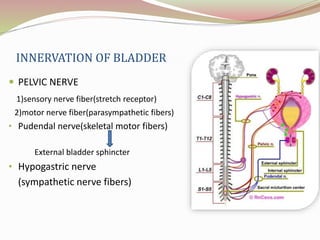
INNERVATION OF BLADDER
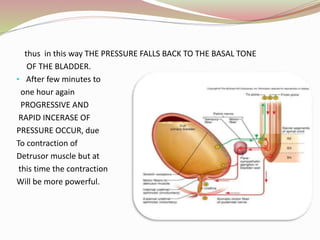
 PELVIC NERVE
1)sensory nerve fiber(stretch receptor)
2)motor nerve fiber(parasympathetic fibers)
• Pudendal nerve(skeletal motor fibers)
External bladder sphincter
• Hypogastric nerve
(sympathetic nerve fibers)
MECHANISM
 Urine coming from the kidney to the urinary bladder through
ureter.
 After some time when enough urine is collected in bladder
stretch receptor is stimulated, sensory signals from the
bladder stretch receptors are conducted to the sacral
segments of the spinal cord through the pelvic nerve.
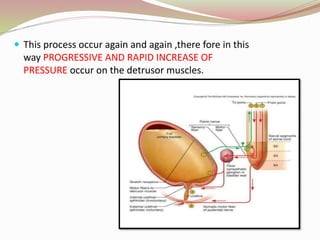
 From the sacral region of the cord signal came back toward the
bladder,THROUGH the parasympathetic fibers which causes
the bladder to contract.
 This process occur again and again ,there fore in this
way PROGRESSIVE AND RAPID INCREASE OF
PRESSURE occur on the detrusor muscles.
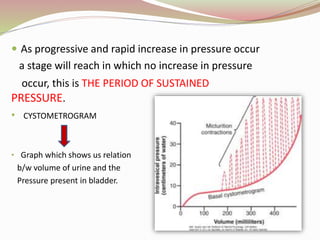
 As progressive and rapid increase in pressure occur
a stage will reach in which no increase in pressure
occur, this is THE PERIOD OF SUSTAINED
PRESSURE.
• CYSTOMETROGRAM
• Graph which shows us relation
b/w volume of urine and the
Pressure present in bladder.
 At this stage when the period of sustained pressure is reached
the signal
From the bladder is trasmitted
toward high centers of the brain through sensory
Nerve fibers (pelvic nerve)
 And thus the individual feel urge to urinate. If the time and place
is not suitable, then the high centers send inhibitry signals to the
external urethral sphincter, through pudendal nerve(skeletal
nerve fiber),
to keep the sphincter close.
• After some time when the external urethral sphincter remain in
Close state, symphathetic fibers stimulate and causes the
bladder to
relax
thus in this way THE PRESSURE FALLS BACK TO THE BASAL TONE
OF THE BLADDER.
• After few minutes to
one hour again
PROGRESSIVE AND
RAPID INCERASE OF
PRESSURE OCCUR, due
To contraction of
Detrusor muscle but at
this time the contraction
Will be more powerful.
 Then again THE PERIOD OF SUSTAINED PRESSURE
is reached and individual again feels urge to urinate.
• When proper time and suitable place is reached the
higher center of the brain decrease signals towared
external sphincter.
• Thus external sphincter relaxes and bladder emptying
Begins.
DEFINITION
 The signal complete cycle in which
1) progressive and rapid increase of pressure occur
2)a period of sustained pressure occur and
3)return of the pressure to the basal tone of the
bladder occur, is called micturition reflex.
OR
• An autonomic spinal cord reflex which helps in
emptying of the urinary bladder which may be inhibited
or facilitated by the higher centers present in the brain is called
micturition reflex.
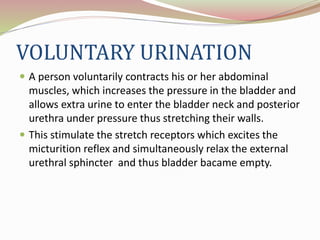
VOLUNTARY URINATION
 A person voluntarily contracts his or her abdominal
muscles, which increases the pressure in the bladder and
allows extra urine to enter the bladder neck and posterior
urethra under pressure thus stretching their walls.
 This stimulate the stretch receptors which excites the
micturition reflex and simultaneously relax the external
urethral sphincter and thus bladder bacame empty.
Some definition
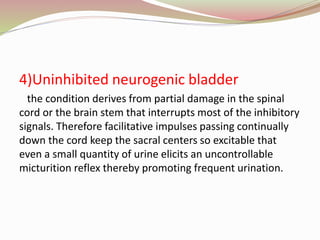
4)Uninhibited neurogenic bladder
the condition derives from partial damage in the spinal
cord or the brain stem that interrupts most of the inhibitory
signals. Therefore facilitative impulses passing continually
down the cord keep the sacral centers so excitable that
even a small quantity of urine elicits an uncontrollable
micturition reflex thereby promoting frequent urination.
23/1/2015 11;15 am friday

Micturition reflex

  • 2.
    MUHAMMA D NAVEED TOPIC OF PRESENTATION MICTURITIONREFLEX CONCERNED TEACHER MADAM,DR.NAILA ASLAM
  • 3.
    INNERVATION OF BLADDER PELVIC NERVE 1)sensory nerve fiber(stretch receptor) 2)motor nerve fiber(parasympathetic fibers) • Pudendal nerve(skeletal motor fibers) External bladder sphincter • Hypogastric nerve (sympathetic nerve fibers)
  • 4.
    MECHANISM  Urine comingfrom the kidney to the urinary bladder through ureter.  After some time when enough urine is collected in bladder stretch receptor is stimulated, sensory signals from the bladder stretch receptors are conducted to the sacral segments of the spinal cord through the pelvic nerve.  From the sacral region of the cord signal came back toward the bladder,THROUGH the parasympathetic fibers which causes the bladder to contract.
  • 5.
     This processoccur again and again ,there fore in this way PROGRESSIVE AND RAPID INCREASE OF PRESSURE occur on the detrusor muscles.
  • 6.
     As progressiveand rapid increase in pressure occur a stage will reach in which no increase in pressure occur, this is THE PERIOD OF SUSTAINED PRESSURE. • CYSTOMETROGRAM • Graph which shows us relation b/w volume of urine and the Pressure present in bladder.
  • 7.
     At thisstage when the period of sustained pressure is reached the signal From the bladder is trasmitted toward high centers of the brain through sensory Nerve fibers (pelvic nerve)  And thus the individual feel urge to urinate. If the time and place is not suitable, then the high centers send inhibitry signals to the external urethral sphincter, through pudendal nerve(skeletal nerve fiber), to keep the sphincter close. • After some time when the external urethral sphincter remain in Close state, symphathetic fibers stimulate and causes the bladder to relax
  • 8.
    thus in thisway THE PRESSURE FALLS BACK TO THE BASAL TONE OF THE BLADDER. • After few minutes to one hour again PROGRESSIVE AND RAPID INCERASE OF PRESSURE OCCUR, due To contraction of Detrusor muscle but at this time the contraction Will be more powerful.
  • 9.
     Then againTHE PERIOD OF SUSTAINED PRESSURE is reached and individual again feels urge to urinate. • When proper time and suitable place is reached the higher center of the brain decrease signals towared external sphincter. • Thus external sphincter relaxes and bladder emptying Begins.
  • 10.
    DEFINITION  The signalcomplete cycle in which 1) progressive and rapid increase of pressure occur 2)a period of sustained pressure occur and 3)return of the pressure to the basal tone of the bladder occur, is called micturition reflex. OR • An autonomic spinal cord reflex which helps in emptying of the urinary bladder which may be inhibited or facilitated by the higher centers present in the brain is called micturition reflex.
  • 13.
    VOLUNTARY URINATION  Aperson voluntarily contracts his or her abdominal muscles, which increases the pressure in the bladder and allows extra urine to enter the bladder neck and posterior urethra under pressure thus stretching their walls.  This stimulate the stretch receptors which excites the micturition reflex and simultaneously relax the external urethral sphincter and thus bladder bacame empty.
  • 14.
  • 15.
    4)Uninhibited neurogenic bladder thecondition derives from partial damage in the spinal cord or the brain stem that interrupts most of the inhibitory signals. Therefore facilitative impulses passing continually down the cord keep the sacral centers so excitable that even a small quantity of urine elicits an uncontrollable micturition reflex thereby promoting frequent urination.
  • 16.