BLADDER PHYSIOLOGY
AND INNERVATION
DR M BHASKAR REDDY
NST RESIDENT
GGH,GUNTUR
12/05/24
2
• The smooth muscles of the bladder
arranged in spiral, longitudinal, and
circular bundles
• Contraction of circular muscle
(Detrusor)is mainly responsible for
emptying bladder
• The muscle bundle pass on either
side of the urethra (Internal urethral
sphincter)
• Farther along the urethra is a
sphincter of skeletal muscle (External
urethral sphincter around
membranous urethra)
• The normal function of the urinary bladder is to store and expel
urine in a coordinated, controlled fashion.
• This coordinated activity is regulated by the central and peripheral
nervous systems.
NEUROGENIC BLADDER
• Neurogenic bladder is a term applied to a
malfunctioning urinary bladder due to
neurologic dysfunction from internal or
external trauma, disease, or injury.
Neuro Anatomy of Voiding
NEURO ANATOMY
• Normal voiding essentially is a spinal reflex
• It is modulated by the central nervous system (brain and
spinal cord), which coordinates the functions of the bladder and
urethra.
• The bladder and urethra are innervated by 3 sets of peripheral
nerves arising from the autonomic nervous system (ANS) and
somatic nervous system.
Brain
• The brain is the master control of the entire urinary
system.
• The micturition control center is located in the
frontal lobe of the brain. The primary activity of this
area is to send inhibitory signals to the detrusor
muscle to prevent the bladder from emptying
(contracting) until a socially acceptable time and
place to urinate is available.
• Certain lesions of the brain, including stroke,
cancer, dementia, result in loss of voluntary control
of the normal micturition reflex.
• The signal transmitted by the brain is routed
through 2 intermediate stops (the brainstem and
the sacral spinal cord) prior to reaching the bladder.
• Medial frontal cortex
* Responsible for complex cognitive and socially
appropriate behavior for voiding
* PET scans showed
significant activity in Rt. Inferior frontal gyrus,
Rt. Anterior cingulate gyrus during voiding
* fMRI showed significant activity in anterior
cingulate gyrus, Rt. Insula during bladder filling
Brainstem
• The pons is responsible for coordinating the activities of the
urinary sphincters and the bladder. The mechanical process of
urination is coordinated by the pons in the area known as the
pontine micturition center.
• The pons is a major relay center between the brain and the
bladder. The conscious sensations associated with bladder activity
are transmitted to the pons from the cerebral cortex.
• The primary coordinating center for bladder function resides
within the nucleus locus coeruleus of the pons.
• This center synchronizes bladder contraction with relaxation of the
urethral sphincter during voiding.
• The interaction of a variety of excitatory and
inhibitory neuronal systems is the function of the
PMC, which is characterized by its inborn excitatory
nature.
• The PMC functions as a relay switch in the voiding
pathway. Stimulation of the PMC causes the urethral
sphincters to open while facilitating the detrusor to
contract and expel the urine.
• The PMC is affected by emotions, which is why some
people may experience incontinence when they are
excited or scared. Usually the brain takes over the
control of the pons at age 3-4 years.
• When the bladder becomes full, the stretch
receptors of the detrusor muscle send a signal to the
pons, which in turn notifies the brain.
• In an uninhibited bladder (e.g. infancy) the pontine
voiding center funct ions without cortical inhibition
and the detrusor muscle contracts when the bladder
reaches a critical capacity.
• People perceive this signal (bladder fullness) as a
sudden desire to go to the bathroom. Under normal
situations, the brain sends an inhibitory signal to the
pons to inhibit the bladder from contracting until a
bathroom is found.
• When the PMC is deactivated, the urge to urinate
disappears, allowing the patient to delay urination
until finding a socially acceptable time and place.
When urination is appropriate, the brain sends
excitatory signals to the pons, allowing the urinary
sphincters to open and the detrusor to empty.
Spinal cord
• The spinal cord functions as a long communication
pathway between the brainstem and the sacral spinal
cord.
• When the sacral cord receives the sensory
information from the bladder, this signal travels up
the spinal cord to the pons and then ultimately to the
brain.
• In the normal cycle of bladder filling and emptying,
the spinal cord acts as an important intermediary
between the pons and the sacral cord. An intact
spinal cord is critical for normal micturition.
• If spinal cord injury has occurred, the patient will
demonstrate symptoms of urinary frequency,
urgency, and urge incontinence but will be unable to
empty his or her bladder completely.
• This occurs because the urinary bladder and the
sphincter are both overactive, a condition termed
detrusor sphincter dyssynergia with detrusor
hyperreflexia (DSD-DH).
• There is a specialized area of the spinal cord known
as the sacral reflex center. It is responsible for
bladder contractions. The sacral reflex center is the
primitive voiding center.
• If the sacral cord becomes severely injured (eg,
spinal tumor, herniated disc), the bladder may not
function.
• Affected patients may develop urinary retention,
termed detrusor areflexia. The detrusor will be
unable to contract, so the patient will not be able to
urinate and urinary retention will occur.
Peripheral Nerves
• Under normal conditions, the bladder and the
internal urethral sphincter primarily are under
sympathetic nervous system control.
• When the sympathetic nervous system is active, it
causes the bladder to increase its capacity without
increasing detrusor resting pressure
(accommodation) and stimulates the internal
urinary sphincter to remain tightly closed.
• The sympathetic activity also inhibits parasympathetic
stimulation. When the sympathetic nervous system is active,
urinary accommodation occurs and the micturition reflex is
inhibited.
• The parasympathetic nervous system functions in a manner
opposite to that of the sympathetic nervous system.
• In terms of urinary function, the parasympathetic nerves
stimulate the detrusor to contract. Immediately preceding
parasympathetic stimulation, the sympathetic influence on
the internal urethral sphincter becomes suppressed so that
the internal sphincter relaxes and opens.
• In addition, the activity of the pudendal nerve is
inhibited to cause the external sphincter to open.
The result is facilitation of voluntary urination.
• The pudendal nerve originates from the nucleus of
Onuf and regulates the voluntary actions of the
external urinary sphincter and the pelvic
diaphragm.
• Activation of the pudendal nerve causes
contraction of the external sphincter.
• Difficult or prolonged vaginal delivery may cause
temporary neurapraxia of the pudendal nerve and
cause stress urinary incontinence.
• Conversely, suprasacral-infrapontine spinal cord
trauma can cause overstimulation of the pudendal
nerve, resulting in urinary retention.
Peripheral Nerves in Micturition
• Parasympathetic (cholinergic) - Bladder contraction
• Sympathetic - Bladder Relaxation (β adrenergic)
• Sympathetic - Bladder neck and urethral contraction (α
adrenergic)
• Somatic (Pudendal nerve) - contraction pelvic floor
musculature and EUS
Peripheral Nerves in Micturition
Peripheral Nervous System
• Somatic (S2-S4)
• Pudendal nerves
• Excitatory to external sphincter
• Parasympathetic (S2-S4)
• Pelvic nerves
• Excitatory to bladder, relaxes
sphincter
• Sympathetic (T10-L2)
• Hypogastric nerves to pelvic
ganglia
• Inhibitory to bladder body,
excitatory to bladder
base/urethra
Neuroanatomy of Voiding
• Frontal lobe
• Micturition center
• Sends inhibitory signals
• Pons (Pontine Micturition Center)
• Major relay/excitatory center
• Coordinates urinary sphincters and the bladder
• Affected by emotions
• Spinal cord
• Intermediary between upper and lower control
Physiology of micturition
Filling phase
• During the filling phase, the bladder accumulates
increasing volumes of urine while the pressure inside the
bladder remains low.
• The pressure within the bladder must be lower than the
urethral pressure during the filling phase.
• If the bladder pressure is greater than the urethral
pressure (resistance), urine will leak out.
• The filling of the urinary bladder depends on the intrinsic
viscoelastic properties of the bladder and the inhibition of
the parasympathetic nerves. Thus, bladder filling primarily is
a passive event.
• As the bladder fills, the pudendal nerve becomes excited.
Contraction of the external sphincter, coupled with that of
the internal sphincter, maintains urethral pressure
(resistance) higher than normal bladder pressure. The
combination of both urinary sphincters is known as the
continence mechanism.
Emptying phase
• When the bladder is filled to capacity, the stretch receptors
within the bladder wall signal the sacral cord.
• At this point, the pudendal nerve causes relaxation of the
levator ani so that the pelvic floor muscle relaxes.
• The pudendal nerve also signals the external sphincter to
open. The sympathetic nerves send a message to the internal
sphincter to relax and open, resulting in a lower urethral
resistance.
• When the urethral sphincters relax and open, the
parasympathetic nerves trigger contraction of the detrusor.
• When the bladder contracts, the pressure generated by the
bladder overcomes the urethral pressure, resulting in
urinary flow.
• Thus, the voiding process requires coordination of both the
ANS and somatic nervous system, which are in turn
controlled by the PMC located in the brainstem.
Innervation of the Lower Urinary
Tract
Function
Balance between suprasacral
modulating pathways, sacral cord
and the pelvic floor
Emptying phase: “Voiding Reflex”
Series of coordinated events
involving outlet relaxation,
detrusor contraction
Storage phase: “Guarding
reflexes” constant afferent input
to maintain continence
Bladder Pressure-Volume
Relationship
Bladder
Dysfunction
Categories of Incontinence
• Urge incontinence
• Stress incontinence
• Overflow incontinence
• Functional incontinence
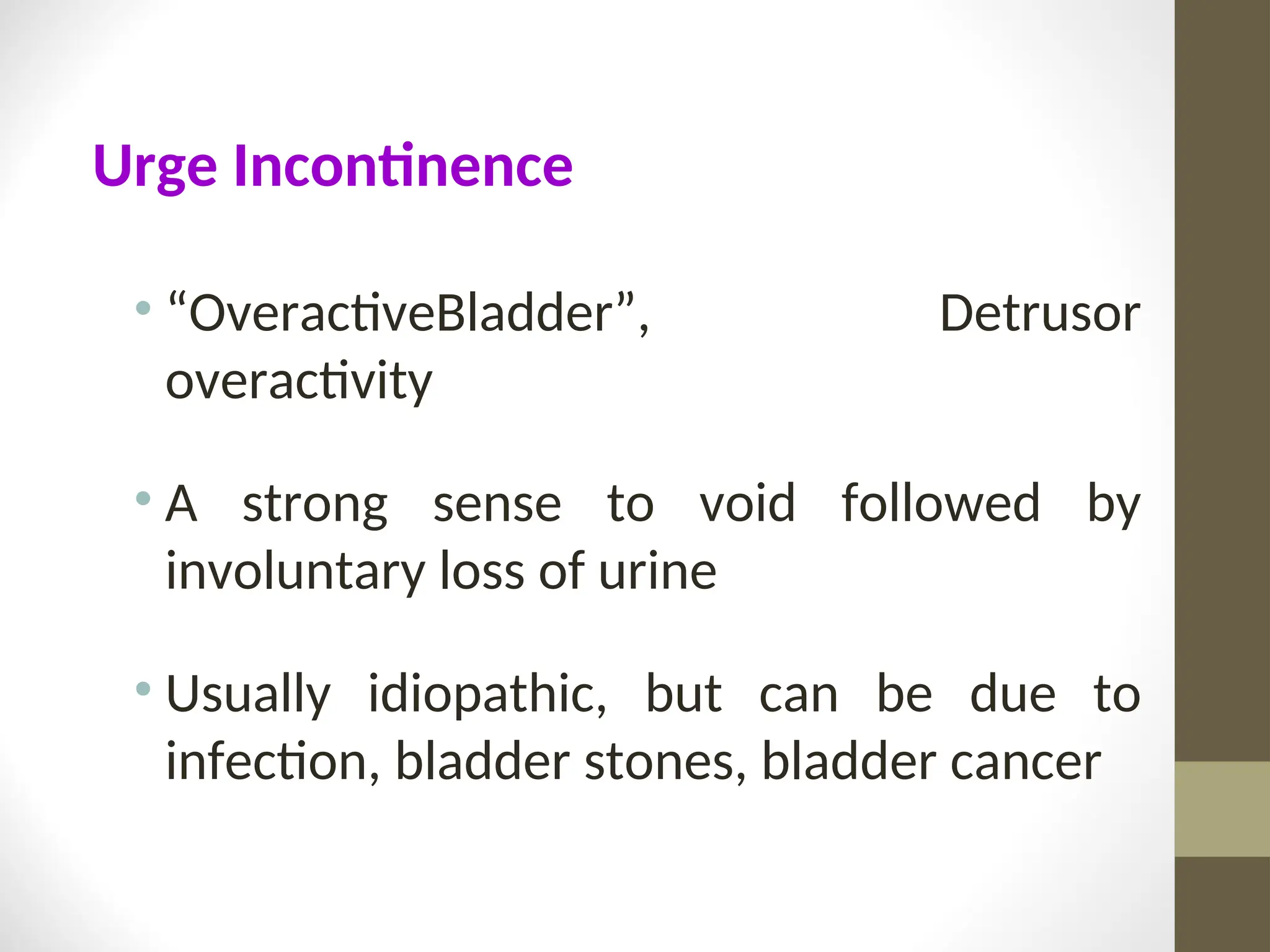
Urge Incontinence
• “OveractiveBladder”, Detrusor
overactivity
• A strong sense to void followed by
involuntary loss of urine
• Usually idiopathic, but can be due to
infection, bladder stones, bladder cancer
Stress Incontinence
• Involuntary loss of urine due to increased
intra-abdominal pressure
• Coughing
• Sneezing
• Laughing
• Most common type in young women
• Due to pelvic floor muscle weakening .
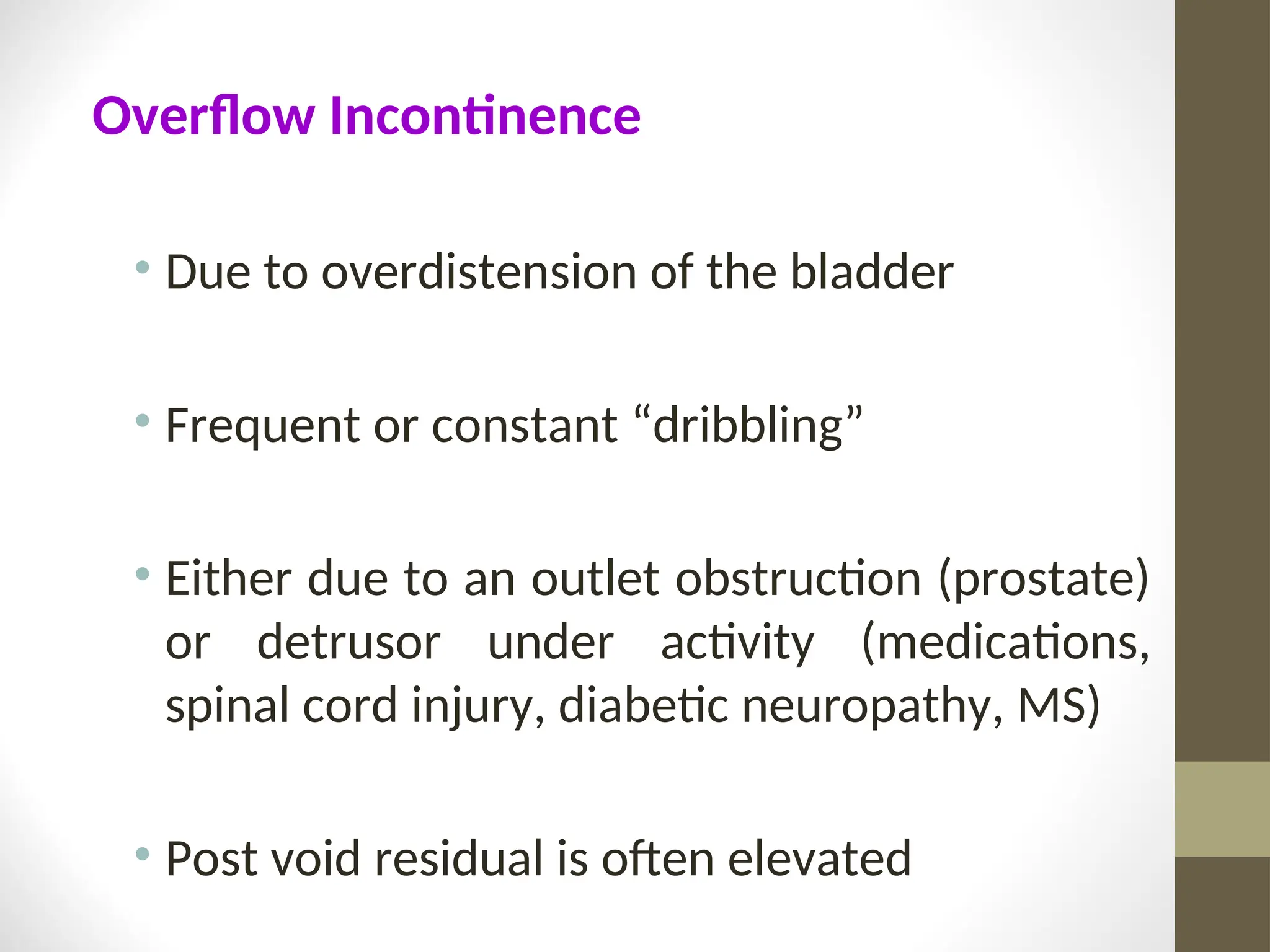
Overflow Incontinence
• Due to overdistension of the bladder
• Frequent or constant “dribbling”
• Either due to an outlet obstruction (prostate)
or detrusor under activity (medications,
spinal cord injury, diabetic neuropathy, MS)
• Post void residual is often elevated
• Urinary incontinence results from a dysfunction of the
bladder, the sphincter, or both.
• Bladder overactivity (spastic bladder) is associated with the
symptoms of urge incontinence, while sphincter
underactivity (decreased resistance) results in symptomatic
stress incontinence.
• A combination of detrusor overactivity and sphincter
underactivity may result in mixed symptoms.
Pathophysiology & level of
dysfunction
Brain lesion
• Lesions of the brain above the pons destroy the master
control center, causing a complete loss of voiding control.
• The voiding reflexes of the lower urinary tract—the
primitive voiding reflex—remain intact.
• Affected individuals show signs of urge incontinence
(medically termed detrusor hyperreflexia or overactivity).
• The bladder empties too quickly and too often,
with relatively low quantities, and storing urine in
the bladder is difficult. Usually, people with this
problem rush to the bathroom and even leak urine
before reaching their destination. They may wake
up frequently at night to void.
• Typical examples of a brain lesion are stroke, brain
tumor, Parkinson disease,Hydrocephalus and
cerebral palsy.
Spinal cord lesion
• Diseases of the spinal cord between the pons and
the sacral spinal cord also result in spastic bladder
or overactive bladder
• These people experience urge incontinence. The
bladder empties too quickly and too frequently.
The voiding disorder is similar to that of the brain
lesion except that the external sphincter may have
paradoxical contractions as well.
• If both the bladder and external sphincter become
spastic at the same time, the affected individual will
sense an overwhelming desire to urinate but only a
small amount of urine may dribble out. The medical
term for this is detrusor-sphincter dyssynergia
because the bladder and the external sphincter are
not in synergy.
• The causes of spinal cord injuries include motor
vehicle and diving accidents. Multiple sclerosis (MS)
is a common cause of spinal cord disease in young
women.
Sacral cord injury
• Selected injuries of the sacral cord and the
corresponding nerve roots arising from the sacral
cord may prevent the bladder from emptying.
• If a sensory neurogenic bladder is present, the
affected individual may not be able to sense when
the bladder is full.
• In the case of a motor neurogenic bladder, the
individual will sense the bladder is full and the
detrusor may not contract, a condition known as
detrusor areflexia.
• These individuals have difficulty eliminating urine
and experience overflow incontinence; the
bladder gradually overdistends until the urine
spills out.
• Typical causes are a sacral cord tumor, herniated
disc, and injuries that crush the pelvis. This
condition also may occur after a lumbar
laminectomy, radical hysterectomy, or
abdominoperineal resection.
Peripheral nerve injury
• Diabetes mellitus and AIDS are 2 of the conditions
causing peripheral neuropathy resulting in urinary
retention.
• These diseases destroy the nerves to the bladder and
may lead to silent, painless distention of the bladder.
• Patients with chronic diabetes lose the sensation
of bladder filling first, before the bladder
decompensates.
• Similar to injury to the sacral cord, affected
individuals will have difficulty urinating.
• They also may have a hypocontractile bladder.
Work up
Laboratory Studies
• Urinalysis and urine culture: Urinary tract infection can
cause irritative voiding symptoms and urge
incontinence.
• Urine cytology
• Carcinoma-in-situ of the urinary bladder causes
symptoms of urinary frequency and urgency. Irritative
voiding symptoms out of proportion to the overall
clinical picture and/or hematuria warrant urine
cytology and cystoscopy.
• Blood urea nitrogen (BUN) and creatinine (Cr) are
checked if compromised renal function is suspected.
• Diagnostic Procedures
• Postvoid residual urine
• The postvoid residual urine (PVR) measurement is a
part of basic evaluation for urinary incontinence.
• If the PVR is high, the bladder may be not contractile
or the bladder outlet may be obstructed. Both of
these conditions will cause urinary retention with
overflow incontinence.
• Uroflow rate
• Uroflow rate is a useful screening test used mainly to evaluate
bladder outlet obstruction. Uroflow rate is volume of urine
voided per unit of time.
• Low uroflow rate may reflect urethral obstruction, a weak
detrusor, or a combination of both. This test alone cannot
distinguish an obstruction from a contractile detrusor.
• Filling cystometrogram
• A filling cystometrogram (CMG) assesses the bladder capacity,
compliance, and the presence of phasic contractions (detrusor
instability). Most commonly, liquid filling medium is used.
• An average adult bladder holds approximately 50-500 mL of
urine.
Voiding cystometrogram (pressure-flow
study)
• Pressure-flow study simultaneously records the
voiding detrusor pressure and the rate of urinary
flow.
• This is the only test able to assess bladder
contractility and the extent of a bladder outlet
obstruction.
• Cystogram
• A static cystogram helps to confirm the presence
of stress incontinence, and the presence of a
cystocele. Intrinsic sphincter deficiency will be
evident by an open bladder neck. Presence of a
vesicovaginal fistula or bladder diverticulum also
may be noted.
• A voiding cystogram can assess bladder neck and
urethral function (internal and external
sphincter) during filling and voiding phases. A
voiding cystogram can identify a urethral
diverticulum, urethral obstruction, and
vesicoureteral reflux.
• Electromyography
• Electromyography (EMG) helps to ascertain the presence of
coordinated or uncoordinated voiding. Failure of urethral
relaxation during bladder contraction results in uncoordinated
voiding (detrusor sphincter dyssynergia).
• EMG allows accurate diagnosis of detrusor sphincter dyssynergia
common in spinal cord injuries.
• Cystoscopy
• The precise role of cystoscopy in the evaluation of neurogenic
bladder allows discovery of bladder lesions (eg, bladder cancer,
bladder stone)
Management of Storage Failure
• Detrusor Hyperreflexia
• INTRAVESICAL anticholinergics (oxybutynin, atropine )
• Intravesical desensitisation (capsaicin)
• Denervation (nerve blocks using transvesical phenol, botulinum
toxin)
• Sacral deafferentation (surgical division of sacral posterior roots )
• Low compliance/capacity
• Anticholinergic medications
• Bladder augmentation surgery (ileocystoplasty, myomectomy)
• Bladder neck/sphincter insufficiency
• Alpha agonist (ephedrine, imipramine )
• Artificial sphincter (inflatable cuff) device
Management of Voiding
Failure
• Detrusor insufficiency
• Cholinergic medications (bethanecol, distigmine
bromide )
• Acontractile bladder
• Clean intermittent self cathetrisation
• Indwelling urinary catheter .
• Supra pubic catheter
Outlet obstruction
• Alpha adrenergic antagonist (phenoxybenzamine,
prazosin)
• Spasmolytic agents (baclofen, diazepam; botulinum
toxin injection)
• Sphincterotomy
• Prostatectomy / urethrotomy
• Stress incontinence may be treated with surgical and nonsurgical
means.
• Urge incontinence may be treated with behavioral modification or
with bladder-relaxing agents.
• Mixed incontinence may require medications as well as surgery.
• Overflow incontinence may be treated with some type of catheter
regimen.
• Functional incontinence may be resolved by treating the
underlying cause (eg, urinary tract infection, constipation) or by
simply changing a few medications.
Treatment
• Stress Incontinence
• Medications
• Likely not on test as none currently FDA approved
• Alpha adrenergic agonists (Duloxetine)
• Invasive Treatments
• Surgery
• Bulking agent injections
• Urge Incontinence
• Bladder training (holding urine longer between voids)
• Kegel Excercises to strengthen pelvic floor
• 81% reduction in episodes vs 69% reduction in
oxybutynin treated patients
• Urge Incontinence
• Medications
• Anticholinergics
• Oxybutynin (short acting, long acting,
transdermal)
• Tolteradine (short acting, long acting)
• Oxybutynin slightly more effective, but higher
side effects (Dry Mouth)
• Mixed Incontinence
• Target therapy at most prominent component
• Overflow Incontinence
• Identify and relieve obstruction
• Men usually due to the prostate (BPH medication,
Surgery, catheterizaton)
• Women usually with history of previous surgery
and referral is warranted
BLADDER INNERVATION,nerve supply power point

BLADDER INNERVATION,nerve supply power point

  • 1.
    BLADDER PHYSIOLOGY AND INNERVATION DRM BHASKAR REDDY NST RESIDENT GGH,GUNTUR
  • 2.
    12/05/24 2 • The smoothmuscles of the bladder arranged in spiral, longitudinal, and circular bundles • Contraction of circular muscle (Detrusor)is mainly responsible for emptying bladder • The muscle bundle pass on either side of the urethra (Internal urethral sphincter) • Farther along the urethra is a sphincter of skeletal muscle (External urethral sphincter around membranous urethra)
  • 3.
    • The normalfunction of the urinary bladder is to store and expel urine in a coordinated, controlled fashion. • This coordinated activity is regulated by the central and peripheral nervous systems.
  • 4.
    NEUROGENIC BLADDER • Neurogenicbladder is a term applied to a malfunctioning urinary bladder due to neurologic dysfunction from internal or external trauma, disease, or injury.
  • 5.
  • 8.
    NEURO ANATOMY • Normalvoiding essentially is a spinal reflex • It is modulated by the central nervous system (brain and spinal cord), which coordinates the functions of the bladder and urethra. • The bladder and urethra are innervated by 3 sets of peripheral nerves arising from the autonomic nervous system (ANS) and somatic nervous system.
  • 9.
    Brain • The brainis the master control of the entire urinary system. • The micturition control center is located in the frontal lobe of the brain. The primary activity of this area is to send inhibitory signals to the detrusor muscle to prevent the bladder from emptying (contracting) until a socially acceptable time and place to urinate is available.
  • 10.
    • Certain lesionsof the brain, including stroke, cancer, dementia, result in loss of voluntary control of the normal micturition reflex. • The signal transmitted by the brain is routed through 2 intermediate stops (the brainstem and the sacral spinal cord) prior to reaching the bladder.
  • 11.
    • Medial frontalcortex * Responsible for complex cognitive and socially appropriate behavior for voiding * PET scans showed significant activity in Rt. Inferior frontal gyrus, Rt. Anterior cingulate gyrus during voiding * fMRI showed significant activity in anterior cingulate gyrus, Rt. Insula during bladder filling
  • 12.
    Brainstem • The ponsis responsible for coordinating the activities of the urinary sphincters and the bladder. The mechanical process of urination is coordinated by the pons in the area known as the pontine micturition center. • The pons is a major relay center between the brain and the bladder. The conscious sensations associated with bladder activity are transmitted to the pons from the cerebral cortex. • The primary coordinating center for bladder function resides within the nucleus locus coeruleus of the pons. • This center synchronizes bladder contraction with relaxation of the urethral sphincter during voiding.
  • 13.
    • The interactionof a variety of excitatory and inhibitory neuronal systems is the function of the PMC, which is characterized by its inborn excitatory nature. • The PMC functions as a relay switch in the voiding pathway. Stimulation of the PMC causes the urethral sphincters to open while facilitating the detrusor to contract and expel the urine.
  • 14.
    • The PMCis affected by emotions, which is why some people may experience incontinence when they are excited or scared. Usually the brain takes over the control of the pons at age 3-4 years. • When the bladder becomes full, the stretch receptors of the detrusor muscle send a signal to the pons, which in turn notifies the brain. • In an uninhibited bladder (e.g. infancy) the pontine voiding center funct ions without cortical inhibition and the detrusor muscle contracts when the bladder reaches a critical capacity.
  • 15.
    • People perceivethis signal (bladder fullness) as a sudden desire to go to the bathroom. Under normal situations, the brain sends an inhibitory signal to the pons to inhibit the bladder from contracting until a bathroom is found. • When the PMC is deactivated, the urge to urinate disappears, allowing the patient to delay urination until finding a socially acceptable time and place. When urination is appropriate, the brain sends excitatory signals to the pons, allowing the urinary sphincters to open and the detrusor to empty.
  • 16.
    Spinal cord • Thespinal cord functions as a long communication pathway between the brainstem and the sacral spinal cord. • When the sacral cord receives the sensory information from the bladder, this signal travels up the spinal cord to the pons and then ultimately to the brain. • In the normal cycle of bladder filling and emptying, the spinal cord acts as an important intermediary between the pons and the sacral cord. An intact spinal cord is critical for normal micturition.
  • 17.
    • If spinalcord injury has occurred, the patient will demonstrate symptoms of urinary frequency, urgency, and urge incontinence but will be unable to empty his or her bladder completely. • This occurs because the urinary bladder and the sphincter are both overactive, a condition termed detrusor sphincter dyssynergia with detrusor hyperreflexia (DSD-DH).
  • 18.
    • There isa specialized area of the spinal cord known as the sacral reflex center. It is responsible for bladder contractions. The sacral reflex center is the primitive voiding center. • If the sacral cord becomes severely injured (eg, spinal tumor, herniated disc), the bladder may not function. • Affected patients may develop urinary retention, termed detrusor areflexia. The detrusor will be unable to contract, so the patient will not be able to urinate and urinary retention will occur.
  • 19.
    Peripheral Nerves • Undernormal conditions, the bladder and the internal urethral sphincter primarily are under sympathetic nervous system control. • When the sympathetic nervous system is active, it causes the bladder to increase its capacity without increasing detrusor resting pressure (accommodation) and stimulates the internal urinary sphincter to remain tightly closed.
  • 20.
    • The sympatheticactivity also inhibits parasympathetic stimulation. When the sympathetic nervous system is active, urinary accommodation occurs and the micturition reflex is inhibited. • The parasympathetic nervous system functions in a manner opposite to that of the sympathetic nervous system. • In terms of urinary function, the parasympathetic nerves stimulate the detrusor to contract. Immediately preceding parasympathetic stimulation, the sympathetic influence on the internal urethral sphincter becomes suppressed so that the internal sphincter relaxes and opens.
  • 21.
    • In addition,the activity of the pudendal nerve is inhibited to cause the external sphincter to open. The result is facilitation of voluntary urination. • The pudendal nerve originates from the nucleus of Onuf and regulates the voluntary actions of the external urinary sphincter and the pelvic diaphragm.
  • 22.
    • Activation ofthe pudendal nerve causes contraction of the external sphincter. • Difficult or prolonged vaginal delivery may cause temporary neurapraxia of the pudendal nerve and cause stress urinary incontinence. • Conversely, suprasacral-infrapontine spinal cord trauma can cause overstimulation of the pudendal nerve, resulting in urinary retention.
  • 23.
    Peripheral Nerves inMicturition • Parasympathetic (cholinergic) - Bladder contraction • Sympathetic - Bladder Relaxation (β adrenergic) • Sympathetic - Bladder neck and urethral contraction (α adrenergic) • Somatic (Pudendal nerve) - contraction pelvic floor musculature and EUS
  • 24.
  • 25.
    Peripheral Nervous System •Somatic (S2-S4) • Pudendal nerves • Excitatory to external sphincter • Parasympathetic (S2-S4) • Pelvic nerves • Excitatory to bladder, relaxes sphincter • Sympathetic (T10-L2) • Hypogastric nerves to pelvic ganglia • Inhibitory to bladder body, excitatory to bladder base/urethra
  • 26.
    Neuroanatomy of Voiding •Frontal lobe • Micturition center • Sends inhibitory signals • Pons (Pontine Micturition Center) • Major relay/excitatory center • Coordinates urinary sphincters and the bladder • Affected by emotions • Spinal cord • Intermediary between upper and lower control
  • 27.
    Physiology of micturition Fillingphase • During the filling phase, the bladder accumulates increasing volumes of urine while the pressure inside the bladder remains low. • The pressure within the bladder must be lower than the urethral pressure during the filling phase. • If the bladder pressure is greater than the urethral pressure (resistance), urine will leak out.
  • 28.
    • The fillingof the urinary bladder depends on the intrinsic viscoelastic properties of the bladder and the inhibition of the parasympathetic nerves. Thus, bladder filling primarily is a passive event. • As the bladder fills, the pudendal nerve becomes excited. Contraction of the external sphincter, coupled with that of the internal sphincter, maintains urethral pressure (resistance) higher than normal bladder pressure. The combination of both urinary sphincters is known as the continence mechanism.
  • 29.
    Emptying phase • Whenthe bladder is filled to capacity, the stretch receptors within the bladder wall signal the sacral cord. • At this point, the pudendal nerve causes relaxation of the levator ani so that the pelvic floor muscle relaxes. • The pudendal nerve also signals the external sphincter to open. The sympathetic nerves send a message to the internal sphincter to relax and open, resulting in a lower urethral resistance.
  • 30.
    • When theurethral sphincters relax and open, the parasympathetic nerves trigger contraction of the detrusor. • When the bladder contracts, the pressure generated by the bladder overcomes the urethral pressure, resulting in urinary flow. • Thus, the voiding process requires coordination of both the ANS and somatic nervous system, which are in turn controlled by the PMC located in the brainstem.
  • 32.
    Innervation of theLower Urinary Tract Function Balance between suprasacral modulating pathways, sacral cord and the pelvic floor Emptying phase: “Voiding Reflex” Series of coordinated events Series of coordinated events involving outlet relaxation, involving outlet relaxation, detrusor contraction detrusor contraction Storage phase: “Guarding reflexes” constant afferent input to maintain continence
  • 33.
  • 34.
  • 35.
    Categories of Incontinence •Urge incontinence • Stress incontinence • Overflow incontinence • Functional incontinence
  • 37.
    Urge Incontinence • “OveractiveBladder”,Detrusor overactivity • A strong sense to void followed by involuntary loss of urine • Usually idiopathic, but can be due to infection, bladder stones, bladder cancer
  • 38.
    Stress Incontinence • Involuntaryloss of urine due to increased intra-abdominal pressure • Coughing • Sneezing • Laughing • Most common type in young women • Due to pelvic floor muscle weakening .
  • 39.
    Overflow Incontinence • Dueto overdistension of the bladder • Frequent or constant “dribbling” • Either due to an outlet obstruction (prostate) or detrusor under activity (medications, spinal cord injury, diabetic neuropathy, MS) • Post void residual is often elevated
  • 40.
    • Urinary incontinenceresults from a dysfunction of the bladder, the sphincter, or both. • Bladder overactivity (spastic bladder) is associated with the symptoms of urge incontinence, while sphincter underactivity (decreased resistance) results in symptomatic stress incontinence. • A combination of detrusor overactivity and sphincter underactivity may result in mixed symptoms.
  • 41.
    Pathophysiology & levelof dysfunction Brain lesion • Lesions of the brain above the pons destroy the master control center, causing a complete loss of voiding control. • The voiding reflexes of the lower urinary tract—the primitive voiding reflex—remain intact. • Affected individuals show signs of urge incontinence (medically termed detrusor hyperreflexia or overactivity).
  • 42.
    • The bladderempties too quickly and too often, with relatively low quantities, and storing urine in the bladder is difficult. Usually, people with this problem rush to the bathroom and even leak urine before reaching their destination. They may wake up frequently at night to void. • Typical examples of a brain lesion are stroke, brain tumor, Parkinson disease,Hydrocephalus and cerebral palsy.
  • 43.
    Spinal cord lesion •Diseases of the spinal cord between the pons and the sacral spinal cord also result in spastic bladder or overactive bladder • These people experience urge incontinence. The bladder empties too quickly and too frequently. The voiding disorder is similar to that of the brain lesion except that the external sphincter may have paradoxical contractions as well.
  • 44.
    • If boththe bladder and external sphincter become spastic at the same time, the affected individual will sense an overwhelming desire to urinate but only a small amount of urine may dribble out. The medical term for this is detrusor-sphincter dyssynergia because the bladder and the external sphincter are not in synergy. • The causes of spinal cord injuries include motor vehicle and diving accidents. Multiple sclerosis (MS) is a common cause of spinal cord disease in young women.
  • 45.
    Sacral cord injury •Selected injuries of the sacral cord and the corresponding nerve roots arising from the sacral cord may prevent the bladder from emptying. • If a sensory neurogenic bladder is present, the affected individual may not be able to sense when the bladder is full. • In the case of a motor neurogenic bladder, the individual will sense the bladder is full and the detrusor may not contract, a condition known as detrusor areflexia.
  • 46.
    • These individualshave difficulty eliminating urine and experience overflow incontinence; the bladder gradually overdistends until the urine spills out. • Typical causes are a sacral cord tumor, herniated disc, and injuries that crush the pelvis. This condition also may occur after a lumbar laminectomy, radical hysterectomy, or abdominoperineal resection.
  • 47.
    Peripheral nerve injury •Diabetes mellitus and AIDS are 2 of the conditions causing peripheral neuropathy resulting in urinary retention. • These diseases destroy the nerves to the bladder and may lead to silent, painless distention of the bladder.
  • 48.
    • Patients withchronic diabetes lose the sensation of bladder filling first, before the bladder decompensates. • Similar to injury to the sacral cord, affected individuals will have difficulty urinating. • They also may have a hypocontractile bladder.
  • 49.
    Work up Laboratory Studies •Urinalysis and urine culture: Urinary tract infection can cause irritative voiding symptoms and urge incontinence. • Urine cytology • Carcinoma-in-situ of the urinary bladder causes symptoms of urinary frequency and urgency. Irritative voiding symptoms out of proportion to the overall clinical picture and/or hematuria warrant urine cytology and cystoscopy. • Blood urea nitrogen (BUN) and creatinine (Cr) are checked if compromised renal function is suspected.
  • 50.
    • Diagnostic Procedures •Postvoid residual urine • The postvoid residual urine (PVR) measurement is a part of basic evaluation for urinary incontinence. • If the PVR is high, the bladder may be not contractile or the bladder outlet may be obstructed. Both of these conditions will cause urinary retention with overflow incontinence.
  • 51.
    • Uroflow rate •Uroflow rate is a useful screening test used mainly to evaluate bladder outlet obstruction. Uroflow rate is volume of urine voided per unit of time. • Low uroflow rate may reflect urethral obstruction, a weak detrusor, or a combination of both. This test alone cannot distinguish an obstruction from a contractile detrusor. • Filling cystometrogram • A filling cystometrogram (CMG) assesses the bladder capacity, compliance, and the presence of phasic contractions (detrusor instability). Most commonly, liquid filling medium is used. • An average adult bladder holds approximately 50-500 mL of urine.
  • 52.
    Voiding cystometrogram (pressure-flow study) •Pressure-flow study simultaneously records the voiding detrusor pressure and the rate of urinary flow. • This is the only test able to assess bladder contractility and the extent of a bladder outlet obstruction.
  • 53.
    • Cystogram • Astatic cystogram helps to confirm the presence of stress incontinence, and the presence of a cystocele. Intrinsic sphincter deficiency will be evident by an open bladder neck. Presence of a vesicovaginal fistula or bladder diverticulum also may be noted. • A voiding cystogram can assess bladder neck and urethral function (internal and external sphincter) during filling and voiding phases. A voiding cystogram can identify a urethral diverticulum, urethral obstruction, and vesicoureteral reflux.
  • 54.
    • Electromyography • Electromyography(EMG) helps to ascertain the presence of coordinated or uncoordinated voiding. Failure of urethral relaxation during bladder contraction results in uncoordinated voiding (detrusor sphincter dyssynergia). • EMG allows accurate diagnosis of detrusor sphincter dyssynergia common in spinal cord injuries. • Cystoscopy • The precise role of cystoscopy in the evaluation of neurogenic bladder allows discovery of bladder lesions (eg, bladder cancer, bladder stone)
  • 55.
    Management of StorageFailure • Detrusor Hyperreflexia • INTRAVESICAL anticholinergics (oxybutynin, atropine ) • Intravesical desensitisation (capsaicin) • Denervation (nerve blocks using transvesical phenol, botulinum toxin) • Sacral deafferentation (surgical division of sacral posterior roots ) • Low compliance/capacity • Anticholinergic medications • Bladder augmentation surgery (ileocystoplasty, myomectomy) • Bladder neck/sphincter insufficiency • Alpha agonist (ephedrine, imipramine ) • Artificial sphincter (inflatable cuff) device
  • 56.
    Management of Voiding Failure •Detrusor insufficiency • Cholinergic medications (bethanecol, distigmine bromide ) • Acontractile bladder • Clean intermittent self cathetrisation • Indwelling urinary catheter . • Supra pubic catheter Outlet obstruction • Alpha adrenergic antagonist (phenoxybenzamine, prazosin) • Spasmolytic agents (baclofen, diazepam; botulinum toxin injection) • Sphincterotomy • Prostatectomy / urethrotomy
  • 57.
    • Stress incontinencemay be treated with surgical and nonsurgical means. • Urge incontinence may be treated with behavioral modification or with bladder-relaxing agents. • Mixed incontinence may require medications as well as surgery. • Overflow incontinence may be treated with some type of catheter regimen. • Functional incontinence may be resolved by treating the underlying cause (eg, urinary tract infection, constipation) or by simply changing a few medications.
  • 58.
    Treatment • Stress Incontinence •Medications • Likely not on test as none currently FDA approved • Alpha adrenergic agonists (Duloxetine) • Invasive Treatments • Surgery • Bulking agent injections
  • 59.
    • Urge Incontinence •Bladder training (holding urine longer between voids) • Kegel Excercises to strengthen pelvic floor • 81% reduction in episodes vs 69% reduction in oxybutynin treated patients
  • 60.
    • Urge Incontinence •Medications • Anticholinergics • Oxybutynin (short acting, long acting, transdermal) • Tolteradine (short acting, long acting) • Oxybutynin slightly more effective, but higher side effects (Dry Mouth)
  • 61.
    • Mixed Incontinence •Target therapy at most prominent component • Overflow Incontinence • Identify and relieve obstruction • Men usually due to the prostate (BPH medication, Surgery, catheterizaton) • Women usually with history of previous surgery and referral is warranted