MICROPROPAGATION

PRESENTED BY ADIL
MAZEED
B.SC BIOTECHNOLOGY
3 RD YEAR
Definition of micropropagation
Clonal propagation ‘IN VITRO’

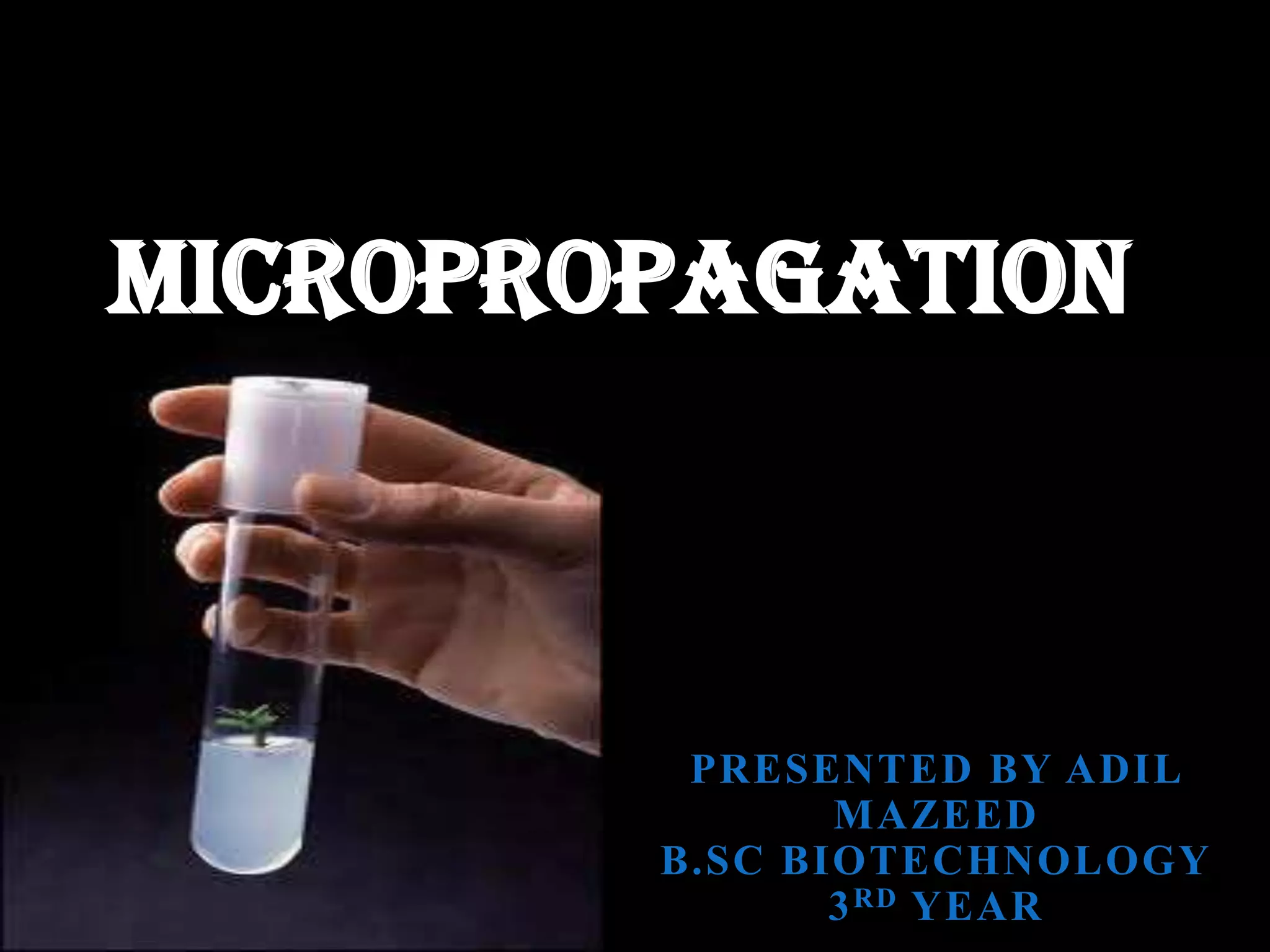
 Micro-propagation is the production of
whole plant from small section of plant
such as a stem tip, node, meristem,
embryo, or even a seed.
STEPS OF MICRO-PROPAGATION
 Establishment

 Proliferation

 Rooting and hardening

 Sometimes one step is also included in cases
where establishment of plantlets in soil is
particularly elaborate
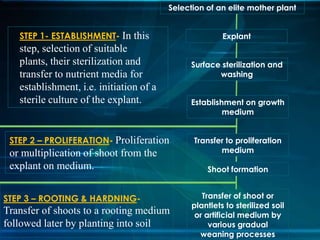
Selection of an elite mother plant

STEP 1- ESTABLISHMENT- In this

step, selection of suitable
plants, their sterilization and
transfer to nutrient media for
establishment, i.e. initiation of a
sterile culture of the explant.

STEP 2 – PROLIFERATION- Proliferation

or multiplication of shoot from the
explant on medium.
STEP 3 – ROOTING & HARDNING-

Transfer of shoots to a rooting medium
followed later by planting into soil

Explant
Surface sterilization and
washing
Establishment on growth
medium
Transfer to proliferation
medium
Shoot formation
Transfer of shoot or
plantlets to sterilized soil
or artificial medium by
various gradual
weaning processes
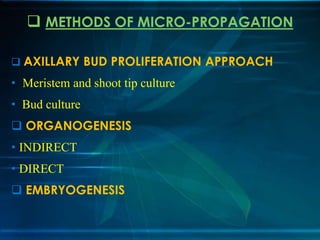
 METHODS OF MICRO-PROPAGATION
 AXILLARY BUD PROLIFERATION APPROACH

• Meristem and shoot tip culture
• Bud culture
 ORGANOGENESIS

• INDIRECT
• DIRECT
 EMBRYOGENESIS
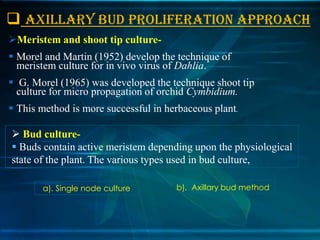
 AXILLARY BUD PROLIFERATION APPROACH
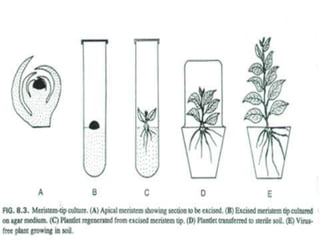
Meristem and shoot tip culture Morel and Martin (1952) develop the technique of
meristem culture for in vivo virus of Dahlia.

 G. Morel (1965) was developed the technique shoot tip
culture for micro propagation of orchid Cymbidium.
 This method is more successful in herbaceous plant.

 Bud culture Buds contain active meristem depending upon the physiological
state of the plant. The various types used in bud culture,
a). Single node culture

b). Axillary bud method
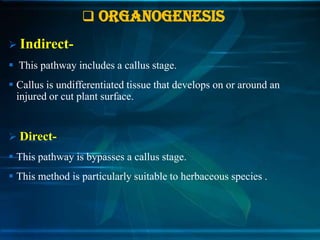
 ORGANOGENESIS
 Indirect This pathway includes a callus stage.

 Callus is undifferentiated tissue that develops on or around an
injured or cut plant surface.

 Direct This pathway is bypasses a callus stage.
 This method is particularly suitable to herbaceous species .
 EMBRYOGENESIS
• The process of initiation and development of embryos and
embryo like structure from somatic cells.
• It usually involves a callus intermediate stage which can
result in variation among seedlings.

• Its not a common micro-propagation technique but
currently being used to produce superior pine seedlings.
a). Direct embryogenesis

b). Indirect embryogenesis
HOW does micro-propagation work?
 Plant cell have the ability to reproduce the whole plant
from a single cell. This is called totipotency.
 Totipotency is the ability of single cell to express the full
genome in the cells to which it gives rise by cell division.

Why do we do it?
 To regenerate plant from single cell or plant tissues.

 To produce large quantities of identical plant.
 To create new plant varieties.
thank you

Micropropagation. adil.

  • 1.
  • 2.
    Definition of micropropagation Clonalpropagation ‘IN VITRO’  Micro-propagation is the production of whole plant from small section of plant such as a stem tip, node, meristem, embryo, or even a seed.
  • 3.
    STEPS OF MICRO-PROPAGATION Establishment  Proliferation  Rooting and hardening  Sometimes one step is also included in cases where establishment of plantlets in soil is particularly elaborate
  • 4.
    Selection of anelite mother plant STEP 1- ESTABLISHMENT- In this step, selection of suitable plants, their sterilization and transfer to nutrient media for establishment, i.e. initiation of a sterile culture of the explant. STEP 2 – PROLIFERATION- Proliferation or multiplication of shoot from the explant on medium. STEP 3 – ROOTING & HARDNING- Transfer of shoots to a rooting medium followed later by planting into soil Explant Surface sterilization and washing Establishment on growth medium Transfer to proliferation medium Shoot formation Transfer of shoot or plantlets to sterilized soil or artificial medium by various gradual weaning processes
  • 5.
     METHODS OFMICRO-PROPAGATION  AXILLARY BUD PROLIFERATION APPROACH • Meristem and shoot tip culture • Bud culture  ORGANOGENESIS • INDIRECT • DIRECT  EMBRYOGENESIS
  • 6.
     AXILLARY BUDPROLIFERATION APPROACH Meristem and shoot tip culture Morel and Martin (1952) develop the technique of meristem culture for in vivo virus of Dahlia.  G. Morel (1965) was developed the technique shoot tip culture for micro propagation of orchid Cymbidium.  This method is more successful in herbaceous plant.  Bud culture Buds contain active meristem depending upon the physiological state of the plant. The various types used in bud culture, a). Single node culture b). Axillary bud method
  • 7.
     ORGANOGENESIS  IndirectThis pathway includes a callus stage.  Callus is undifferentiated tissue that develops on or around an injured or cut plant surface.  Direct This pathway is bypasses a callus stage.  This method is particularly suitable to herbaceous species .
  • 8.
     EMBRYOGENESIS • Theprocess of initiation and development of embryos and embryo like structure from somatic cells. • It usually involves a callus intermediate stage which can result in variation among seedlings. • Its not a common micro-propagation technique but currently being used to produce superior pine seedlings. a). Direct embryogenesis b). Indirect embryogenesis
  • 10.
    HOW does micro-propagationwork?  Plant cell have the ability to reproduce the whole plant from a single cell. This is called totipotency.  Totipotency is the ability of single cell to express the full genome in the cells to which it gives rise by cell division. Why do we do it?  To regenerate plant from single cell or plant tissues.  To produce large quantities of identical plant.  To create new plant varieties.
  • 11.