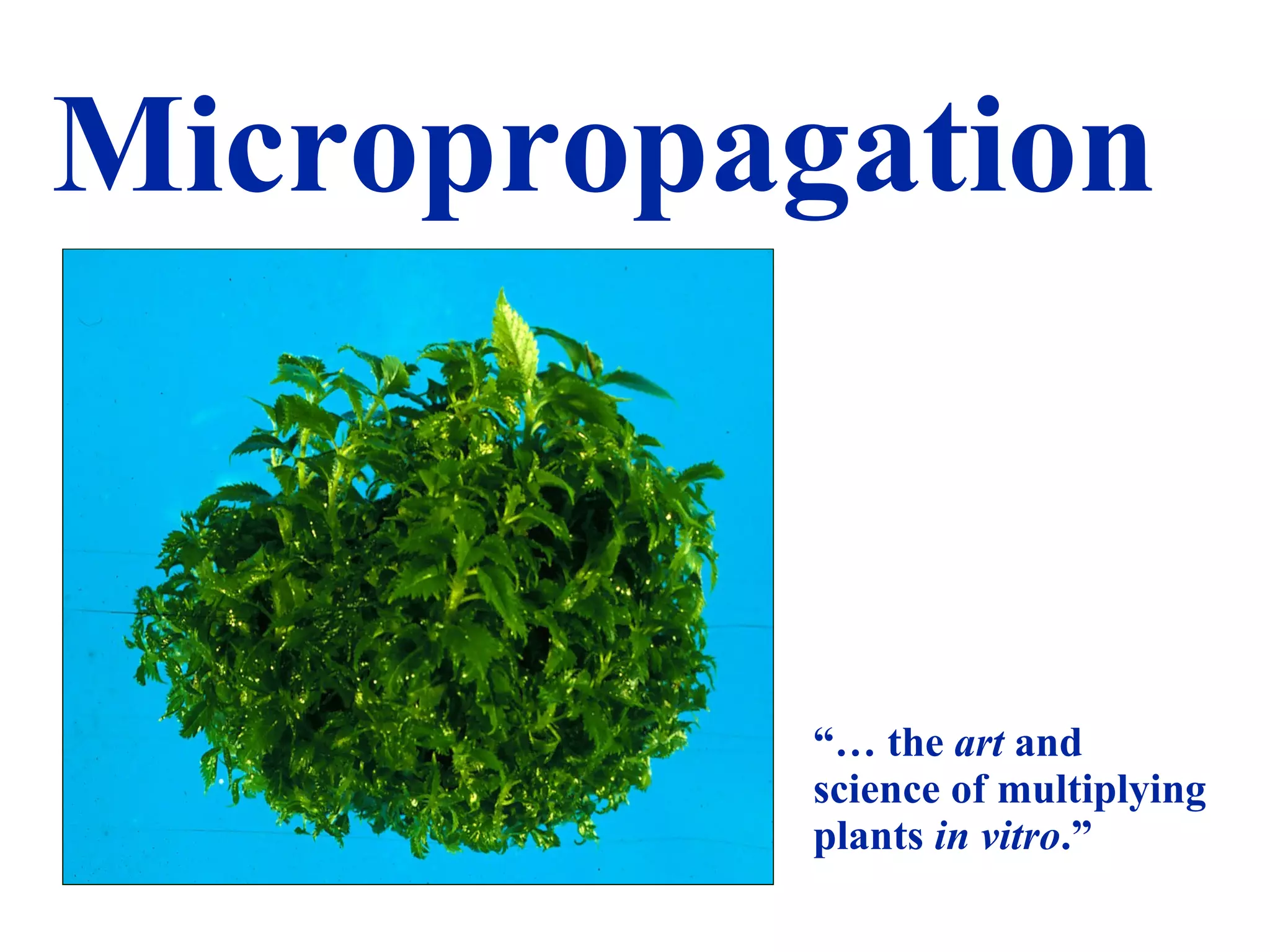

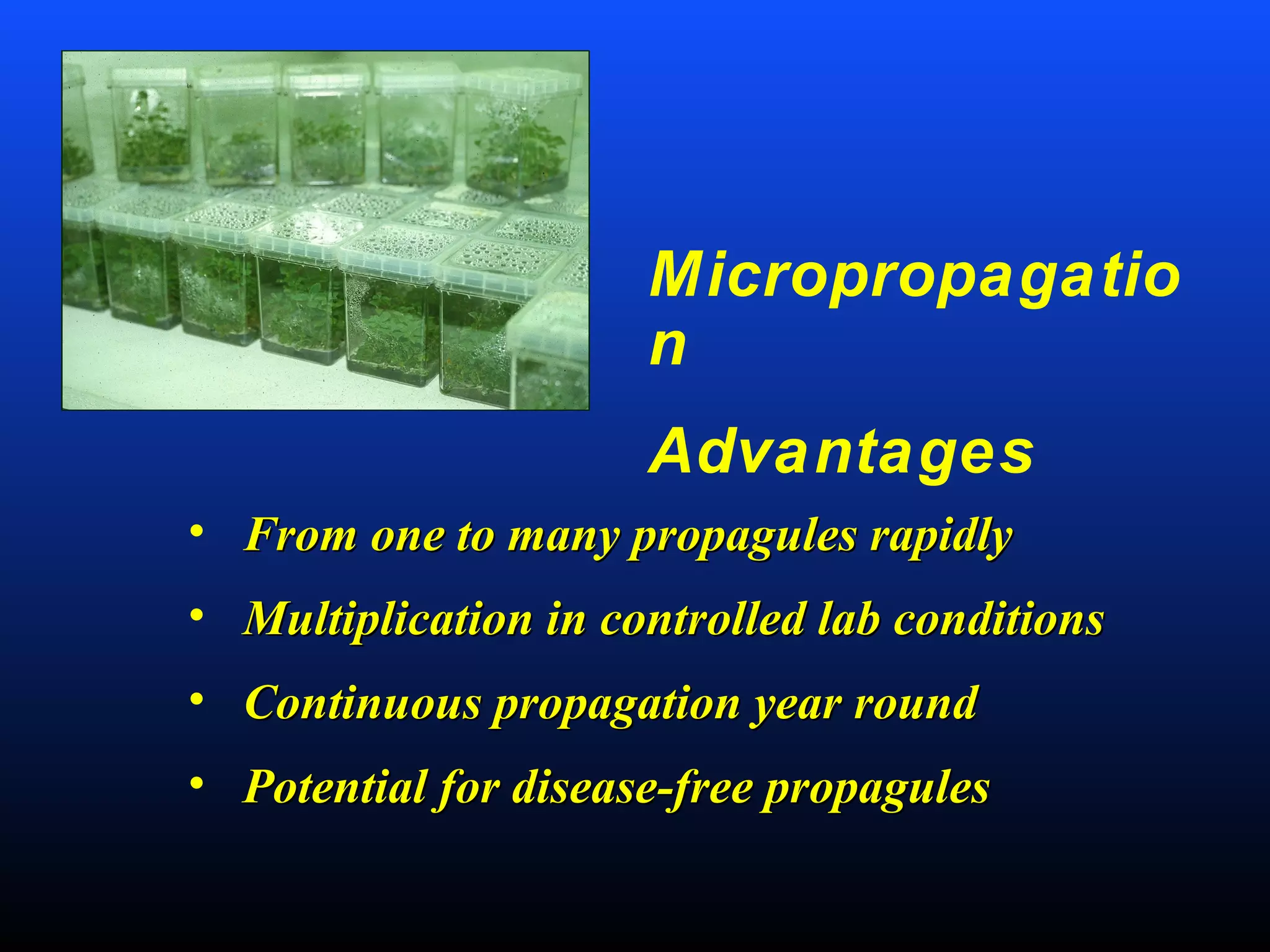
Micropropagation
“… the art and
science of multiplying
plants in vitro.”
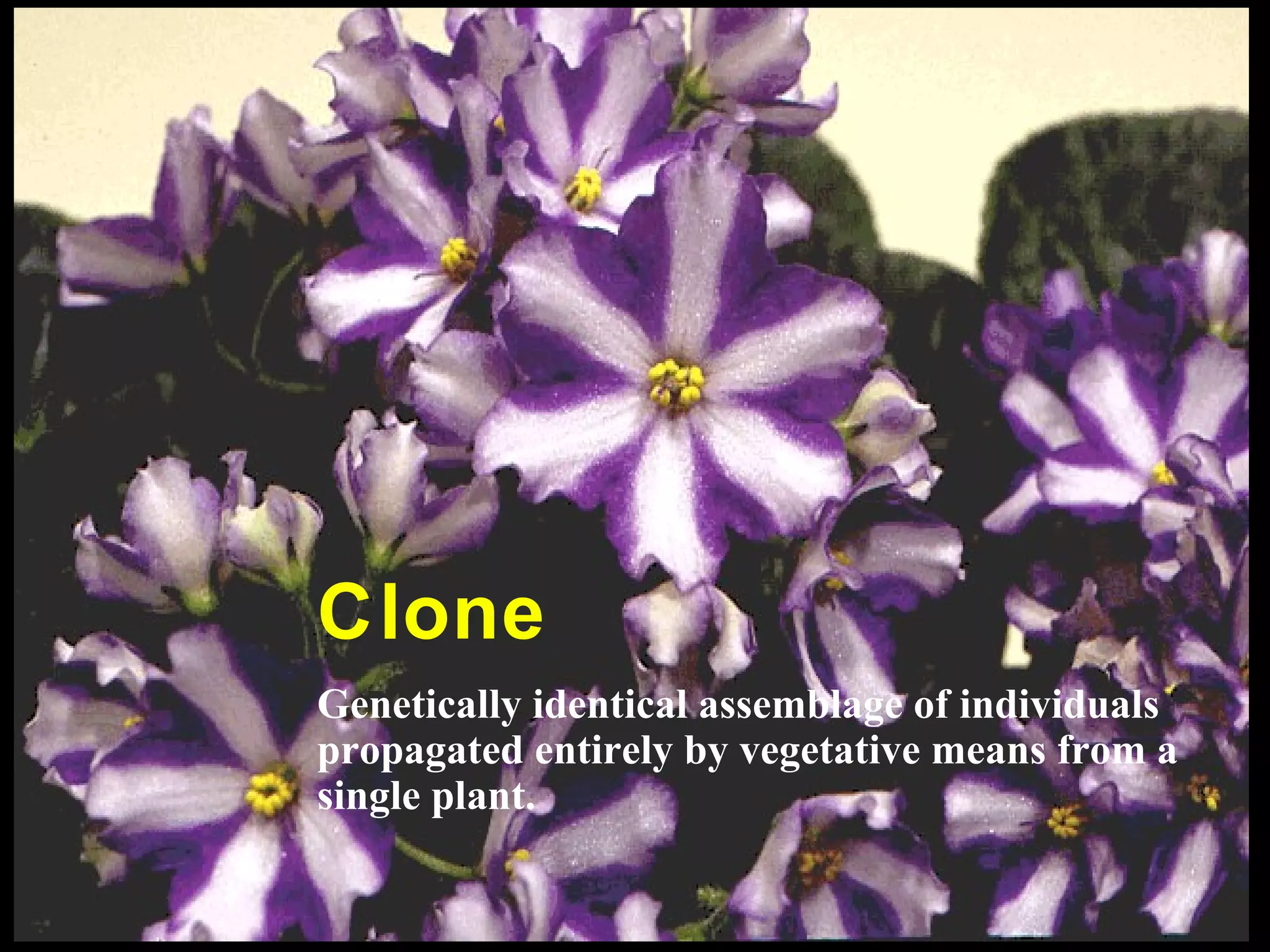
Clone
Genetically identical assemblage of individuals
propagated entirely by vegetative means from a
single plant.
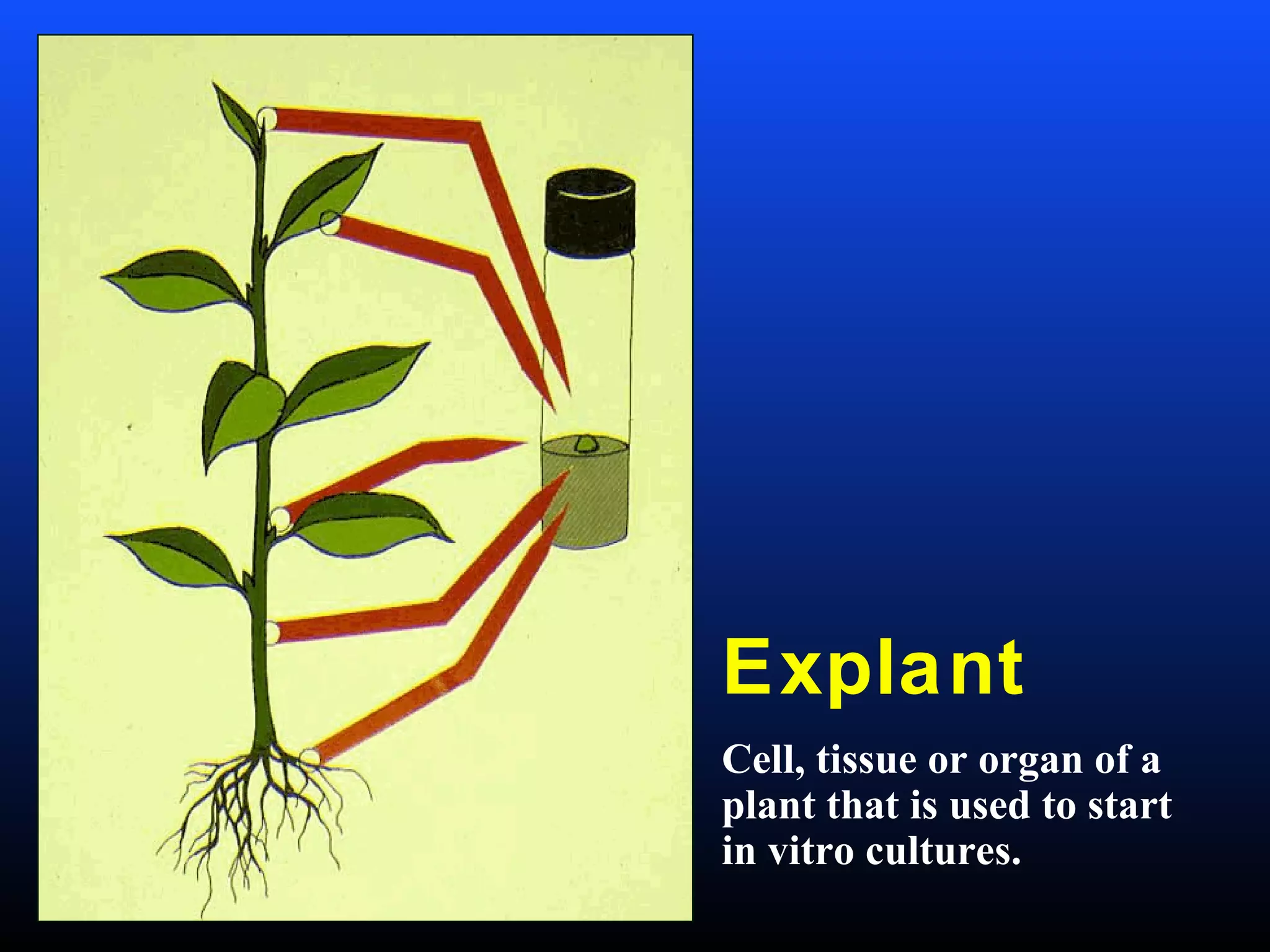
Explant
Cell, tissue or organ of a
plant that is used to start
in vitro cultures.
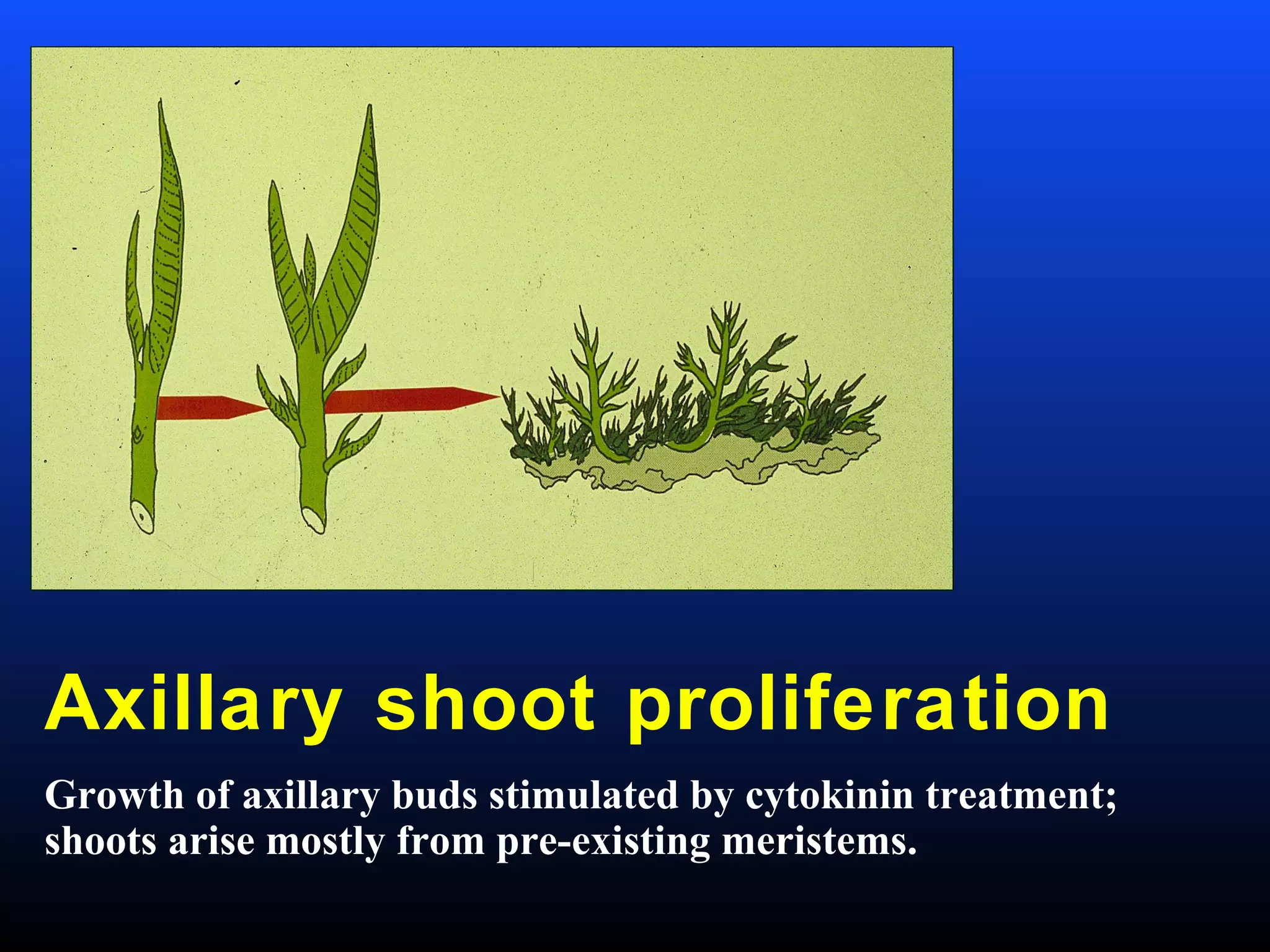
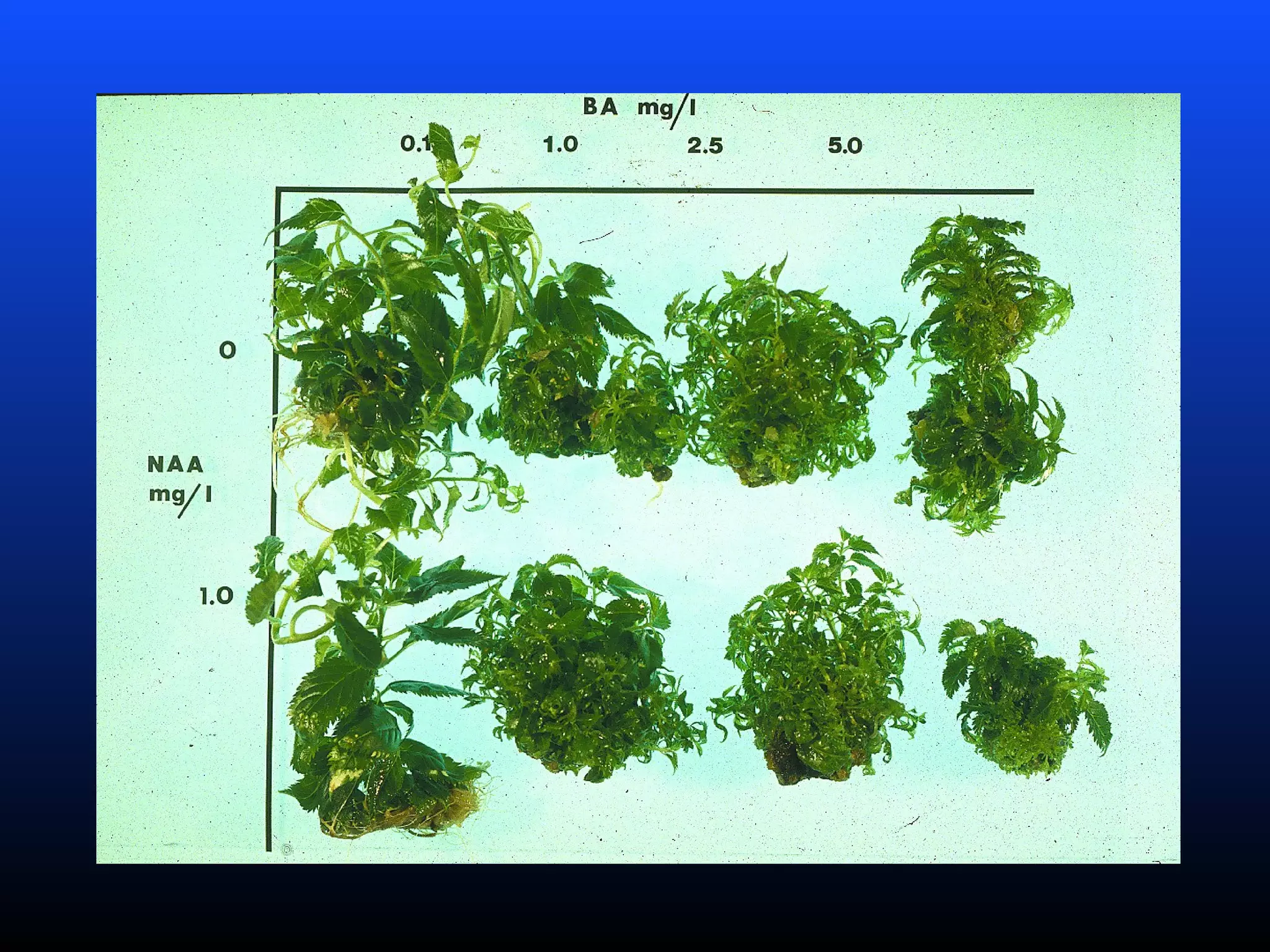
Axillary shoot proliferation
Growth of axillary buds stimulated by cytokinin treatment;
shoots arise mostly from pre-existing meristems.
Shoot proliferating culture of ‘Hally Jolivette’ cherry
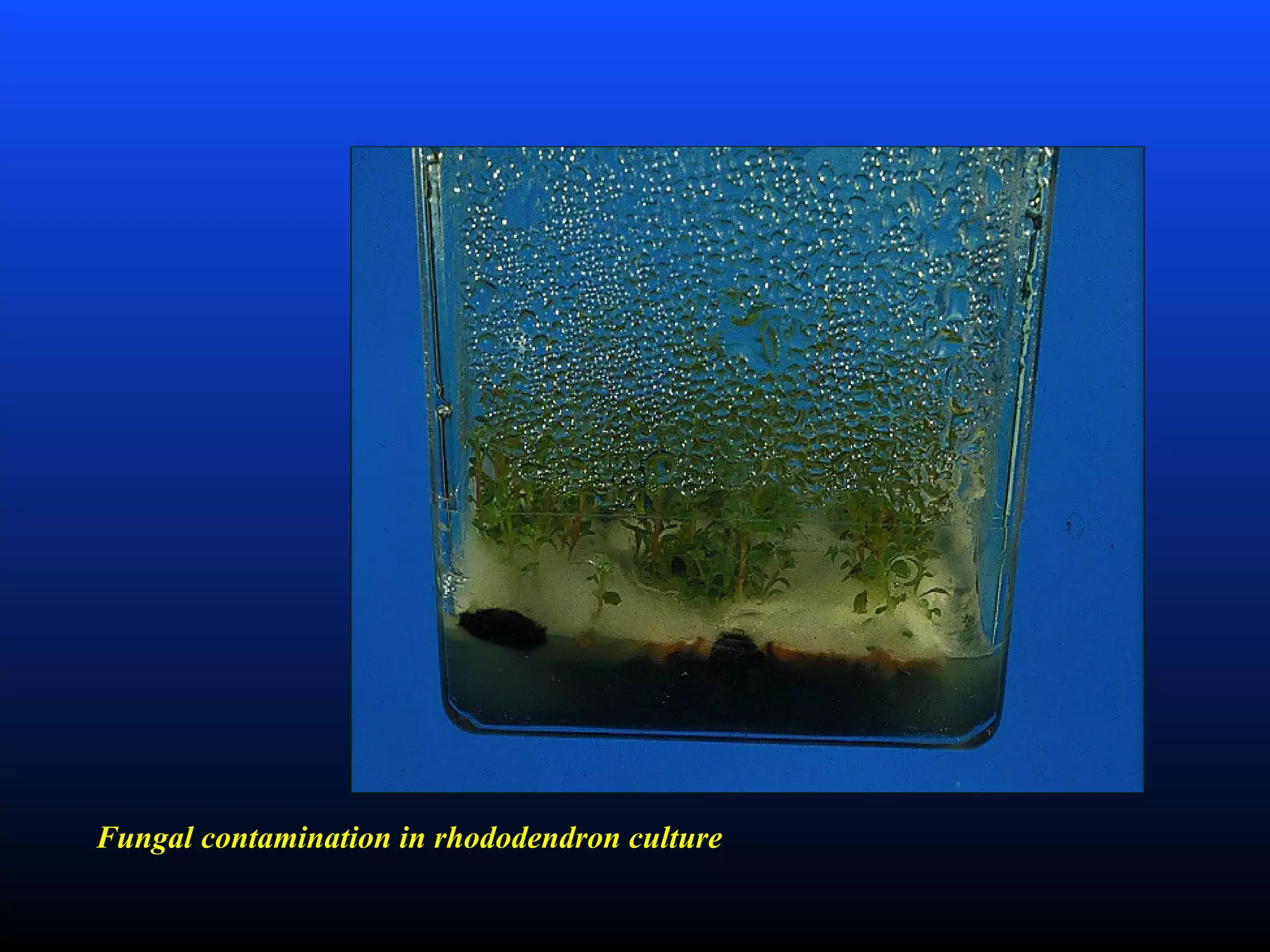
Fungal contamination in rhododendron culture
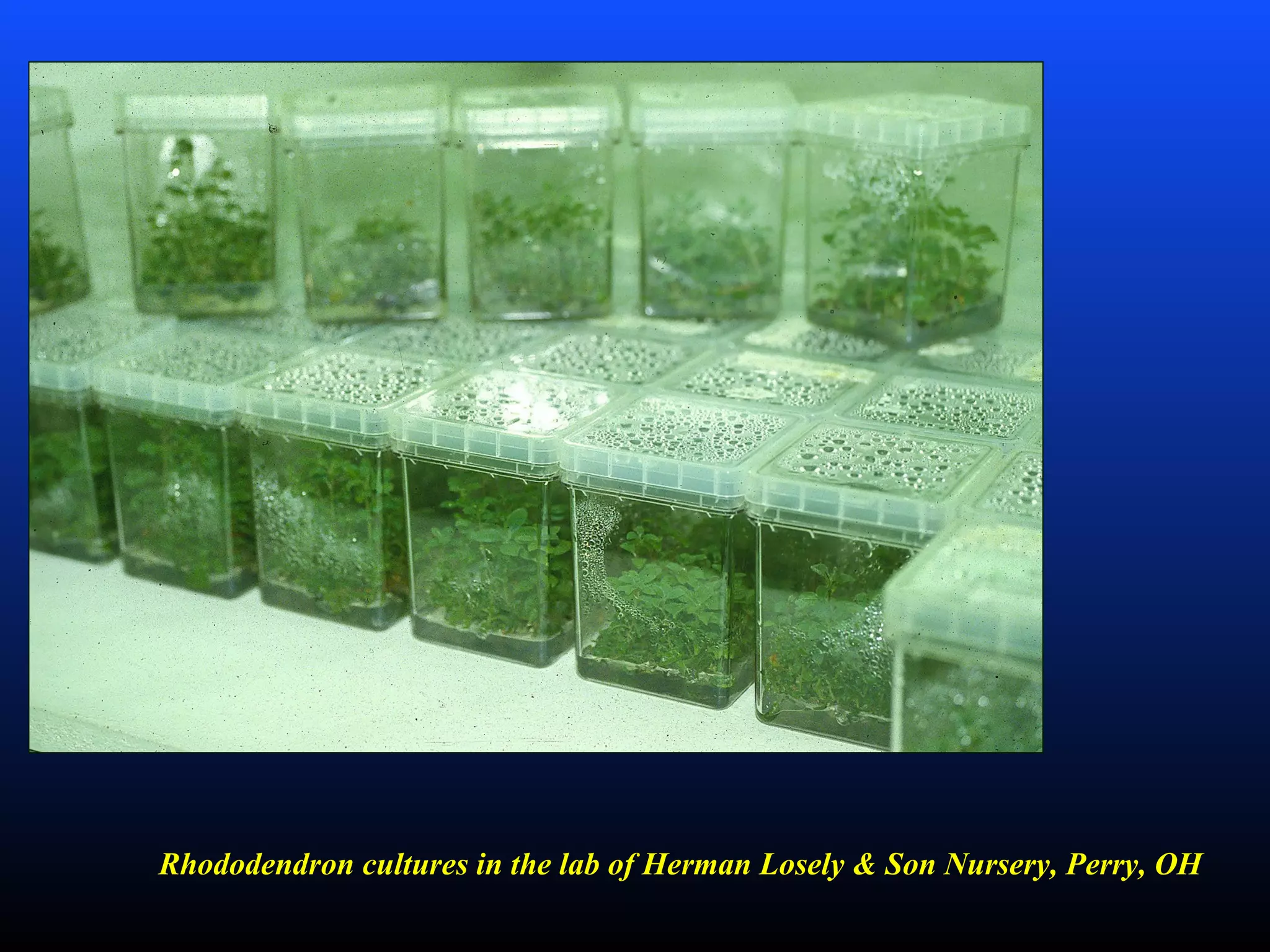
Rhododendron cultures in the lab of Herman Losely & Son Nursery, Perry, OH
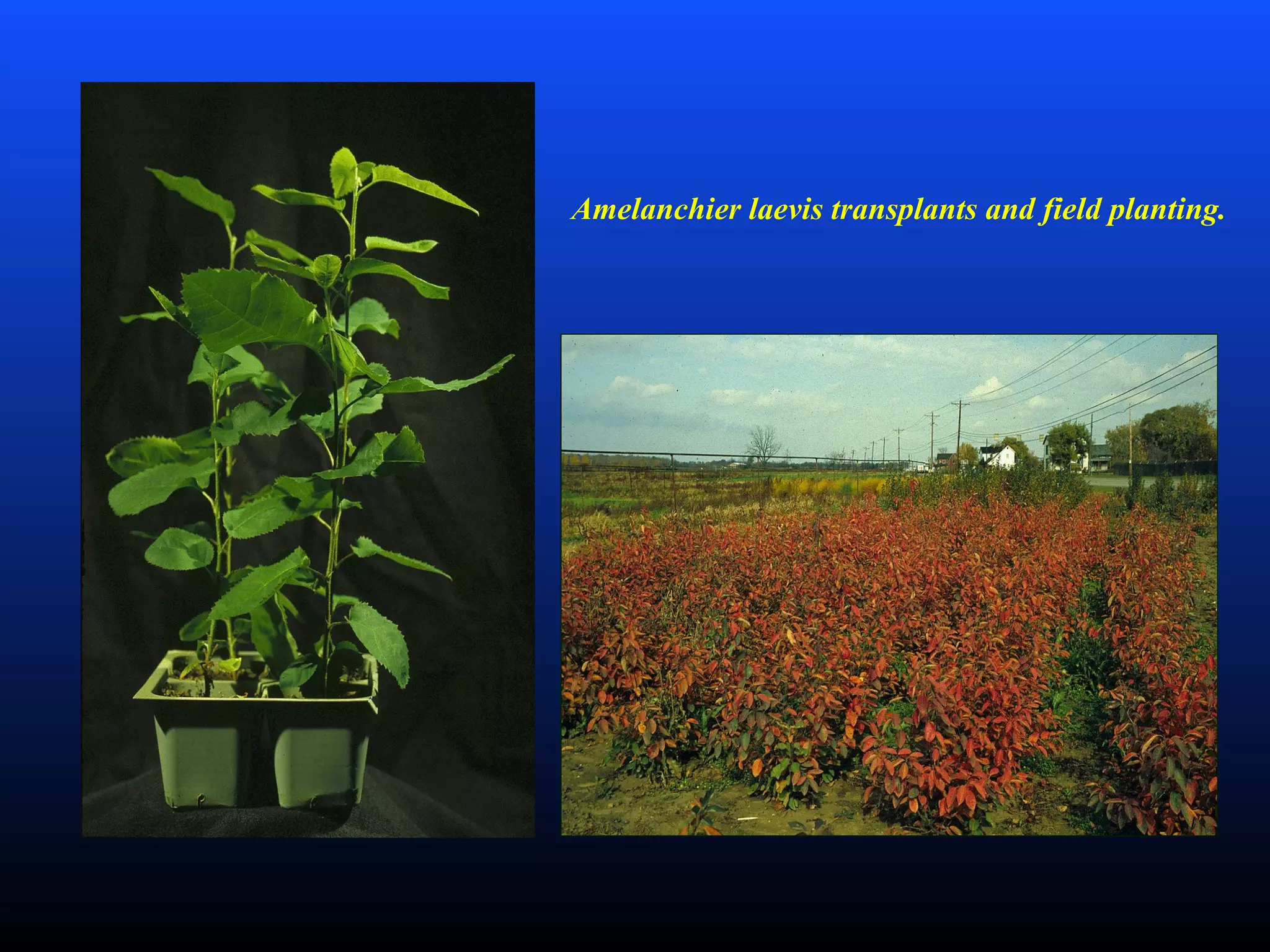
Amelanchier laevis transplants and field planting.
Micropropagatio
n
Advantages
• From one to many propagules rapidlyFrom one to many propagules rapidly
• Multiplication in controlled lab conditionsMultiplication in controlled lab conditions
• Continuous propagation year roundContinuous propagation year round
• Potential for disease-free propagulesPotential for disease-free propagules
Conventional
Propagation
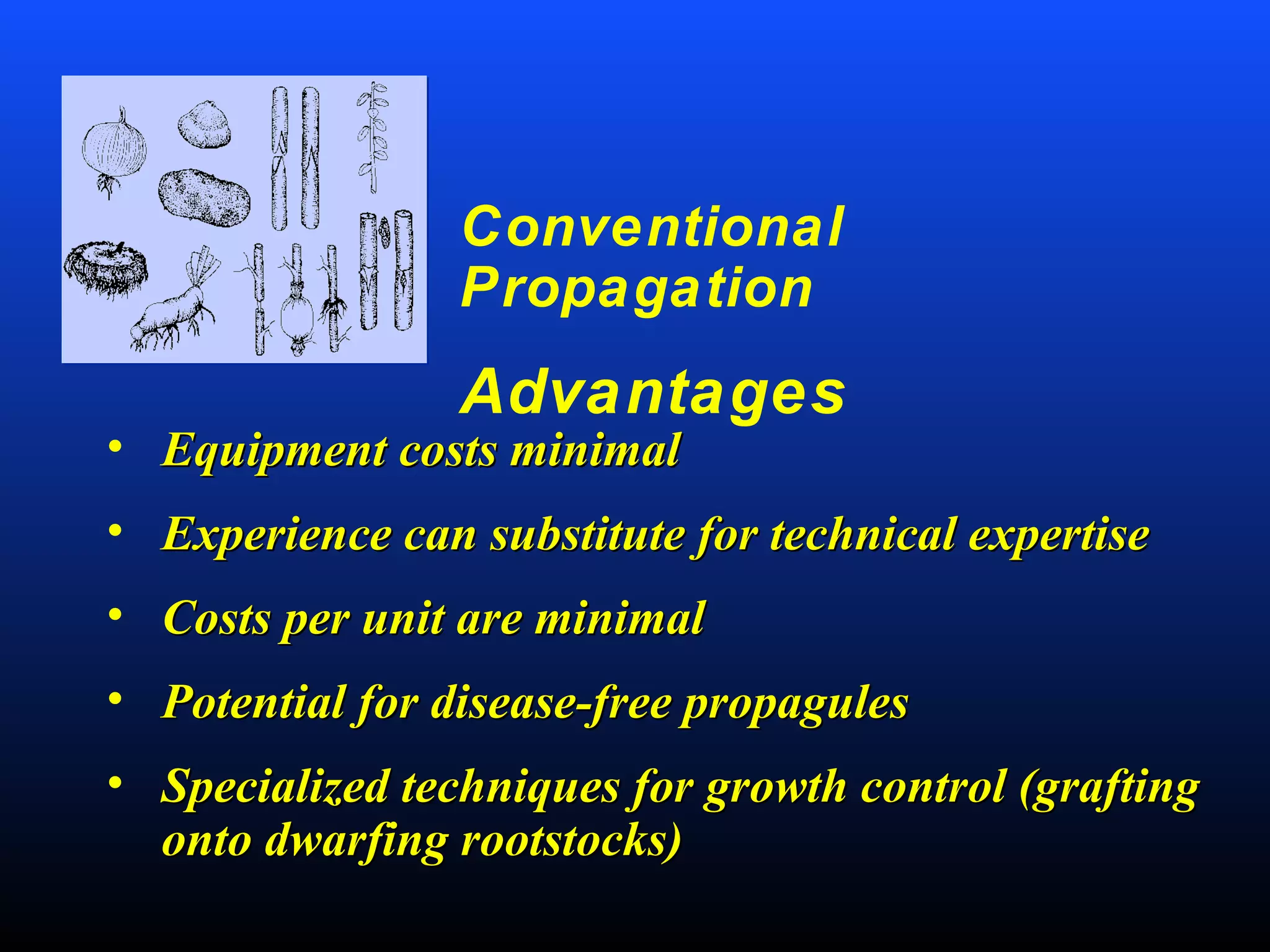
Advantages
• Equipment costs minimalEquipment costs minimal
• Experience can substitute for technical expertiseExperience can substitute for technical expertise
• Costs per unit are minimalCosts per unit are minimal
• Potential for disease-free propagulesPotential for disease-free propagules
• Specialized techniques for growth control (graftingSpecialized techniques for growth control (grafting
onto dwarfing rootstocks)onto dwarfing rootstocks)
Micropropagatio
n
Limitations
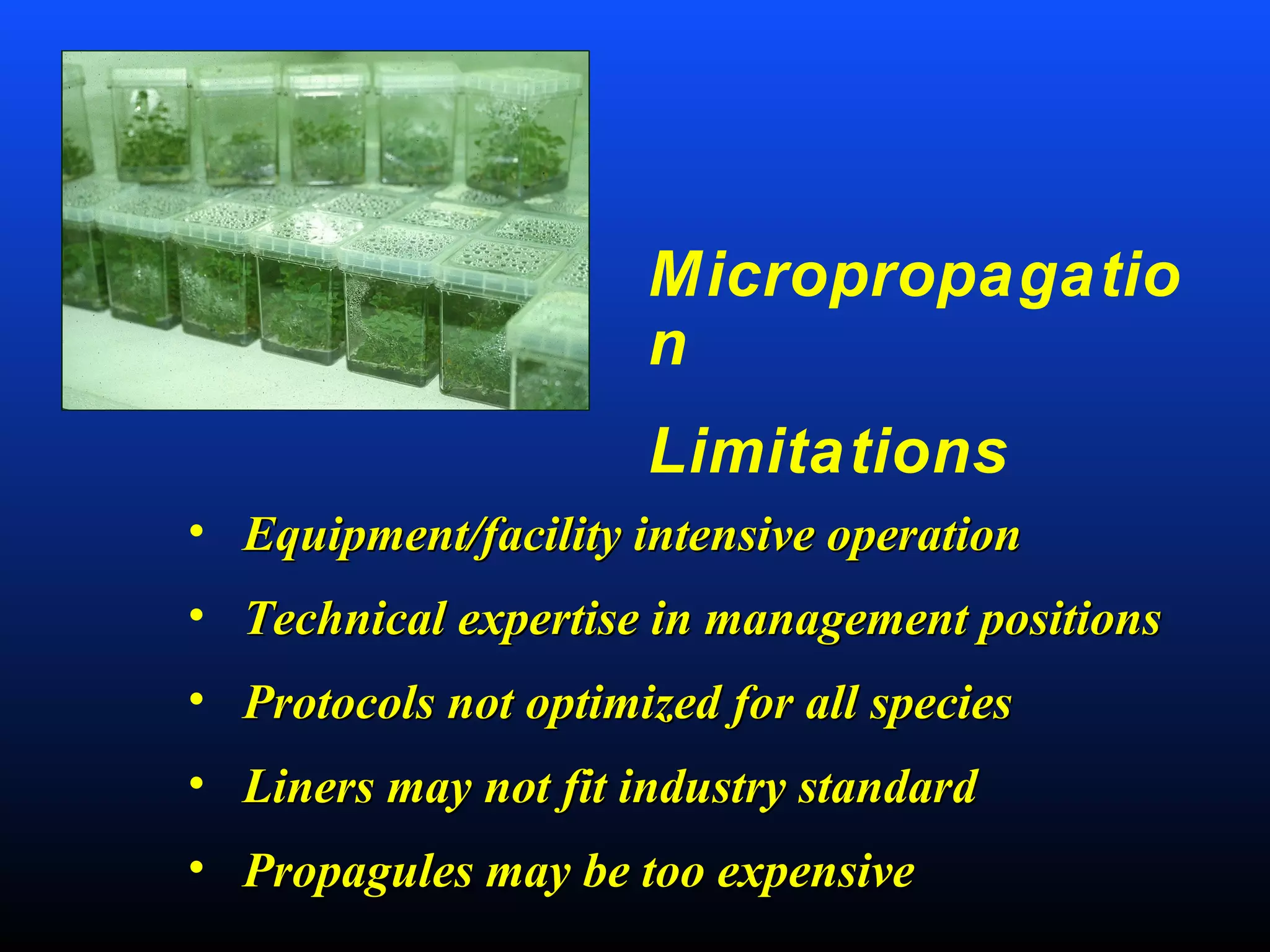
• Equipment/facility intensive operationEquipment/facility intensive operation
• Technical expertise in management positionsTechnical expertise in management positions
• Protocols not optimized for all speciesProtocols not optimized for all species
• Liners may not fit industry standardLiners may not fit industry standard
• Propagules may be too expensivePropagules may be too expensive
Micropropagatio
n
Applications
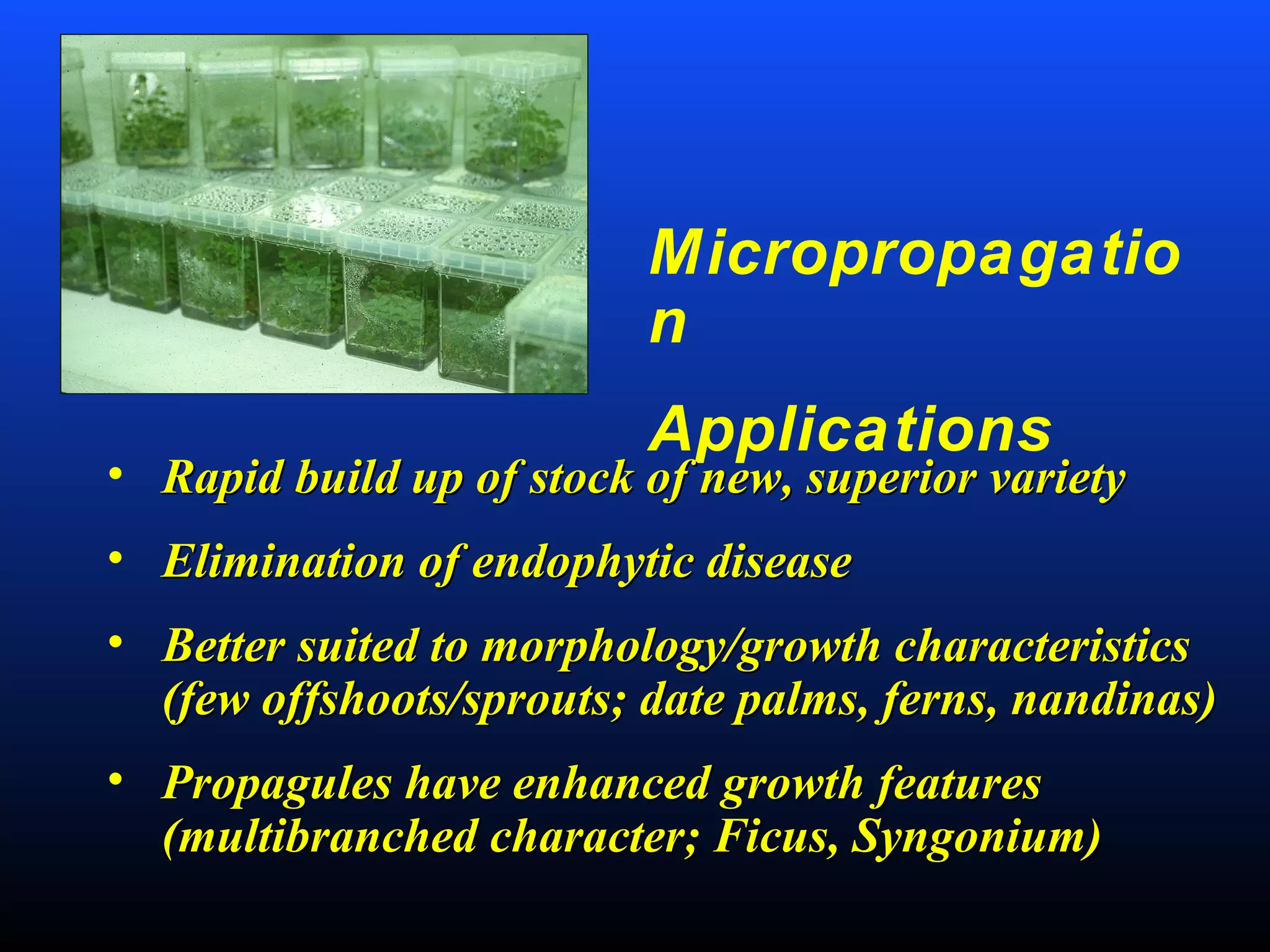
• Rapid build up of stock of new, superior varietyRapid build up of stock of new, superior variety
• Elimination of endophytic diseaseElimination of endophytic disease
• Better suited to morphology/growth characteristicsBetter suited to morphology/growth characteristics
(few offshoots/sprouts; date palms, ferns, nandinas)(few offshoots/sprouts; date palms, ferns, nandinas)
• Propagules have enhanced growth featuresPropagules have enhanced growth features
(multibranched character; Ficus, Syngonium)(multibranched character; Ficus, Syngonium)
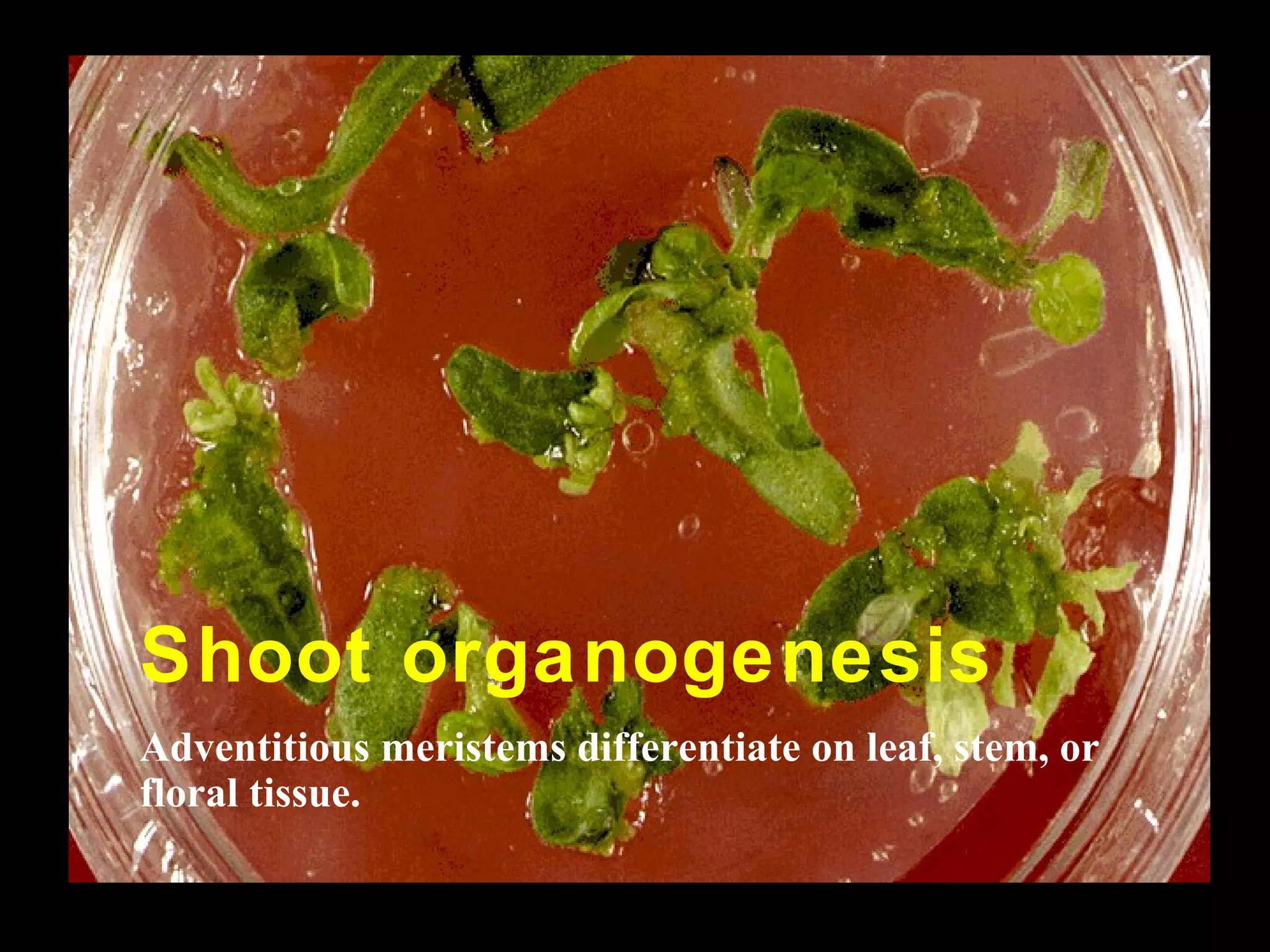
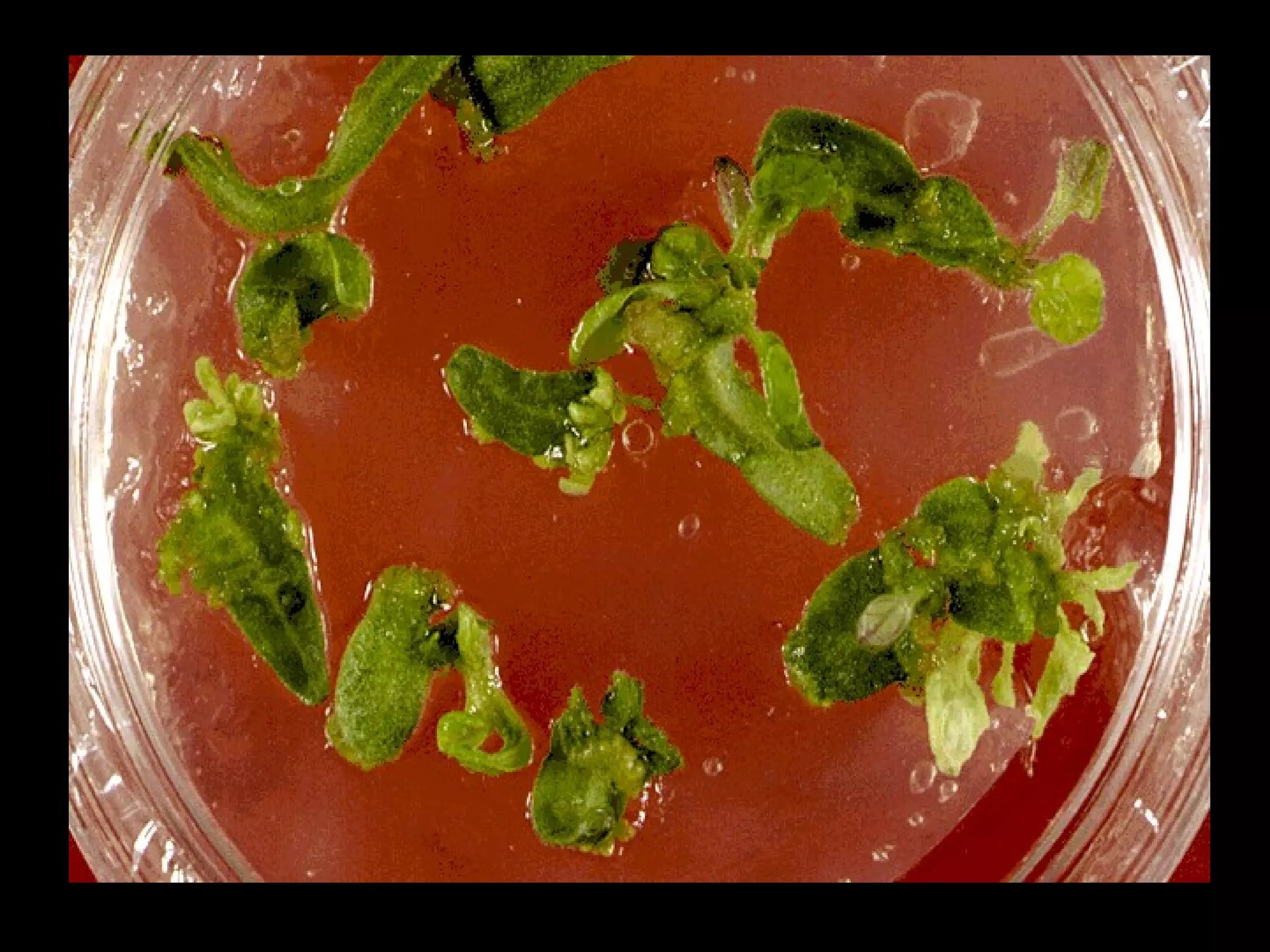
Shoot organogenesis
Adventitious meristems differentiate on leaf, stem, or
floral tissue.
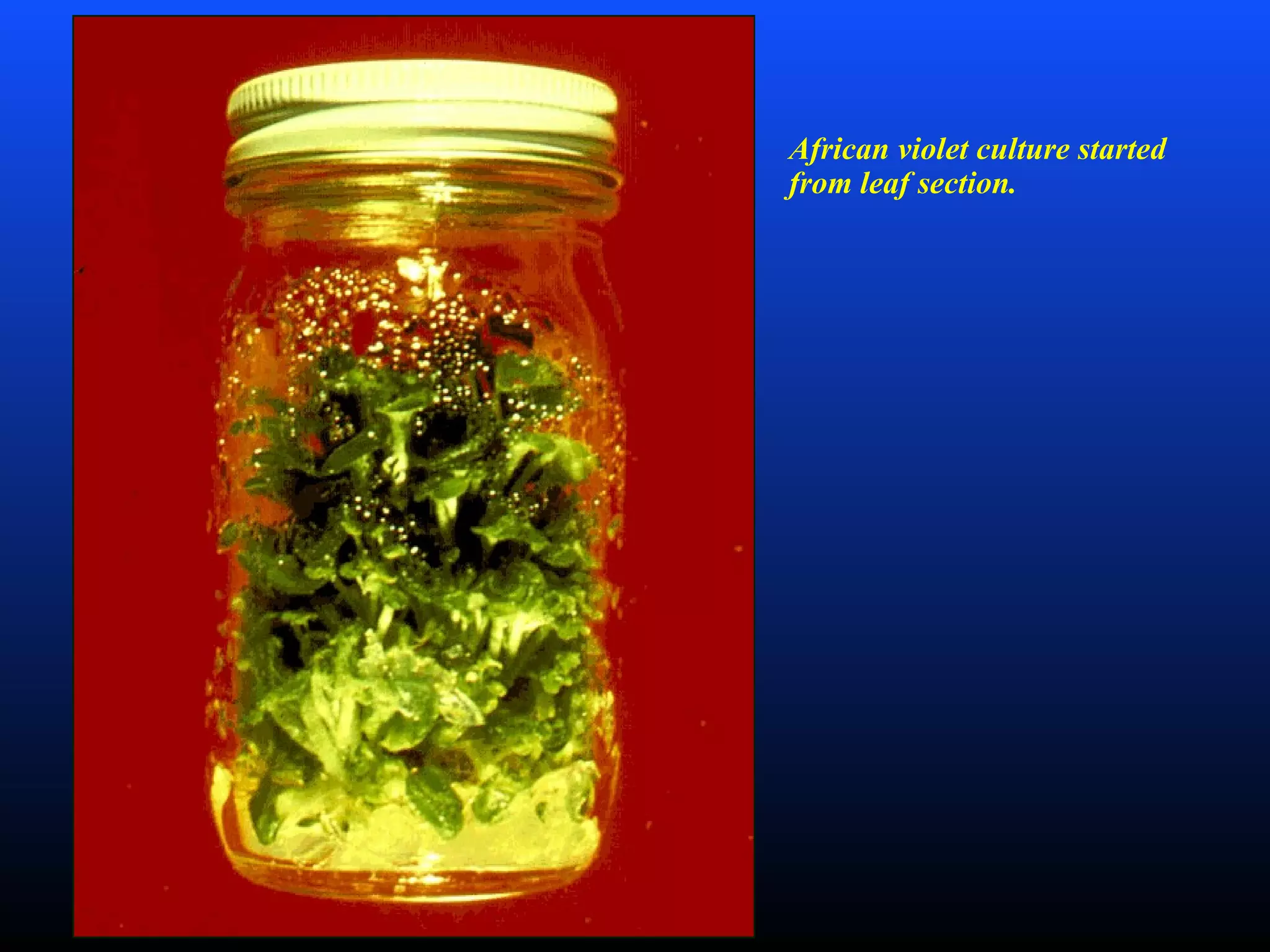
African violet culture started
from leaf section.
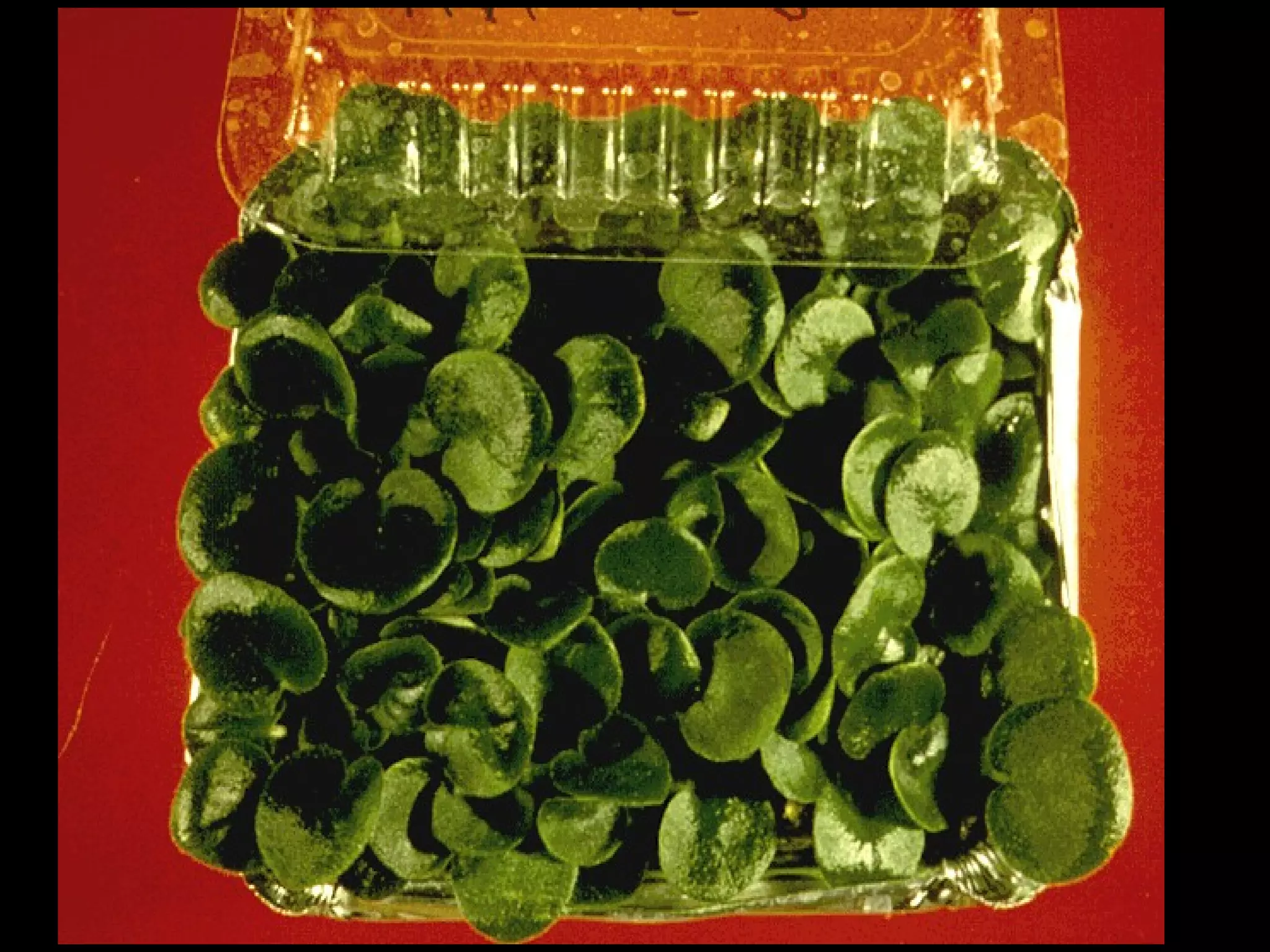
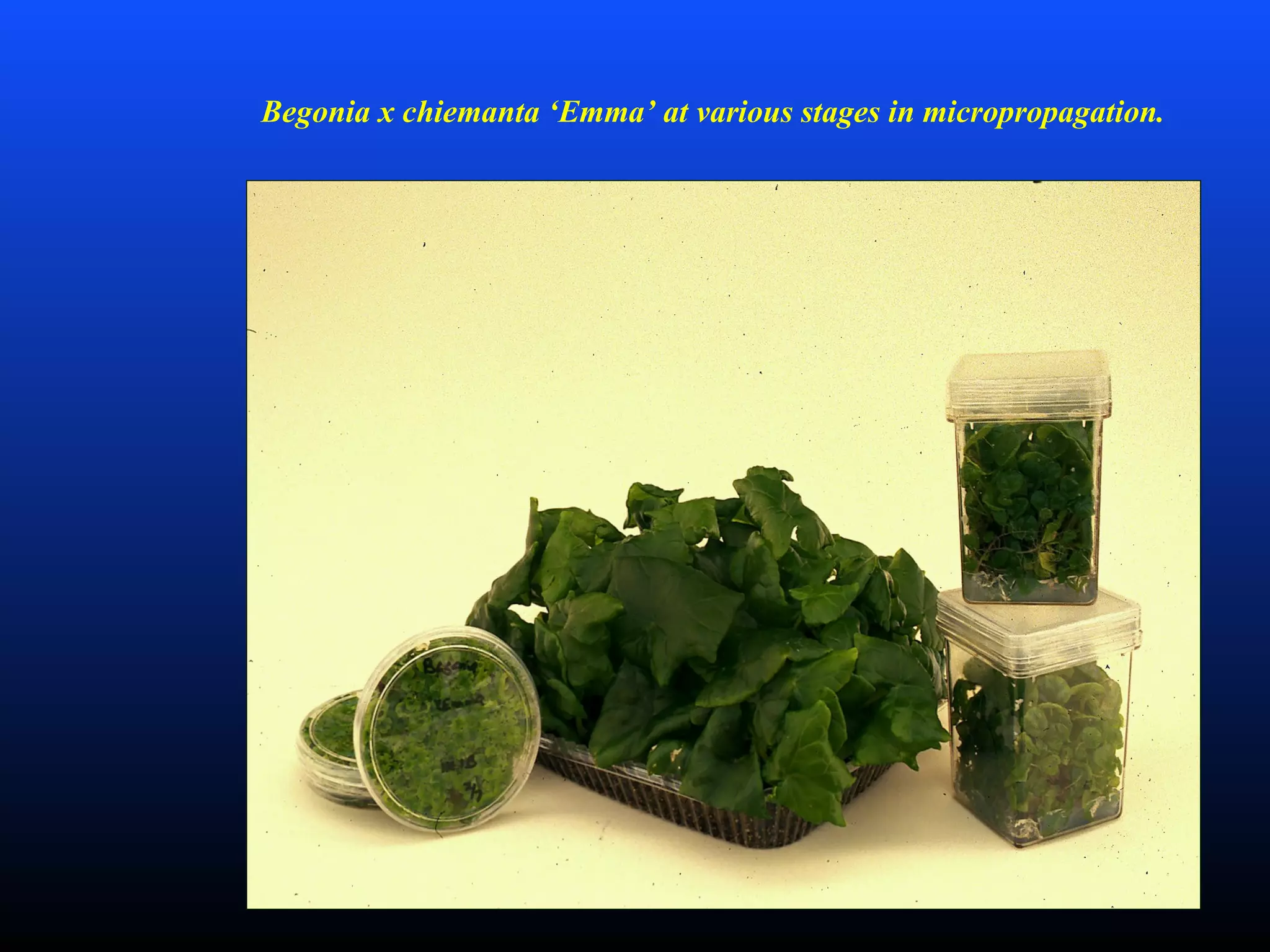
Begonia x chiemanta ‘Emma’ at various stages in micropropagation.
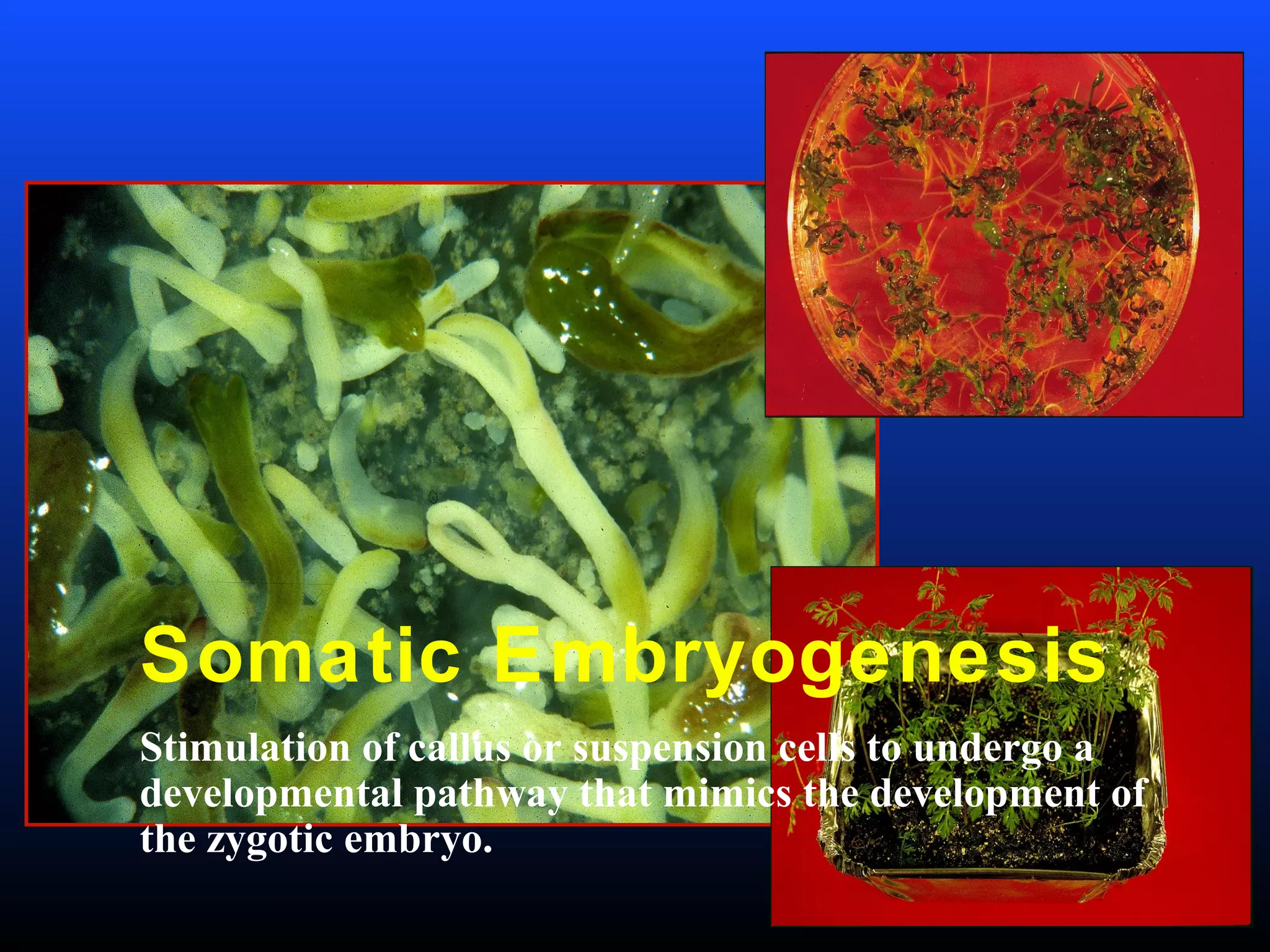
Somatic Embryogenesis
Stimulation of callus or suspension cells to undergo a
developmental pathway that mimics the development of
the zygotic embryo.
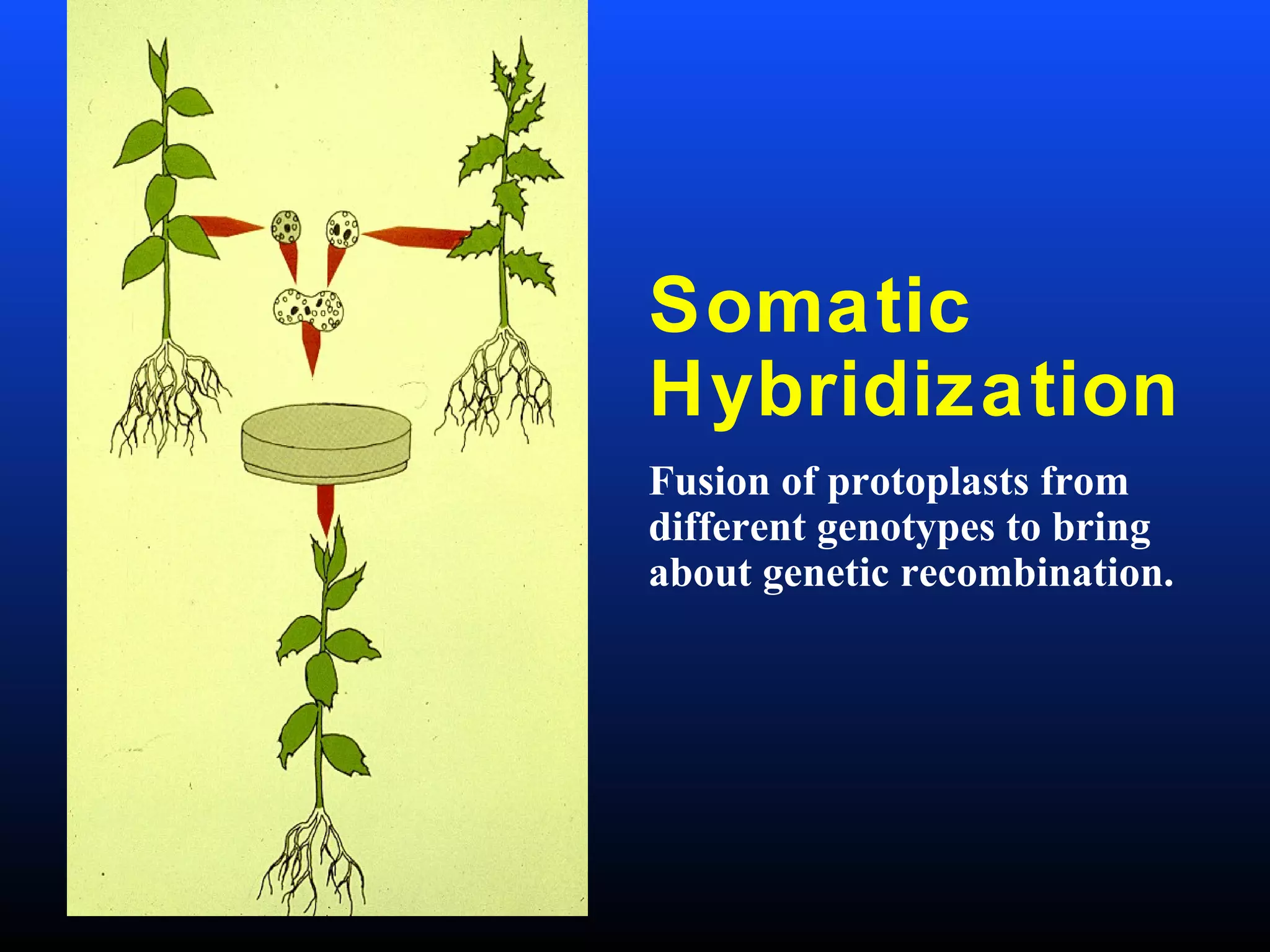
Somatic
Hybridization
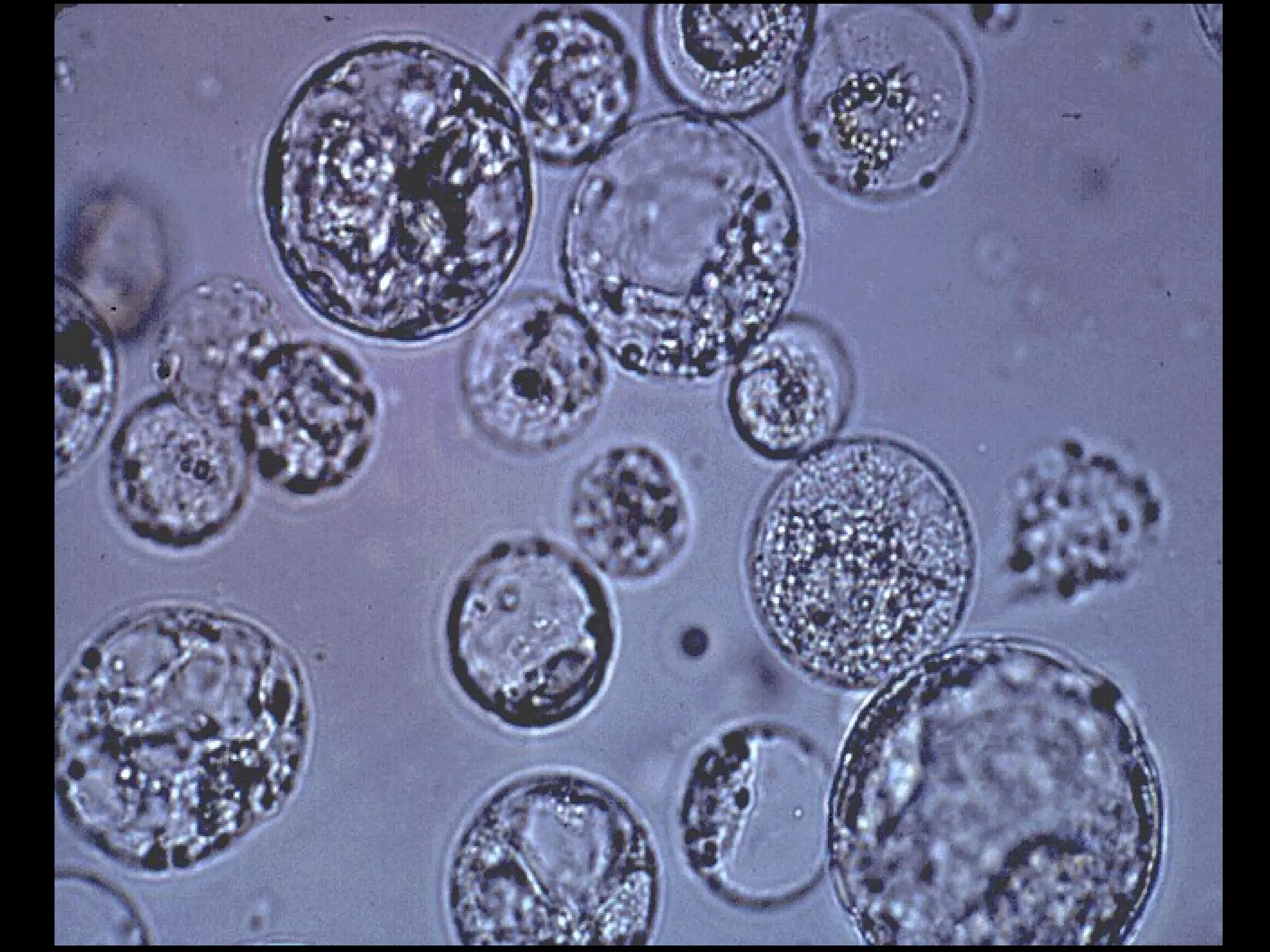
Fusion of protoplasts from
different genotypes to bring
about genetic recombination.
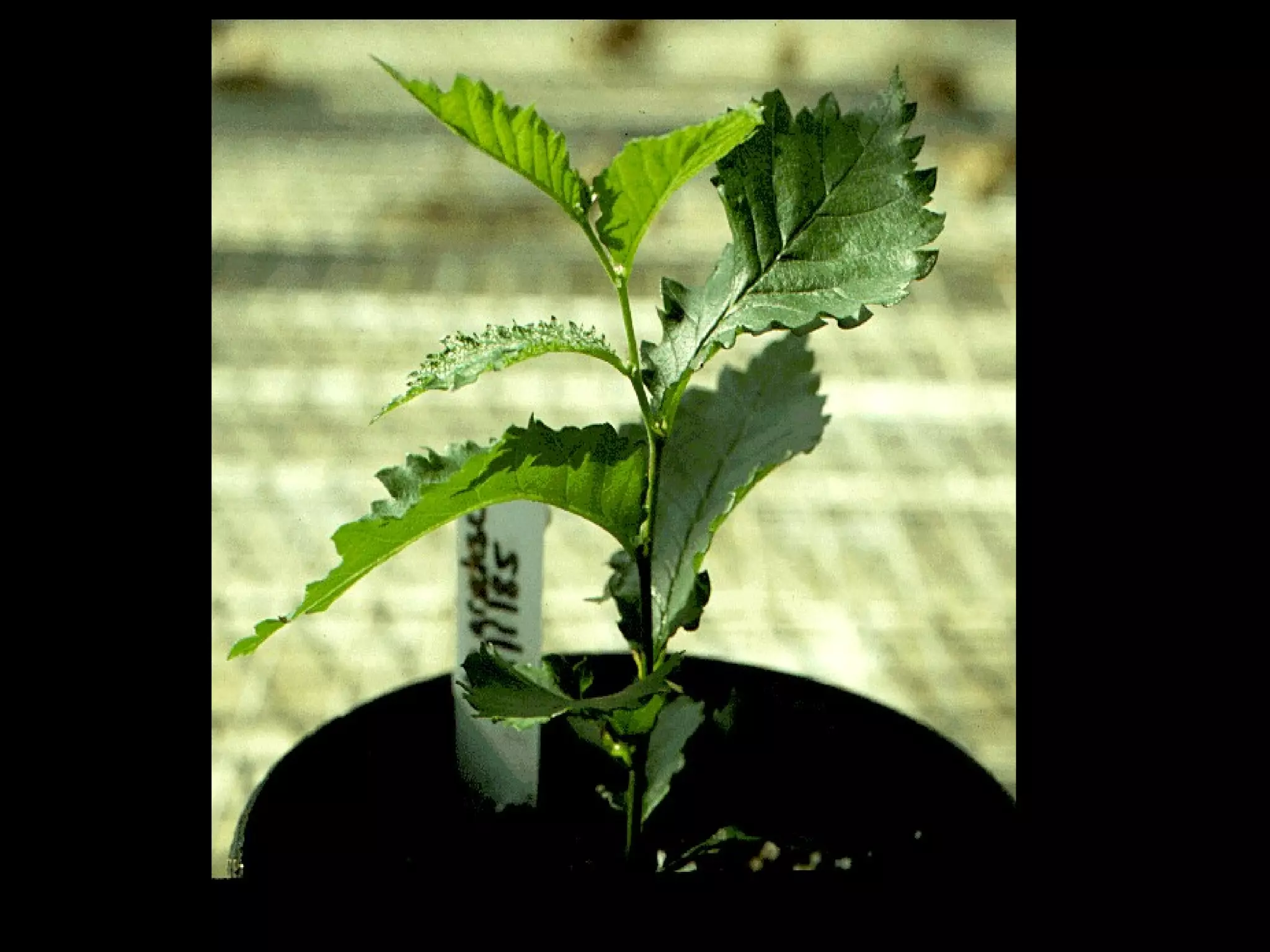
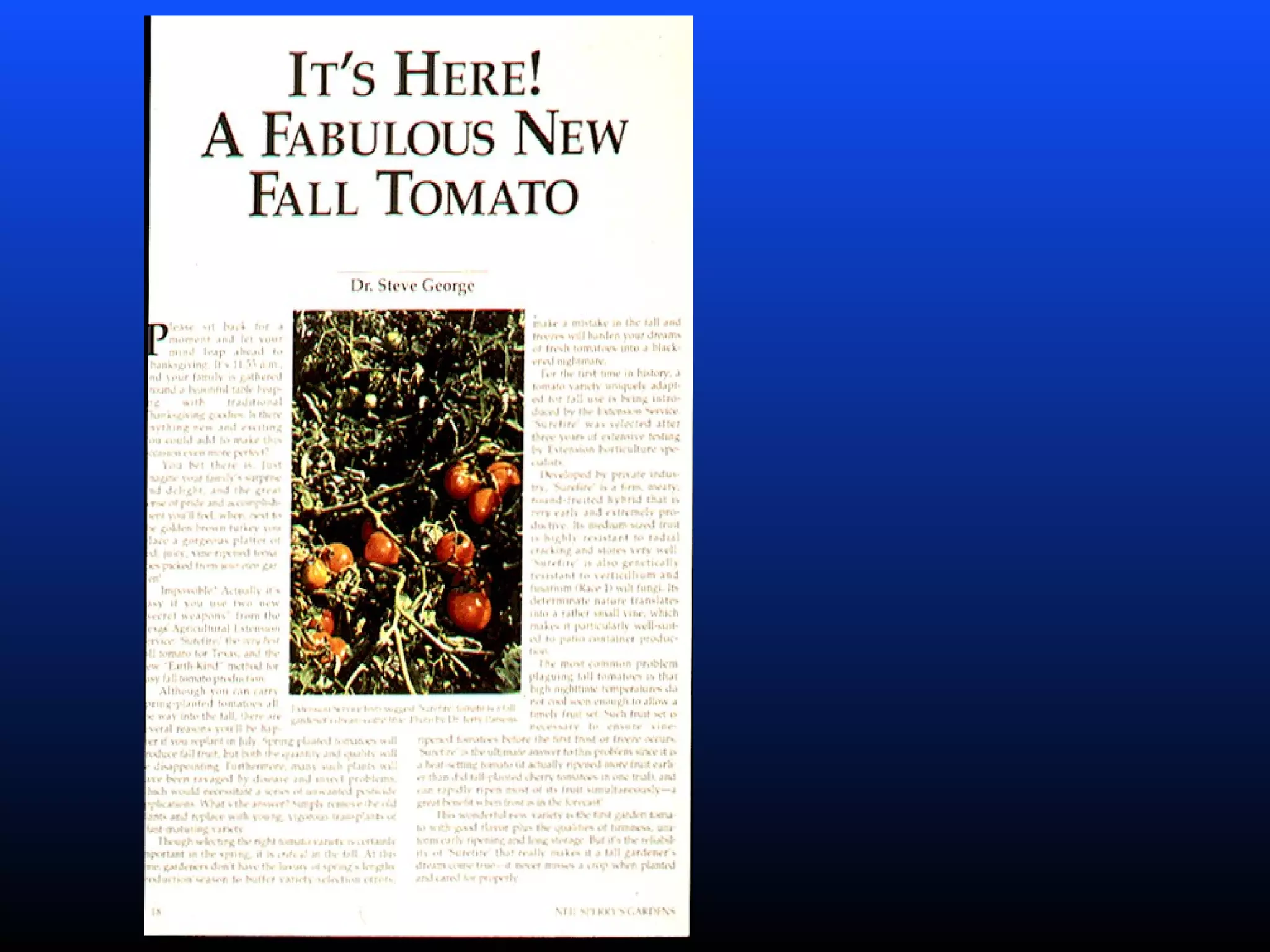
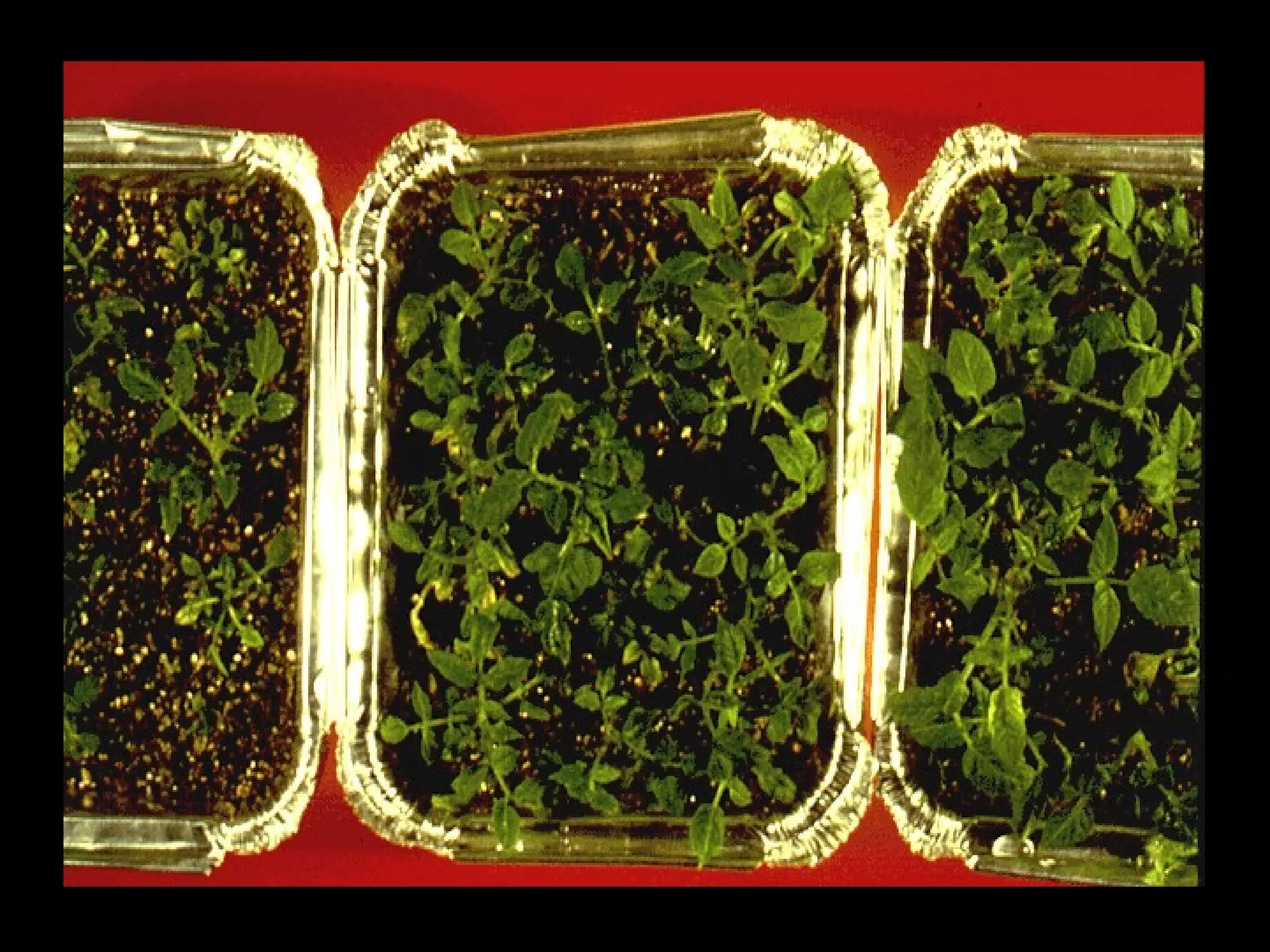
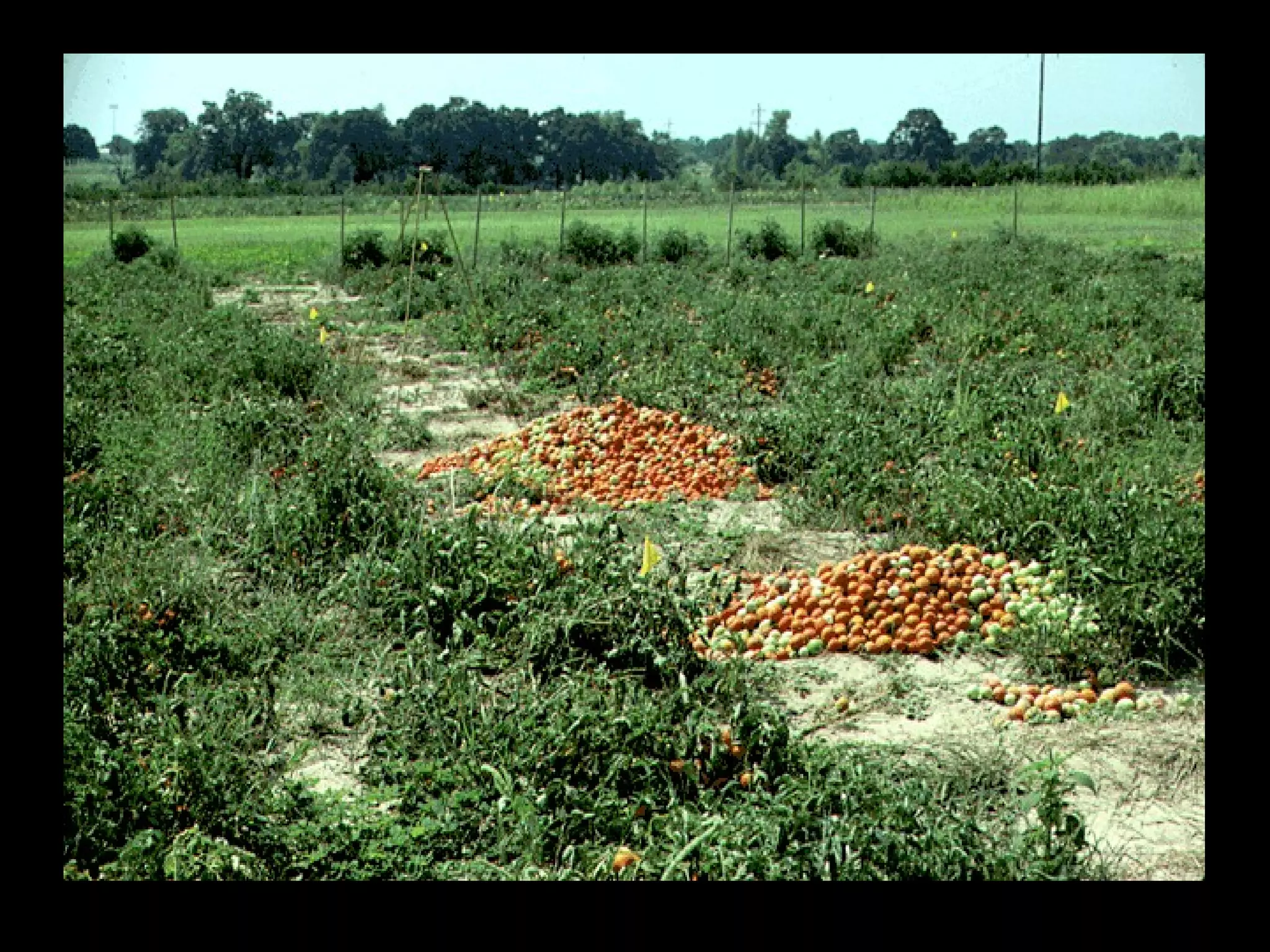
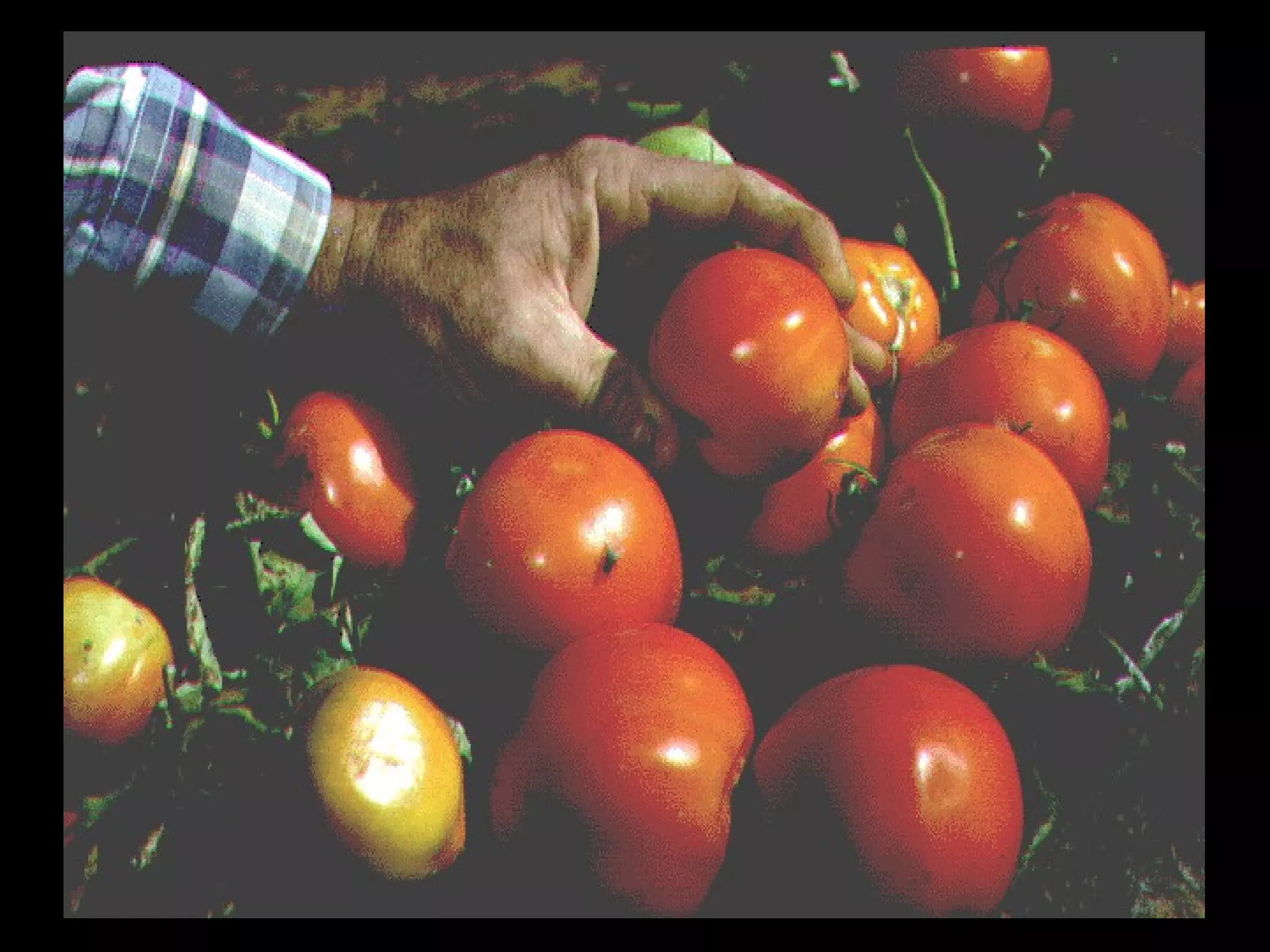
Somaclonal variation
Heritable genetic variation that arises in plants
produced through tissue culture.
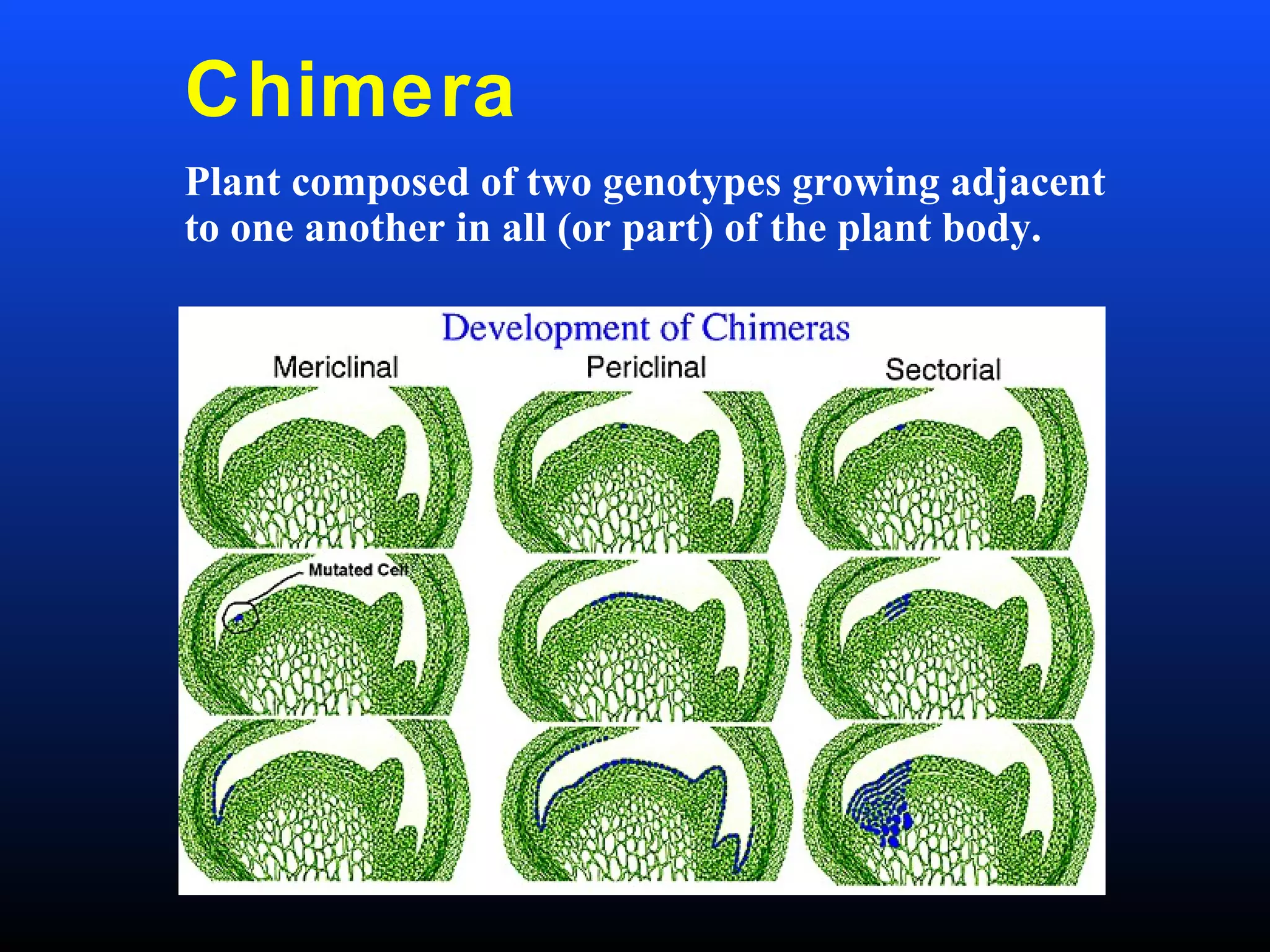
Chimera
Plant composed of two genotypes growing adjacent
to one another in all (or part) of the plant body.
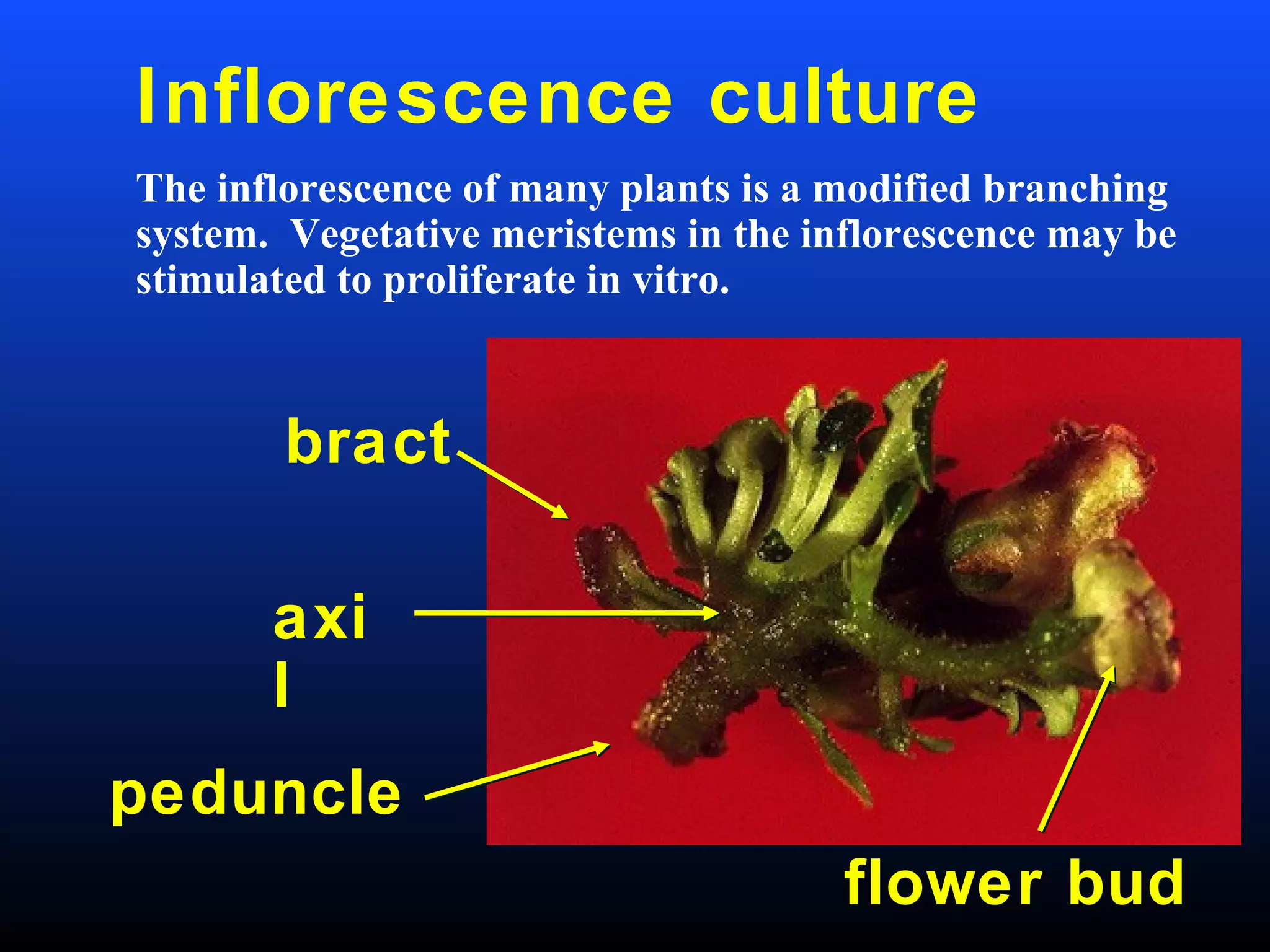
Inflorescence culture
The inflorescence of many plants is a modified branching
system. Vegetative meristems in the inflorescence may be
stimulated to proliferate in vitro.
bract
flower bud
peduncle
axi
l
Microprop
Microprop

Microprop