Microbial Fuel Cells: Conversion
of Organic Matter to Electricity

Miss Jiraphorn Lubsungnoen         ID: M5430116
School: Biotechnology
Institute: Agricultural Technology
Thesis advisor: Asst. Prof. Dr. Apichat Boontawan
Introduction
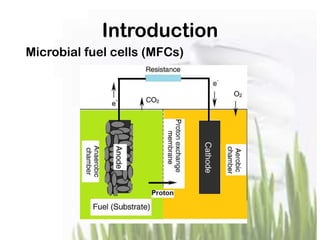
Microbial fuel cells (MFCs)
Objective
• To demonstrate electricity could be
  generate from wastewater.
• To examine efficiency of wastewater
  degradation when using MFCs.
Methodology
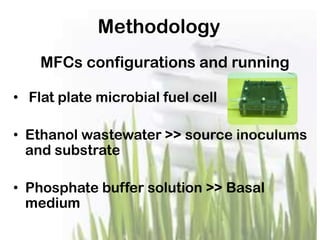
    MFCs configurations and running

• Flat plate microbial fuel cell

• Ethanol wastewater >> source inoculums
  and substrate

• Phosphate buffer solution >> Basal
  medium
Analyze
• Voltage output and power generation
• Chemical oxygen demand (COD)
  removal of the wastewater
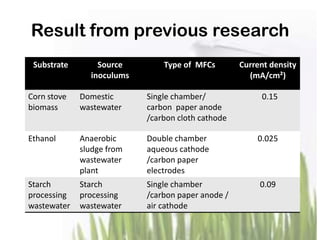
Result from previous research
 Substrate       Source        Type of MFCs        Current density
               inoculums                             (mA/cm²)

Corn stove   Domestic      Single chamber/              0.15
biomass      wastewater    carbon paper anode
                           /carbon cloth cathode

Ethanol      Anaerobic     Double chamber              0.025
             sludge from   aqueous cathode
             wastewater    /carbon paper
             plant         electrodes
Starch       Starch        Single chamber               0.09
processing   processing    /carbon paper anode /
wastewater   wastewater    air cathode
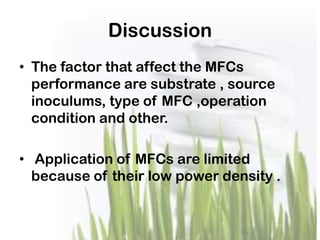
Discussion
• The factor that affect the MFCs
  performance are substrate , source
  inoculums, type of MFC ,operation
  condition and other.

• Application of MFCs are limited
  because of their low power density .
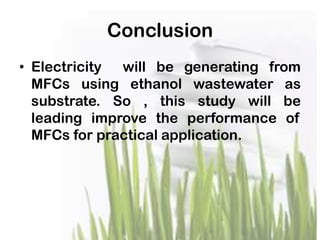
Conclusion
• Electricity will be generating from
  MFCs using ethanol wastewater as
  substrate. So , this study will be
  leading improve the performance of
  MFCs for practical application.
Thank you

Microbial fuel cells

  • 1.
    Microbial Fuel Cells:Conversion of Organic Matter to Electricity Miss Jiraphorn Lubsungnoen ID: M5430116 School: Biotechnology Institute: Agricultural Technology Thesis advisor: Asst. Prof. Dr. Apichat Boontawan
  • 2.
  • 3.
    Objective • To demonstrateelectricity could be generate from wastewater. • To examine efficiency of wastewater degradation when using MFCs.
  • 4.
    Methodology MFCs configurations and running • Flat plate microbial fuel cell • Ethanol wastewater >> source inoculums and substrate • Phosphate buffer solution >> Basal medium
  • 5.
    Analyze • Voltage outputand power generation • Chemical oxygen demand (COD) removal of the wastewater
  • 6.
    Result from previousresearch Substrate Source Type of MFCs Current density inoculums (mA/cm²) Corn stove Domestic Single chamber/ 0.15 biomass wastewater carbon paper anode /carbon cloth cathode Ethanol Anaerobic Double chamber 0.025 sludge from aqueous cathode wastewater /carbon paper plant electrodes Starch Starch Single chamber 0.09 processing processing /carbon paper anode / wastewater wastewater air cathode
  • 7.
    Discussion • The factorthat affect the MFCs performance are substrate , source inoculums, type of MFC ,operation condition and other. • Application of MFCs are limited because of their low power density .
  • 8.
    Conclusion • Electricity willbe generating from MFCs using ethanol wastewater as substrate. So , this study will be leading improve the performance of MFCs for practical application.
  • 9.