MicrobialFuelCell
Hajira Mahmood
Ph.D. chemistry Scholar
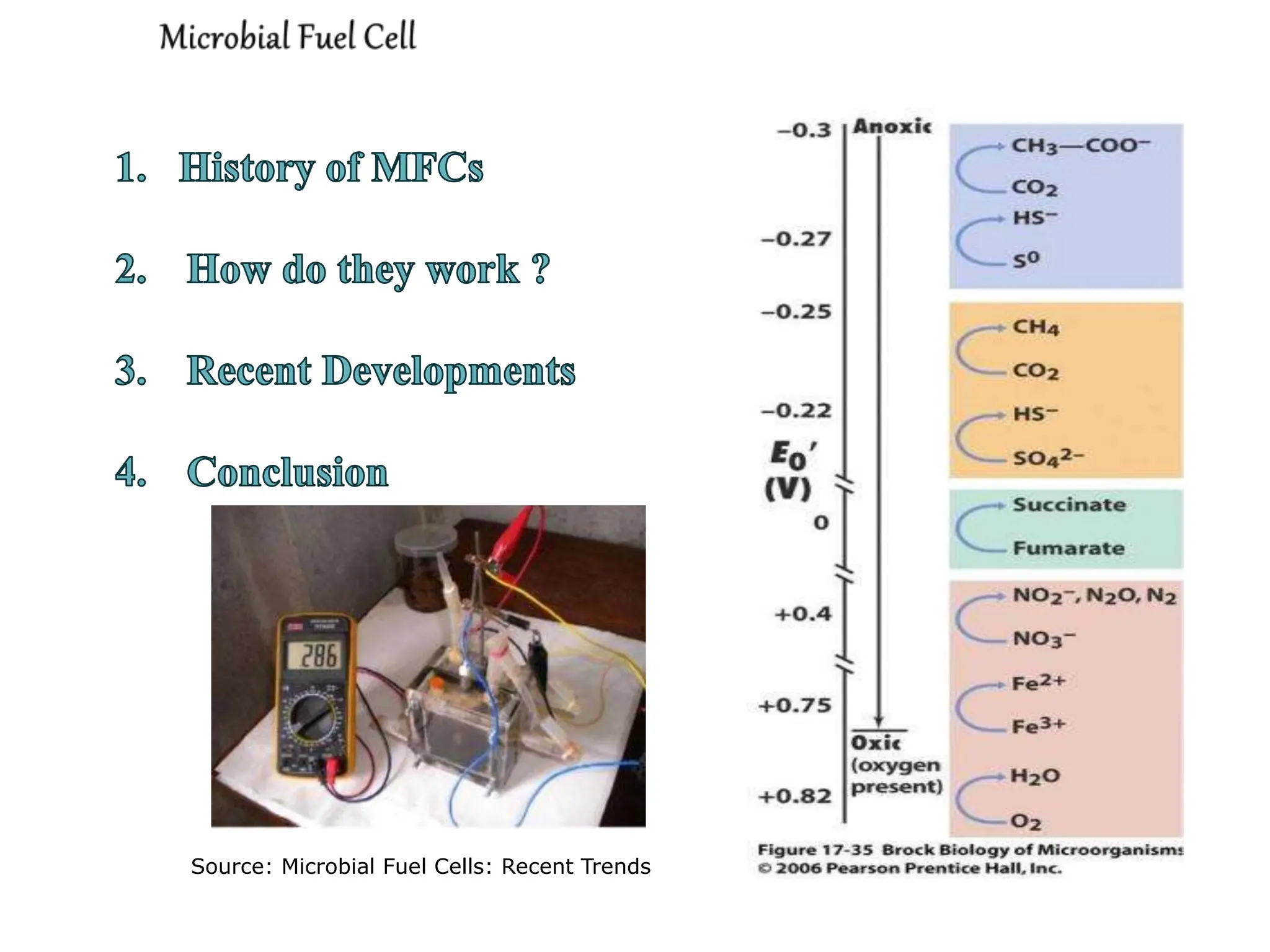
Source: Microbial Fuel Cells: Recent Trends
Introduction
A microbial fuel cell (MFC) is a bio electrochemical
fuel cell system that generates electricity by using
microorganisms' metabolic activity
have a lot of potential for producing bioelectricity by
using organic waste as feedstock.
It is a source of renewable energy
can also help in reducing carbon emissions.
History
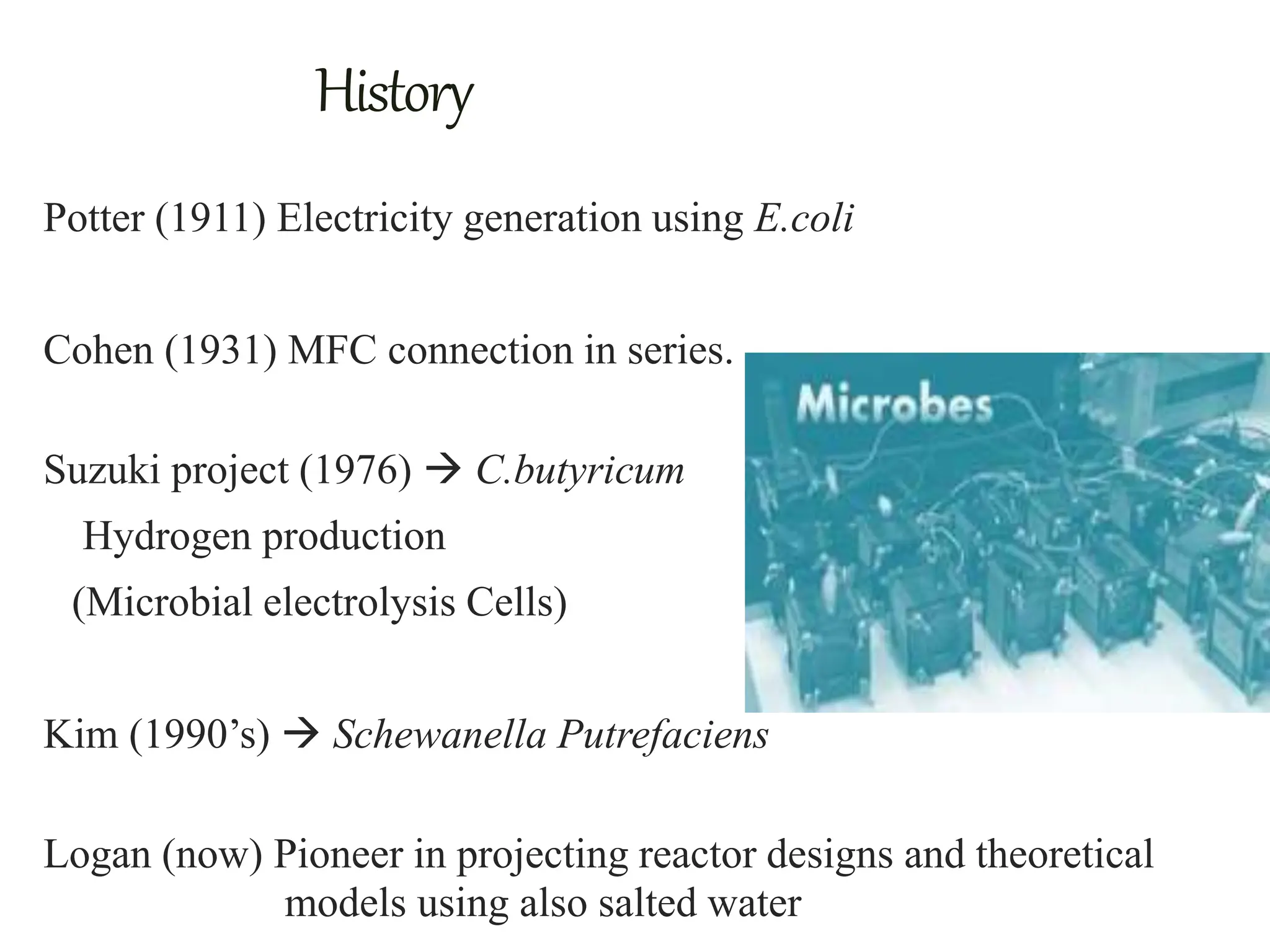
Potter (1911) Electricity generation using E.coli
Cohen (1931) MFC connection in series.
Suzuki project (1976)  C.butyricum
Hydrogen production
(Microbial electrolysis Cells)
Kim (1990’s)  Schewanella Putrefaciens
Logan (now) Pioneer in projecting reactor designs and theoretical
models using also salted water
WorkingofMicrobialfuelcell
Its working is based on the principle of redox reactions.
bioreactors convert the energy in the chemical bonds of
organic compounds into electrical energy through
catalytic activity of microorganisms under anaerobic
conditions.
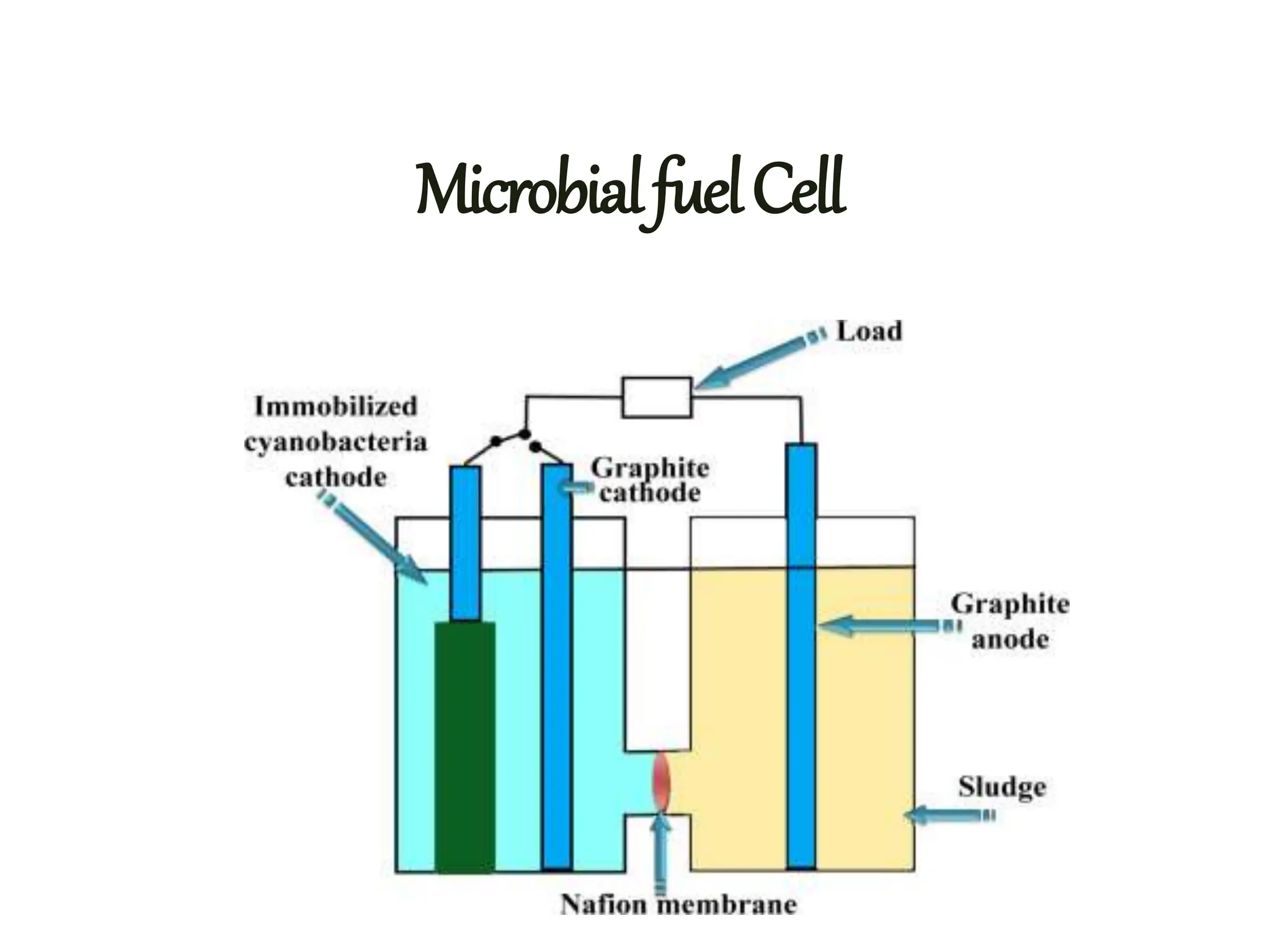
Electrons are transferred from anode chamber to cathode
chamber employing an external electrical circuit to
generate electrical energy.
At the cathode, the protons and electrons are consumed,
combined with oxygen (O2), and form into water.
MicrobialfuelCell
RedoxReaction
In MFC:
In this case O2 is the final acceptor of
electrons Final Product is Water
In absence of Oxygen:
(Glucose) C12H22O11+ 13H2O  12CO2 + 48H+ + 48e-
The final electron acceptor could be Fe(III) or nitrate, so called mediator
because the electrons pass to H+ and the final product is H2
8H+ + 8e-(Mediator)  4H2
ComponentsOfMicrobialFuelCell
There are various components of the microbial fuel cell
Majorly divided into 2 chambers i.e. an anodic chamber &
cathodic chamber.
The anodic chamber contains the anode and the cathodic
chamber contains the cathode.
1. Anode chamber
2. Cathode chamber
3. Exchange membrane
4. Substrate
5. Electrical circuit.
6. Microbes or Microorganisms
7. Electrodes and copper wires for connecting electrodes.
AnodeChamber
It is a biocompatible and conductive component,
stable chemically with the substrate.
The bacteria present in this chamber convert the
substrate to H2O (water), CO2 (carbon dioxide),
and energy.
These bacteria are stored in an environment with
limited oxygen levels. It is made up of stainless
steel mesh with graphite rods or plates.
CathodeChamber
In this chamber, the protons and electrons
are recombined.
The level of oxygen (O2) is reduced to
water.
It uses Pt as a catalyst.
ExchangeMembrane
It acts as either a cation exchange membrane or a
proton exchange membrane.
The exchange membrane in MFC technology uses Ultrex
or Nafion.
The protons are allowed to flow through this membrane.
While on the other side, the electrons and protons are
recombined.
ElectricalCircuit
The electrons leave the anode chamber and move
through the electrical circuit to supply the power to
load.
Substrates
These are used to generate energy for the bacteria cell.
The power density, Coulombic efficiency, performance, and
economic viability of a microbial fuel cell are influenced by
the type of substrate used.
The organic substrates, which can be used in MFC are
protein, volatile acids, carbohydrates, wastewater, and
cellulose.
The most commonly used substrate is Acetate.
Advantages
The advantages of Microbial Fuel cell technology are
given below.
This technology can generate electricity from bio
wastes and organic matter.
It can convert the energy of the substrate to electrical
energy/electricity.
Aeration
Omission of gas treatment
Bioremediation of toxic compounds.
ConstructionofMFC
The anode and cathode chambers of MFC are made up of
glass, plexiglass, and polycarbonate material.
The materials like carbon paper, carbon cloth, graphite are
used as anode electrodes.
To maintain the electrode’s aerobic nature, an air cathode is
used and it is made up of pl-black catalyst material or
platinum material.
To generate electricity, photosynthetic bacteria are used
effectively. Mixed bacterial cultures are used in MFC, such as
natural microbial communities, marine and lake sediments,
domestic wastewater, and brewery wastewater.
To generate electricity, photosynthetic bacteria are used
effectively. Mixed bacterial cultures are used in MFC,
such as natural microbial communities, marine and lake
sediments, domestic wastewater, and brewery
wastewater.
To generate power, the substrates such as acetate,
glucose, propionate, and butyrate are used in MFC. In
bio-electricity generation, the various organic substrates
are used, which are involved in anaerobic activity by the
microbes.
To produce continuous electricity, domestic wastewater
is used effectively. For maximum power density
production- swine wastewater; For bio-electricity and
hydrogen production – waste sludge; For bio-electricity
generation – oil wastewater.
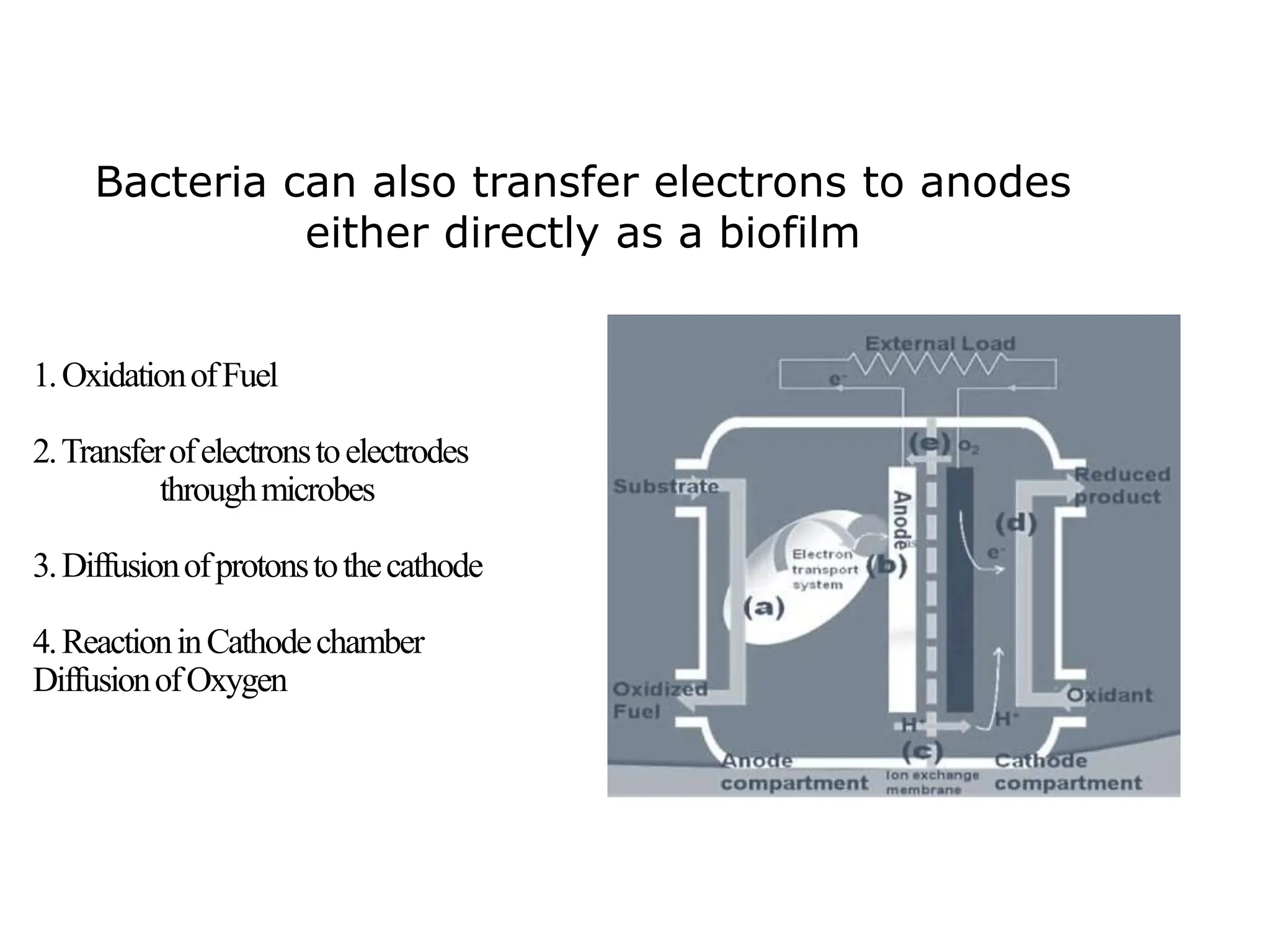
1.OxidationofFuel
2.Transferofelectronstoelectrodes
throughmicrobes
3.Diffusionofprotonstothecathode
4.ReactioninCathodechamber
DiffusionofOxygen
Bacteria can also transfer electrons to anodes
either directly as a biofilm
RecentImprovements
1. Professor Torres (ASU)
new material for IEM:
AS-4
(High Anion Exchange Capacity)
2. Professor Logan (PSU) uses water with ammonium
bicarbonate salt to augment the energy produced
(5.6 W/m2)
 It doesn’t smear the membrane
 Easy to remove by evaporation (110°F = 43.33°C)
 Improved efficiency
3. Professor Burgess Newcastle University discover of new
http://www.dailymail.co.uk/sciencetech/article-2104727/Space-bacteria-British-river-new-power-source-world.html
Nafion © Polymeric Structure
WhyareImportant?
Promising area of study for electronic small devices
Energy continuously (as long the substrate is provided)
Energy from wastewaters
Reduced imported energy
Theoretically without emissions
Disadvantages
The following are the disadvantages of Microbial
Fuel Cell technology
The generated power density is low.
Very expensive
Activation losses and ohmic are present
Metabolic losses of bacteria.
Applications
A few Microbial Fuel cell applications are listed below.
Used in the generation of electricity or power and bio-
electricity.
Used in biosensors
Used in biogas
Used in the treatment of wastewater
Used in various bio-fuel applications such as gases.
Used in the desalination process
Used in production of secondary fuel
Used as an education tool.
ThankyoufortheAttention
References:
Khera, J. and Chandra A. (2012); Microbial Fuel Cells: Recent Trends

Microbial fuel cell.pptx

  • 1.
  • 2.
    Source: Microbial FuelCells: Recent Trends
  • 3.
    Introduction A microbial fuelcell (MFC) is a bio electrochemical fuel cell system that generates electricity by using microorganisms' metabolic activity have a lot of potential for producing bioelectricity by using organic waste as feedstock. It is a source of renewable energy can also help in reducing carbon emissions.
  • 4.
    History Potter (1911) Electricitygeneration using E.coli Cohen (1931) MFC connection in series. Suzuki project (1976)  C.butyricum Hydrogen production (Microbial electrolysis Cells) Kim (1990’s)  Schewanella Putrefaciens Logan (now) Pioneer in projecting reactor designs and theoretical models using also salted water
  • 5.
    WorkingofMicrobialfuelcell Its working isbased on the principle of redox reactions. bioreactors convert the energy in the chemical bonds of organic compounds into electrical energy through catalytic activity of microorganisms under anaerobic conditions. Electrons are transferred from anode chamber to cathode chamber employing an external electrical circuit to generate electrical energy. At the cathode, the protons and electrons are consumed, combined with oxygen (O2), and form into water.
  • 6.
  • 7.
    RedoxReaction In MFC: In thiscase O2 is the final acceptor of electrons Final Product is Water In absence of Oxygen: (Glucose) C12H22O11+ 13H2O  12CO2 + 48H+ + 48e- The final electron acceptor could be Fe(III) or nitrate, so called mediator because the electrons pass to H+ and the final product is H2 8H+ + 8e-(Mediator)  4H2
  • 8.
    ComponentsOfMicrobialFuelCell There are variouscomponents of the microbial fuel cell Majorly divided into 2 chambers i.e. an anodic chamber & cathodic chamber. The anodic chamber contains the anode and the cathodic chamber contains the cathode. 1. Anode chamber 2. Cathode chamber 3. Exchange membrane 4. Substrate 5. Electrical circuit. 6. Microbes or Microorganisms 7. Electrodes and copper wires for connecting electrodes.
  • 9.
    AnodeChamber It is abiocompatible and conductive component, stable chemically with the substrate. The bacteria present in this chamber convert the substrate to H2O (water), CO2 (carbon dioxide), and energy. These bacteria are stored in an environment with limited oxygen levels. It is made up of stainless steel mesh with graphite rods or plates.
  • 10.
    CathodeChamber In this chamber,the protons and electrons are recombined. The level of oxygen (O2) is reduced to water. It uses Pt as a catalyst.
  • 11.
    ExchangeMembrane It acts aseither a cation exchange membrane or a proton exchange membrane. The exchange membrane in MFC technology uses Ultrex or Nafion. The protons are allowed to flow through this membrane. While on the other side, the electrons and protons are recombined.
  • 12.
    ElectricalCircuit The electrons leavethe anode chamber and move through the electrical circuit to supply the power to load.
  • 13.
    Substrates These are usedto generate energy for the bacteria cell. The power density, Coulombic efficiency, performance, and economic viability of a microbial fuel cell are influenced by the type of substrate used. The organic substrates, which can be used in MFC are protein, volatile acids, carbohydrates, wastewater, and cellulose. The most commonly used substrate is Acetate.
  • 14.
    Advantages The advantages ofMicrobial Fuel cell technology are given below. This technology can generate electricity from bio wastes and organic matter. It can convert the energy of the substrate to electrical energy/electricity. Aeration Omission of gas treatment Bioremediation of toxic compounds.
  • 15.
    ConstructionofMFC The anode andcathode chambers of MFC are made up of glass, plexiglass, and polycarbonate material. The materials like carbon paper, carbon cloth, graphite are used as anode electrodes. To maintain the electrode’s aerobic nature, an air cathode is used and it is made up of pl-black catalyst material or platinum material. To generate electricity, photosynthetic bacteria are used effectively. Mixed bacterial cultures are used in MFC, such as natural microbial communities, marine and lake sediments, domestic wastewater, and brewery wastewater.
  • 16.
    To generate electricity,photosynthetic bacteria are used effectively. Mixed bacterial cultures are used in MFC, such as natural microbial communities, marine and lake sediments, domestic wastewater, and brewery wastewater. To generate power, the substrates such as acetate, glucose, propionate, and butyrate are used in MFC. In bio-electricity generation, the various organic substrates are used, which are involved in anaerobic activity by the microbes. To produce continuous electricity, domestic wastewater is used effectively. For maximum power density production- swine wastewater; For bio-electricity and hydrogen production – waste sludge; For bio-electricity generation – oil wastewater.
  • 17.
  • 18.
    RecentImprovements 1. Professor Torres(ASU) new material for IEM: AS-4 (High Anion Exchange Capacity) 2. Professor Logan (PSU) uses water with ammonium bicarbonate salt to augment the energy produced (5.6 W/m2)  It doesn’t smear the membrane  Easy to remove by evaporation (110°F = 43.33°C)  Improved efficiency 3. Professor Burgess Newcastle University discover of new http://www.dailymail.co.uk/sciencetech/article-2104727/Space-bacteria-British-river-new-power-source-world.html Nafion © Polymeric Structure
  • 19.
    WhyareImportant? Promising area ofstudy for electronic small devices Energy continuously (as long the substrate is provided) Energy from wastewaters Reduced imported energy Theoretically without emissions
  • 20.
    Disadvantages The following arethe disadvantages of Microbial Fuel Cell technology The generated power density is low. Very expensive Activation losses and ohmic are present Metabolic losses of bacteria.
  • 21.
    Applications A few MicrobialFuel cell applications are listed below. Used in the generation of electricity or power and bio- electricity. Used in biosensors Used in biogas Used in the treatment of wastewater Used in various bio-fuel applications such as gases. Used in the desalination process Used in production of secondary fuel Used as an education tool.
  • 22.
    ThankyoufortheAttention References: Khera, J. andChandra A. (2012); Microbial Fuel Cells: Recent Trends