
MGT 2306
MARKETING MANAGEMENT
Lesson 4
LESSON 4 OBJECTIVES
• Examine the marketing environment by which all
organizations operate within
• Distinguish between Internal and External
environmental factors that will affect an
organization’s marketing efforts
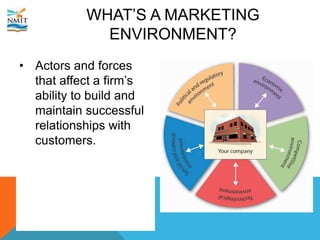
WHAT’S A MARKETING
ENVIRONMENT?
• Actors and forces
that affect a firm’s
ability to build and
maintain successful
relationships with
customers.
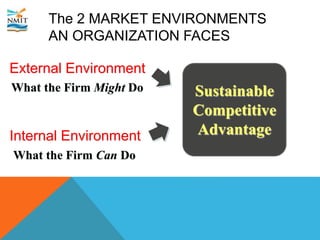
External Environment
What the Firm Might Do
Internal Environment
What the Firm Can Do
Sustainable
Competitive
Advantage
The 2 MARKET ENVIRONMENTS
AN ORGANIZATION FACES
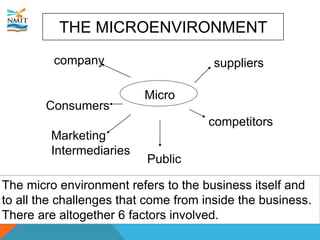
THE MICROENVIRONMENT
company suppliers
Consumers
competitors
Public
Micro
Marketing
Intermediaries
The micro environment refers to the business itself and
to all the challenges that come from inside the business.
There are altogether 6 factors involved.
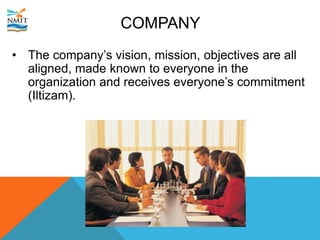
COMPANY
• The company’s vision, mission, objectives are all
aligned, made known to everyone in the
organization and receives everyone’s commitment
(Iltizam).
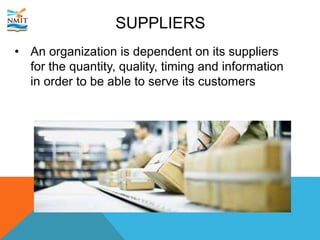
SUPPLIERS
• An organization is dependent on its suppliers
for the quantity, quality, timing and information
in order to be able to serve its customers
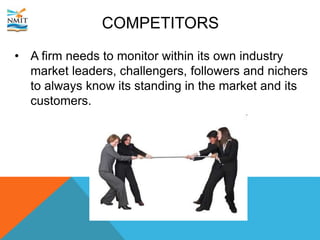
COMPETITORS
• A firm needs to monitor within its own industry
market leaders, challengers, followers and nichers
to always know its standing in the market and its
customers.
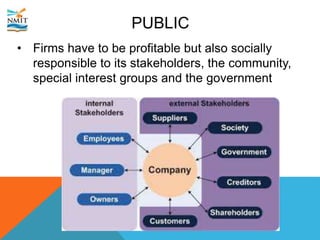
PUBLIC
• Firms have to be profitable but also socially
responsible to its stakeholders, the community,
special interest groups and the government
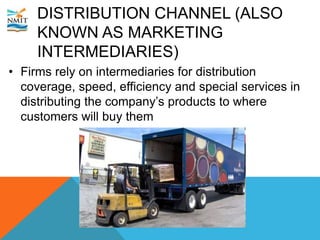
DISTRIBUTION CHANNEL (ALSO
KNOWN AS MARKETING
INTERMEDIARIES)
• Firms rely on intermediaries for distribution
coverage, speed, efficiency and special services in
distributing the company’s products to where
customers will buy them
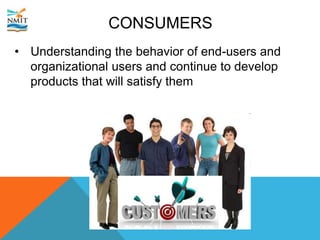
CONSUMERS
• Understanding the behavior of end-users and
organizational users and continue to develop
products that will satisfy them
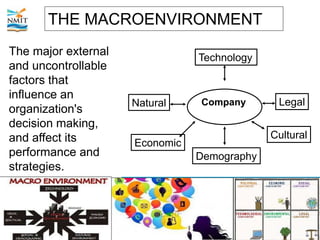
THE MACROENVIRONMENT
Company
Cultural
Economic
Demography
Natural
Technology
Legal
The major external
and uncontrollable
factors that
influence an
organization's
decision making,
and affect its
performance and
strategies.
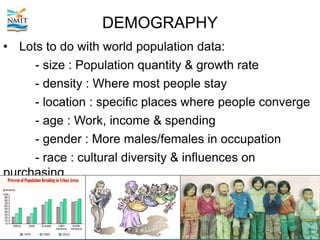
DEMOGRAPHY
• Lots to do with world population data:
- size : Population quantity & growth rate
- density : Where most people stay
- location : specific places where people converge
- age : Work, income & spending
- gender : More males/females in occupation
- race : cultural diversity & influences on
purchasing
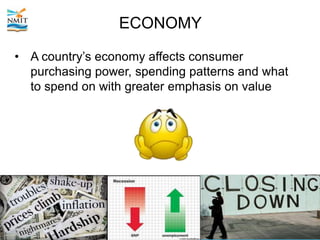
ECONOMY
• A country’s economy affects consumer
purchasing power, spending patterns and what
to spend on with greater emphasis on value
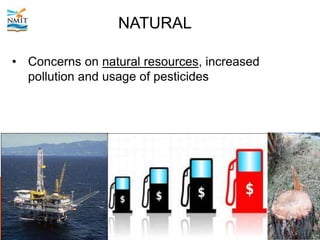
NATURAL
• Concerns on natural resources, increased
pollution and usage of pesticides
TECHNOLOGICAL
• Rapid pace of advancement, new opportunities
but rapid obsoletes, R&D costs
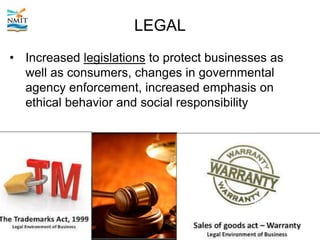
LEGAL
• Increased legislations to protect businesses as
well as consumers, changes in governmental
agency enforcement, increased emphasis on
ethical behavior and social responsibility
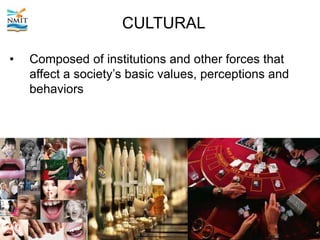
CULTURAL
• Composed of institutions and other forces that
affect a society’s basic values, perceptions and
behaviors
RESPONDING TO THE MARKETING
ENVIRONMENT
Reactive : Passive acceptance and adaptation
- Companies design strategies that
avoid threats and capitalize upon
opportunities.
Proactive : Environmental management
- Use of lobbyists, Public relations,
advertorials, lawsuits, complaints
and contractual agreements to
influence environmental forces.

MGT2306-MARKETING-MANAGEMENT LESSON 4

  • 1.
  • 2.
    LESSON 4 OBJECTIVES •Examine the marketing environment by which all organizations operate within • Distinguish between Internal and External environmental factors that will affect an organization’s marketing efforts
  • 3.
    WHAT’S A MARKETING ENVIRONMENT? •Actors and forces that affect a firm’s ability to build and maintain successful relationships with customers.
  • 4.
    External Environment What theFirm Might Do Internal Environment What the Firm Can Do Sustainable Competitive Advantage The 2 MARKET ENVIRONMENTS AN ORGANIZATION FACES
  • 5.
    THE MICROENVIRONMENT company suppliers Consumers competitors Public Micro Marketing Intermediaries Themicro environment refers to the business itself and to all the challenges that come from inside the business. There are altogether 6 factors involved.
  • 6.
    COMPANY • The company’svision, mission, objectives are all aligned, made known to everyone in the organization and receives everyone’s commitment (Iltizam).
  • 7.
    SUPPLIERS • An organizationis dependent on its suppliers for the quantity, quality, timing and information in order to be able to serve its customers
  • 8.
    COMPETITORS • A firmneeds to monitor within its own industry market leaders, challengers, followers and nichers to always know its standing in the market and its customers.
  • 9.
    PUBLIC • Firms haveto be profitable but also socially responsible to its stakeholders, the community, special interest groups and the government
  • 10.
    DISTRIBUTION CHANNEL (ALSO KNOWNAS MARKETING INTERMEDIARIES) • Firms rely on intermediaries for distribution coverage, speed, efficiency and special services in distributing the company’s products to where customers will buy them
  • 11.
    CONSUMERS • Understanding thebehavior of end-users and organizational users and continue to develop products that will satisfy them
  • 12.
    THE MACROENVIRONMENT Company Cultural Economic Demography Natural Technology Legal The majorexternal and uncontrollable factors that influence an organization's decision making, and affect its performance and strategies.
  • 13.
    DEMOGRAPHY • Lots todo with world population data: - size : Population quantity & growth rate - density : Where most people stay - location : specific places where people converge - age : Work, income & spending - gender : More males/females in occupation - race : cultural diversity & influences on purchasing
  • 14.
    ECONOMY • A country’seconomy affects consumer purchasing power, spending patterns and what to spend on with greater emphasis on value
  • 15.
    NATURAL • Concerns onnatural resources, increased pollution and usage of pesticides
  • 16.
    TECHNOLOGICAL • Rapid paceof advancement, new opportunities but rapid obsoletes, R&D costs
  • 17.
    LEGAL • Increased legislationsto protect businesses as well as consumers, changes in governmental agency enforcement, increased emphasis on ethical behavior and social responsibility
  • 18.
    CULTURAL • Composed ofinstitutions and other forces that affect a society’s basic values, perceptions and behaviors
  • 19.
    RESPONDING TO THEMARKETING ENVIRONMENT Reactive : Passive acceptance and adaptation - Companies design strategies that avoid threats and capitalize upon opportunities. Proactive : Environmental management - Use of lobbyists, Public relations, advertorials, lawsuits, complaints and contractual agreements to influence environmental forces.