MARKETING MIX
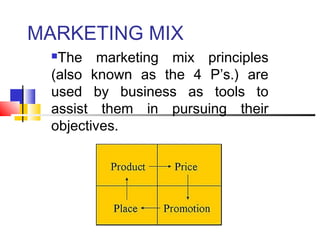
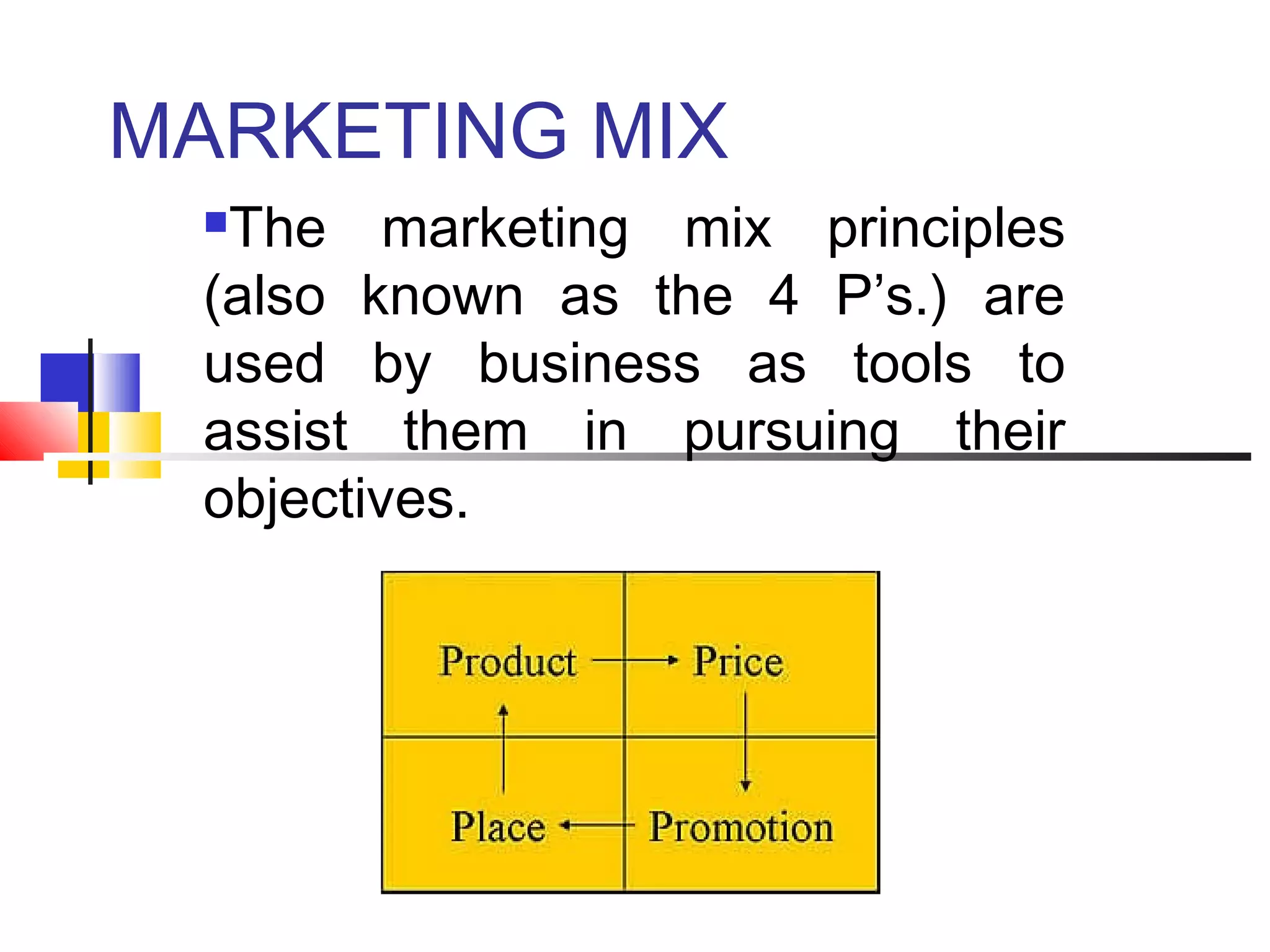
The marketing mix principles
(also known as the 4 P’s.) are
used by business as tools to
assist them in pursuing their
objectives.
Promotion
 Promotion activities are meant to
communicate & persuade the target
market to buy the company’s products
 This is done by???
Marketing Mix (4p’s)
Promotion
www.learnmarketing.net
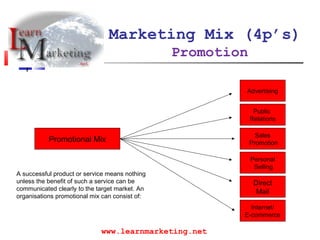
Promotional Mix
Advertising
Public
Relations
Sales
Promotion
Personal
Selling
Direct
Mail
Internet/
E-commerce
A successful product or service means nothing
unless the benefit of such a service can be
communicated clearly to the target market. An
organisations promotional mix can consist of:
 Promotion Strategies
 A successful product or service means nothing unless the benefit of
such a service can be communicated clearly to the target market. An
organisations promotional strategy can consist of:
 Advertising:  Is any non personal paid form of communication using
any form of mass media.
 Public relations: Involves developing positive relationships with the
organisation media public. The art of good public relations is not only
to obtain favorable publicity within the media, but it is also involves
being able to handle successfully negative attention.
 Sales promotion: Commonly used to obtain an increase in sales
short term. Could involve using money off coupons or special offers.
 Personal selling: Selling a product service one to one.
 Direct Mail: Is the sending of publicity material to a named person
within an organisation. There has been a massive growth in direct
mail campaigns over the last 5 years.
Personal selling
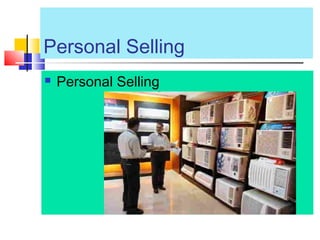
 Personal Selling: Face to face personal
communication
 Advertising- Mass communication efforts
through media
 Sales Promotion- Communication through
contests, trade shows, free samples, yellow
pages, call helplines
Personal Selling
 Personal Selling
Nokia
 Nokia
Messages
 Fly High
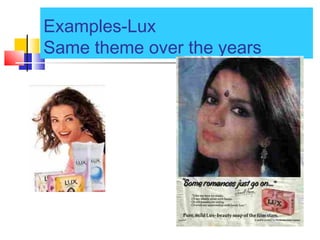
Examples-Lux
Same theme over the years
Celebrity endorsement
 Using famous people to attract target
segment
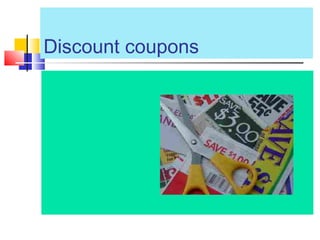
Discount coupons
TV Channels
TV Channels
 TVC
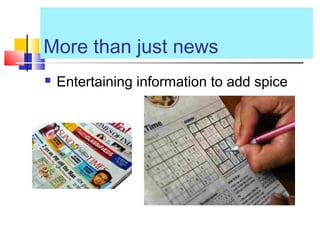
More than just news
 Entertaining information to add spice
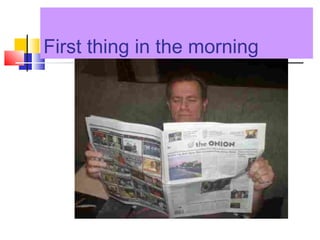
First thing in the morning
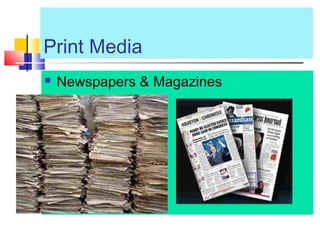
Print Media
 Newspapers & Magazines
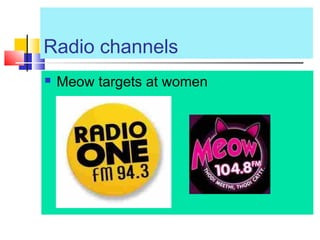
Radio channels
 Meow targets at women
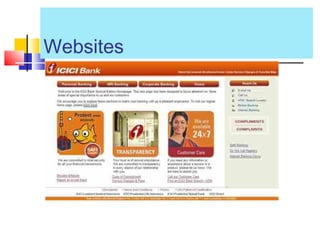
Websites
Videos can be uploaded
 Companies upload their corporate films
 www.youtube.com
Public Relations
 Public relations are where the communication
is not directly paid for and includes press
releases, sponsorship deals, exhibitions,
conferences, seminars or trade fairs and
events.
 Word of mouth is any apparently informal
communication about the product by ordinary
individuals, satisfied customers or people
specifically engaged to create word of mouth
momentum.
Message Strategy
 What message are you trying to put across
to your target audience?
 How will you deliver that message? Will it be
through the appropriate use of branding?
 Logos or slogan design?
 The message should reinforce the benefit of
the product and should also help the
company in developing the positioning
strategy of the product.
Media Strategy
 Media strategy refers to how the organisation is
going to deliver their message.
 What aspects of the promotional mix will the
company use to deliver their message strategy.
 Where will they promote?
 Clearly the company must take into account the
readership and general behaviour of their target
audience before they select their media strategy.
 What newspapers do their target market read?
 What TV programmes do they watch?
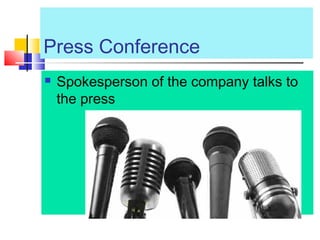
Press Conference
 Spokesperson of the company talks to
the press
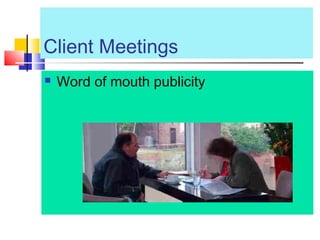
Client Meetings
 Word of mouth publicity
Word of mouth publicity
 Word of mouth is a reference to
the passing of information from
person to person.
 Originally the term referred specifically
to oral communication but now includes
any type of human communication,
such as face to face, telephone, email,
and text messaging
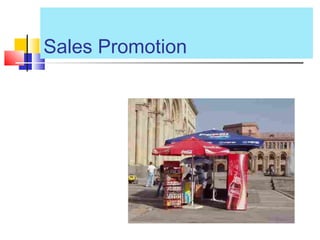
Sales Promotion
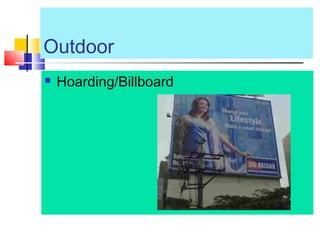
Outdoor
 Hoarding/Billboard
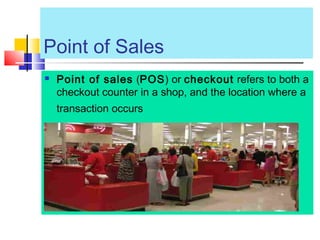
Point of Sales
 Point of sales (POS) or checkout refers to both a
checkout counter in a shop, and the location where a
transaction occurs
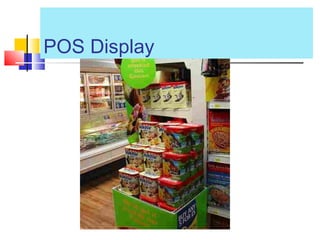
POS Display
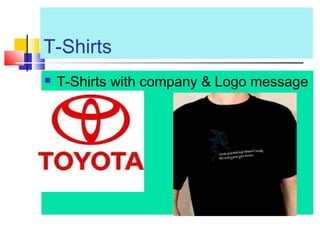
T-Shirts
 T-Shirts with company & Logo message
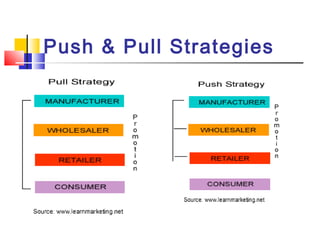
Push & Pull Strategies
Push strategy
 A push strategy is where the manufacturer
concentrates some of their marketing effort
on promoting their product to retailers to
convince them to stock the product.
 A combination of promotional mix strategies
are used at this stage aimed at the retailer
including personal selling, and direct mail.
 The product is pushed onto the
retailer, hence the name push.
Pull strategy
 A pull strategy is based around the
manufacturer promoting their product
amongst the target market to create
demand.
 Consumers pull the product through the
distribution channel forcing the wholesaler
and retailer to stock it, hence the name pull
strategy.
 Organizations tend to use both push and pull
strategies to create demand from retailers
and consumers.

Marketing mix promotion

  • 1.
    MARKETING MIX The marketingmix principles (also known as the 4 P’s.) are used by business as tools to assist them in pursuing their objectives.
  • 2.
    Promotion  Promotion activitiesare meant to communicate & persuade the target market to buy the company’s products  This is done by???
  • 3.
    Marketing Mix (4p’s) Promotion www.learnmarketing.net PromotionalMix Advertising Public Relations Sales Promotion Personal Selling Direct Mail Internet/ E-commerce A successful product or service means nothing unless the benefit of such a service can be communicated clearly to the target market. An organisations promotional mix can consist of:
  • 4.
     Promotion Strategies  Asuccessful product or service means nothing unless the benefit of such a service can be communicated clearly to the target market. An organisations promotional strategy can consist of:  Advertising:  Is any non personal paid form of communication using any form of mass media.  Public relations: Involves developing positive relationships with the organisation media public. The art of good public relations is not only to obtain favorable publicity within the media, but it is also involves being able to handle successfully negative attention.  Sales promotion: Commonly used to obtain an increase in sales short term. Could involve using money off coupons or special offers.  Personal selling: Selling a product service one to one.  Direct Mail: Is the sending of publicity material to a named person within an organisation. There has been a massive growth in direct mail campaigns over the last 5 years.
  • 5.
    Personal selling  PersonalSelling: Face to face personal communication  Advertising- Mass communication efforts through media  Sales Promotion- Communication through contests, trade shows, free samples, yellow pages, call helplines
  • 6.
  • 7.
  • 8.
  • 9.
  • 10.
    Celebrity endorsement  Usingfamous people to attract target segment
  • 11.
  • 12.
  • 13.
  • 14.
    More than justnews  Entertaining information to add spice
  • 15.
    First thing inthe morning
  • 16.
  • 17.
    Radio channels  Meowtargets at women
  • 18.
  • 19.
    Videos can beuploaded  Companies upload their corporate films  www.youtube.com
  • 20.
    Public Relations  Publicrelations are where the communication is not directly paid for and includes press releases, sponsorship deals, exhibitions, conferences, seminars or trade fairs and events.  Word of mouth is any apparently informal communication about the product by ordinary individuals, satisfied customers or people specifically engaged to create word of mouth momentum.
  • 21.
    Message Strategy  Whatmessage are you trying to put across to your target audience?  How will you deliver that message? Will it be through the appropriate use of branding?  Logos or slogan design?  The message should reinforce the benefit of the product and should also help the company in developing the positioning strategy of the product.
  • 22.
    Media Strategy  Mediastrategy refers to how the organisation is going to deliver their message.  What aspects of the promotional mix will the company use to deliver their message strategy.  Where will they promote?  Clearly the company must take into account the readership and general behaviour of their target audience before they select their media strategy.  What newspapers do their target market read?  What TV programmes do they watch?
  • 23.
    Press Conference  Spokespersonof the company talks to the press
  • 24.
    Client Meetings  Wordof mouth publicity
  • 25.
    Word of mouthpublicity  Word of mouth is a reference to the passing of information from person to person.  Originally the term referred specifically to oral communication but now includes any type of human communication, such as face to face, telephone, email, and text messaging
  • 26.
  • 27.
  • 28.
    Point of Sales Point of sales (POS) or checkout refers to both a checkout counter in a shop, and the location where a transaction occurs
  • 29.
  • 30.
    T-Shirts  T-Shirts withcompany & Logo message
  • 31.
    Push & PullStrategies
  • 32.
    Push strategy  Apush strategy is where the manufacturer concentrates some of their marketing effort on promoting their product to retailers to convince them to stock the product.  A combination of promotional mix strategies are used at this stage aimed at the retailer including personal selling, and direct mail.  The product is pushed onto the retailer, hence the name push.
  • 33.
    Pull strategy  Apull strategy is based around the manufacturer promoting their product amongst the target market to create demand.  Consumers pull the product through the distribution channel forcing the wholesaler and retailer to stock it, hence the name pull strategy.  Organizations tend to use both push and pull strategies to create demand from retailers and consumers.