5
0
0:
0 4
3
2
1
0
Independentgroup
design
ShayanIqbal
Matched
Group
Design
Independent Group
Design
Random Group
Design
Natural group
design
Important Concepts Related To Experimental
Research
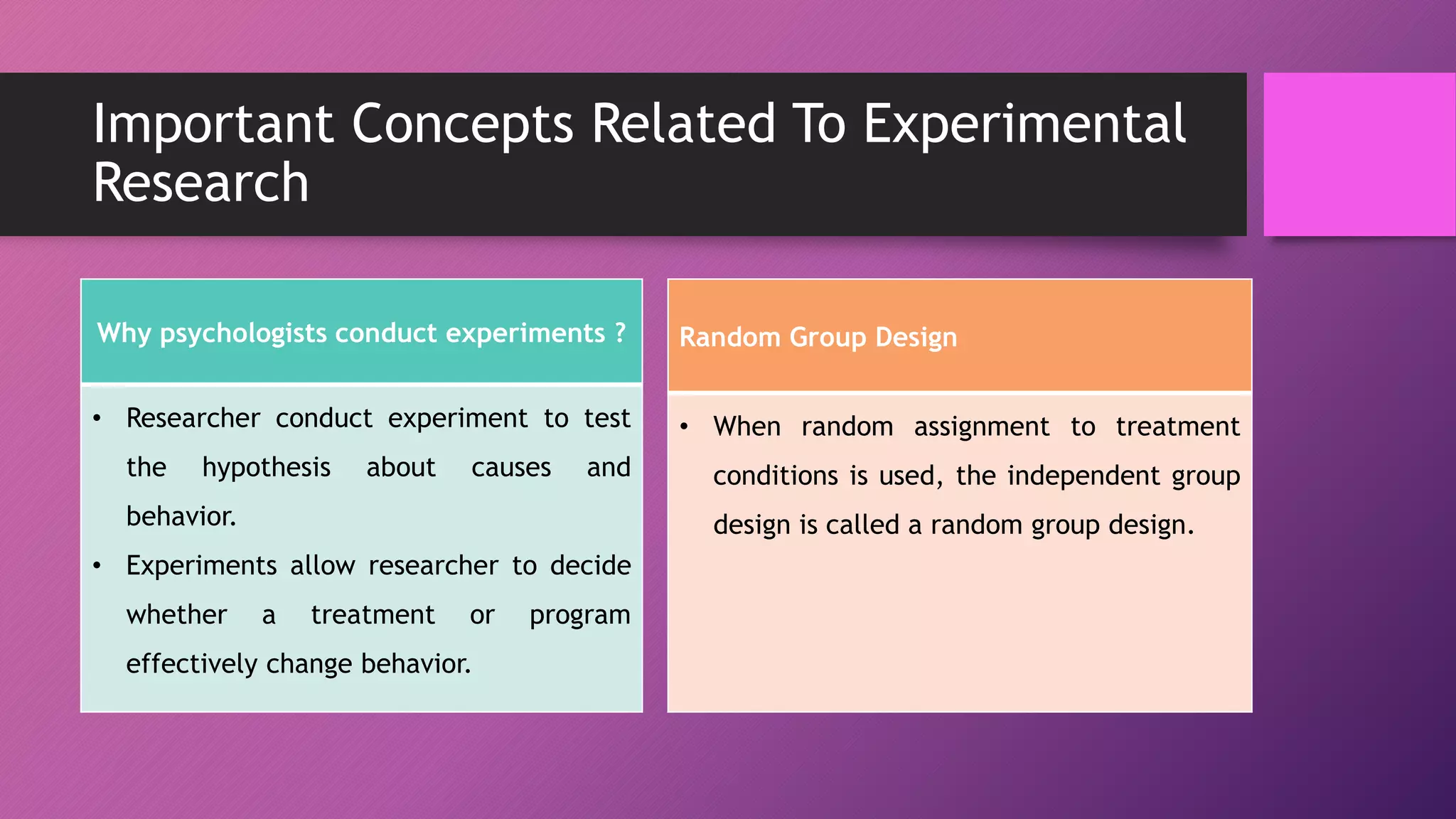
Why psychologists conduct experiments ?
• Researcher conduct experiment to test
the hypothesis about causes and
behavior.
• Experiments allow researcher to decide
whether a treatment or program
effectively change behavior.
Random Group Design
• When random assignment to treatment
conditions is used, the independent group
design is called a random group design.
Important Concepts Related To Experimental
Research
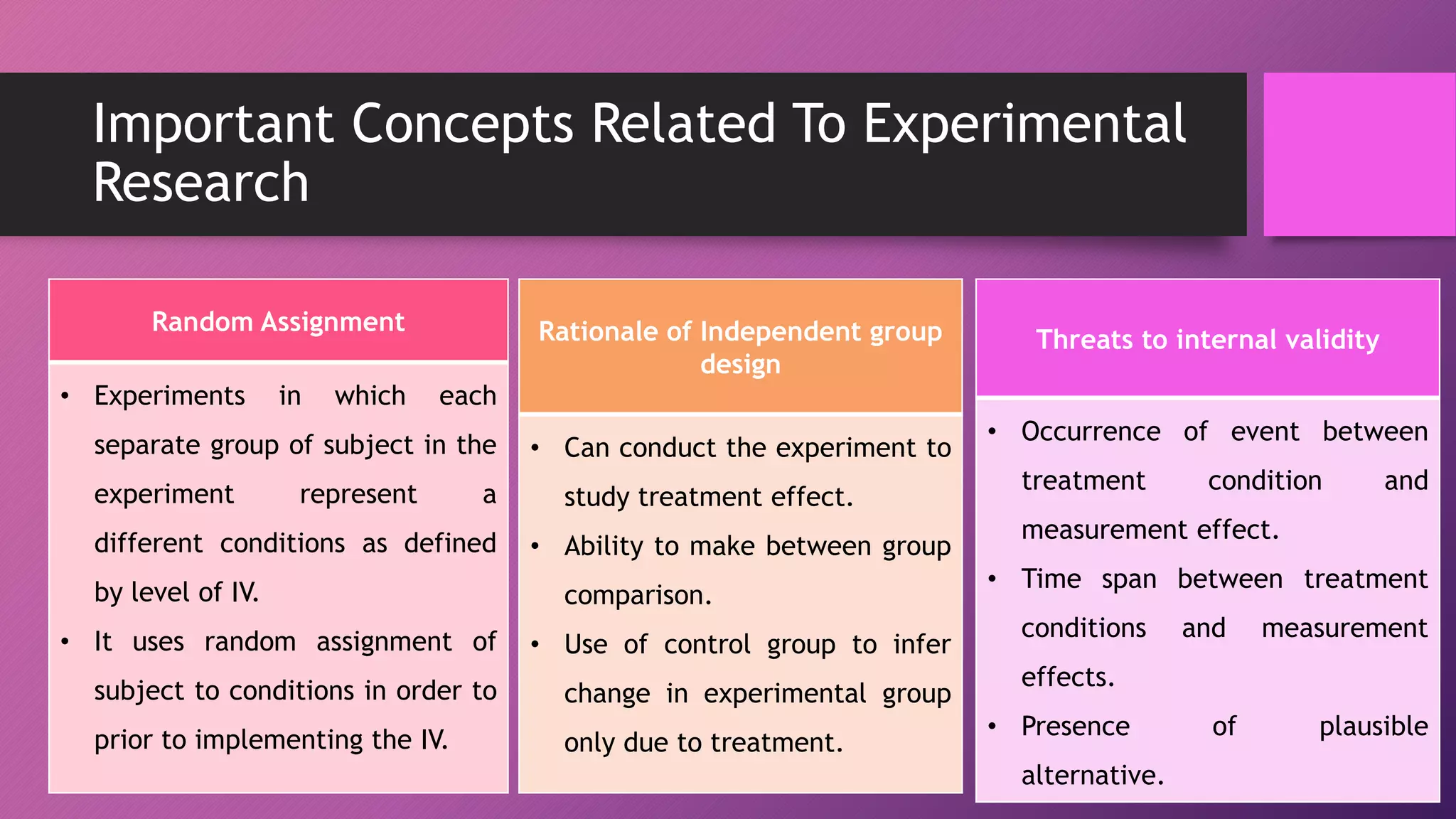
Random Assignment
• Experiments in which each
separate group of subject in the
experiment represent a
different conditions as defined
by level of IV.
• It uses random assignment of
subject to conditions in order to
prior to implementing the IV.
Rationale of Independent group
design
• Can conduct the experiment to
study treatment effect.
• Ability to make between group
comparison.
• Use of control group to infer
change in experimental group
only due to treatment.
Threats to internal validity
• Occurrence of event between
treatment condition and
measurement effect.
• Time span between treatment
conditions and measurement
effects.
• Presence of plausible
alternative.
Logic of experimental research
Experimental manipulation
• Researcher manipulate an IV in
an experiment to observe the
effect on behavior, as assessed
by the dependent variable.
Experimental control
• Experimental control allow
researcher to make causal
inference that the IV cause the
effect change in DV.
• Manipulation, holding condition
constant, balancing.
Internal validity
• The IV caused the difference in
behavior as measured by the DV.
• Three conditions required for
causal inferences; covariation,
time order relationship,
elimination of plausible
alternative causes.
High internal validity of experiment
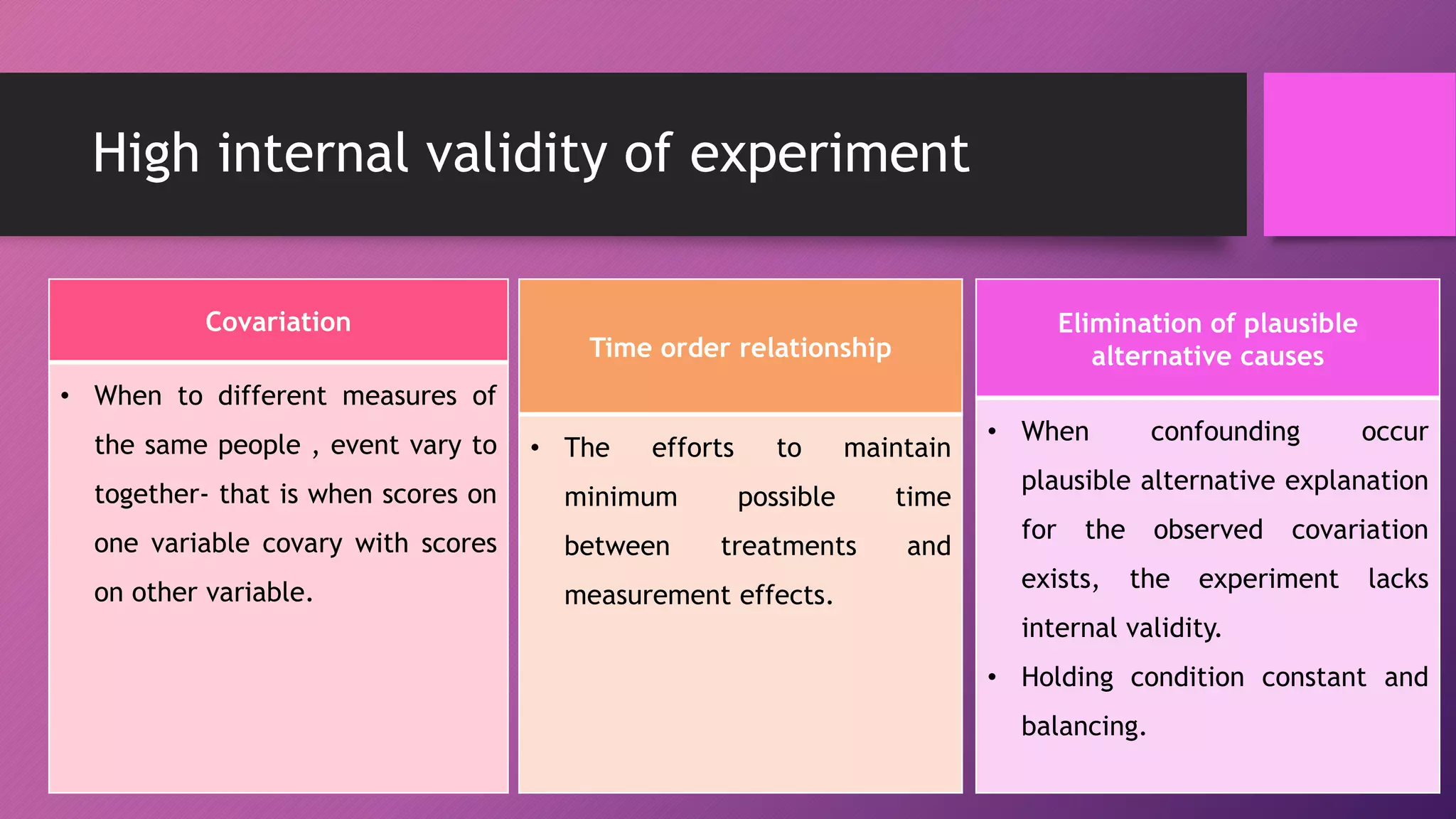
Covariation
• When to different measures of
the same people , event vary to
together- that is when scores on
one variable covary with scores
on other variable.
Time order relationship
• The efforts to maintain
minimum possible time
between treatments and
measurement effects.
Elimination of plausible
alternative causes
• When confounding occur
plausible alternative explanation
for the observed covariation
exists, the experiment lacks
internal validity.
• Holding condition constant and
balancing.
Elimination of plausible alternative causes
Holding condition constant
• It is to make sure that the IV is
the only factor that differs
systematically across the group.
Balancing
• Balancing the difference
among subject tested from
heterogenous population.
• Forming comparable groups at
the start of experiment.
Averaging
• As a part of balancing the
researcher averages the
individual differences among
subject across the group of the
experiment .
Elimination of plausible alternative
Objective
• Dittmar et al.(2006).
• There goal was to determine
whether exposure to very thin
body images causes young girls
experience negative experience
about their own body.
Sample
• In the experiment small group
of young girls read a story
about Mira as she went
shopping for clothes and
prepared to go to the birthday
party.
Procedure
• as they heard the story, the girls
looked at the pictures with six
scenes related to story.
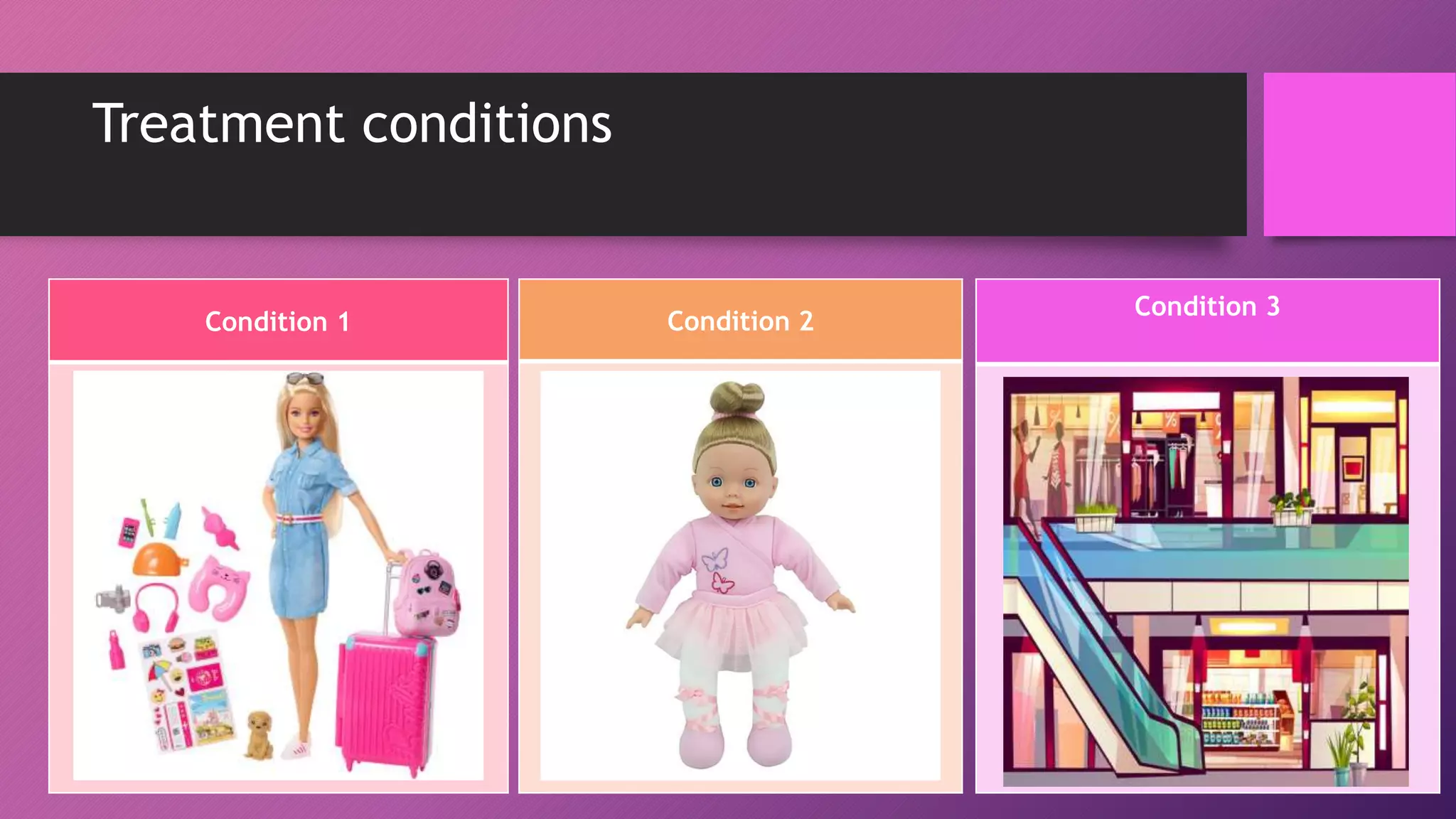
Treatment conditions
Condition 1 Condition 2
Condition 3
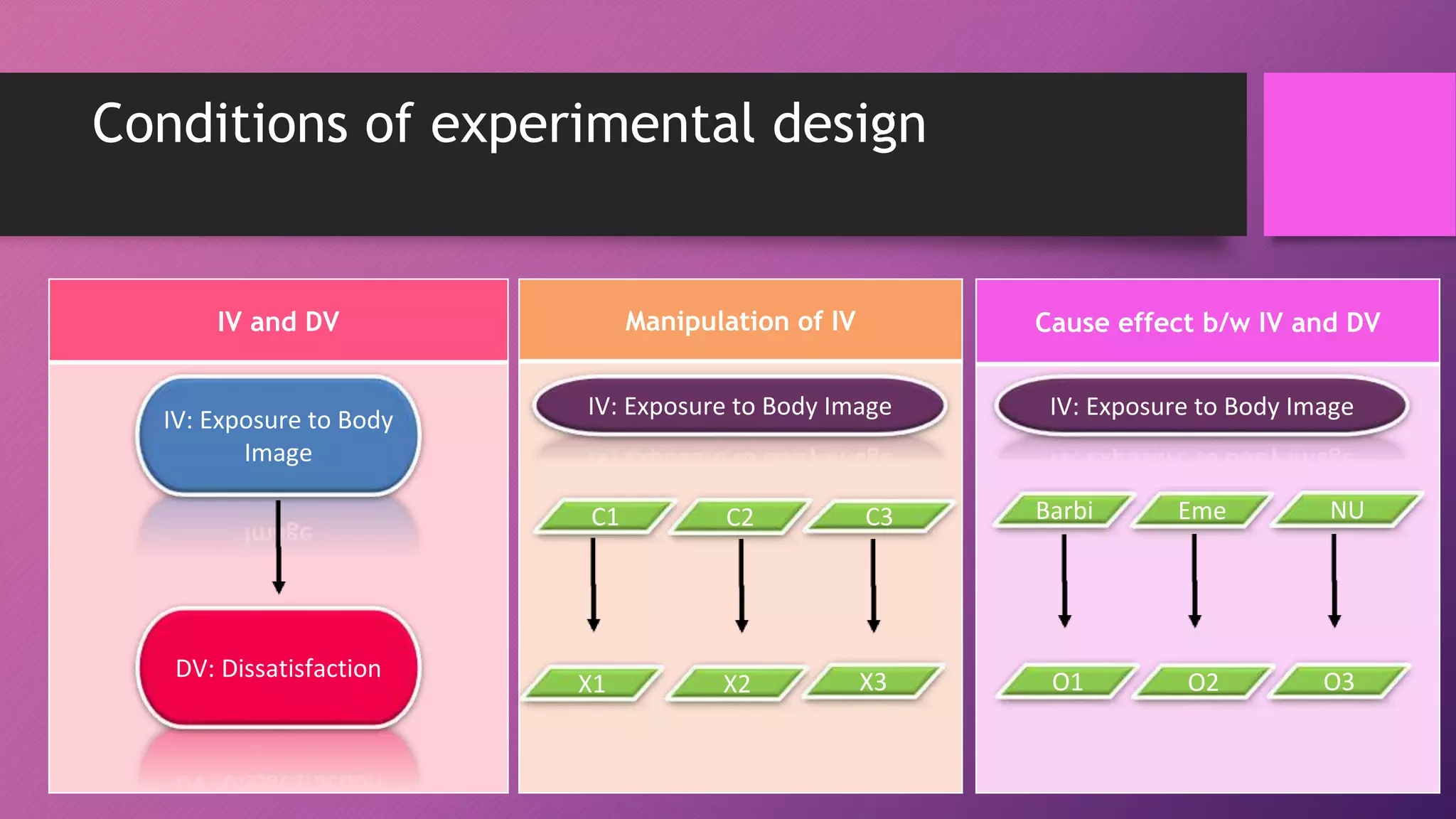
Conditions of experimental design
IV and DV Manipulation of IV Cause effect b/w IV and DV
IV: Exposure to Body
Image
DV: Dissatisfaction
IV: Exposure to Body Image
C1 C2 C3
X1 X2 X3
IV: Exposure to Body Image
Barbi Eme NU
O3
O2
O1
Random Assignment to treatment conditions and
observation of behavior
Stage 1 : Random Assignment
Stage 2: Random assignment to
treatment condition
Stage 3: Observation of behavior
Girls
R1 R2 R3
X1 X2 X3
Barbi Eme NU
O3
O2
O1
R1
n=17
R2
n=20
R3
n=20
R1 R2 R3
THANK
YOU

Independent group design

  • 1.
  • 2.
  • 3.
  • 4.
    Important Concepts RelatedTo Experimental Research Why psychologists conduct experiments ? • Researcher conduct experiment to test the hypothesis about causes and behavior. • Experiments allow researcher to decide whether a treatment or program effectively change behavior. Random Group Design • When random assignment to treatment conditions is used, the independent group design is called a random group design.
  • 5.
    Important Concepts RelatedTo Experimental Research Random Assignment • Experiments in which each separate group of subject in the experiment represent a different conditions as defined by level of IV. • It uses random assignment of subject to conditions in order to prior to implementing the IV. Rationale of Independent group design • Can conduct the experiment to study treatment effect. • Ability to make between group comparison. • Use of control group to infer change in experimental group only due to treatment. Threats to internal validity • Occurrence of event between treatment condition and measurement effect. • Time span between treatment conditions and measurement effects. • Presence of plausible alternative.
  • 6.
    Logic of experimentalresearch Experimental manipulation • Researcher manipulate an IV in an experiment to observe the effect on behavior, as assessed by the dependent variable. Experimental control • Experimental control allow researcher to make causal inference that the IV cause the effect change in DV. • Manipulation, holding condition constant, balancing. Internal validity • The IV caused the difference in behavior as measured by the DV. • Three conditions required for causal inferences; covariation, time order relationship, elimination of plausible alternative causes.
  • 7.
    High internal validityof experiment Covariation • When to different measures of the same people , event vary to together- that is when scores on one variable covary with scores on other variable. Time order relationship • The efforts to maintain minimum possible time between treatments and measurement effects. Elimination of plausible alternative causes • When confounding occur plausible alternative explanation for the observed covariation exists, the experiment lacks internal validity. • Holding condition constant and balancing.
  • 8.
    Elimination of plausiblealternative causes Holding condition constant • It is to make sure that the IV is the only factor that differs systematically across the group. Balancing • Balancing the difference among subject tested from heterogenous population. • Forming comparable groups at the start of experiment. Averaging • As a part of balancing the researcher averages the individual differences among subject across the group of the experiment .
  • 9.
    Elimination of plausiblealternative Objective • Dittmar et al.(2006). • There goal was to determine whether exposure to very thin body images causes young girls experience negative experience about their own body. Sample • In the experiment small group of young girls read a story about Mira as she went shopping for clothes and prepared to go to the birthday party. Procedure • as they heard the story, the girls looked at the pictures with six scenes related to story.
  • 10.
    Treatment conditions Condition 1Condition 2 Condition 3
  • 11.
    Conditions of experimentaldesign IV and DV Manipulation of IV Cause effect b/w IV and DV IV: Exposure to Body Image DV: Dissatisfaction IV: Exposure to Body Image C1 C2 C3 X1 X2 X3 IV: Exposure to Body Image Barbi Eme NU O3 O2 O1
  • 12.
    Random Assignment totreatment conditions and observation of behavior Stage 1 : Random Assignment Stage 2: Random assignment to treatment condition Stage 3: Observation of behavior Girls R1 R2 R3 X1 X2 X3 Barbi Eme NU O3 O2 O1 R1 n=17 R2 n=20 R3 n=20 R1 R2 R3
  • 13.