Chapter 7
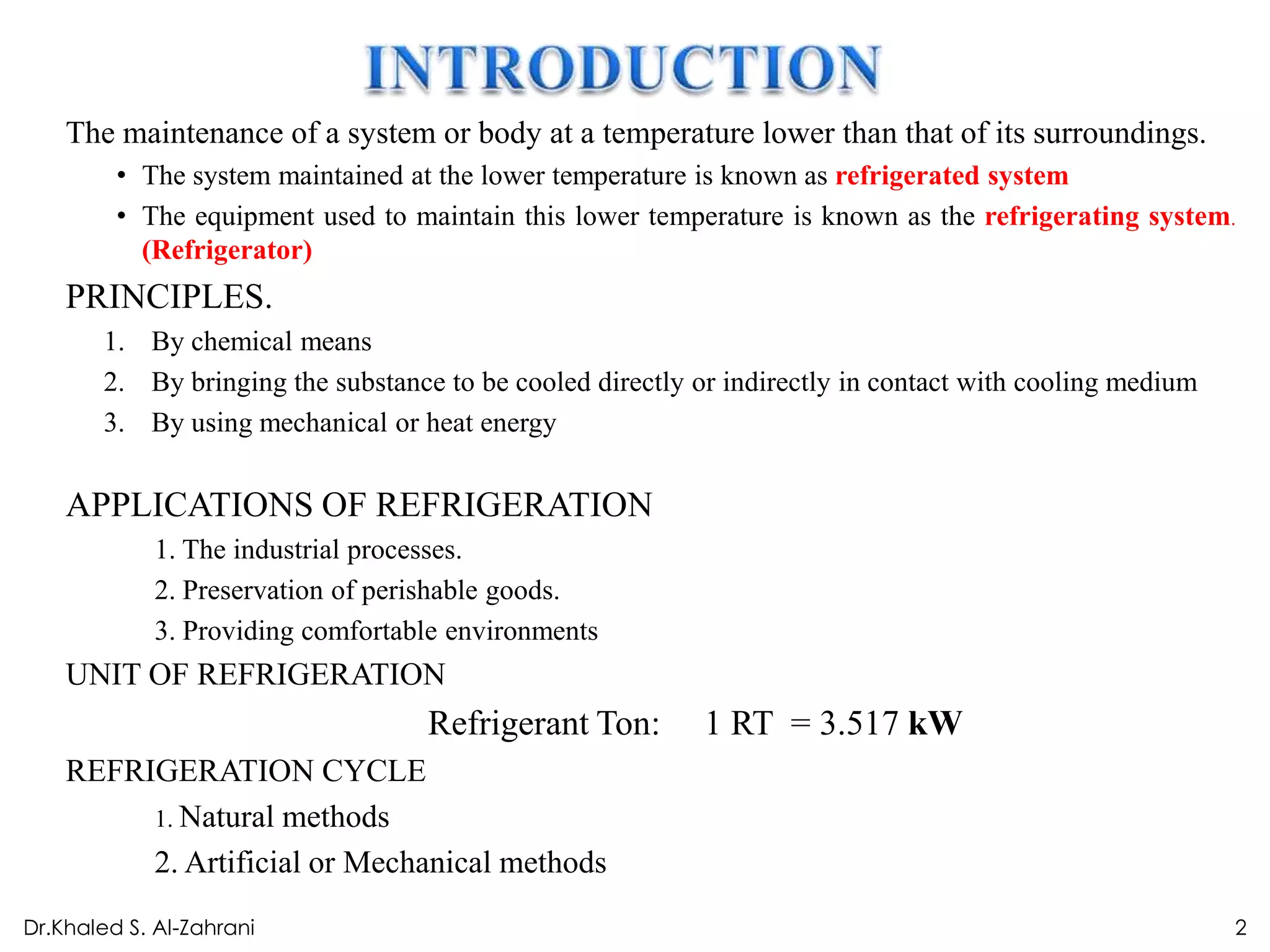
The maintenance of a system or body at a temperature lower than that of its surroundings.
         • The system maintained at the lower temperature is known as refrigerated system
         • The equipment used to maintain this lower temperature is known as the refrigerating system.
           (Refrigerator)
    PRINCIPLES.
       1. By chemical means
       2. By bringing the substance to be cooled directly or indirectly in contact with cooling medium
       3. By using mechanical or heat energy


    APPLICATIONS OF REFRIGERATION
             1. The industrial processes.
             2. Preservation of perishable goods.
             3. Providing comfortable environments
    UNIT OF REFRIGERATION
                                   Refrigerant Ton:        1 RT = 3.517 kW
    REFRIGERATION CYCLE
         1. Natural methods
         2. Artificial or Mechanical methods
Dr.Khaled S. Al-Zahrani                                                                                  2
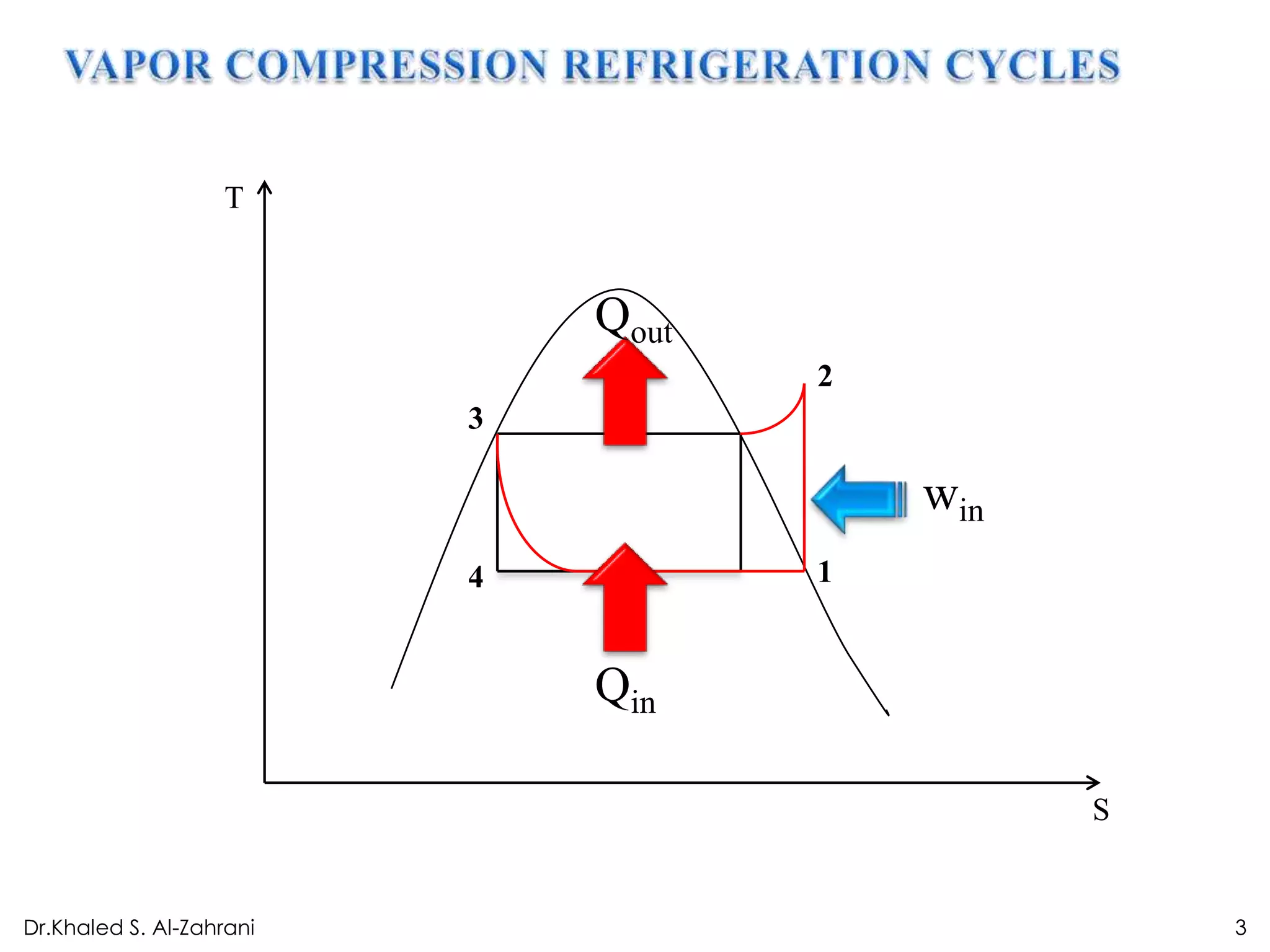
T


                              Qout
                                     2
                          3

                                         win
                          4          1


                              Qin

                                               S


Dr.Khaled S. Al-Zahrani                            3
Dr.Khaled S. Al-Zahrani   4
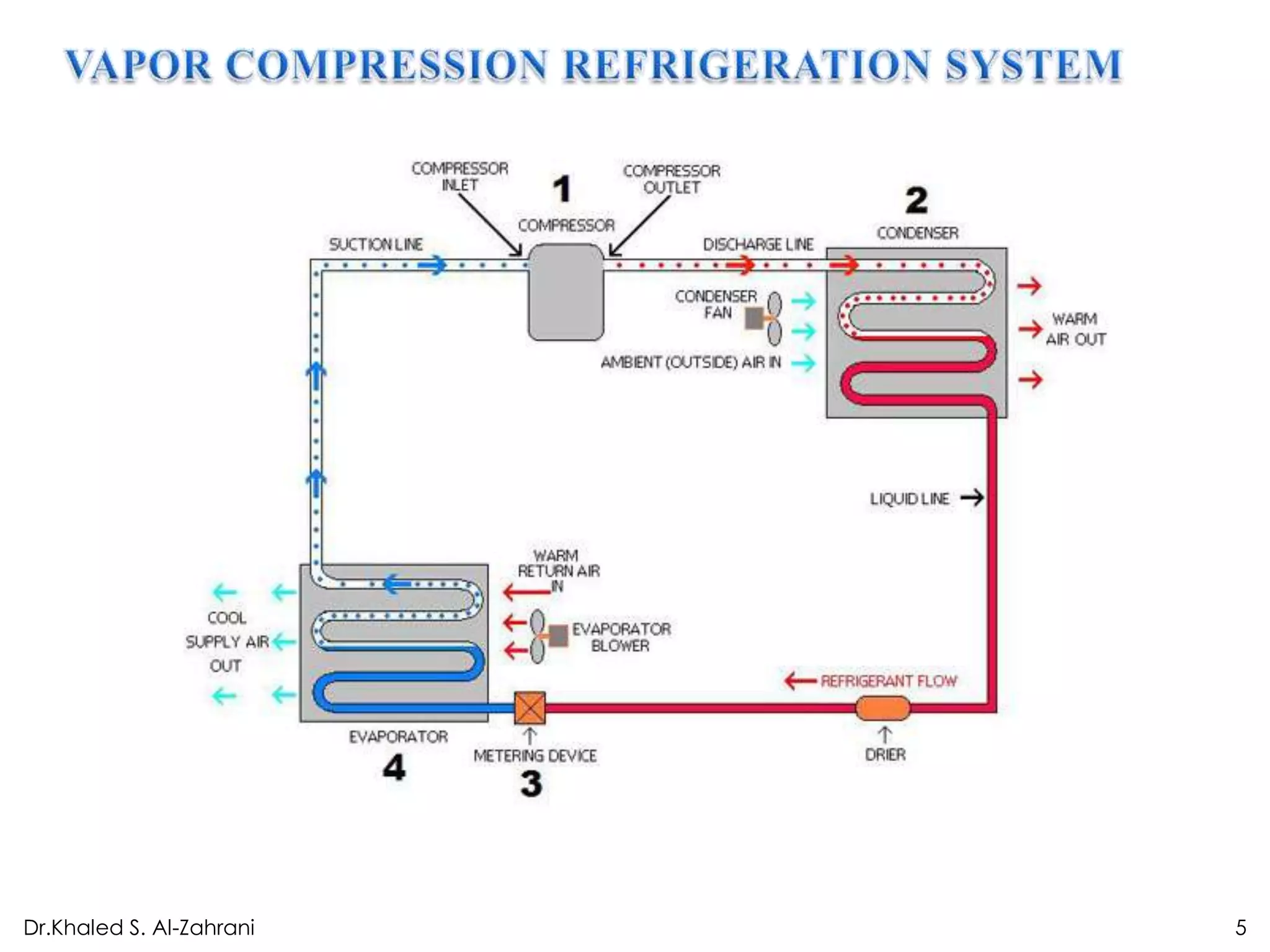
Dr.Khaled S. Al-Zahrani   5
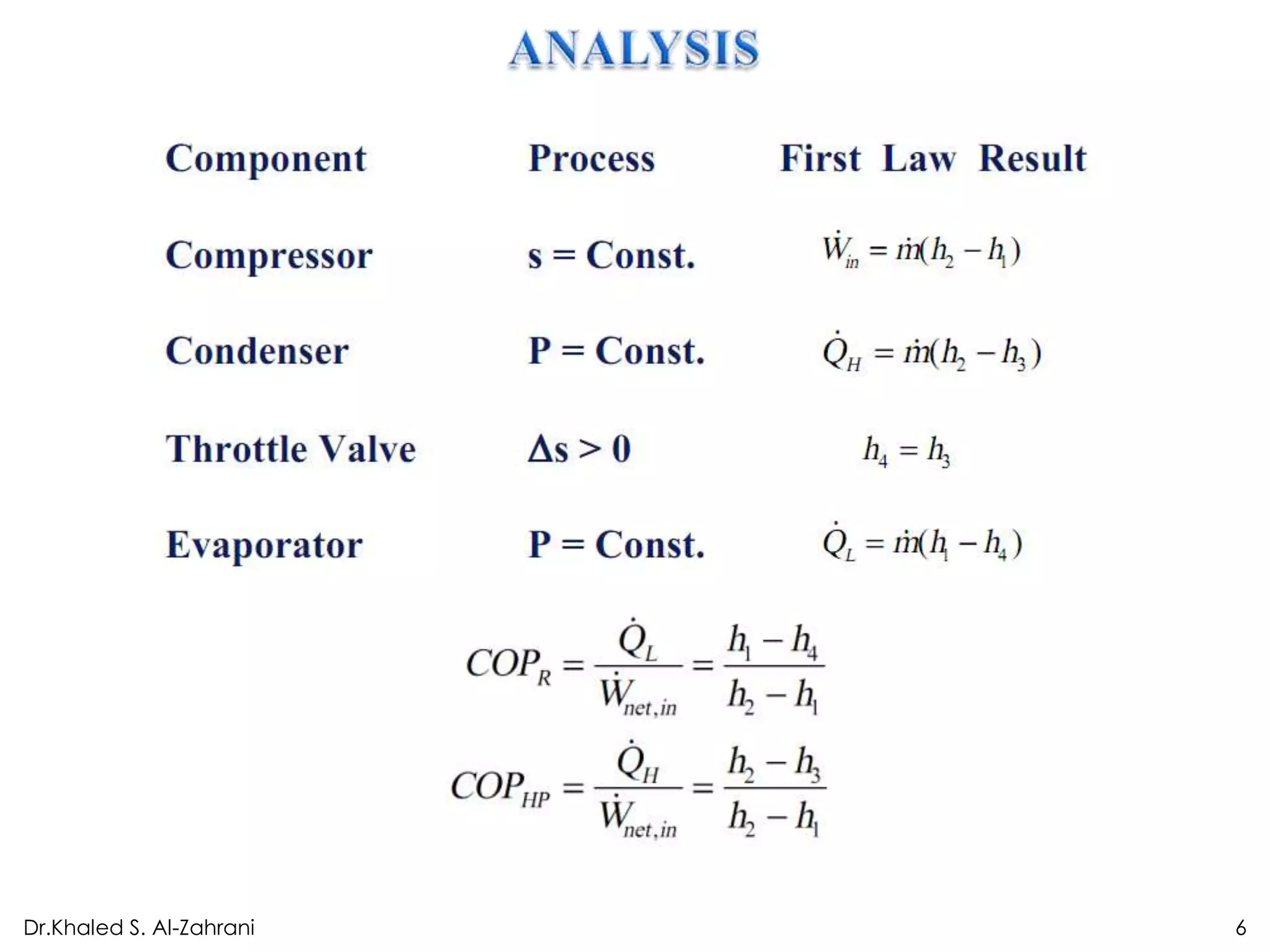
Dr.Khaled S. Al-Zahrani   6
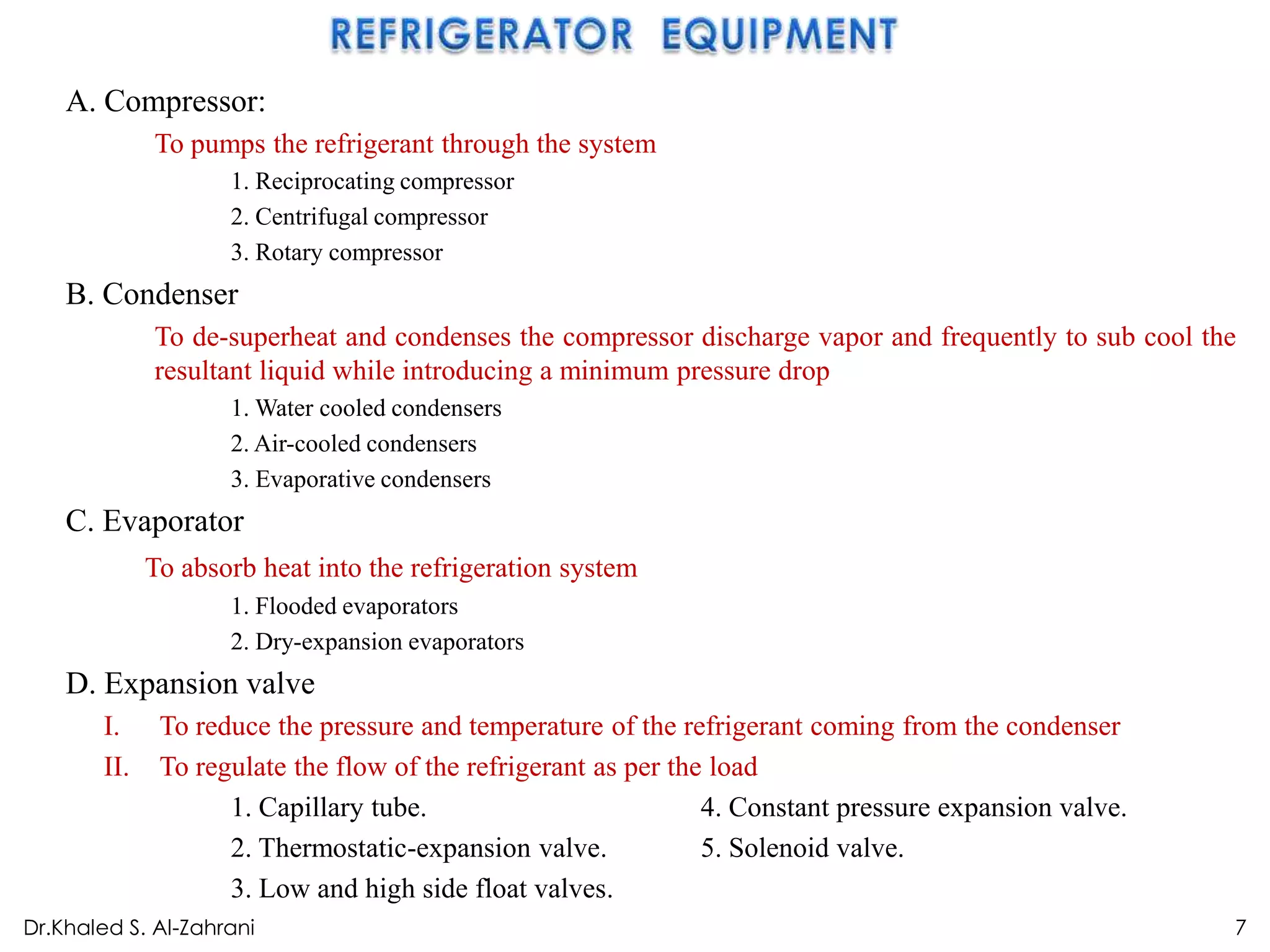
A. Compressor:
             To pumps the refrigerant through the system
                    1. Reciprocating compressor
                    2. Centrifugal compressor
                    3. Rotary compressor
    B. Condenser
             To de-superheat and condenses the compressor discharge vapor and frequently to sub cool the
             resultant liquid while introducing a minimum pressure drop
                    1. Water cooled condensers
                    2. Air-cooled condensers
                    3. Evaporative condensers
    C. Evaporator
             To absorb heat into the refrigeration system
                    1. Flooded evaporators
                    2. Dry-expansion evaporators
    D. Expansion valve
       I.     To reduce the pressure and temperature of the refrigerant coming from the condenser
       II.    To regulate the flow of the refrigerant as per the load
                    1. Capillary tube.                          4. Constant pressure expansion valve.
                    2. Thermostatic-expansion valve.            5. Solenoid valve.
                    3. Low and high side float valves.
Dr.Khaled S. Al-Zahrani                                                                                 7
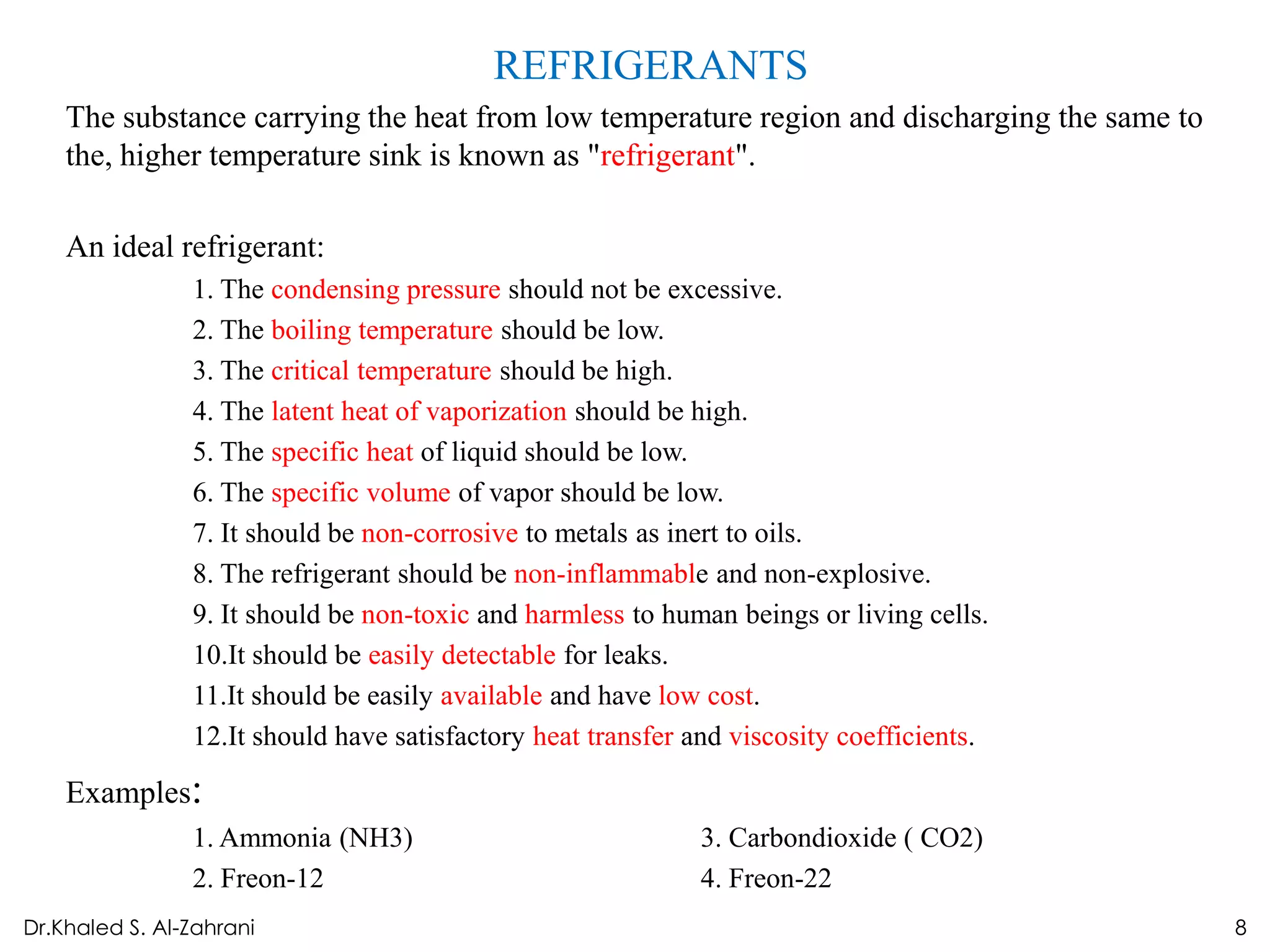
REFRIGERANTS
    The substance carrying the heat from low temperature region and discharging the same to
    the, higher temperature sink is known as "refrigerant".

    An ideal refrigerant:
                1. The condensing pressure should not be excessive.
                2. The boiling temperature should be low.
                3. The critical temperature should be high.
                4. The latent heat of vaporization should be high.
                5. The specific heat of liquid should be low.
                6. The specific volume of vapor should be low.
                7. It should be non-corrosive to metals as inert to oils.
                8. The refrigerant should be non-inflammable and non-explosive.
                9. It should be non-toxic and harmless to human beings or living cells.
                10.It should be easily detectable for leaks.
                11.It should be easily available and have low cost.
                12.It should have satisfactory heat transfer and viscosity coefficients.

    Examples:
                1. Ammonia (NH3)                             3. Carbondioxide ( CO2)
                2. Freon-12                                  4. Freon-22
Dr.Khaled S. Al-Zahrani                                                                       8

MET 211 Refrigeration

  • 1.
  • 2.
    The maintenance ofa system or body at a temperature lower than that of its surroundings. • The system maintained at the lower temperature is known as refrigerated system • The equipment used to maintain this lower temperature is known as the refrigerating system. (Refrigerator) PRINCIPLES. 1. By chemical means 2. By bringing the substance to be cooled directly or indirectly in contact with cooling medium 3. By using mechanical or heat energy APPLICATIONS OF REFRIGERATION 1. The industrial processes. 2. Preservation of perishable goods. 3. Providing comfortable environments UNIT OF REFRIGERATION Refrigerant Ton: 1 RT = 3.517 kW REFRIGERATION CYCLE 1. Natural methods 2. Artificial or Mechanical methods Dr.Khaled S. Al-Zahrani 2
  • 3.
    T Qout 2 3 win 4 1 Qin S Dr.Khaled S. Al-Zahrani 3
  • 4.
  • 5.
  • 6.
  • 7.
    A. Compressor: To pumps the refrigerant through the system 1. Reciprocating compressor 2. Centrifugal compressor 3. Rotary compressor B. Condenser To de-superheat and condenses the compressor discharge vapor and frequently to sub cool the resultant liquid while introducing a minimum pressure drop 1. Water cooled condensers 2. Air-cooled condensers 3. Evaporative condensers C. Evaporator To absorb heat into the refrigeration system 1. Flooded evaporators 2. Dry-expansion evaporators D. Expansion valve I. To reduce the pressure and temperature of the refrigerant coming from the condenser II. To regulate the flow of the refrigerant as per the load 1. Capillary tube. 4. Constant pressure expansion valve. 2. Thermostatic-expansion valve. 5. Solenoid valve. 3. Low and high side float valves. Dr.Khaled S. Al-Zahrani 7
  • 8.
    REFRIGERANTS The substance carrying the heat from low temperature region and discharging the same to the, higher temperature sink is known as "refrigerant". An ideal refrigerant: 1. The condensing pressure should not be excessive. 2. The boiling temperature should be low. 3. The critical temperature should be high. 4. The latent heat of vaporization should be high. 5. The specific heat of liquid should be low. 6. The specific volume of vapor should be low. 7. It should be non-corrosive to metals as inert to oils. 8. The refrigerant should be non-inflammable and non-explosive. 9. It should be non-toxic and harmless to human beings or living cells. 10.It should be easily detectable for leaks. 11.It should be easily available and have low cost. 12.It should have satisfactory heat transfer and viscosity coefficients. Examples: 1. Ammonia (NH3) 3. Carbondioxide ( CO2) 2. Freon-12 4. Freon-22 Dr.Khaled S. Al-Zahrani 8