คลกเพอแกไขลกษณะชอเรองรองตนแบบ
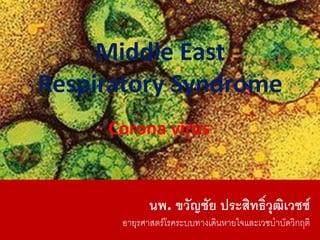
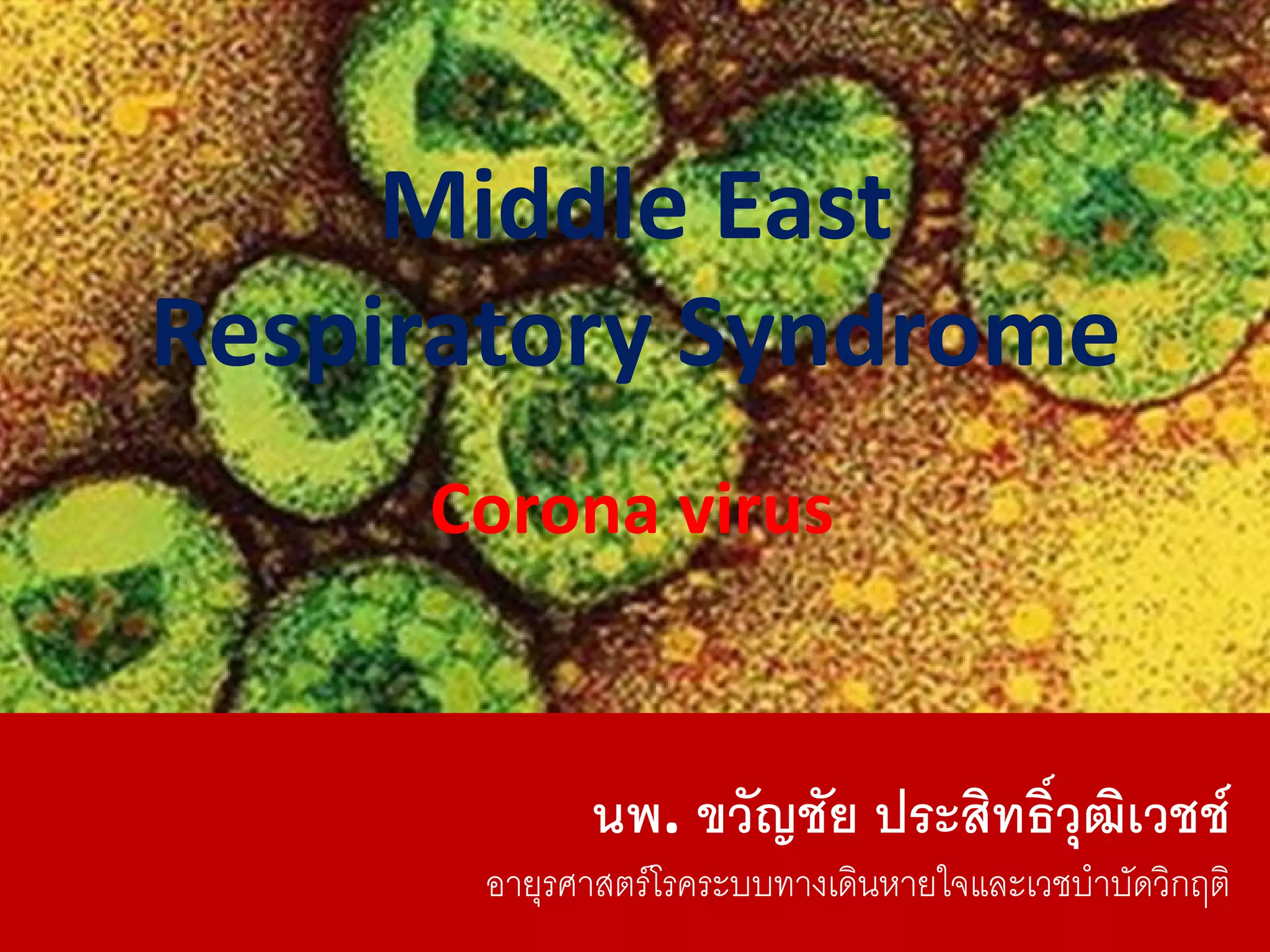
Middle East
Respiratory Syndrome
Corona virus
นพ. ขวญชย ประสทธวฒเวชช
อายรศาสตรโรคระบบทางเดนหายใจและเวชบ%าบดวกฤต
Corona Virus
§
Coronaviruses primarily infect the upper respiratory and
gastrointestinal tract of mammals and birds
§
Coronaviruses are believed to cause a significant
percentage of all common colds in human adults
§
Coronaviruses can even cause pneumonia, either direct
viral pneumonia or a secondary bacterial pneumonia
§
Coronaviruses also cause a range of diseases in farm
animals and domesticated pets
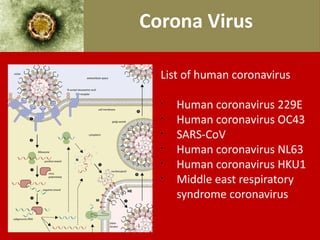
List of human coronavirus
§
Human coronavirus 229E
§
Human coronavirus OC43
§
SARS-CoV
§
Human coronavirus NL63
§
Human coronavirus HKU1
§
Middle east respiratory
syndrome coronavirus
Corona Virus
MERS CoV
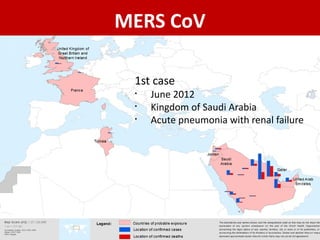
1st case
§
June 2012
§
Kingdom of Saudi Arabia
§
Acute pneumonia with renal failure
MERS CoV
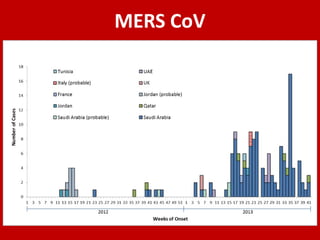
MERS CoV
§
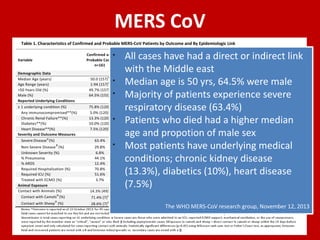
All cases have had a direct or indirect link
with the Middle east
§
Median age is 50 yrs, 64.5% were male
§
Majority of patients experience severe
respiratory disease (63.4%)
§
Patients who died had a higher median
age and propotion of male sex
§
Most patients have underlying medical
conditions; chronic kidney disease
(13.3%), diabetics (10%), heart disease
(7.5%)
The WHO MERS-CoV research group, November 12, 2013
MERS CoV
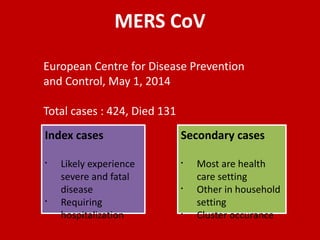
Index cases
§
Likely experience
severe and fatal
disease
§
Requiring
hospitalization
Secondary cases
§
Most are health
care setting
§
Other in household
setting
§
Cluster occurance
European Centre for Disease Prevention
and Control, May 1, 2014
Total cases : 424, Died 131
Clinical features
§
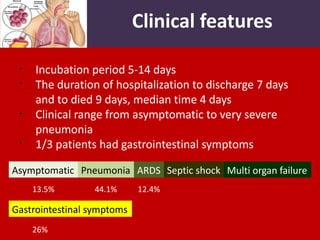
Incubation period 5-14 days
§
The duration of hospitalization to discharge 7 days
and to died 9 days, median time 4 days
§
Clinical range from asymptomatic to very severe
pneumonia
§
1/3 patients had gastrointestinal symptoms
Asymptomatic Pneumonia ARDS Septic shock Multi organ failure
13.5% 44.1% 12.4%
Gastrointestinal symptoms
26%
Clinical features
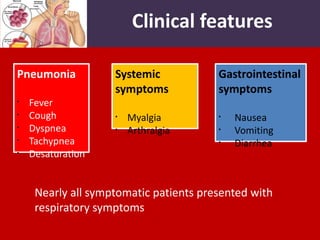
Pneumonia
§
Fever
§
Cough
§
Dyspnea
§
Tachypnea
§
Desaturation
Systemic
symptoms
§
Myalgia
§
Arthralgia
Gastrointestinal
symptoms
§
Nausea
§
Vomiting
§
Diarrhea
Nearly all symptomatic patients presented with
respiratory symptoms
Chest radiograph
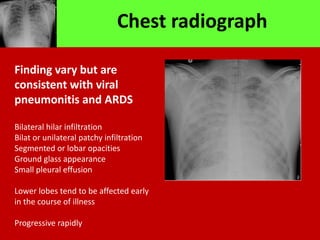
Finding vary but are
consistent with viral
pneumonitis and ARDS
Bilateral hilar infiltration
Bilat or unilateral patchy infiltration
Segmented or lobar opacities
Ground glass appearance
Small pleural effusion
Lower lobes tend to be affected early
in the course of illness
Progressive rapidly
Common laboratory
findings
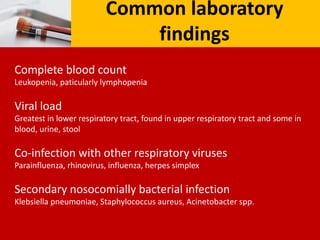
Complete blood count
Leukopenia, paticularly lymphopenia
Viral load
Greatest in lower respiratory tract, found in upper respiratory tract and some in
blood, urine, stool
Co-infection with other respiratory viruses
Parainfluenza, rhinovirus, influenza, herpes simplex
Secondary nosocomially bacterial infection
Klebsiella pneumoniae, Staphylococcus aureus, Acinetobacter spp.
Transmission
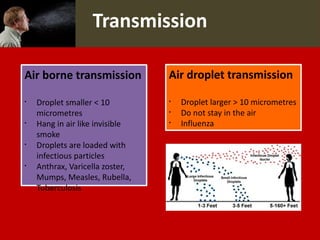
Air borne transmission
§
Droplet smaller < 10
micrometres
§
Hang in air like invisible
smoke
§
Droplets are loaded with
infectious particles
§
Anthrax, Varicella zoster,
Mumps, Measles, Rubella,
Tuberculosis
Air droplet transmission
§
Droplet larger > 10 micrometres
§
Do not stay in the air
§
Influenza
Transmission
MERS CoV
Zoonosis in sporadic case
§
Camel and bat
Human to human transmission in secondary case
§
Small air droplet
§
Transmission did not extend beyond close contacts into the community
§
Secondary attack rates among family members of patients appear to be low
Cluster
Defined as two or more persons with onset of symptoms within 14 day period
and are associated with specific setting
Transmission
MERS CoV
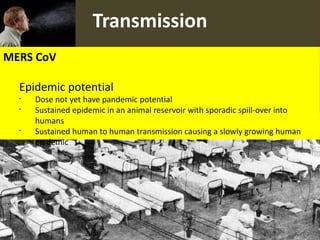
Epidemic potential
§
Dose not yet have pandemic potential
§
Sustained epidemic in an animal reservoir with sporadic spill-over into
humans
§
Sustained human to human transmission causing a slowly growing human
epidemic
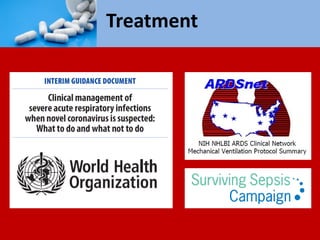
Treatment
Absent of pathogen-specific interventions
Management largely depends on provision of organ
support and vigilance for and prevention of
complications
Treatment
Treatment
Organ support and prevention of complication
§
Lung-protective ventilatory strategies for ARDS
§
Sepsis early directed goal therapy
§
Antimicrobial treatment for co-infection
§
Renal replacement therapy
§
Cardiovascular support
§
ECMO
Non useful drug
§
High dose corticosteroid
§
Interferons, Cyclosporin A, Ribavirin, Nitazoxanide,Immunoglobulins,
Lopinavir
§
SARS CoV convalescent plasma
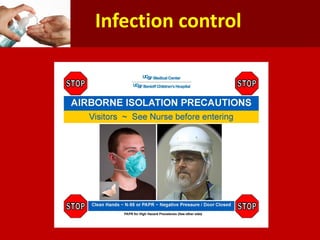
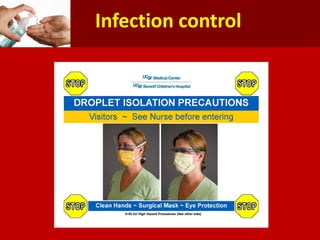
Infection control
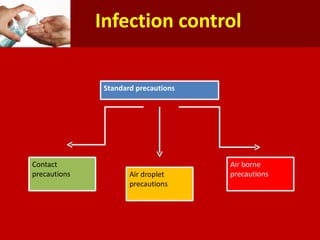
Standard precautions
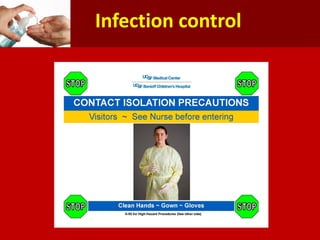
Contact
precautions
Air borne
precautionsAir droplet
precautions
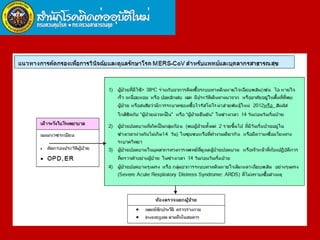
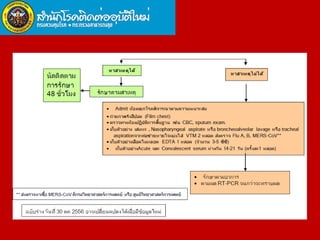
Infection control
Infection control
Infection control
นพ. ขวญชย ประสทธวฒเวชช
อายรศาสตรโรคระบบทางเดนหายใจและเวชบ%าบดวกฤต

Mers cov