Middle East Respiratory Syndrome Coronavirus
(MERS-CoV):
BY:
DR.SATTI MOH’D SALEH
INFECTIOUS DISEASE PHYSICIAN
MEDICAL DIRECTOR
MEEQAT GENERAL HOSPITAL
CBAHI INFECTION CONTROL MEMBER
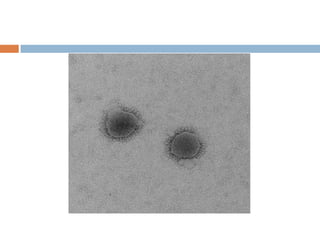
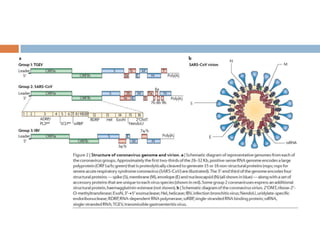
CORONA VIRUS
- CORONA DERIVED FROM LATIN ( MEANS
CROWN OR HALO) DUE TO SHORT SPIKE LIKE
PROJECTIONS (HE)
MERS CoV-
6 NEW TYPE OF CORONA VIRUS

- 2ND OF 4 SUB GROUP ALPHA- B-GAMA &
DELTA

- RNA VIRUS

-ALPHA & BETA DESCEND FROM BAT GENE
POOL

- DELTA & GAMA FROM AVIAN GENE POOL
NOVEL CORONA VIRUS
NOVEL CORONA VIRUS REPORTED ON
24/9/2012 BY DR. ALI MOHAMMAD ZAKI

-ISOLATED & IDENTIFIED FROM PATIENT
60 YEARS OLD WITH ACUTE PNEUMONEA
& ARF
BY DR. ALI M. ZAKI
-POSTED HIS FINDINGS
vb.nhr.com
-
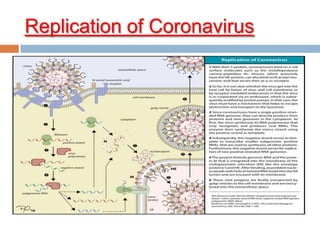
CoronavirusReplication of
MERS CoV
NAMED AS NOVEL CORONA VIRUS OR
SAUDI’S SARS LIKE CORONA VIRUS

- INTERNATIONAL COMMITTEE ON
TOXONOMY OF VIRUS NAME IT AS MERS
CoV
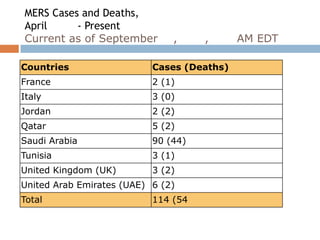
MERS Cases and Deaths,
April - Present
Current as of September , , AM EDT
Countries Cases (Deaths)
France 2 (1)
Italy 3 (0)
Jordan 2 (2)
Qatar 5 (2)
Saudi Arabia 90 (44)
Tunisia 3 (1)
United Kingdom (UK) 3 (2)
United Arab Emirates (UAE) 6 (2)
Total 114 (54
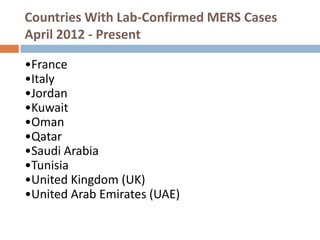
Countries With Lab-Confirmed MERS Cases
April 2012 - Present
•France
•Italy
•Jordan
•Kuwait
•Oman
•Qatar
•Saudi Arabia
•Tunisia
•United Kingdom (UK)
•United Arab Emirates (UAE)
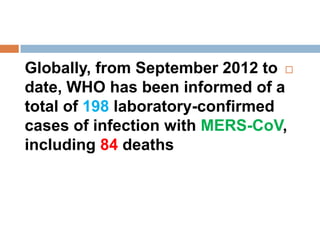
Globally, from September 2012 to
date, WHO has been informed of a
total of 198 laboratory-confirmed
cases of infection with MERS-CoV,
including 84 deaths
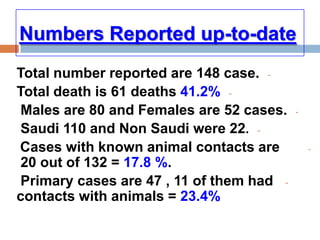
-Total number reported are 148 case.
-Total death is 61 deaths 41.2%
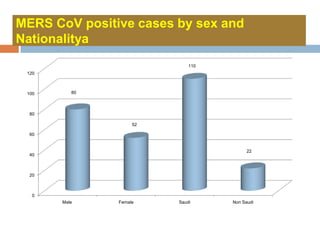
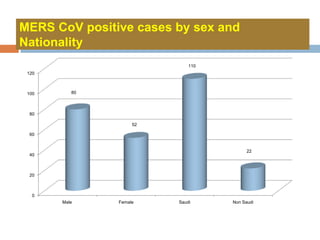
-Males are 80 and Females are 52 cases.
-Saudi 110 and Non Saudi were 22.
-Cases with known animal contacts are
20 out of 132 = 17.8 %.
-Primary cases are 47 , 11 of them had
contacts with animals = 23.4%
date-to-Numbers Reported up
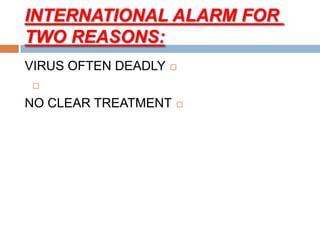
INTERNATIONAL ALARM FOR
TWO REASONS:
VIRUS OFTEN DEADLY

NO CLEAR TREATMENT
SOURCE UNKNOWN
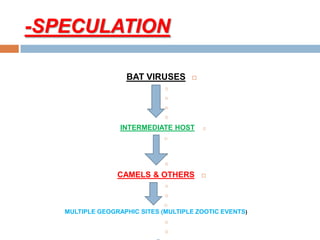
SPECULATION-
VIRUSESBAT




INTERMEDIATE HOST



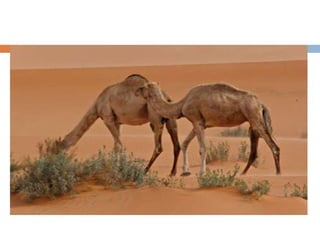
& OTHERSCAMELS



MULTIPLE GEOGRAPHIC SITES (MULTIPLE ZOOTIC EVENTS)


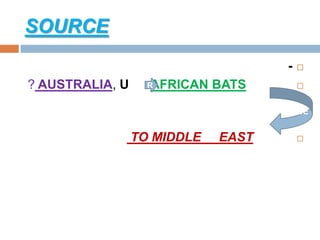
SOURCE
-
AFRICAN BATSU,AUSTRALIA?
TO MIDDLE EAST
S
O
R
C
E
SOURCE
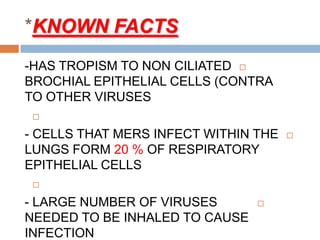
KNOWN FACTS*
-HAS TROPISM TO NON CILIATED
BROCHIAL EPITHELIAL CELLS (CONTRA
TO OTHER VIRUSES

- CELLS THAT MERS INFECT WITHIN THE
LUNGS FORM 20 % OF RESPIRATORY
EPITHELIAL CELLS

- LARGE NUMBER OF VIRUSES
NEEDED TO BE INHALED TO CAUSE
INFECTION
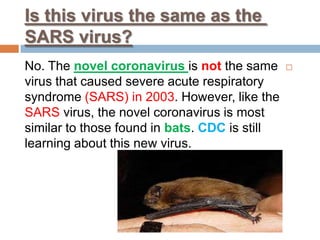
Is this virus the same as the
SARS virus?
the samenotisnovel coronavirusNo. The
virus that caused severe acute respiratory
syndrome (SARS) in 2003. However, like the
SARS virus, the novel coronavirus is most
similar to those found in bats. CDC is still
learning about this new virus.
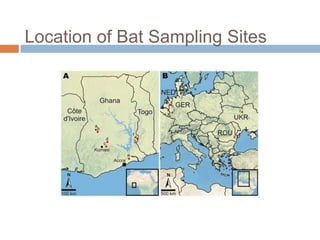
Location of Bat Sampling Sites
INCUBATIONCoV-MERS
period
The available data suggest that
symptoms have occurred up to
14 days after last exposure.

SYMPTOMS:
Fever
Cough
Chills
Sore throat
Myalgia
Arthralgia followed by dyspnea
May present with fever and diarrhea
Followed by ARDS, septic shock,
multiorgan failure
CLINICAL CASECoV-MERS
definition
A person with an acute respiratory infection,
which may include fever (≥ 38°C , 100.4°F)
and cough; AND
Suspicion of pulmonary parenchymal
disease (e.g., pneumonia or acute respiratory
distress syndrome based on clinical or
radiological evidence); AND
History of travel from the Arabian Peninsula
or neighboring countries* within 14 days.

CDC Case Definitions:
Probable Case
•Any person who-
–meets the criteria above for “Patient Under Investigation” and has
clinical, radiological, or histopathological evidence of pulmonary
parenchyma disease (e.g. pneumonia or ARDS), but no possibility of
laboratory confirmation exists, either because the patient or samples are
not available or there is no testing available for other respiratory
infections, AND
–is a close contact with a laboratory-confirmed case, AND
–has illness not already explained by any other infection or etiology,
including all clinically indicated tests for community-acquired
pneumonia according to local management guidelines.
•OR any person with-
–severe acute respiratory illness with no known etiology, AND
–an epidemiologic link to a confirmed MERS case.
.
Confirmed Case
•A person with laboratory confirmation of
infection with MERS-CoV
Positive PCR for confirmation
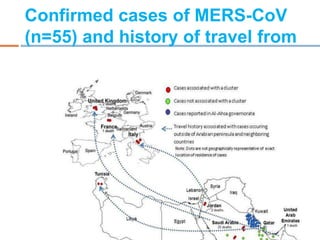
Confirmed cases of MERS-CoV
(n=55) and history of travel from
the Arabian Peninsula
 Check for
 co – infection with other viruses
 e.g.: H1N1,
 bacterial infection,
 fungal infection.
MERS-CoV CLOSE CONTACT
definition
A close contact* is defined as a person who:
Did not use respiratory protection (N95 or
higher level respirator); AND
Shared the same airspace within 10 feet for
at least 5 minutes. Examples of close contact
include providing care for the case (e.g., a
healthcare worker or family member), or
having similar close physical contact; or
stayed at the same place (e.g., lived with,
visited) as the case during their infectious
period.
First Reported MERS-CoV
Case
60 year old Saudi man
•Presented on June 13th with 7d h/o fever and
cough; recent shortness of breath
•Increasing blood urea nitrogen (BUN) and
creatinine, starting day 3 of admission
•White cell count normal on admission (but
92.5% neutrophils) and increased to a peak of
23,800 cells per cubic millimeter on day 10 with
neutrophilia, lymphopenia, and progressive
thrombocytopenia
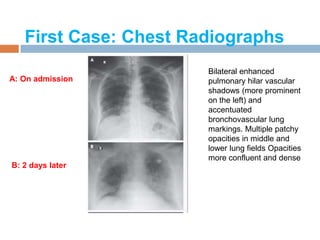
First Case: Chest Radiographs
Bilateral enhanced
pulmonary hilar vascular
shadows (more prominent
on the left) and
accentuated
bronchovascular lung
markings. Multiple patchy
opacities in middle and
lower lung fields Opacities
more confluent and dense
A: On admission
B: 2 days later
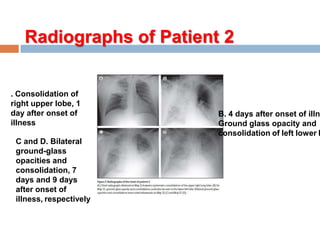
Radiographs of Patient 2
B. 4 days after onset of illn
Ground glass opacity and
consolidation of left lower l
. Consolidation of
right upper lobe, 1
day after onset of
illness
C and D. Bilateral
ground-glass
opacities and
consolidation, 7
days and 9 days
after onset of
illness, respectively
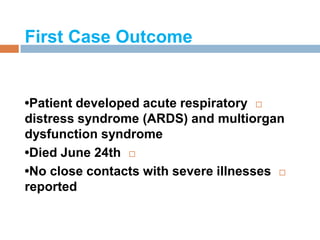
First Case Outcome
•Patient developed acute respiratory
distress syndrome (ARDS) and multiorgan
dysfunction syndrome
•Died June 24th
•No close contacts with severe illnesses
reported
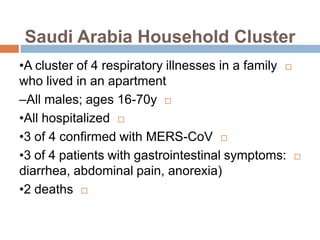
Saudi Arabia Household Cluster
•A cluster of 4 respiratory illnesses in a family
who lived in an apartment
–All males; ages 16-70y
•All hospitalized
•3 of 4 confirmed with MERS-CoV
•3 of 4 patients with gastrointestinal symptoms:
diarrhea, abdominal pain, anorexia)
•2 deaths
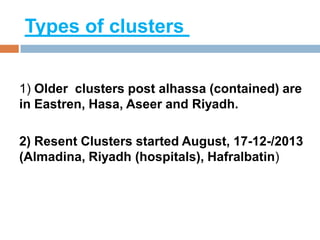
Types of clusters
1) Older clusters post alhassa (contained) are
in Eastren, Hasa, Aseer and Riyadh.
2) Resent Clusters started August, 17-12-/2013
(Almadina, Riyadh (hospitals), Hafralbatin)
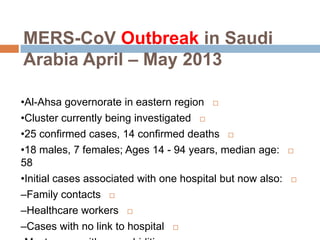
MERS-CoV Outbreak in Saudi
Arabia April – May 2013
•Al-Ahsa governorate in eastern region
•Cluster currently being investigated
•25 confirmed cases, 14 confirmed deaths
•18 males, 7 females; Ages 14 - 94 years, median age:
58
•Initial cases associated with one hospital but now also:
–Family contacts
–Healthcare workers
–Cases with no link to hospital
MERS CoV positive cases by sex and
Nationalitya
0
20
40
60
80
100
120
Male Female Saudi Non Saudi
80
52
110
22
MERS CoV positive cases by sex and
Nationality
0
20
40
60
80
100
120
Male Female Saudi Non Saudi
80
52
110
22
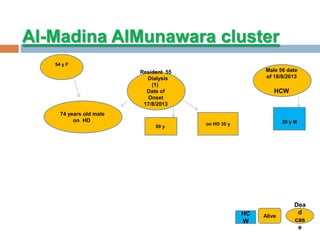
clusterAlMunawaraMadina-Al
Resident 55
Dialysis
(1)
Date of
Onset
17/8/2013
Male 56 date
of 18/8/2013
HCW
74 years old male
on HD
Dea
d
cas
e
Alive
35 yon HD
89 y
54 y F
39 y M
HC
W
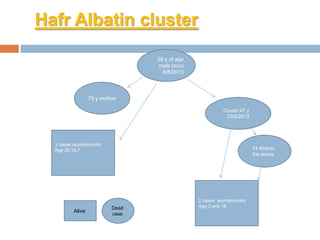
clusterAlbatinHafr
3 cases asymptomatic
Age 26,16,7
2 cases asymptomatic
Age 3 and 18
38 y of age
male (son)
8/8/2013
79 y mother
Cousin 47 y
23/8/2013
74 Mother
the above
Dead
case
Alive
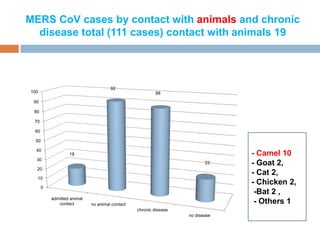
MERS CoV cases by contact with animals and chronic
disease total (111 cases) contact with animals 19
0
10
20
30
40
50
60
70
80
90
100
admitted animal
contact no animal contact
chronic disease
no disease
19
92
88
23
- Camel 10
- Goat 2,
- Cat 2,
- Chicken 2,
-Bat 2 ,
- Others 1
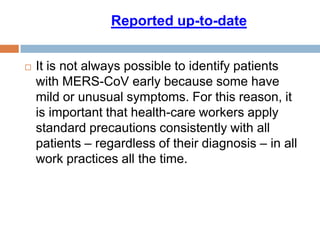
 It is not always possible to identify patients
with MERS-CoV early because some have
mild or unusual symptoms. For this reason, it
is important that health-care workers apply
standard precautions consistently with all
patients – regardless of their diagnosis – in all
work practices all the time.
date-to-Reported up
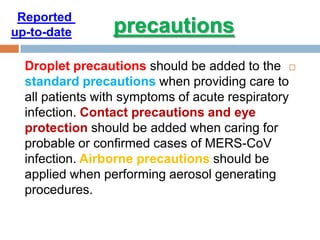
Droplet precautions should be added to the
standard precautions when providing care to
all patients with symptoms of acute respiratory
infection. Contact precautions and eye
protection should be added when caring for
probable or confirmed cases of MERS-CoV
infection. Airborne precautions should be
applied when performing aerosol generating
procedures.
precautions
Reported
date-to-up
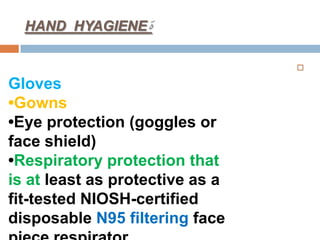
HAND HYAGIENE

Gloves
•Gowns
•Eye protection (goggles or
face shield)
•Respiratory protection that
is at least as protective as a
fit-tested NIOSH-certified
disposable N95 filtering face
Personal Protective Equipment
(PPE) for Healthcare personnel
(HCP)
Recommended PPE should be worn by HCP
upon entry into patient rooms or care areas.
•Upon exit from the patient room or care
area, PPE should be removed and either:
–Discarded, or
–For re-useable PPE, cleaned and disinfected
according to the manufacturer’s reprocessing
instructions.
Environmental Infection Control
•Follow standard procedures, per
hospital policy and manufacturers’
instructions, for cleaning and/or
disinfection of:
–Environmental surfaces and
equipment
–Textiles and laundry
–Food utensils and dishware
Infection Control
Recommendations for
Hospitalized Patients
•These recommendations are for hospitalized
patients who meet the case definition and are
based on the following issues:
–Poorly characterized clinical signs and
symptoms, and a suspected high rate of
morbidity and mortality among infected patients
–Unknown modes of transmission of MERS-CoV
–Lack of a vaccine and chemoprophylaxis
–Evidence of limited, not sustained, human-to-
human transmission
Patient Placement
Airborne Infection Isolation Room (AIIR)
–If an AIIR is not available, the patient should be
transferred as soon as is feasible to a facility where an
AIIR is available.
–Pending transfer, place a facemask on the patient
and isolate him/her in a single-patient room with the
door closed.
–The patient should not be placed in any room where
room exhaust is recirculated without high-efficiency
particulate air (HEPA) filtration.
•Once in an AIIR, the patient’s facemask may be
removed.
•When outside of the AIIR, patients should wear a
facemask to contain secretions.
Patient Placement
Limit transport and movement of the patient
outside of the AIIR to medically-essential
purposes.
•Implement staffing policies to minimize the
number of personnel who must enter the room.
Health-care providers are advised
to maintain vigilance.

- NO SUSTAINED TRANSMISSION IN
COMMUNITY

- PEOPLE WITH COMORBIDITY
OR IMMUNOSUPPRESSION
INCREASE INFECTION,
INCREASE COMPLICATION,
INCREASE MORBIDITY
PERSON TO PERSON TRANSMISSION (VERY
LOW)
People at high risk
 of severe disease due to MERS-CoV should
avoid close contact with animals when visiting
farms or barn areas where the virus is known
to be potentially circulating. For the general
public, when visiting a farm or a barn, general
hygiene measures, such as regular hand
washing before and after touching
animals, avoiding contact with sick
animals, and following food hygiene
practices, should be adhered to.
Complications

Complications have included severe
1- pneumonia, acute respiratory distress
syndrome 2- (ARDS) with multi-organ
failure,
3- renal failure requiring
dialysis, consumptive 4- coagulopathy
and pericarditis.
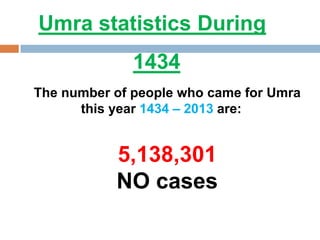
The number of people who came for Umra
this year 1434 – 2013 are:
5,138,301
NO cases
Umra statistics During
1434
ADVISES IN HAJJ & UMRA
FREQUENT HAND WASHING
CONTACT WITH OTHERS
NOT TO TOUCH EYE NOSE & MOUTH
WITHOUT HAND WASHING
COVER MOUTH, NOSE WITH TISSUES
(NOT TO INFECT OTHERS ON COUGHING
& SNEEZING)
CDC does not recommend that travelers
change their plans because of MERS.
However, the Saudi Arabia Ministry of
Health has made special
recommendations for travelers to Hajj
and Umrah. Because of the risk of
MERS, Saudi Arabia recommends that the
following groups should postpone their
plans for Hajj and Umrah this year:
People over 65 years old
Children under 12 years old
Pregnant women
People with chronic diseases (such as
heart disease, kidney disease, diabetes, or
respiratory disease)
People with weakened immune systems
People with cancer or terminal illnesses
CDC encourages people traveling to Saudi
Arabia to perform Hajj or Umrah to
consider this advice. People who are
concerned about MERS should discuss
their travel plans with their doctor.
How Can Travelers Protect
Themselves?
Taking these everyday actions can help
prevent the spread of germs and protect
against colds, flu, and other illnesses:
Wash your hands often with soap and
water. If soap and water are not
based hand-alcoholavailable, use an
.sanitizer
Avoid touching your eyes, nose, and
mouth. Germs spread this way.
Avoid close contact with sick people.
Be sure you are up-to-date with all of your
shots, and if possible, see your healthcare
provider at least 4–6 weeks before travel to
get any additional shots.
.
:If you are sick
Cover your mouth with a tissue when
you cough or sneeze, and throw the
tissue in the trash.
Avoid contact with other people to
keep from infecting them.
Investigations
 Chest x – ray findings:
 Bilateral hailer infiltrate
 Bilateral patchy infiltrate
 Segmental or lobar opacity
 Pleural effusion
Laboratory Testing
Lower respiratory specimens
(sputum, bronchoalveolar
lavage, endotracheal) are a priority
respiratory specimen for real time reverse
transcription polymerase chain reaction
(RT-PCR) testing
•Respiratory (lower and upper
tracts), stool, and
serum specimens
•Specimen collection at different times
Positive PCR for
confirmation
Emergency Use Authorization
•FDA issued an EUA on June 5, 2013, to
authorize use of CDC's “Novel coronavirus
2012 real-time reverse transcription–PCR
assay” to test for MERS-CoV in clinical
respiratory, blood, and stool specimens.
•Assay will be deployed to Laboratory
Response Network (LRN) laboratories in all 50
states over the coming weeks.
Approach to Serology
•Identify and generate candidate CoV antigens
–Using proteins from similar bat viruses
•Develop ELISA-based assay
•Evaluate assay with an extensive panel of
negative (specificity) and positive sera
(sensitivity)
Therapeutics
•No vaccines developed as of
yet
• antivirals identified as of yet
•Treatment
USED IN MONKEY
-
SYMPTOMS, SLOW VIRAL GROWTH
DAMAGE TO LUNGS, BREATHING
(ONLY USED IN FEW MONKEYS WITHIN 8
HOURS OF INFECTIONS)
U
S
E
D
I
N
M
O
N
K
E
Y
Management:

 Isolation: standard + droplet
±airborne precautions
 Organ support
 Prevention of complications
Empiric use of:
 Broad spectrum antibiotic
 Antiviral (oseltamivir)
 Plus or minus antifungal
 Lung protective ventilator
 Strategies for ARDS
 Treatment of complication (RENAL
FAILURE)
 Steroids (no benefits)
 Treatment of HCAI
PATIENTA DYINGIF YOU HAVE
,SHOULD
IT AS LAST EFFORTYOU TRY
FUTURE TREATMENT
INTERFERON ALFA 2 + RIBAVERIN
USED IN MONKEY
-
SYMPTOMS, SLOW VIRAL GROWTH
DAMAGE TO LUNGS, BREATHING
(ONLY USED IN FEW MONKEYS WITHIN 8
HOURS OF INFECTIONS)
U
S
E
D
I
N
M
O
N
K
E
Y
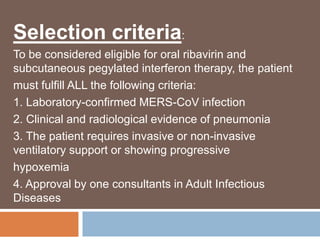
Selection criteria:
To be considered eligible for oral ribavirin and
subcutaneous pegylated interferon therapy, the patient
must fulfill ALL the following criteria:
1. Laboratory-confirmed MERS-CoV infection
2. Clinical and radiological evidence of pneumonia
3. The patient requires invasive or non-invasive
ventilatory support or showing progressive
hypoxemia
4. Approval by one consultants in Adult Infectious
Diseases
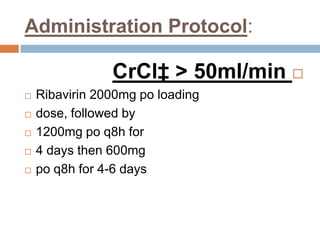
Administration Protocol:
ml/min50CrCl‡ >
 Ribavirin 2000mg po loading
 dose, followed by
 1200mg po q8h for
 4 days then 600mg
 po q8h for 4-6 days
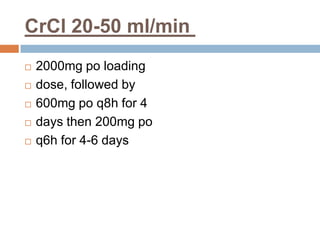
ml/min50-20CrCl
 2000mg po loading
 dose, followed by
 600mg po q8h for 4
 days then 200mg po
 q6h for 4-6 days
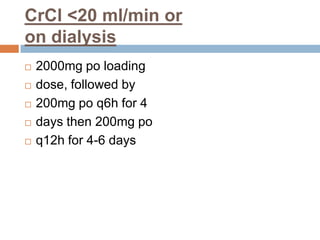
CrCl <20 ml/min or
on dialysis
 2000mg po loading
 dose, followed by
 200mg po q6h for 4
 days then 200mg po
 q12h for 4-6 days
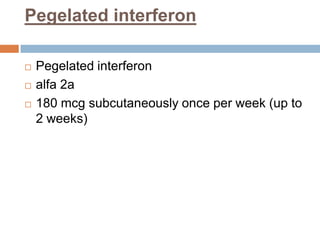
Pegelated interferon
 Pegelated interferon
 alfa 2a
 180 mcg subcutaneously once per week (up to
2 weeks)
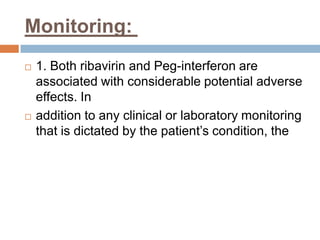
Monitoring:
 1. Both ribavirin and Peg-interferon are
associated with considerable potential adverse
effects. In
 addition to any clinical or laboratory monitoring
that is dictated by the patient’s condition, the
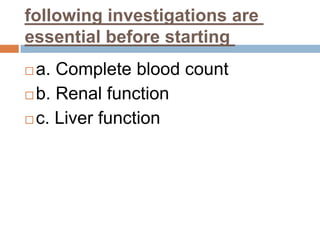
following investigations are
essential before starting
 a. Complete blood count
 b. Renal function
 c. Liver function
 2. Conscious patients must have a formal
psychiatric assessment if there is any
clinical evidence
 of psychosis or acute confusion
 Changes to the treatment protocol:
 1. Changes in the treatment protocol in
response to toxicity or clinical
developments are permitted. A
psychiatric
assessment
LAST REMINDER,
NO UNNECESSARY PANIC…
ALWAYS COMPLY WITH INFECTION
CONTROL & PREVENTION STANDARDS
Sporadic
-–-–
SUMMARY
● According to the investigations made for the 148
cases we do not know the source of the infection (
possible animal? Camels, Possible human.. GOK
● Human transmission is there we do not know how?
Possible close contact or droplet???
● Chronic disease is a risk factor specially kidney
disease.
●Serological investigation are not yet done but
samples are available for testing.
● we will continue surveillance and research.
Corona update mers
Corona update mers
Corona update mers

Corona update mers

  • 1.
    Middle East RespiratorySyndrome Coronavirus (MERS-CoV): BY: DR.SATTI MOH’D SALEH INFECTIOUS DISEASE PHYSICIAN MEDICAL DIRECTOR MEEQAT GENERAL HOSPITAL CBAHI INFECTION CONTROL MEMBER
  • 2.
    CORONA VIRUS - CORONADERIVED FROM LATIN ( MEANS CROWN OR HALO) DUE TO SHORT SPIKE LIKE PROJECTIONS (HE)
  • 3.
    MERS CoV- 6 NEWTYPE OF CORONA VIRUS  - 2ND OF 4 SUB GROUP ALPHA- B-GAMA & DELTA  - RNA VIRUS  -ALPHA & BETA DESCEND FROM BAT GENE POOL  - DELTA & GAMA FROM AVIAN GENE POOL
  • 4.
    NOVEL CORONA VIRUS NOVELCORONA VIRUS REPORTED ON 24/9/2012 BY DR. ALI MOHAMMAD ZAKI  -ISOLATED & IDENTIFIED FROM PATIENT 60 YEARS OLD WITH ACUTE PNEUMONEA & ARF BY DR. ALI M. ZAKI -POSTED HIS FINDINGS
  • 5.
  • 8.
  • 9.
    MERS CoV NAMED ASNOVEL CORONA VIRUS OR SAUDI’S SARS LIKE CORONA VIRUS  - INTERNATIONAL COMMITTEE ON TOXONOMY OF VIRUS NAME IT AS MERS CoV
  • 10.
    MERS Cases andDeaths, April - Present Current as of September , , AM EDT Countries Cases (Deaths) France 2 (1) Italy 3 (0) Jordan 2 (2) Qatar 5 (2) Saudi Arabia 90 (44) Tunisia 3 (1) United Kingdom (UK) 3 (2) United Arab Emirates (UAE) 6 (2) Total 114 (54
  • 11.
    Countries With Lab-ConfirmedMERS Cases April 2012 - Present •France •Italy •Jordan •Kuwait •Oman •Qatar •Saudi Arabia •Tunisia •United Kingdom (UK) •United Arab Emirates (UAE)
  • 12.
    Globally, from September2012 to date, WHO has been informed of a total of 198 laboratory-confirmed cases of infection with MERS-CoV, including 84 deaths
  • 13.
    -Total number reportedare 148 case. -Total death is 61 deaths 41.2% -Males are 80 and Females are 52 cases. -Saudi 110 and Non Saudi were 22. -Cases with known animal contacts are 20 out of 132 = 17.8 %. -Primary cases are 47 , 11 of them had contacts with animals = 23.4% date-to-Numbers Reported up
  • 14.
    INTERNATIONAL ALARM FOR TWOREASONS: VIRUS OFTEN DEADLY  NO CLEAR TREATMENT
  • 15.
  • 16.
  • 17.
  • 18.
    KNOWN FACTS* -HAS TROPISMTO NON CILIATED BROCHIAL EPITHELIAL CELLS (CONTRA TO OTHER VIRUSES  - CELLS THAT MERS INFECT WITHIN THE LUNGS FORM 20 % OF RESPIRATORY EPITHELIAL CELLS  - LARGE NUMBER OF VIRUSES NEEDED TO BE INHALED TO CAUSE INFECTION
  • 19.
    Is this virusthe same as the SARS virus? the samenotisnovel coronavirusNo. The virus that caused severe acute respiratory syndrome (SARS) in 2003. However, like the SARS virus, the novel coronavirus is most similar to those found in bats. CDC is still learning about this new virus.
  • 20.
    Location of BatSampling Sites
  • 22.
    INCUBATIONCoV-MERS period The available datasuggest that symptoms have occurred up to 14 days after last exposure. 
  • 23.
    SYMPTOMS: Fever Cough Chills Sore throat Myalgia Arthralgia followedby dyspnea May present with fever and diarrhea Followed by ARDS, septic shock, multiorgan failure
  • 24.
    CLINICAL CASECoV-MERS definition A personwith an acute respiratory infection, which may include fever (≥ 38°C , 100.4°F) and cough; AND Suspicion of pulmonary parenchymal disease (e.g., pneumonia or acute respiratory distress syndrome based on clinical or radiological evidence); AND History of travel from the Arabian Peninsula or neighboring countries* within 14 days. 
  • 25.
    CDC Case Definitions: ProbableCase •Any person who- –meets the criteria above for “Patient Under Investigation” and has clinical, radiological, or histopathological evidence of pulmonary parenchyma disease (e.g. pneumonia or ARDS), but no possibility of laboratory confirmation exists, either because the patient or samples are not available or there is no testing available for other respiratory infections, AND –is a close contact with a laboratory-confirmed case, AND –has illness not already explained by any other infection or etiology, including all clinically indicated tests for community-acquired pneumonia according to local management guidelines. •OR any person with- –severe acute respiratory illness with no known etiology, AND –an epidemiologic link to a confirmed MERS case. .
  • 26.
    Confirmed Case •A personwith laboratory confirmation of infection with MERS-CoV Positive PCR for confirmation
  • 27.
    Confirmed cases ofMERS-CoV (n=55) and history of travel from the Arabian Peninsula
  • 28.
     Check for co – infection with other viruses  e.g.: H1N1,  bacterial infection,  fungal infection.
  • 29.
    MERS-CoV CLOSE CONTACT definition Aclose contact* is defined as a person who: Did not use respiratory protection (N95 or higher level respirator); AND Shared the same airspace within 10 feet for at least 5 minutes. Examples of close contact include providing care for the case (e.g., a healthcare worker or family member), or having similar close physical contact; or stayed at the same place (e.g., lived with, visited) as the case during their infectious period.
  • 30.
    First Reported MERS-CoV Case 60year old Saudi man •Presented on June 13th with 7d h/o fever and cough; recent shortness of breath •Increasing blood urea nitrogen (BUN) and creatinine, starting day 3 of admission •White cell count normal on admission (but 92.5% neutrophils) and increased to a peak of 23,800 cells per cubic millimeter on day 10 with neutrophilia, lymphopenia, and progressive thrombocytopenia
  • 31.
    First Case: ChestRadiographs Bilateral enhanced pulmonary hilar vascular shadows (more prominent on the left) and accentuated bronchovascular lung markings. Multiple patchy opacities in middle and lower lung fields Opacities more confluent and dense A: On admission B: 2 days later
  • 32.
    Radiographs of Patient2 B. 4 days after onset of illn Ground glass opacity and consolidation of left lower l . Consolidation of right upper lobe, 1 day after onset of illness C and D. Bilateral ground-glass opacities and consolidation, 7 days and 9 days after onset of illness, respectively
  • 33.
    First Case Outcome •Patientdeveloped acute respiratory distress syndrome (ARDS) and multiorgan dysfunction syndrome •Died June 24th •No close contacts with severe illnesses reported
  • 34.
    Saudi Arabia HouseholdCluster •A cluster of 4 respiratory illnesses in a family who lived in an apartment –All males; ages 16-70y •All hospitalized •3 of 4 confirmed with MERS-CoV •3 of 4 patients with gastrointestinal symptoms: diarrhea, abdominal pain, anorexia) •2 deaths
  • 35.
    Types of clusters 1)Older clusters post alhassa (contained) are in Eastren, Hasa, Aseer and Riyadh. 2) Resent Clusters started August, 17-12-/2013 (Almadina, Riyadh (hospitals), Hafralbatin)
  • 36.
    MERS-CoV Outbreak inSaudi Arabia April – May 2013 •Al-Ahsa governorate in eastern region •Cluster currently being investigated •25 confirmed cases, 14 confirmed deaths •18 males, 7 females; Ages 14 - 94 years, median age: 58 •Initial cases associated with one hospital but now also: –Family contacts –Healthcare workers –Cases with no link to hospital
  • 37.
    MERS CoV positivecases by sex and Nationalitya 0 20 40 60 80 100 120 Male Female Saudi Non Saudi 80 52 110 22
  • 38.
    MERS CoV positivecases by sex and Nationality 0 20 40 60 80 100 120 Male Female Saudi Non Saudi 80 52 110 22
  • 39.
    clusterAlMunawaraMadina-Al Resident 55 Dialysis (1) Date of Onset 17/8/2013 Male56 date of 18/8/2013 HCW 74 years old male on HD Dea d cas e Alive 35 yon HD 89 y 54 y F 39 y M HC W
  • 40.
    clusterAlbatinHafr 3 cases asymptomatic Age26,16,7 2 cases asymptomatic Age 3 and 18 38 y of age male (son) 8/8/2013 79 y mother Cousin 47 y 23/8/2013 74 Mother the above Dead case Alive
  • 41.
    MERS CoV casesby contact with animals and chronic disease total (111 cases) contact with animals 19 0 10 20 30 40 50 60 70 80 90 100 admitted animal contact no animal contact chronic disease no disease 19 92 88 23 - Camel 10 - Goat 2, - Cat 2, - Chicken 2, -Bat 2 , - Others 1
  • 42.
     It isnot always possible to identify patients with MERS-CoV early because some have mild or unusual symptoms. For this reason, it is important that health-care workers apply standard precautions consistently with all patients – regardless of their diagnosis – in all work practices all the time. date-to-Reported up
  • 43.
    Droplet precautions shouldbe added to the standard precautions when providing care to all patients with symptoms of acute respiratory infection. Contact precautions and eye protection should be added when caring for probable or confirmed cases of MERS-CoV infection. Airborne precautions should be applied when performing aerosol generating procedures. precautions Reported date-to-up
  • 44.
    HAND HYAGIENE  Gloves •Gowns •Eye protection(goggles or face shield) •Respiratory protection that is at least as protective as a fit-tested NIOSH-certified disposable N95 filtering face
  • 45.
    Personal Protective Equipment (PPE)for Healthcare personnel (HCP) Recommended PPE should be worn by HCP upon entry into patient rooms or care areas. •Upon exit from the patient room or care area, PPE should be removed and either: –Discarded, or –For re-useable PPE, cleaned and disinfected according to the manufacturer’s reprocessing instructions.
  • 46.
    Environmental Infection Control •Followstandard procedures, per hospital policy and manufacturers’ instructions, for cleaning and/or disinfection of: –Environmental surfaces and equipment –Textiles and laundry –Food utensils and dishware
  • 47.
    Infection Control Recommendations for HospitalizedPatients •These recommendations are for hospitalized patients who meet the case definition and are based on the following issues: –Poorly characterized clinical signs and symptoms, and a suspected high rate of morbidity and mortality among infected patients –Unknown modes of transmission of MERS-CoV –Lack of a vaccine and chemoprophylaxis –Evidence of limited, not sustained, human-to- human transmission
  • 48.
    Patient Placement Airborne InfectionIsolation Room (AIIR) –If an AIIR is not available, the patient should be transferred as soon as is feasible to a facility where an AIIR is available. –Pending transfer, place a facemask on the patient and isolate him/her in a single-patient room with the door closed. –The patient should not be placed in any room where room exhaust is recirculated without high-efficiency particulate air (HEPA) filtration. •Once in an AIIR, the patient’s facemask may be removed. •When outside of the AIIR, patients should wear a facemask to contain secretions.
  • 49.
    Patient Placement Limit transportand movement of the patient outside of the AIIR to medically-essential purposes. •Implement staffing policies to minimize the number of personnel who must enter the room.
  • 50.
    Health-care providers areadvised to maintain vigilance.
  • 51.
     - NO SUSTAINEDTRANSMISSION IN COMMUNITY  - PEOPLE WITH COMORBIDITY OR IMMUNOSUPPRESSION INCREASE INFECTION, INCREASE COMPLICATION, INCREASE MORBIDITY PERSON TO PERSON TRANSMISSION (VERY LOW)
  • 52.
    People at highrisk  of severe disease due to MERS-CoV should avoid close contact with animals when visiting farms or barn areas where the virus is known to be potentially circulating. For the general public, when visiting a farm or a barn, general hygiene measures, such as regular hand washing before and after touching animals, avoiding contact with sick animals, and following food hygiene practices, should be adhered to.
  • 53.
    Complications  Complications have includedsevere 1- pneumonia, acute respiratory distress syndrome 2- (ARDS) with multi-organ failure, 3- renal failure requiring dialysis, consumptive 4- coagulopathy and pericarditis.
  • 54.
    The number ofpeople who came for Umra this year 1434 – 2013 are: 5,138,301 NO cases Umra statistics During 1434
  • 55.
    ADVISES IN HAJJ& UMRA FREQUENT HAND WASHING CONTACT WITH OTHERS NOT TO TOUCH EYE NOSE & MOUTH WITHOUT HAND WASHING COVER MOUTH, NOSE WITH TISSUES (NOT TO INFECT OTHERS ON COUGHING & SNEEZING)
  • 56.
    CDC does notrecommend that travelers change their plans because of MERS. However, the Saudi Arabia Ministry of Health has made special recommendations for travelers to Hajj and Umrah. Because of the risk of MERS, Saudi Arabia recommends that the following groups should postpone their plans for Hajj and Umrah this year: People over 65 years old Children under 12 years old Pregnant women People with chronic diseases (such as heart disease, kidney disease, diabetes, or respiratory disease) People with weakened immune systems People with cancer or terminal illnesses CDC encourages people traveling to Saudi Arabia to perform Hajj or Umrah to consider this advice. People who are concerned about MERS should discuss their travel plans with their doctor.
  • 57.
    How Can TravelersProtect Themselves? Taking these everyday actions can help prevent the spread of germs and protect against colds, flu, and other illnesses: Wash your hands often with soap and water. If soap and water are not based hand-alcoholavailable, use an .sanitizer Avoid touching your eyes, nose, and mouth. Germs spread this way. Avoid close contact with sick people. Be sure you are up-to-date with all of your shots, and if possible, see your healthcare provider at least 4–6 weeks before travel to get any additional shots. . :If you are sick Cover your mouth with a tissue when you cough or sneeze, and throw the tissue in the trash. Avoid contact with other people to keep from infecting them.
  • 58.
    Investigations  Chest x– ray findings:  Bilateral hailer infiltrate  Bilateral patchy infiltrate  Segmental or lobar opacity  Pleural effusion
  • 59.
    Laboratory Testing Lower respiratoryspecimens (sputum, bronchoalveolar lavage, endotracheal) are a priority respiratory specimen for real time reverse transcription polymerase chain reaction (RT-PCR) testing •Respiratory (lower and upper tracts), stool, and serum specimens •Specimen collection at different times
  • 60.
  • 61.
    Emergency Use Authorization •FDAissued an EUA on June 5, 2013, to authorize use of CDC's “Novel coronavirus 2012 real-time reverse transcription–PCR assay” to test for MERS-CoV in clinical respiratory, blood, and stool specimens. •Assay will be deployed to Laboratory Response Network (LRN) laboratories in all 50 states over the coming weeks.
  • 62.
    Approach to Serology •Identifyand generate candidate CoV antigens –Using proteins from similar bat viruses •Develop ELISA-based assay •Evaluate assay with an extensive panel of negative (specificity) and positive sera (sensitivity)
  • 63.
    Therapeutics •No vaccines developedas of yet • antivirals identified as of yet •Treatment
  • 64.
    USED IN MONKEY - SYMPTOMS,SLOW VIRAL GROWTH DAMAGE TO LUNGS, BREATHING (ONLY USED IN FEW MONKEYS WITHIN 8 HOURS OF INFECTIONS) U S E D I N M O N K E Y
  • 65.
    Management:   Isolation: standard+ droplet ±airborne precautions  Organ support  Prevention of complications
  • 66.
    Empiric use of: Broad spectrum antibiotic  Antiviral (oseltamivir)  Plus or minus antifungal  Lung protective ventilator  Strategies for ARDS  Treatment of complication (RENAL FAILURE)  Steroids (no benefits)  Treatment of HCAI
  • 67.
    PATIENTA DYINGIF YOUHAVE ,SHOULD IT AS LAST EFFORTYOU TRY
  • 68.
  • 69.
    USED IN MONKEY - SYMPTOMS,SLOW VIRAL GROWTH DAMAGE TO LUNGS, BREATHING (ONLY USED IN FEW MONKEYS WITHIN 8 HOURS OF INFECTIONS) U S E D I N M O N K E Y
  • 70.
    Selection criteria: To beconsidered eligible for oral ribavirin and subcutaneous pegylated interferon therapy, the patient must fulfill ALL the following criteria: 1. Laboratory-confirmed MERS-CoV infection 2. Clinical and radiological evidence of pneumonia 3. The patient requires invasive or non-invasive ventilatory support or showing progressive hypoxemia 4. Approval by one consultants in Adult Infectious Diseases
  • 71.
    Administration Protocol: ml/min50CrCl‡ > Ribavirin 2000mg po loading  dose, followed by  1200mg po q8h for  4 days then 600mg  po q8h for 4-6 days
  • 72.
    ml/min50-20CrCl  2000mg poloading  dose, followed by  600mg po q8h for 4  days then 200mg po  q6h for 4-6 days
  • 73.
    CrCl <20 ml/minor on dialysis  2000mg po loading  dose, followed by  200mg po q6h for 4  days then 200mg po  q12h for 4-6 days
  • 74.
    Pegelated interferon  Pegelatedinterferon  alfa 2a  180 mcg subcutaneously once per week (up to 2 weeks)
  • 75.
    Monitoring:  1. Bothribavirin and Peg-interferon are associated with considerable potential adverse effects. In  addition to any clinical or laboratory monitoring that is dictated by the patient’s condition, the
  • 76.
    following investigations are essentialbefore starting  a. Complete blood count  b. Renal function  c. Liver function
  • 77.
     2. Consciouspatients must have a formal psychiatric assessment if there is any clinical evidence  of psychosis or acute confusion  Changes to the treatment protocol:  1. Changes in the treatment protocol in response to toxicity or clinical developments are permitted. A psychiatric assessment
  • 78.
    LAST REMINDER, NO UNNECESSARYPANIC… ALWAYS COMPLY WITH INFECTION CONTROL & PREVENTION STANDARDS
  • 79.
  • 80.
    SUMMARY ● According tothe investigations made for the 148 cases we do not know the source of the infection ( possible animal? Camels, Possible human.. GOK ● Human transmission is there we do not know how? Possible close contact or droplet??? ● Chronic disease is a risk factor specially kidney disease. ●Serological investigation are not yet done but samples are available for testing. ● we will continue surveillance and research.