1
Infection Prevention &Infection Prevention &
ControlControl
97 total slides 2
Infection control
• Goal of infection control is to prevent the
spread of infectious diseases
• Infectious disease is any disease caused
by the growth of pathogens in the body
• Pathogens are disease-causing
microorganisms (germs)
• Infectious diseases can cause unnecessary
pain, suffering and death
97 total slides 3
Maintain a safe environment
• Follow specific polices and procedures
designed to reduce risk of transferring
infectious diseases
• Prevent pathogens from being transmitted:
– Patient to client, staff to client, client to
staff, staff to staff
– Improperly cleaned instruments and
equipment
4
Infection
Infection can be:
• Generalized or systemic (throughout the body)
• Localized (affecting one part of the body)
Signs and symptoms of infection:
• Systemic: headaches, fever, fatigue, vomiting,
diarrhea, increased pulse and respiration
• Localized: redness, swelling, painful, warm to
the touch
97 total slides 5
Microbiology
• Microbiology: the study of microorganisms
• Microorganisms are one celled animals or
plants invisible to the eye, can only be seen
with a microscope
• 1600s: Anton van Leeuwenhoek invented the
microscope
• 1800s: Louis Pasteur developed germ theory.
Stated that microorganisms, called bacteria,
cause specific diseases in humans and animals
97 total slides 6
History of infection control
• 1843 Oliver Wendell Holmes: contagious
disease or communicable disease can be spread
directly or indirectly from one person to
another through contaminated hands
• Ignaz Philipp Semmelweis observed high
mortality rate from MDs going from morgue to
patients’ bedside without washing hands
• 1864 Joseph Lister: developed surgical aseptic
technique to prevent wound contamination
97 total slides 7
Facts about microorganisms
• Not all are harmful
• Normal flora (microorganisms) are found on
skin, in the intestines and vagina
• Some are necessary to maintain normal
bodily functions
– Escherichia coli (E. coli):
• Aids the digestive process in the colon
• Can cause infection in the blood or
urine; can cause spontaneous abortion
97 total slides 8
Facts about microorganisms
• Some microorganisms are part of the normal
flora but have no beneficial role
• Normally they do no harm unless the person
is susceptible to infection due to supression
of the body’s immune response
• The immune response: the body fights
infection by producing antibodies (protective
proteins that combat pathogens)
97 total slides 9
Facts about microorganisms
• Antibiotics are drugs which inhibit the
growth of or destroy microorganisms
• They also suppress the body’s normal flora
and create an imbalance that can decrease
the body’s ability to resist other infections
• Age, overall health, stress, nutrition and
drugs can also weaken the body
• Opportunistic infections take advantage of
the body’s weakened state to grow
97 total slides 10
Growth of microorganisms
• Aerobic – require oxygen to live
• Anerobic – do not require oxygen to live
• Many microorganisms thrive in warm, moist,
dark environments like the human body which
becomes a host to the microorganism
• Symbiosis – the host benefits
• Neutralism – no damage is done to the host
• Parasitic – the host is damaged, the pathogen
causing damage is called the parasite
97 total slides 11
Types of microbes
• Microbe – a pathogenic microorganism
• Classifications of plant and animal microbes:
– Bacteria
– Viruses
– Fungi
– Rickettsia
– Protozoa
97 total slides 12
Bacteria
• One-celled plants
• Either pathogenic or non-pathogenic
• Many produce toxins (poisonous substances)
• Most bacteria are aerobic (need oxygen) and
grow best in moderate temperatures
• A group of bacteria growing in one place is
called a colony
97 total slides 13
Categories of Bacteria
• Bacteria are categorized according to shape
• Each type causes certain conditions and
diseases
• Types of bacteria:
– Round or ovoid shape
– Rod
– Spiral
97 total slides 14
Round/Ovoid Bacteria
• Round or ovoid bacteria are called Cocci
• Cocci are further defined by their
appearance:
– Micrococci – appear singly
– Diplococci – appear in pairs
– Staphylococci – appear as irregular
clusters
– Streptococci – form chains
97 total slides 15
Infections caused by cocci
• Micrococci cause skin and wound infections
• Diplococci cause gonorrhea, meningitis and
some pneumonias
• Staphylococci are pus-producing and can
cause abscesses, boils, wound infections,
UTIs and some pneumonias
• Streptococci can cause rheumatic fever and
strep throat
97 total slides 16
Rod shaped bacteria
• Rod shaped bacteria are called bacilli
• Bacilli are further defined by their appearance
– Bacilli – appear singly
– Coccobacilli – when rods are somewhat oval
– Diplobacilli – appear in pairs
– Streptobacilli – attached end to end to form
a chain
• Bacilli diseases: TB, tetanus, pertussis, typhoid
fever, botulism and diphtheria
97 total slides 17
Spiral shaped bacteria
• Spiral shaped bacteria are defined by their
appearance
– Vibrios – form curved rods
– Spirilla: organism is rigid
– Spirochetes: organism is flexible
• Common diseases caused by spiral shaped
bacteria are syphilis and cholera
97 total slides 18
Bacteria and locomotion
• Cocci are incapable of movement
• Some rod and spiral shaped bacteria
have slender whip-like appendages
called flagella (singular: flagellum).
• Flagella enable the bacteria to move.
97 total slides 19
Diagnosing bacterial infections
• Essential for proper treatment of infection
• Gram staining: frequently used lab method
• Bacteria are stained with crystal violet
• Type of cell wall determines how it reacts to
staining. Three categories of reactions:
– Gram positive: cell wall retains the stain
– Gram negative: cell wall loses the stain
– Acid fast: cell wall retains the stain even
when treated with acid
97 total slides 20
Diagnosing bacterial
infections
• Growing the microorganism in various culture
media is also used for diagnosis
• Takes 24-72 hours for colonies to form
• Can identify exact bacteria
• Can choose a more precise antibiotic for a
specific bacterium
97 total slides 21
Spores: the resting stage
• Some bacteria can grow spores
• Spores are thick capsules which the bacteria
creates for self-protection
• Spores are created when life-supporting
conditions are not favorable
• Bacteria is alive but dormant, difficult to kill,
resistant to heat, drying and disinfectants
• Can lie dormant for months or years until
conditions are favorable for re-emergence
97 total slides 22
Treating bacterial
infections
• Almost all bacteria can be destroyed with
antibiotics
• Some are antibiotic-resistant, create threat
to health care workers and patients
• Extremely high temperatures must be used
for sterilization to kill bacterial spores
97 total slides 23
Viruses
• Smallest of the microbes
• Need electron microscope to see them
• Viruses are not whole cells, they depend on
other living cells to provide food, nutrients
and for reproduction
• They are called obligate intracellular
parasites because they can only live inside
another living organism
97 total slides 24
Viruses
• Over 300 viruses have been identified by
researchers
• Some appear to be harmless
• Cause infections like influenza, pneumonia,
chicken pox, croup, hepatitis B, AIDS, measles,
mumps, polio, herpes, and warts
• Transmitted through blood & body secretions
• Difficult to treat because they are resistant to
disinfectants and not killed by antibiotics
97 total slides 25
Fungi
• Fungi are a large group of simple plants.
• Two forms of fungi are potential pathogens:
yeast and molds
– Yeasts are one celled
– Molds are multi-celled
• Thrive in warm, moist, dark conditions
• Cannot produce their own nutrients, must rely
on living and dead organic materials
97 total slides 26
Fungi
• Many yeasts and molds are non-pathogenic
• Penicillin (antibiotic) is produced from a mold
• Fungi can become pathogenic under the right
conditions
• Can create various opportunistic infections:
– Mildly annoying
– Chronic and/or recurrent
– Life-threatening
97 total slides 27
Fungal infections
• Cutaneous infections: superficial infections
of the skin or mucus membranes, including
hair follicles and scalp. Example: ringworm,
athlete’s foot
• Systemic infections: Example: histoplasmosis
(respiratory disease)
– Difficult or impossible to treat or cure
– Treatment requires medications toxic to
humans
97 total slides 28
Rickettsia
• Smaller than bacteria, with rod or spherical
shapes
• Called obligate intracellular parasites - must
live inside cell of another living organism
• Rickettsia transmitted through bites of
fleas, lice, ticks and mites
• Diseases: several types of typhus and Rocky
Mountain Spotted Fever
• Typhus is the only rickettsial infection that
can be transferred from 1 human to another
97 total slides 29
Protozoa
• The only microorganism classified as an animal.
• Plentiful in the environment – 45,000 different
identified types of protozoa
• Animal parasites reside in and out of the body
• Seek locations that provide nutrients, warmth
and moisture
• Protozoa constantly present in intestines, skin,
and mucus membranes of the nose and throat
97 total slides 30
Protozoa
• Found in decayed materials, bird and animal
feces, water contaminated with sewage
waste, food washed in contaminated water
or handled by unwashed hands, and insect
bites
• Common diseases caused by protozoa:
dysentery, trichomonas, toxoplasmosis,
pneumocystis pneumonia and malaria
97 total slides 31
Chain of infection
• Model of infectious disease transmission
• Six elements must be present for an
infection to develop
1. The infectious agent
2. Reservoir host
3. Portal of exit from the host
4. Route of transmission
5. Port of entry
6. Susceptible host
97 total slides 32
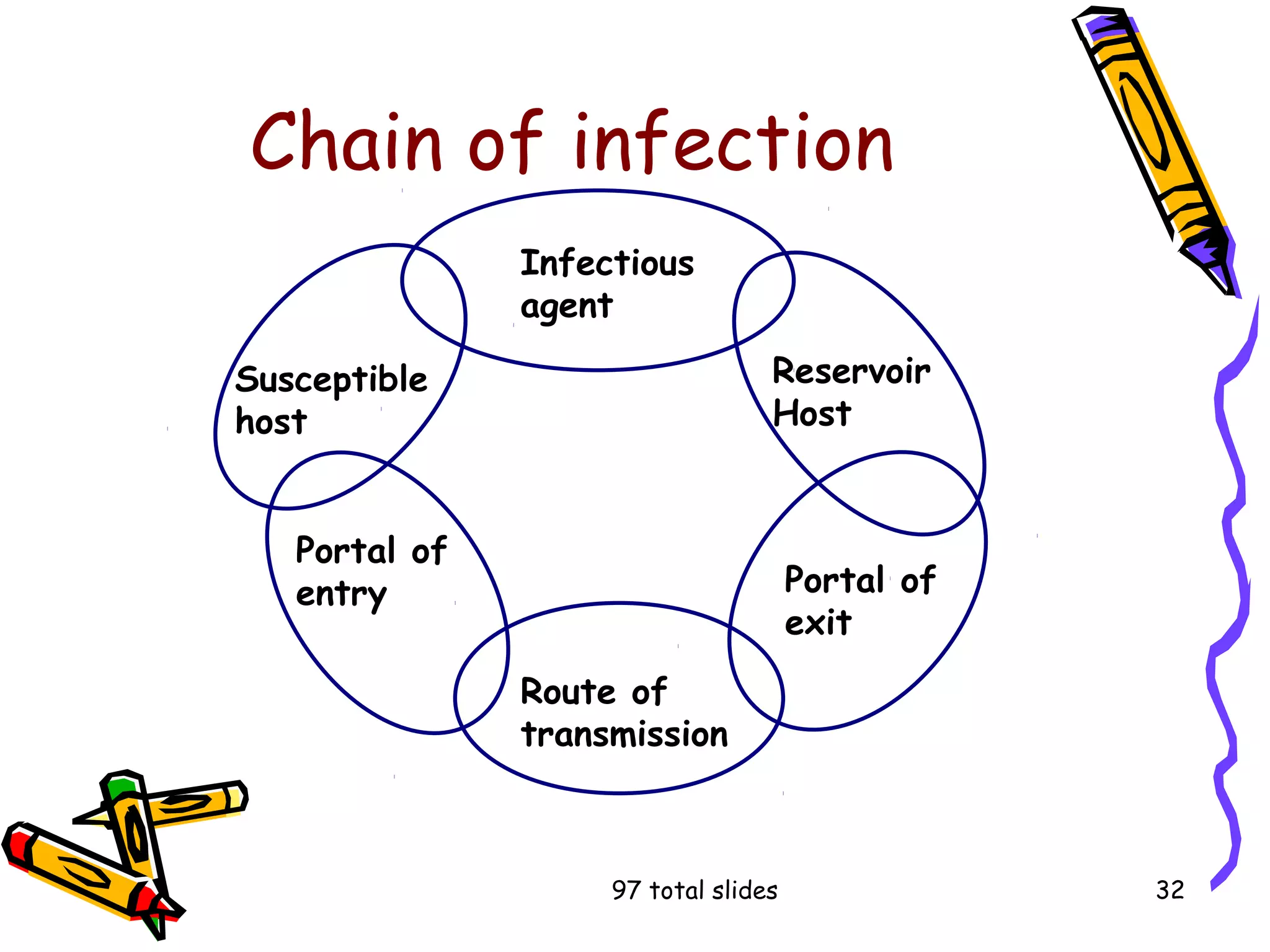
Chain of infection
Infectious
agent
Reservoir
Host
Portal of
exit
Route of
transmission
Portal of
entry
Susceptible
host
97 total slides 33
Chain of infection
1. Infectious agent: a pathogen must be
present
2. Reservoir host: the pathogen must have a
place to live and grow – the human body,
contaminated water or food, animals,
insects, birds, dead or decaying organic
material.
• Humans who can transmit infection but how
no signs of the disease are called carriers.
Person may be unaware they are a carrier.
97 total slides 34
Chain of infection
3. Portal of exit: the pathogen must be able
to escape from the reservoir host where
it has been growing.
• Examples of portals of exit are blood,
urine, feces, breaks in the skin, wound
drainage, and body secretions like saliva,
mucus and reproductive fluids
97 total slides 35
Chain of infection
4. Route of transmission: When the pathogen
leaves the reservoir host through the
portal of exit, it must have a way of being
transmitted to a new host.
• Examples of routes of transmission are air,
food, insects, and direct contact with an
infected person
97 total slides 36
Chain of infection
5. Portal of entry: The pathogen must have a
way of entering the new host. Common
ports of entry are the mouth, nostrils, and
breaks in the skin
6. Susceptible host: An individual who has a
large number of pathogens invading the
body or does not have adequate resistance
to the invading pathogen will get the
infectious disease
97 total slides 37
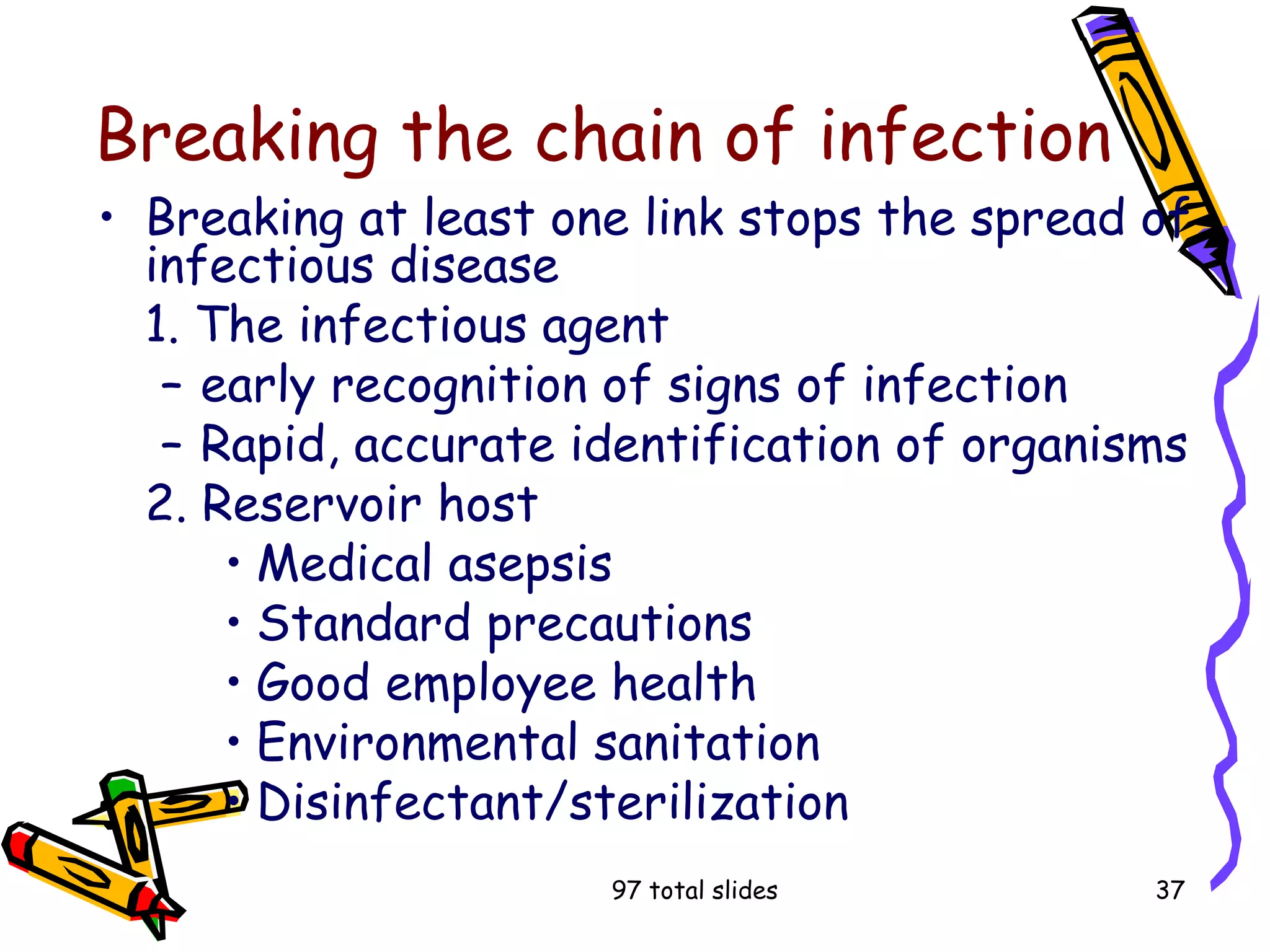
Breaking the chain of infection
• Breaking at least one link stops the spread of
infectious disease
1. The infectious agent
– early recognition of signs of infection
– Rapid, accurate identification of organisms
2. Reservoir host
• Medical asepsis
• Standard precautions
• Good employee health
• Environmental sanitation
• Disinfectant/sterilization
97 total slides 38
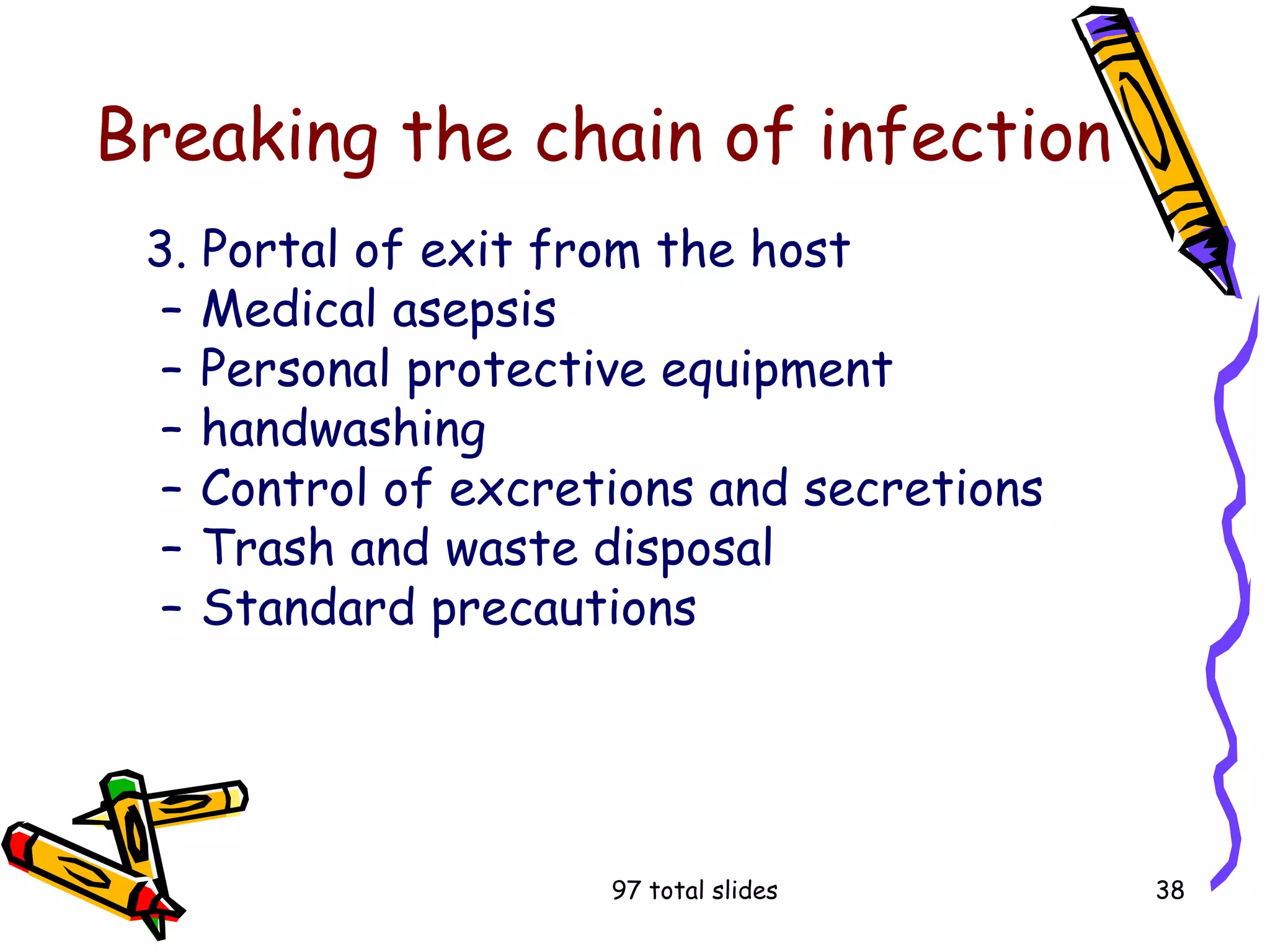
Breaking the chain of infection
3. Portal of exit from the host
– Medical asepsis
– Personal protective equipment
– handwashing
– Control of excretions and secretions
– Trash and waste disposal
– Standard precautions
97 total slides 39
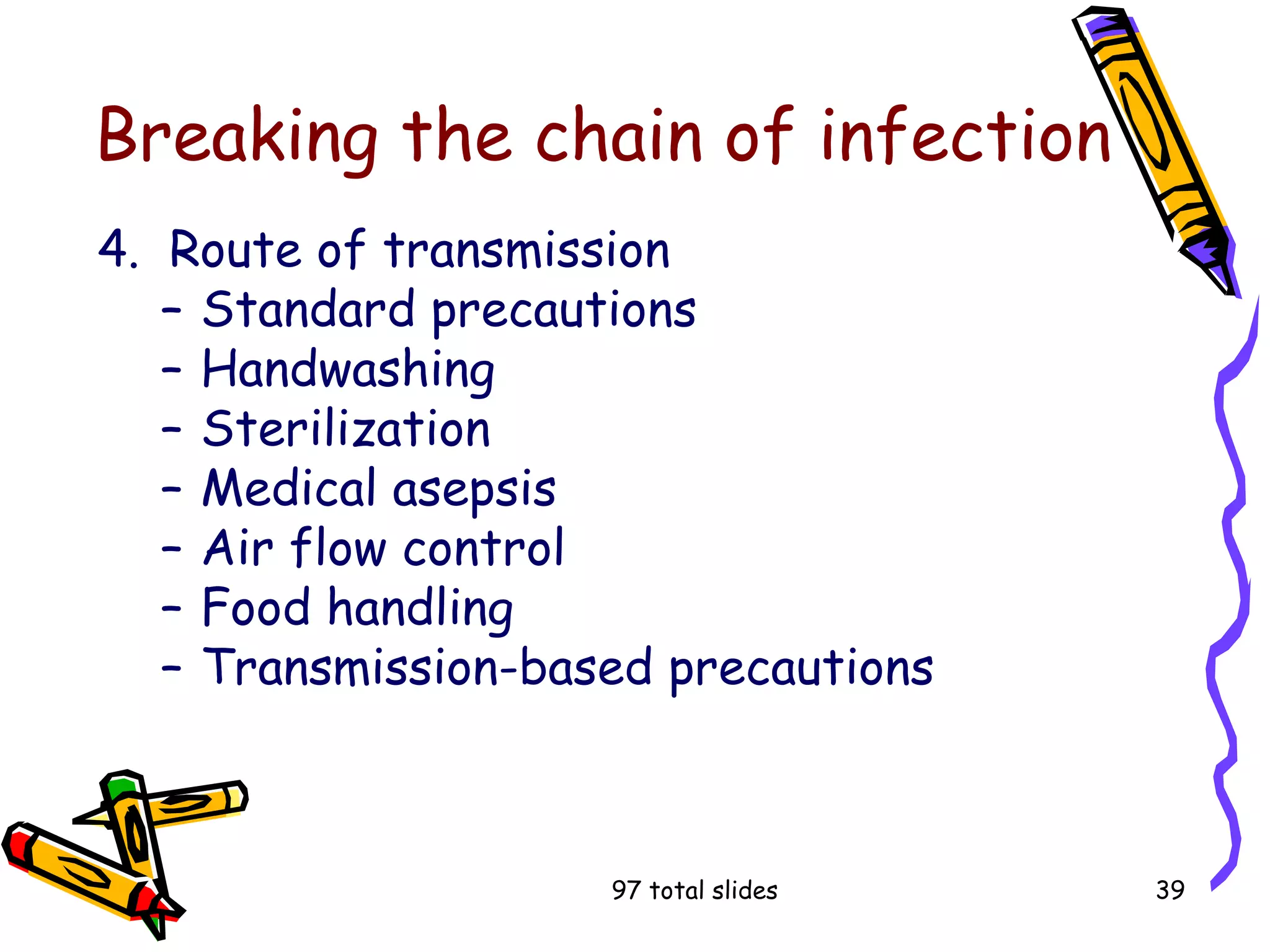
Breaking the chain of infection
4. Route of transmission
– Standard precautions
– Handwashing
– Sterilization
– Medical asepsis
– Air flow control
– Food handling
– Transmission-based precautions
97 total slides 40
Breaking the chain of infection
5. Portal of entry
– Wound care
– Catheter care
– Medical asepsis
– Standard precautions
5. Susceptible Host
– Treating underlying diseases
– Recognizing high-risk patients
97 total slides 41
Defense Mechanisms
• A number of defense mechanisms exist
outside and in the body to break the chain,
including decreasing the sources of
microorganisms; preventing the
transmission of microorganisms; and
maximizing the host’s resistance to the
microorganism
97 total slides 42
Body’s natural defenses to
eliminate/kill pathogens
• Cilia - in respiratory tract, catch and move
pathogens out of the body
• Coughing/sneezing, to propel pathogens
outward
• Tears - contain chemicals to kill bacteria
• Hydrochloric acid in stomach
• Rise in body temperature (fever)
• Leukocyte (white blood cell) production
increases, to destroy pathogens
97 total slides 43
Scope of the problem
• Health care facilities or “sick care buildings”
have higher concentration of microorganisms
than a normal environment
– Patients with lowered levels of resistance
due to illness
– Health care personnel have frequent
contact with body fluids
• Nosocomial infection – contracted by 5-10%
of patients while receiving health care
– Results in 80,000 deaths per year
97 total slides 44
Scope of the problem
• Industrial illness – a disease contracted by a
health care professional during work
• Blood-borne pathogens such as Hepatitis B and
HIV can be transmitted through needle sticks
• 800,000 needle sticks occur each year
• Up to 500 health care workers die each year
from Hepatitis B
• Follow precautions when performing procedures
• Dispose of all sharps in proper containers
97 total slides 45
Regulatory Agencies
• Center for Disease Control and Prevention
(CDC) - Responsible for developing safe
guidelines to help prevent and control the
spread of infectious diseases
• Occupational Safety and Health
Administration (OSHA) - Responsible for
maintaining minimum health and safety
standards for employees
97 total slides 46
Prevention: Medical Asepsis
• Medical asepsis (clean technique):
procedures to decrease the number and
spread of pathogens
• Hand washing, good personal hygiene,
cleaning rooms between patient use,
proper disposal of gloves after contact
with body fluids or contaminated objects
97 total slides 47
Prevention: Surgical Asepsis
• Surgical asepsis (sterile technique):
procedures that completely eliminate the
presence of pathogens from objects and
areas
– Sterile caps, gowns, masks, and gloves
– Sterilizing instruments
– Maintaining sterile fields
– Changing dressing
– Disposing of contaminated materials
97 total slides 48
Breaking chain of infection
• Most important concept: breaking at least
one link stops the infectious disease
• Chain of infection summarized into 3
components:
1. Source of infecting microorganisms (1 & 2)
2. Means of transmission for the micro-
organisms (3, 4 & 5)
3. Susceptible host (6)
97 total slides 49
Breaking chain of infection
Best defenses:
1. Decrease the sources of infecting
microorganisms (1 & 2)
2. Prevent means of transmission for the
micro-organisms (3, 4 & 5)
3. Maximize the resistance of the host (6)
97 total slides 50
Methods to decrease the
source of microorganisms
• Perform proper hand washing
• Decontaminate surfaces and equipment
with antiseptics, disinfectants and
sterilization procedures
• Avoid contact with patients and others
when harboring infectious microorganisms
97 total slides 51
Preventing transmission
of microorganisms
• Wear PPE – personal protective equipment:
caps, gloves, gowns masks, booties and eye
protection
• Follow isolation procedures when indicated
• Take additional precautions when working
with patients who have highly contagious
diseases. Don’t ignore posted signs.
97 total slides 52
Maintaining resistance
• Provide and practice good hygiene
• Ensure proper nutrition and fluid intake
• Get enough rest
• Decrease stressors – physical and
psychosocial - that weaken the immune
response
• What can you do in your life to increase
resistance to disease-causing pathogens?
97 total slides 53
Standard Precautions
• Developed by the CDC
• Follow at all times and apply to every
patient
• To prevent contact with potentially
infectious body fluids: blood, secretions,
excretions, non-intact skin and mucous
membranes
97 total slides 54
Handwashing
• Perform proper handwashing techniques:
– when coming on the clinical site
– when taking a break or leaving work
– between client contacts
– before gloving and after ungloving
– before and after touching your face
– after contact with any contaminants
– before touching items considered clean
97 total slides 55
Handwashing
• See Practical Skills Guide for Midwifery:
Procedure – step-by-step how to do it
• Explain why is it important to know
(1) the procedure – what to do
(2) the rationale – the reason you do it
that way, why each step is important
97 total slides 56
Personal Protective Equipment
• Abbreviated PPE
• Includes gloves, masks, protective eyewear,
gowns, caps and shoes
• Use appropriate PPE in situations that could
cause infection to you or your client
• Use clean, non-sterile gloves when handling
blood, body fluids, secretions, excretions,
contaminated items, mucous membranes and
non-intact skin
97 total slides 57
Gloves
• Change gloves between tasks/procedures on
the same client if there is contact with
material that may contain a high
concentration of microorganisms (ex: feces)
• Remove gloves promptly after use, before
touching non-contaminated items and
environmental surfaces and before taking
care of another patient
• After removing gloves, wash your hands
97 total slides 58
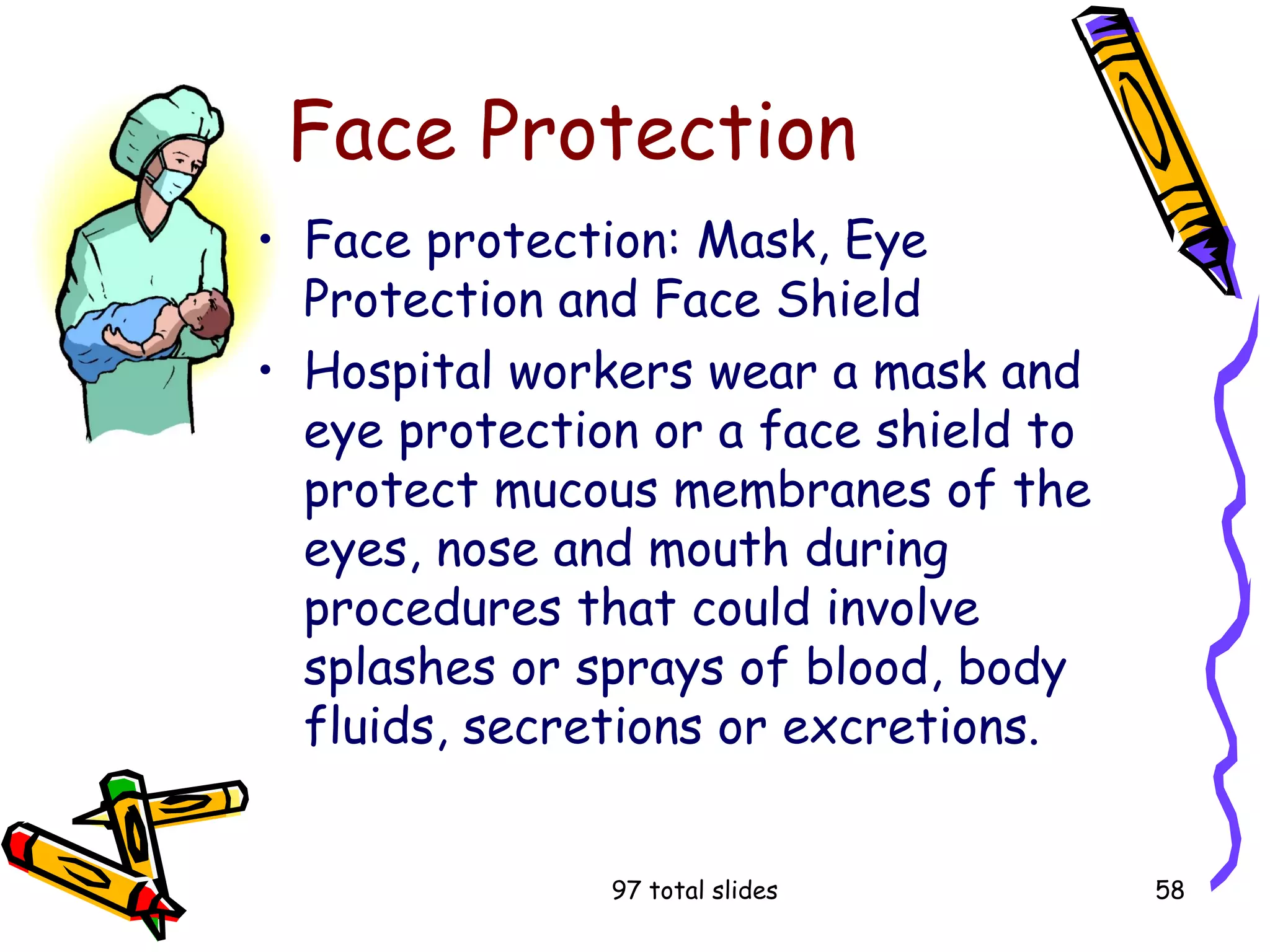
Face Protection
• Face protection: Mask, Eye
Protection and Face Shield
• Hospital workers wear a mask and
eye protection or a face shield to
protect mucous membranes of the
eyes, nose and mouth during
procedures that could involve
splashes or sprays of blood, body
fluids, secretions or excretions.
97 total slides 59
Gowns
• Gowns may be cloth or paper
– Cloth gowns are reusable
– Paper gowns are disposable
• Some clinical sites provide gowns to clients
for physical exams
• A clean, non-sterile gown protects skin and
prevents soiling clothing during procedures
that could involve splashes or sprays of blood,
body fluids, secretions or excretions.
• Follow the procedures on your clinical site(s)
97 total slides 60
Removing a Gown
• Remove a soiled gown as promptly as possible
• Fold front of gown into itself, outside in
• Place cloth gowns in a closed receptacle
marked with the biohazard symbol to be
picked up, laundered and re-used
• Place paper gowns in a closed waste can in a
red plastic bag marked with the biohazard
symbol
• Wash hands promptly to avoid transferring
microorganisms
97 total slides 61
Client care equipment
• Handle used/soiled client care equipment to
prevent skin, mucous membranes and clothing
from exposure to blood, body fluids,
secretions and excretions which could be
transferred to other patients and
environments
• Reusable equipment must be properly cleaned
and reprocessed before being used on another
client
• Discard single-use items appropriately
97 total slides 62
Environmental Control
• Follow procedures for the routine care,
cleaning and disinfection of environmental
surfaces, beds, bedside equipment, and other
frequently touched surfaces
• For used linen that is soiled with blood, body
fluids, secretions and excretions – fold with
soiled surface in, handle to prevent exposing
skin, mucous membranes and clothing which
could transfer microorganisms to other
environments, and place in designated
biohazardous medical waste receptacle
97 total slides 63
Occupational Health and
Blood-Borne Pathogens
• Take care to prevent injuries when using and
cleaning/disposing of “sharps” - needles,
scalpels, and other sharp instruments
• Place used disposable syringes, needles and
scalpel blades in appropriate puncture-
resistant containers
• Containers should be located close by for
convenient disposal
• Placer reusable syringes and needles in a
puncture resistant container for transport to
be reprocessed (sterilized)
97 total slides 64
Occupational Health and
Blood-Borne Pathogens
• Never recap used needles
• Follow facility policies on how to handle
contaminated needles
• If the facility allows recapping (for example,
drawing up from a multi-dose vial), use either
a one-handed “scoop” technique or a
mechanical device to hold the needle sheath
• Do not remove used needles from disposable
syringes by hand
• Do not bend, break or manipulate used needles
97 total slides 65
Occupational Health and
Blood-Borne Pathogens
• Use mouthpieces, resuscitation
bags, or other ventilation devices
as an alternative to mouth-to-
mouth resuscitation methods.
• Keep these devices available in
areas where clients may need to be
resuscitated (ie, birth rooms)
97 total slides 66
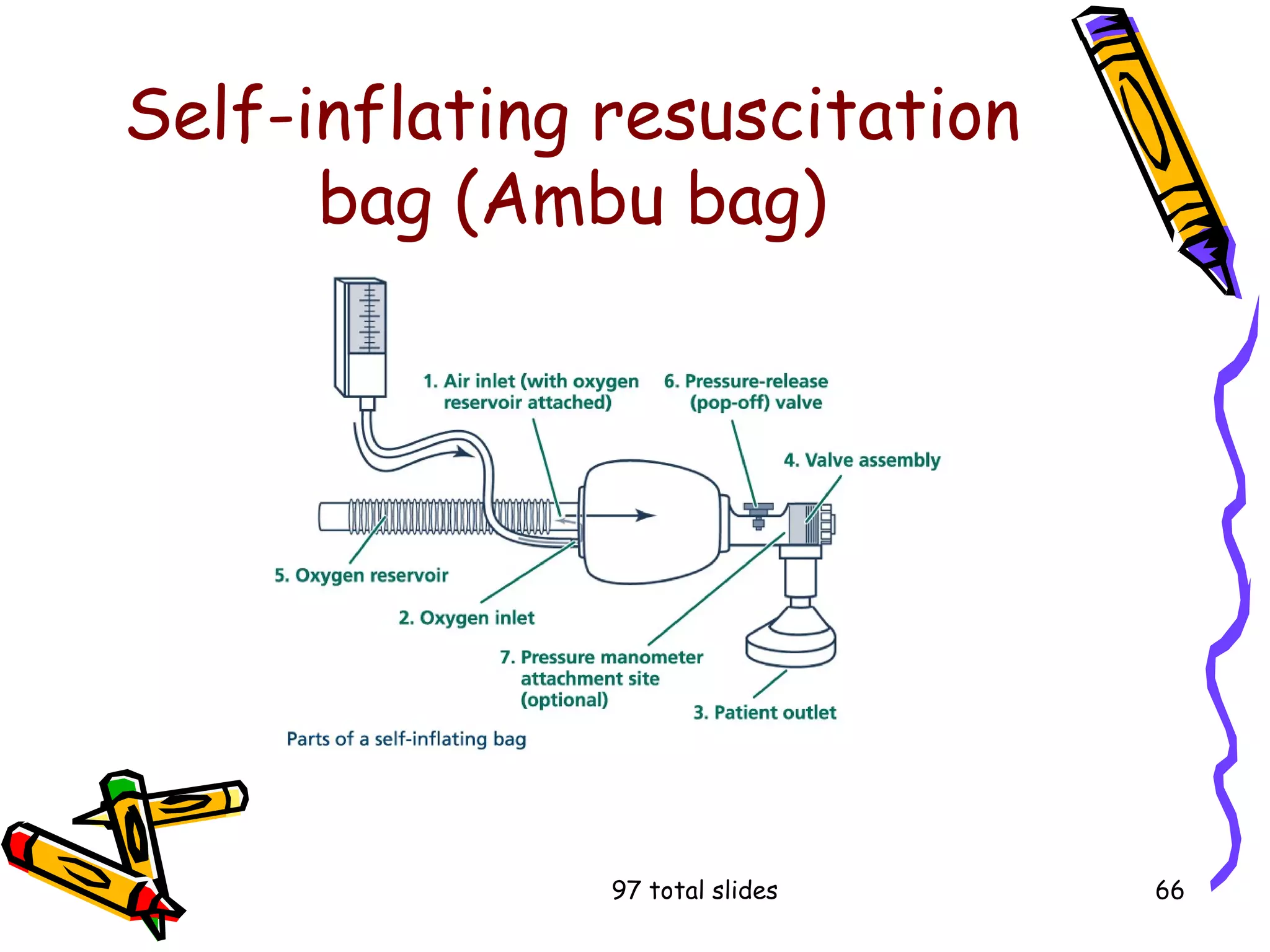
Self-inflating resuscitation
bag (Ambu bag)
97 total slides 67
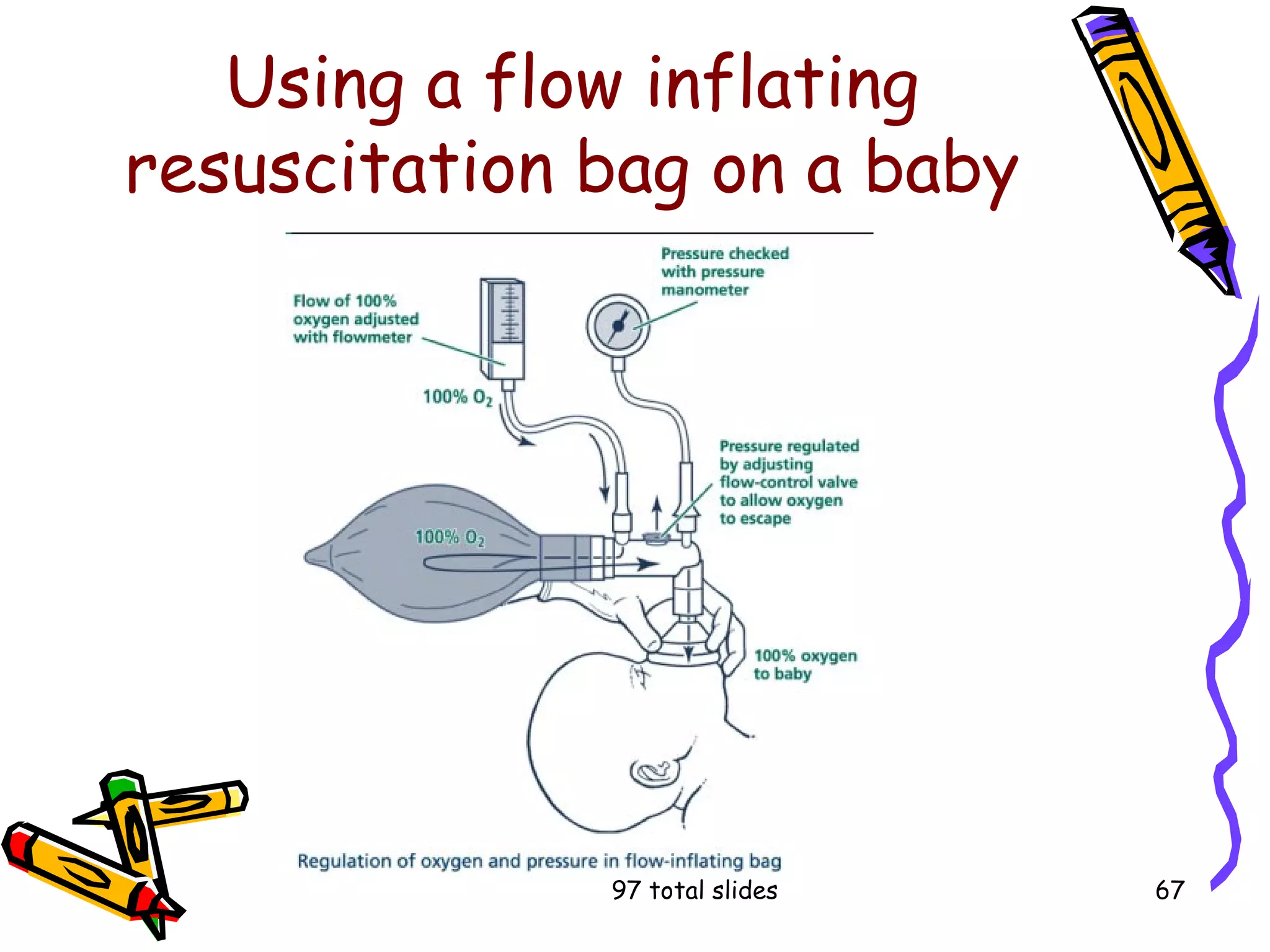
Using a flow inflating
resuscitation bag on a baby
97 total slides 68
Environmental control
• Follow facility infection control procedures
for cleaning the environment, jacuzzi tubs,
etc.
• Use Transmission-Based Precautions:
– Airborne precautions
– Droplet precautions
– Contact precautions
97 total slides 69
Airborne Precautions
• Airborne droplets or dust particles containing
infectious agents can remain suspended in the
air for long periods of time
• Air currents can blow them long distances
• Can be emitted during talking, sneezing,
coughing and whispering
• Examples: Mycobaterium tuberculosis,
Rubeola (measles) and Varicella (chicken pox)
97 total slides 70
Droplet Precautions
• Propelled short distances through the air
• Deposited on host’s conjunctiva, nasal mucosa
or mouth
• Can be emitted during talking, sneezing,
coughing and during procedures like
suctioning and bronchoscopy
• Examples: streptococcal pharyngitis, mumps,
influenza, rubella, some some pneumonias,
meningitis and sepsis
97 total slides 71
Contact Precautions
• Most important and frequent mode of
transmission for nosocomial infections
– Nosocomial = originates/takes place in
hospital or other health care facility
– Nosocomial infection = the client gets it as a
result of being in the health care facility
• Example: herpes (HSV), impetigo, scabies, some
gastrointestinal, respiratory, skin and wound
infections
• Direct-contact & Indirect-contact transmission
97 total slides 72
Direct Contact
Transmission
• Occurs when touching
the infected client’s dry
skin during client care
activities like giving a
massage
• Can occur between two
clients: a source of the
infecting micro-
organism and a
susceptible host
Indirect contact
transmission
• Occurs when a
contaminated
object is touched.
• For example,
coming in contact
with needles,
instruments,
environmental
surfaces or client
care items.
97 total slides 73
Double-bagging technique
• Used when disposing of medical waste from
clients with infections (ex HIV)
• Health care worker “A”, wearing proper PPE,
takes the contaminated bag from the area
• “A” slips it into another bag held by co-
worker “B”
• “B” does not touch the contaminated bag
• “A” does not touch the clean bag
• The bags are labeled according to the facility
policy with hazardous waste or linen markers
to alert to the need for special handling
97 total slides 74
Sterilization
• Chemical agents and physical methods used to
destroy or inhibit growth of pathogens
• Bacteriostatic – inhibits growth
• Bacteriocidal/germicidal – kills microorganisms
• Antiseptics – bacteriostatic chemical agents,
mild enough to use on skin: 70% isopropyl
alcohol
• Disinfectants – destroy most bacteria and
viruses. Used for instruments that do not
penetrate the skin and for cleaning the
environment – floors, bathrooms, equipment
97 total slides 75
Disinfectants
• Chemical disinfectants can be harmful to the
skin. When using chemical disinfectants follow
manufacturer’s directions for dilution and for
antidoting any exposure
• 10% household bleach in water meets OSHA
requirements, kills HBV, HIV and TB
• Soaking for 20-30 minutes in 70% isopropyl
alcohol acts as a disinfectant: used for some
instruments, glass thermometers
• Boiling instruments in water: cover and boil in
“rolling water” for 20 mins. Rarely used today.
97 total slides 76
Sterilization
• Agents/methods that totally destroy all
microorganisms including viruses and spores
• Include chemical agents, gas, radiation, dry or
moist heat under pressure
• Most common method used is the autoclave,
which sterilizes by steam created by a
pressurized heating system
• Small units used in a medical office; large units
used in hospitals
97 total slides 77
Surgical Asepsis – Sterile
Technique
• Aseptic: free from pathogenic microorganisms
• Sterile Technique: refers to a group pf
principles and procedures designed to eliminate
pathogens
• Sterile field: an area designated as free from
microorganisms
• Example: a sterile towel placed on a clean, dry
surface – the towel becomes the sterile field
• Consider the field as a 3-dimensional area
97 total slides 78
Maintaining a sterile field
• Field should be above the waist height
• Do not bring contaminants into the field
• Actions that contaminate the field: touching
it, allowing it to become wet, reaching across it,
talking or coughing directly over the surface
• Work to the side of the field
• Sterile gloves come in sealed packages that
must be opened at the edge of the sterile field
and placed onto the field
• See PSGM Skills Book to put on sterile gloves
97 total slides 79
Blood borne diseases
• HBV and HIV: put health care workers at risk
• Transmitted by infected blood, mucous,
secretions, excretions, any moist body fluid
(except sweat)
• Routes of transmission:
– Parenteral – blood transfusion, needle
sharing, stick by needle or other sharp
instrument
– Mucous membranes – eye or mouth
– Sexual contact
– Perinatal – from infected mother to her baby
97 total slides 80
HBV
• When infected with HBV, the liver becomes
inflamed and can be destroyed
• Symptoms range from mild to severe -jaundice
(yellowing of the eyes, skin, mucous
membranes), dark urine, extreme fatigue, loss
of appetite, nausea, abdominal pain, joint pain,
rash and fever
• Prevention: HBV vaccine, use of PPE, preventing
puncture injuries, disinfecting and sterilizing
equipment and environments
97 total slides 81
HBV vaccine
• OSHA requires employers to provide the HBV
vaccine free for employees with exposure risk
• A series of 3 doses given over 6 months
• Induce protective antibody levels in 85 – 97%
of healthy adults
• Blood test can determine antibody levels
• An employee has the right to refuse the HBV
vaccine but must sign a form to release the
facility from responsibility if the health care
worker becomes infected
97 total slides 82
HIV
• The Human Immunodeficiency virus that
causes AIDS
• HIV virus destroys cells in the host that are
vital to the immune system function
• Testing: tests for HIV antibodies
• Most infected people test positive within 6-12
weeks up to 6 months from exposure
• HIV positive = infected with the virus, can
transmit to others even if non-symptomatic
• AIDS = weakened immune system
97 total slides 83
AIDS
• Most but not all HIV infected people will
eventually develop AIDS and die from
“opportunistic infections” such as PCP
(Pneumocystis carinii pneumonia)
• Signs and symptoms of AIDS: weakness,
chronic fever, night sweats, swelling of lymph
nodes, weight loss and diarrhea
• No known vaccine or cure
• Managed by treating symptoms with antiviral
drugs and a healthy supportive lifestyle
97 total slides 84
HIV transmission
• HIV has been isolated from blood, semen,
breast milk, vaginal secretions, saliva, tears,
urine, cerebrospinal fluid and amniotic fluid
• Only blood, semen, vaginal secretions and
breast milk have been proven to transmit HIV
• Transmission not through casual contact:
– Parenteral – blood transfusion, needle stick
– Mucous membranes – eye or mouth
– Sexual intercourse
– Perinatal – from infected mother to baby
97 total slides 85
HIV transmission
HIV is NOT transmitted through:
• Sharing household facilities, food, eating
utensils, plates, drinking glasses or towels
• Hugging and kissing on the cheek
• Mosquitoes or other animals
Infection from exposure is determined by:
• Amount of the virus transmitted
• How many exposures
• Overall health of the person
97 total slides 86
HBV& HIV: Relative risk
• Most health care workers are afraid of
getting HIV, but HIV is much harder to
catch than HBV
• The infection and death rate from HBV far
exceeds HIV
• Only 3-5 health care workers out of 1000
injured with a needle contaminated with
HIV will become infected
97 total slides 87
Tuberculosis
• Airborne pathogen mycobacterium tuberculosis
primarily affects the lungs
• Working with TB clients requires using special
PPE, individually fitted masks, to avoid inhaling
tiny droplets which carry the disease
• Cases of TB have increased in recent years
• Medication must be taken for 6 months
• If clients don’t complete the course of
treatment, a drug-resistant strain can mutate
and re-infect the person
97 total slides 88
Tuberculosis
• Screening for TB is a skin test
• Positive test result means the person has been
exposed to the disease
• A chest x-ray confirms active disease
• Signs and symptoms: lethargy, fever, night
sweats, cough, weight loss, coughing up blood-
tinged sputum, chest pain, and SOB.
• Patients hospitalized with suspected TB are put
in isolation for 2-3 weeks and begin antibiotic
treatment
97 total slides 89
Drug-resistant organisms
• A fairly recent occurrence
• Results from:
– the overuse of antibiotics in the USA to
treat minor conditions
– Using wide-spectrum antibiotics instead of
testing/prescribing for a specific pathogen
– patients not completing an entire course of
prescribed treatment of antibiotics
• These create conditions that encourage
pathogens to become resistant to antibiotics
97 total slides 90
Drug-resistant organisms
• Two drug resistant organisms encountered in
health care:
– MRSA – Methicillin-resistant Staphylococcus
aureas
– VRE – Vancomycin-resistant Enterococcus
• Both are difficult to control and can cause
serious, life threatening infections esp. in
susceptible people (ex: premature babies)
• Treatment is expensive and has severe side
effects – liver, kidney & hearing damage
97 total slides 91
Reporting accidental
exposure
• Report any injury or accident involving exposure
to blood or body fluids immediately to your
clinical preceptor/supervisor
• Complete a written incident or injury report
• Reporting facilitates evaluation, appropriate
treatment and follow-up
• Failure to report can result in negative health
consequences and is in violation of OSHA
requirements
97 total slides 92
OSHA Regulations
• Every facility must have an Exposure Control
Plan:
– Predetermines employee exposure risk to
blood-borne pathogens
– Describes how employees at risk will be
protected
– Gives training and annual retraining and
testing requirements for employees
– Gives policies and procedures to follow in
case of employee exposure
97 total slides 93
SUMMARY
• How do antibiotics work?
• What is an opportunistic infection?
• Define: Aerobic, Anerobic, host, Symbiosis,
Neutralism and Parasitic
• Differentiate plant and animal microbes:
Bacteria, Viruses, Fungi, Rickettsia,
Protozoa
97 total slides 94
SUMMARY
• Explain the chain of infection and how to break
it at each point
1. The infectious agent
2. Reservoir host
3. Portal of exit from the host
4. Route of transmission
5. Port of entry
6. Susceptible host
97 total slides 95
SUMMARY
• What are the body’s natural defense
mechanisms?
• Explain the concept of a sterile field and how to
avoid contaminating it
• Describe standard precautions including
handwashing, gloving, PPE
• Explain the differences between antiseptics,
disinfectants and sterilization
97 total slides 96
SUMMARY
• How is HIV transmitted? How is it NOT?
• What are the 3 major disease risks for health
care workers
• How do pathogens become drug-resistant?
• What is the role of government agencies: CDC,
OSHA
• Explain environmental control and transmission
precautions
97 total slides 97
Infection Prevention &Infection Prevention &
ControlControl

CBIC- Infection Prevention & Control training with Accrediation and with CME POINTS

  • 1.
    1 Infection Prevention &InfectionPrevention & ControlControl
  • 2.
    97 total slides2 Infection control • Goal of infection control is to prevent the spread of infectious diseases • Infectious disease is any disease caused by the growth of pathogens in the body • Pathogens are disease-causing microorganisms (germs) • Infectious diseases can cause unnecessary pain, suffering and death
  • 3.
    97 total slides3 Maintain a safe environment • Follow specific polices and procedures designed to reduce risk of transferring infectious diseases • Prevent pathogens from being transmitted: – Patient to client, staff to client, client to staff, staff to staff – Improperly cleaned instruments and equipment
  • 4.
    4 Infection Infection can be: •Generalized or systemic (throughout the body) • Localized (affecting one part of the body) Signs and symptoms of infection: • Systemic: headaches, fever, fatigue, vomiting, diarrhea, increased pulse and respiration • Localized: redness, swelling, painful, warm to the touch
  • 5.
    97 total slides5 Microbiology • Microbiology: the study of microorganisms • Microorganisms are one celled animals or plants invisible to the eye, can only be seen with a microscope • 1600s: Anton van Leeuwenhoek invented the microscope • 1800s: Louis Pasteur developed germ theory. Stated that microorganisms, called bacteria, cause specific diseases in humans and animals
  • 6.
    97 total slides6 History of infection control • 1843 Oliver Wendell Holmes: contagious disease or communicable disease can be spread directly or indirectly from one person to another through contaminated hands • Ignaz Philipp Semmelweis observed high mortality rate from MDs going from morgue to patients’ bedside without washing hands • 1864 Joseph Lister: developed surgical aseptic technique to prevent wound contamination
  • 7.
    97 total slides7 Facts about microorganisms • Not all are harmful • Normal flora (microorganisms) are found on skin, in the intestines and vagina • Some are necessary to maintain normal bodily functions – Escherichia coli (E. coli): • Aids the digestive process in the colon • Can cause infection in the blood or urine; can cause spontaneous abortion
  • 8.
    97 total slides8 Facts about microorganisms • Some microorganisms are part of the normal flora but have no beneficial role • Normally they do no harm unless the person is susceptible to infection due to supression of the body’s immune response • The immune response: the body fights infection by producing antibodies (protective proteins that combat pathogens)
  • 9.
    97 total slides9 Facts about microorganisms • Antibiotics are drugs which inhibit the growth of or destroy microorganisms • They also suppress the body’s normal flora and create an imbalance that can decrease the body’s ability to resist other infections • Age, overall health, stress, nutrition and drugs can also weaken the body • Opportunistic infections take advantage of the body’s weakened state to grow
  • 10.
    97 total slides10 Growth of microorganisms • Aerobic – require oxygen to live • Anerobic – do not require oxygen to live • Many microorganisms thrive in warm, moist, dark environments like the human body which becomes a host to the microorganism • Symbiosis – the host benefits • Neutralism – no damage is done to the host • Parasitic – the host is damaged, the pathogen causing damage is called the parasite
  • 11.
    97 total slides11 Types of microbes • Microbe – a pathogenic microorganism • Classifications of plant and animal microbes: – Bacteria – Viruses – Fungi – Rickettsia – Protozoa
  • 12.
    97 total slides12 Bacteria • One-celled plants • Either pathogenic or non-pathogenic • Many produce toxins (poisonous substances) • Most bacteria are aerobic (need oxygen) and grow best in moderate temperatures • A group of bacteria growing in one place is called a colony
  • 13.
    97 total slides13 Categories of Bacteria • Bacteria are categorized according to shape • Each type causes certain conditions and diseases • Types of bacteria: – Round or ovoid shape – Rod – Spiral
  • 14.
    97 total slides14 Round/Ovoid Bacteria • Round or ovoid bacteria are called Cocci • Cocci are further defined by their appearance: – Micrococci – appear singly – Diplococci – appear in pairs – Staphylococci – appear as irregular clusters – Streptococci – form chains
  • 15.
    97 total slides15 Infections caused by cocci • Micrococci cause skin and wound infections • Diplococci cause gonorrhea, meningitis and some pneumonias • Staphylococci are pus-producing and can cause abscesses, boils, wound infections, UTIs and some pneumonias • Streptococci can cause rheumatic fever and strep throat
  • 16.
    97 total slides16 Rod shaped bacteria • Rod shaped bacteria are called bacilli • Bacilli are further defined by their appearance – Bacilli – appear singly – Coccobacilli – when rods are somewhat oval – Diplobacilli – appear in pairs – Streptobacilli – attached end to end to form a chain • Bacilli diseases: TB, tetanus, pertussis, typhoid fever, botulism and diphtheria
  • 17.
    97 total slides17 Spiral shaped bacteria • Spiral shaped bacteria are defined by their appearance – Vibrios – form curved rods – Spirilla: organism is rigid – Spirochetes: organism is flexible • Common diseases caused by spiral shaped bacteria are syphilis and cholera
  • 18.
    97 total slides18 Bacteria and locomotion • Cocci are incapable of movement • Some rod and spiral shaped bacteria have slender whip-like appendages called flagella (singular: flagellum). • Flagella enable the bacteria to move.
  • 19.
    97 total slides19 Diagnosing bacterial infections • Essential for proper treatment of infection • Gram staining: frequently used lab method • Bacteria are stained with crystal violet • Type of cell wall determines how it reacts to staining. Three categories of reactions: – Gram positive: cell wall retains the stain – Gram negative: cell wall loses the stain – Acid fast: cell wall retains the stain even when treated with acid
  • 20.
    97 total slides20 Diagnosing bacterial infections • Growing the microorganism in various culture media is also used for diagnosis • Takes 24-72 hours for colonies to form • Can identify exact bacteria • Can choose a more precise antibiotic for a specific bacterium
  • 21.
    97 total slides21 Spores: the resting stage • Some bacteria can grow spores • Spores are thick capsules which the bacteria creates for self-protection • Spores are created when life-supporting conditions are not favorable • Bacteria is alive but dormant, difficult to kill, resistant to heat, drying and disinfectants • Can lie dormant for months or years until conditions are favorable for re-emergence
  • 22.
    97 total slides22 Treating bacterial infections • Almost all bacteria can be destroyed with antibiotics • Some are antibiotic-resistant, create threat to health care workers and patients • Extremely high temperatures must be used for sterilization to kill bacterial spores
  • 23.
    97 total slides23 Viruses • Smallest of the microbes • Need electron microscope to see them • Viruses are not whole cells, they depend on other living cells to provide food, nutrients and for reproduction • They are called obligate intracellular parasites because they can only live inside another living organism
  • 24.
    97 total slides24 Viruses • Over 300 viruses have been identified by researchers • Some appear to be harmless • Cause infections like influenza, pneumonia, chicken pox, croup, hepatitis B, AIDS, measles, mumps, polio, herpes, and warts • Transmitted through blood & body secretions • Difficult to treat because they are resistant to disinfectants and not killed by antibiotics
  • 25.
    97 total slides25 Fungi • Fungi are a large group of simple plants. • Two forms of fungi are potential pathogens: yeast and molds – Yeasts are one celled – Molds are multi-celled • Thrive in warm, moist, dark conditions • Cannot produce their own nutrients, must rely on living and dead organic materials
  • 26.
    97 total slides26 Fungi • Many yeasts and molds are non-pathogenic • Penicillin (antibiotic) is produced from a mold • Fungi can become pathogenic under the right conditions • Can create various opportunistic infections: – Mildly annoying – Chronic and/or recurrent – Life-threatening
  • 27.
    97 total slides27 Fungal infections • Cutaneous infections: superficial infections of the skin or mucus membranes, including hair follicles and scalp. Example: ringworm, athlete’s foot • Systemic infections: Example: histoplasmosis (respiratory disease) – Difficult or impossible to treat or cure – Treatment requires medications toxic to humans
  • 28.
    97 total slides28 Rickettsia • Smaller than bacteria, with rod or spherical shapes • Called obligate intracellular parasites - must live inside cell of another living organism • Rickettsia transmitted through bites of fleas, lice, ticks and mites • Diseases: several types of typhus and Rocky Mountain Spotted Fever • Typhus is the only rickettsial infection that can be transferred from 1 human to another
  • 29.
    97 total slides29 Protozoa • The only microorganism classified as an animal. • Plentiful in the environment – 45,000 different identified types of protozoa • Animal parasites reside in and out of the body • Seek locations that provide nutrients, warmth and moisture • Protozoa constantly present in intestines, skin, and mucus membranes of the nose and throat
  • 30.
    97 total slides30 Protozoa • Found in decayed materials, bird and animal feces, water contaminated with sewage waste, food washed in contaminated water or handled by unwashed hands, and insect bites • Common diseases caused by protozoa: dysentery, trichomonas, toxoplasmosis, pneumocystis pneumonia and malaria
  • 31.
    97 total slides31 Chain of infection • Model of infectious disease transmission • Six elements must be present for an infection to develop 1. The infectious agent 2. Reservoir host 3. Portal of exit from the host 4. Route of transmission 5. Port of entry 6. Susceptible host
  • 32.
    97 total slides32 Chain of infection Infectious agent Reservoir Host Portal of exit Route of transmission Portal of entry Susceptible host
  • 33.
    97 total slides33 Chain of infection 1. Infectious agent: a pathogen must be present 2. Reservoir host: the pathogen must have a place to live and grow – the human body, contaminated water or food, animals, insects, birds, dead or decaying organic material. • Humans who can transmit infection but how no signs of the disease are called carriers. Person may be unaware they are a carrier.
  • 34.
    97 total slides34 Chain of infection 3. Portal of exit: the pathogen must be able to escape from the reservoir host where it has been growing. • Examples of portals of exit are blood, urine, feces, breaks in the skin, wound drainage, and body secretions like saliva, mucus and reproductive fluids
  • 35.
    97 total slides35 Chain of infection 4. Route of transmission: When the pathogen leaves the reservoir host through the portal of exit, it must have a way of being transmitted to a new host. • Examples of routes of transmission are air, food, insects, and direct contact with an infected person
  • 36.
    97 total slides36 Chain of infection 5. Portal of entry: The pathogen must have a way of entering the new host. Common ports of entry are the mouth, nostrils, and breaks in the skin 6. Susceptible host: An individual who has a large number of pathogens invading the body or does not have adequate resistance to the invading pathogen will get the infectious disease
  • 37.
    97 total slides37 Breaking the chain of infection • Breaking at least one link stops the spread of infectious disease 1. The infectious agent – early recognition of signs of infection – Rapid, accurate identification of organisms 2. Reservoir host • Medical asepsis • Standard precautions • Good employee health • Environmental sanitation • Disinfectant/sterilization
  • 38.
    97 total slides38 Breaking the chain of infection 3. Portal of exit from the host – Medical asepsis – Personal protective equipment – handwashing – Control of excretions and secretions – Trash and waste disposal – Standard precautions
  • 39.
    97 total slides39 Breaking the chain of infection 4. Route of transmission – Standard precautions – Handwashing – Sterilization – Medical asepsis – Air flow control – Food handling – Transmission-based precautions
  • 40.
    97 total slides40 Breaking the chain of infection 5. Portal of entry – Wound care – Catheter care – Medical asepsis – Standard precautions 5. Susceptible Host – Treating underlying diseases – Recognizing high-risk patients
  • 41.
    97 total slides41 Defense Mechanisms • A number of defense mechanisms exist outside and in the body to break the chain, including decreasing the sources of microorganisms; preventing the transmission of microorganisms; and maximizing the host’s resistance to the microorganism
  • 42.
    97 total slides42 Body’s natural defenses to eliminate/kill pathogens • Cilia - in respiratory tract, catch and move pathogens out of the body • Coughing/sneezing, to propel pathogens outward • Tears - contain chemicals to kill bacteria • Hydrochloric acid in stomach • Rise in body temperature (fever) • Leukocyte (white blood cell) production increases, to destroy pathogens
  • 43.
    97 total slides43 Scope of the problem • Health care facilities or “sick care buildings” have higher concentration of microorganisms than a normal environment – Patients with lowered levels of resistance due to illness – Health care personnel have frequent contact with body fluids • Nosocomial infection – contracted by 5-10% of patients while receiving health care – Results in 80,000 deaths per year
  • 44.
    97 total slides44 Scope of the problem • Industrial illness – a disease contracted by a health care professional during work • Blood-borne pathogens such as Hepatitis B and HIV can be transmitted through needle sticks • 800,000 needle sticks occur each year • Up to 500 health care workers die each year from Hepatitis B • Follow precautions when performing procedures • Dispose of all sharps in proper containers
  • 45.
    97 total slides45 Regulatory Agencies • Center for Disease Control and Prevention (CDC) - Responsible for developing safe guidelines to help prevent and control the spread of infectious diseases • Occupational Safety and Health Administration (OSHA) - Responsible for maintaining minimum health and safety standards for employees
  • 46.
    97 total slides46 Prevention: Medical Asepsis • Medical asepsis (clean technique): procedures to decrease the number and spread of pathogens • Hand washing, good personal hygiene, cleaning rooms between patient use, proper disposal of gloves after contact with body fluids or contaminated objects
  • 47.
    97 total slides47 Prevention: Surgical Asepsis • Surgical asepsis (sterile technique): procedures that completely eliminate the presence of pathogens from objects and areas – Sterile caps, gowns, masks, and gloves – Sterilizing instruments – Maintaining sterile fields – Changing dressing – Disposing of contaminated materials
  • 48.
    97 total slides48 Breaking chain of infection • Most important concept: breaking at least one link stops the infectious disease • Chain of infection summarized into 3 components: 1. Source of infecting microorganisms (1 & 2) 2. Means of transmission for the micro- organisms (3, 4 & 5) 3. Susceptible host (6)
  • 49.
    97 total slides49 Breaking chain of infection Best defenses: 1. Decrease the sources of infecting microorganisms (1 & 2) 2. Prevent means of transmission for the micro-organisms (3, 4 & 5) 3. Maximize the resistance of the host (6)
  • 50.
    97 total slides50 Methods to decrease the source of microorganisms • Perform proper hand washing • Decontaminate surfaces and equipment with antiseptics, disinfectants and sterilization procedures • Avoid contact with patients and others when harboring infectious microorganisms
  • 51.
    97 total slides51 Preventing transmission of microorganisms • Wear PPE – personal protective equipment: caps, gloves, gowns masks, booties and eye protection • Follow isolation procedures when indicated • Take additional precautions when working with patients who have highly contagious diseases. Don’t ignore posted signs.
  • 52.
    97 total slides52 Maintaining resistance • Provide and practice good hygiene • Ensure proper nutrition and fluid intake • Get enough rest • Decrease stressors – physical and psychosocial - that weaken the immune response • What can you do in your life to increase resistance to disease-causing pathogens?
  • 53.
    97 total slides53 Standard Precautions • Developed by the CDC • Follow at all times and apply to every patient • To prevent contact with potentially infectious body fluids: blood, secretions, excretions, non-intact skin and mucous membranes
  • 54.
    97 total slides54 Handwashing • Perform proper handwashing techniques: – when coming on the clinical site – when taking a break or leaving work – between client contacts – before gloving and after ungloving – before and after touching your face – after contact with any contaminants – before touching items considered clean
  • 55.
    97 total slides55 Handwashing • See Practical Skills Guide for Midwifery: Procedure – step-by-step how to do it • Explain why is it important to know (1) the procedure – what to do (2) the rationale – the reason you do it that way, why each step is important
  • 56.
    97 total slides56 Personal Protective Equipment • Abbreviated PPE • Includes gloves, masks, protective eyewear, gowns, caps and shoes • Use appropriate PPE in situations that could cause infection to you or your client • Use clean, non-sterile gloves when handling blood, body fluids, secretions, excretions, contaminated items, mucous membranes and non-intact skin
  • 57.
    97 total slides57 Gloves • Change gloves between tasks/procedures on the same client if there is contact with material that may contain a high concentration of microorganisms (ex: feces) • Remove gloves promptly after use, before touching non-contaminated items and environmental surfaces and before taking care of another patient • After removing gloves, wash your hands
  • 58.
    97 total slides58 Face Protection • Face protection: Mask, Eye Protection and Face Shield • Hospital workers wear a mask and eye protection or a face shield to protect mucous membranes of the eyes, nose and mouth during procedures that could involve splashes or sprays of blood, body fluids, secretions or excretions.
  • 59.
    97 total slides59 Gowns • Gowns may be cloth or paper – Cloth gowns are reusable – Paper gowns are disposable • Some clinical sites provide gowns to clients for physical exams • A clean, non-sterile gown protects skin and prevents soiling clothing during procedures that could involve splashes or sprays of blood, body fluids, secretions or excretions. • Follow the procedures on your clinical site(s)
  • 60.
    97 total slides60 Removing a Gown • Remove a soiled gown as promptly as possible • Fold front of gown into itself, outside in • Place cloth gowns in a closed receptacle marked with the biohazard symbol to be picked up, laundered and re-used • Place paper gowns in a closed waste can in a red plastic bag marked with the biohazard symbol • Wash hands promptly to avoid transferring microorganisms
  • 61.
    97 total slides61 Client care equipment • Handle used/soiled client care equipment to prevent skin, mucous membranes and clothing from exposure to blood, body fluids, secretions and excretions which could be transferred to other patients and environments • Reusable equipment must be properly cleaned and reprocessed before being used on another client • Discard single-use items appropriately
  • 62.
    97 total slides62 Environmental Control • Follow procedures for the routine care, cleaning and disinfection of environmental surfaces, beds, bedside equipment, and other frequently touched surfaces • For used linen that is soiled with blood, body fluids, secretions and excretions – fold with soiled surface in, handle to prevent exposing skin, mucous membranes and clothing which could transfer microorganisms to other environments, and place in designated biohazardous medical waste receptacle
  • 63.
    97 total slides63 Occupational Health and Blood-Borne Pathogens • Take care to prevent injuries when using and cleaning/disposing of “sharps” - needles, scalpels, and other sharp instruments • Place used disposable syringes, needles and scalpel blades in appropriate puncture- resistant containers • Containers should be located close by for convenient disposal • Placer reusable syringes and needles in a puncture resistant container for transport to be reprocessed (sterilized)
  • 64.
    97 total slides64 Occupational Health and Blood-Borne Pathogens • Never recap used needles • Follow facility policies on how to handle contaminated needles • If the facility allows recapping (for example, drawing up from a multi-dose vial), use either a one-handed “scoop” technique or a mechanical device to hold the needle sheath • Do not remove used needles from disposable syringes by hand • Do not bend, break or manipulate used needles
  • 65.
    97 total slides65 Occupational Health and Blood-Borne Pathogens • Use mouthpieces, resuscitation bags, or other ventilation devices as an alternative to mouth-to- mouth resuscitation methods. • Keep these devices available in areas where clients may need to be resuscitated (ie, birth rooms)
  • 66.
    97 total slides66 Self-inflating resuscitation bag (Ambu bag)
  • 67.
    97 total slides67 Using a flow inflating resuscitation bag on a baby
  • 68.
    97 total slides68 Environmental control • Follow facility infection control procedures for cleaning the environment, jacuzzi tubs, etc. • Use Transmission-Based Precautions: – Airborne precautions – Droplet precautions – Contact precautions
  • 69.
    97 total slides69 Airborne Precautions • Airborne droplets or dust particles containing infectious agents can remain suspended in the air for long periods of time • Air currents can blow them long distances • Can be emitted during talking, sneezing, coughing and whispering • Examples: Mycobaterium tuberculosis, Rubeola (measles) and Varicella (chicken pox)
  • 70.
    97 total slides70 Droplet Precautions • Propelled short distances through the air • Deposited on host’s conjunctiva, nasal mucosa or mouth • Can be emitted during talking, sneezing, coughing and during procedures like suctioning and bronchoscopy • Examples: streptococcal pharyngitis, mumps, influenza, rubella, some some pneumonias, meningitis and sepsis
  • 71.
    97 total slides71 Contact Precautions • Most important and frequent mode of transmission for nosocomial infections – Nosocomial = originates/takes place in hospital or other health care facility – Nosocomial infection = the client gets it as a result of being in the health care facility • Example: herpes (HSV), impetigo, scabies, some gastrointestinal, respiratory, skin and wound infections • Direct-contact & Indirect-contact transmission
  • 72.
    97 total slides72 Direct Contact Transmission • Occurs when touching the infected client’s dry skin during client care activities like giving a massage • Can occur between two clients: a source of the infecting micro- organism and a susceptible host Indirect contact transmission • Occurs when a contaminated object is touched. • For example, coming in contact with needles, instruments, environmental surfaces or client care items.
  • 73.
    97 total slides73 Double-bagging technique • Used when disposing of medical waste from clients with infections (ex HIV) • Health care worker “A”, wearing proper PPE, takes the contaminated bag from the area • “A” slips it into another bag held by co- worker “B” • “B” does not touch the contaminated bag • “A” does not touch the clean bag • The bags are labeled according to the facility policy with hazardous waste or linen markers to alert to the need for special handling
  • 74.
    97 total slides74 Sterilization • Chemical agents and physical methods used to destroy or inhibit growth of pathogens • Bacteriostatic – inhibits growth • Bacteriocidal/germicidal – kills microorganisms • Antiseptics – bacteriostatic chemical agents, mild enough to use on skin: 70% isopropyl alcohol • Disinfectants – destroy most bacteria and viruses. Used for instruments that do not penetrate the skin and for cleaning the environment – floors, bathrooms, equipment
  • 75.
    97 total slides75 Disinfectants • Chemical disinfectants can be harmful to the skin. When using chemical disinfectants follow manufacturer’s directions for dilution and for antidoting any exposure • 10% household bleach in water meets OSHA requirements, kills HBV, HIV and TB • Soaking for 20-30 minutes in 70% isopropyl alcohol acts as a disinfectant: used for some instruments, glass thermometers • Boiling instruments in water: cover and boil in “rolling water” for 20 mins. Rarely used today.
  • 76.
    97 total slides76 Sterilization • Agents/methods that totally destroy all microorganisms including viruses and spores • Include chemical agents, gas, radiation, dry or moist heat under pressure • Most common method used is the autoclave, which sterilizes by steam created by a pressurized heating system • Small units used in a medical office; large units used in hospitals
  • 77.
    97 total slides77 Surgical Asepsis – Sterile Technique • Aseptic: free from pathogenic microorganisms • Sterile Technique: refers to a group pf principles and procedures designed to eliminate pathogens • Sterile field: an area designated as free from microorganisms • Example: a sterile towel placed on a clean, dry surface – the towel becomes the sterile field • Consider the field as a 3-dimensional area
  • 78.
    97 total slides78 Maintaining a sterile field • Field should be above the waist height • Do not bring contaminants into the field • Actions that contaminate the field: touching it, allowing it to become wet, reaching across it, talking or coughing directly over the surface • Work to the side of the field • Sterile gloves come in sealed packages that must be opened at the edge of the sterile field and placed onto the field • See PSGM Skills Book to put on sterile gloves
  • 79.
    97 total slides79 Blood borne diseases • HBV and HIV: put health care workers at risk • Transmitted by infected blood, mucous, secretions, excretions, any moist body fluid (except sweat) • Routes of transmission: – Parenteral – blood transfusion, needle sharing, stick by needle or other sharp instrument – Mucous membranes – eye or mouth – Sexual contact – Perinatal – from infected mother to her baby
  • 80.
    97 total slides80 HBV • When infected with HBV, the liver becomes inflamed and can be destroyed • Symptoms range from mild to severe -jaundice (yellowing of the eyes, skin, mucous membranes), dark urine, extreme fatigue, loss of appetite, nausea, abdominal pain, joint pain, rash and fever • Prevention: HBV vaccine, use of PPE, preventing puncture injuries, disinfecting and sterilizing equipment and environments
  • 81.
    97 total slides81 HBV vaccine • OSHA requires employers to provide the HBV vaccine free for employees with exposure risk • A series of 3 doses given over 6 months • Induce protective antibody levels in 85 – 97% of healthy adults • Blood test can determine antibody levels • An employee has the right to refuse the HBV vaccine but must sign a form to release the facility from responsibility if the health care worker becomes infected
  • 82.
    97 total slides82 HIV • The Human Immunodeficiency virus that causes AIDS • HIV virus destroys cells in the host that are vital to the immune system function • Testing: tests for HIV antibodies • Most infected people test positive within 6-12 weeks up to 6 months from exposure • HIV positive = infected with the virus, can transmit to others even if non-symptomatic • AIDS = weakened immune system
  • 83.
    97 total slides83 AIDS • Most but not all HIV infected people will eventually develop AIDS and die from “opportunistic infections” such as PCP (Pneumocystis carinii pneumonia) • Signs and symptoms of AIDS: weakness, chronic fever, night sweats, swelling of lymph nodes, weight loss and diarrhea • No known vaccine or cure • Managed by treating symptoms with antiviral drugs and a healthy supportive lifestyle
  • 84.
    97 total slides84 HIV transmission • HIV has been isolated from blood, semen, breast milk, vaginal secretions, saliva, tears, urine, cerebrospinal fluid and amniotic fluid • Only blood, semen, vaginal secretions and breast milk have been proven to transmit HIV • Transmission not through casual contact: – Parenteral – blood transfusion, needle stick – Mucous membranes – eye or mouth – Sexual intercourse – Perinatal – from infected mother to baby
  • 85.
    97 total slides85 HIV transmission HIV is NOT transmitted through: • Sharing household facilities, food, eating utensils, plates, drinking glasses or towels • Hugging and kissing on the cheek • Mosquitoes or other animals Infection from exposure is determined by: • Amount of the virus transmitted • How many exposures • Overall health of the person
  • 86.
    97 total slides86 HBV& HIV: Relative risk • Most health care workers are afraid of getting HIV, but HIV is much harder to catch than HBV • The infection and death rate from HBV far exceeds HIV • Only 3-5 health care workers out of 1000 injured with a needle contaminated with HIV will become infected
  • 87.
    97 total slides87 Tuberculosis • Airborne pathogen mycobacterium tuberculosis primarily affects the lungs • Working with TB clients requires using special PPE, individually fitted masks, to avoid inhaling tiny droplets which carry the disease • Cases of TB have increased in recent years • Medication must be taken for 6 months • If clients don’t complete the course of treatment, a drug-resistant strain can mutate and re-infect the person
  • 88.
    97 total slides88 Tuberculosis • Screening for TB is a skin test • Positive test result means the person has been exposed to the disease • A chest x-ray confirms active disease • Signs and symptoms: lethargy, fever, night sweats, cough, weight loss, coughing up blood- tinged sputum, chest pain, and SOB. • Patients hospitalized with suspected TB are put in isolation for 2-3 weeks and begin antibiotic treatment
  • 89.
    97 total slides89 Drug-resistant organisms • A fairly recent occurrence • Results from: – the overuse of antibiotics in the USA to treat minor conditions – Using wide-spectrum antibiotics instead of testing/prescribing for a specific pathogen – patients not completing an entire course of prescribed treatment of antibiotics • These create conditions that encourage pathogens to become resistant to antibiotics
  • 90.
    97 total slides90 Drug-resistant organisms • Two drug resistant organisms encountered in health care: – MRSA – Methicillin-resistant Staphylococcus aureas – VRE – Vancomycin-resistant Enterococcus • Both are difficult to control and can cause serious, life threatening infections esp. in susceptible people (ex: premature babies) • Treatment is expensive and has severe side effects – liver, kidney & hearing damage
  • 91.
    97 total slides91 Reporting accidental exposure • Report any injury or accident involving exposure to blood or body fluids immediately to your clinical preceptor/supervisor • Complete a written incident or injury report • Reporting facilitates evaluation, appropriate treatment and follow-up • Failure to report can result in negative health consequences and is in violation of OSHA requirements
  • 92.
    97 total slides92 OSHA Regulations • Every facility must have an Exposure Control Plan: – Predetermines employee exposure risk to blood-borne pathogens – Describes how employees at risk will be protected – Gives training and annual retraining and testing requirements for employees – Gives policies and procedures to follow in case of employee exposure
  • 93.
    97 total slides93 SUMMARY • How do antibiotics work? • What is an opportunistic infection? • Define: Aerobic, Anerobic, host, Symbiosis, Neutralism and Parasitic • Differentiate plant and animal microbes: Bacteria, Viruses, Fungi, Rickettsia, Protozoa
  • 94.
    97 total slides94 SUMMARY • Explain the chain of infection and how to break it at each point 1. The infectious agent 2. Reservoir host 3. Portal of exit from the host 4. Route of transmission 5. Port of entry 6. Susceptible host
  • 95.
    97 total slides95 SUMMARY • What are the body’s natural defense mechanisms? • Explain the concept of a sterile field and how to avoid contaminating it • Describe standard precautions including handwashing, gloving, PPE • Explain the differences between antiseptics, disinfectants and sterilization
  • 96.
    97 total slides96 SUMMARY • How is HIV transmitted? How is it NOT? • What are the 3 major disease risks for health care workers • How do pathogens become drug-resistant? • What is the role of government agencies: CDC, OSHA • Explain environmental control and transmission precautions
  • 97.
    97 total slides97 Infection Prevention &Infection Prevention & ControlControl