Learning at Work The Role of Mentoring at Work
Purpose of this presentation To confirm the importance of the employer in the three way partnership. To explore the role of the workplace supervisor To identify the benefits and skills of mentoring in the work place To agree an Individual Training Plan for each supervisor
  Consider your own education/ training:  How has the teacher changed? How has the student changed? How has learning changed? Write down 5 statements for each bullet point
Why is learning changing? Life is faster/ more distraction Concentration is different/ learners want an instant fix There is a lot of informal learning Work/ life mix Information is very easy to gain – google it! More pressure – more choice There isn’t a  job for life
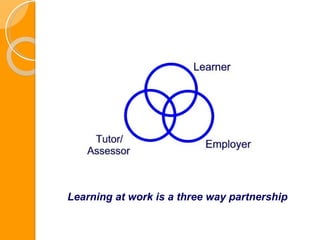
Learning at work is a three way partnership
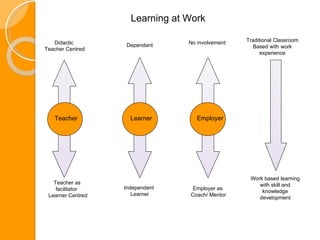
Learning at Work Teacher Didactic  Teacher Centred Learner Teacher as facilitator  Learner Centred Dependant Independent  Learner No involvement Employer as  Coach/ Mentor Traditional Classroom Based with work experience Work based learning with skill and knowledge development Employer
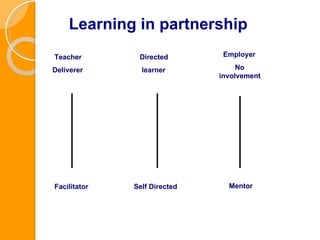
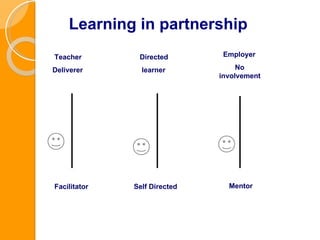
Learning in partnership Teacher Deliverer Facilitator Directed learner Self Directed Employer No  involvement Mentor
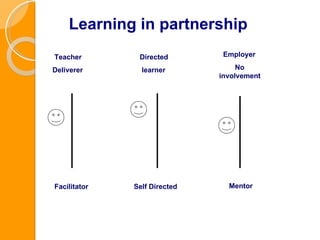
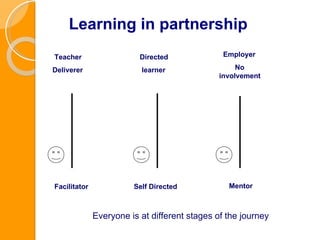
Learning in partnership Teacher Deliverer Facilitator Directed learner Self Directed Employer No  involvement Mentor Everyone is at different stages of the journey
Advantages of work place Experience the reality of work Apply knowledge and skills Allows repetition and consolidation of skills Is an individual journey through negotiation with learner/ employer
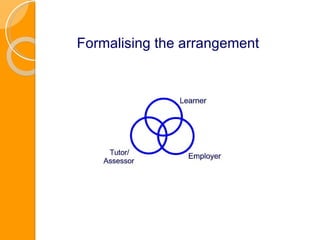
Formalising the arrangement
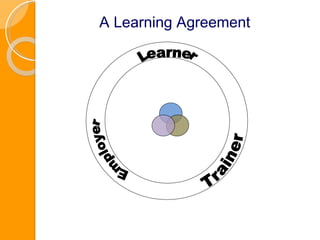
A Learning Agreement Learner Employer Trainer
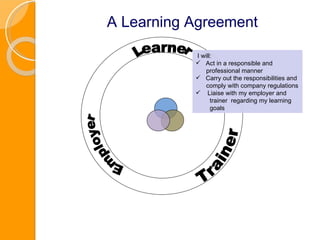
A Learning Agreement I will: Act in a responsible and  professional manner Carry out the responsibilities and comply with company regulations Liaise with my employer and  trainer  regarding my learning  goals Learner Employer Trainer
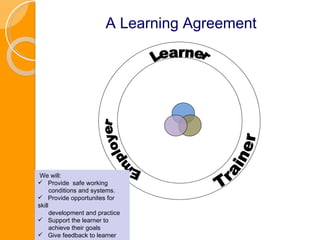
A Learning Agreement We will: Provide  safe working  conditions and systems.  Provide opportunites for skill development and practice Support the learner to  achieve their goals Give feedback to learner  and trainer. Learner Employer Trainer
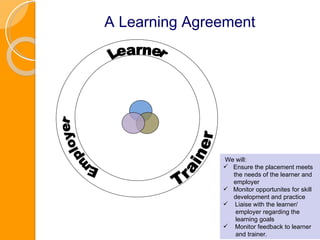
A Learning Agreement We will: Ensure the placement meets the needs of the learner and  employer  Monitor opportunites for skill development and practice Liaise with the learner/  employer regarding the learning goals Monitor feedback to learner  and trainer. Learner Employer Trainer
Role of the Mentor What do you see as the benefits of a mentor to: The learner The supervisor The business Write down 5 statements for each bullet point
What is the difference? Consider, the following and define what makes the difference between the roles: Mentor Coach Tutor Teacher
Skills required by the Supervisor Discussion What are the skills that you will require to support a learner in the workplace?
Issues about mentoring Is it a line manager? Is it someone in the learner’s team? How is it formally recognised by the company?
Assessment A learner’s work is stored in a working portfolio known as their Portfolio of Evidence.
Portfolio of Evidence A method of  gathering evidence  of work experience or practice.  Evidence can be  assessed  against qualification criteria and standards. Can be  accredited  with similar recognition as other formal qualifications. Can be used as a  learning tool  to develop skills and knowledge through “learning by doing”
Portfolio of Evidence Evidence could include:  Observation Records Witness Testimonies Professional Discussions Artefacts (photos/video/products) Case Histories and Studies Projects/ Assignments
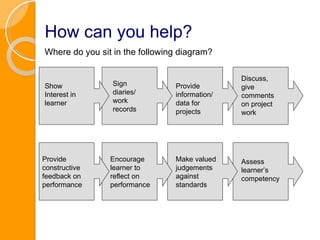
How can you help? Show  Interest in learner Sign diaries/ work records Provide information/ data for projects Discuss, give comments on project work Provide constructive feedback on performance Encourage learner to reflect on performance Make valued judgements against standards Assess learner’s competency Where do you sit in the following diagram?
Summary Learning at work needs a structured approach between learner/ employer and training provider A portfolio of evidence is a way of gathering evidence of work The employer can help the learner to achieve their learning goals
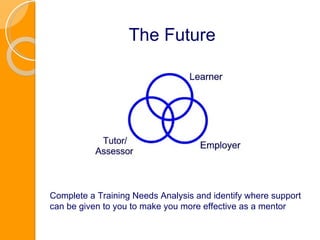
The Future Complete a Training Needs Analysis and identify where support can be given to you to make you more effective as a mentor
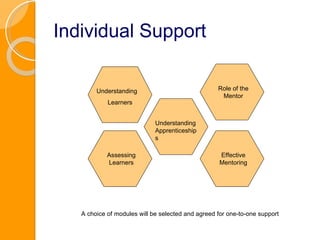
Individual Support Understanding Apprenticeships Understanding  Learners Assessing Learners Role of the Mentor Effective Mentoring A choice of modules will be selected and agreed for one-to-one support
Thank you

Mentor Briefing Ppt

  • 1.
    Learning at WorkThe Role of Mentoring at Work
  • 2.
    Purpose of thispresentation To confirm the importance of the employer in the three way partnership. To explore the role of the workplace supervisor To identify the benefits and skills of mentoring in the work place To agree an Individual Training Plan for each supervisor
  • 3.
    Consideryour own education/ training: How has the teacher changed? How has the student changed? How has learning changed? Write down 5 statements for each bullet point
  • 4.
    Why is learningchanging? Life is faster/ more distraction Concentration is different/ learners want an instant fix There is a lot of informal learning Work/ life mix Information is very easy to gain – google it! More pressure – more choice There isn’t a job for life
  • 5.
    Learning at workis a three way partnership
  • 6.
    Learning at WorkTeacher Didactic Teacher Centred Learner Teacher as facilitator Learner Centred Dependant Independent Learner No involvement Employer as Coach/ Mentor Traditional Classroom Based with work experience Work based learning with skill and knowledge development Employer
  • 7.
    Learning in partnershipTeacher Deliverer Facilitator Directed learner Self Directed Employer No involvement Mentor
  • 8.
    Learning in partnershipTeacher Deliverer Facilitator Directed learner Self Directed Employer No involvement Mentor
  • 9.
    Learning in partnershipTeacher Deliverer Facilitator Directed learner Self Directed Employer No involvement Mentor
  • 10.
    Learning in partnershipTeacher Deliverer Facilitator Directed learner Self Directed Employer No involvement Mentor Everyone is at different stages of the journey
  • 11.
    Advantages of workplace Experience the reality of work Apply knowledge and skills Allows repetition and consolidation of skills Is an individual journey through negotiation with learner/ employer
  • 12.
  • 13.
    A Learning AgreementLearner Employer Trainer
  • 14.
    A Learning AgreementI will: Act in a responsible and professional manner Carry out the responsibilities and comply with company regulations Liaise with my employer and trainer regarding my learning goals Learner Employer Trainer
  • 15.
    A Learning AgreementWe will: Provide safe working conditions and systems. Provide opportunites for skill development and practice Support the learner to achieve their goals Give feedback to learner and trainer. Learner Employer Trainer
  • 16.
    A Learning AgreementWe will: Ensure the placement meets the needs of the learner and employer Monitor opportunites for skill development and practice Liaise with the learner/ employer regarding the learning goals Monitor feedback to learner and trainer. Learner Employer Trainer
  • 17.
    Role of theMentor What do you see as the benefits of a mentor to: The learner The supervisor The business Write down 5 statements for each bullet point
  • 18.
    What is thedifference? Consider, the following and define what makes the difference between the roles: Mentor Coach Tutor Teacher
  • 19.
    Skills required bythe Supervisor Discussion What are the skills that you will require to support a learner in the workplace?
  • 20.
    Issues about mentoringIs it a line manager? Is it someone in the learner’s team? How is it formally recognised by the company?
  • 21.
    Assessment A learner’swork is stored in a working portfolio known as their Portfolio of Evidence.
  • 22.
    Portfolio of EvidenceA method of gathering evidence of work experience or practice. Evidence can be assessed against qualification criteria and standards. Can be accredited with similar recognition as other formal qualifications. Can be used as a learning tool to develop skills and knowledge through “learning by doing”
  • 23.
    Portfolio of EvidenceEvidence could include: Observation Records Witness Testimonies Professional Discussions Artefacts (photos/video/products) Case Histories and Studies Projects/ Assignments
  • 24.
    How can youhelp? Show Interest in learner Sign diaries/ work records Provide information/ data for projects Discuss, give comments on project work Provide constructive feedback on performance Encourage learner to reflect on performance Make valued judgements against standards Assess learner’s competency Where do you sit in the following diagram?
  • 25.
    Summary Learning atwork needs a structured approach between learner/ employer and training provider A portfolio of evidence is a way of gathering evidence of work The employer can help the learner to achieve their learning goals
  • 26.
    The Future Completea Training Needs Analysis and identify where support can be given to you to make you more effective as a mentor
  • 27.
    Individual Support UnderstandingApprenticeships Understanding Learners Assessing Learners Role of the Mentor Effective Mentoring A choice of modules will be selected and agreed for one-to-one support
  • 28.

Editor's Notes

  • #3 Purpose – Why are you here To confirm the importance of the three way relationship and the part each party plays To look at learning in more detail To explore the role of the supervisor To explain the way forward
  • #4 Set into two groups to brain storm some ideas
  • #6 Learning at Work is the three way relationship It is not as successful if there are only two parties involved. The learner is at the centre
  • #14 Bring in a copy of the Learning Agreement from an Audit file