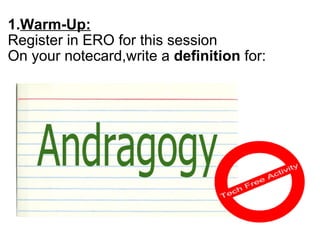
Warm-Up: Register in ERO for this session On your notecard,write a  definition  for:  
Team Building Activity Who are You?
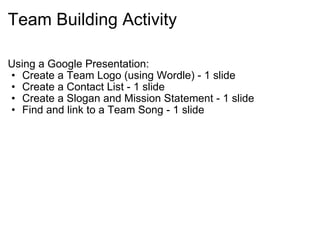
Team Building Activity Using a Google Presentation: Create a Team Logo (using Wordle) - 1 slide Create a Contact List - 1 slide Create a Slogan and Mission Statement - 1 slide Find and link to a Team Song - 1 slide
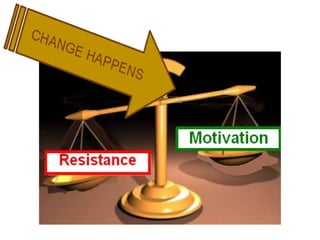
CHANGE is like SUNSHINE... Some CHANGE because they see the LIGHT and some CHANGE because they feel the HEAT.
An effective change agent is someone who... Isn't afraid to change course and challenge the status quo Helps others embrace change without feeling threatened  Fosters collaboration Respects and uses the wisdom of experienced teachers Builds bridges between old and new ideas  Engages teachers in evaluative thinking Models continuous improvement in one's own work
 
 
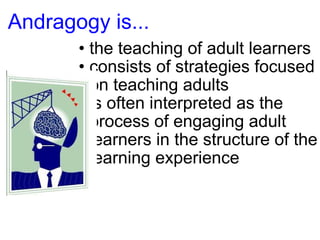
Andragogy is... the teaching of adult learners consists of strategies focused on teaching adults is often interpreted as the process of engaging adult learners in the structure of the learning experience
Details
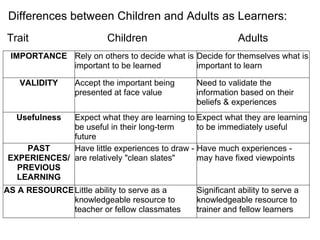
Differences between Children and Adults as Learners:    Trait                          Children                              Adults IMPORTANCE Rely on others to decide what is important to be learned Decide for themselves what is important to learn VALIDITY Accept the important being presented at face value Need to validate the information based on their beliefs & experiences Usefulness Expect what they are learning to be useful in their long-term future Expect what they are learning to be immediately useful PAST EXPERIENCES/ PREVIOUS LEARNING Have little experiences to draw - are relatively "clean slates" Have much experiences - may have fixed viewpoints AS A RESOURCE Little ability to serve as a knowledgeable resource to teacher or fellow classmates Significant ability to serve a knowledgeable resource to trainer and fellow learners
Professional Development  Pet Peeves 3 Qualities of Good Professional Development
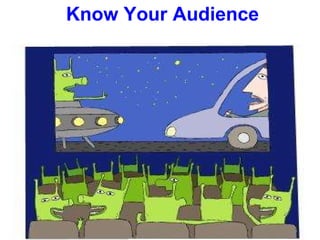
  Know Your Audience
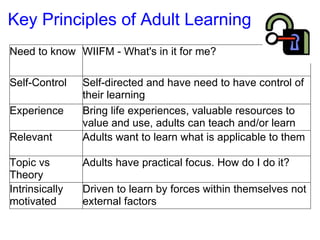
Key Principles of Adult Learning Need to know WIIFM - What's in it for me? Self-Control  Self-directed and have need to have control of their learning  Experience Bring life experiences, valuable resources to value and use, adults can teach and/or learn Relevant Adults want to learn what is applicable to them Topic vs Theory Adults have practical focus. How do I do it? Intrinsically motivated Driven to learn by forces within themselves not external factors
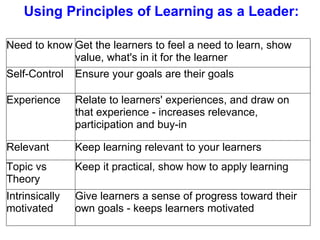
Using Principles of Learning as a Leader: Need to know Get the learners to feel a need to learn, show value, what's in it for the learner Self-Control  Ensure your goals are their goals Experience Relate to learners' experiences, and draw on that experience - increases relevance, participation and buy-in Relevant Keep learning relevant to your learners Topic vs Theory Keep it practical, show how to apply learning Intrinsically motivated Give learners a sense of progress toward their own goals - keeps learners motivated
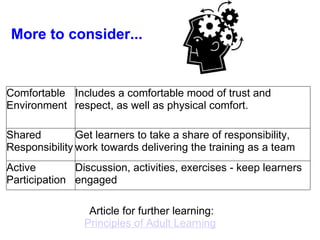
More to consider...   Article for further learning: Principles of Adult Learning Comfortable  Environment  Includes a comfortable mood of trust and respect, as well as physical comfort. Shared Responsibility  Get learners to take a share of responsibility, work towards delivering the training as a team Active Participation Discussion, activities, exercises - keep learners engaged
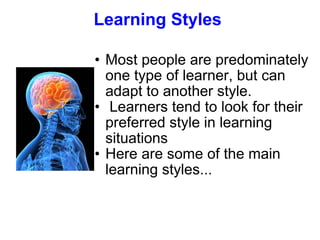
Learning Styles   Most people are predominately one type of learner, but can adapt to another style.   Learners tend to look for their preferred style in learning situations Here are some of the main learning styles...
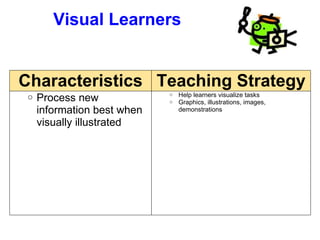
Visual Learners Characteristics Teaching Strategy Process new information best when visually illustrated Help learners visualize tasks Graphics, illustrations, images, demonstrations
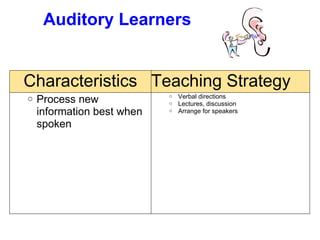
Auditory Learners Characteristics Teaching Strategy Process new information best when spoken Verbal directions Lectures, discussion Arrange for speakers
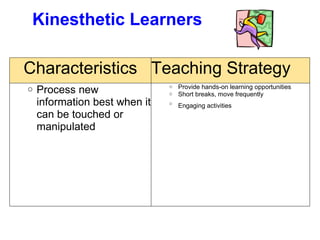
Kinesthetic Learners Characteristics Teaching Strategy Process new information best when it can be touched or manipulated Provide hands-on learning opportunities Short breaks, move frequently Engaging activities
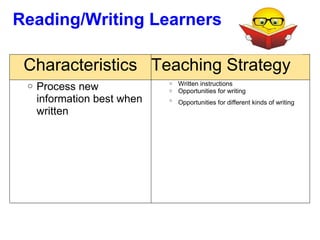
Reading/Writing Learners Characteristics Teaching Strategy Process new information best when written Written instructions Opportunities for writing Opportunities for different kinds of writing
What's Your Learning Style?
Learning Styles Assessment Complete inventory & email yourself the results 
Building Your ChIP  
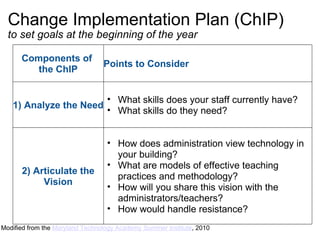
Change Implementation Plan (ChIP) to set goals at the beginning of the year Modified from the  Maryland Technology Academy Summer Institute , 2010 Components of  the ChIP Points to Consider 1) Analyze the Need What skills does your staff currently have? What skills do they need? 2) Articulate the Vision How does administration view technology in your building? What are models of effective teaching practices and methodology? How will you share this vision with the administrators/teachers?  How would handle resistance?
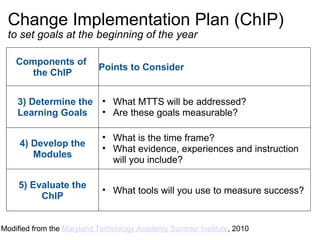
Change Implementation Plan (ChIP) to set goals at the beginning of the year Modified from the  Maryland Technology Academy Summer Institute , 2010 Components of  the ChIP Points to Consider    3) Determine the Learning Goals What MTTS will be addressed? Are these goals measurable? 4) Develop the Modules What is the time frame? What evidence, experiences and instruction will you include? 5) Evaluate the ChIP What tools will you use to measure success?
Consider one of the skills taught during STEP to implement at your school. Begin your ChIP. Timer
Sharing your ChiP How will you communicate your vision to administrators and staff? How will you confront resistance to change?
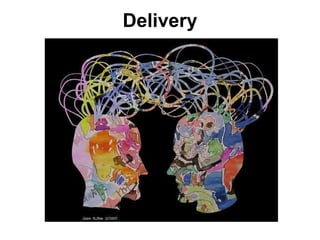
Delivery
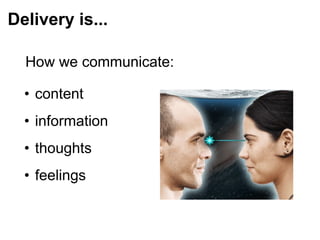
Delivery is...   How we communicate: content information thoughts feelings    
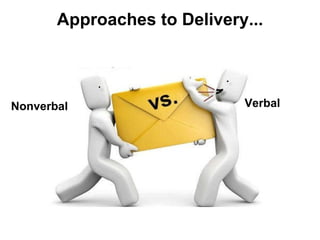
Approaches to Delivery... Verbal Nonverbal
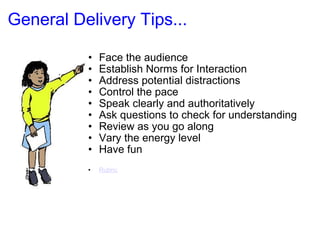
General Delivery Tips... Face the audience Establish Norms for Interaction Address potential distractions Control the pace  Speak clearly and authoritatively Ask questions to check for understanding Review as you go along Vary the energy level Have fun Rubric  
Video Analysis We will watch a 6 minute video about presenting.  As you watch, think about how each presentation can be improved. After watching the video, take a moment to think about other presentation skills that you can personally improve upon .   Video  
Content http://www.johnlund.com/uploaded_images/bigpicture-773191.jpg
Content
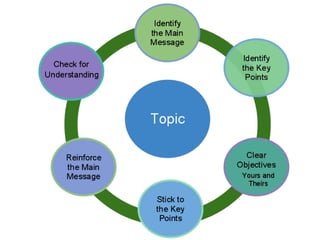
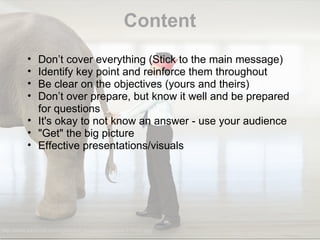
Content http://www.johnlund.com/uploaded_images/bigpicture-773191.jpg Don’t cover everything (Stick to the main message) Identify key point and reinforce them throughout Be clear on the objectives (yours and theirs) Don’t over prepare, but know it well and be prepared for questions It's okay to not know an answer - use your audience "Get" the big picture Effective presentations/visuals 

Copy of step_professional_development_part_1

  • 1.
    Warm-Up: Register inERO for this session On your notecard,write a definition for:  
  • 2.
  • 3.
    Team Building ActivityUsing a Google Presentation: Create a Team Logo (using Wordle) - 1 slide Create a Contact List - 1 slide Create a Slogan and Mission Statement - 1 slide Find and link to a Team Song - 1 slide
  • 4.
    CHANGE is likeSUNSHINE... Some CHANGE because they see the LIGHT and some CHANGE because they feel the HEAT.
  • 5.
    An effective changeagent is someone who... Isn't afraid to change course and challenge the status quo Helps others embrace change without feeling threatened Fosters collaboration Respects and uses the wisdom of experienced teachers Builds bridges between old and new ideas  Engages teachers in evaluative thinking Models continuous improvement in one's own work
  • 6.
  • 7.
  • 8.
    Andragogy is... theteaching of adult learners consists of strategies focused on teaching adults is often interpreted as the process of engaging adult learners in the structure of the learning experience
  • 9.
  • 10.
    Differences between Childrenand Adults as Learners:   Trait                          Children                              Adults IMPORTANCE Rely on others to decide what is important to be learned Decide for themselves what is important to learn VALIDITY Accept the important being presented at face value Need to validate the information based on their beliefs & experiences Usefulness Expect what they are learning to be useful in their long-term future Expect what they are learning to be immediately useful PAST EXPERIENCES/ PREVIOUS LEARNING Have little experiences to draw - are relatively "clean slates" Have much experiences - may have fixed viewpoints AS A RESOURCE Little ability to serve as a knowledgeable resource to teacher or fellow classmates Significant ability to serve a knowledgeable resource to trainer and fellow learners
  • 11.
    Professional Development  PetPeeves 3 Qualities of Good Professional Development
  • 12.
      Know YourAudience
  • 13.
    Key Principles ofAdult Learning Need to know WIIFM - What's in it for me? Self-Control Self-directed and have need to have control of their learning Experience Bring life experiences, valuable resources to value and use, adults can teach and/or learn Relevant Adults want to learn what is applicable to them Topic vs Theory Adults have practical focus. How do I do it? Intrinsically motivated Driven to learn by forces within themselves not external factors
  • 14.
    Using Principles ofLearning as a Leader: Need to know Get the learners to feel a need to learn, show value, what's in it for the learner Self-Control Ensure your goals are their goals Experience Relate to learners' experiences, and draw on that experience - increases relevance, participation and buy-in Relevant Keep learning relevant to your learners Topic vs Theory Keep it practical, show how to apply learning Intrinsically motivated Give learners a sense of progress toward their own goals - keeps learners motivated
  • 15.
    More to consider...  Article for further learning: Principles of Adult Learning Comfortable  Environment Includes a comfortable mood of trust and respect, as well as physical comfort. Shared Responsibility Get learners to take a share of responsibility, work towards delivering the training as a team Active Participation Discussion, activities, exercises - keep learners engaged
  • 16.
    Learning Styles Most people are predominately one type of learner, but can adapt to another style.   Learners tend to look for their preferred style in learning situations Here are some of the main learning styles...
  • 17.
    Visual Learners CharacteristicsTeaching Strategy Process new information best when visually illustrated Help learners visualize tasks Graphics, illustrations, images, demonstrations
  • 18.
    Auditory Learners CharacteristicsTeaching Strategy Process new information best when spoken Verbal directions Lectures, discussion Arrange for speakers
  • 19.
    Kinesthetic Learners CharacteristicsTeaching Strategy Process new information best when it can be touched or manipulated Provide hands-on learning opportunities Short breaks, move frequently Engaging activities
  • 20.
    Reading/Writing Learners CharacteristicsTeaching Strategy Process new information best when written Written instructions Opportunities for writing Opportunities for different kinds of writing
  • 21.
  • 22.
    Learning Styles AssessmentComplete inventory & email yourself the results 
  • 23.
  • 24.
    Change Implementation Plan(ChIP) to set goals at the beginning of the year Modified from the Maryland Technology Academy Summer Institute , 2010 Components of  the ChIP Points to Consider 1) Analyze the Need What skills does your staff currently have? What skills do they need? 2) Articulate the Vision How does administration view technology in your building? What are models of effective teaching practices and methodology? How will you share this vision with the administrators/teachers?  How would handle resistance?
  • 25.
    Change Implementation Plan(ChIP) to set goals at the beginning of the year Modified from the Maryland Technology Academy Summer Institute , 2010 Components of  the ChIP Points to Consider    3) Determine the Learning Goals What MTTS will be addressed? Are these goals measurable? 4) Develop the Modules What is the time frame? What evidence, experiences and instruction will you include? 5) Evaluate the ChIP What tools will you use to measure success?
  • 26.
    Consider one ofthe skills taught during STEP to implement at your school. Begin your ChIP. Timer
  • 27.
    Sharing your ChiPHow will you communicate your vision to administrators and staff? How will you confront resistance to change?
  • 28.
  • 29.
    Delivery is...  How we communicate: content information thoughts feelings    
  • 30.
    Approaches to Delivery...Verbal Nonverbal
  • 31.
    General Delivery Tips...Face the audience Establish Norms for Interaction Address potential distractions Control the pace  Speak clearly and authoritatively Ask questions to check for understanding Review as you go along Vary the energy level Have fun Rubric  
  • 32.
    Video Analysis Wewill watch a 6 minute video about presenting.  As you watch, think about how each presentation can be improved. After watching the video, take a moment to think about other presentation skills that you can personally improve upon .   Video  
  • 33.
  • 34.
  • 35.
    Content http://www.johnlund.com/uploaded_images/bigpicture-773191.jpg Don’tcover everything (Stick to the main message) Identify key point and reinforce them throughout Be clear on the objectives (yours and theirs) Don’t over prepare, but know it well and be prepared for questions It's okay to not know an answer - use your audience "Get" the big picture Effective presentations/visuals 

Editor's Notes

  • #5 We could use either picture
  • #33 The speaker does say the word "Hell" at 2:27/2:28 Stop the video at 3:23