







The World of Learning
Different Approaches to
delivering apprenticeships
Learning Styles
Visual
Auditory
Kinaesthetic
Reading/writing
© Pathway Group | E & OE
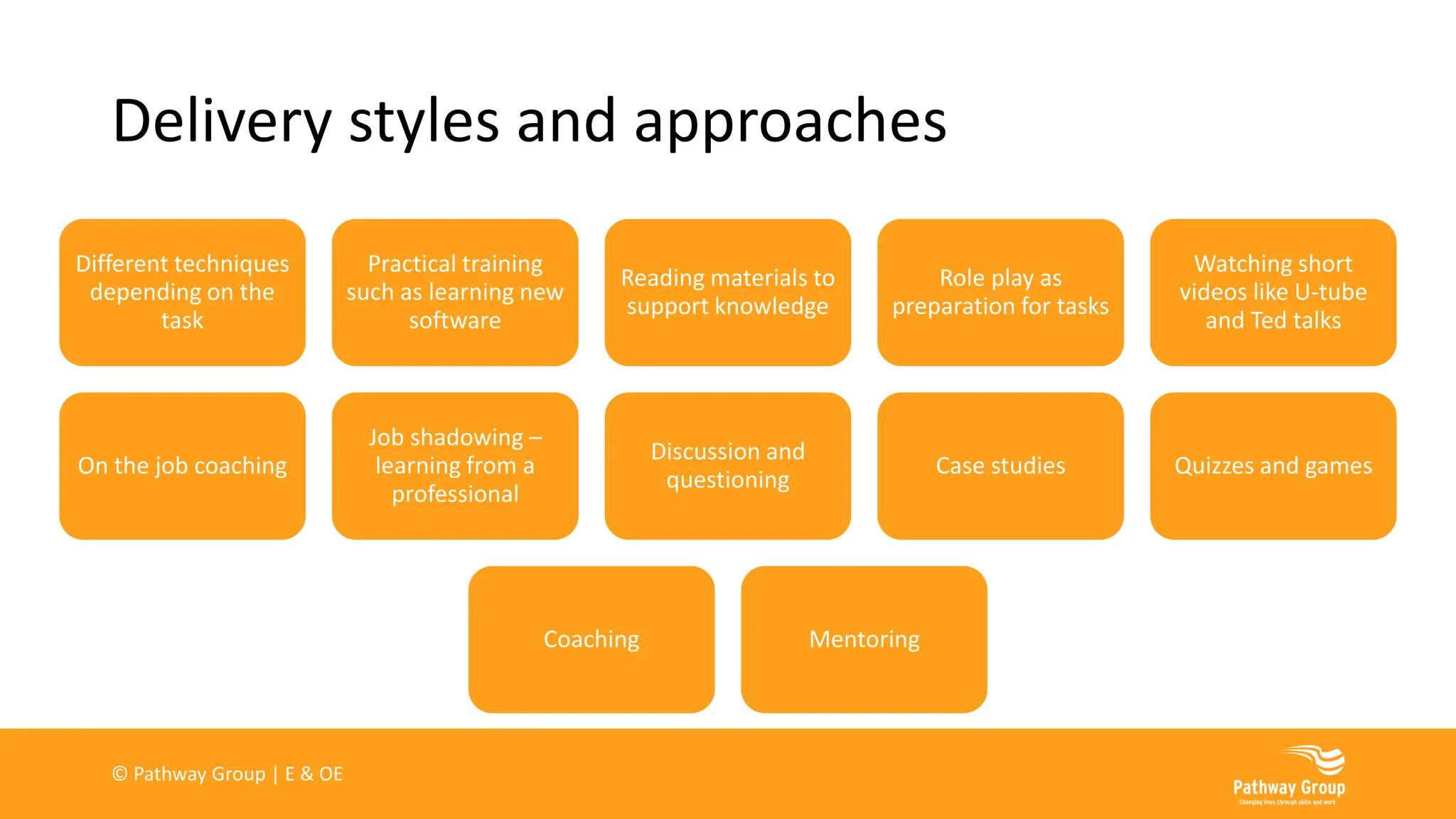
Delivery styles and approaches
Different techniques
depending on the
task
Practical training
such as learning new
software
Reading materials to
support knowledge
Role play as
preparation for tasks
Watching short
videos like U-tube
and Ted talks
On the job coaching
Job shadowing –
learning from a
professional
Discussion and
questioning
Case studies Quizzes and games
Coaching Mentoring
© Pathway Group | E & OE
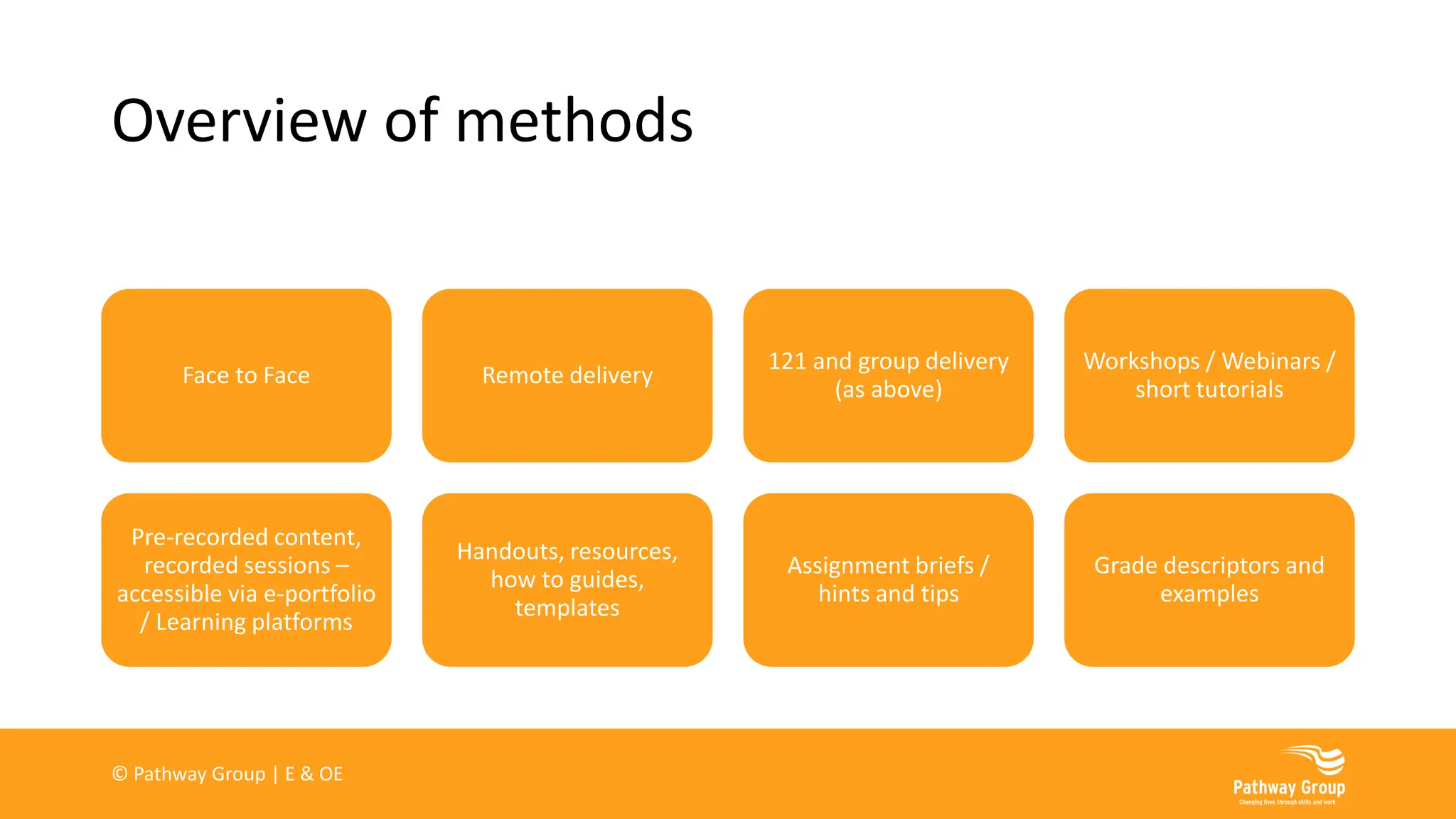
Overview of methods
Face to Face Remote delivery
121 and group delivery
(as above)
Workshops / Webinars /
short tutorials
Pre-recorded content,
recorded sessions –
accessible via e-portfolio
/ Learning platforms
Handouts, resources,
how to guides,
templates
Assignment briefs /
hints and tips
Grade descriptors and
examples
© Pathway Group | E & OE
Let’s discuss
The benefits and considerations of each delivery style In meeting
the needs of apprentices and employers
© Pathway Group | E & OE
Blended learning models and
their effectiveness
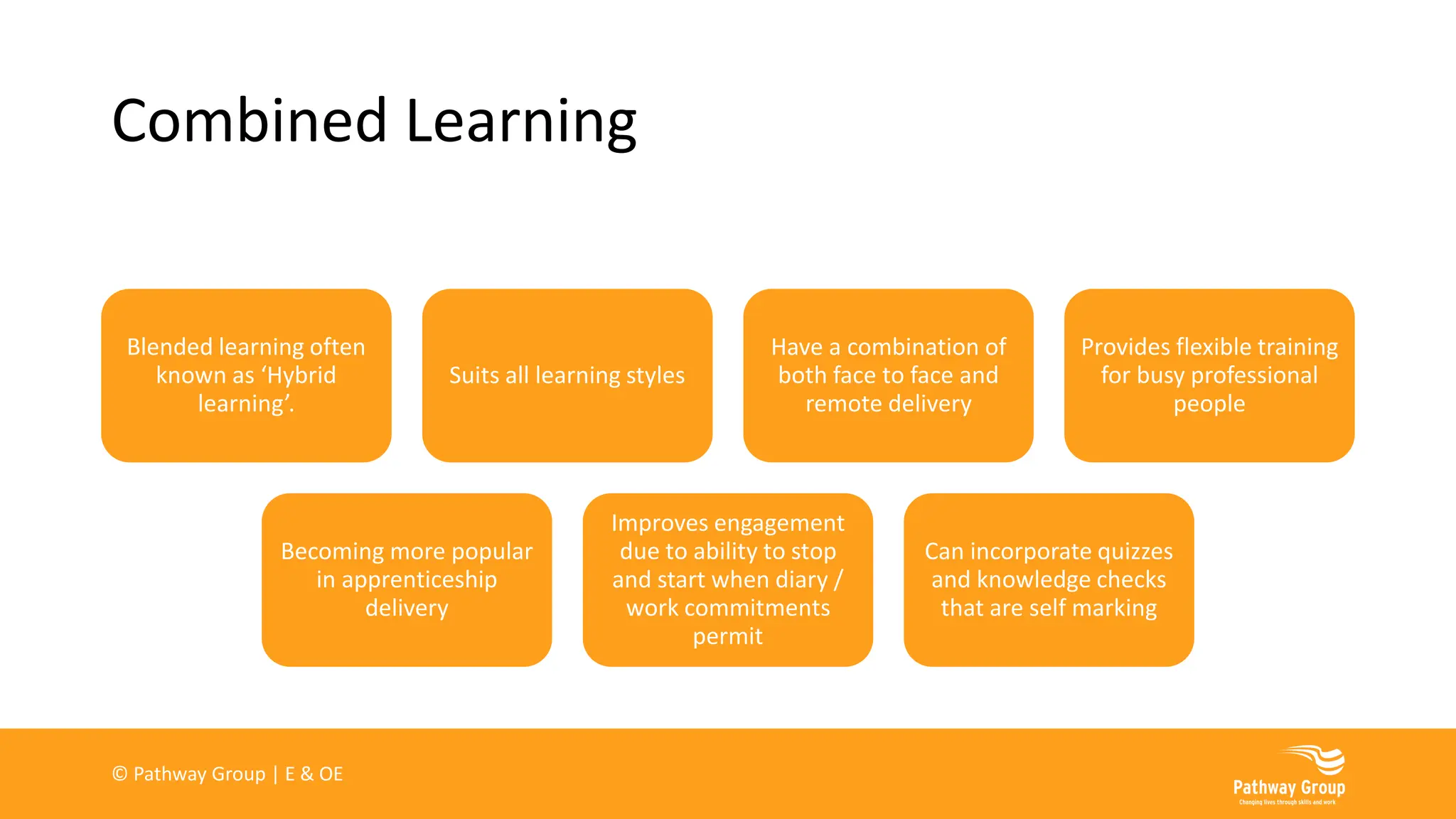
Combined Learning
Blended learning often
known as ‘Hybrid
learning’.
Suits all learning styles
Have a combination of
both face to face and
remote delivery
Provides flexible training
for busy professional
people
Becoming more popular
in apprenticeship
delivery
Improves engagement
due to ability to stop
and start when diary /
work commitments
permit
Can incorporate quizzes
and knowledge checks
that are self marking
© Pathway Group | E & OE
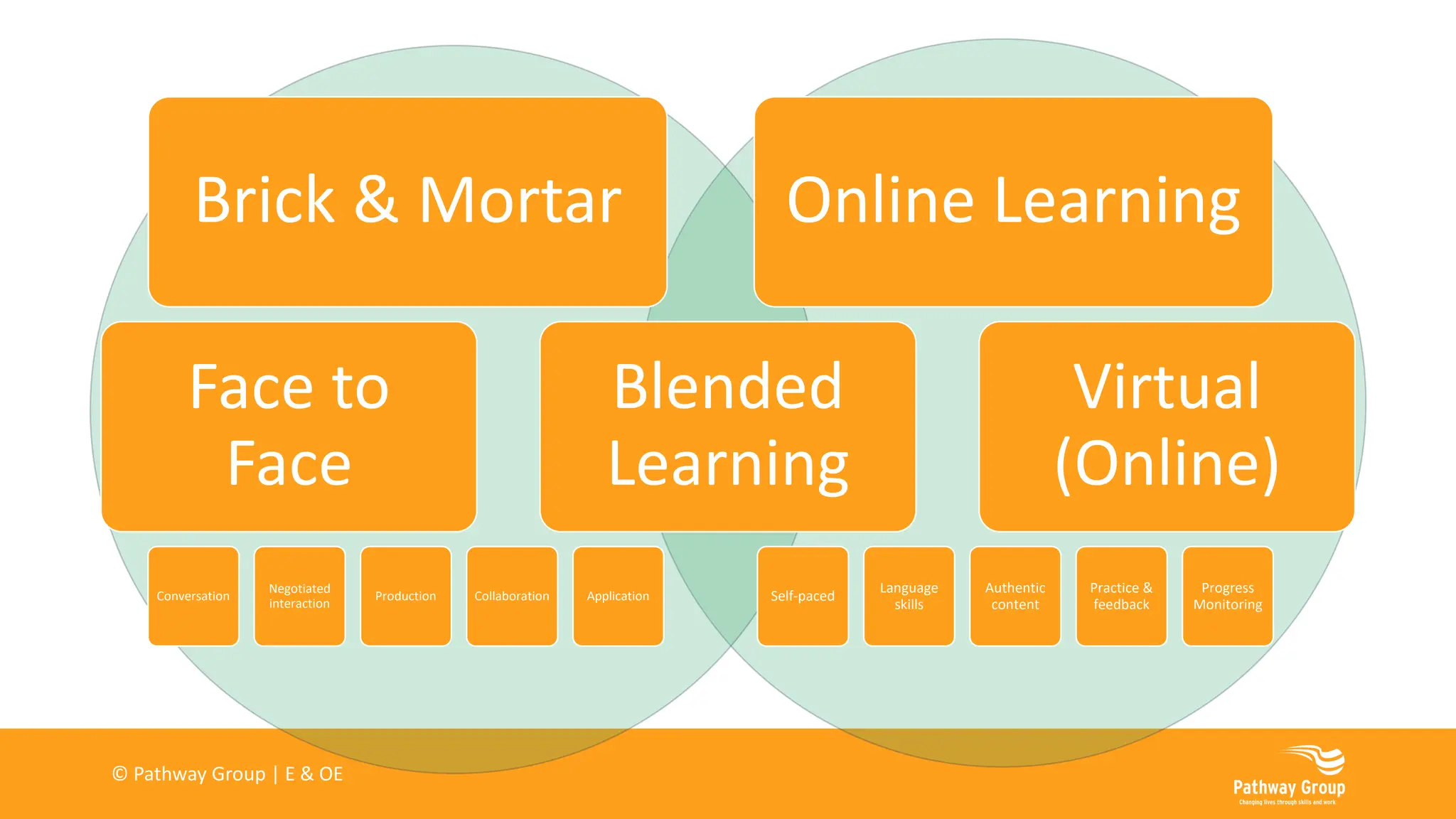
Brick & Mortar Online Learning
Face to
Face
Blended
Learning
Virtual
(Online)
Conversation
Negotiated
interaction
Production Collaboration Application Self-paced
Language
skills
Authentic
content
Practice &
feedback
Progress
Monitoring
© Pathway Group | E & OE
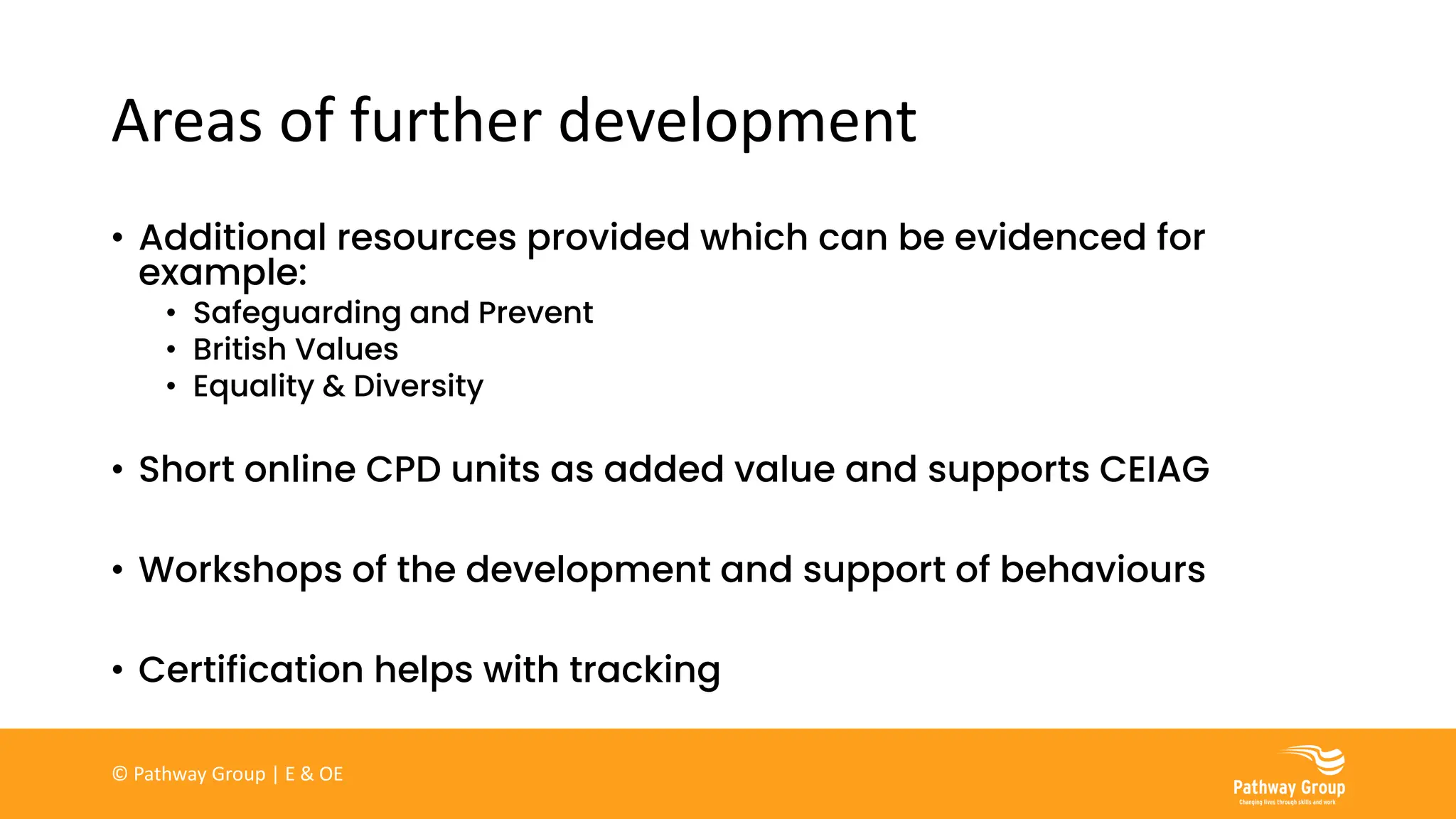
Areas of further development
• Additional resources provided which can be evidenced for
example:
• Safeguarding and Prevent
• British Values
• Equality & Diversity
• Short online CPD units as added value and supports CEIAG
• Workshops of the development and support of behaviours
• Certification helps with tracking
© Pathway Group | E & OE
Let's discuss…
What strategies should be considered for designing and
implementing effective blended learning models in apprenticeship
programmes (this should include Intent, Implementation and
Impact)
© Pathway Group | E & OE
Off-the-job training, mentoring,
and supervision
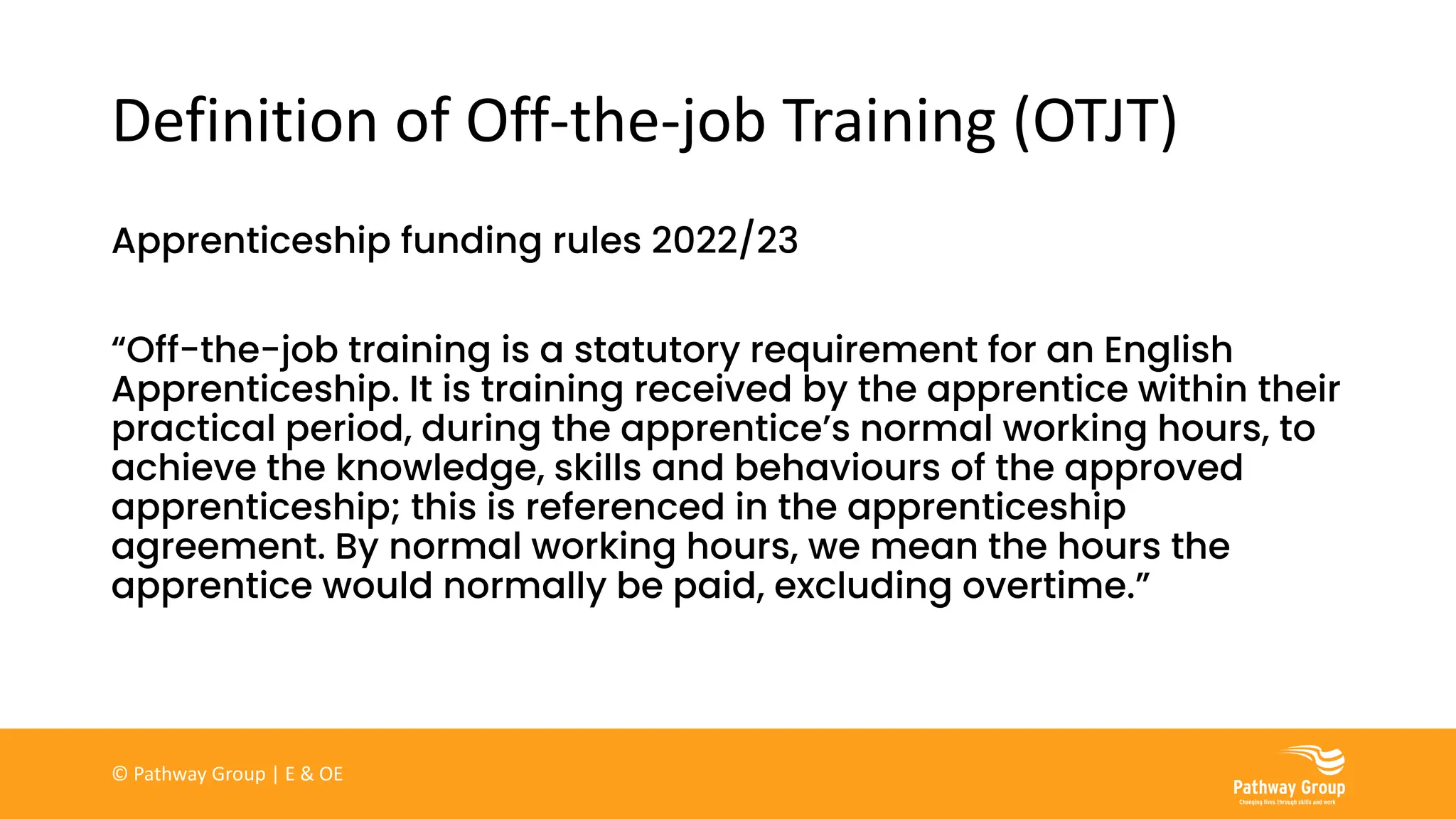
Definition of Off-the-job Training (OTJT)
Apprenticeship funding rules 2022/23
“Off-the-job training is a statutory requirement for an English
Apprenticeship. It is training received by the apprentice within their
practical period, during the apprentice’s normal working hours, to
achieve the knowledge, skills and behaviours of the approved
apprenticeship; this is referenced in the apprenticeship
agreement. By normal working hours, we mean the hours the
apprentice would normally be paid, excluding overtime.”
© Pathway Group | E & OE
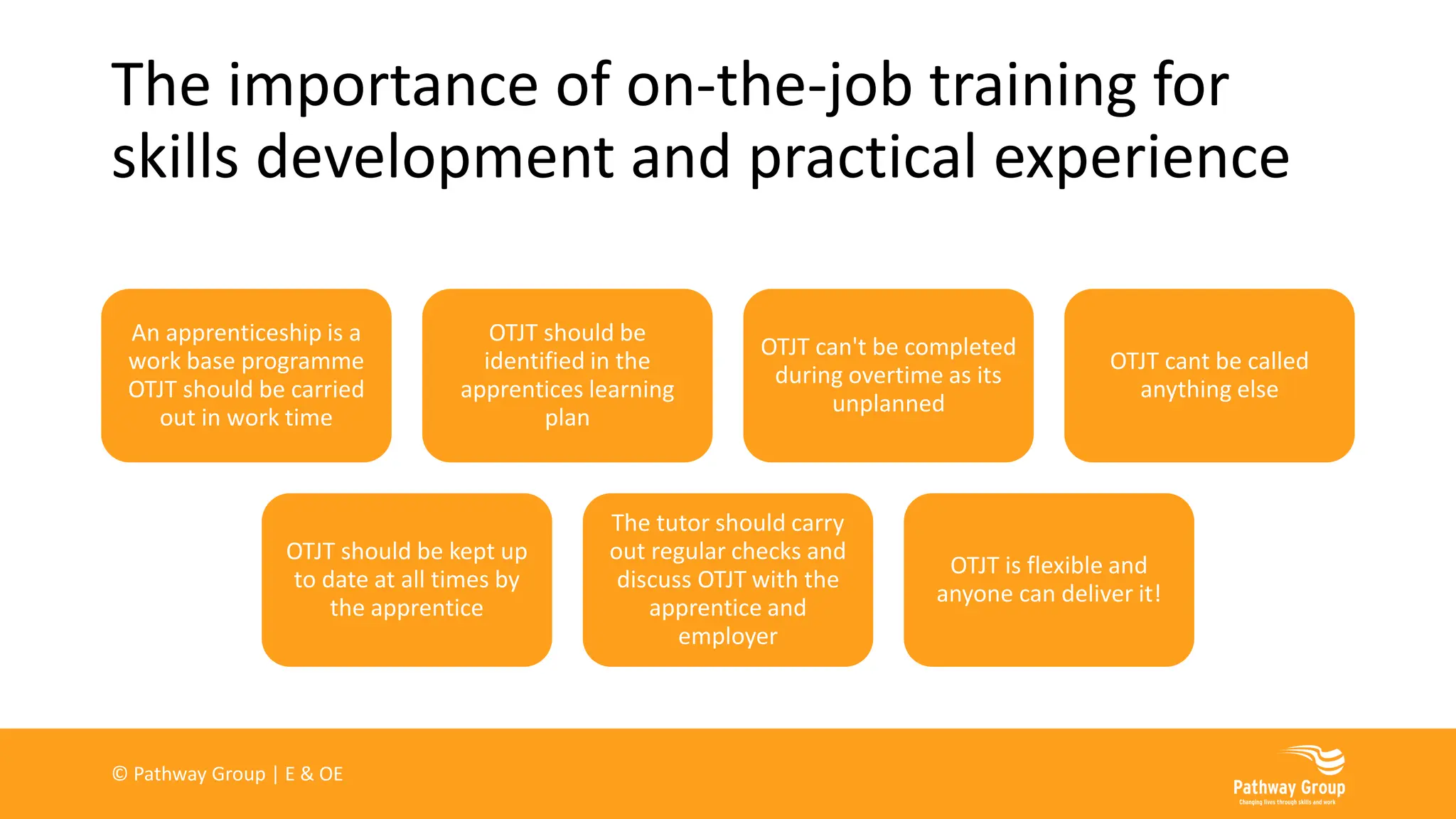
The importance of on-the-job training for
skills development and practical experience
An apprenticeship is a
work base programme
OTJT should be carried
out in work time
OTJT should be
identified in the
apprentices learning
plan
OTJT can't be completed
during overtime as its
unplanned
OTJT cant be called
anything else
OTJT should be kept up
to date at all times by
the apprentice
The tutor should carry
out regular checks and
discuss OTJT with the
apprentice and
employer
OTJT is flexible and
anyone can deliver it!
© Pathway Group | E & OE
What can be included…
Apprenticeship funding rules 2022/23
“Off-the-job training must deliver new skills directly relevant to the
apprenticeship standard. It can include the following:
• The teaching of theory (e.g. lectures, role-playing, simulations,
exercises, online learning and manufacturer training);
• Practical training, shadowing, mentoring, industry visits, and
participation in competitions, where the activity has been agreed
upon and documented as part of the agreed training plan or
• Learning support and time spent writing assignments”
© Pathway Group | E & OE
What can't be included
Apprenticeship funding rules 2022/23
“Off-the-job training must not include:
• Time spend on initial assessment and onboarding activities;
• English and maths training, up to including Level 2
• Training to acquire knowledge, skills and behaviours that are not
required by the apprenticeship standard;
• Progress reviews or on-programme assessments; or
• Training which takes place outside the apprentice’s normal
working hours (unless the apprentice has been paid for these
additional hours or been given time off in lieu)
© Pathway Group | E & OE
Why are supervisors and mentors important
in apprenticeships?
• The supervisors should carry out a thorough induction for new
staff or upskills
• Workplace mentor or coach to be assigned
• Ensure the provider is aware of contact details
• Supervisors or mentors can attend the tripartite review if they are
able to contribute to the feedback and development process
• Tutors should provide progress updates to supervisors. Learners
may request mentors to be involved
• Mentors can help the apprentice resolve issues quickly if they
don’t feel comfortable talking the employer
• No formal training is required to be a mentor
© Pathway Group | E & OE
Let's discuss…
Effective strategies for providing on-the-job training, mentoring
and supervision to enhance apprentices' learning experiences
© Pathway Group | E & OE
The importance and impact of work-based
projects
• Work-based projects allow the apprentice to apply their learning
directly to real-life challenges within the organisation.
• Projects can be created to improve processes and efficiencies.
This may even be environmental or money saving projects.
• The tutor will provide guidance around tools such as Gannt
charts and creating business cases.
• Organisations can benefit from these projects
• Projects can be used as best practice and develop a culture of
collaboration and team work
© Pathway Group | E & OE
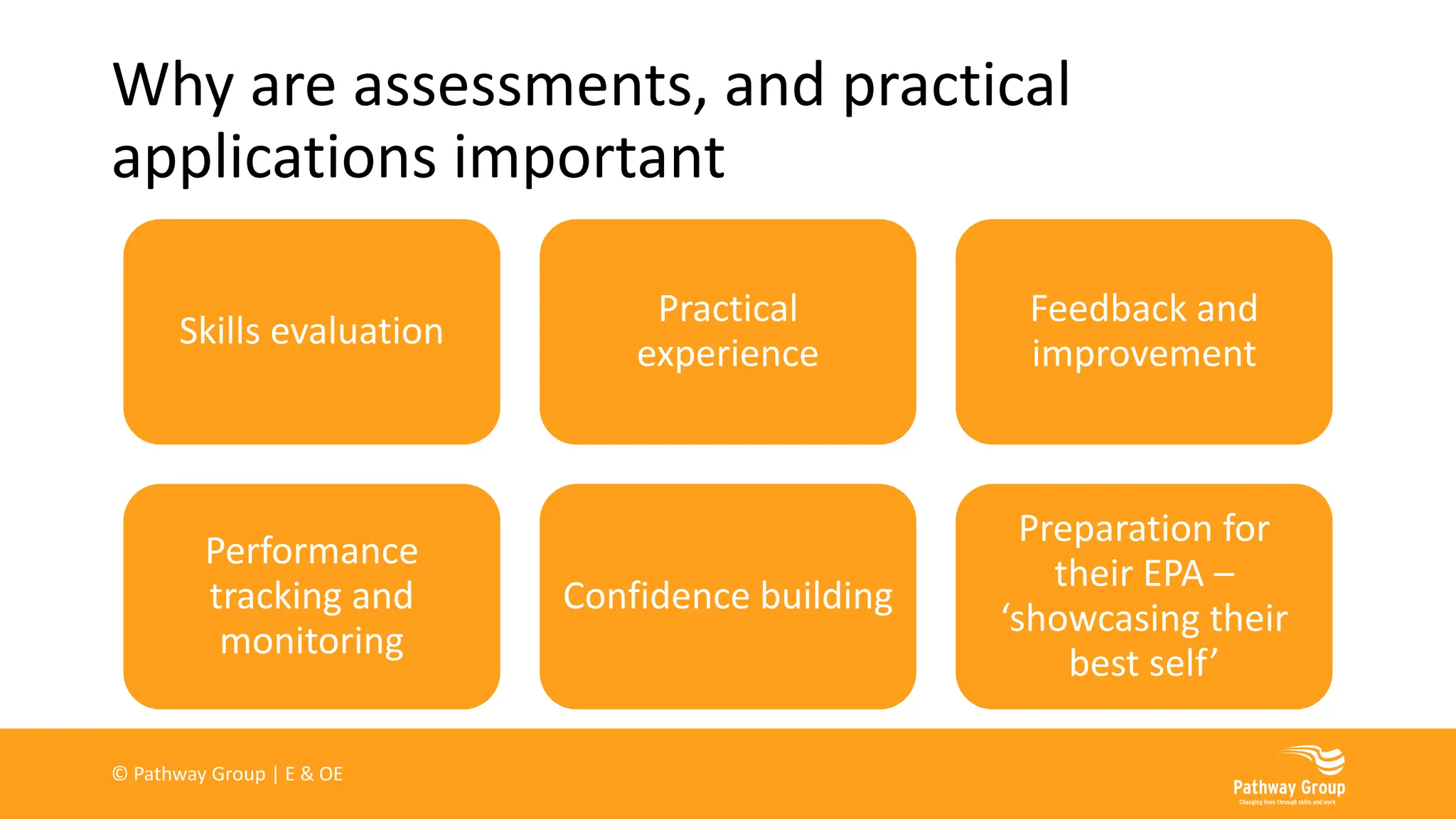
Why are assessments, and practical
applications important
Skills evaluation
Practical
experience
Feedback and
improvement
Performance
tracking and
monitoring
Confidence building
Preparation for
their EPA –
‘showcasing their
best self’
© Pathway Group | E & OE
Let's discuss…
As a manager or mentor, how would you help your apprentice
agree on a project? What impact would you like to see and hear
within your business?
© Pathway Group | E & OE

The World of Learning - Apprenticeship Training Material - Pathway Group.pdf

  • 1.
    The World ofLearning
  • 2.
  • 3.
  • 4.
    Delivery styles andapproaches Different techniques depending on the task Practical training such as learning new software Reading materials to support knowledge Role play as preparation for tasks Watching short videos like U-tube and Ted talks On the job coaching Job shadowing – learning from a professional Discussion and questioning Case studies Quizzes and games Coaching Mentoring © Pathway Group | E & OE
  • 5.
    Overview of methods Faceto Face Remote delivery 121 and group delivery (as above) Workshops / Webinars / short tutorials Pre-recorded content, recorded sessions – accessible via e-portfolio / Learning platforms Handouts, resources, how to guides, templates Assignment briefs / hints and tips Grade descriptors and examples © Pathway Group | E & OE
  • 6.
    Let’s discuss The benefitsand considerations of each delivery style In meeting the needs of apprentices and employers © Pathway Group | E & OE
  • 7.
    Blended learning modelsand their effectiveness
  • 8.
    Combined Learning Blended learningoften known as ‘Hybrid learning’. Suits all learning styles Have a combination of both face to face and remote delivery Provides flexible training for busy professional people Becoming more popular in apprenticeship delivery Improves engagement due to ability to stop and start when diary / work commitments permit Can incorporate quizzes and knowledge checks that are self marking © Pathway Group | E & OE
  • 9.
    Brick & MortarOnline Learning Face to Face Blended Learning Virtual (Online) Conversation Negotiated interaction Production Collaboration Application Self-paced Language skills Authentic content Practice & feedback Progress Monitoring © Pathway Group | E & OE
  • 10.
    Areas of furtherdevelopment • Additional resources provided which can be evidenced for example: • Safeguarding and Prevent • British Values • Equality & Diversity • Short online CPD units as added value and supports CEIAG • Workshops of the development and support of behaviours • Certification helps with tracking © Pathway Group | E & OE
  • 11.
    Let's discuss… What strategiesshould be considered for designing and implementing effective blended learning models in apprenticeship programmes (this should include Intent, Implementation and Impact) © Pathway Group | E & OE
  • 12.
  • 13.
    Definition of Off-the-jobTraining (OTJT) Apprenticeship funding rules 2022/23 “Off-the-job training is a statutory requirement for an English Apprenticeship. It is training received by the apprentice within their practical period, during the apprentice’s normal working hours, to achieve the knowledge, skills and behaviours of the approved apprenticeship; this is referenced in the apprenticeship agreement. By normal working hours, we mean the hours the apprentice would normally be paid, excluding overtime.” © Pathway Group | E & OE
  • 14.
    The importance ofon-the-job training for skills development and practical experience An apprenticeship is a work base programme OTJT should be carried out in work time OTJT should be identified in the apprentices learning plan OTJT can't be completed during overtime as its unplanned OTJT cant be called anything else OTJT should be kept up to date at all times by the apprentice The tutor should carry out regular checks and discuss OTJT with the apprentice and employer OTJT is flexible and anyone can deliver it! © Pathway Group | E & OE
  • 15.
    What can beincluded… Apprenticeship funding rules 2022/23 “Off-the-job training must deliver new skills directly relevant to the apprenticeship standard. It can include the following: • The teaching of theory (e.g. lectures, role-playing, simulations, exercises, online learning and manufacturer training); • Practical training, shadowing, mentoring, industry visits, and participation in competitions, where the activity has been agreed upon and documented as part of the agreed training plan or • Learning support and time spent writing assignments” © Pathway Group | E & OE
  • 16.
    What can't beincluded Apprenticeship funding rules 2022/23 “Off-the-job training must not include: • Time spend on initial assessment and onboarding activities; • English and maths training, up to including Level 2 • Training to acquire knowledge, skills and behaviours that are not required by the apprenticeship standard; • Progress reviews or on-programme assessments; or • Training which takes place outside the apprentice’s normal working hours (unless the apprentice has been paid for these additional hours or been given time off in lieu) © Pathway Group | E & OE
  • 17.
    Why are supervisorsand mentors important in apprenticeships? • The supervisors should carry out a thorough induction for new staff or upskills • Workplace mentor or coach to be assigned • Ensure the provider is aware of contact details • Supervisors or mentors can attend the tripartite review if they are able to contribute to the feedback and development process • Tutors should provide progress updates to supervisors. Learners may request mentors to be involved • Mentors can help the apprentice resolve issues quickly if they don’t feel comfortable talking the employer • No formal training is required to be a mentor © Pathway Group | E & OE
  • 18.
    Let's discuss… Effective strategiesfor providing on-the-job training, mentoring and supervision to enhance apprentices' learning experiences © Pathway Group | E & OE
  • 19.
    The importance andimpact of work-based projects • Work-based projects allow the apprentice to apply their learning directly to real-life challenges within the organisation. • Projects can be created to improve processes and efficiencies. This may even be environmental or money saving projects. • The tutor will provide guidance around tools such as Gannt charts and creating business cases. • Organisations can benefit from these projects • Projects can be used as best practice and develop a culture of collaboration and team work © Pathway Group | E & OE
  • 20.
    Why are assessments,and practical applications important Skills evaluation Practical experience Feedback and improvement Performance tracking and monitoring Confidence building Preparation for their EPA – ‘showcasing their best self’ © Pathway Group | E & OE
  • 21.
    Let's discuss… As amanager or mentor, how would you help your apprentice agree on a project? What impact would you like to see and hear within your business? © Pathway Group | E & OE