catamenia
KARISHMA MOHAMMAD
MPT 2ND YEAR
WHAT IT IS…..
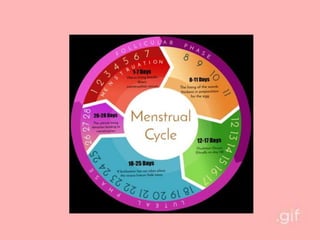
Menstrual is a Latin word : Lunar month of 28 days.
Defined as, Cyclic physiological changes that take place
during reproductive period in female.
The periodic blood that flows as a discharge from the
uterus.
Also called menorrhea, the time during which
menstruation occurs is referred to as menses.
The menses occurs at approximately 4 week intervals to
compose the menstrual cycle.
• Menarche: a woman's first menstruation. Starts
typically around 11-12 years. Depends on overall
health and diet.
• Menopause: End of a woman's reproductive phase
around 45-50 years.
• DURATION OF THE CYCLE:28 days (20 to 40
days)
• Amount of blood loss is approx 20 to 80 ml with
an average of 35ml.
MENSTURAL DISCHARGE CONSISTS OF,
1. Blood
2. Mucus
3. Vaginal epithelial cells
4. Fragments of endometrium
5. Prostaglandins
6. Enzymes
7. Bacteria
CHANGES DURING MENSTRUAL CYCLE
Changes in
• I. Ovary
• II. Uterus
• III Cervix
• IV. Vagina
• V Fallopian tubes
• VI Hormonal secretion
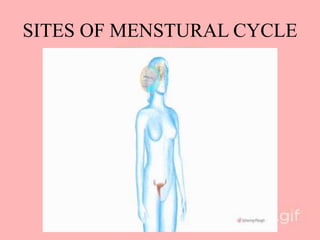
SITES OF MENSTURAL CYCLE
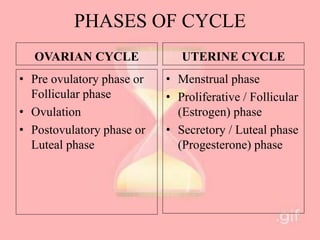
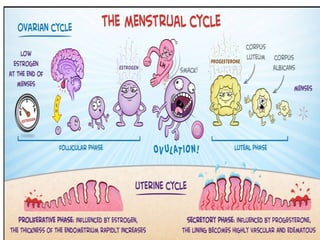
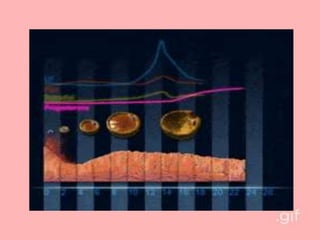
PHASES OF CYCLE
OVARIAN CYCLE UTERINE CYCLE
• Menstrual phase
• Proliferative / Follicular
(Estrogen) phase
• Secretory / Luteal phase
(Progesterone) phase
• Pre ovulatory phase or
Follicular phase
• Ovulation
• Postovulatory phase or
Luteal phase
PRE OVULATORY / FOLLICULAR
PHASE
• Begins with bleeding on 1st day of menstrual
cycle & ends with ovulation
• Folliculogenesis : Maturation of ovum.
• During follicular phase, low level of estrogen
suppresses production of LH from pituitary
gland. (Negative feedback )
• When ovum has nearly matured, estrogen
levels reaches a threshold above which they
stimulate production of LH , LH SURGE
(Positive feedback )
OVULATION
• Release of secondary oocyte from ovary
(following rupture of Graffian follicle) into
peritoneal cavity.
• It usually occurs 14th day ( in a 28-day cycle )
• 36 hrs after mid-cycle LH surge
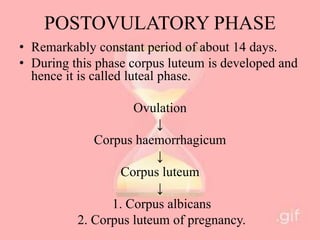
POSTOVULATORY PHASE
• Remarkably constant period of about 14 days.
• During this phase corpus luteum is developed and
hence it is called luteal phase.
Ovulation
↓
Corpus haemorrhagicum
↓
Corpus luteum
↓
1. Corpus albicans
2. Corpus luteum of pregnancy.
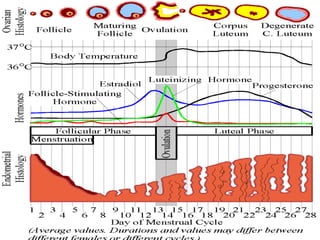
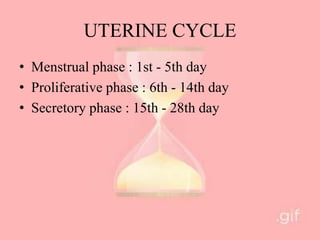
UTERINE CYCLE
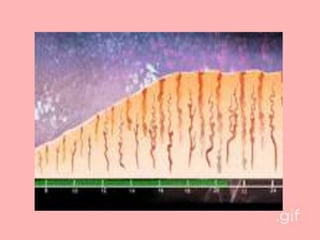
• Menstrual phase : 1st - 5th day
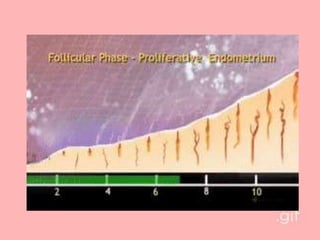
• Proliferative phase : 6th - 14th day
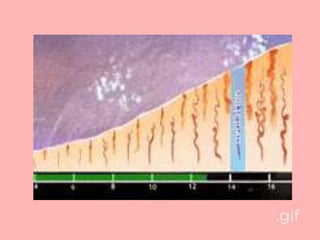
• Secretory phase : 15th - 28th day
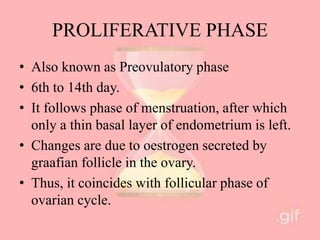
PROLIFERATIVE PHASE
• Also known as Preovulatory phase
• 6th to 14th day.
• It follows phase of menstruation, after which
only a thin basal layer of endometrium is left.
• Changes are due to oestrogen secreted by
graafian follicle in the ovary.
• Thus, it coincides with follicular phase of
ovarian cycle.
SECRETORY PHASE
• Postovulatory phase .
• 15th to 28th day.
• Changes are due to both estrogens &
progesterone secreted by corpus luteum .
• This coincides with luteal phase of ovarian
cycle.
• Endometrial glands increases in size & exceeds
thickness of endometrium. So, they become
tortuous.
• They secrete thick viscous fluid containing
glycogen.
• Blood supply of endometrium further increases
• Thickness of endometrium ↑ to 5-6 mm.
• These changes provide appropriate conditions for
implantation.
• If fertilization does not occur, corpus luteum
involutes & on 26thday oestrogen & progesterone
level falls & mark end of secretory phase.
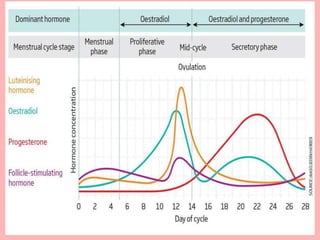
HORMONAL REGULATION
• 1) Proliferative Phase : Estrogens.
• 2) Secretory Phase : Progesterone.
• 3) Menstrual Phase :commences as hormone
production by corpus luteum declines.
Hormones involved are:
1. Hypothalamic hormone - GnRH
2. Anterior pituitary hormones - FSH and LH
3. Ovarian hormones - Estrogen and
progesterone.
HYPOTHALAMIC HORMONE
• GnRH is also known as luteinizing hormone
releasing hormone (LHRH)
• It stimulates secretion of FSH & LH from
anterior pituitary.
ANTERIOR PITUITARY
HORMONES
• FSH & LH
• FSH stimulates recruitment & growth of
immature ovarian follicles.
• LH triggers ovulation & sustains corpus
luteum.
OVARIAN HORMONES
• Estrogen & progesterone
• Ovarian follicle secretes estrogen and corpus
luteum secretes progesterone.
• Estrogen is responsible for growth of follicles.
• Both hormones act together to produce
changes in uterus, cervix and vagina.
Menstural cycle 1
Menstural cycle 1
Menstural cycle 1

Menstural cycle 1

  • 1.
  • 2.
    WHAT IT IS….. Menstrualis a Latin word : Lunar month of 28 days. Defined as, Cyclic physiological changes that take place during reproductive period in female. The periodic blood that flows as a discharge from the uterus. Also called menorrhea, the time during which menstruation occurs is referred to as menses. The menses occurs at approximately 4 week intervals to compose the menstrual cycle.
  • 3.
    • Menarche: awoman's first menstruation. Starts typically around 11-12 years. Depends on overall health and diet. • Menopause: End of a woman's reproductive phase around 45-50 years. • DURATION OF THE CYCLE:28 days (20 to 40 days) • Amount of blood loss is approx 20 to 80 ml with an average of 35ml.
  • 4.
    MENSTURAL DISCHARGE CONSISTSOF, 1. Blood 2. Mucus 3. Vaginal epithelial cells 4. Fragments of endometrium 5. Prostaglandins 6. Enzymes 7. Bacteria
  • 5.
    CHANGES DURING MENSTRUALCYCLE Changes in • I. Ovary • II. Uterus • III Cervix • IV. Vagina • V Fallopian tubes • VI Hormonal secretion
  • 7.
  • 9.
    PHASES OF CYCLE OVARIANCYCLE UTERINE CYCLE • Menstrual phase • Proliferative / Follicular (Estrogen) phase • Secretory / Luteal phase (Progesterone) phase • Pre ovulatory phase or Follicular phase • Ovulation • Postovulatory phase or Luteal phase
  • 11.
    PRE OVULATORY /FOLLICULAR PHASE • Begins with bleeding on 1st day of menstrual cycle & ends with ovulation • Folliculogenesis : Maturation of ovum. • During follicular phase, low level of estrogen suppresses production of LH from pituitary gland. (Negative feedback ) • When ovum has nearly matured, estrogen levels reaches a threshold above which they stimulate production of LH , LH SURGE (Positive feedback )
  • 13.
    OVULATION • Release ofsecondary oocyte from ovary (following rupture of Graffian follicle) into peritoneal cavity. • It usually occurs 14th day ( in a 28-day cycle ) • 36 hrs after mid-cycle LH surge
  • 14.
    POSTOVULATORY PHASE • Remarkablyconstant period of about 14 days. • During this phase corpus luteum is developed and hence it is called luteal phase. Ovulation ↓ Corpus haemorrhagicum ↓ Corpus luteum ↓ 1. Corpus albicans 2. Corpus luteum of pregnancy.
  • 16.
    UTERINE CYCLE • Menstrualphase : 1st - 5th day • Proliferative phase : 6th - 14th day • Secretory phase : 15th - 28th day
  • 17.
    PROLIFERATIVE PHASE • Alsoknown as Preovulatory phase • 6th to 14th day. • It follows phase of menstruation, after which only a thin basal layer of endometrium is left. • Changes are due to oestrogen secreted by graafian follicle in the ovary. • Thus, it coincides with follicular phase of ovarian cycle.
  • 19.
    SECRETORY PHASE • Postovulatoryphase . • 15th to 28th day. • Changes are due to both estrogens & progesterone secreted by corpus luteum . • This coincides with luteal phase of ovarian cycle.
  • 21.
    • Endometrial glandsincreases in size & exceeds thickness of endometrium. So, they become tortuous. • They secrete thick viscous fluid containing glycogen. • Blood supply of endometrium further increases • Thickness of endometrium ↑ to 5-6 mm. • These changes provide appropriate conditions for implantation. • If fertilization does not occur, corpus luteum involutes & on 26thday oestrogen & progesterone level falls & mark end of secretory phase.
  • 23.
    HORMONAL REGULATION • 1)Proliferative Phase : Estrogens. • 2) Secretory Phase : Progesterone. • 3) Menstrual Phase :commences as hormone production by corpus luteum declines. Hormones involved are: 1. Hypothalamic hormone - GnRH 2. Anterior pituitary hormones - FSH and LH 3. Ovarian hormones - Estrogen and progesterone.
  • 24.
    HYPOTHALAMIC HORMONE • GnRHis also known as luteinizing hormone releasing hormone (LHRH) • It stimulates secretion of FSH & LH from anterior pituitary.
  • 25.
    ANTERIOR PITUITARY HORMONES • FSH& LH • FSH stimulates recruitment & growth of immature ovarian follicles. • LH triggers ovulation & sustains corpus luteum.
  • 26.
    OVARIAN HORMONES • Estrogen& progesterone • Ovarian follicle secretes estrogen and corpus luteum secretes progesterone. • Estrogen is responsible for growth of follicles. • Both hormones act together to produce changes in uterus, cervix and vagina.