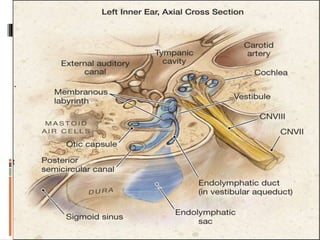
MENIERE’S DISEASE
DR ZEESHANALI
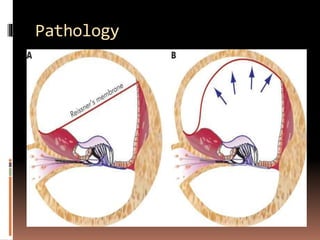
Pathology
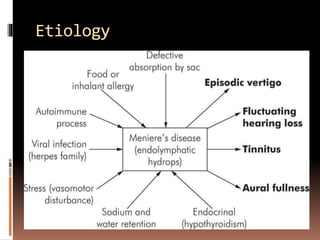
Etiology
Theories
 Increase productions due to mediators
 Decrease absorption by endolymphatic sac
 Particle obstruction theory (glycoproteins)
 Narrow endolymphatic duct
Clinical features
 35-60 years
 Male>female
 Unilateral (later bilateral 10-40%)
 Vertigo (episodic,sudden,20min -20hrs,vagal
symptoms)
 Tullio phenomenun
 Hearing loss (fluctuating
SNHL,Diplacusis,recruitment)
Clinical features
 Tinnitus (low pitch roaring, change in pitch
and loudness near attack)
 Aural fullness (episodic)
Examination
 Otoscopy --- normal
 Nystagmus (episodic)
 fast unaffected ear
 Tunning fork ---SNHL
Investigations
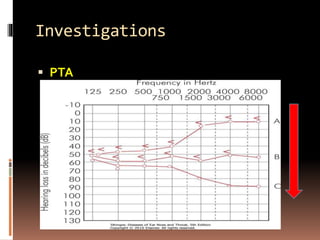
 PTA
Investigation
 Recruitment test --- positive
 SISI --- > 70% (normal 15%)
 Tone decay test --- < 20dB (normal 0-15dB)
Investigation
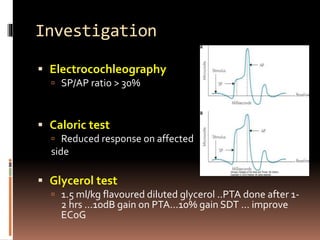
 Electrocochleography
 SP/AP ratio > 30%
 Caloric test
 Reduced response on affected
side
 Glycerol test
 1.5 ml/kg flavoured diluted glycerol ..PTA done after 1-
2 hrs …10dB gain on PTA…10% gain SDT … improve
ECoG
Investigation
 Electronystagmography
 VEMP
 BERA
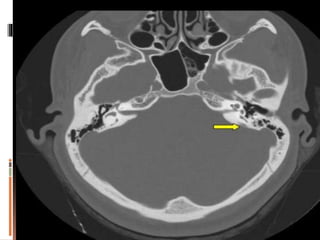
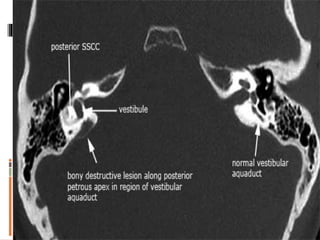
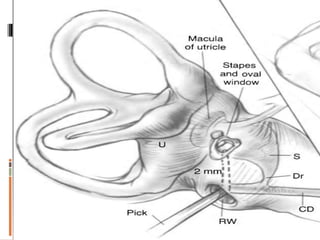
 CT scan (normal aperture 6mm but in meniere 2mm)
 MRI (rule out CP angle lesions)
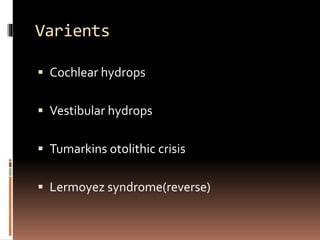
Varients
 Cochlear hydrops
 Vestibular hydrops
 Tumarkins otolithic crisis
 Lermoyez syndrome(reverse)
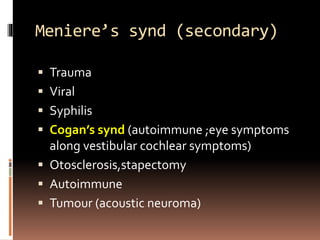
Meniere’s synd (secondary)
 Trauma
 Viral
 Syphilis
 Cogan’s synd (autoimmune ;eye symptoms
along vestibular cochlear symptoms)
 Otosclerosis,stapectomy
 Autoimmune
 Tumour (acoustic neuroma)
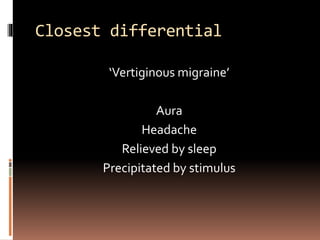
Closest differential
‘Vertiginous migraine’
Aura
Headache
Relieved by sleep
Precipitated by stimulus
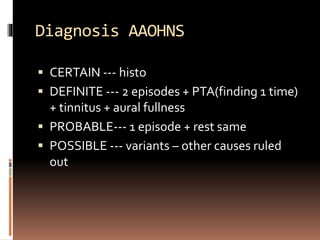
Diagnosis AAOHNS
 CERTAIN --- histo
 DEFINITE --- 2 episodes + PTA(finding 1 time)
+ tinnitus + aural fullness
 PROBABLE--- 1 episode + rest same
 POSSIBLE --- variants – other causes ruled
out
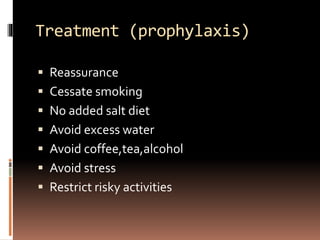
Treatment (prophylaxis)
 Reassurance
 Cessate smoking
 No added salt diet
 Avoid excess water
 Avoid coffee,tea,alcohol
 Avoid stress
 Restrict risky activities
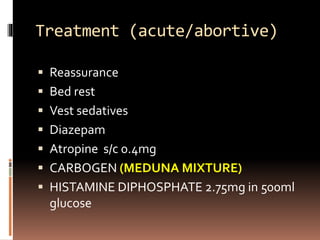
Treatment (acute/abortive)
 Reassurance
 Bed rest
 Vest sedatives
 Diazepam
 Atropine s/c 0.4mg
 CARBOGEN (MEDUNA MIXTURE)
 HISTAMINE DIPHOSPHATE 2.75mg in 500ml
glucose
Treatment (chronic)
 Vest sedative
 Nicotinic acid 50 mg xTDS (titerate till
flushing)
 Betahistine 8-16mg xTDS
 Lasix 40 mg alternate day
 Treat allergy
 Hormonal cause(thyroid)
CHEMICAL LABYRINTHECTOMY
AMINOGLYCOSIDES
 Amikacin,dihydrostreptomycin,kanamycin ---
cochleotoxic
 Gentacin ,streptomycin(low doses)---
vestibulotoxic
Mechanism
 Destroy dark cells responsible for producing
endolymph
 Produce free radicles within the cells
 Disrupt DNA and proteins
Patient counsel
 Hearing loss
 Rash
 Fever
 Perioral numbness
 OSCILLOPSIA
 Renal toxicity
 Allergic reaction
 Warn about transient treatment related HL
Methods
 Intramuscular (treat bilateral disease)
 Intratympanic (unilateral disease)
Intramuscular gentamycin
 1 gm x BD 5 days
 Test for vestibulocochlear functions
 Repeat same dose if requierd
 STOP when!
 Vertigo stops
 Worsens
 Decrease caloric response
 Decrease hearing
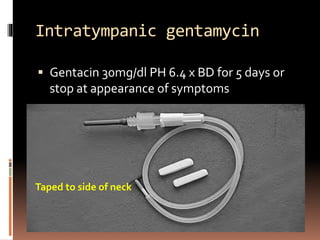
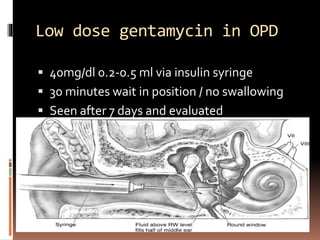
Intratympanic gentamycin
 Gentacin 30mg/dl PH 6.4 x BD for 5 days or
stop at appearance of symptoms
Taped to side of neck
Low dose gentamycin in OPD
 40mg/dl 0.2-0.5 ml via insulin syringe
 30 minutes wait in position / no swallowing
 Seen after 7 days and evaluated
Conservative procedures
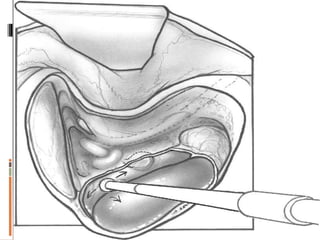
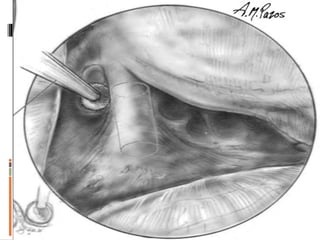
 Decompression of duct
 Endolymphatic shunt
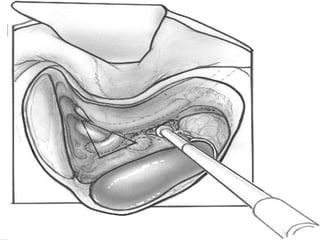
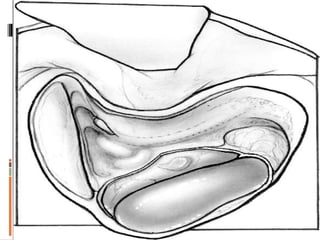
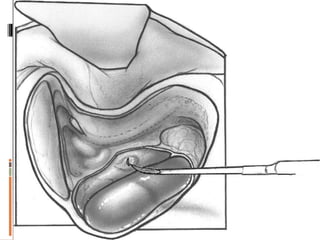
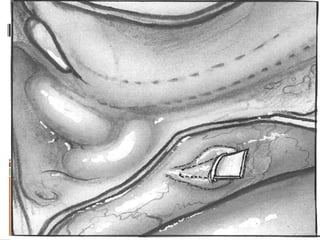
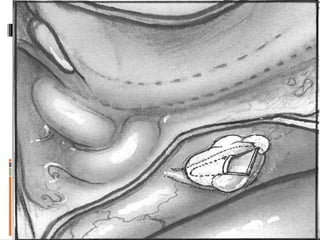
 Sacculotomy (Ficks operation)….Cody tack
 Cochleosacculotomy(otic –periotic shunt)
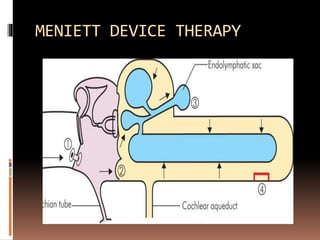
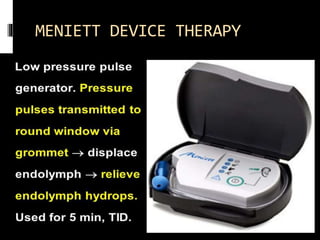
 Meniett device therapy
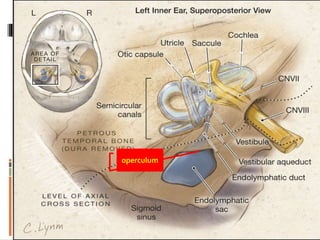
DECOMPRESSION /SHUNT OP
operculum
Selection criteria
 Failed medical treatment
 Debilitating vertigo
 For both primary and secondary meniere
 Improvement in 76-95%
 Hearing preserving ---cochlear implantation can be
done
 Donot operate in meniere variants!
complications
 Rare
 2% SNHL worsens
 10-20% symptoms persists
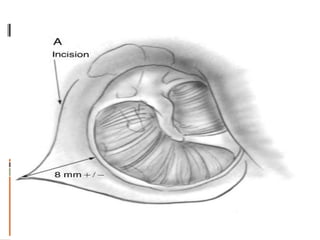
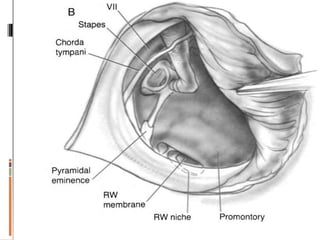
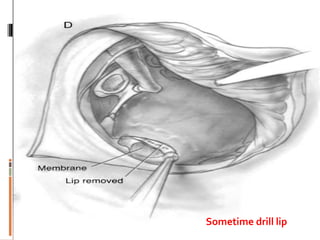
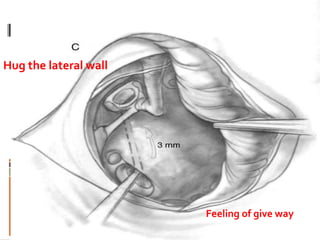
COCHLEOSACCULOTOMY
Selection criteria
 Severe vertigo
 Tumarkin crisis
 BEST for Old patients unable to tolerate GA
 EASYTO PERFORM
 ALMOST FREE FROM MORBIDITY
 NO POST OPERATIVEVERTIGO
 Hearing preserving
Sometime drill lip
Hug the lateral wall
Feeling of give way
complications
 Similar to stapedectomy
MENIETT DEVICE THERAPY
Destructive procedures
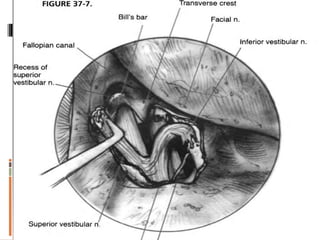
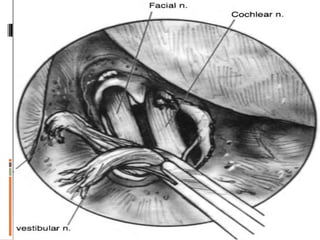
 Section of vestibular nerve
 Ultrasonic destruction of vestibular labyrinth
 Labyrinthectomy
DEAFFERENTATION
TYPES
 Translabyrinthine vestibular neurectomy
 Retrolabyrinthine
 Retrosigmoidal
Counsel patient!!!
 Meniere’s disease can remit spontaneously in
70% within 08 years!!
 10-40% chance of involvement of second
ear!!
 Tinnitus may or may not resolve after
surgery!!
Why do it?
 Destroying the end organ can lead to better
and early compensation by the brain
 Breaking the connection between the
preganglionic and postganglionic fibres leads
to better takeover by the brain as it consider
it as a complete lesion
In whom to do it?
 Failed /exhausted medical and conservative
approaches for 1 year
 Vertigo severe and debilitating
 Dead ear
 Having NON SERVICEABLE HEARING
 > 50 db HL pure tone av
 SRT < 50%
What is the trade off?
 Taking away the intolerable vertigo and
giving tolerable feeling of imbalance or
motion tolerance in sensory deprived
situations like darkness or walking on cushion
 Younger the patient better the tolerance
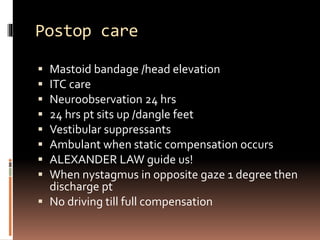
Postop care
 Mastoid bandage /head elevation
 ITC care
 Neuroobservation 24 hrs
 24 hrs pt sits up /dangle feet
 Vestibular suppressants
 Ambulant when static compensation occurs
 ALEXANDER LAW guide us!
 When nystagmus in opposite gaze 1 degree then
discharge pt
 No driving till full compensation
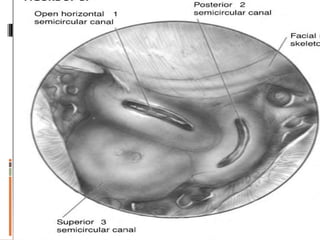
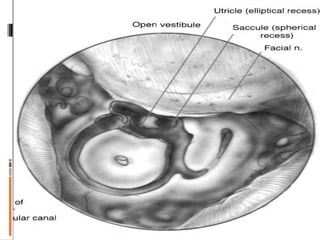
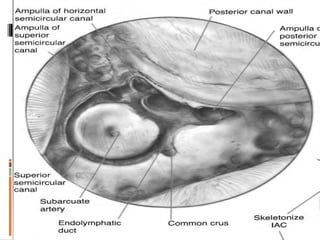
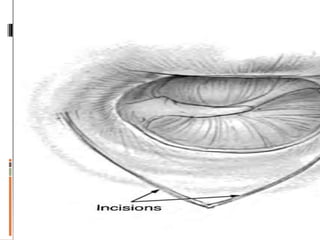
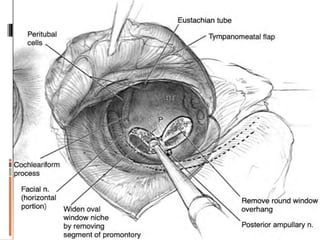
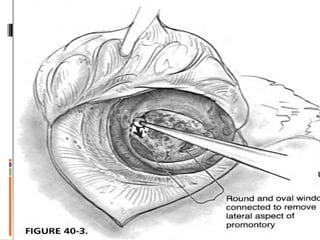
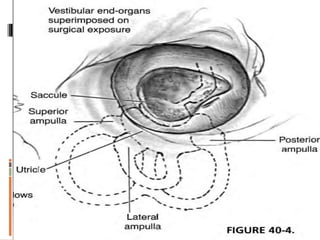
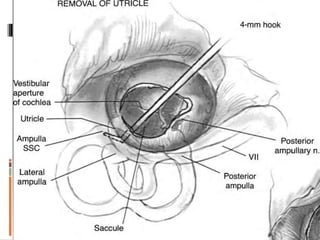
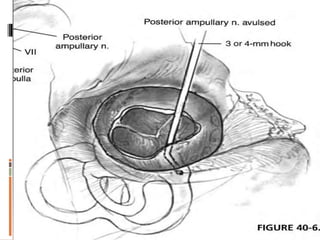
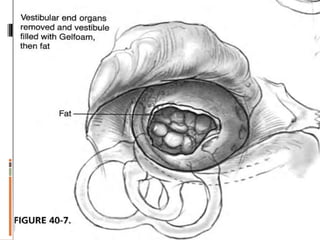
TRANSCANAL LABYRINTHECTOMY
Criteria
 Same as neurectomy
complications
 CSF leak
 Failure to find utricle
 Injury to facial nerve
 Incomplete labyrinthectomy
 Persistent vertigo(neuroepithelial remnant)
 Perform caloric test post op to find out
 Revision surgery
New research
 Mostly focused on improving diagnosis via
imaging and other test battery
 No major break through in management
 Intratympanic steriod has variable success!
THANK YOU

Meniere's disease