Saurabh Gupta
Prof. (Dr.) S. K. Jaiswal unit
Introduction
 Meniere's disease (idiopathic endolymphatic hydrops)
is a disorder of the inner ear associated with a
symptoms consisting of spontaneous, episodic attacks
of vertigo; sensorineural hearing loss which usually
fluctuates; tinnitus; and often a sensation of aural
fullness.
 dramatic variability is the hallmark of this disease.
Introduction : History
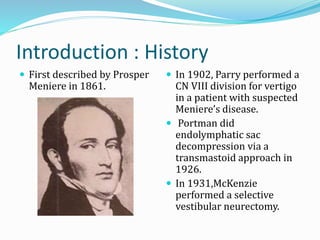
 First described by Prosper
Meniere in 1861.
 In 1902, Parry performed a
CN VIII division for vertigo
in a patient with suspected
Meniere’s disease.
 Portman did
endolymphatic sac
decompression via a
transmastoid approach in
1926.
 In 1931,McKenzie
performed a selective
vestibular neurectomy.
Pathology
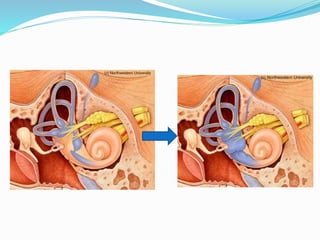
 Distortion of the membranous labyrinth.
 This condition reflects the changes in the anatomy of
the membranous labyrinth as a consequence of the
over-accumulation of endolymph.
 Mainly affects scala media and saccule
 Bulging of reissner’s membrane
 Saccule may come to lie against the stapes footplate.
Etiology
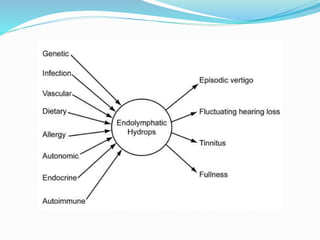
A. Defective absorption by endolymphatic sac-
• Poor vascularity of sac
• Less absorptive tubular epithelium
• increased perisaccular fibrosis
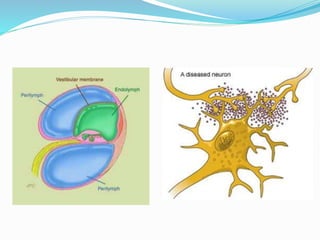
B. Rupture of reissner’s membreane leading to mixing of
perilymph & endolymph- Schuknecht
• allow leakage of the potassium-rich endolymph into
the perilymph, bathing the eighth cranial nerve and
lateral sides of the hair cells
Etiology
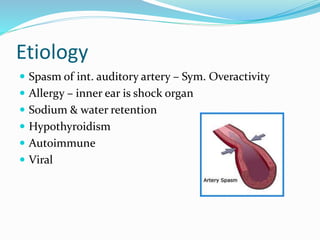
 Spasm of int. auditory artery – Sym. Overactivity
 Allergy – inner ear is shock organ
 Sodium & water retention
 Hypothyroidism
 Autoimmune
 Viral
Clinical features
 Affects in 4th -5th decade of life
 Male:Female 1:1
 Prevalence more in whites.
 VERTIGO : episodic attacks , asso. with nystagmus,
nausea & vomiting , vagal disturbance
 Tullio phenomenon may be seen
Clinical features
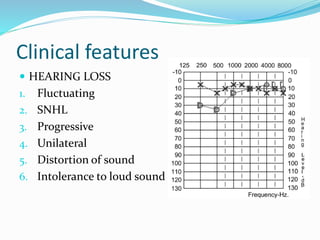
 HEARING LOSS
1. Fluctuating
2. SNHL
3. Progressive
4. Unilateral
5. Distortion of sound
6. Intolerance to loud sound
Clinical features
 TINNITUS
1. Low pitched roaring
2. Subjective
3. Unilateral
 AURAL FULLNESS
1. Fluctuates , in prodromal phase
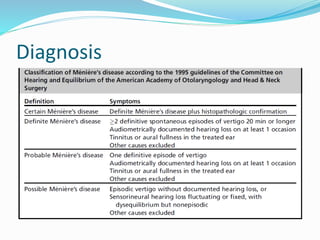
Diagnosis
Investigations
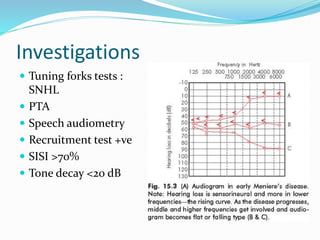
 Tuning forks tests :
SNHL
 PTA
 Speech audiometry
 Recruitment test +ve
 SISI >70%
 Tone decay <20 dB
Investigations
 Caloric testing – canal paresis
 ENG
 Head Thurst test
 ECoG – SP is larger & more negative
 SP/AP ratio increases > 30%
 Glycerol test
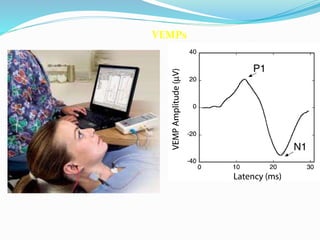
 VEMP – elevated threshold
VEMPs
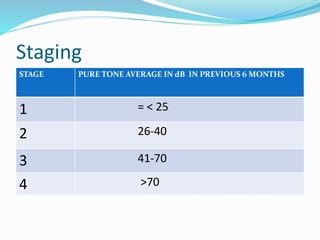
Staging
STAGE PURE TONE AVERAGE IN dB IN PREVIOUS 6 MONTHS
1 = < 25
2 26-40
3 41-70
4 >70
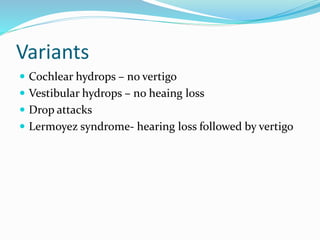
Variants
 Cochlear hydrops – no vertigo
 Vestibular hydrops – no heaing loss
 Drop attacks
 Lermoyez syndrome- hearing loss followed by vertigo
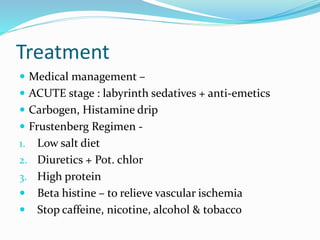
Treatment
 Medical management –
 ACUTE stage : labyrinth sedatives + anti-emetics
 Carbogen, Histamine drip
 Frustenberg Regimen -
1. Low salt diet
2. Diuretics + Pot. chlor
3. High protein
 Beta histine – to relieve vascular ischemia
 Stop caffeine, nicotine, alcohol & tobacco
Non ablative procedures
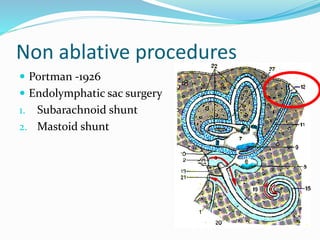
 Portman -1926
 Endolymphatic sac surgery
1. Subarachnoid shunt
2. Mastoid shunt
Non ablative procedures
 Intratympanic steroids
 May benefit in autoimmune causes of meniere’s
syndrome.
 Sacculotomy
 Cochleosacculotomy
Ablative procedures
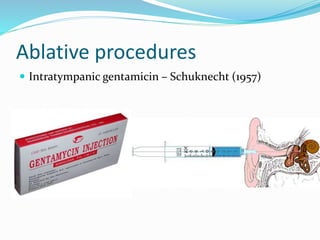
 Intratympanic gentamicin – Schuknecht (1957)
Ablative procedures
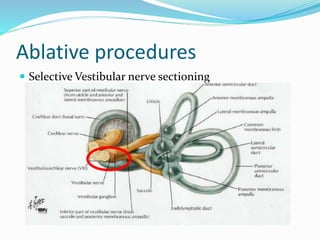
 Selective Vestibular nerve sectioning
Ablative procedures
 Ultrasonic destruction of vest. Labyrinth
 Cryodestruction
 Labyrinthectomy - when cochlear function has been
totally deteoriated ,higher rate of vertigo control seen
than that typical for vestibular neurectomy
Recent advances
 decrease hydrops by pulsing pressure in the middle
ear
 Meniett device - handheld air pressure generator that
the patient self-administers
 The pressure is delivered in complex pulses of up to
20 cm of water, over a 5 minute period.
 The device requires a ventilation tube to be placed in
the tympanic membrane before initiation of therapy
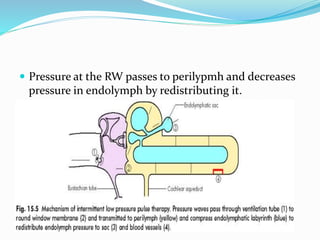
 Pressure at the RW passes to perilypmh and decreases
pressure in endolymph by redistributing it.
Meniere’s disease

Meniere’s disease

  • 1.
    Saurabh Gupta Prof. (Dr.)S. K. Jaiswal unit
  • 2.
    Introduction  Meniere's disease(idiopathic endolymphatic hydrops) is a disorder of the inner ear associated with a symptoms consisting of spontaneous, episodic attacks of vertigo; sensorineural hearing loss which usually fluctuates; tinnitus; and often a sensation of aural fullness.  dramatic variability is the hallmark of this disease.
  • 3.
    Introduction : History First described by Prosper Meniere in 1861.  In 1902, Parry performed a CN VIII division for vertigo in a patient with suspected Meniere’s disease.  Portman did endolymphatic sac decompression via a transmastoid approach in 1926.  In 1931,McKenzie performed a selective vestibular neurectomy.
  • 4.
    Pathology  Distortion ofthe membranous labyrinth.  This condition reflects the changes in the anatomy of the membranous labyrinth as a consequence of the over-accumulation of endolymph.  Mainly affects scala media and saccule  Bulging of reissner’s membrane  Saccule may come to lie against the stapes footplate.
  • 6.
    Etiology A. Defective absorptionby endolymphatic sac- • Poor vascularity of sac • Less absorptive tubular epithelium • increased perisaccular fibrosis B. Rupture of reissner’s membreane leading to mixing of perilymph & endolymph- Schuknecht • allow leakage of the potassium-rich endolymph into the perilymph, bathing the eighth cranial nerve and lateral sides of the hair cells
  • 8.
    Etiology  Spasm ofint. auditory artery – Sym. Overactivity  Allergy – inner ear is shock organ  Sodium & water retention  Hypothyroidism  Autoimmune  Viral
  • 10.
    Clinical features  Affectsin 4th -5th decade of life  Male:Female 1:1  Prevalence more in whites.  VERTIGO : episodic attacks , asso. with nystagmus, nausea & vomiting , vagal disturbance  Tullio phenomenon may be seen
  • 11.
    Clinical features  HEARINGLOSS 1. Fluctuating 2. SNHL 3. Progressive 4. Unilateral 5. Distortion of sound 6. Intolerance to loud sound
  • 12.
    Clinical features  TINNITUS 1.Low pitched roaring 2. Subjective 3. Unilateral  AURAL FULLNESS 1. Fluctuates , in prodromal phase
  • 13.
  • 14.
    Investigations  Tuning forkstests : SNHL  PTA  Speech audiometry  Recruitment test +ve  SISI >70%  Tone decay <20 dB
  • 15.
    Investigations  Caloric testing– canal paresis  ENG  Head Thurst test  ECoG – SP is larger & more negative  SP/AP ratio increases > 30%  Glycerol test  VEMP – elevated threshold
  • 16.
  • 17.
    Staging STAGE PURE TONEAVERAGE IN dB IN PREVIOUS 6 MONTHS 1 = < 25 2 26-40 3 41-70 4 >70
  • 18.
    Variants  Cochlear hydrops– no vertigo  Vestibular hydrops – no heaing loss  Drop attacks  Lermoyez syndrome- hearing loss followed by vertigo
  • 19.
    Treatment  Medical management–  ACUTE stage : labyrinth sedatives + anti-emetics  Carbogen, Histamine drip  Frustenberg Regimen - 1. Low salt diet 2. Diuretics + Pot. chlor 3. High protein  Beta histine – to relieve vascular ischemia  Stop caffeine, nicotine, alcohol & tobacco
  • 20.
    Non ablative procedures Portman -1926  Endolymphatic sac surgery 1. Subarachnoid shunt 2. Mastoid shunt
  • 21.
    Non ablative procedures Intratympanic steroids  May benefit in autoimmune causes of meniere’s syndrome.  Sacculotomy  Cochleosacculotomy
  • 22.
    Ablative procedures  Intratympanicgentamicin – Schuknecht (1957)
  • 23.
    Ablative procedures  SelectiveVestibular nerve sectioning
  • 24.
    Ablative procedures  Ultrasonicdestruction of vest. Labyrinth  Cryodestruction  Labyrinthectomy - when cochlear function has been totally deteoriated ,higher rate of vertigo control seen than that typical for vestibular neurectomy
  • 25.
    Recent advances  decreasehydrops by pulsing pressure in the middle ear  Meniett device - handheld air pressure generator that the patient self-administers  The pressure is delivered in complex pulses of up to 20 cm of water, over a 5 minute period.  The device requires a ventilation tube to be placed in the tympanic membrane before initiation of therapy
  • 26.
     Pressure atthe RW passes to perilypmh and decreases pressure in endolymph by redistributing it.