Presentation 
Pharmaceutical Importance of 5-membered 
Heterocycles 
Presented By 
Samya Sayantan 
Id:121-29-381 
Batch: 7th 
Sec: A 
Department of Pharmacy 
Daffodil International University
Introduction 
• A heterocyclic compound is a cyclic compound that 
has atoms of at least two different elements as 
members of its ring. The counterparts of 
heterocyclic compounds are homocyclic compound , 
the rings of which are made of a single element. 
• Although heterocyclic compounds may be inorganic, 
most contain at least one carbon.
Five membered Heterocycles 
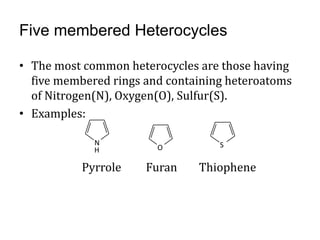
• The most common heterocycles are those having 
five membered rings and containing heteroatoms 
of Nitrogen(N), Oxygen(O), Sulfur(S). 
• Examples: 
N 
H O S 
Pyrrole Furan Thiophene
Pyrrole 
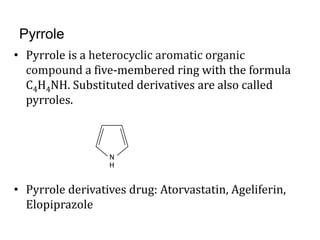
• Pyrrole is a heterocyclic aromatic organic 
compound a five-membered ring with the formula 
C4H4NH. Substituted derivatives are also called 
pyrroles. 
NH 
• Pyrrole derivatives drug: Atorvastatin, Ageliferin, 
Elopiprazole
• Structure 
atorvastatin ageliferin 
elopiprazole
Pharmaceutical Importance 
Pyrrole derivatives drug mainly used in- 
• Treatment of dyslipidemia & the prevention of 
cardiac disease. 
• Antibacterial agent 
• Antipsychotic drug
furan 
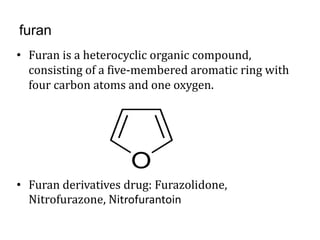
• Furan is a heterocyclic organic compound, 
consisting of a five-membered aromatic ring with 
four carbon atoms and one oxygen. 
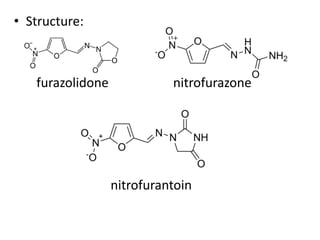
• Furan derivatives drug: Furazolidone, 
Nitrofurazone, Nitrofurantoin
• Structure: 
furazolidone nitrofurazone 
nitrofurantoin
Pharmaceutical Importance 
• Used to treat diarrhoea and enteritis caused 
by bacteria or protozoan infections. 
• Batericidal compound used as an antibiotic most 
commonly in the form of ointments. 
• Used as antiparasitic drug.
Thiophene 
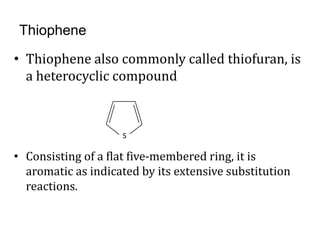
• Thiophene also commonly called thiofuran, is 
a heterocyclic compound 
S 
• Consisting of a flat five-membered ring, it is 
aromatic as indicated by its extensive substitution 
reactions.
Pharmaceutical Importance 
Thiophenes are important heterocyclic compounds 
that are widely used as building blocks in many 
agrochemicals and pharmaceuticals. The benzene 
ring of a biologically active compound may often 
be replaced by a thiophene without loss of 
activity. This is seen in examples such as 
the NSAID lornoxicam the thiophene analog 
of piroxicam.
Imidazole 
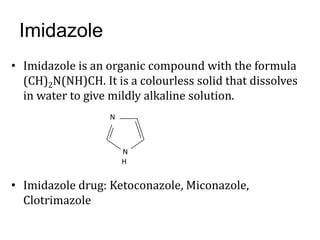
• Imidazole is an organic compound with the formula 
(CH)2N(NH)CH. It is a colourless solid that dissolves 
in water to give mildly alkaline solution. 
N 
N 
H 
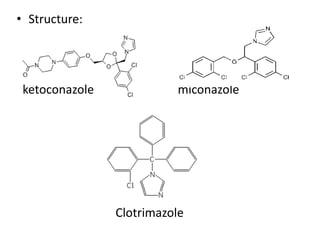
• Imidazole drug: Ketoconazole, Miconazole, 
Clotrimazole
• Structure: 
ketoconazole miconazole 
Clotrimazole
Pharmaceutical Importance 
• Imidazole derivatives are potent antifungal agent. 
• It is also used in the treatment of mycotic infection 
of skin.
thiazole 
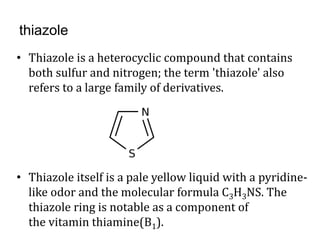
• Thiazole is a heterocyclic compound that contains 
both sulfur and nitrogen; the term 'thiazole' also 
refers to a large family of derivatives. 
• Thiazole itself is a pale yellow liquid with a pyridine-like 
odor and the molecular formula C3H3NS. The 
thiazole ring is notable as a component of 
the vitamin thiamine(B1).
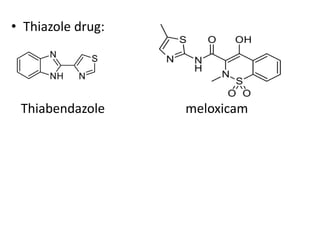
• Thiazole drug: 
Thiabendazole meloxicam
Pharmaceutical Importance 
• Used in the disease of dutch elm disease 
• Used as paracitiside 
• Angiogenesis Inhibitor 
• Used as anti microbial agent-sulfathiazole 
• Used as antidepressant drug-pramipexole
pyrazole 
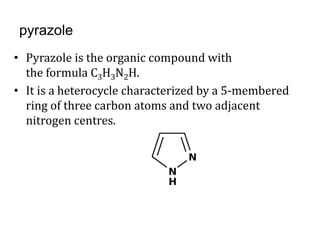
• Pyrazole is the organic compound with 
the formula C3H3N2H. 
• It is a heterocycle characterized by a 5-membered 
ring of three carbon atoms and two adjacent 
nitrogen centres.
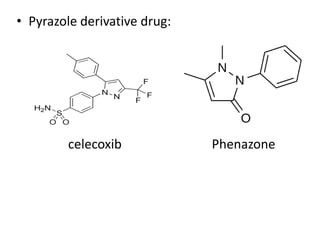
• Pyrazole derivative drug: 
celecoxib Phenazone
Pharmaceutical Importance 
• In medicine, derivatives of pyrazoles are used for 
their analgesic, anti-inflammatory, antipyretic, 
antiarrhythmic, tranquilizing, muscle relaxing, 
anticonvulsant, monoamineoxidase inhibiting, 
antidiabetic and antibacterial activities.
Oxazole 
• Oxazoles are heterocyclic aromatic compounds 
containing an oxygen atom and a nitrogen atom 
separated by one carbon atom. 
• Oxazole derivatives have become increasingly 
important because of their use as intermediates for 
the preparation of new biological materials.
Pharmaceutical Importance 
The wide range of biological activities of oxazoles 
includes anti-inflammatory, analgesic, 
antibacterial, antifungal, hypoglycemic, 
antiproliferative, anti-tuberculosis, muscle 
relaxant and HIV inhibitor activity.

Medicinal chemistry sam

  • 1.
    Presentation Pharmaceutical Importanceof 5-membered Heterocycles Presented By Samya Sayantan Id:121-29-381 Batch: 7th Sec: A Department of Pharmacy Daffodil International University
  • 2.
    Introduction • Aheterocyclic compound is a cyclic compound that has atoms of at least two different elements as members of its ring. The counterparts of heterocyclic compounds are homocyclic compound , the rings of which are made of a single element. • Although heterocyclic compounds may be inorganic, most contain at least one carbon.
  • 3.
    Five membered Heterocycles • The most common heterocycles are those having five membered rings and containing heteroatoms of Nitrogen(N), Oxygen(O), Sulfur(S). • Examples: N H O S Pyrrole Furan Thiophene
  • 4.
    Pyrrole • Pyrroleis a heterocyclic aromatic organic compound a five-membered ring with the formula C4H4NH. Substituted derivatives are also called pyrroles. NH • Pyrrole derivatives drug: Atorvastatin, Ageliferin, Elopiprazole
  • 5.
    • Structure atorvastatinageliferin elopiprazole
  • 6.
    Pharmaceutical Importance Pyrrolederivatives drug mainly used in- • Treatment of dyslipidemia & the prevention of cardiac disease. • Antibacterial agent • Antipsychotic drug
  • 7.
    furan • Furanis a heterocyclic organic compound, consisting of a five-membered aromatic ring with four carbon atoms and one oxygen. • Furan derivatives drug: Furazolidone, Nitrofurazone, Nitrofurantoin
  • 8.
    • Structure: furazolidonenitrofurazone nitrofurantoin
  • 9.
    Pharmaceutical Importance •Used to treat diarrhoea and enteritis caused by bacteria or protozoan infections. • Batericidal compound used as an antibiotic most commonly in the form of ointments. • Used as antiparasitic drug.
  • 10.
    Thiophene • Thiophenealso commonly called thiofuran, is a heterocyclic compound S • Consisting of a flat five-membered ring, it is aromatic as indicated by its extensive substitution reactions.
  • 11.
    Pharmaceutical Importance Thiophenesare important heterocyclic compounds that are widely used as building blocks in many agrochemicals and pharmaceuticals. The benzene ring of a biologically active compound may often be replaced by a thiophene without loss of activity. This is seen in examples such as the NSAID lornoxicam the thiophene analog of piroxicam.
  • 12.
    Imidazole • Imidazoleis an organic compound with the formula (CH)2N(NH)CH. It is a colourless solid that dissolves in water to give mildly alkaline solution. N N H • Imidazole drug: Ketoconazole, Miconazole, Clotrimazole
  • 13.
    • Structure: ketoconazolemiconazole Clotrimazole
  • 14.
    Pharmaceutical Importance •Imidazole derivatives are potent antifungal agent. • It is also used in the treatment of mycotic infection of skin.
  • 15.
    thiazole • Thiazoleis a heterocyclic compound that contains both sulfur and nitrogen; the term 'thiazole' also refers to a large family of derivatives. • Thiazole itself is a pale yellow liquid with a pyridine-like odor and the molecular formula C3H3NS. The thiazole ring is notable as a component of the vitamin thiamine(B1).
  • 16.
    • Thiazole drug: Thiabendazole meloxicam
  • 17.
    Pharmaceutical Importance •Used in the disease of dutch elm disease • Used as paracitiside • Angiogenesis Inhibitor • Used as anti microbial agent-sulfathiazole • Used as antidepressant drug-pramipexole
  • 18.
    pyrazole • Pyrazoleis the organic compound with the formula C3H3N2H. • It is a heterocycle characterized by a 5-membered ring of three carbon atoms and two adjacent nitrogen centres.
  • 19.
    • Pyrazole derivativedrug: celecoxib Phenazone
  • 20.
    Pharmaceutical Importance •In medicine, derivatives of pyrazoles are used for their analgesic, anti-inflammatory, antipyretic, antiarrhythmic, tranquilizing, muscle relaxing, anticonvulsant, monoamineoxidase inhibiting, antidiabetic and antibacterial activities.
  • 21.
    Oxazole • Oxazolesare heterocyclic aromatic compounds containing an oxygen atom and a nitrogen atom separated by one carbon atom. • Oxazole derivatives have become increasingly important because of their use as intermediates for the preparation of new biological materials.
  • 22.
    Pharmaceutical Importance Thewide range of biological activities of oxazoles includes anti-inflammatory, analgesic, antibacterial, antifungal, hypoglycemic, antiproliferative, anti-tuberculosis, muscle relaxant and HIV inhibitor activity.