camera techniques
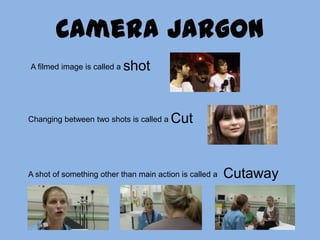
Camera JargonshotA filmed image is called aCutChanging between two shots is called a CutawayA shot of something other than main action is called a
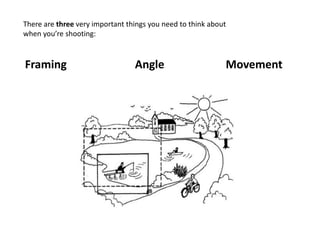
There are three very important things you need to think about when you’re shooting:FramingAngleMovement
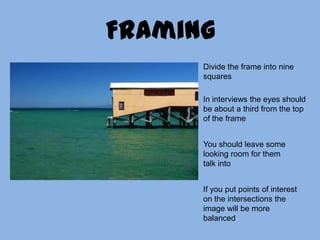
FramingDivide the frame into nine squaresIn interviews the eyes should be about a third from the top of the frameYou should leave some looking room for them talk intoIf you put points of interest on the intersections the image will be more balanced
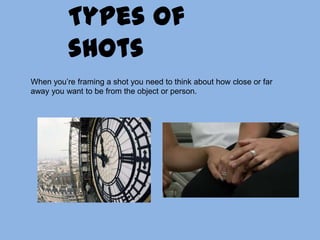
Types of shotsWhen you’re framing a shot you need to think about how close or far away you want to be from the object or person.
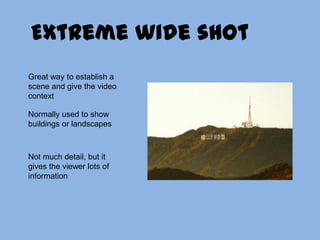
Extreme wide shotGreat way to establish a scene and give the video contextNormally used to show buildings or landscapesNot much detail, but it gives the viewer lots of information
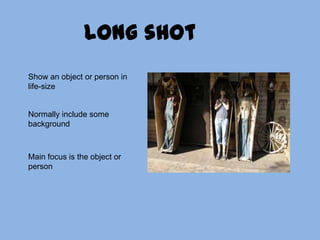
Long shotShow an object or person in life-sizeNormally include some backgroundMain focus is the object or person
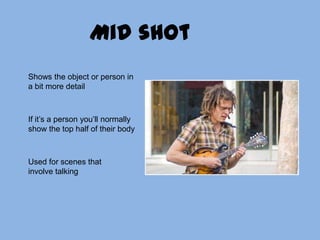
Mid shotShows the object or person in a bit more detailIf it’s a person you’ll normally show the top half of their bodyUsed for scenes that involve talking
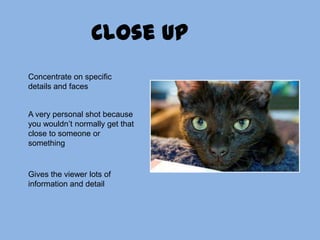
Close upConcentrate on specific details and facesA very personal shot because you wouldn’t normally get that close to someone or somethingGives the viewer lots of information and detail
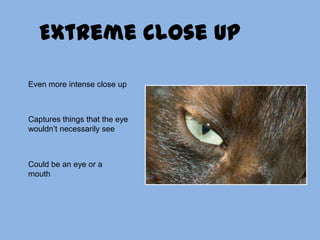
Extreme close upEven more intense close upCaptures things that the eye wouldn’t necessarily seeCould be an eye or a mouth
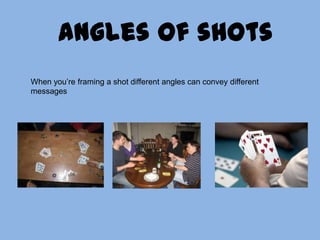
Angles of shotsWhen you’re framing a shot different angles can convey different messages
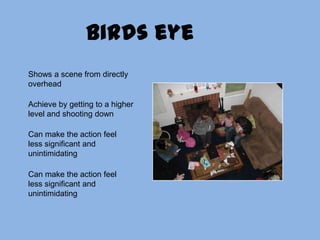
Birds eyeShows a scene from directly overheadAchieve by getting to a higher level and shooting downCan make the action feel less significant and unintimidatingCan make the action feel less significant and unintimidating
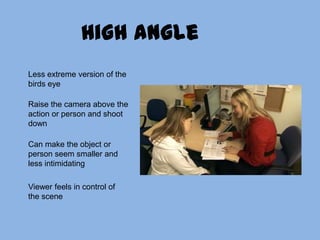
High angleLess extreme version of the birds eyeRaise the camera above the action or person and shoot downCan make the object or person seem smaller and less intimidating Viewer feels in control of the scene
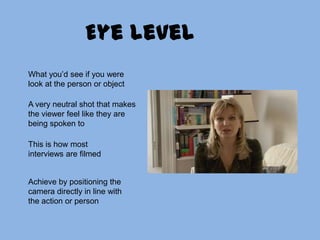
Eye levelWhat you’d see if you were look at the person or objectA very neutral shot that makes the viewer feel like they are being spoken toThis is how most interviews are filmedAchieve by positioning the camera directly in line with the action or person
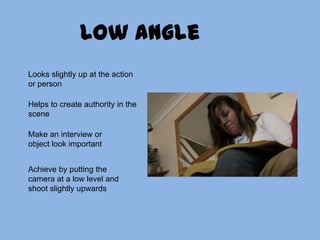
Low angleLooks slightly up at the action or personHelps to create authority in the scene Make an interview or object look importantAchieve by putting the camera at a low level and shoot slightly upwards
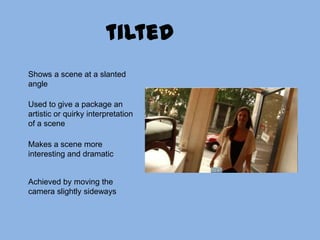
tiltedShows a scene at a slanted angle Used to give a package an artistic or quirky interpretation of a sceneMakes a scene more interesting and dramatic Achieved by moving the camera slightly sideways
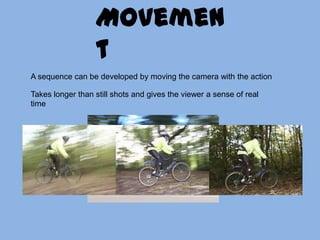
MovementA sequence can be developed by moving the camera with the action Takes longer than still shots and gives the viewer a sense of real time
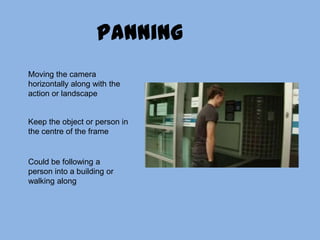
PanningMoving the camera horizontally along with the action or landscapeKeep the object or person in the centre of the frameCould be following a person into a building or walking along
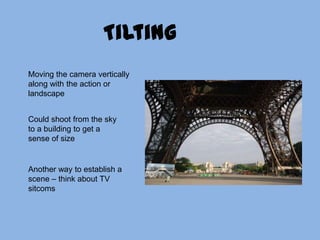
TiltingMoving the camera vertically along with the action or landscapeCould shoot from the sky to a building to get a sense of sizeAnother way to establish a scene – think about TV sitcoms
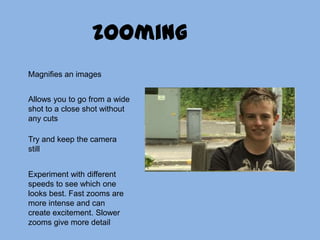
zoomingMagnifies an imagesAllows you to go from a wide shot to a close shot without any cutsTry and keep the camera stillExperiment with different speeds to see which one looks best. Fast zooms are more intense and can create excitement. Slower zooms give more detail

Media box workshop

  • 1.
  • 2.
    Camera JargonshotA filmedimage is called aCutChanging between two shots is called a CutawayA shot of something other than main action is called a
  • 3.
    There are threevery important things you need to think about when you’re shooting:FramingAngleMovement
  • 4.
    FramingDivide the frameinto nine squaresIn interviews the eyes should be about a third from the top of the frameYou should leave some looking room for them talk intoIf you put points of interest on the intersections the image will be more balanced
  • 5.
    Types of shotsWhenyou’re framing a shot you need to think about how close or far away you want to be from the object or person.
  • 6.
    Extreme wide shotGreatway to establish a scene and give the video contextNormally used to show buildings or landscapesNot much detail, but it gives the viewer lots of information
  • 7.
    Long shotShow anobject or person in life-sizeNormally include some backgroundMain focus is the object or person
  • 8.
    Mid shotShows theobject or person in a bit more detailIf it’s a person you’ll normally show the top half of their bodyUsed for scenes that involve talking
  • 9.
    Close upConcentrate onspecific details and facesA very personal shot because you wouldn’t normally get that close to someone or somethingGives the viewer lots of information and detail
  • 10.
    Extreme close upEvenmore intense close upCaptures things that the eye wouldn’t necessarily seeCould be an eye or a mouth
  • 11.
    Angles of shotsWhenyou’re framing a shot different angles can convey different messages
  • 12.
    Birds eyeShows ascene from directly overheadAchieve by getting to a higher level and shooting downCan make the action feel less significant and unintimidatingCan make the action feel less significant and unintimidating
  • 13.
    High angleLess extremeversion of the birds eyeRaise the camera above the action or person and shoot downCan make the object or person seem smaller and less intimidating Viewer feels in control of the scene
  • 14.
    Eye levelWhat you’dsee if you were look at the person or objectA very neutral shot that makes the viewer feel like they are being spoken toThis is how most interviews are filmedAchieve by positioning the camera directly in line with the action or person
  • 15.
    Low angleLooks slightlyup at the action or personHelps to create authority in the scene Make an interview or object look importantAchieve by putting the camera at a low level and shoot slightly upwards
  • 16.
    tiltedShows a sceneat a slanted angle Used to give a package an artistic or quirky interpretation of a sceneMakes a scene more interesting and dramatic Achieved by moving the camera slightly sideways
  • 17.
    MovementA sequence canbe developed by moving the camera with the action Takes longer than still shots and gives the viewer a sense of real time
  • 18.
    PanningMoving the camerahorizontally along with the action or landscapeKeep the object or person in the centre of the frameCould be following a person into a building or walking along
  • 19.
    TiltingMoving the cameravertically along with the action or landscapeCould shoot from the sky to a building to get a sense of sizeAnother way to establish a scene – think about TV sitcoms
  • 20.
    zoomingMagnifies an imagesAllowsyou to go from a wide shot to a close shot without any cutsTry and keep the camera stillExperiment with different speeds to see which one looks best. Fast zooms are more intense and can create excitement. Slower zooms give more detail