TEACHING MOMENTS IN THE
O.R.
A GUIDE FOR WORKING WITH C-ARM
EQUIPMENT IN THE O.R.
PREPARED BY:
Jesse Robertson RT(R)
GOAL AND PURPOSE OF THIS
POWERPOINT PRESENTATION
Teach Technologists information they need to
know while working in the O.R.
Review important policies that pertain to the O.R.
Help technologists gain quick knowledge when
orientating to the O.R.
MOVING YOUR PATIENT OVER IN EPIC
It’s important to pay attention to the examination
that the nurse has ordered in EPIC, because if
he/she has made a mistake, it can result in trouble
for you.
If the nurse has ordered FL<HR, and you move the
exam over to begin it, you will not be given the
option to move this patient into an operating room
fluoroscopic procedure. If you begin the exam in X-
RAY Room 1 or 2, the anesthesiologist and nurses
will no longer be able to find the patient
information in EPIC. This causes a lot of confusion,
and eventually irritation will be directed toward
you (when they find out what happened).
WHAT TO DO WHEN THIS HAPPENS
When you see that an order has been put in
incorrectly, call the nurse that placed the order and
ask him/her to make the needed adjustment.
When the order is correct, you may proceeded in
moving the patient over in EPIC to
ENDING YOUR EXAM IN EPIC
When your exam is finished, be sure that the study
that is ordered reflects the study that was done.
If you Are doing a lap chole and the doctor decides
not to do cholangiogram, change your order to
fluoro support if there were no films taken.
If you are doing a cysto and the doctor never
injects contrast, but he places a stent that you take
an x-ray of, change the cysto order to FLP<HR.
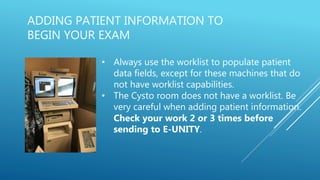
ADDING PATIENT INFORMATION TO
BEGIN YOUR EXAM
• Always use the worklist to populate patient
data fields, except for these machines that do
not have worklist capabilities.
• The Cysto room does not have a worklist. Be
very careful when adding patient information.
Check your work 2 or 3 times before
sending to E-UNITY.
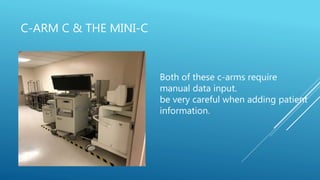
C-ARM C & THE MINI-C
Both of these c-arms require
manual data input.
be very careful when adding patient
information.
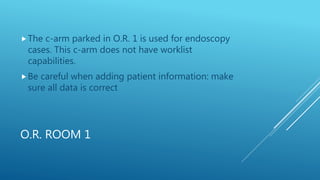
O.R. ROOM 1
The c-arm parked in O.R. 1 is used for endoscopy
cases. This c-arm does not have worklist
capabilities.
Be careful when adding patient information: make
sure all data is correct
WORKLIST CAPABLE MACHINES
All of the Ziehm machines are worklist capable.
Worklist should always be used to populate your
data fields when setting up your case.
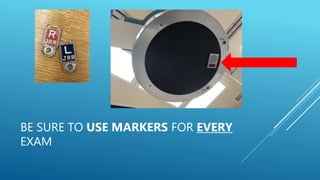
2ND POINT TO REMEMBER: MARKERS
BE SURE TO USE MARKERS FOR EVERY
EXAM
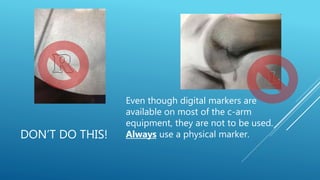
DON’T DO THIS!
Even though digital markers are
available on most of the c-arm
equipment, they are not to be used.
Always use a physical marker.
Create an imaging report at the end of your
exam by selecting this button (ZIEHM
MACHINES ONLY)
Be sure to send every image that is saved in your
study to E-Unity. Each image is a part of the
patients medical record and needs to be protected.
EQUIPMENT SAFETY IN THE O.R.
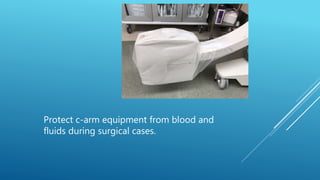
Protect c-arm equipment from blood and
fluids during surgical cases.
Cover foot switches with a clear plastic
bag for doctors who wish to do their
own IMAGING
When power cords are crossing
work paths within the operating
room, use the orange cord
protectors to help bring
attention to this trip hazard.
These orange pads stick to the
floor, and are disposable after
your case. IF YOU DON’T KNOW
WHERE THEY ARE, Ask the or
aides where you can find these.
X-RAY CONTRAST IN THE O.R.
Radiology provides the Isovue 300 for studies
requiring contrast.
We charge for the contrast when we end the exam.
The nurse charts the administration of the contrast.
Always bring an extra bottle with you for cases
requiring contrast. Carry back any unopened
bottles of contrast and lock them up in Radiology.
Never leave bottles behind in the O.R.
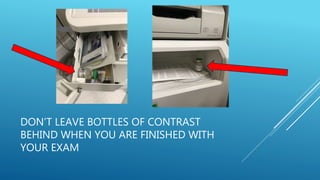
DON’T LEAVE BOTTLES OF CONTRAST
BEHIND WHEN YOU ARE FINISHED WITH
YOUR EXAM
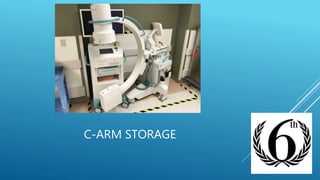
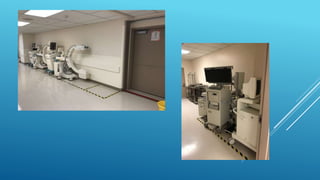
C-ARM STORAGE
Every c-arm in the OR has a place for storage.
The small Ziehm is stored in the hallway outside of O.R. 7.
There is a niche marked off with striped black and yellow
tape for this c-arm. When you are finished working with it,
please be sure to put it back in it’s spot.
The big Ziehm is parked in the hallway by OR 10.
The flat panel Ziehm is parked in the hallway by OR 10
The small white Siemens (c-arm C) is stored in the closet in
that same hallway.
The mini-c is also stored in that closet
C-ARM STORAGE AREA
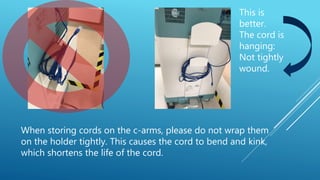
This is
better.
The cord is
hanging:
Not tightly
wound.
When storing cords on the c-arms, please do not wrap them
on the holder tightly. This causes the cord to bend and kink,
which shortens the life of the cord.
THIS IS AN EXAMPLE OF HOW THE POWER AND C-
ARM CONNECTION CORDS SHOULD LOOK ON THE
BACK OF THE C-ARM WHEN PROPERLY STORED.
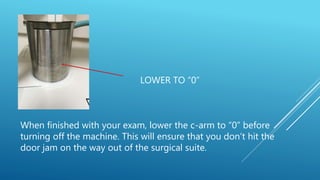
LOWER TO “0”
When finished with your exam, lower the c-arm to “0” before
turning off the machine. This will ensure that you don’t hit the
door jam on the way out of the surgical suite.
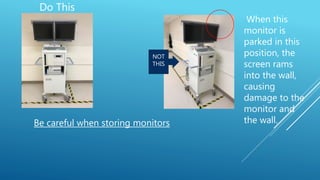
Do This
NOT
THIS
Be careful when storing monitors
When this
monitor is
parked in this
position, the
screen rams
into the wall,
causing
damage to the
monitor and
the wall.
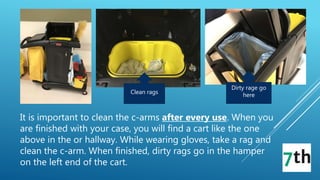
Dirty rage go
hereClean rags
It is important to clean the c-arms after every use. When you
are finished with your case, you will find a cart like the one
above in the or hallway. While wearing gloves, take a rag and
clean the c-arm. When finished, dirty rags go in the hamper
on the left end of the cart.
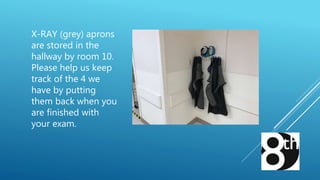
X-RAY (grey) aprons
are stored in the
hallway by room 10.
Please help us keep
track of the 4 we
have by putting
them back when you
are finished with
your exam.
CHARGE EXAM AND LOG ON
SURGERY LOG
Check to make sure your images have crossed over into E-
Unity (every time you charge out an exam)
After you charge your exam, go to the surgery log and put
your initials by the case you have finished.
If the medical record number is not already entered into
the surgery log for you, it is your responsibility to do this.
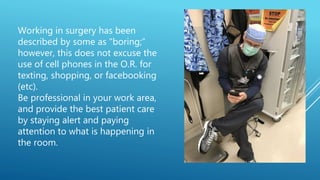
Working in surgery has been
described by some as "boring;”
however, this does not excuse the
use of cell phones in the O.R. for
texting, shopping, or facebooking
(etc).
Be professional in your work area,
and provide the best patient care
by staying alert and paying
attention to what is happening in
the room.
SUMMARY
1. Be sure your exam info and
patient info are correct
2. Use your markers
3. Save every image to E-Unity
4. Protect equipment and
protect people
5. Manage your contrast
6. Properly store your c-arm
7. Clean your c-arm after every
use
8. Put away lead aprons and
thyroid shields.
9. Charge and log your exam.
10. Refrain from personal cell
phone use (including surfing
the web)while working in the
O.R.
WHAT’S NEXT?
More “Teaching Moments” are to come.
Doctor preference cards for the O.R. are being
developed. This will help you to know exactly what
the doctor expects of radiology for the procedures
you may be involved in.
THANKS FOR VIEWING
If you have any questions about this powerpoint
presentation, please ask Jesse.
All questions about the O.R. can be answered by
your lead techs and Marty.

Teaching Moments in the OR

  • 1.
    TEACHING MOMENTS INTHE O.R. A GUIDE FOR WORKING WITH C-ARM EQUIPMENT IN THE O.R. PREPARED BY: Jesse Robertson RT(R)
  • 2.
    GOAL AND PURPOSEOF THIS POWERPOINT PRESENTATION Teach Technologists information they need to know while working in the O.R. Review important policies that pertain to the O.R. Help technologists gain quick knowledge when orientating to the O.R.
  • 3.
    MOVING YOUR PATIENTOVER IN EPIC It’s important to pay attention to the examination that the nurse has ordered in EPIC, because if he/she has made a mistake, it can result in trouble for you. If the nurse has ordered FL<HR, and you move the exam over to begin it, you will not be given the option to move this patient into an operating room fluoroscopic procedure. If you begin the exam in X- RAY Room 1 or 2, the anesthesiologist and nurses will no longer be able to find the patient information in EPIC. This causes a lot of confusion, and eventually irritation will be directed toward you (when they find out what happened).
  • 4.
    WHAT TO DOWHEN THIS HAPPENS When you see that an order has been put in incorrectly, call the nurse that placed the order and ask him/her to make the needed adjustment. When the order is correct, you may proceeded in moving the patient over in EPIC to
  • 5.
    ENDING YOUR EXAMIN EPIC When your exam is finished, be sure that the study that is ordered reflects the study that was done. If you Are doing a lap chole and the doctor decides not to do cholangiogram, change your order to fluoro support if there were no films taken. If you are doing a cysto and the doctor never injects contrast, but he places a stent that you take an x-ray of, change the cysto order to FLP<HR.
  • 6.
    ADDING PATIENT INFORMATIONTO BEGIN YOUR EXAM • Always use the worklist to populate patient data fields, except for these machines that do not have worklist capabilities. • The Cysto room does not have a worklist. Be very careful when adding patient information. Check your work 2 or 3 times before sending to E-UNITY.
  • 7.
    C-ARM C &THE MINI-C Both of these c-arms require manual data input. be very careful when adding patient information.
  • 8.
    O.R. ROOM 1 Thec-arm parked in O.R. 1 is used for endoscopy cases. This c-arm does not have worklist capabilities. Be careful when adding patient information: make sure all data is correct
  • 9.
    WORKLIST CAPABLE MACHINES Allof the Ziehm machines are worklist capable. Worklist should always be used to populate your data fields when setting up your case.
  • 10.
    2ND POINT TOREMEMBER: MARKERS
  • 11.
    BE SURE TOUSE MARKERS FOR EVERY EXAM
  • 12.
    DON’T DO THIS! Eventhough digital markers are available on most of the c-arm equipment, they are not to be used. Always use a physical marker.
  • 13.
    Create an imagingreport at the end of your exam by selecting this button (ZIEHM MACHINES ONLY)
  • 14.
    Be sure tosend every image that is saved in your study to E-Unity. Each image is a part of the patients medical record and needs to be protected.
  • 15.
  • 16.
    Protect c-arm equipmentfrom blood and fluids during surgical cases.
  • 17.
    Cover foot switcheswith a clear plastic bag for doctors who wish to do their own IMAGING
  • 18.
    When power cordsare crossing work paths within the operating room, use the orange cord protectors to help bring attention to this trip hazard. These orange pads stick to the floor, and are disposable after your case. IF YOU DON’T KNOW WHERE THEY ARE, Ask the or aides where you can find these.
  • 19.
  • 20.
    Radiology provides theIsovue 300 for studies requiring contrast. We charge for the contrast when we end the exam. The nurse charts the administration of the contrast. Always bring an extra bottle with you for cases requiring contrast. Carry back any unopened bottles of contrast and lock them up in Radiology. Never leave bottles behind in the O.R.
  • 21.
    DON’T LEAVE BOTTLESOF CONTRAST BEHIND WHEN YOU ARE FINISHED WITH YOUR EXAM
  • 22.
  • 23.
    Every c-arm inthe OR has a place for storage. The small Ziehm is stored in the hallway outside of O.R. 7. There is a niche marked off with striped black and yellow tape for this c-arm. When you are finished working with it, please be sure to put it back in it’s spot. The big Ziehm is parked in the hallway by OR 10. The flat panel Ziehm is parked in the hallway by OR 10 The small white Siemens (c-arm C) is stored in the closet in that same hallway. The mini-c is also stored in that closet
  • 24.
  • 26.
    This is better. The cordis hanging: Not tightly wound. When storing cords on the c-arms, please do not wrap them on the holder tightly. This causes the cord to bend and kink, which shortens the life of the cord.
  • 27.
    THIS IS ANEXAMPLE OF HOW THE POWER AND C- ARM CONNECTION CORDS SHOULD LOOK ON THE BACK OF THE C-ARM WHEN PROPERLY STORED.
  • 28.
    LOWER TO “0” Whenfinished with your exam, lower the c-arm to “0” before turning off the machine. This will ensure that you don’t hit the door jam on the way out of the surgical suite.
  • 29.
    Do This NOT THIS Be carefulwhen storing monitors When this monitor is parked in this position, the screen rams into the wall, causing damage to the monitor and the wall.
  • 30.
    Dirty rage go hereCleanrags It is important to clean the c-arms after every use. When you are finished with your case, you will find a cart like the one above in the or hallway. While wearing gloves, take a rag and clean the c-arm. When finished, dirty rags go in the hamper on the left end of the cart.
  • 31.
    X-RAY (grey) aprons arestored in the hallway by room 10. Please help us keep track of the 4 we have by putting them back when you are finished with your exam.
  • 32.
    CHARGE EXAM ANDLOG ON SURGERY LOG Check to make sure your images have crossed over into E- Unity (every time you charge out an exam) After you charge your exam, go to the surgery log and put your initials by the case you have finished. If the medical record number is not already entered into the surgery log for you, it is your responsibility to do this.
  • 33.
    Working in surgeryhas been described by some as "boring;” however, this does not excuse the use of cell phones in the O.R. for texting, shopping, or facebooking (etc). Be professional in your work area, and provide the best patient care by staying alert and paying attention to what is happening in the room.
  • 34.
    SUMMARY 1. Be sureyour exam info and patient info are correct 2. Use your markers 3. Save every image to E-Unity 4. Protect equipment and protect people 5. Manage your contrast 6. Properly store your c-arm 7. Clean your c-arm after every use 8. Put away lead aprons and thyroid shields. 9. Charge and log your exam. 10. Refrain from personal cell phone use (including surfing the web)while working in the O.R.
  • 35.
    WHAT’S NEXT? More “TeachingMoments” are to come. Doctor preference cards for the O.R. are being developed. This will help you to know exactly what the doctor expects of radiology for the procedures you may be involved in.
  • 36.
    THANKS FOR VIEWING Ifyou have any questions about this powerpoint presentation, please ask Jesse. All questions about the O.R. can be answered by your lead techs and Marty.