Media
and
Information Literacy
Module 6:
Media and Information
Languages
O Media and other information
providers play a central role in
information and communication
processes. Nowadays, media
become the common outlet of
self-expression and creativity. It
huge influence spreads speedily
across the globe. The connection
between technological advances
and people’s connectivity created
a huge impact on the lives of
today’s generation.
Language
OThe method of human
communication, either
spoken or written,
consisting of the use of
words in a structured and
conventional way.
Media Languages
OThese are codes,
conventions, formats,
symbols and nararative
structures that indicate
the meaning of media
messages to an audience.
Importance of Media
Language
OEvery medium has its
own “Language” or
combination of languages
that is used to
communicate meaning.
Codes
Codes
OSystems of signs that
when put together
create meaning.
Technical Codes
O These are ways in which
equipment is used to tell the
story.
O This includes sound, camera
angles, types of shots and
lightning as well as camera
techniques, framing, depth of
field, lightning, exposure and
juxtaposition.
Camera Shot
1.Extreme Long
Shot
-also called
extreme wide
shots such as a
large crowd
scene or a view
of scenery as far
as the horizon.
2.Long Shot
-a view of a
situation or
setting from a
distance.
3.Medium Long
Shot
-shows a group
of people
interaction
with each
other
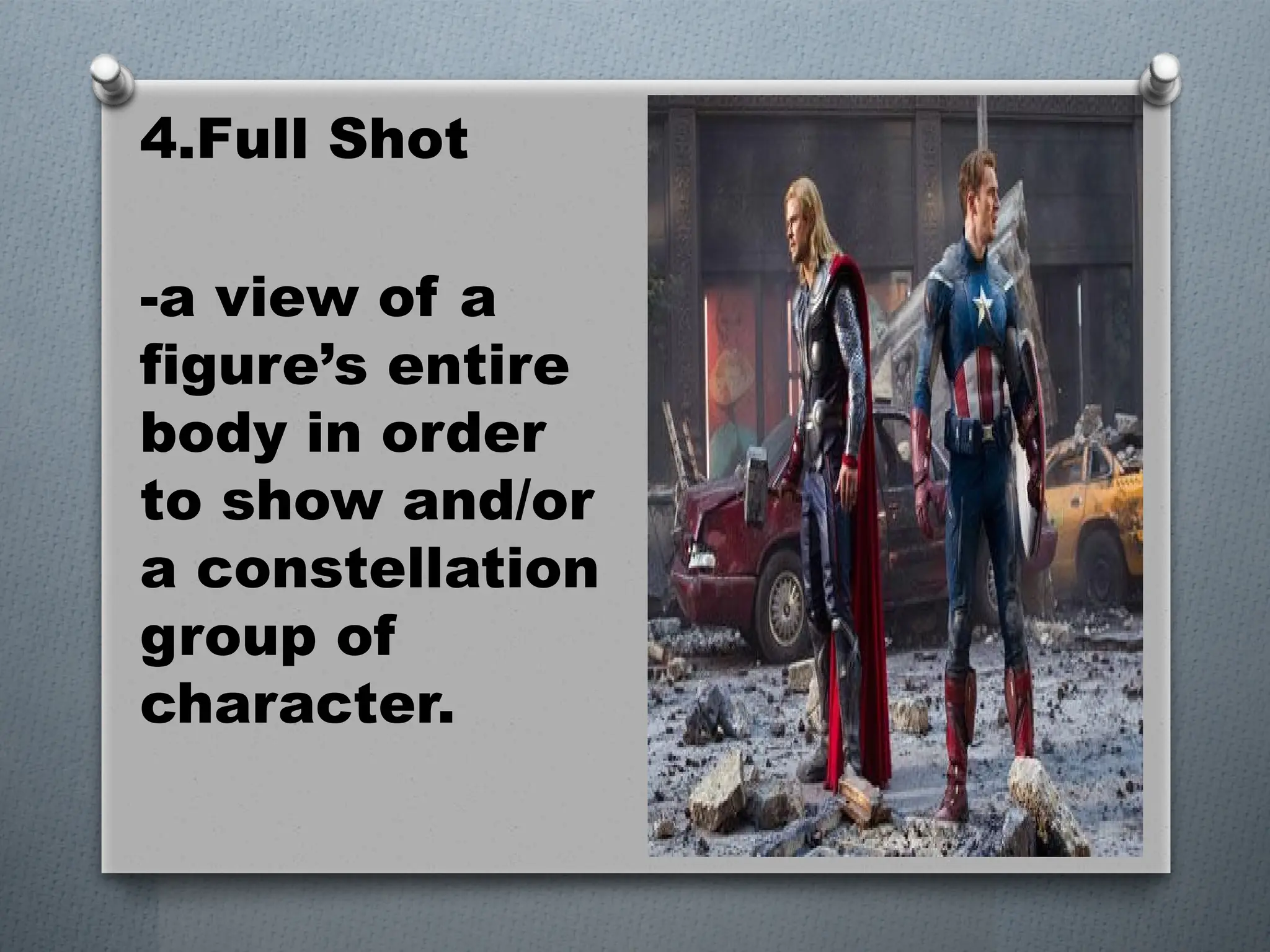
4.Full Shot
-a view of a
figure’s entire
body in order
to show and/or
a constellation
group of
character.
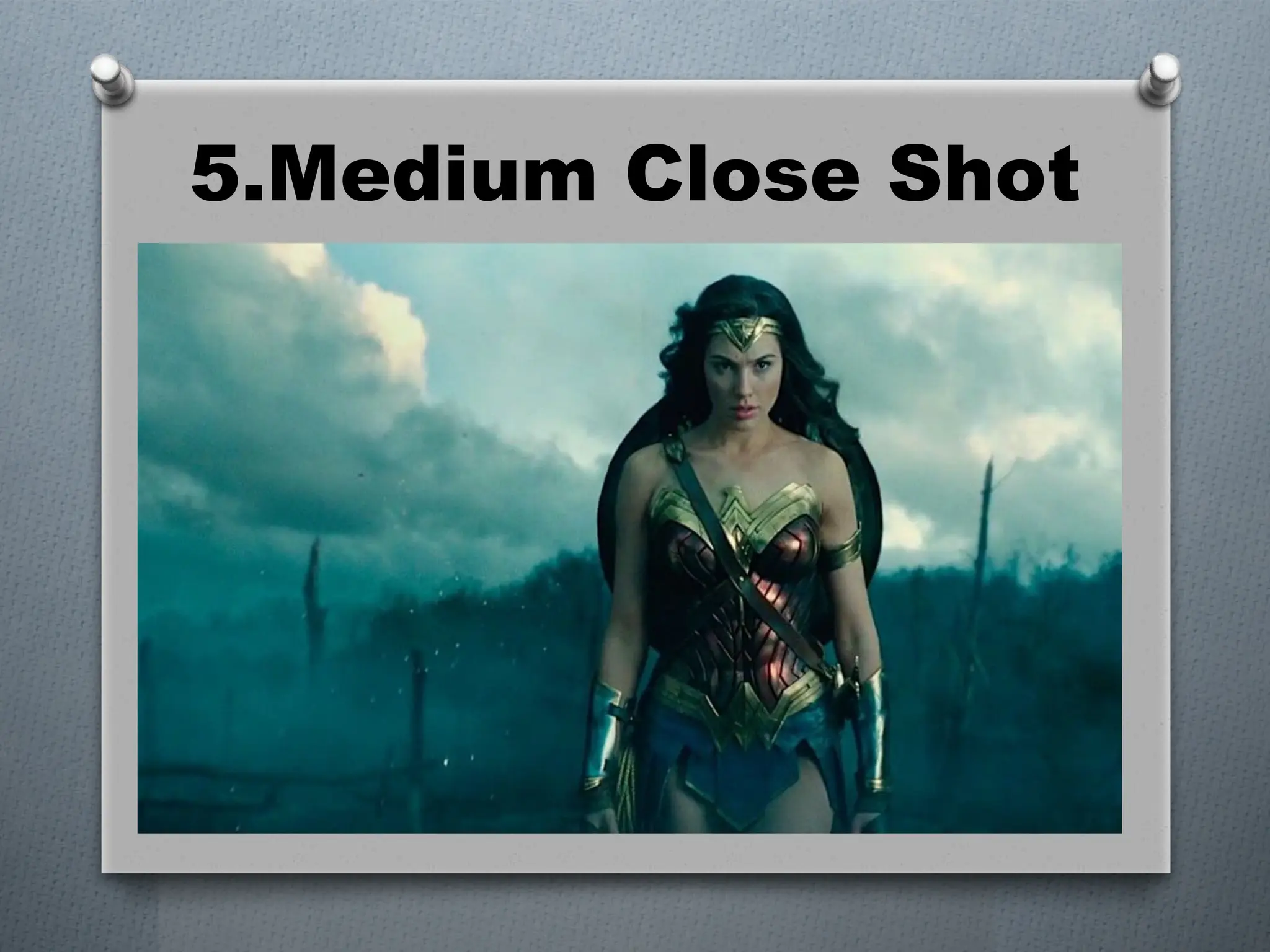
5.Medium Close Shot
6.Close-Up
Shot
-a full-screen
shot of a
subject’s face
showing the
finest nuances
of expression.
7.Extreme
Close-Up Shot
-a shot of a
hand, eye,
mouth, or any
object in
detail.
The Language of Media
O Media products can be classified
according to its categories or genre.
Each genre uses codes and
conventions to easily convey a
message. Codes are systems of
signs, which create meaning and is
divided into three categories:
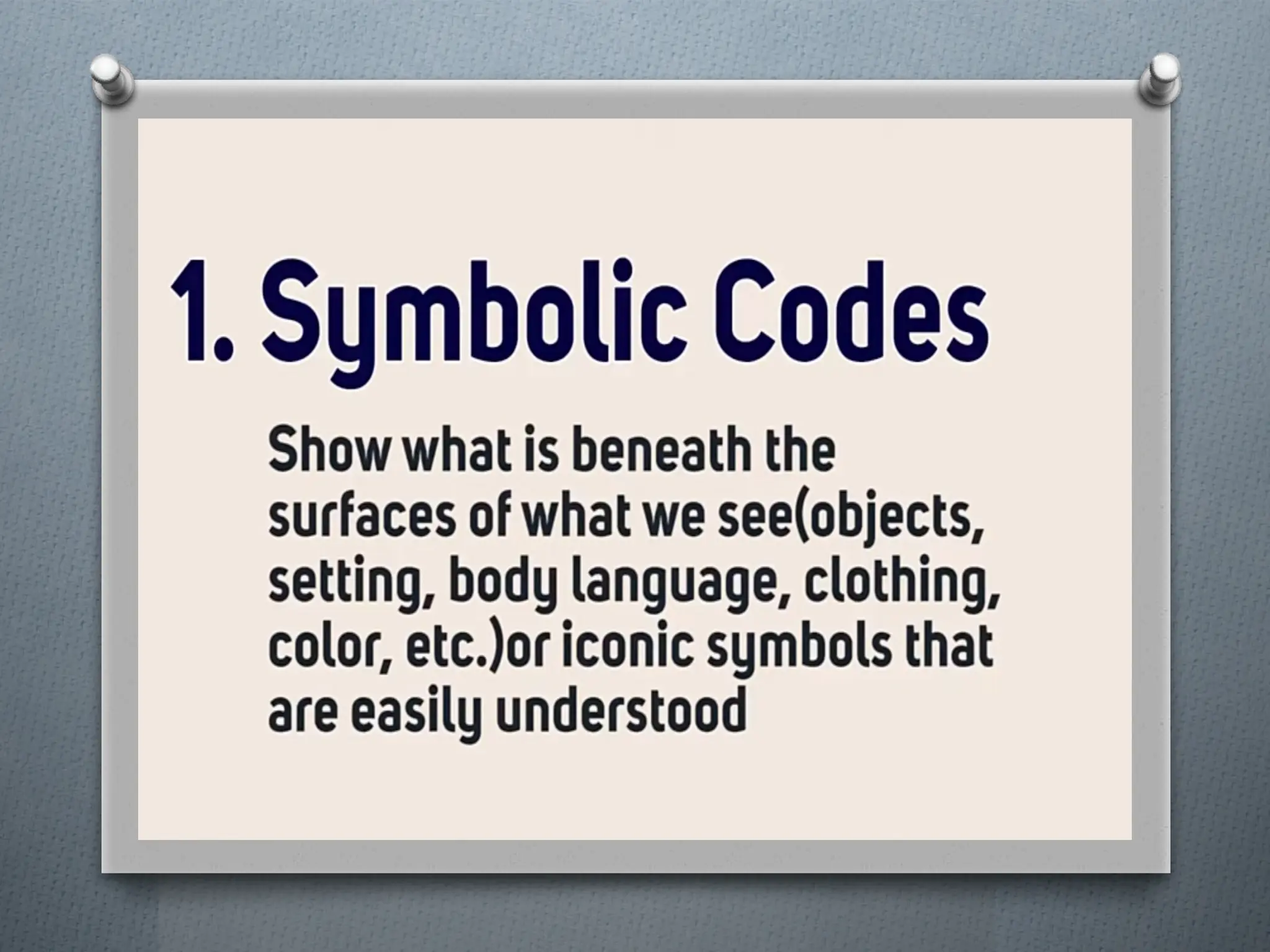
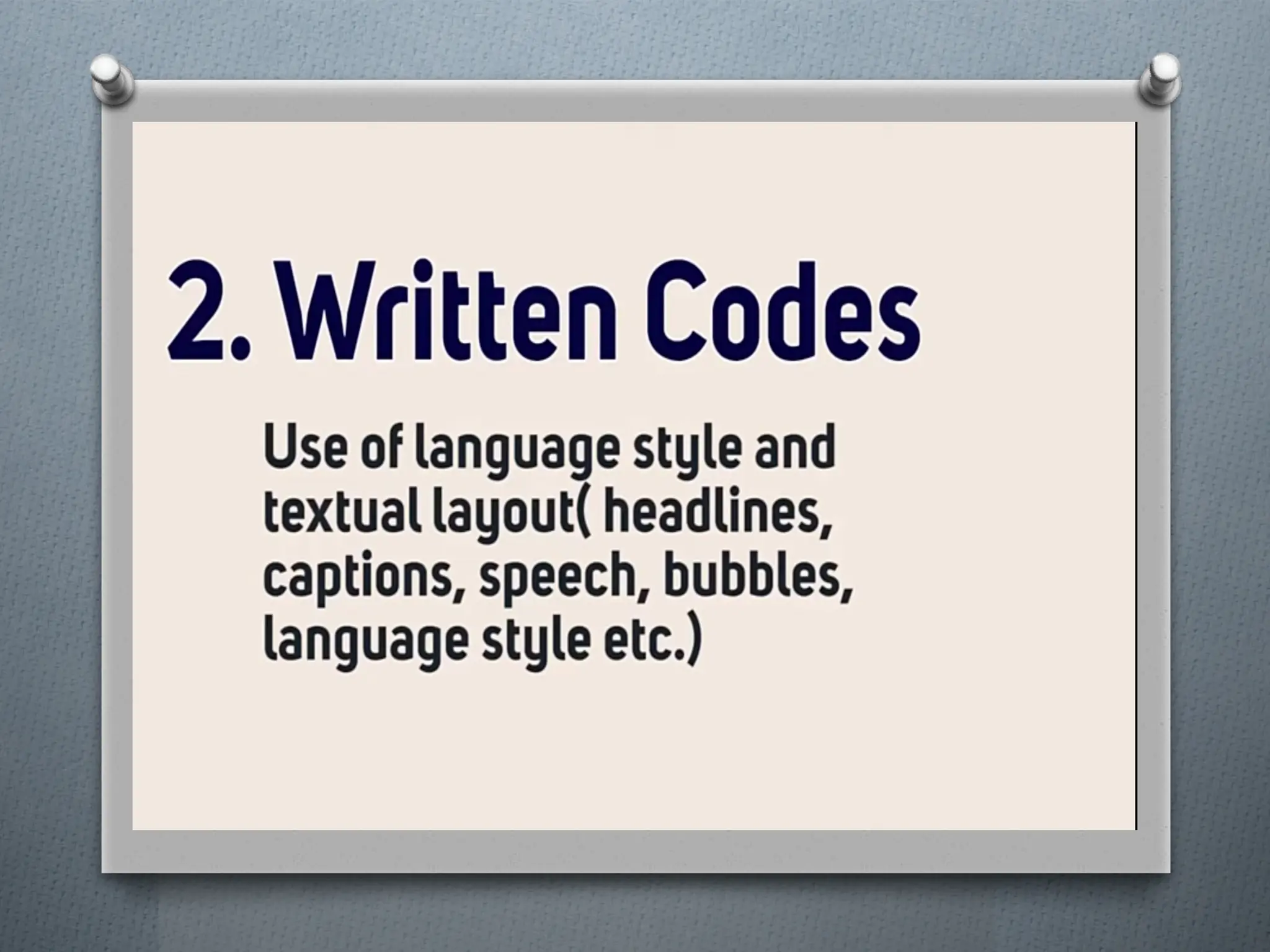
O Technical Codes
O Symbolic Codes
O Written Codes
Media and information Literacy -Module 6.pptx

Media and information Literacy -Module 6.pptx

  • 1.
  • 2.
    O Media andother information providers play a central role in information and communication processes. Nowadays, media become the common outlet of self-expression and creativity. It huge influence spreads speedily across the globe. The connection between technological advances and people’s connectivity created a huge impact on the lives of today’s generation.
  • 3.
    Language OThe method ofhuman communication, either spoken or written, consisting of the use of words in a structured and conventional way.
  • 4.
    Media Languages OThese arecodes, conventions, formats, symbols and nararative structures that indicate the meaning of media messages to an audience.
  • 5.
    Importance of Media Language OEverymedium has its own “Language” or combination of languages that is used to communicate meaning.
  • 6.
  • 7.
    Codes OSystems of signsthat when put together create meaning.
  • 8.
    Technical Codes O Theseare ways in which equipment is used to tell the story. O This includes sound, camera angles, types of shots and lightning as well as camera techniques, framing, depth of field, lightning, exposure and juxtaposition.
  • 9.
    Camera Shot 1.Extreme Long Shot -alsocalled extreme wide shots such as a large crowd scene or a view of scenery as far as the horizon.
  • 10.
    2.Long Shot -a viewof a situation or setting from a distance.
  • 11.
    3.Medium Long Shot -shows agroup of people interaction with each other
  • 12.
    4.Full Shot -a viewof a figure’s entire body in order to show and/or a constellation group of character.
  • 13.
  • 14.
    6.Close-Up Shot -a full-screen shot ofa subject’s face showing the finest nuances of expression.
  • 15.
    7.Extreme Close-Up Shot -a shotof a hand, eye, mouth, or any object in detail.
  • 16.
    The Language ofMedia O Media products can be classified according to its categories or genre. Each genre uses codes and conventions to easily convey a message. Codes are systems of signs, which create meaning and is divided into three categories: O Technical Codes O Symbolic Codes O Written Codes