






Marvin Bronoso
DAY 2
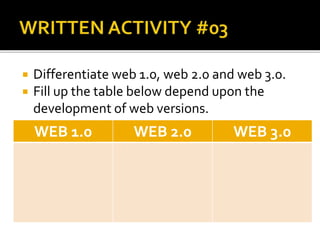
 Differentiate web 1.0, web 2.0 and web 3.0.
 Fill up the table below depend upon the
development of web versions.
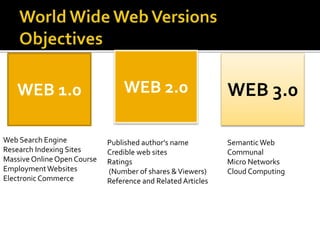
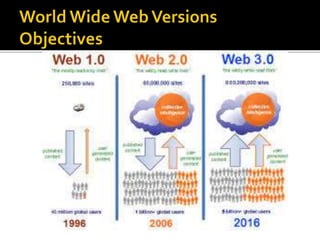
WEB 1.0 WEB 2.0 WEB 3.0
 ICTToday
 WorldWideWeb
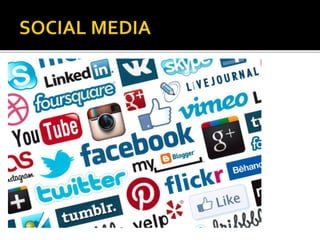
 Social Media
 WebVersions
 Power ofWeb Search Engine
 Different types of web sites
 Importance of credibility of sites.
 Evaluation and Filtering of Information in
media
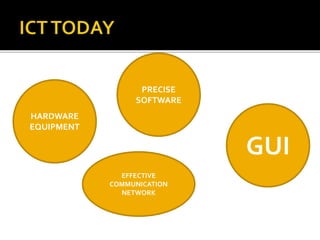
HARDWARE
EQUIPMENT
PRECISE
SOFTWARE
GUI
EFFECTIVE
COMMUNICATION
NETWORK
ICT
NETWORK
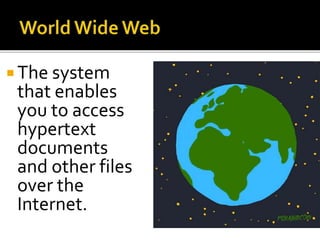
 The system
that enables
you to access
hypertext
documents
and other files
over the
Internet.
 VIRALITY – rate of reposting or of
photos, pieces of information, or
ideas published in one’s social
media profile or page.
WEB 1.0 WEB 2.0 WEB 3.0
Web Search Engine
Research Indexing Sites
Massive Online Open Course
EmploymentWebsites
ElectronicCommerce
Published author’s name
Credible web sites
Ratings
(Number of shares &Viewers)
Reference and Related Articles
SemanticWeb
Communal
Micro Networks
Cloud Computing
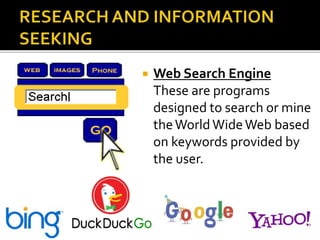
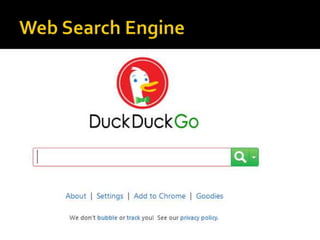
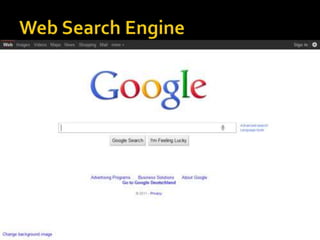
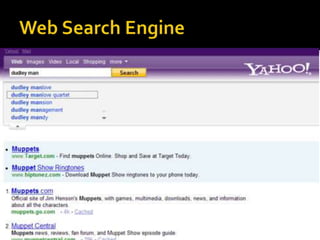
 Web Search Engine
These are programs
designed to search or mine
theWorldWideWeb based
on keywords provided by
the user.
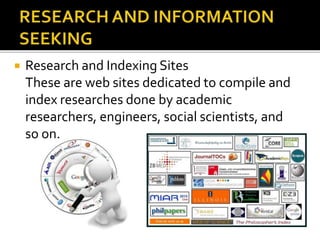
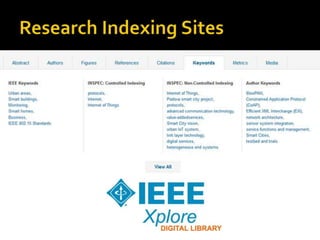
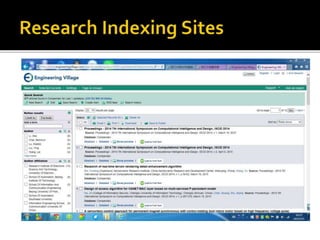
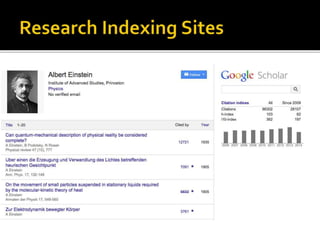
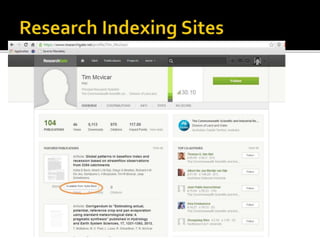
 Research and Indexing Sites
These are web sites dedicated to compile and
index researches done by academic
researchers, engineers, social scientists, and
so on.
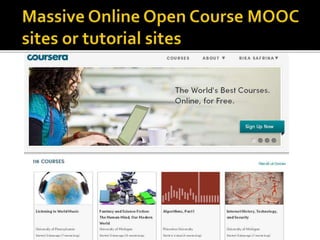
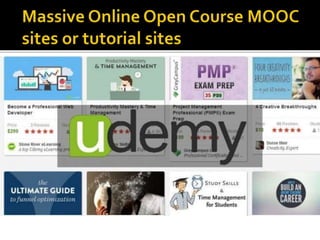
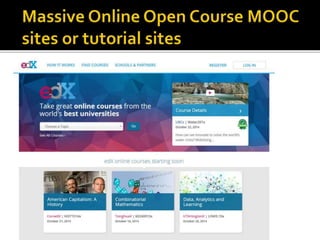
 Massive Online Open Course MOOC sites or
tutorial sites
Web sites dedicated to teach and inform
users focused on different areas.
 EmploymentWeb Sites
These are the web sites that enable
companies to post job vacancies and also
accommodate job seekers by providing a
resume-submission facility.
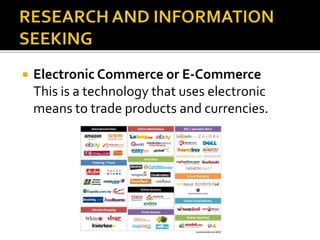
 Electronic Commerce or E-Commerce
This is a technology that uses electronic
means to trade products and currencies.
 The inherited property of web and
its later versions give viewers the
privilege to influence content or give
anyone the freedom to publish his
or her own websites regardless of
the content
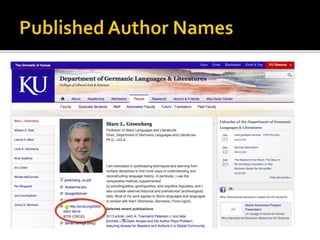
 Publishing the name of the one
who wrote the article or
information is one sign that the
information is valid, credible,
and legitimate.
Error-free articles are
more likely published by
credible web sites.
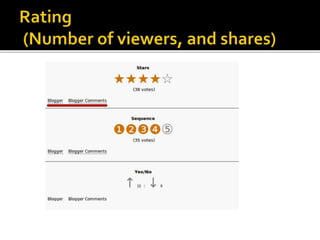
A credible article is more likely
to receive a high rating or a
normally high number of stars
or good comment/feedback
from reviewers.
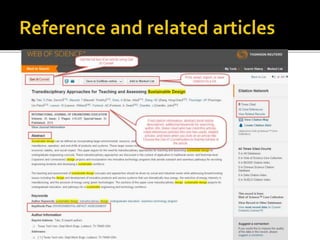
Most of the credible articles
include a list of references or
articles related to the
published one.
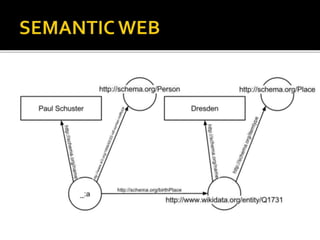
The standards promote
common data formats and
exchange protocols on the
web, most fundamentally the
RESOURCE DESCRIPTION
FRAMEWORK (RDF).
It allows the user to interact
and collaborate with each
other in a SOCIAL MEDIA
DIALOGUE as creators or user
generated content in virtual
community.
Micro Networks designs and
builds sophisticated network
systems from a variety of
diverse components requiring
hardware, software and
networking expertise.
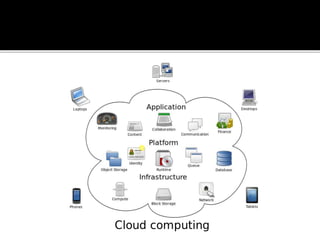
 Cloud computing is a type
of Internet-based computing
that provides shared computer
processing resources and data to
computers and other devices on
demand.
Media and Information Literacy 102

Media and Information Literacy 102

  • 1.
  • 2.
     Differentiate web1.0, web 2.0 and web 3.0.  Fill up the table below depend upon the development of web versions. WEB 1.0 WEB 2.0 WEB 3.0
  • 3.
     ICTToday  WorldWideWeb Social Media  WebVersions  Power ofWeb Search Engine  Different types of web sites  Importance of credibility of sites.  Evaluation and Filtering of Information in media
  • 4.
  • 5.
  • 6.
     The system thatenables you to access hypertext documents and other files over the Internet.
  • 8.
     VIRALITY –rate of reposting or of photos, pieces of information, or ideas published in one’s social media profile or page.
  • 9.
    WEB 1.0 WEB2.0 WEB 3.0 Web Search Engine Research Indexing Sites Massive Online Open Course EmploymentWebsites ElectronicCommerce Published author’s name Credible web sites Ratings (Number of shares &Viewers) Reference and Related Articles SemanticWeb Communal Micro Networks Cloud Computing
  • 12.
     Web SearchEngine These are programs designed to search or mine theWorldWideWeb based on keywords provided by the user.
  • 17.
     Research andIndexing Sites These are web sites dedicated to compile and index researches done by academic researchers, engineers, social scientists, and so on.
  • 22.
     Massive OnlineOpen Course MOOC sites or tutorial sites Web sites dedicated to teach and inform users focused on different areas.
  • 26.
     EmploymentWeb Sites Theseare the web sites that enable companies to post job vacancies and also accommodate job seekers by providing a resume-submission facility.
  • 31.
     Electronic Commerceor E-Commerce This is a technology that uses electronic means to trade products and currencies.
  • 33.
     The inheritedproperty of web and its later versions give viewers the privilege to influence content or give anyone the freedom to publish his or her own websites regardless of the content
  • 34.
     Publishing thename of the one who wrote the article or information is one sign that the information is valid, credible, and legitimate.
  • 36.
    Error-free articles are morelikely published by credible web sites.
  • 38.
    A credible articleis more likely to receive a high rating or a normally high number of stars or good comment/feedback from reviewers.
  • 40.
    Most of thecredible articles include a list of references or articles related to the published one.
  • 44.
    The standards promote commondata formats and exchange protocols on the web, most fundamentally the RESOURCE DESCRIPTION FRAMEWORK (RDF).
  • 46.
    It allows theuser to interact and collaborate with each other in a SOCIAL MEDIA DIALOGUE as creators or user generated content in virtual community.
  • 48.
    Micro Networks designsand builds sophisticated network systems from a variety of diverse components requiring hardware, software and networking expertise.
  • 50.
     Cloud computingis a type of Internet-based computing that provides shared computer processing resources and data to computers and other devices on demand.

Editor's Notes

  • #7 The technology was proposed by Tim Berners-Lee in 1989, in which a database and interface will implemented to associate links in readable documents.
  • #8 ICT Produced another high impact user application – the social media. These application started together with the Web 2.0 and are used in communicating and socializing with other application users in virtual communities and networks. These applications allow users to create and exchange user-generated information. The social media platform contains different formats. Some of these forms of social media are blogs, enterprise social networks, forums, photo-sharing sites, product selling and review sites, reasearch sharing sites, special interest groups, social games, social networks and video sharing.
  • #9 The effectiveness of social media application can be measured by its virality… Remember that we have the power to make the information we gather using different forms of media that are beneficial to us. EVALUATE.
  • #13 One of the ideal applications laid down for ICT and the WWW is for research and education. Since the main objective of the web is to share and disseminate information. Today, there are a number of information sources over the internet, some of which are presented below. They return search results such as we sites, files, photos, or any other media files. Examples are Bing, Duckduckgo, google and yahoo
  • #18 #2 Research and Indexing sites.
  • #20 X-Plore indexing sites
  • #21 Google Scholar by going to https://scholar.google.com.ph/
  • #22 Research Gate indexing site
  • #23 The delivery of information is similar to a classroom lecture setup, wherein lectures and assignments are delivered and submitted, respectively, online. Various universities around the world offer this service.
  • #24 Coursera
  • #25 UDEMY
  • #26 EDx
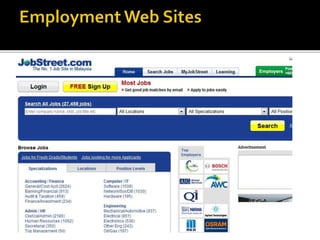
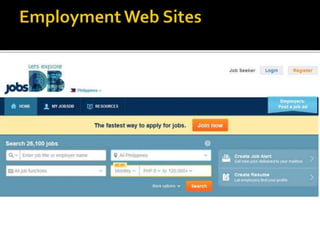
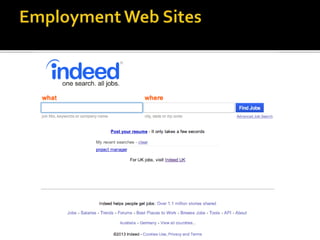
  • #27 One important feature of these web sites is the ability to match the qualification of the applicants and the required qualification in a certain job vacancy.
  • #28 jobstreet
  • #29 jobsDB
  • #30 bestjobs
  • #31 upwork
  • #32 It includes any technology that introduces ease in business management and customer convenience.
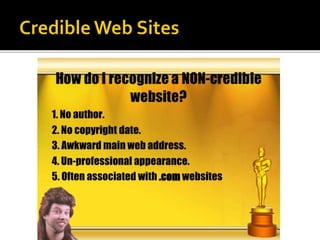
  • #34 There are no standards governing content publishing on the World Wide Web to ensure the correctness of information and originality, but there are ways on how to verify if the information is trustworthy or legitimate.
  • #36 Most of the author who are intentionally writing hoaxes or false articles will likely omit writing their names to avoid responsibility. This will also enable the users to further research and verify the author.
  • #40 This are the collective ratings of past viewers of the site. If the article is not credible or contains false information, it has a high probability of getting a low rating.
  • #42 To verify the authenticity of an articles, visit the article posted in the reference and confirm if the information written on the web site conforms to the information in the references.
  • #50 It provides building technology solutions that are simple to manage and easy to use.
  • #52 rapidly provisioned and released with minimal management effort. Cloud computing and storage solutions provide users and enterprises with various capabilities to store and process their data in either privately owned,