Mechanism of Labor
By:
Khair-Ullah Khan Barak
4th year MBBS
Hamdard University, Karachi, Pakistan
Labor
Definition:
Process by which regular painful
contractions bring about effacement and
dilation of the cervix and descent of the
presenting part, ultimately leading to expulsion
of the fetus and the placenta from the mother.
Consists of three stages
Mechanism of Labor
Refers to the series of changes in position and
attitude that the fetus undergoes during its
passage through the birth canal.
The relation of the fetal head and body to the
maternal pelvis changes as fetus descends
through the pelvis.
This is essential so that the optimal diameters
of the fetal skull are present at each stage of
the descent.
Series of changes during Labor
Engagement
Descent
Flexion
Internal rotation
Extension
Restitution
External rotation
Delivery of the shoulders and fetal body
Engagement
Engagement is said to have occurred
when the widest part of the
presenting part has passed
successfully through the pelvic inlet.
Head is normally in the transverse
position.
Prior to labor in nulliparous women.
During labor in multiparous women.
If more than two-fifths of the fetal
head is palpable abdominally, the
head is not yet engaged.
Descent
Is needed before Flexion, Internal rotaion
and Extension
Secondary to uterine action during 1st
stage and latent phase of 2nd stage of
labor.
Helped by voluntary use of abdominal
muscles and valsalva maneuver during
active phase of 2nd stage of labor
Flexion
Occurs as the head
descends into the
narrower mid-cavity
of the pelvis.
This occurs passively
due to the
surrounding
structure.
Important in
minimizing the
presenting diameter
of the fetal head.
Internal rotation
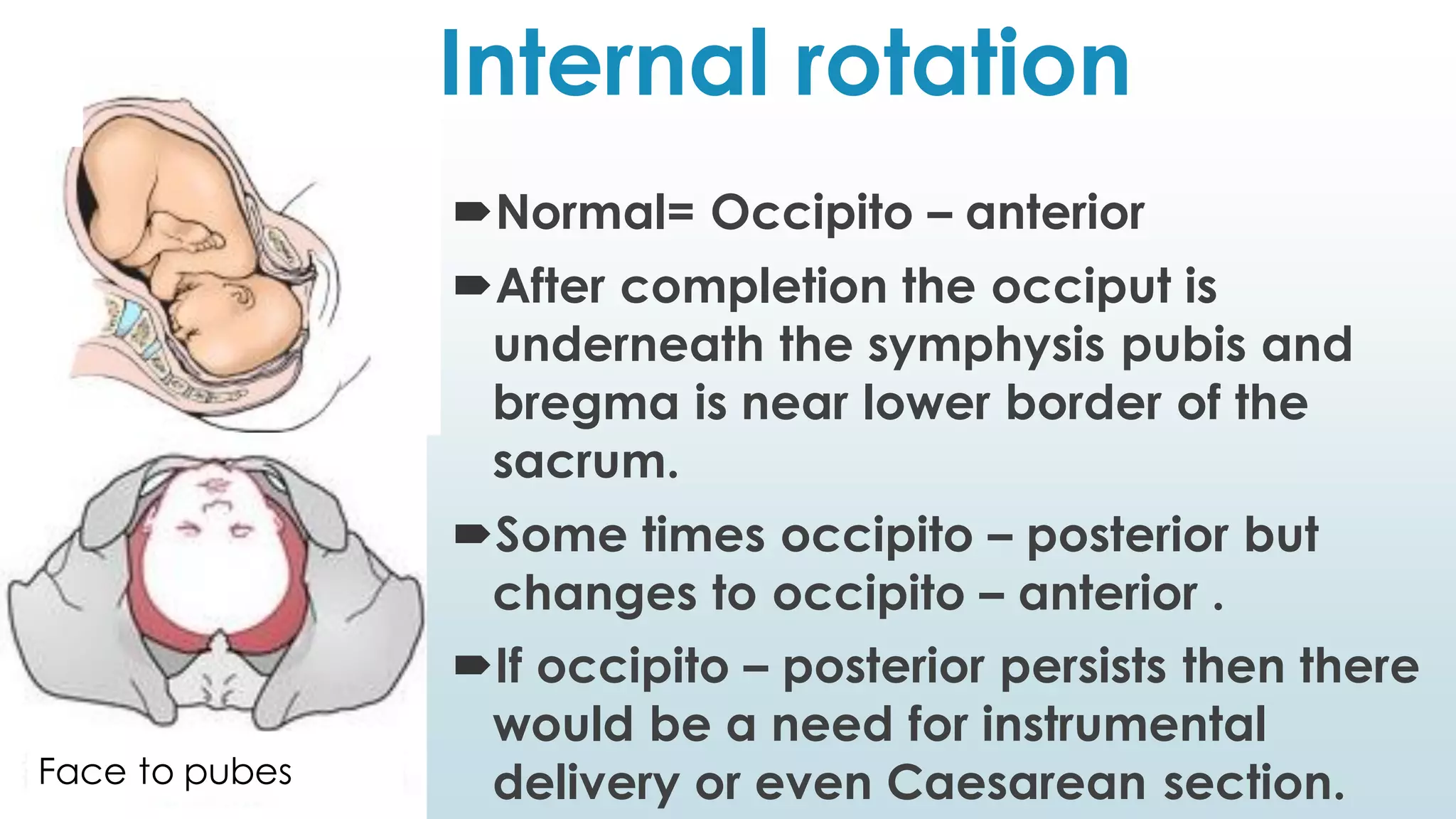
Normal= Occipito – anterior
After completion the occiput is
underneath the symphysis pubis and
bregma is near lower border of the
sacrum.
Some times occipito – posterior but
changes to occipito – anterior .
If occipito – posterior persists then there
would be a need for instrumental
delivery or even Caesarean section.Face to pubes
Extension
 The well flexed head now extends and the occiput escapes from underneath the symphysis
pubis and distends the vulva.
 This is known as crowning of the head.
 Further extension occurs and the occiput underneath the symphysis pubis acts as fulcrum
point as the bregma, face and chin appear in succession over the post vaginal opening and
perineal body resulting in minimizing soft tissue trauma.
Restitution
The slight rotation of the occiput through one – eight of the circle.
When the head is delivering the occiput is directly anterior.
As soon as it escapes from the vulva, the head aligns itself with
shoulders, which have entered the pelvis in oblique position.
External rotation
In order to be delivered, the shoulders have to rotate into the direct
AP plane as the pelvis is widest at its outlet.
When this occurs, the occiput rotates through a further one – eight
of a circle to the transverse position.
Delivery of the shoulders and fetal body
 The anterior shoulder will be under
symphysis pubis and delivers 1st.
 The posterior shoulder delivers 2nd.
 This process may occur without assistance, but lateral traction is often exerted by gently pulling
the fetal head in a downward direction to help release the anterior shoulder from underneath
the pubic symphysis
Normally rest of the
body is delivered easily,
with the posterior
shoulder guided over
the perineum by
traction in the opposite
direction, so sweeping
the baby on to the
maternal abdomen
Mechanism of labor

Mechanism of labor

  • 1.
    Mechanism of Labor By: Khair-UllahKhan Barak 4th year MBBS Hamdard University, Karachi, Pakistan
  • 2.
    Labor Definition: Process by whichregular painful contractions bring about effacement and dilation of the cervix and descent of the presenting part, ultimately leading to expulsion of the fetus and the placenta from the mother. Consists of three stages
  • 3.
    Mechanism of Labor Refersto the series of changes in position and attitude that the fetus undergoes during its passage through the birth canal. The relation of the fetal head and body to the maternal pelvis changes as fetus descends through the pelvis. This is essential so that the optimal diameters of the fetal skull are present at each stage of the descent.
  • 4.
    Series of changesduring Labor Engagement Descent Flexion Internal rotation Extension Restitution External rotation Delivery of the shoulders and fetal body
  • 5.
    Engagement Engagement is saidto have occurred when the widest part of the presenting part has passed successfully through the pelvic inlet. Head is normally in the transverse position. Prior to labor in nulliparous women. During labor in multiparous women. If more than two-fifths of the fetal head is palpable abdominally, the head is not yet engaged.
  • 6.
    Descent Is needed beforeFlexion, Internal rotaion and Extension Secondary to uterine action during 1st stage and latent phase of 2nd stage of labor. Helped by voluntary use of abdominal muscles and valsalva maneuver during active phase of 2nd stage of labor
  • 7.
    Flexion Occurs as thehead descends into the narrower mid-cavity of the pelvis. This occurs passively due to the surrounding structure. Important in minimizing the presenting diameter of the fetal head.
  • 8.
    Internal rotation Normal= Occipito– anterior After completion the occiput is underneath the symphysis pubis and bregma is near lower border of the sacrum. Some times occipito – posterior but changes to occipito – anterior . If occipito – posterior persists then there would be a need for instrumental delivery or even Caesarean section.Face to pubes
  • 9.
    Extension  The wellflexed head now extends and the occiput escapes from underneath the symphysis pubis and distends the vulva.  This is known as crowning of the head.  Further extension occurs and the occiput underneath the symphysis pubis acts as fulcrum point as the bregma, face and chin appear in succession over the post vaginal opening and perineal body resulting in minimizing soft tissue trauma.
  • 10.
    Restitution The slight rotationof the occiput through one – eight of the circle. When the head is delivering the occiput is directly anterior. As soon as it escapes from the vulva, the head aligns itself with shoulders, which have entered the pelvis in oblique position.
  • 11.
    External rotation In orderto be delivered, the shoulders have to rotate into the direct AP plane as the pelvis is widest at its outlet. When this occurs, the occiput rotates through a further one – eight of a circle to the transverse position.
  • 12.
    Delivery of theshoulders and fetal body  The anterior shoulder will be under symphysis pubis and delivers 1st.  The posterior shoulder delivers 2nd.  This process may occur without assistance, but lateral traction is often exerted by gently pulling the fetal head in a downward direction to help release the anterior shoulder from underneath the pubic symphysis
  • 13.
    Normally rest ofthe body is delivered easily, with the posterior shoulder guided over the perineum by traction in the opposite direction, so sweeping the baby on to the maternal abdomen