MECHANISM OF LABOUR
Lie, presentation, attitude, &position
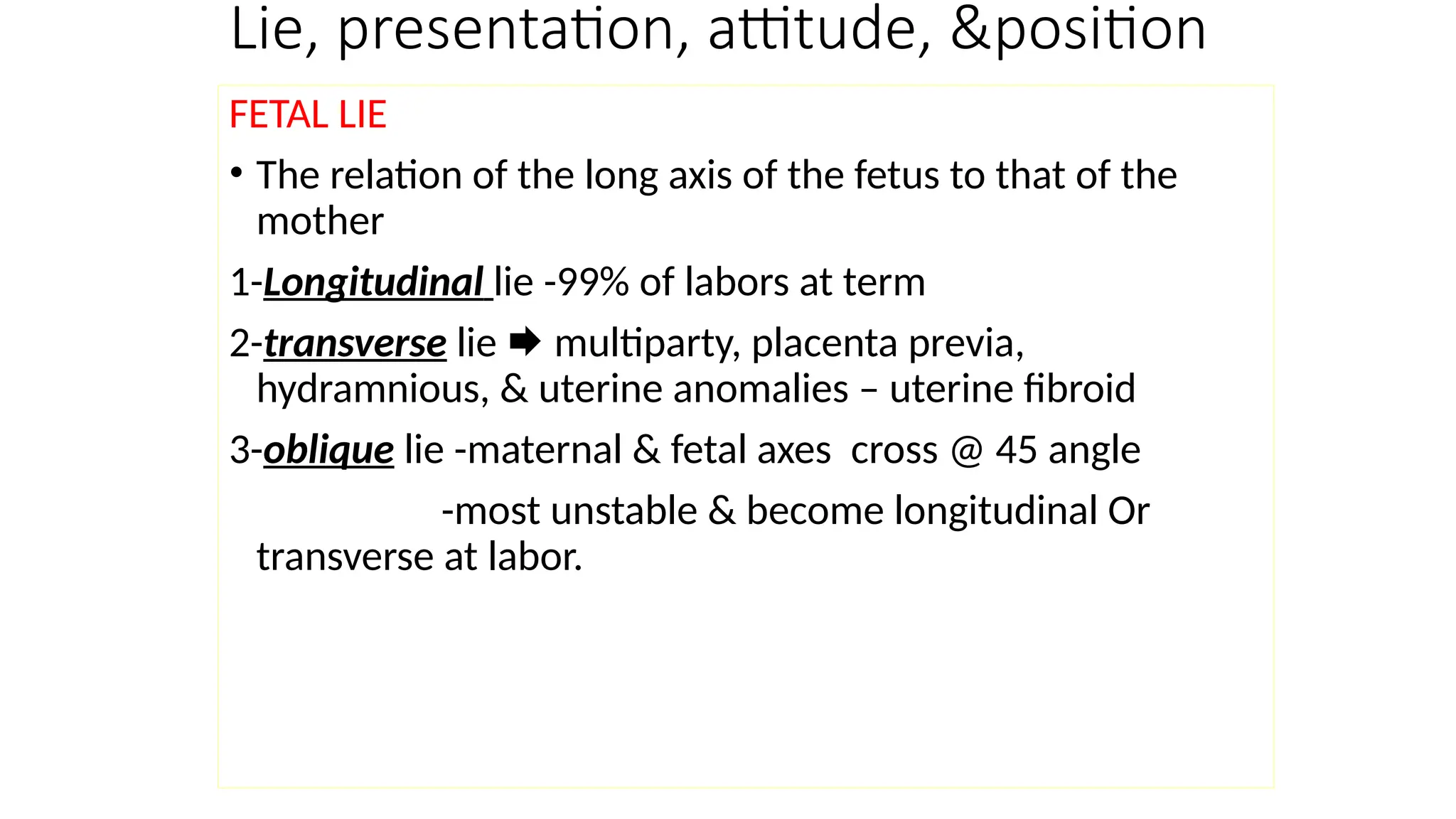
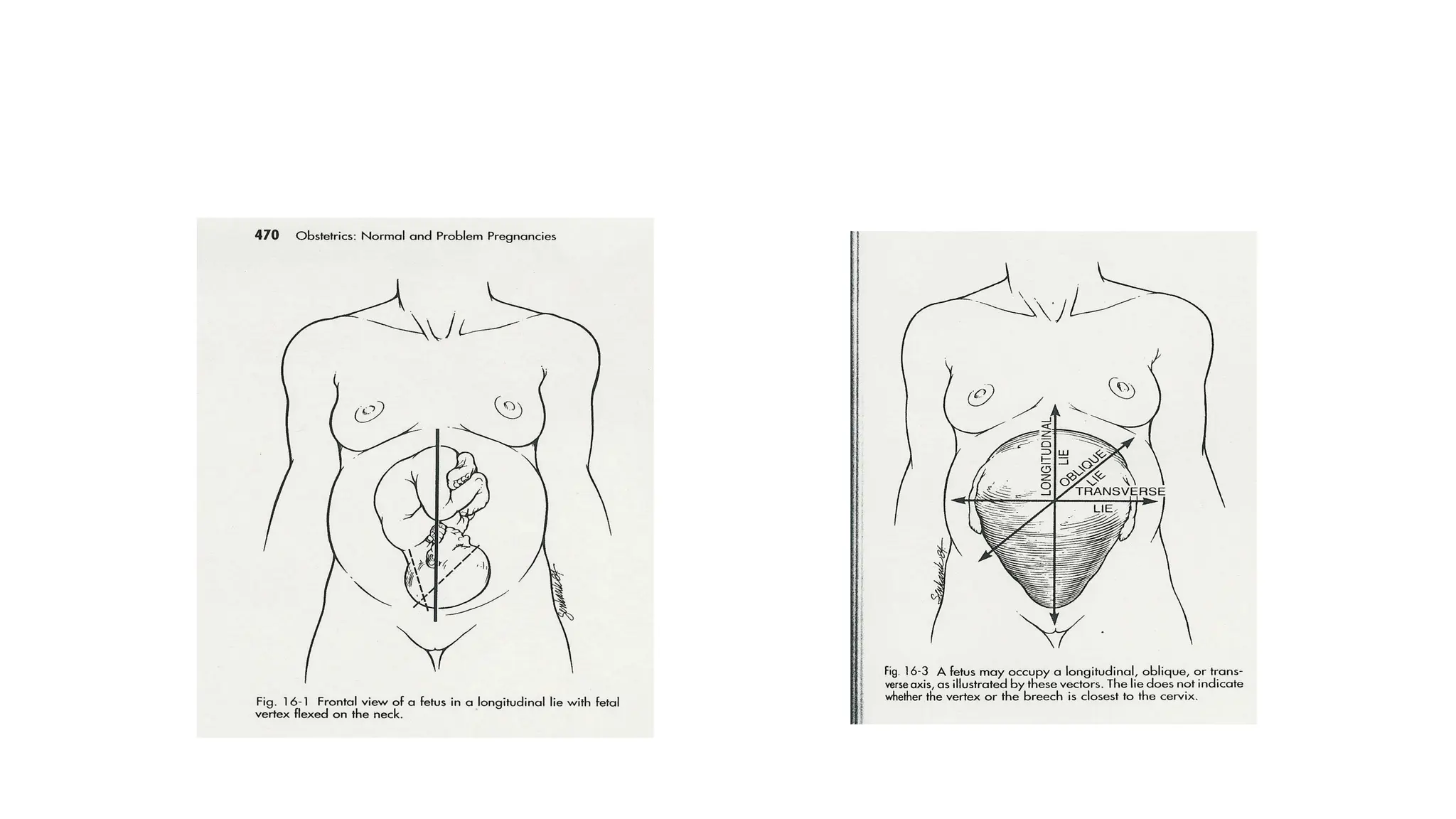
FETAL LIE
• The relation of the long axis of the fetus to that of the
mother
1-Longitudinal lie -99% of labors at term
2-transverse lie  multiparty, placenta previa,
hydramnious, & uterine anomalies – uterine fibroid
3-oblique lie -maternal & fetal axes cross @ 45 angle
-most unstable & become longitudinal Or
transverse at labor.
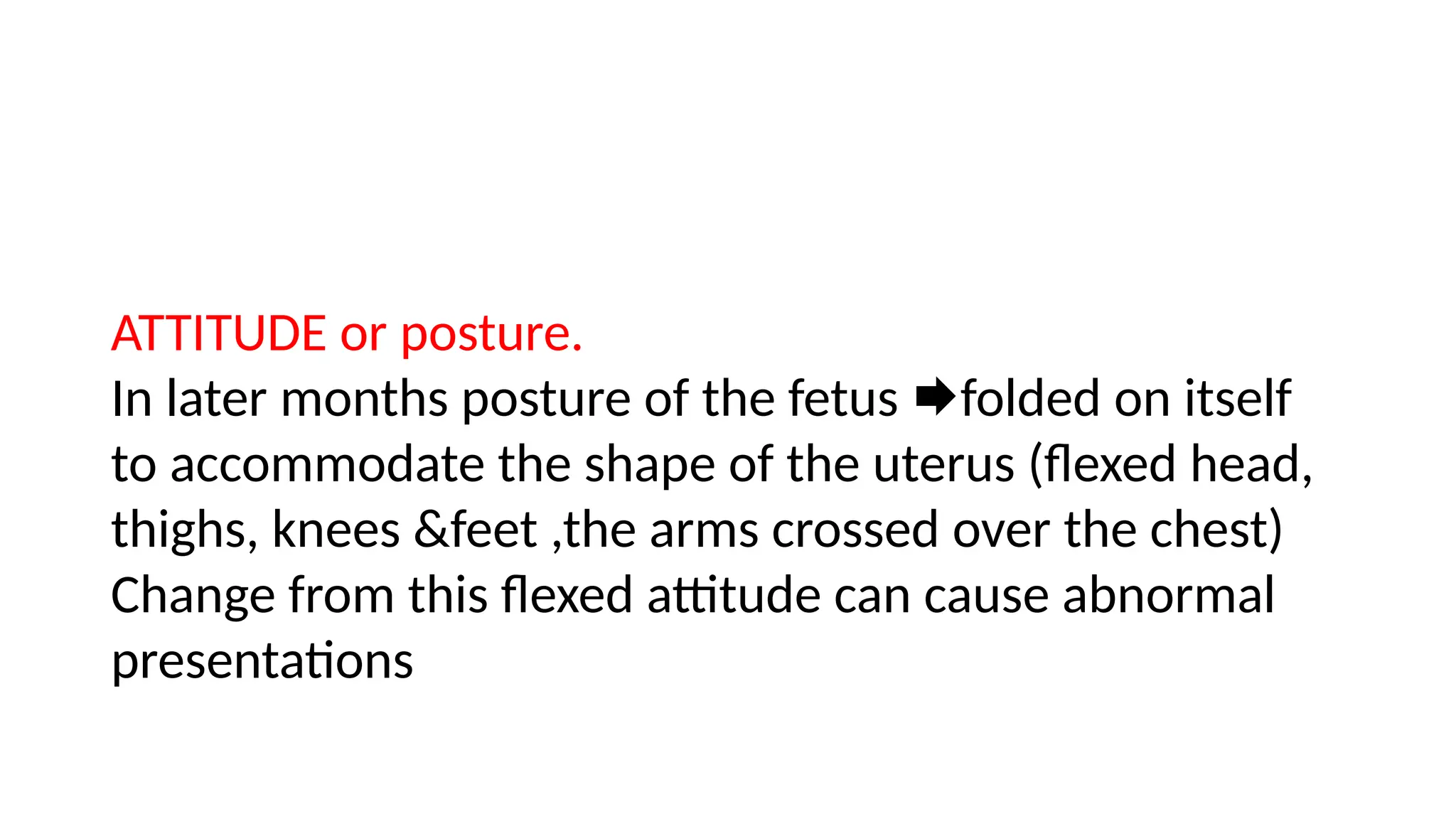
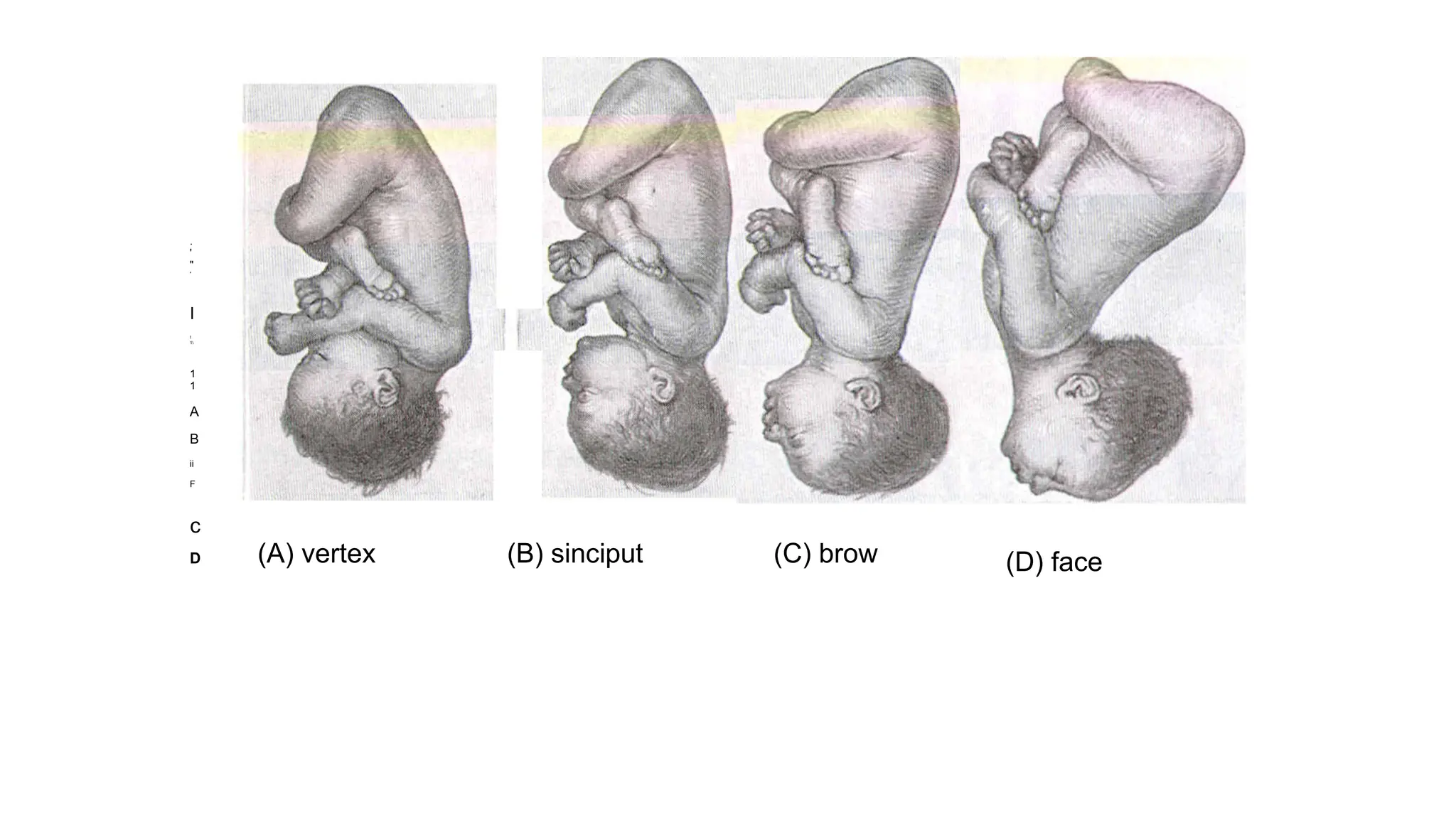
ATTITUDE or posture.
In later months posture of the fetus folded on itself
to accommodate the shape of the uterus (flexed head,
thighs, knees &feet ,the arms crossed over the chest)
Change from this flexed attitude can cause abnormal
presentations
.
'
"
'
I
!
1
1
1
A
B
ii
F
c
D (A) vertex (B) sinciput (C) brow (D) face
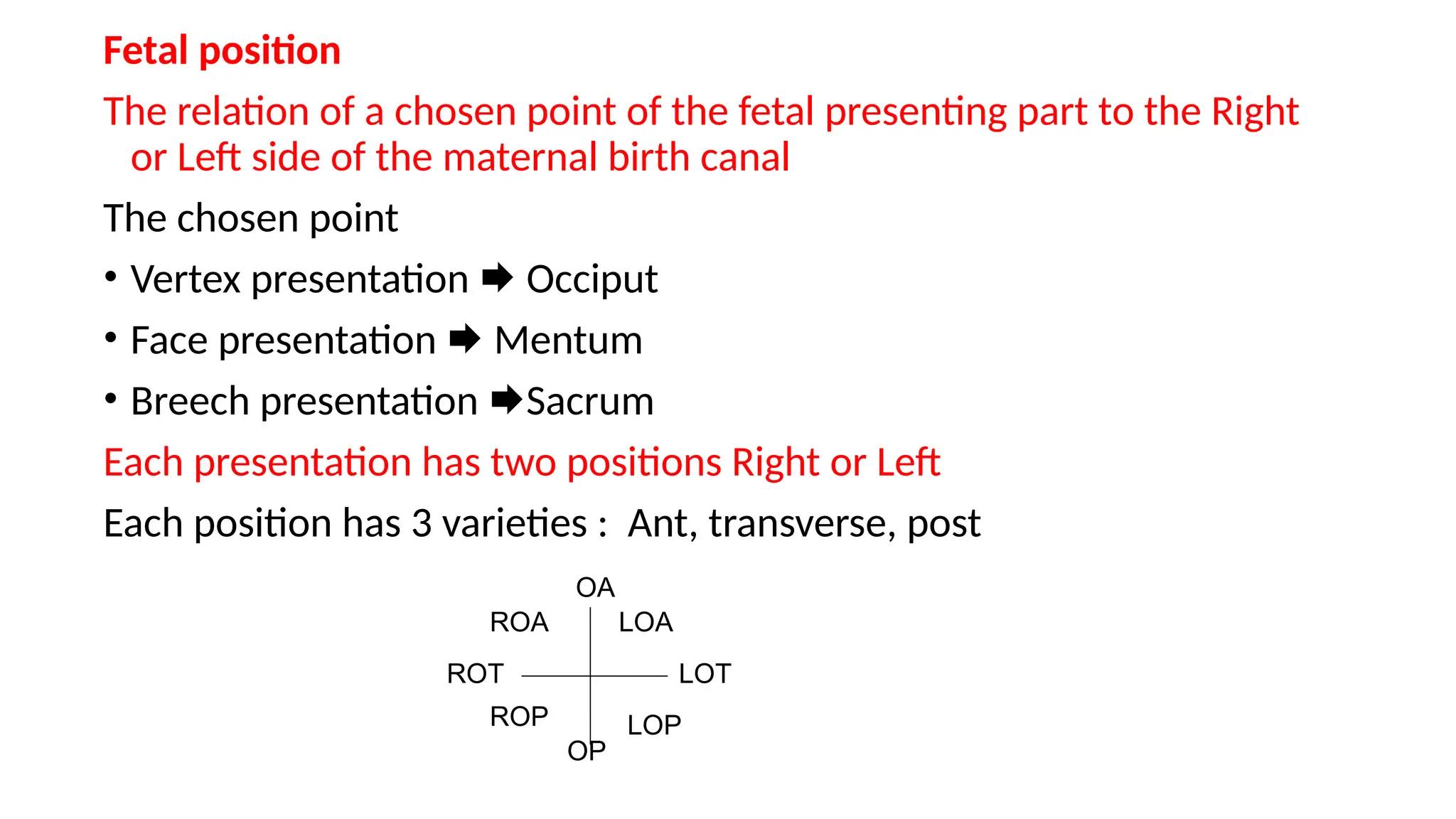
Fetal position
The relation of a chosen point of the fetal presenting part to the Right
or Left side of the maternal birth canal
The chosen point
• Vertex presentation  Occiput
• Face presentation  Mentum
• Breech presentation Sacrum
Each presentation has two positions Right or Left
Each position has 3 varieties : Ant, transverse, post
OA
OP
LOT
ROT
LOA
ROA
LOP
ROP
Lie, presentation, attitude, &position
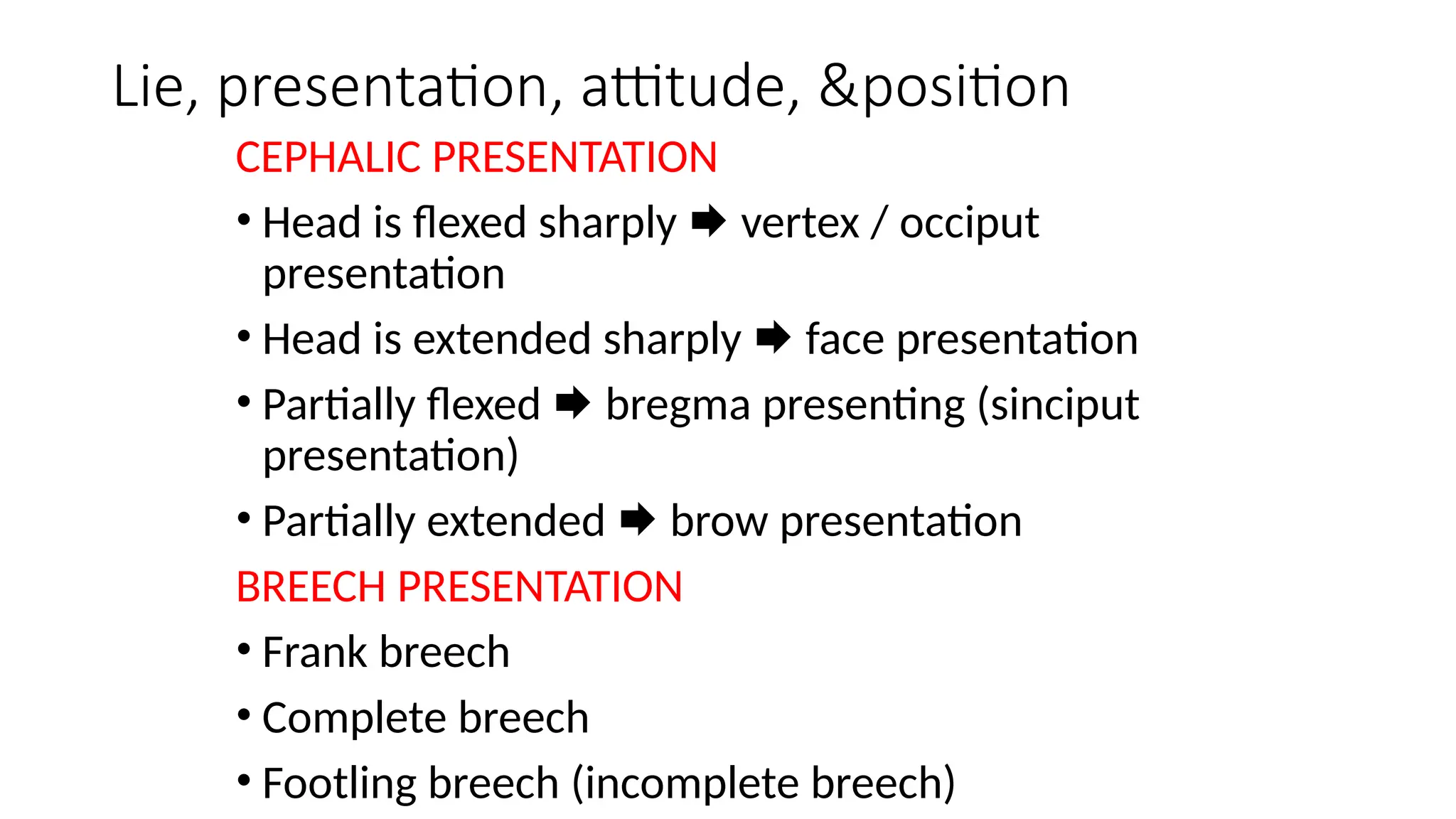
CEPHALIC PRESENTATION
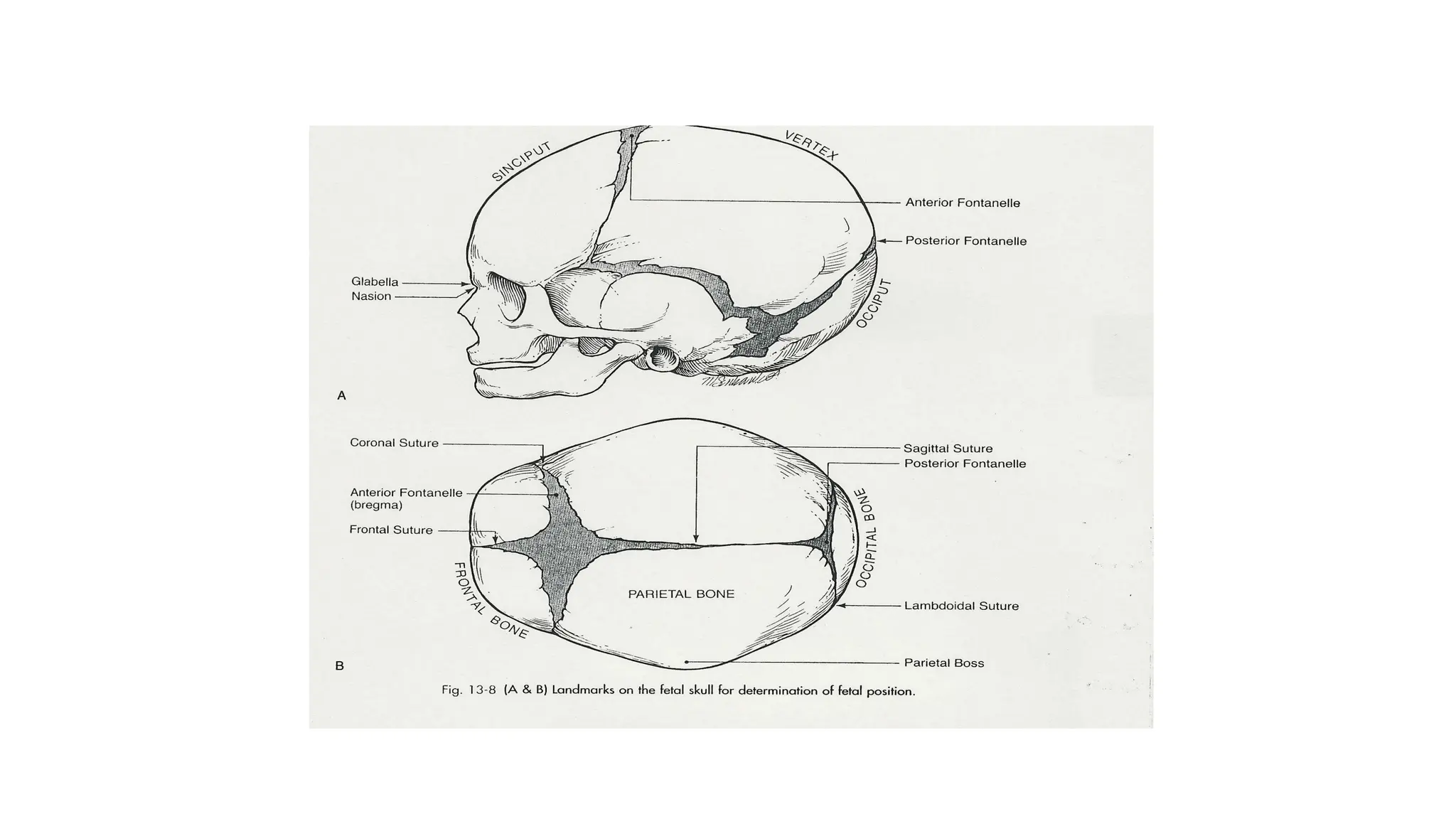
• Head is flexed sharply  vertex / occiput
presentation
• Head is extended sharply  face presentation
• Partially flexed  bregma presenting (sinciput
presentation)
• Partially extended  brow presentation
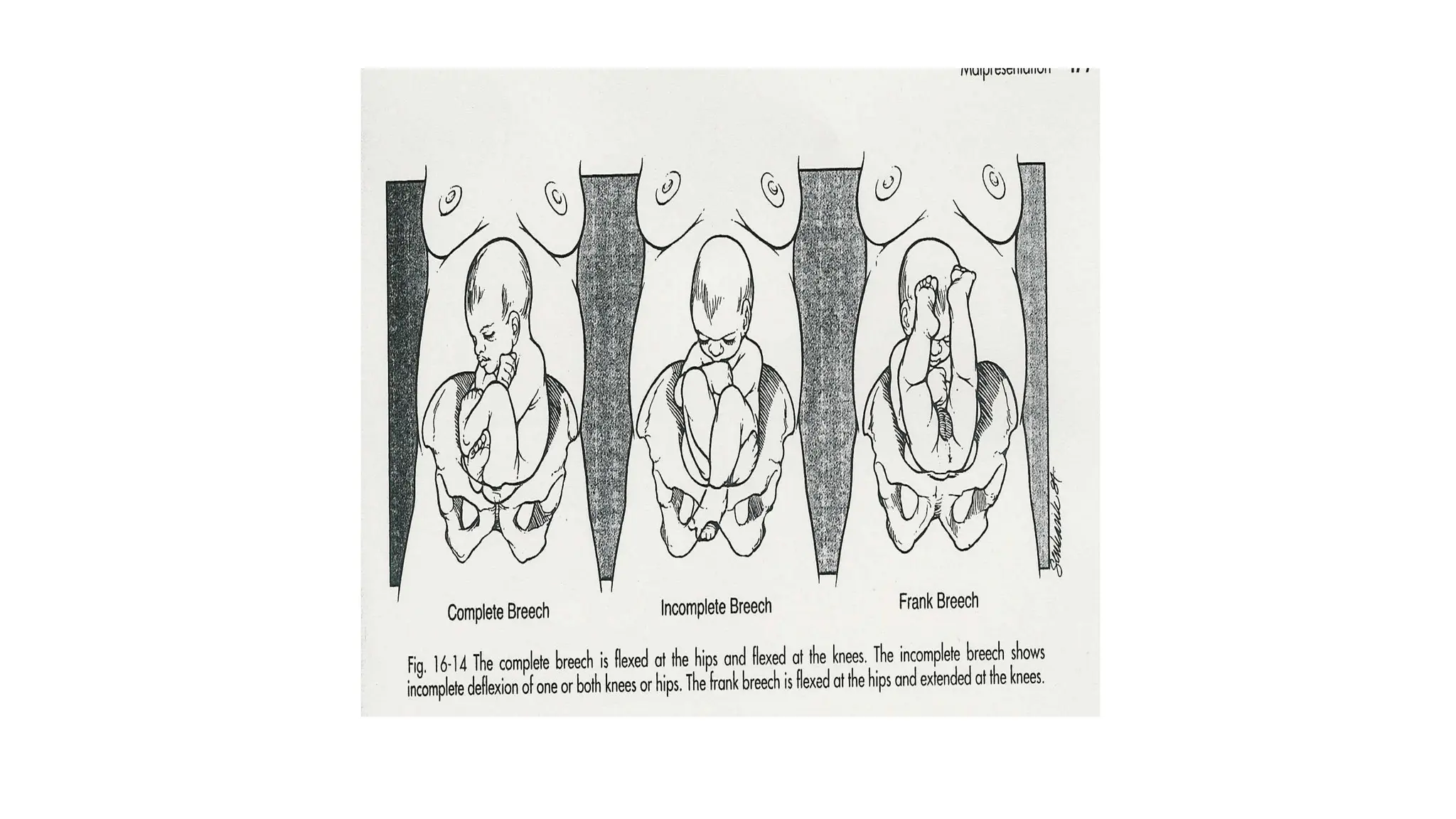
BREECH PRESENTATION
• Frank breech
• Complete breech
• Footling breech (incomplete breech)
FREQUENCY OF VARIOUS PRESENTATIONS & POSITIONS AT TERM
• Vertex  96%
2/3 Lt
1/3 Rt
• Breech  3.5%
• Face 0.3%
• Shoulder 0.4%
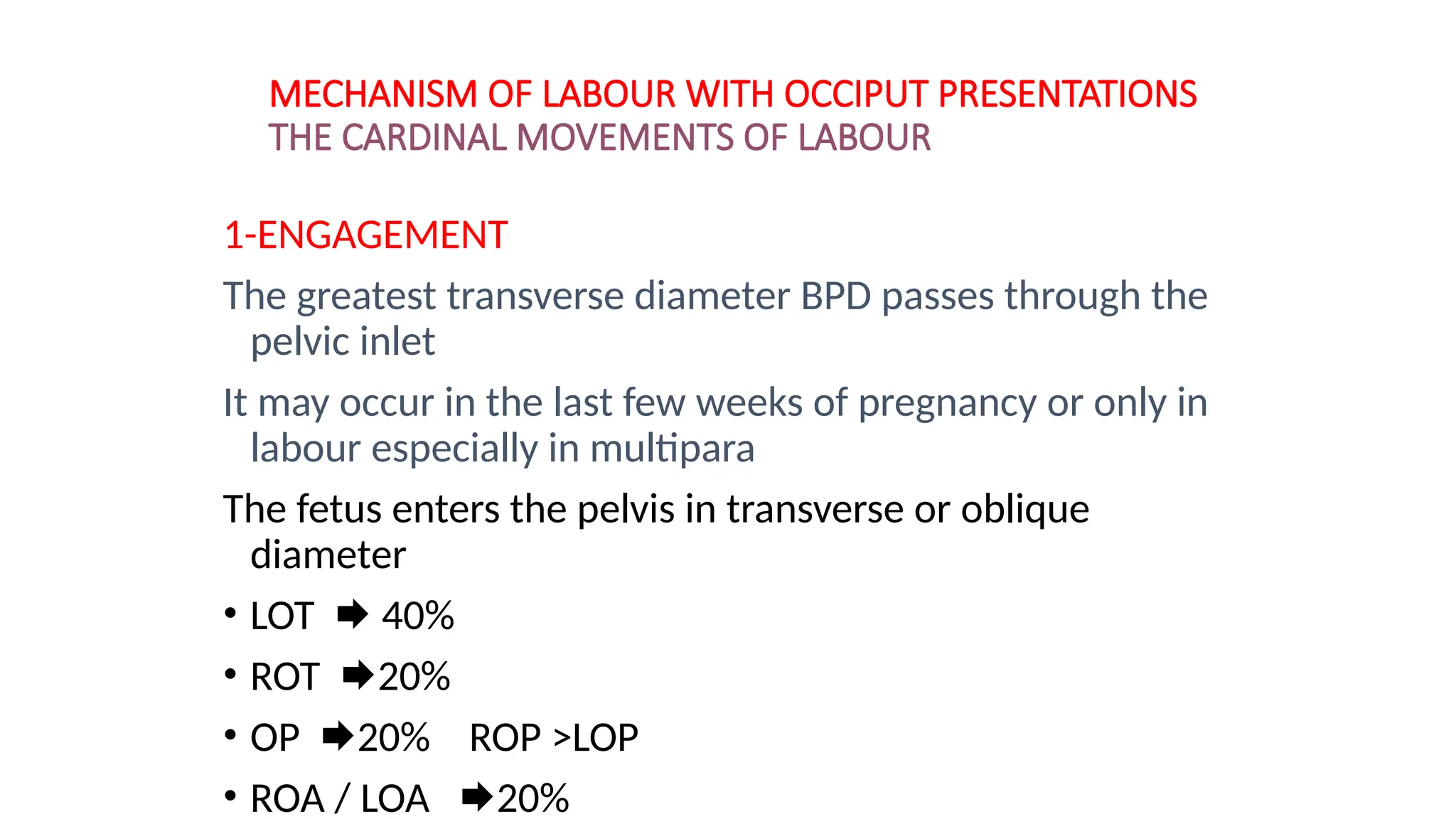
MECHANISM OF LABOUR WITH OCCIPUT PRESENTATIONS
THE CARDINAL MOVEMENTS OF LABOUR
1-ENGAGEMENT
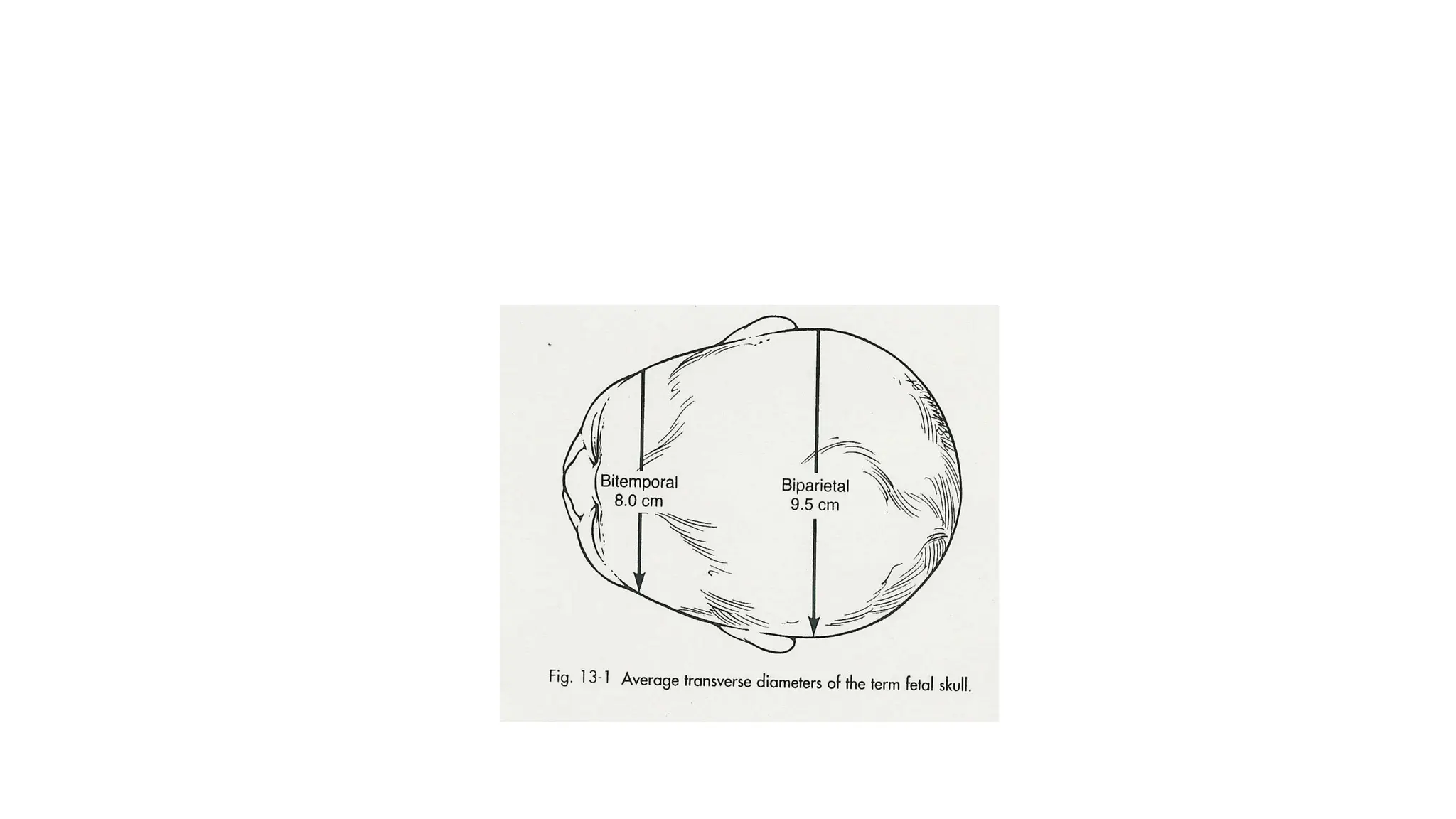
The greatest transverse diameter BPD passes through the
pelvic inlet
It may occur in the last few weeks of pregnancy or only in
labour especially in multipara
The fetus enters the pelvis in transverse or oblique
diameter
• LOT  40%
• ROT 20%
• OP 20% ROP >LOP
• ROA / LOA 20%
THE CARDINAL MOVEMENTS OF LABOUR
2-DESCENT
• In nullipara engagement takes place before the onset of labour &
further descent may not occur till the 2nd
stage
• In multipara descent begins with engagement
• It is gradually progressive till the fetus is delivered
• It is affected by the uterine contractions & thinning of the lower
segment
3-Flexion
• The descending head meets resistance of pelvic floor,
Cervix & walls of the pelvis   flexion
• The shorter suboccipito-bregmatic is substituted for the
longer occipito-frontal
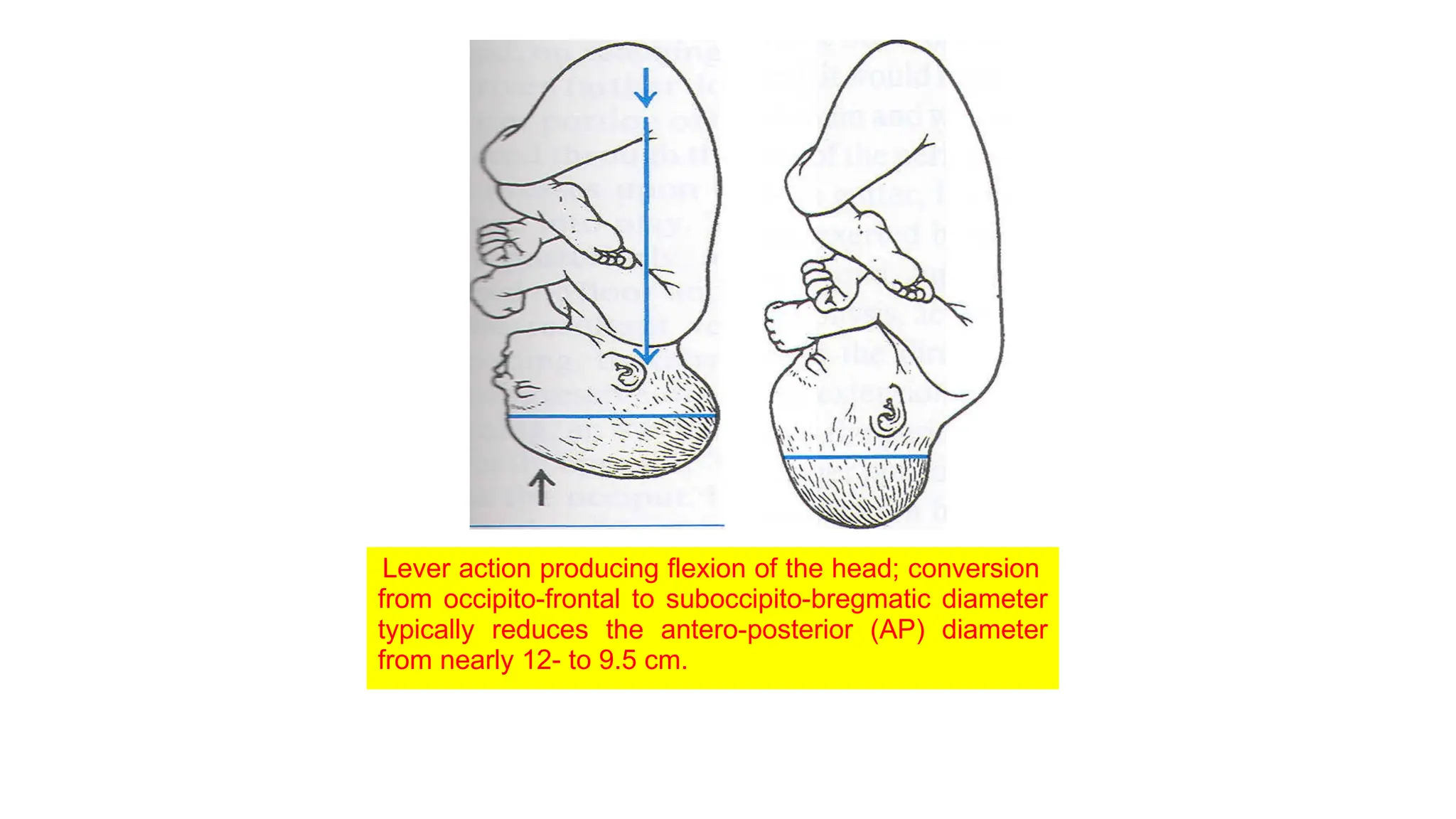
Lever action producing flexion of the head; conversion
from occipito-frontal to suboccipito-bregmatic diameter
typically reduces the antero-posterior (AP) diameter
from nearly 12- to 9.5 cm.
4-INTERNAL ROTATION
• Turning of the head from the OT position  anteriorly
towards the symphysis pubis ie. Occiput moves from
transverse to ant 45º
• Less commonly OT  posteriorly towards the sacrum
135º
• It is not accomplished till the head has reached the iscial
spines
The levator ani muscles form a V shaped sling that tend to
rotate the vertex anteriorly
5-EXTENSION
• When the flexed head reaches the vulva it undergoes
extension  the base of the occiput will be in direct
contact with the inferior margin of the symphysis pubis
• Crowning  the largest diameter of the fetal head is
encircled by the vulvar ring
• The head is born by further extension as the occiput,
bregma (ant.fontanelle), forehead, nose, mouth & chin
pass successively over the perineum
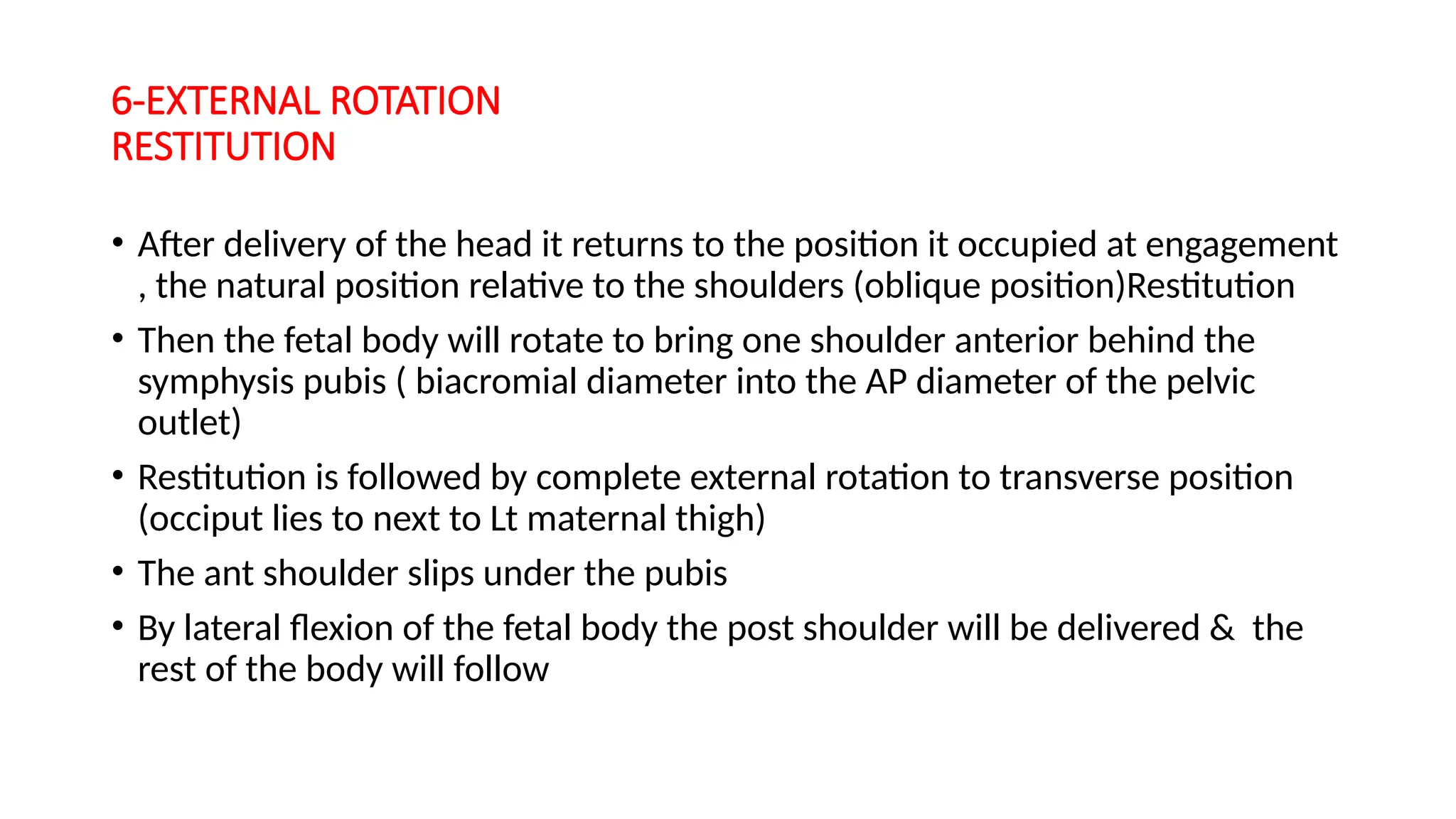
6-EXTERNAL ROTATION
RESTITUTION
• After delivery of the head it returns to the position it occupied at engagement
, the natural position relative to the shoulders (oblique position)Restitution
• Then the fetal body will rotate to bring one shoulder anterior behind the
symphysis pubis ( biacromial diameter into the AP diameter of the pelvic
outlet)
• Restitution is followed by complete external rotation to transverse position
(occiput lies to next to Lt maternal thigh)
• The ant shoulder slips under the pubis
• By lateral flexion of the fetal body the post shoulder will be delivered & the
rest of the body will follow
3
0
2
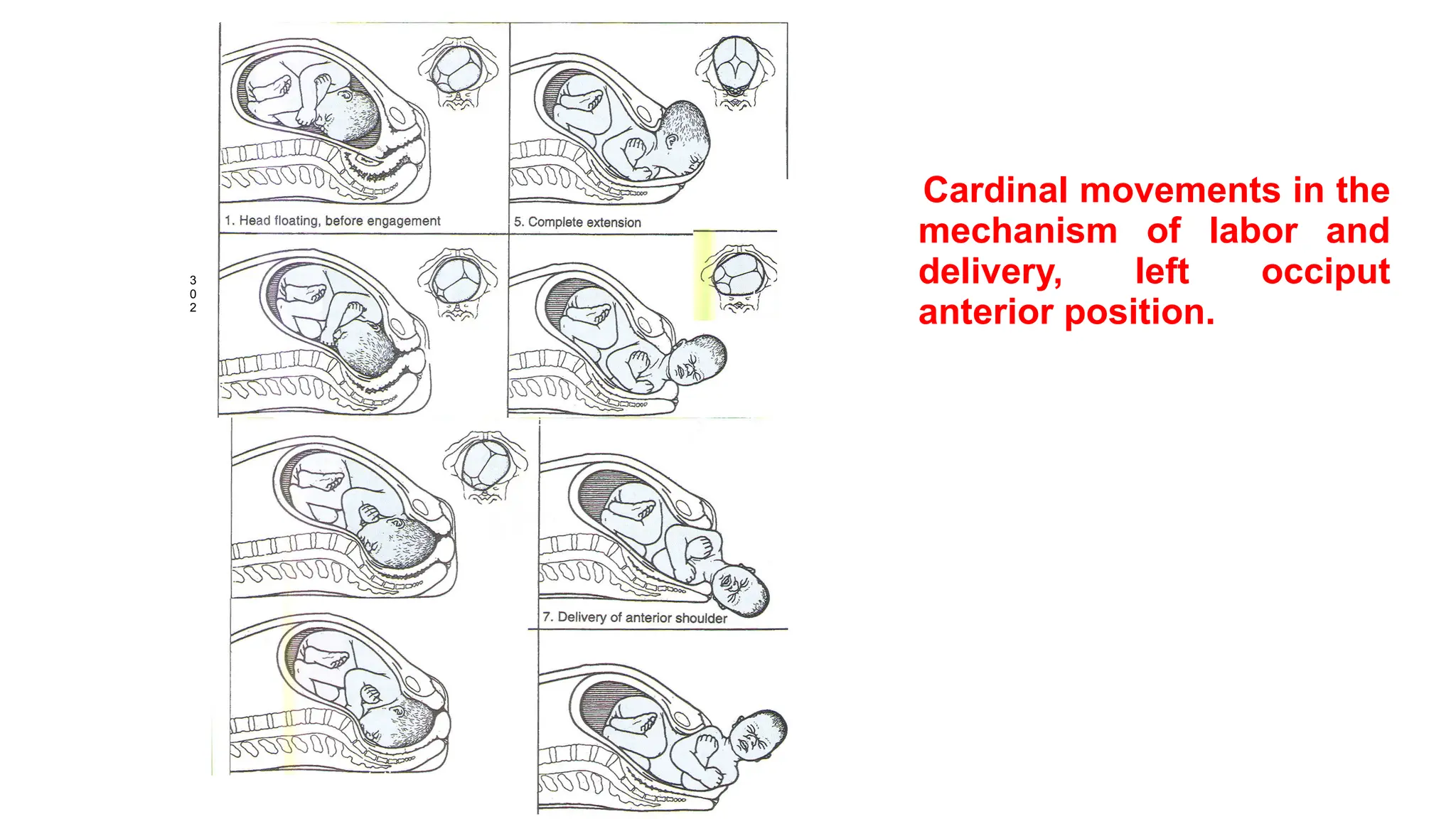
2.Engagement;descent, flexion 6. Restitution (external rotation)
3. Further descent, internal rotation
4. Complete rotation, beginning
extension
Cardinal movements in the
mechanism of labor and
delivery, left occiput
anterior position.
OCCIPUT POSTERIOR POSITION
• Mechanism of labour is identical to OT & anterior varieties
• Usually more longer.
• The occiput rotate to the symphysis pubis through 135º instead of 90º
or 45º
• If rotation does not occur direct occiput post (5-10%)or
Partial rotation transverse arrest
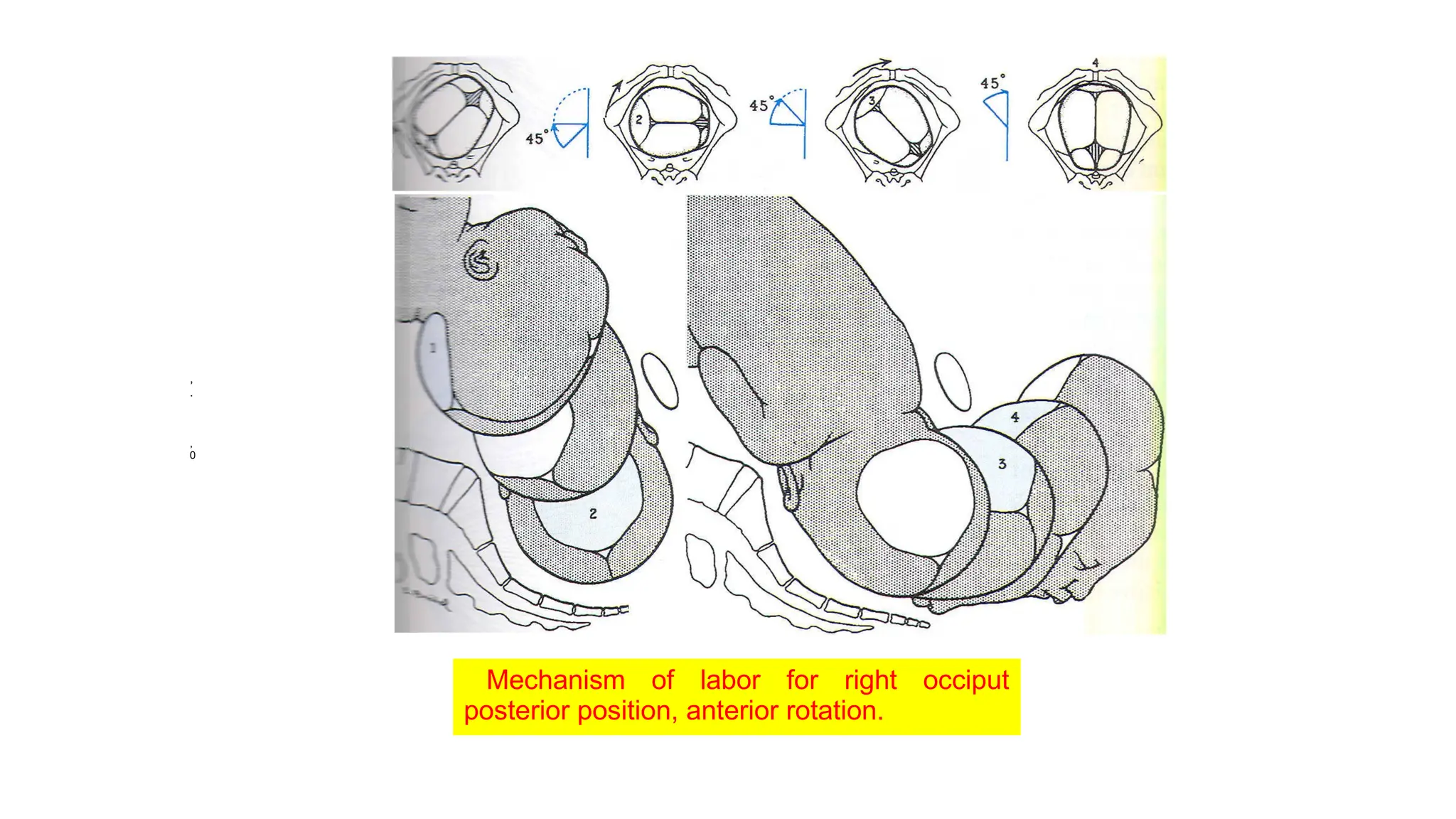
Mechanism of labor for right occiput
posterior position, anterior rotation.
,
.
,
0
THE MECHANISM OF LABOUR EDFIERE .pptx

  • 1.
  • 2.
    Lie, presentation, attitude,&position FETAL LIE • The relation of the long axis of the fetus to that of the mother 1-Longitudinal lie -99% of labors at term 2-transverse lie  multiparty, placenta previa, hydramnious, & uterine anomalies – uterine fibroid 3-oblique lie -maternal & fetal axes cross @ 45 angle -most unstable & become longitudinal Or transverse at labor.
  • 4.
    ATTITUDE or posture. Inlater months posture of the fetus folded on itself to accommodate the shape of the uterus (flexed head, thighs, knees &feet ,the arms crossed over the chest) Change from this flexed attitude can cause abnormal presentations
  • 5.
    . ' " ' I ! 1 1 1 A B ii F c D (A) vertex(B) sinciput (C) brow (D) face
  • 6.
    Fetal position The relationof a chosen point of the fetal presenting part to the Right or Left side of the maternal birth canal The chosen point • Vertex presentation  Occiput • Face presentation  Mentum • Breech presentation Sacrum Each presentation has two positions Right or Left Each position has 3 varieties : Ant, transverse, post OA OP LOT ROT LOA ROA LOP ROP
  • 8.
    Lie, presentation, attitude,&position CEPHALIC PRESENTATION • Head is flexed sharply  vertex / occiput presentation • Head is extended sharply  face presentation • Partially flexed  bregma presenting (sinciput presentation) • Partially extended  brow presentation BREECH PRESENTATION • Frank breech • Complete breech • Footling breech (incomplete breech)
  • 10.
    FREQUENCY OF VARIOUSPRESENTATIONS & POSITIONS AT TERM • Vertex  96% 2/3 Lt 1/3 Rt • Breech  3.5% • Face 0.3% • Shoulder 0.4%
  • 11.
    MECHANISM OF LABOURWITH OCCIPUT PRESENTATIONS THE CARDINAL MOVEMENTS OF LABOUR 1-ENGAGEMENT The greatest transverse diameter BPD passes through the pelvic inlet It may occur in the last few weeks of pregnancy or only in labour especially in multipara The fetus enters the pelvis in transverse or oblique diameter • LOT  40% • ROT 20% • OP 20% ROP >LOP • ROA / LOA 20%
  • 13.
    THE CARDINAL MOVEMENTSOF LABOUR 2-DESCENT • In nullipara engagement takes place before the onset of labour & further descent may not occur till the 2nd stage • In multipara descent begins with engagement • It is gradually progressive till the fetus is delivered • It is affected by the uterine contractions & thinning of the lower segment
  • 14.
    3-Flexion • The descendinghead meets resistance of pelvic floor, Cervix & walls of the pelvis   flexion • The shorter suboccipito-bregmatic is substituted for the longer occipito-frontal
  • 15.
    Lever action producingflexion of the head; conversion from occipito-frontal to suboccipito-bregmatic diameter typically reduces the antero-posterior (AP) diameter from nearly 12- to 9.5 cm.
  • 16.
    4-INTERNAL ROTATION • Turningof the head from the OT position  anteriorly towards the symphysis pubis ie. Occiput moves from transverse to ant 45º • Less commonly OT  posteriorly towards the sacrum 135º • It is not accomplished till the head has reached the iscial spines The levator ani muscles form a V shaped sling that tend to rotate the vertex anteriorly
  • 17.
    5-EXTENSION • When theflexed head reaches the vulva it undergoes extension  the base of the occiput will be in direct contact with the inferior margin of the symphysis pubis • Crowning  the largest diameter of the fetal head is encircled by the vulvar ring • The head is born by further extension as the occiput, bregma (ant.fontanelle), forehead, nose, mouth & chin pass successively over the perineum
  • 18.
    6-EXTERNAL ROTATION RESTITUTION • Afterdelivery of the head it returns to the position it occupied at engagement , the natural position relative to the shoulders (oblique position)Restitution • Then the fetal body will rotate to bring one shoulder anterior behind the symphysis pubis ( biacromial diameter into the AP diameter of the pelvic outlet) • Restitution is followed by complete external rotation to transverse position (occiput lies to next to Lt maternal thigh) • The ant shoulder slips under the pubis • By lateral flexion of the fetal body the post shoulder will be delivered & the rest of the body will follow
  • 19.
    3 0 2 2.Engagement;descent, flexion 6.Restitution (external rotation) 3. Further descent, internal rotation 4. Complete rotation, beginning extension Cardinal movements in the mechanism of labor and delivery, left occiput anterior position.
  • 20.
    OCCIPUT POSTERIOR POSITION •Mechanism of labour is identical to OT & anterior varieties • Usually more longer. • The occiput rotate to the symphysis pubis through 135º instead of 90º or 45º • If rotation does not occur direct occiput post (5-10%)or Partial rotation transverse arrest
  • 21.
    Mechanism of laborfor right occiput posterior position, anterior rotation. , . , 0