Androu Waheeb
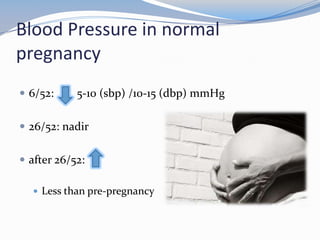
Blood Pressure in normal
pregnancy
 6/52:     5-10 (sbp) /10-15 (dbp) mmHg

 26/52: nadir


 after 26/52:

   Less than pre-pregnancy
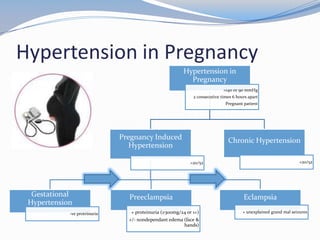
Hypertension in Pregnancy
                                                        Hypertension in
                                                          Pregnancy
                                                                            >140 or 90 mmHg
                                                             2 consecutive times 6 hours apart
                                                                             Pregnant patient


                              Pregnancy Induced                               Chronic Hypertension
                                 Hypertension

                                                           >20/52                                                 <20/52


  Gestational                   Preeclampsia                                          Eclampsia
 Hypertension
            -ve protrinuria      + proteinuria (≥300mg/24 or 1+)                      + unexplained grand mal seizures
                                +/- nondependant edema (face &
                                                       hands)
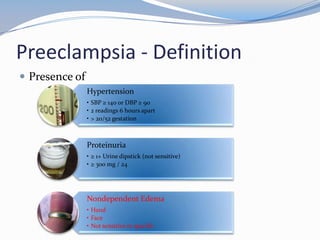
Preeclampsia - Definition
 Presence of
                Hypertension
                • SBP ≥ 140 or DBP ≥ 90
                • 2 readings 6 hours apart
                • > 20/52 gestation


                Proteinuria
                • ≥ 1+ Urine dipstick (not sensitive)
                • ≥ 300 mg / 24


                Nondependent Edema
                • Hand
                • Face
                • Not sensitive or specific
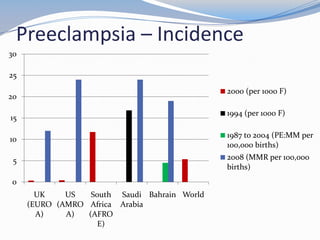
Preeclampsia – Incidence
30

25
                                              2000 (per 1000 F)
20

                                              1994 (per 1000 F)
15

                                              1987 to 2004 (PE:MM per
10
                                              100,000 births)
 5                                            2008 (MMR per 100,000
                                              births)
0
       UK    US   South Saudi Bahrain World
     (EURO (AMRO Africa Arabia
       A)    A)  (AFRO
                    E)
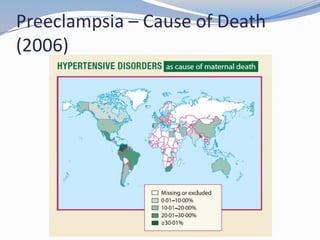
Preeclampsia – Cause of Death
(2006)
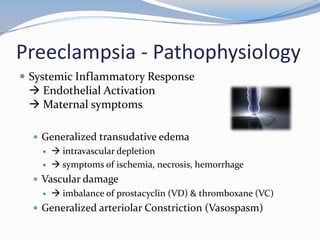
Preeclampsia - Pathophysiology
 Systemic Inflammatory Response
  Endothelial Activation
  Maternal symptoms

   Generalized transudative edema
        intravascular depletion
        symptoms of ischemia, necrosis, hemorrhage
   Vascular damage
        imbalance of prostacyclin (VD) & thromboxane (VC)
   Generalized arteriolar Constriction (Vasospasm)
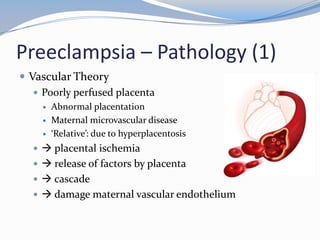
Preeclampsia – Pathology (1)
 Vascular Theory
    Poorly perfused placenta
       Abnormal placentation
       Maternal microvascular disease
       ‘Relative’: due to hyperplacentosis
    placental ischemia
    release of factors by placenta
    cascade
    damage maternal vascular endothelium
Preeclampsia – Pathology (2)
 Alloimmune Theory
    Sperm exposure
     mucous alloimmunization
     cascade (≈ classical inflammatory response)
     inhibition of placentation
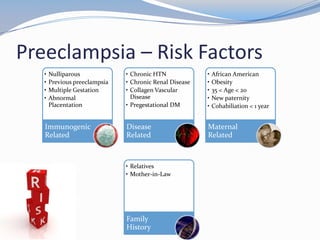
Preeclampsia – Risk Factors
   •   Nulliparous             • Chronic HTN             •   African American
   •   Previous preeclampsia   • Chronic Renal Disease   •   Obesity
   •   Multiple Gestation      • Collagen Vascular       •   35 < Age < 20
   •   Abnormal                  Disease                 •   New paternity
       Placentation            • Pregestational DM       •   Cohabiliation < 1 year


   Immunogenic                 Disease                   Maternal
   Related                     Related                   Related


                               • Relatives
                               • Mother-in-Law


                               Family
                               History
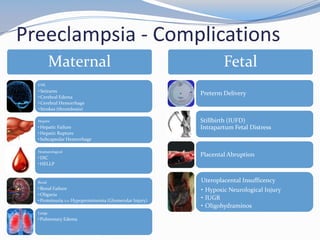
Preeclampsia - Complications
          Maternal                                               Fetal
  CNS
  • Seizures
                                                         Preterm Delivery
  • Cerebral Edema
  • Cerebral Hemorrhage
  • Strokes (thrombosis)

  Hepatic                                                Stillbirth (IUFD)
  • Hepatic Failure                                      Intrapartum Fetal Distress
  • Hepatic Rupture
  • Subcapsular Hemorrhage

  Heamatological
  • DIC
                                                         Placental Abruption
  • HELLP


  Renal                                                  Uteroplacental Insufficency
  • Renal Failure                                        • Hypoxic Neurological Injury
  • Oliguria
  • Proteinuria >> Hypoproteinemia (Glomerular Injury)   • IUGR
                                                         • Oligohydraminos
  Lungs
  • Pulmonary Edema
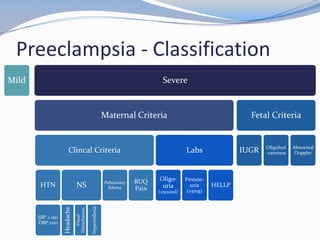
Preeclampsia - Classification
Mild                                                                             Severe


                                                             Maternal Criteria                                  Fetal Criteria


                                                                                                                     Oligohyd   Abnormal
                       Clincal Criteria                                                    Labs               IUGR   -raminos    Doppler


                                                                         RUQ    Oligo-     Protein-
                                                             Pulmonary
        HTN                   NS                               Edema     Pain    uria        uria     HELLP
                                                                                (≤500ml)   (≥5mg)
                                             Hyperreflexia
                   Headache

                              Disturbances
                                 Visual


       SBP ≥ 160
       DBP ≥110
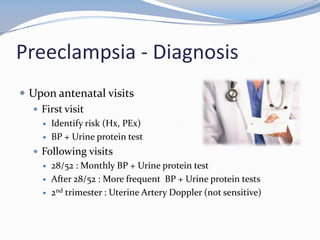
Preeclampsia - Diagnosis
 Upon antenatal visits
   First visit
       Identify risk (Hx, PEx)
       BP + Urine protein test
   Following visits
       28/52 : Monthly BP + Urine protein test
       After 28/52 : More frequent BP + Urine protein tests
       2nd trimester : Uterine Artery Doppler (not sensitive)
Preeclampsia - Management
                                                              • Fetal: 2qw
             • Close monitoring                                 • CTG
                                                                • US

Admission
               required                           Severity      • US Doppler: Umbilical + Cerebral
                                                 Assessment     • Liquor Assessment


             • Bloods
 IV Line     • Infusions                          Stabilize
                                                   Patient


             • Monitoring urine                               • Fluid Restriction (80ml/h)
               output and ease of                             • Decision based on severity +
 Urinary                                                        gestational age
 Catheter      24h urine collection               Therapy       • Mother is concern

             • Maternal
               • PEx
               • BP :15m, 30, 4qh
               • 24/24 Urinary Collection                     • Decision on date required
 Severity      • 2qw: FBC, Coag.                  Delivery
Assessment       Profile, LFT, serum(Cr), Uric
                 Acid
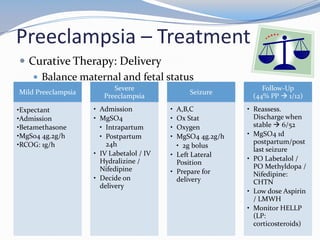
Preeclampsia – Treatment
 Curative Therapy: Delivery
    Balance maternal and fetal status
                          Severe                                Follow-Up
Mild Preeclampsia                              Seizure
                       Preeclampsia                          (44% PP  1/12)
•Expectant          • Admission           • A,B,C           • Reassess.
•Admission          • MgSO4               • Ox Stat           Discharge when
•Betamethasone        • Intrapartum       • Oxygen            stable  6/52
•MgSo4 4g.2g/h        • Postpartum        • MgSO4 4g.2g/h   • MgSO4 1d
•RCOG: 1g/h             24h                                   postpartum/post
                                            • 2g bolus
                                                              last seizure
                    • IV Labetalol / IV   • Left Lateral
                      Hydralizine /                         • PO Labetalol /
                                            Position
                      Nifedipine                              PO Methyldopa /
                                          • Prepare for       Nifedipine:
                    • Decide on             delivery          CHTN
                      delivery
                                                            • Low dose Aspirin
                                                              / LMWH
                                                            • Monitor HELLP
                                                              (LP:
                                                              corticosteroids)
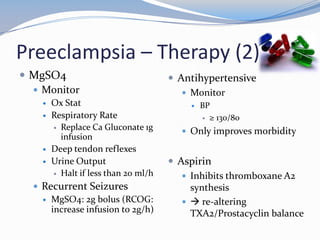
Preeclampsia – Therapy (2)
 MgSO4                                Antihypertensive
   Monitor                               Monitor
       Ox Stat                               BP
       Respiratory Rate                        ≥ 130/80
         Replace Ca Gluconate 1g
                                          Only improves morbidity
          infusion
       Deep tendon reflexes
       Urine Output                   Aspirin
         Halt if less than 20 ml/h
                                          Inhibits thromboxane A2
   Recurrent Seizures                     synthesis
     MgSO4: 2g bolus (RCOG:               re-altering
      increase infusion to 2g/h)           TXA2/Prostacyclin balance
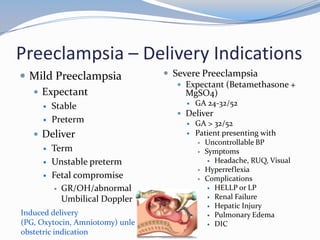
Preeclampsia – Delivery Indications
 Mild Preeclampsia                 Severe Preeclampsia
                                       Expectant (Betamethasone +
   Expectant                           MgSO4)
        Stable                            GA 24-32/52
                                       Deliver
        Preterm                           GA > 32/52
    Deliver                               Patient presenting with
                                               Uncontrollable BP
        Term                                  Symptoms
        Unstable preterm                         Headache, RUQ, Visual
                                               Hyperreflexia
        Fetal compromise                      Complications
          GR/OH/abnormal                         HELLP or LP
                                                  Renal Failure
           Umbilical Doppler
                                                  Hepatic Injury
Induced delivery                                  Pulmonary Edema
(PG, Oxytocin, Amniotomy) unless                  DIC
obstetric indication
Androu Waheeb

Preeclampsia

  • 1.
  • 2.
    Blood Pressure innormal pregnancy  6/52: 5-10 (sbp) /10-15 (dbp) mmHg  26/52: nadir  after 26/52:  Less than pre-pregnancy
  • 3.
    Hypertension in Pregnancy Hypertension in Pregnancy >140 or 90 mmHg 2 consecutive times 6 hours apart Pregnant patient Pregnancy Induced Chronic Hypertension Hypertension >20/52 <20/52 Gestational Preeclampsia Eclampsia Hypertension -ve protrinuria + proteinuria (≥300mg/24 or 1+) + unexplained grand mal seizures +/- nondependant edema (face & hands)
  • 4.
    Preeclampsia - Definition Presence of Hypertension • SBP ≥ 140 or DBP ≥ 90 • 2 readings 6 hours apart • > 20/52 gestation Proteinuria • ≥ 1+ Urine dipstick (not sensitive) • ≥ 300 mg / 24 Nondependent Edema • Hand • Face • Not sensitive or specific
  • 5.
    Preeclampsia – Incidence 30 25 2000 (per 1000 F) 20 1994 (per 1000 F) 15 1987 to 2004 (PE:MM per 10 100,000 births) 5 2008 (MMR per 100,000 births) 0 UK US South Saudi Bahrain World (EURO (AMRO Africa Arabia A) A) (AFRO E)
  • 6.
    Preeclampsia – Causeof Death (2006)
  • 7.
    Preeclampsia - Pathophysiology Systemic Inflammatory Response  Endothelial Activation  Maternal symptoms  Generalized transudative edema   intravascular depletion   symptoms of ischemia, necrosis, hemorrhage  Vascular damage   imbalance of prostacyclin (VD) & thromboxane (VC)  Generalized arteriolar Constriction (Vasospasm)
  • 8.
    Preeclampsia – Pathology(1)  Vascular Theory  Poorly perfused placenta  Abnormal placentation  Maternal microvascular disease  ‘Relative’: due to hyperplacentosis   placental ischemia   release of factors by placenta   cascade   damage maternal vascular endothelium
  • 9.
    Preeclampsia – Pathology(2)  Alloimmune Theory  Sperm exposure   mucous alloimmunization   cascade (≈ classical inflammatory response)   inhibition of placentation
  • 10.
    Preeclampsia – RiskFactors • Nulliparous • Chronic HTN • African American • Previous preeclampsia • Chronic Renal Disease • Obesity • Multiple Gestation • Collagen Vascular • 35 < Age < 20 • Abnormal Disease • New paternity Placentation • Pregestational DM • Cohabiliation < 1 year Immunogenic Disease Maternal Related Related Related • Relatives • Mother-in-Law Family History
  • 11.
    Preeclampsia - Complications Maternal Fetal CNS • Seizures Preterm Delivery • Cerebral Edema • Cerebral Hemorrhage • Strokes (thrombosis) Hepatic Stillbirth (IUFD) • Hepatic Failure Intrapartum Fetal Distress • Hepatic Rupture • Subcapsular Hemorrhage Heamatological • DIC Placental Abruption • HELLP Renal Uteroplacental Insufficency • Renal Failure • Hypoxic Neurological Injury • Oliguria • Proteinuria >> Hypoproteinemia (Glomerular Injury) • IUGR • Oligohydraminos Lungs • Pulmonary Edema
  • 12.
    Preeclampsia - Classification Mild Severe Maternal Criteria Fetal Criteria Oligohyd Abnormal Clincal Criteria Labs IUGR -raminos Doppler RUQ Oligo- Protein- Pulmonary HTN NS Edema Pain uria uria HELLP (≤500ml) (≥5mg) Hyperreflexia Headache Disturbances Visual SBP ≥ 160 DBP ≥110
  • 13.
    Preeclampsia - Diagnosis Upon antenatal visits  First visit  Identify risk (Hx, PEx)  BP + Urine protein test  Following visits  28/52 : Monthly BP + Urine protein test  After 28/52 : More frequent BP + Urine protein tests  2nd trimester : Uterine Artery Doppler (not sensitive)
  • 14.
    Preeclampsia - Management • Fetal: 2qw • Close monitoring • CTG • US Admission required Severity • US Doppler: Umbilical + Cerebral Assessment • Liquor Assessment • Bloods IV Line • Infusions Stabilize Patient • Monitoring urine • Fluid Restriction (80ml/h) output and ease of • Decision based on severity + Urinary gestational age Catheter 24h urine collection Therapy • Mother is concern • Maternal • PEx • BP :15m, 30, 4qh • 24/24 Urinary Collection • Decision on date required Severity • 2qw: FBC, Coag. Delivery Assessment Profile, LFT, serum(Cr), Uric Acid
  • 15.
    Preeclampsia – Treatment Curative Therapy: Delivery  Balance maternal and fetal status Severe Follow-Up Mild Preeclampsia Seizure Preeclampsia (44% PP  1/12) •Expectant • Admission • A,B,C • Reassess. •Admission • MgSO4 • Ox Stat Discharge when •Betamethasone • Intrapartum • Oxygen stable  6/52 •MgSo4 4g.2g/h • Postpartum • MgSO4 4g.2g/h • MgSO4 1d •RCOG: 1g/h 24h postpartum/post • 2g bolus last seizure • IV Labetalol / IV • Left Lateral Hydralizine / • PO Labetalol / Position Nifedipine PO Methyldopa / • Prepare for Nifedipine: • Decide on delivery CHTN delivery • Low dose Aspirin / LMWH • Monitor HELLP (LP: corticosteroids)
  • 16.
    Preeclampsia – Therapy(2)  MgSO4  Antihypertensive  Monitor  Monitor  Ox Stat  BP  Respiratory Rate  ≥ 130/80  Replace Ca Gluconate 1g  Only improves morbidity infusion  Deep tendon reflexes  Urine Output  Aspirin  Halt if less than 20 ml/h  Inhibits thromboxane A2  Recurrent Seizures synthesis  MgSO4: 2g bolus (RCOG:   re-altering increase infusion to 2g/h) TXA2/Prostacyclin balance
  • 17.
    Preeclampsia – DeliveryIndications  Mild Preeclampsia  Severe Preeclampsia  Expectant (Betamethasone +  Expectant MgSO4)  Stable  GA 24-32/52  Deliver  Preterm  GA > 32/52  Deliver  Patient presenting with  Uncontrollable BP  Term  Symptoms  Unstable preterm  Headache, RUQ, Visual  Hyperreflexia  Fetal compromise  Complications  GR/OH/abnormal  HELLP or LP  Renal Failure Umbilical Doppler  Hepatic Injury Induced delivery  Pulmonary Edema (PG, Oxytocin, Amniotomy) unless  DIC obstetric indication
  • 18.

Editor's Notes

  • #3 Progesterone vasodilation  decreased systemic vascular resistance  decreased BP
  • #4 HTN in pregnancy: BP&gt;=140/90 2x 6/24 apart &gt; 20/52PIH: develops due to pregnancy, regresses postpartumPaggrevatedH: underlying HTN worsened by pregnncy
  • #5 Proteinura: &gt;300mg protein in urine
  • #10 Mucosal alloimmunizationCellular cascade &amp; molecular events resemble classical inflammatory responseNo immune tolerance  no placentation
  • #15 Biochem: LDH raised  heamolysisLFT: AST &gt;75 iu/l  liver damageUS: Abdominal Circ (Asymmetrical IUGR)Uri c Acid: increases mortality
  • #16 RCOG: 1g/h MgSO4; recurrent increase to 2Goal of severe preeclampsia: prevent eclampsia, control bp, dliverLabetalol: iv/po. B and a blockade. Hydralizine: VasodilatorPlacental antigens increase in labor and delivery  increased risk postpartum seizuresAspirin: 25% recurrent. Prevents it. 70% if CHTN. Prior and during new pregnancy