Mechanical
Ventilation
Primer
Firas Rabi, MD
Indications
 Airway Compromise
 Airway patency is in doubt
 Loss of gag or cough reflex
 Respiratory Failure
 Hypoxemic – generally, PaO2 ≤ 60 mmHg
 Needs help oxygenating
 Hypercarbic – generally, PaCO2 ≥ 50 mmHg
 Needs help ventilating
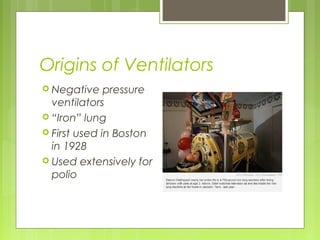
Origins of Ventilators
 Negative pressure
ventilators
 “Iron” lung
 First used in Boston
in 1928
 Used extensively for
polio
Mechanical Ventilators
 Depend on place of employment
 All have similar ventilator patterns, but
may call them different names
 ALL MODES ARE HARMFUL TO THE LUNG 
Goal is always to extubate ASAP.
Alveoli (cartoon)
Alveoli (actual)
Servo 300
Servo i
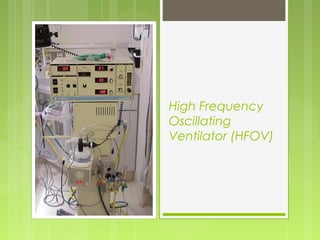
High Frequency
Oscillating
Ventilator (HFOV)
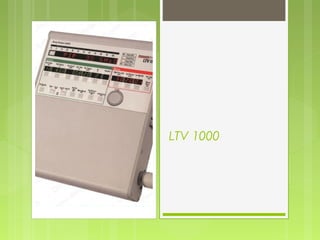
LTV 1000
Ventilator Terminology
 A/C – Assist/Control
 IMV – Intermittent mechanical ventilation
 SIMV – Synchronized IMV
 PRVC – Pressure regulated, volume
control
 PEEP – Positive end-expiratory pressure
 CPAP
 NIPPV
Volume vs. Pressure
 Volume control – tidal volume is constant,
pressure will vary
 Pressure control – pressure is constant,
tidal volume will change based on lung
compliance
Pulmonary Compliance
 Compliance = Volume/Pressure
 This equation is worth memorizing since it
provides the basis for understanding
pulmonary and ventilator interactions
Modes of Ventilation
Control Mode
 Each breath has a pre-set volume, time,
and flow rate
 Patient cannot generate spontaneous
breaths
Assist/Control Mode
 Each breath has a pre-set volume, time,
and flow rate
 Each patient generated respiratory effort
over and above the set rate are delivered
at the set volume and flow rate
Pressure Control
 If the pressure is set at PC 16 above PEEP
of 4, then the ventilator will deliver a top
pressure (peak pressure) of 20 (PC level of
16 plus PEEP) with an end pressure of 4.
 This keeps the airways slightly open,
making it easier to inflate them, and helps
prevent collapse and consolidation
SIMV
 Each breath has a pre-set volume, time,
and flow rate
 Allows patient to generate own breaths
with own volumes and flow rates
 If patient initiates a breath, machine will
not initiate a ventilator breath  no
breath stacking
PRVC
 Each breath is volume controlled (you set
the tidal volume)
 The machine decides how much pressure
to use to deliver that tidal volume based
on the required pressures for previous 2-3
breaths
PRVC
 You get to limit the amount of pressure
used to deliver the volume. If this pressure
is reached, the ventilator will alarm
“regulation pressure limited”, switch to
expiration, and will not be able to deliver
the preset tidal volume
Automode (only in servo i)
 Automatically controls the transition
between controlled (vent triggered) and
support (patient triggered) mode in
accordance with patient’s effort
 PC  PS
 VC  VS
 PRVC  VS
Pressure Support
 Each patient-initiated breath is supported
by the machine
Combo modes
 SIMV VC with PS
 SIMV PC with PS
 SIMV/PRVC with PS
PEEP
 Not a specific mode but rather an
adjunct to any of the other modes
 PEEP is the amount of pressure remaining
in the lung at the END of the expiratory
phase.
 Utilized to keep otherwise collapsing lung
units open while hopefully also improving
oxygenation
Improving oxygenation
 FiO2
 Simplest maneuver
 Free radical damage with prolonged
exposure to > 60%
 PEEP
 Reverses pulmonary shunting
 Atelectasis, pneumonia, ARDS, CHF,
pulmonary hemorrhage
PEEP Side-effects
 Barotrauma
 Diminished cardiac output
 Regional hypoperfusion
CPAP
 This IS a mode and simply means that a
pre-set pressure is present in the circuit
and lungs throughout both the inspiratory
and expiratory phases of the breath
 CPAP serves to keep alveoli from
collapsing, resulting in better oxygenation
and less WOB
CPAP
 The CPAP mode is very commonly used as
a mode to evaluate the patients
readiness for extubation
CPAP vs. BiPAP
 CPAP is essentially PEEP
 BiPAP is PEEP plus pressure support
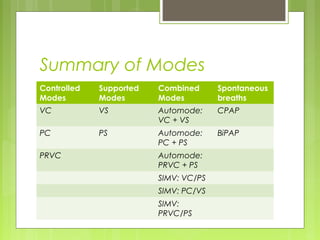
Summary of Modes
Controlled
Modes
Supported
Modes
Combined
Modes
Spontaneous
breaths
VC VS Automode:
VC + VS
CPAP
PC PS Automode:
PC + PS
BiPAP
PRVC Automode:
PRVC + PS
SIMV: VC/PS
SIMV: PC/VS
SIMV:
PRVC/PS
Initial Settings
 Decide on mode
 Rate based on age
 Infants  30
 Children  20
 Adolescents  10
 Most can start with tidal volume of 6mL/kg
 PEEP of 5
Inspiratory Trigger
 Normally set automatically
 Two modes
 Airway pressure
 Flow triggering
I:E Ratio
 Normally 1:2
 Asthma 1:3 or 1:4
 Severe hypoxia 1:1 or 2:1 (inverse ratio)
FiO2
 Start 100%
 Target lowest possible for PaO2 >
60mmHg or sat > 90%
High Frequency
Ventilation
Oxygenation in HFOV
 Oxygenation is primarily controlled by the
Mean Airway Pressure (Paw) and the FiO2
 Mean Airway Pressure is a constant
pressure used to inflate the lung and hold
the alveoli open.
 Since the Paw is constant, it reduces the
injury that results from cycling the lung
open for each breath
Ventilation in HFOV
 Generally controlled by frequency
 Increased frequency reduces amount of
time for exhalation, so leads to decreased
ventilation
↑ Hz  ↑ pCO2
 Increased amplitude/power will increase
ventilation
 Not usually the primary reason for using
HFOV
Troubleshooting
 Sudden deterioration
 Disconnection
 Obstruction
 Pneumothorax
 Equipment failure
 Anxious patient
 Appropriate mode
 Trigger set appropriately
Troubleshooting
 Call the respiratory therapist
Thank You
 Questions

Mechanical ventilation

  • 1.
  • 2.
    Indications  Airway Compromise Airway patency is in doubt  Loss of gag or cough reflex  Respiratory Failure  Hypoxemic – generally, PaO2 ≤ 60 mmHg  Needs help oxygenating  Hypercarbic – generally, PaCO2 ≥ 50 mmHg  Needs help ventilating
  • 3.
    Origins of Ventilators Negative pressure ventilators  “Iron” lung  First used in Boston in 1928  Used extensively for polio
  • 4.
    Mechanical Ventilators  Dependon place of employment  All have similar ventilator patterns, but may call them different names  ALL MODES ARE HARMFUL TO THE LUNG  Goal is always to extubate ASAP.
  • 5.
  • 6.
  • 7.
  • 8.
  • 9.
  • 10.
  • 11.
    Ventilator Terminology  A/C– Assist/Control  IMV – Intermittent mechanical ventilation  SIMV – Synchronized IMV  PRVC – Pressure regulated, volume control  PEEP – Positive end-expiratory pressure  CPAP  NIPPV
  • 12.
    Volume vs. Pressure Volume control – tidal volume is constant, pressure will vary  Pressure control – pressure is constant, tidal volume will change based on lung compliance
  • 13.
    Pulmonary Compliance  Compliance= Volume/Pressure  This equation is worth memorizing since it provides the basis for understanding pulmonary and ventilator interactions
  • 14.
  • 15.
    Control Mode  Eachbreath has a pre-set volume, time, and flow rate  Patient cannot generate spontaneous breaths
  • 16.
    Assist/Control Mode  Eachbreath has a pre-set volume, time, and flow rate  Each patient generated respiratory effort over and above the set rate are delivered at the set volume and flow rate
  • 17.
    Pressure Control  Ifthe pressure is set at PC 16 above PEEP of 4, then the ventilator will deliver a top pressure (peak pressure) of 20 (PC level of 16 plus PEEP) with an end pressure of 4.  This keeps the airways slightly open, making it easier to inflate them, and helps prevent collapse and consolidation
  • 18.
    SIMV  Each breathhas a pre-set volume, time, and flow rate  Allows patient to generate own breaths with own volumes and flow rates  If patient initiates a breath, machine will not initiate a ventilator breath  no breath stacking
  • 19.
    PRVC  Each breathis volume controlled (you set the tidal volume)  The machine decides how much pressure to use to deliver that tidal volume based on the required pressures for previous 2-3 breaths
  • 20.
    PRVC  You getto limit the amount of pressure used to deliver the volume. If this pressure is reached, the ventilator will alarm “regulation pressure limited”, switch to expiration, and will not be able to deliver the preset tidal volume
  • 21.
    Automode (only inservo i)  Automatically controls the transition between controlled (vent triggered) and support (patient triggered) mode in accordance with patient’s effort  PC  PS  VC  VS  PRVC  VS
  • 22.
    Pressure Support  Eachpatient-initiated breath is supported by the machine
  • 23.
    Combo modes  SIMVVC with PS  SIMV PC with PS  SIMV/PRVC with PS
  • 24.
    PEEP  Not aspecific mode but rather an adjunct to any of the other modes  PEEP is the amount of pressure remaining in the lung at the END of the expiratory phase.  Utilized to keep otherwise collapsing lung units open while hopefully also improving oxygenation
  • 25.
    Improving oxygenation  FiO2 Simplest maneuver  Free radical damage with prolonged exposure to > 60%  PEEP  Reverses pulmonary shunting  Atelectasis, pneumonia, ARDS, CHF, pulmonary hemorrhage
  • 26.
    PEEP Side-effects  Barotrauma Diminished cardiac output  Regional hypoperfusion
  • 27.
    CPAP  This ISa mode and simply means that a pre-set pressure is present in the circuit and lungs throughout both the inspiratory and expiratory phases of the breath  CPAP serves to keep alveoli from collapsing, resulting in better oxygenation and less WOB
  • 28.
    CPAP  The CPAPmode is very commonly used as a mode to evaluate the patients readiness for extubation
  • 29.
    CPAP vs. BiPAP CPAP is essentially PEEP  BiPAP is PEEP plus pressure support
  • 30.
    Summary of Modes Controlled Modes Supported Modes Combined Modes Spontaneous breaths VCVS Automode: VC + VS CPAP PC PS Automode: PC + PS BiPAP PRVC Automode: PRVC + PS SIMV: VC/PS SIMV: PC/VS SIMV: PRVC/PS
  • 31.
    Initial Settings  Decideon mode  Rate based on age  Infants  30  Children  20  Adolescents  10  Most can start with tidal volume of 6mL/kg  PEEP of 5
  • 32.
    Inspiratory Trigger  Normallyset automatically  Two modes  Airway pressure  Flow triggering
  • 33.
    I:E Ratio  Normally1:2  Asthma 1:3 or 1:4  Severe hypoxia 1:1 or 2:1 (inverse ratio)
  • 34.
    FiO2  Start 100% Target lowest possible for PaO2 > 60mmHg or sat > 90%
  • 35.
  • 36.
    Oxygenation in HFOV Oxygenation is primarily controlled by the Mean Airway Pressure (Paw) and the FiO2  Mean Airway Pressure is a constant pressure used to inflate the lung and hold the alveoli open.  Since the Paw is constant, it reduces the injury that results from cycling the lung open for each breath
  • 37.
    Ventilation in HFOV Generally controlled by frequency  Increased frequency reduces amount of time for exhalation, so leads to decreased ventilation ↑ Hz  ↑ pCO2  Increased amplitude/power will increase ventilation  Not usually the primary reason for using HFOV
  • 38.
    Troubleshooting  Sudden deterioration Disconnection  Obstruction  Pneumothorax  Equipment failure  Anxious patient  Appropriate mode  Trigger set appropriately
  • 39.
    Troubleshooting  Call therespiratory therapist
  • 40.