MECHANICAL VENTILATION
Capt Femi
What is….
 Mechanical ventilation is a therapeutic method that is to
assist or replace spontaneous breathing.
 It is any means in which physical devices or machines are
used to assist or replace spontaneous breathing.
Indications….
Acute respiratory failure
Prophylactic ventilatory support
Hyperventilation
Acute Respiratory Failure
 Perfusion mismatch
 Right to left shunt
 Alveolar hypoventilation
 Decreased inspired oxygen
 Tissue hypoxia
 Example : CNS disorders, Neuro-muscular disorders
pleural occupying lesions,
Prophylactic support
 Suspected risk of future respiratory failure
 Its instituted to
 decrease the WOB
Minimize hypoxemia
Reduce cardiopulmonary stress
Control airway with sedation.
Hyperventilation therapy
 Ventilator support meant to control and manipulate
paCO2 to lower than normal levels.
- Head injury.
Types ….
Negative pressure ventilation: pressure
lower than atmospheric pressure is
applied to extra thoracic space during the
inspiration.
Positive pressure ventilation: pressure
higher than atmospheric pressure is
applied to the intra alveolar space during
inspiration.
Negative v/s Positive
Major Advantages
 Negative pressure : Non –invasive
No need for sedation
Patient able to eat & drink
 Positive pressure : Higher levels of FiO2
individualized treatment
full ventilator support.
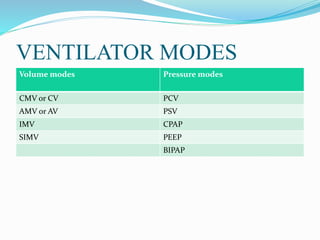
VENTILATOR MODES
Volume modes Pressure modes
CMV or CV PCV
AMV or AV PSV
IMV CPAP
SIMV PEEP
BIPAP
Ventilator Modes
 Assist control: all breaths once triggered, are treated
the same, and have a consistent TV.
 SIMV: mandatory breaths are synchronised with
spontaneous breaths.
 Pressure control ventilation: patient unable to trigger
the ventilator.
 Pressure support ventilation: no mandatory breaths.
Assist or Control Mode
 Delivers a preset volume at a preset rate and a preset
flow rate
 The patient cannot generate spontaneous volume, or
floe rate
 Volume or Pressure control mode
parameters: V/P ,Rate, FiO2.
Synchronized Intermittent
Mandatory Ventilation.
 Delivers a preset no of breaths at a set volume and rate.
 Allows the patient to generate spontaneous breaths,
volumes, and flow rate between the set breaths.
 Detects patient’s spontaneous breaths .
 Works well as weaning mode.
Positive end expiratory pressure
 This is not a specific mode
 It is the amount of pressure remaining in the lung at
the end of expiratory phase.
 Improving oxygenation and prevents lung collapse.
 Usually 5-10 cmH2O
NIV-PPV
 Delivering O2 enriched gas under pressure without
endo tracheal intubation.
 Usually providing with tight fitting face mask
1. CPAP
2.BPAP
In both a preset positive pressure is applied during
inspiration and lower pressure is applied during
expiration at the mask.
Indications for NPPV
 Obstructive sleep apnea
 Neuromuscular disease
 Weaning from ventilator
 In immuno-compromised state.
CPAP
 A preset pressure is present in the circuit and lungs
throughout both the inspiratory and expiratory phases
of the breath.
 CPAP serves to keep alveoli from collapsing , better
oxygenation and less WOB
 Commonly used to evaluate the patients readiness for
extubation.
Intubation procedure
 Confirmation by
Auscultation
Bilateral chest rise
Length of the tube
 spO2 monitoring
Initiation of mechanical ventilation
 Initial setting
- Tidal volume 4-7ml/kg
- Respiratory rate 8-12 breaths/min
- Minute ventilation Tv*f
- PEEP 3-8 cmH2O
- FiO2 40%-100%
- Inspiratory flow
- set PEEP
-Inspiratory time
Monitoring
ABG : keep acid/base balance within normal range
pH 7.35-7.45 , pCO2: 35-45, pO2: 80-100mmHg
 spO2
 Hemodynamic status
 Need of sedation
Alarm settings…
 Low tidal volume: system leak, circuit disconnection
 High minute ventilation : 10-15% above set data
 High respiratory rate : above 16 breaths per minute
 High inspiratory pressure: kinking,water,secretions
 High/low FiO2 alarm
 Apnea alarm: less than 8 breaths per minute
Protective lung ventilation
 Tidal volume close to 6ml/kg body weight
 Lowest spO2 90%
 PEEP to maintain alveolar patency
 Sedation and analgesia
 DVT prophylaxis
 Bed sore prevention
 Nutrition
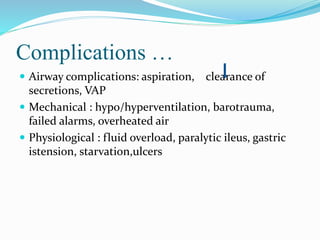
Complications …
 Airway complications: aspiration, clearance of
secretions, VAP
 Mechanical : hypo/hyperventilation, barotrauma,
failed alarms, overheated air
 Physiological : fluid overload, paralytic ileus, gastric
istension, starvation,ulcers
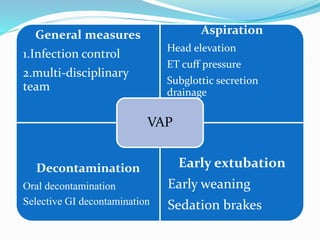
General measures
1.Infection control
2.multi-disciplinary
team
Aspiration
Head elevation
ET cuff pressure
Subglottic secretion
drainage
Decontamination
Oral decontamination
Selective GI decontamination
Early extubation
Early weaning
Sedation brakes
VAP
Nursing care
 Assess the patient
 Assess the artificial airway
 Assess the ventilator
 Assist in weaning

MECHANICAL VENTILATION.pptx

  • 1.
  • 2.
    What is….  Mechanicalventilation is a therapeutic method that is to assist or replace spontaneous breathing.  It is any means in which physical devices or machines are used to assist or replace spontaneous breathing.
  • 3.
    Indications…. Acute respiratory failure Prophylacticventilatory support Hyperventilation
  • 4.
    Acute Respiratory Failure Perfusion mismatch  Right to left shunt  Alveolar hypoventilation  Decreased inspired oxygen  Tissue hypoxia  Example : CNS disorders, Neuro-muscular disorders pleural occupying lesions,
  • 5.
    Prophylactic support  Suspectedrisk of future respiratory failure  Its instituted to  decrease the WOB Minimize hypoxemia Reduce cardiopulmonary stress Control airway with sedation.
  • 6.
    Hyperventilation therapy  Ventilatorsupport meant to control and manipulate paCO2 to lower than normal levels. - Head injury.
  • 7.
    Types …. Negative pressureventilation: pressure lower than atmospheric pressure is applied to extra thoracic space during the inspiration. Positive pressure ventilation: pressure higher than atmospheric pressure is applied to the intra alveolar space during inspiration.
  • 8.
    Negative v/s Positive MajorAdvantages  Negative pressure : Non –invasive No need for sedation Patient able to eat & drink  Positive pressure : Higher levels of FiO2 individualized treatment full ventilator support.
  • 9.
    VENTILATOR MODES Volume modesPressure modes CMV or CV PCV AMV or AV PSV IMV CPAP SIMV PEEP BIPAP
  • 10.
    Ventilator Modes  Assistcontrol: all breaths once triggered, are treated the same, and have a consistent TV.  SIMV: mandatory breaths are synchronised with spontaneous breaths.  Pressure control ventilation: patient unable to trigger the ventilator.  Pressure support ventilation: no mandatory breaths.
  • 11.
    Assist or ControlMode  Delivers a preset volume at a preset rate and a preset flow rate  The patient cannot generate spontaneous volume, or floe rate  Volume or Pressure control mode parameters: V/P ,Rate, FiO2.
  • 12.
    Synchronized Intermittent Mandatory Ventilation. Delivers a preset no of breaths at a set volume and rate.  Allows the patient to generate spontaneous breaths, volumes, and flow rate between the set breaths.  Detects patient’s spontaneous breaths .  Works well as weaning mode.
  • 13.
    Positive end expiratorypressure  This is not a specific mode  It is the amount of pressure remaining in the lung at the end of expiratory phase.  Improving oxygenation and prevents lung collapse.  Usually 5-10 cmH2O
  • 14.
    NIV-PPV  Delivering O2enriched gas under pressure without endo tracheal intubation.  Usually providing with tight fitting face mask 1. CPAP 2.BPAP In both a preset positive pressure is applied during inspiration and lower pressure is applied during expiration at the mask.
  • 15.
    Indications for NPPV Obstructive sleep apnea  Neuromuscular disease  Weaning from ventilator  In immuno-compromised state.
  • 16.
    CPAP  A presetpressure is present in the circuit and lungs throughout both the inspiratory and expiratory phases of the breath.  CPAP serves to keep alveoli from collapsing , better oxygenation and less WOB  Commonly used to evaluate the patients readiness for extubation.
  • 17.
    Intubation procedure  Confirmationby Auscultation Bilateral chest rise Length of the tube  spO2 monitoring
  • 18.
    Initiation of mechanicalventilation  Initial setting - Tidal volume 4-7ml/kg - Respiratory rate 8-12 breaths/min - Minute ventilation Tv*f - PEEP 3-8 cmH2O - FiO2 40%-100% - Inspiratory flow - set PEEP -Inspiratory time
  • 19.
    Monitoring ABG : keepacid/base balance within normal range pH 7.35-7.45 , pCO2: 35-45, pO2: 80-100mmHg  spO2  Hemodynamic status  Need of sedation
  • 20.
    Alarm settings…  Lowtidal volume: system leak, circuit disconnection  High minute ventilation : 10-15% above set data  High respiratory rate : above 16 breaths per minute  High inspiratory pressure: kinking,water,secretions  High/low FiO2 alarm  Apnea alarm: less than 8 breaths per minute
  • 21.
    Protective lung ventilation Tidal volume close to 6ml/kg body weight  Lowest spO2 90%  PEEP to maintain alveolar patency  Sedation and analgesia  DVT prophylaxis  Bed sore prevention  Nutrition
  • 22.
    Complications …  Airwaycomplications: aspiration, clearance of secretions, VAP  Mechanical : hypo/hyperventilation, barotrauma, failed alarms, overheated air  Physiological : fluid overload, paralytic ileus, gastric istension, starvation,ulcers
  • 23.
    General measures 1.Infection control 2.multi-disciplinary team Aspiration Headelevation ET cuff pressure Subglottic secretion drainage Decontamination Oral decontamination Selective GI decontamination Early extubation Early weaning Sedation brakes VAP
  • 24.
    Nursing care  Assessthe patient  Assess the artificial airway  Assess the ventilator  Assist in weaning