Mechanical Project Presentation
 Represented by:
 Abdullah Alghamdi
Ahmed Alzahrani
Faisal Alzahrani
• Type of rotating equipment
• Type of inspection for rotating equipment
• Type of tools & instruments used for rotating equipment
• Code and standards
Outline
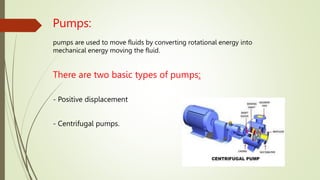
Pumps:
pumps are used to move fluids by converting rotational energy into
mechanical energy moving the fluid.
There are two basic types of pumps:
- Positive displacement
- Centrifugal pumps.
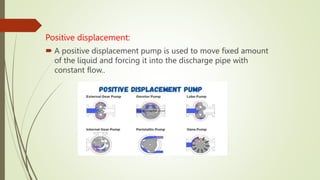
Positive displacement:
 A positive displacement pump is used to move fixed amount
of the liquid and forcing it into the discharge pipe with
constant flow..
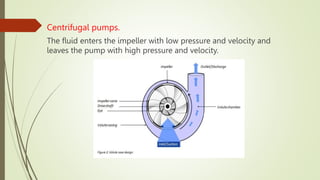
Centrifugal pumps.
The fluid enters the impeller with low pressure and velocity and
leaves the pump with high pressure and velocity.
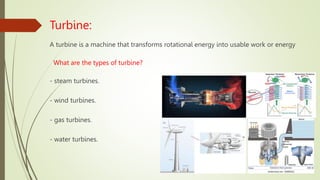
Turbine:
A turbine is a machine that transforms rotational energy into usable work or energy
What are the types of turbine?
- steam turbines.
- wind turbines.
- gas turbines.
- water turbines.
Blowers:
Blower is device used to increase the velocity of air or gas when pass through
it.
What are the main parts of a blower?
- Motor
- Fan wheel or impeller
- Housing
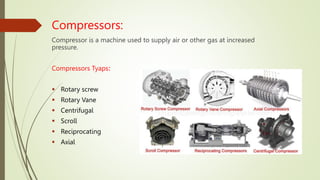
Compressors:
Compressor is a machine used to supply air or other gas at increased
pressure.
Compressors Tyaps:
 Rotary screw
 Rotary Vane
 Centrifugal
 Scroll
 Reciprocating
 Axial
Types of inspection for Rotating
equipment.
INSPECTION OF ROTATING EQUIPMENT
COMPONENTS
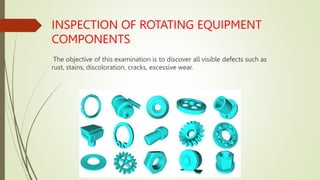
The objective of this examination is to discover all visible defects such as
rust, stains, discoloration, cracks, excessive wear.
Inspection Specification:
- An Inspection Specification is a specification that defines how a factor, an
element or a measure of a process, function, product, service or other object
is to be inspected.
visual inspections
Even visual inspections can be used to determine wear and tear on the
exterior of your equipment, which can be an indicator of what the inside
looks like.
Types of tools used for rotating equipment
inspection.
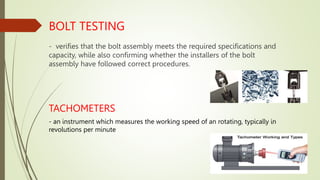
BOLT TESTING
- verifies that the bolt assembly meets the required specifications and
capacity, while also confirming whether the installers of the bolt
assembly have followed correct procedures.
TACHOMETERS
- an instrument which measures the working speed of an rotating, typically in
revolutions per minute
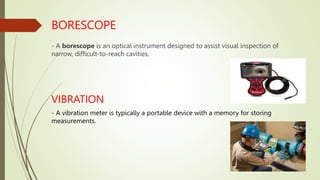
BORESCOPE
- A borescope is an optical instrument designed to assist visual inspection of
narrow, difficult-to-reach cavities,
VIBRATION
- A vibration meter is typically a portable device with a memory for storing
measurements.
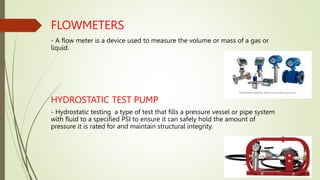
FLOWMETERS
- A flow meter is a device used to measure the volume or mass of a gas or
liquid.
HYDROSTATIC TEST PUMP
- Hydrostatic testing a type of test that fills a pressure vessel or pipe system
with fluid to a specified PSI to ensure it can safely hold the amount of
pressure it is rated for and maintain structural integrity.
standard cod for rotating equipment
API 674
- Covers the minimum requirements for reciprocating positive displacement pumps
and pump units for use in the petroleum, petrochemical, and gas industry services.
API 673
- Covers the minimum requirements for centrifugal fans for use in petroleum,
chemical, and gas industry services.
API 610
- Specifies requirements for centrifugal pumps, including pumps running in reverse as
hydraulic power recovery turbines, for use in petroleum, petrochemical, and gas
industry process services.

mechanical rotating equipment presentation

  • 1.
    Mechanical Project Presentation Represented by:  Abdullah Alghamdi Ahmed Alzahrani Faisal Alzahrani
  • 2.
    • Type ofrotating equipment • Type of inspection for rotating equipment • Type of tools & instruments used for rotating equipment • Code and standards Outline
  • 3.
    Pumps: pumps are usedto move fluids by converting rotational energy into mechanical energy moving the fluid. There are two basic types of pumps: - Positive displacement - Centrifugal pumps.
  • 4.
    Positive displacement:  Apositive displacement pump is used to move fixed amount of the liquid and forcing it into the discharge pipe with constant flow..
  • 5.
    Centrifugal pumps. The fluidenters the impeller with low pressure and velocity and leaves the pump with high pressure and velocity.
  • 6.
    Turbine: A turbine isa machine that transforms rotational energy into usable work or energy What are the types of turbine? - steam turbines. - wind turbines. - gas turbines. - water turbines.
  • 7.
    Blowers: Blower is deviceused to increase the velocity of air or gas when pass through it. What are the main parts of a blower? - Motor - Fan wheel or impeller - Housing
  • 8.
    Compressors: Compressor is amachine used to supply air or other gas at increased pressure. Compressors Tyaps:  Rotary screw  Rotary Vane  Centrifugal  Scroll  Reciprocating  Axial
  • 9.
    Types of inspectionfor Rotating equipment.
  • 10.
    INSPECTION OF ROTATINGEQUIPMENT COMPONENTS The objective of this examination is to discover all visible defects such as rust, stains, discoloration, cracks, excessive wear.
  • 11.
    Inspection Specification: - AnInspection Specification is a specification that defines how a factor, an element or a measure of a process, function, product, service or other object is to be inspected.
  • 12.
    visual inspections Even visualinspections can be used to determine wear and tear on the exterior of your equipment, which can be an indicator of what the inside looks like.
  • 13.
    Types of toolsused for rotating equipment inspection.
  • 14.
    BOLT TESTING - verifiesthat the bolt assembly meets the required specifications and capacity, while also confirming whether the installers of the bolt assembly have followed correct procedures. TACHOMETERS - an instrument which measures the working speed of an rotating, typically in revolutions per minute
  • 15.
    BORESCOPE - A borescopeis an optical instrument designed to assist visual inspection of narrow, difficult-to-reach cavities, VIBRATION - A vibration meter is typically a portable device with a memory for storing measurements.
  • 16.
    FLOWMETERS - A flowmeter is a device used to measure the volume or mass of a gas or liquid. HYDROSTATIC TEST PUMP - Hydrostatic testing a type of test that fills a pressure vessel or pipe system with fluid to a specified PSI to ensure it can safely hold the amount of pressure it is rated for and maintain structural integrity.
  • 17.
    standard cod forrotating equipment API 674 - Covers the minimum requirements for reciprocating positive displacement pumps and pump units for use in the petroleum, petrochemical, and gas industry services. API 673 - Covers the minimum requirements for centrifugal fans for use in petroleum, chemical, and gas industry services. API 610 - Specifies requirements for centrifugal pumps, including pumps running in reverse as hydraulic power recovery turbines, for use in petroleum, petrochemical, and gas industry process services.