www.15inno.com
15inno by Stefan Lindegaard at LinkedIn Groups
stefanlindegaard@me.com
Twitter: @lindegaard
Hey! Free books on 15inno.com!
Measuring Return on Research
and Innovation
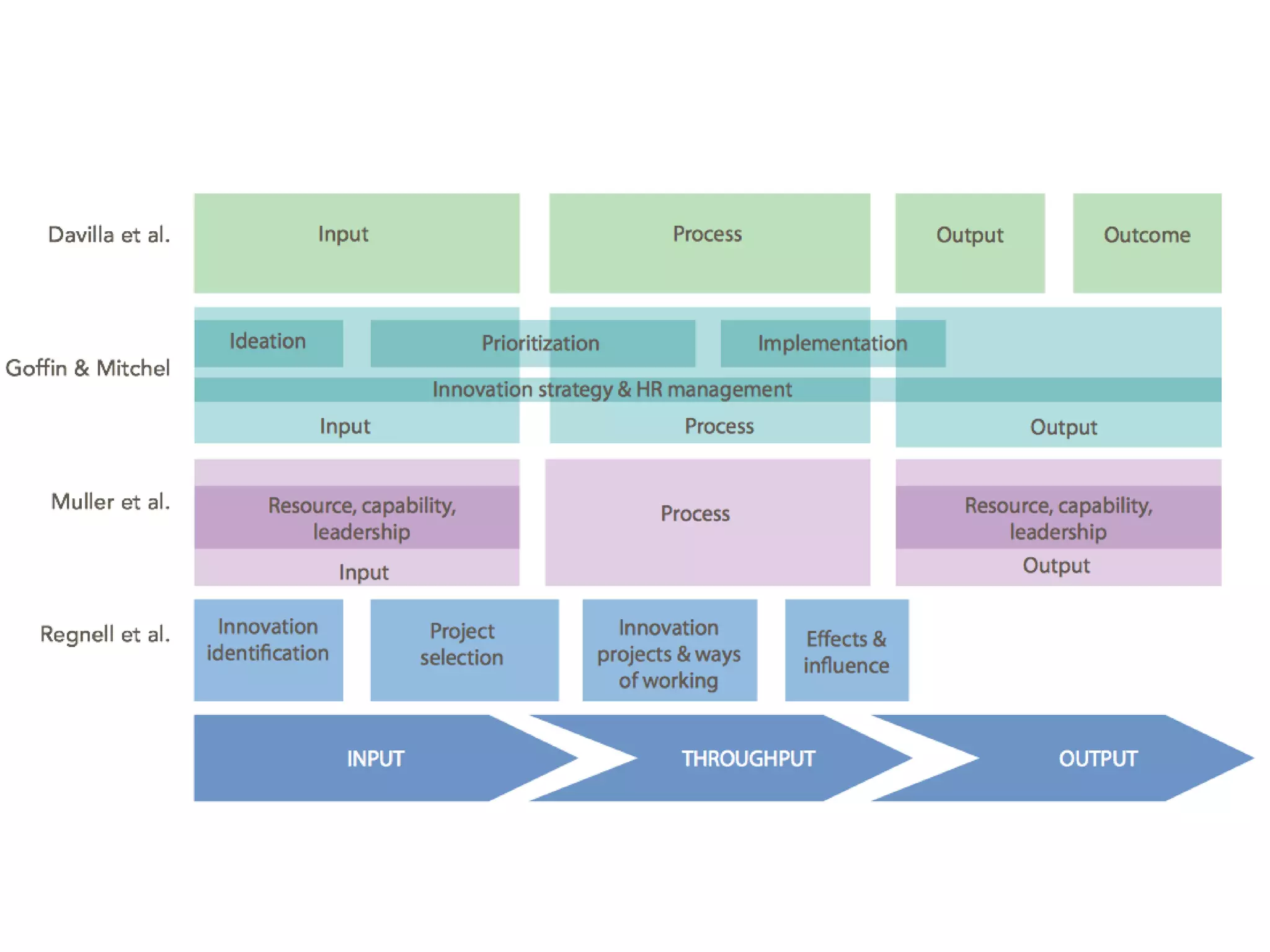
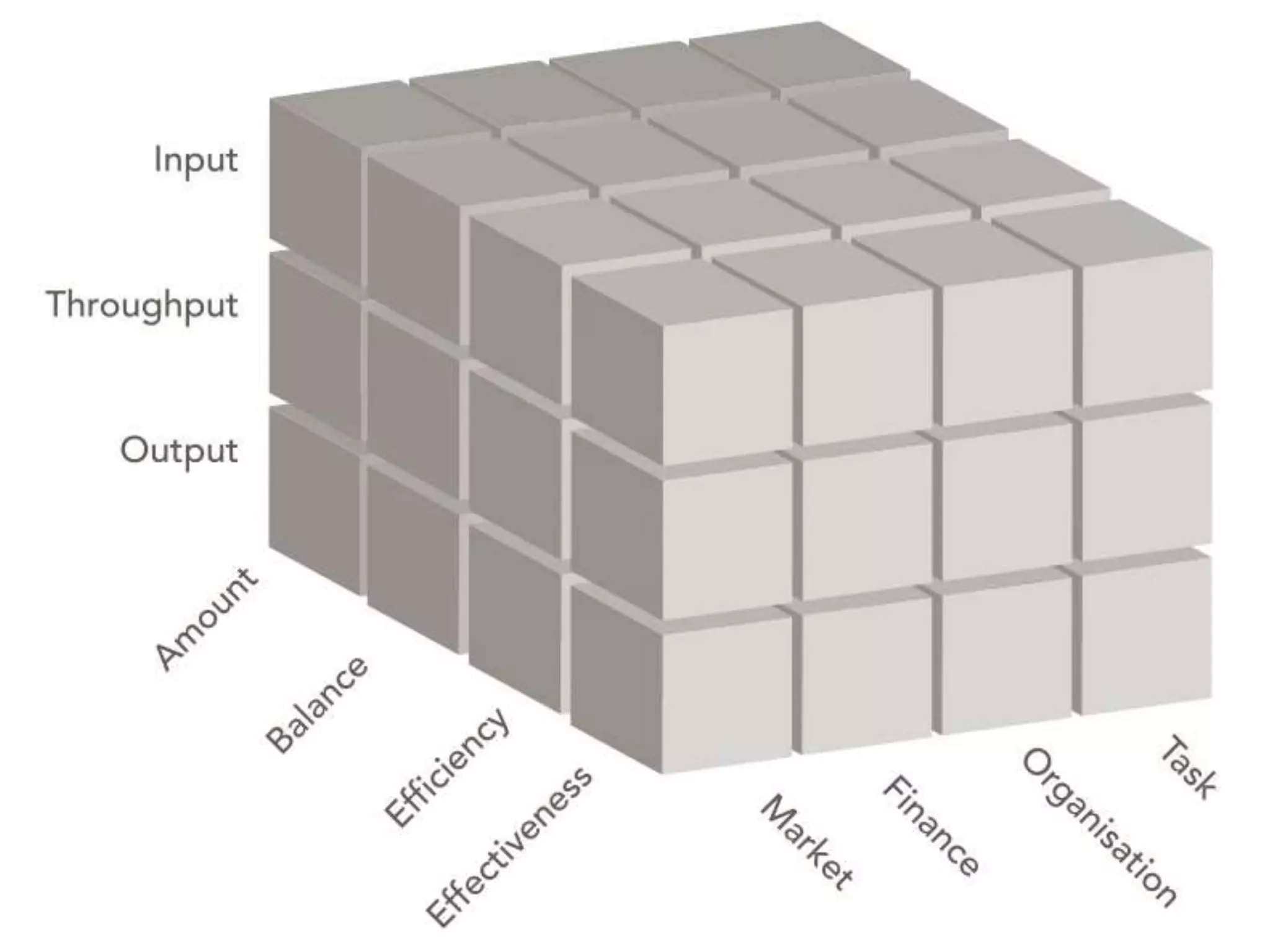
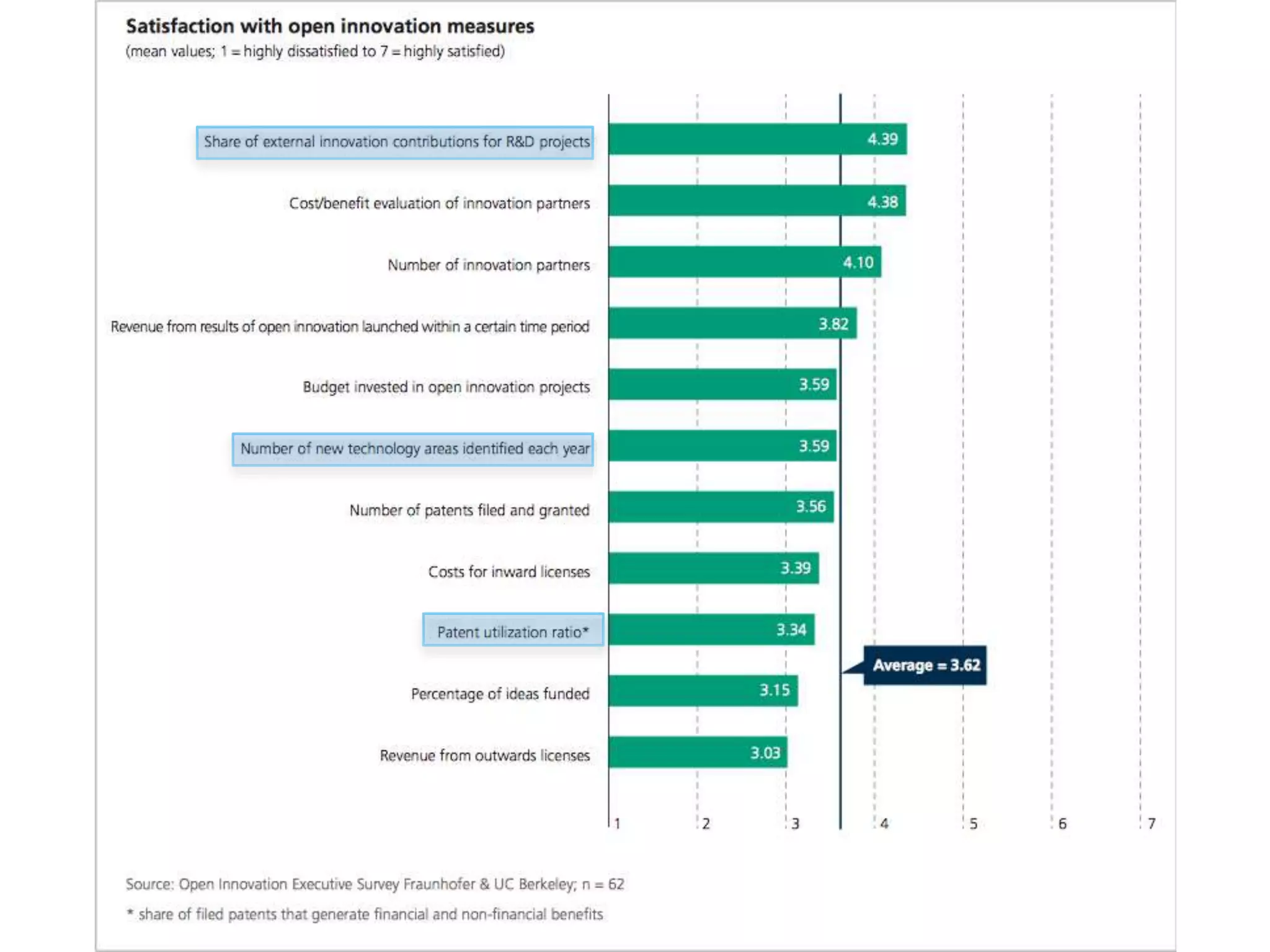
What should we measure?
How should we do it?
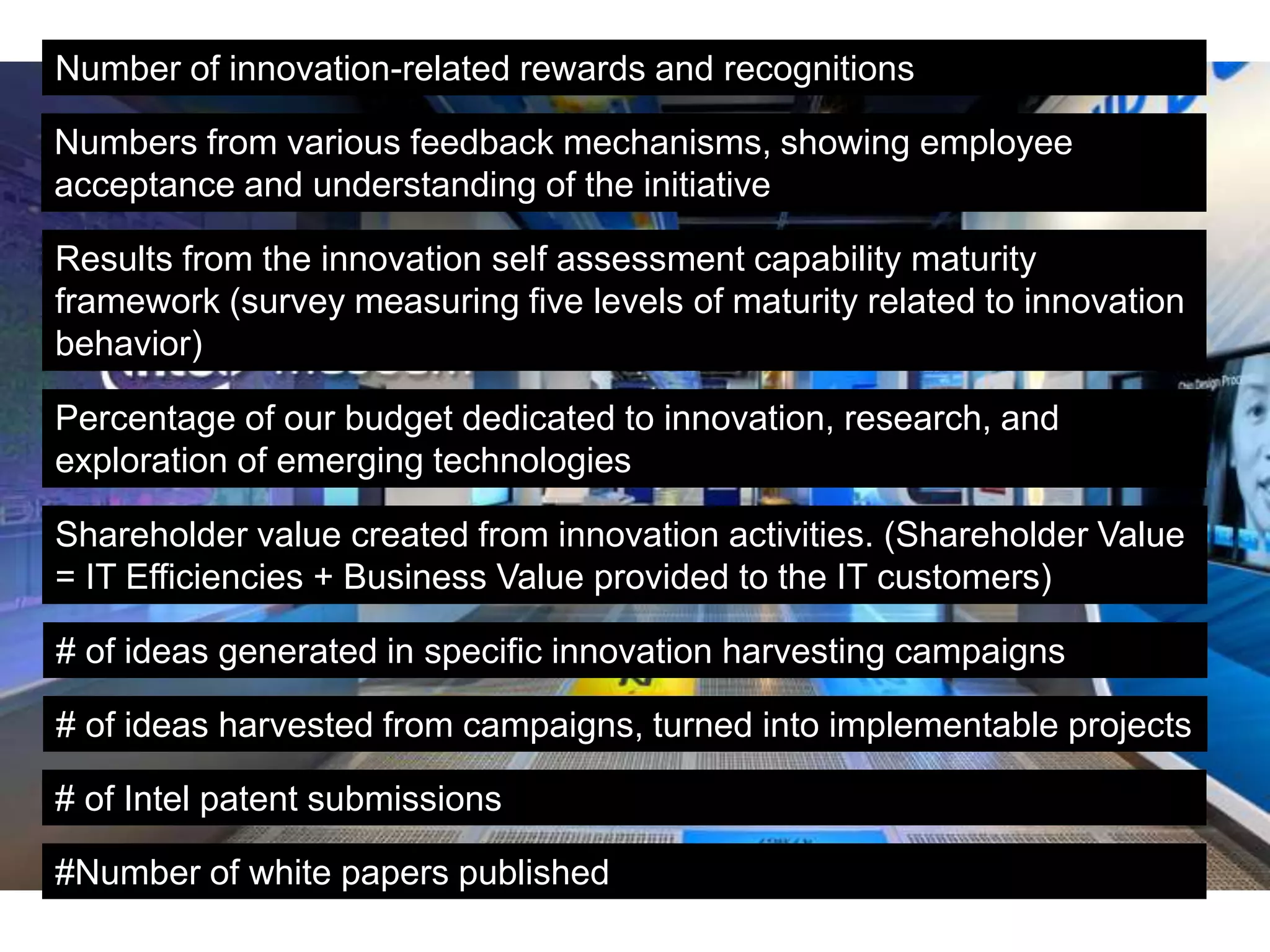
Number of innovation-related rewards and recognitions
Numbers from various feedback mechanisms, showing employee
acceptance and understanding of the initiative
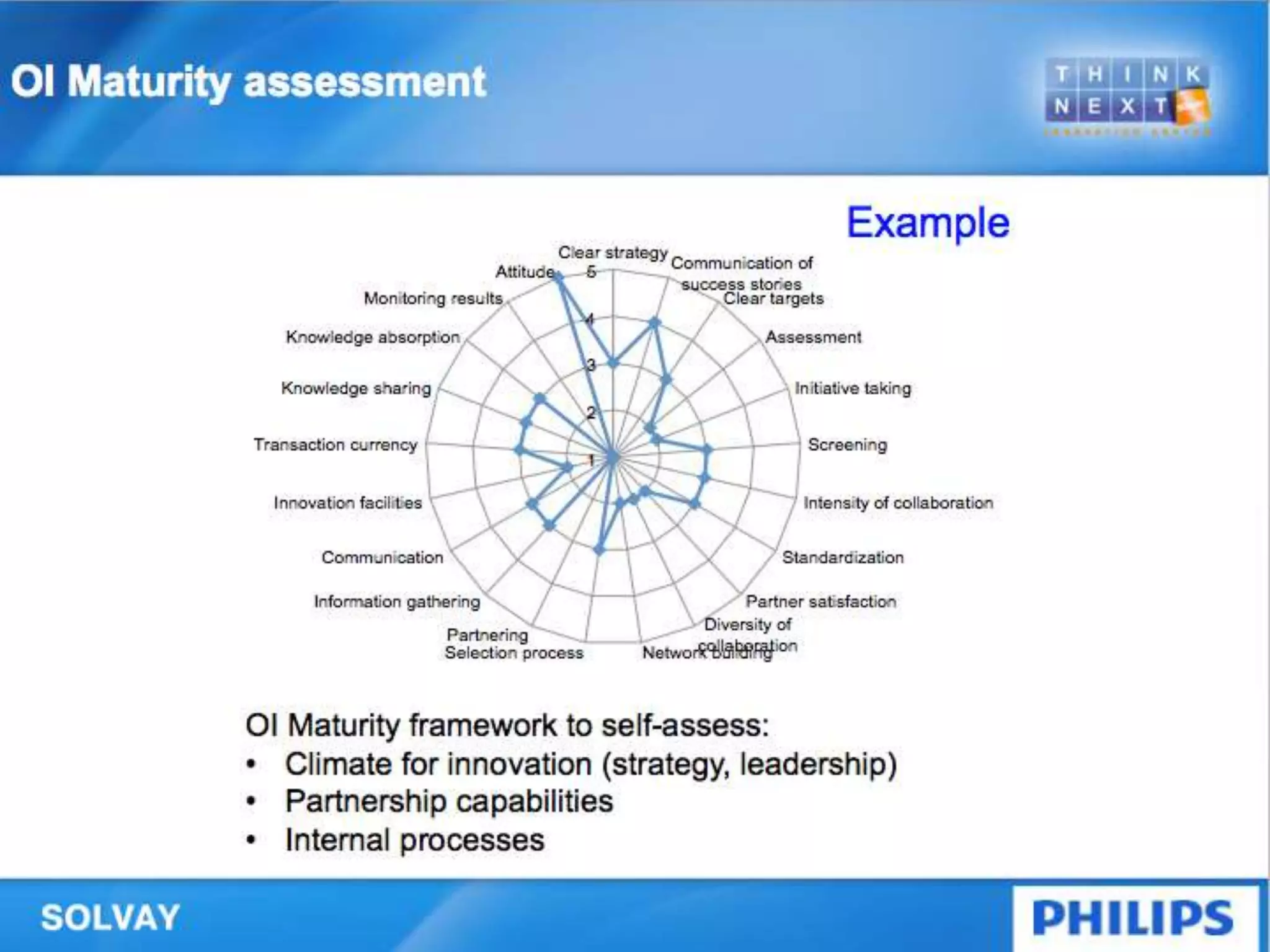
Results from the innovation self assessment capability maturity
framework (survey measuring five levels of maturity related to innovation
behavior)
Percentage of our budget dedicated to innovation, research, and
exploration of emerging technologies
Shareholder value created from innovation activities. (Shareholder Value
= IT Efficiencies + Business Value provided to the IT customers)
# of ideas generated in specific innovation harvesting campaigns
# of ideas harvested from campaigns, turned into implementable projects
# of Intel patent submissions
#Number of white papers published
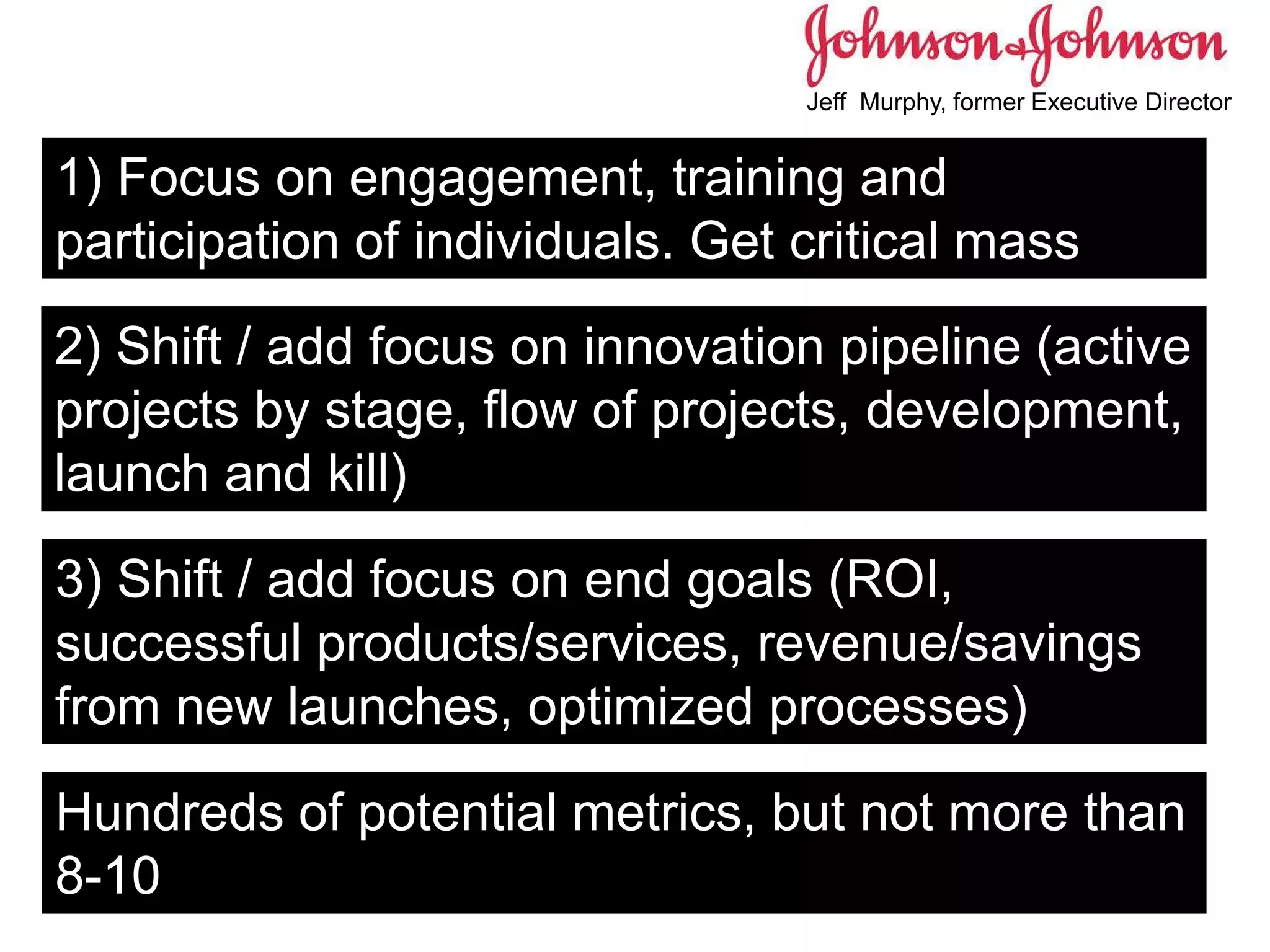
1) Focus on engagement, training and
participation of individuals. Get critical mass
2) Shift / add focus on innovation pipeline (active
projects by stage, flow of projects, development,
launch and kill)
3) Shift / add focus on end goals (ROI,
successful products/services, revenue/savings
from new launches, optimized processes)
Hundreds of potential metrics, but not more than
8-10
Jeff Murphy, former Executive Director
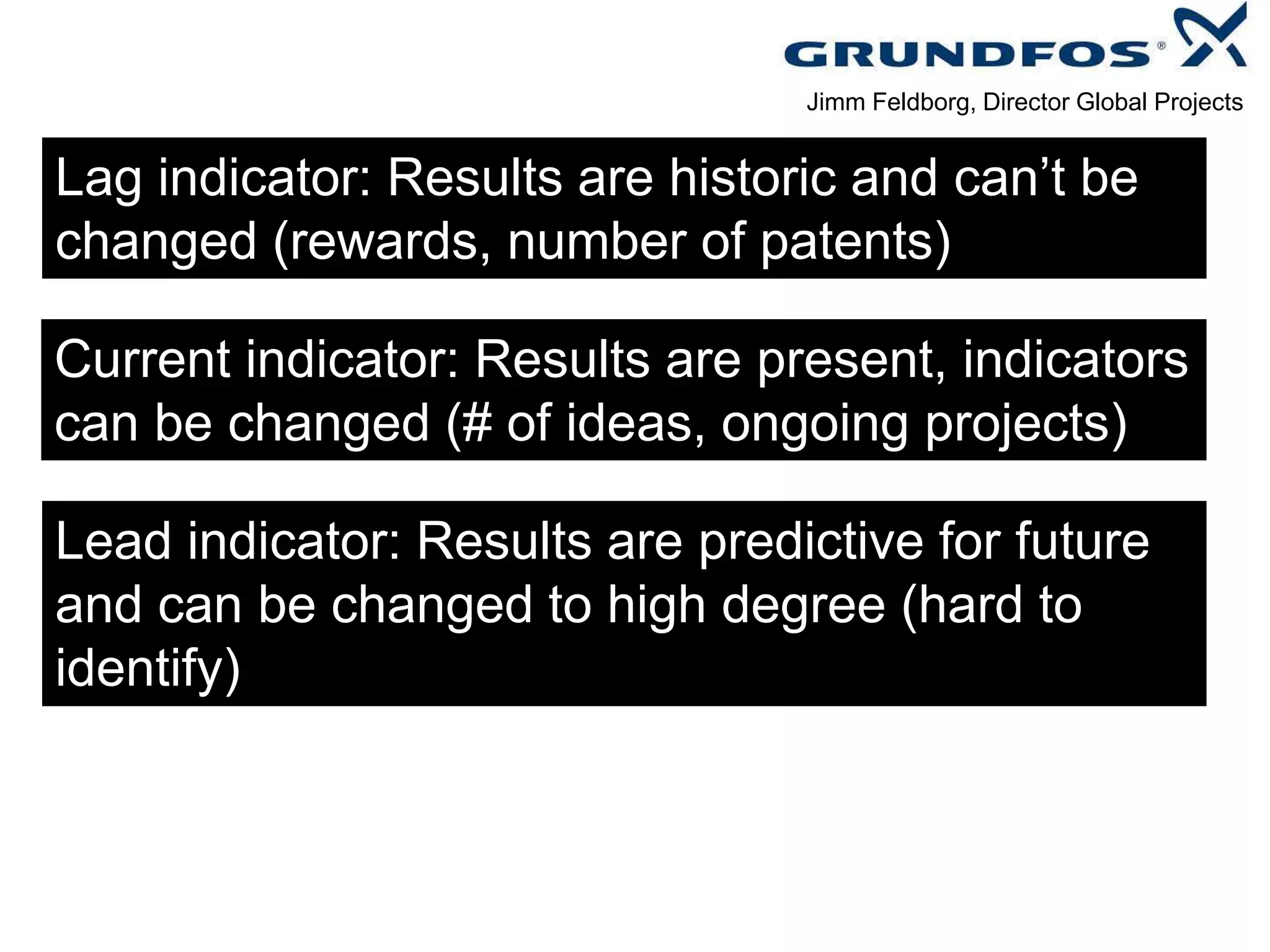
Lag indicator: Results are historic and can’t be
changed (rewards, number of patents)
Current indicator: Results are present, indicators
can be changed (# of ideas, ongoing projects)
Lead indicator: Results are predictive for future
and can be changed to high degree (hard to
identify)
Jimm Feldborg, Director Global Projects
What should we measure?
How should we do it?
Why you should NOT pay too much
attention to this?
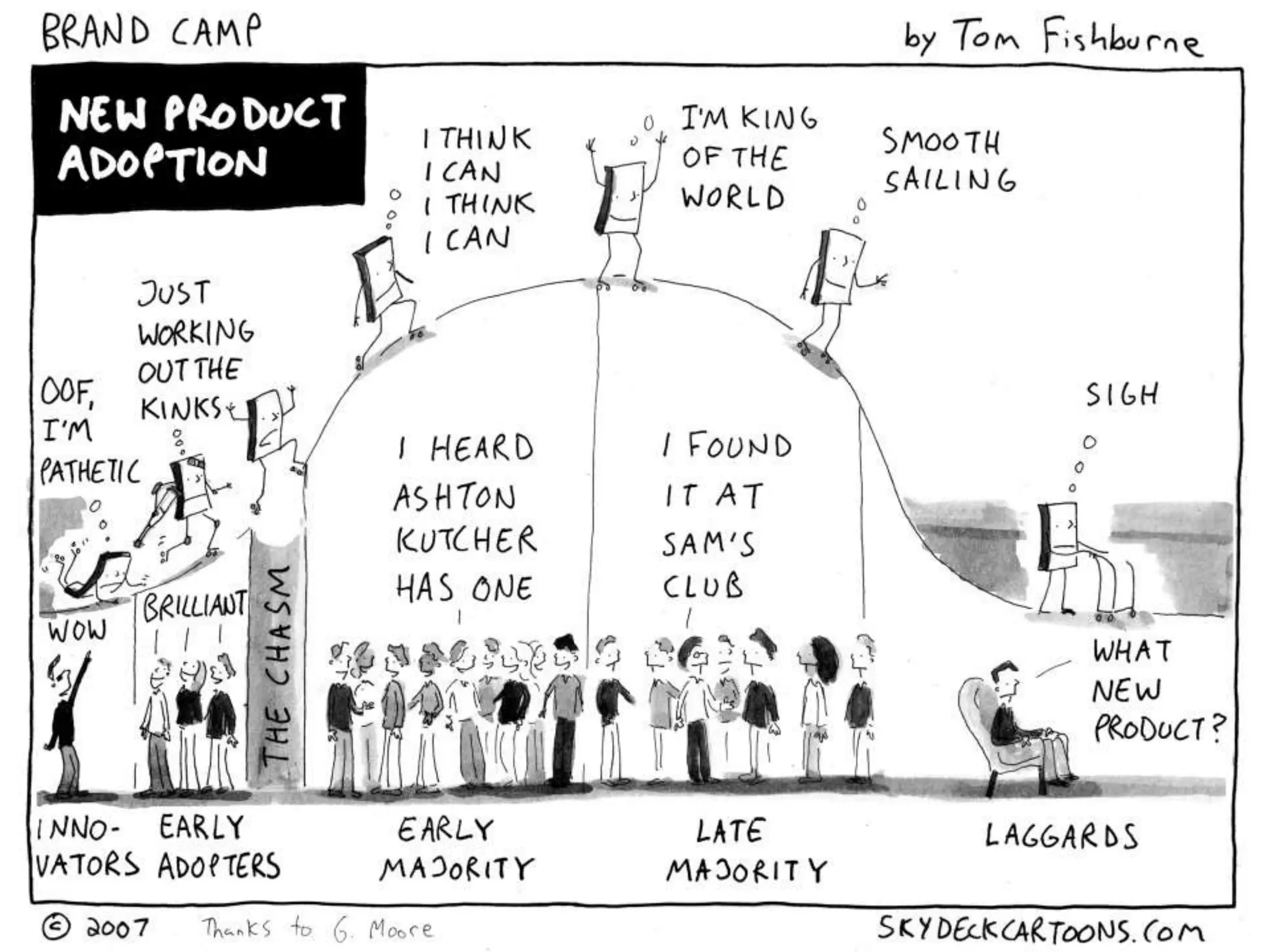
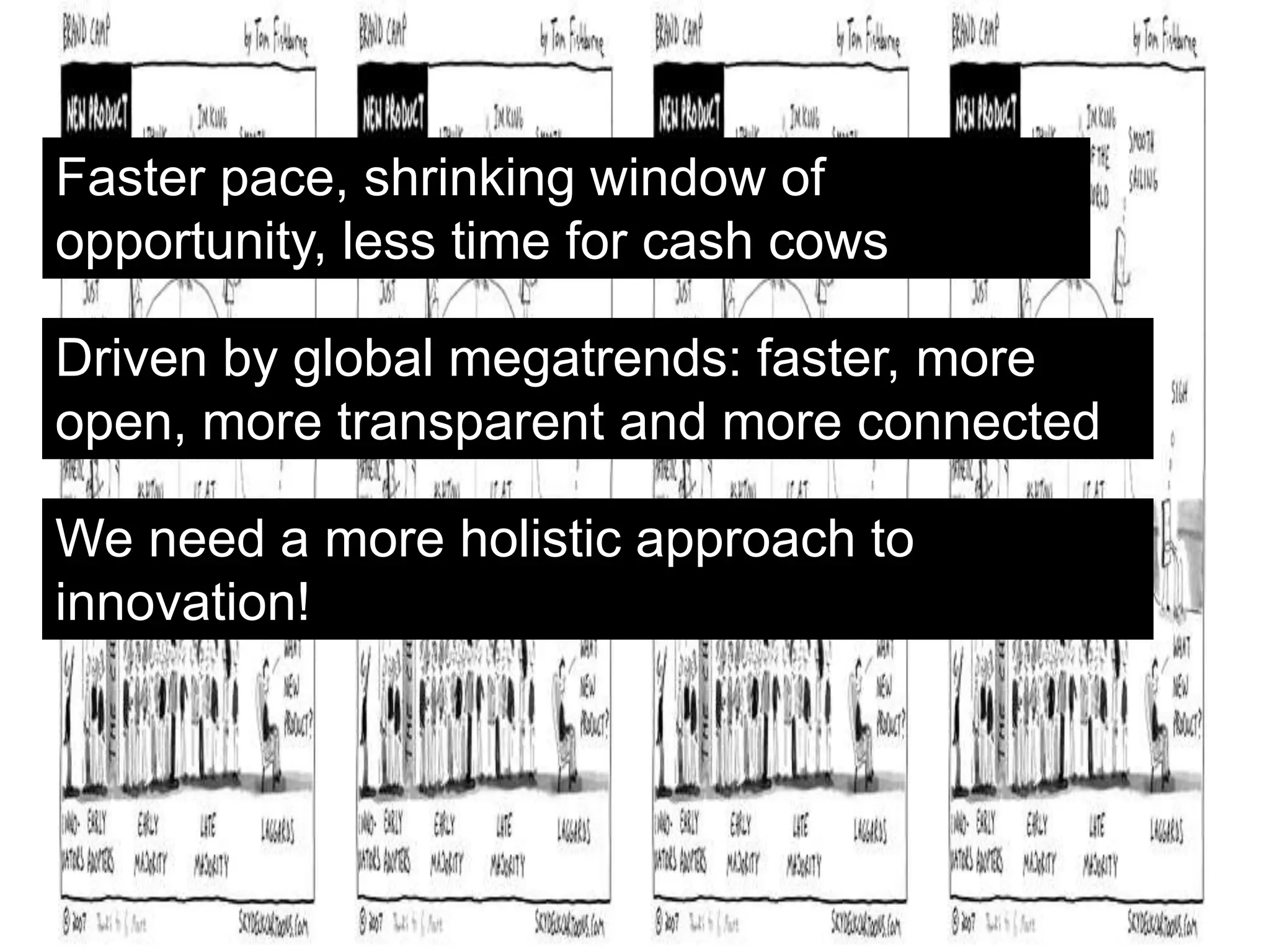
Faster pace, shrinking window of
opportunity, less time for cash cows
Driven by global megatrends: faster, more
open, more transparent and more connected
We need a more holistic approach to
innovation!
What is open innovation?
“…a philosophy or a mindset that they should
embrace within their organization.
This mindset should enable their organization to
work with external input to the innovation
process just as naturally as it does with internal
input”
Open innovation as a term will disappear in 5-7
years!
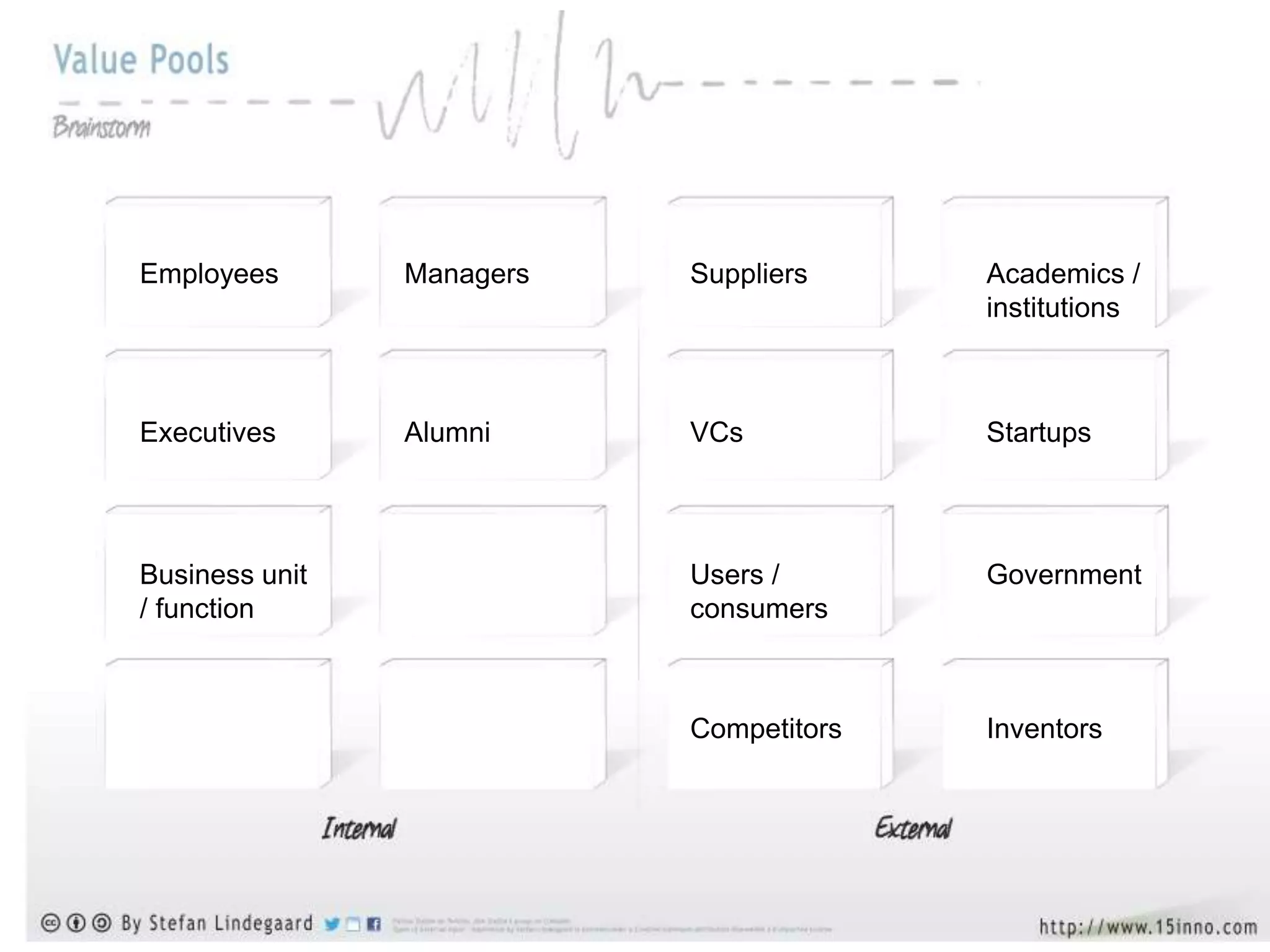
Employees SuppliersManagers Academics /
institutions
Executives VCsAlumni Startups
Business unit
/ function
Users /
consumers
Government
Competitors Inventors
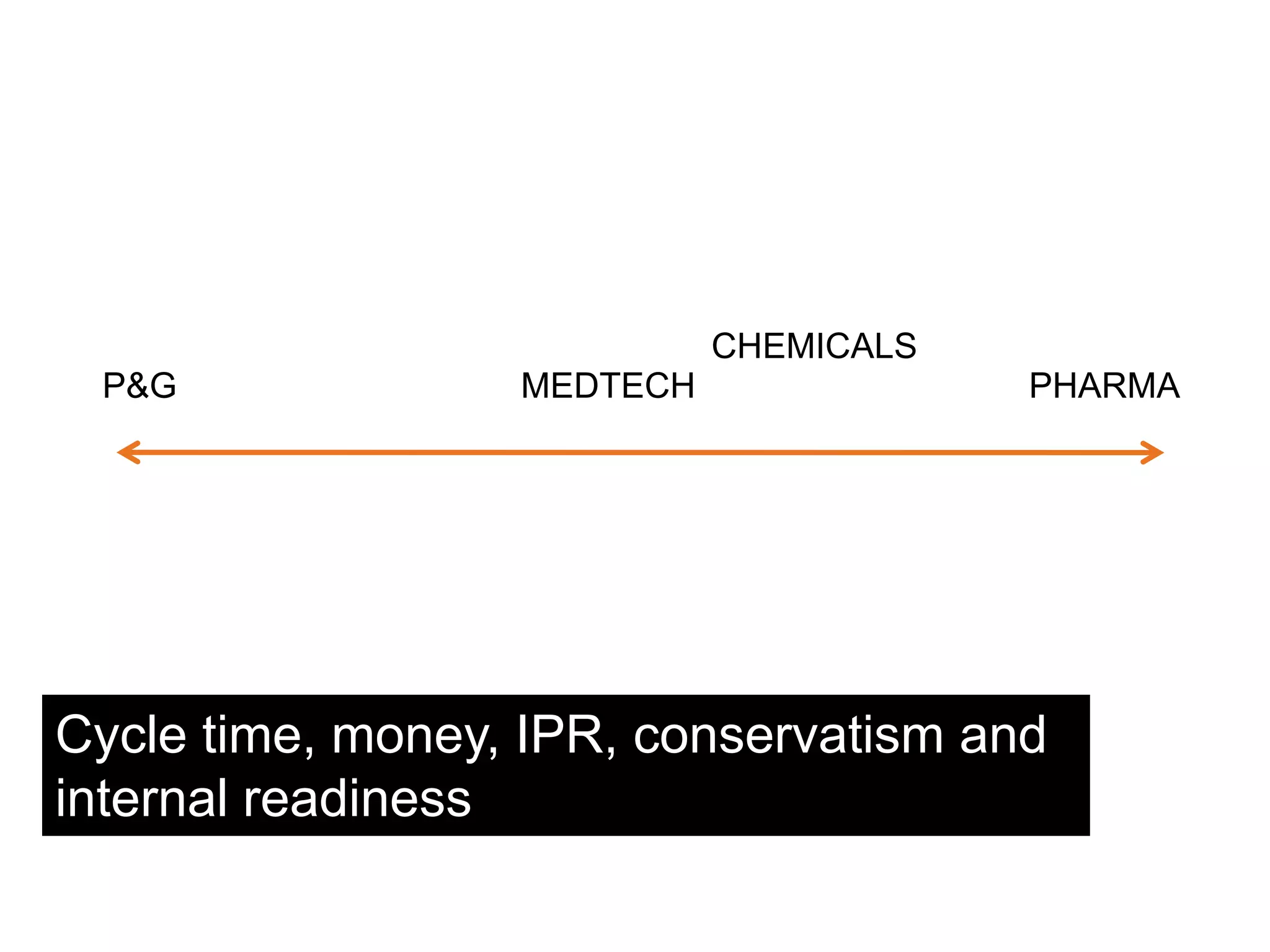
P&G PHARMAMEDTECH
Cycle time, money, IPR, conservatism and
internal readiness
CHEMICALS
A new paradigm for innovation changes the
perspectives and approaches for metrics
on research and innovation
A CFO is wary about investing in the training and
education of the employees.
He asks the CEO: ”What happens if we invest in
developing our people and then they leave the
company?”
The CEO is a bright person and replies: ”What
happens if we don’t and they stay?”
Get in touch!
www.15inno.com
15inno by Stefan Lindegaard at LinkedIn Groups
stefanlindegaard@me.com
Twitter: @lindegaard
Hey! Free books on 15inno.com!
A recent comment on 15inno.com
KPI = Kill Potential Innovation

Measuring Return on Research and Innovation

  • 1.
    www.15inno.com 15inno by StefanLindegaard at LinkedIn Groups stefanlindegaard@me.com Twitter: @lindegaard Hey! Free books on 15inno.com! Measuring Return on Research and Innovation
  • 2.
    What should wemeasure? How should we do it?
  • 6.
    Number of innovation-relatedrewards and recognitions Numbers from various feedback mechanisms, showing employee acceptance and understanding of the initiative Results from the innovation self assessment capability maturity framework (survey measuring five levels of maturity related to innovation behavior) Percentage of our budget dedicated to innovation, research, and exploration of emerging technologies Shareholder value created from innovation activities. (Shareholder Value = IT Efficiencies + Business Value provided to the IT customers) # of ideas generated in specific innovation harvesting campaigns # of ideas harvested from campaigns, turned into implementable projects # of Intel patent submissions #Number of white papers published
  • 7.
    1) Focus onengagement, training and participation of individuals. Get critical mass 2) Shift / add focus on innovation pipeline (active projects by stage, flow of projects, development, launch and kill) 3) Shift / add focus on end goals (ROI, successful products/services, revenue/savings from new launches, optimized processes) Hundreds of potential metrics, but not more than 8-10 Jeff Murphy, former Executive Director
  • 8.
    Lag indicator: Resultsare historic and can’t be changed (rewards, number of patents) Current indicator: Results are present, indicators can be changed (# of ideas, ongoing projects) Lead indicator: Results are predictive for future and can be changed to high degree (hard to identify) Jimm Feldborg, Director Global Projects
  • 9.
    What should wemeasure? How should we do it? Why you should NOT pay too much attention to this?
  • 11.
    Faster pace, shrinkingwindow of opportunity, less time for cash cows Driven by global megatrends: faster, more open, more transparent and more connected We need a more holistic approach to innovation!
  • 12.
    What is openinnovation? “…a philosophy or a mindset that they should embrace within their organization. This mindset should enable their organization to work with external input to the innovation process just as naturally as it does with internal input” Open innovation as a term will disappear in 5-7 years!
  • 13.
    Employees SuppliersManagers Academics/ institutions Executives VCsAlumni Startups Business unit / function Users / consumers Government Competitors Inventors
  • 14.
    P&G PHARMAMEDTECH Cycle time,money, IPR, conservatism and internal readiness CHEMICALS
  • 17.
    A new paradigmfor innovation changes the perspectives and approaches for metrics on research and innovation
  • 20.
    A CFO iswary about investing in the training and education of the employees. He asks the CEO: ”What happens if we invest in developing our people and then they leave the company?” The CEO is a bright person and replies: ”What happens if we don’t and they stay?”
  • 21.
    Get in touch! www.15inno.com 15innoby Stefan Lindegaard at LinkedIn Groups stefanlindegaard@me.com Twitter: @lindegaard Hey! Free books on 15inno.com! A recent comment on 15inno.com KPI = Kill Potential Innovation