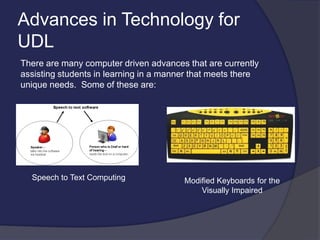
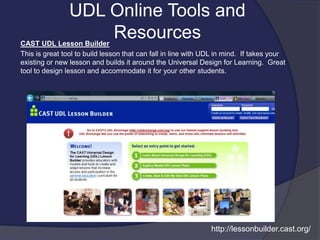
This document discusses Universal Design for Learning (UDL), which seeks to make the learning process adaptable for all people regardless of their abilities or needs. It originated from architectural designs that made buildings universally accessible. UDL principles give all individuals equal opportunities to learn through flexible methods, materials and assessments. Research shows the brain has three networks (recognition, strategic, and affective) that impact learning in different ways. UDL uses diverse tools and flexibility to support these different networks. Advancing technology is also helping to support UDL through tools like speech-to-text.