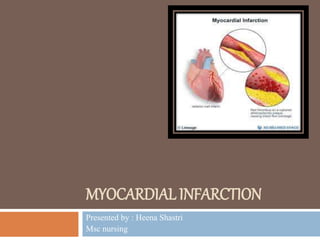
MYOCARDIAL INFARCTION
Presented by : Heena Shastri
Msc nursing
Objectives
 To Define The Myocardial Infarction .
 To Explain The Causes Of Myocardial Infarction .
 To Explain the Clinical classification of Myocardial Infarction
 To Explain The Pathophysiology Of Myocardial Infarction .
 To List Out The Clinical Manifestation Of Myocardial Infarction .
 To Explain The Diagnostic Evaluation Of Myocardial Infarction .
 To List Out The Medical Treatment Of Myocardial Infarction .
 To Explain The Surgical Treatment Of Myocardial Infarction .
 To List Out The Nursing Diagnosis Of Myocardial Infarction .
Infarction
 Obstruction of the blood supply to an organ or
region of tissue, typically by a thrombus causing
local death of the tissue
Definition
 MI refers to a dynamic process by which one or more
regions of the heart experience a severe and
prolonged decrease in oxygen supply because of
insufficient coronary blood flow; subsequently,
necrosis or to the myocardial tissue occurs.
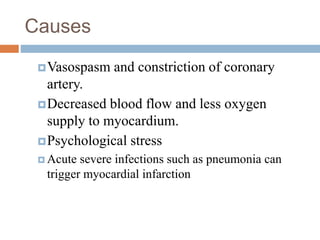
Causes
Vasospasm and constriction of coronary
artery.
Decreased blood flow and less oxygen
supply to myocardium.
Psychological stress
 Acute severe infections such as pneumonia can
trigger myocardial infarction
Clinical classification
 Type 1- Spontaneous myocardial infarction related to
ischemia caused by primary coronary events, such as plaque
formation are fissuring or ruptures
 Type 2 – MI secondary to ischemia from an imbalance
between oxygen demand and supply, such as coronary spasm.
 Type 3 – Sudden, unexpected cardiac death before blood
samples for biomarkers could be drawn or before their
appearance in the circulation.
 Type 4- MI associated with primary percutaneous coronary
intervention.
 Type 5 – MI associated with coronary artery bypass graft
Pathophysiology
Due to etiological factors
Arterial spasm
Sudden irreversible obstruction
Ischemia
Hypoxia
Angina
Necrosis (Gradually )
MI
Clinical manifestation
 Chest pain
 Severe, steady substernal pain
 Not relieved by rest or sublingual vasodilator therapy, but requires
opioids
 May radiate to the arms (usually the left), shoulders, neck, back, and/or
jaw
 Continues for more than 15 minutes
 May produce anxiety and fear, resulting in an increase in heart rate, BP,
and respiratory rate
 Hypertension or hypotension
 severe anxiety, breathing difficulty
 Disorientation, confusion, restlessness
 weakness
 Nausea, vomiting
Diagnostic evaluation
 Patient history
 ECG
 Angiography
 Elevated white blood cell (WBC) count and
sedimentation rate due to the inflammatory process
involved in heart muscle cell damage
Medical management
Oxygen therapy
Analgesic therapy
 Morphine is used to relieve pain, to improve cardiac homodynamic
by reducing preload and after load, and to provide anxiety relief.
Vasodilator therapy- nitric oxide
 NTG promotes venous and arterial relaxation and prevent coronary
artery spasm
Calcium channel blockers-amlodipine , felodipine
 Improve the balance between oxygen supply and demand by
decreasing hearts rate, blood pressure and dilating coronary vessels.
Anticoagulant therapy
 Heparin is useful as an adjunct to thrombolytic therapy.
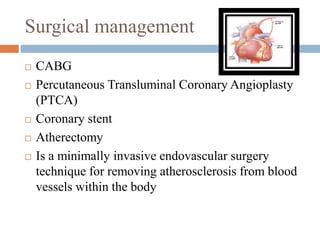
Surgical management
 CABG
 Percutaneous Transluminal Coronary Angioplasty
(PTCA)
 Coronary stent
 Atherectomy
 Is a minimally invasive endovascular surgery
technique for removing atherosclerosis from blood
vessels within the body
Nursing diagnosis
 Acute chest pain related to imbalance between oxygen supply and
demand secondary to reduced coronary blood flow.
 Decreased cardiac output related to impaired contractility.
 Anxiety related to chest pain, fear of death, threatening
environment.
 Activity intolerance related to an imbalance between oxygen supply
and demand
 Impaired gas exchange related to ineffective breathing pattern.
 Risk for Ineffective coping related to threats to self-esteem,
disruption of sleep-rest pattern, lack of significant support system
and loss of control.
 Disturbed sleep pattern related to pain and stressful environment.
 Knowledge deficiency related to treatment modalities as evidenced
by frequently asking question.
Thank you

Mayocardial infarction

  • 1.
    MYOCARDIAL INFARCTION Presented by: Heena Shastri Msc nursing
  • 2.
    Objectives  To DefineThe Myocardial Infarction .  To Explain The Causes Of Myocardial Infarction .  To Explain the Clinical classification of Myocardial Infarction  To Explain The Pathophysiology Of Myocardial Infarction .  To List Out The Clinical Manifestation Of Myocardial Infarction .  To Explain The Diagnostic Evaluation Of Myocardial Infarction .  To List Out The Medical Treatment Of Myocardial Infarction .  To Explain The Surgical Treatment Of Myocardial Infarction .  To List Out The Nursing Diagnosis Of Myocardial Infarction .
  • 3.
    Infarction  Obstruction ofthe blood supply to an organ or region of tissue, typically by a thrombus causing local death of the tissue
  • 4.
    Definition  MI refersto a dynamic process by which one or more regions of the heart experience a severe and prolonged decrease in oxygen supply because of insufficient coronary blood flow; subsequently, necrosis or to the myocardial tissue occurs.
  • 5.
    Causes Vasospasm and constrictionof coronary artery. Decreased blood flow and less oxygen supply to myocardium. Psychological stress  Acute severe infections such as pneumonia can trigger myocardial infarction
  • 6.
    Clinical classification  Type1- Spontaneous myocardial infarction related to ischemia caused by primary coronary events, such as plaque formation are fissuring or ruptures  Type 2 – MI secondary to ischemia from an imbalance between oxygen demand and supply, such as coronary spasm.  Type 3 – Sudden, unexpected cardiac death before blood samples for biomarkers could be drawn or before their appearance in the circulation.  Type 4- MI associated with primary percutaneous coronary intervention.  Type 5 – MI associated with coronary artery bypass graft
  • 7.
    Pathophysiology Due to etiologicalfactors Arterial spasm Sudden irreversible obstruction Ischemia Hypoxia Angina Necrosis (Gradually ) MI
  • 8.
    Clinical manifestation  Chestpain  Severe, steady substernal pain  Not relieved by rest or sublingual vasodilator therapy, but requires opioids  May radiate to the arms (usually the left), shoulders, neck, back, and/or jaw  Continues for more than 15 minutes  May produce anxiety and fear, resulting in an increase in heart rate, BP, and respiratory rate  Hypertension or hypotension  severe anxiety, breathing difficulty  Disorientation, confusion, restlessness  weakness  Nausea, vomiting
  • 10.
    Diagnostic evaluation  Patienthistory  ECG  Angiography  Elevated white blood cell (WBC) count and sedimentation rate due to the inflammatory process involved in heart muscle cell damage
  • 11.
    Medical management Oxygen therapy Analgesictherapy  Morphine is used to relieve pain, to improve cardiac homodynamic by reducing preload and after load, and to provide anxiety relief. Vasodilator therapy- nitric oxide  NTG promotes venous and arterial relaxation and prevent coronary artery spasm Calcium channel blockers-amlodipine , felodipine  Improve the balance between oxygen supply and demand by decreasing hearts rate, blood pressure and dilating coronary vessels. Anticoagulant therapy  Heparin is useful as an adjunct to thrombolytic therapy.
  • 12.
    Surgical management  CABG Percutaneous Transluminal Coronary Angioplasty (PTCA)  Coronary stent  Atherectomy  Is a minimally invasive endovascular surgery technique for removing atherosclerosis from blood vessels within the body
  • 13.
    Nursing diagnosis  Acutechest pain related to imbalance between oxygen supply and demand secondary to reduced coronary blood flow.  Decreased cardiac output related to impaired contractility.  Anxiety related to chest pain, fear of death, threatening environment.  Activity intolerance related to an imbalance between oxygen supply and demand  Impaired gas exchange related to ineffective breathing pattern.  Risk for Ineffective coping related to threats to self-esteem, disruption of sleep-rest pattern, lack of significant support system and loss of control.  Disturbed sleep pattern related to pain and stressful environment.  Knowledge deficiency related to treatment modalities as evidenced by frequently asking question.
  • 14.