Downloaded 1,065 times
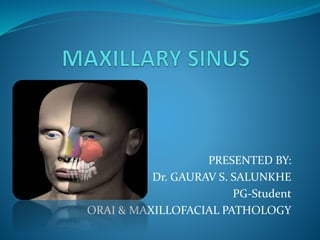

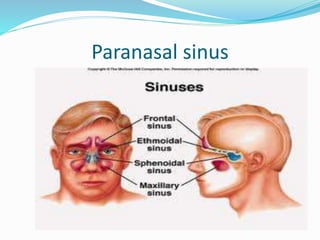
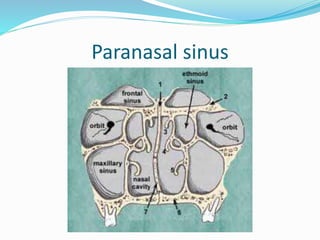
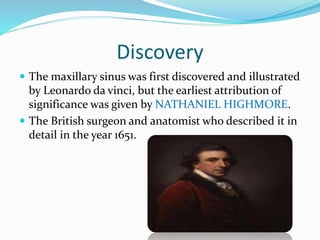
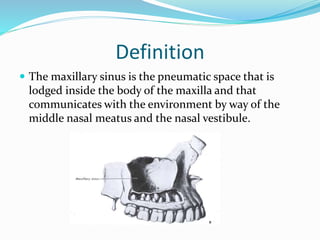
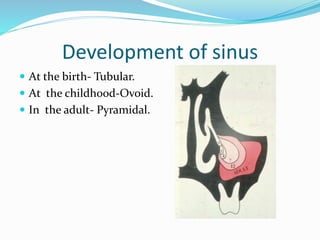
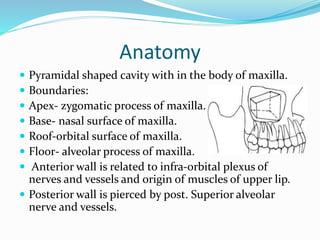
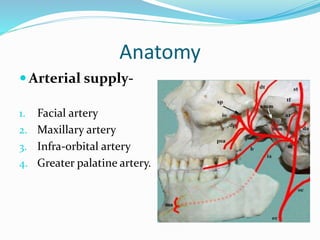
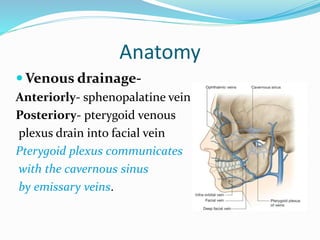
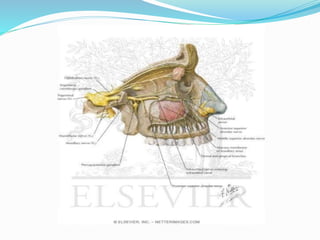
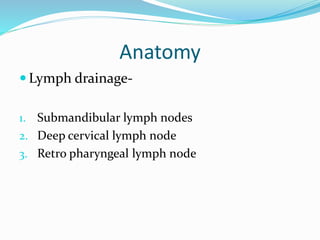
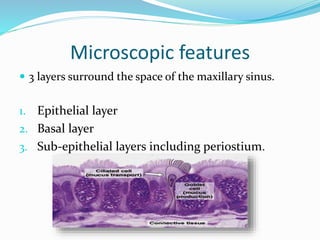
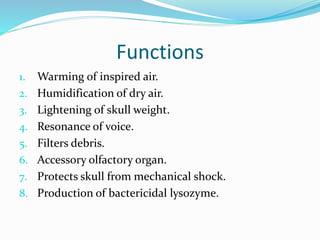
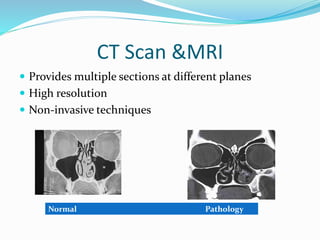
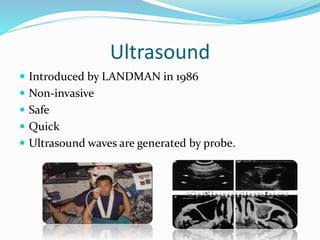
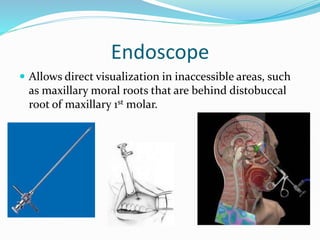









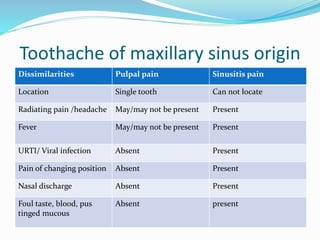
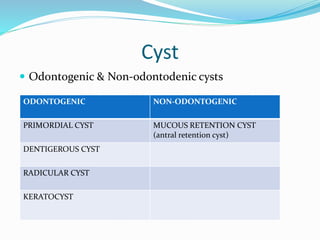

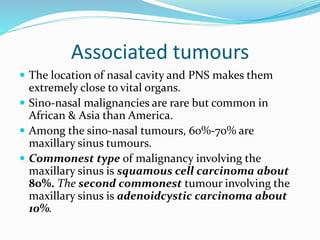



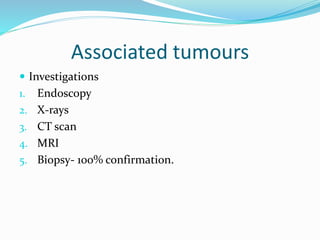



This document provides an overview of the maxillary sinus, including its discovery, anatomy, development, functions, and associated pathologies. Some key points: - The maxillary sinus was first discovered and illustrated by Leonardo da Vinci, but was described in detail by Nathaniel Highmore in 1651. - It is a pyramid-shaped air space within the body of the maxilla. It is bounded by the zygomatic process, nasal surface, orbital surface, and alveolar process. - Development begins in the newborn as a tubular structure, becoming ovoid in childhood and pyramidal in adults. - Pathologies associated with the maxillary sinus include sinusitis, cyst


![final [Autosaved].pptx](https://cdn.slidesharecdn.com/ss_thumbnails/finalautosaved-221213152722-dbd9357e-thumbnail.jpg?width=640&height=640&fit=bounds)


