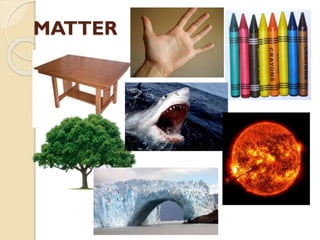
MATTER
MATTER: features
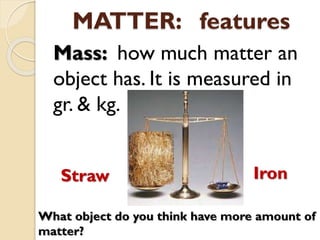
Mass: how much matter an
object has. It is measured in
gr. & kg.
What object do you think have more amount of
matter?
Straw Iron
MATTER: features
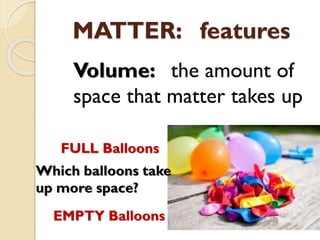
Volume: the amount of
space that matter takes up
Which balloons take
up more space?
FULL Balloons
EMPTY Balloons
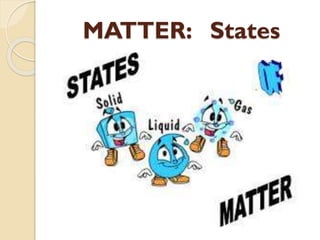
MATTER: States
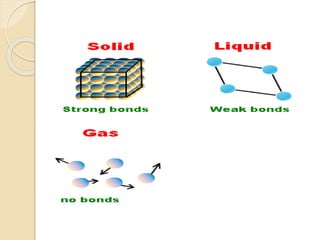
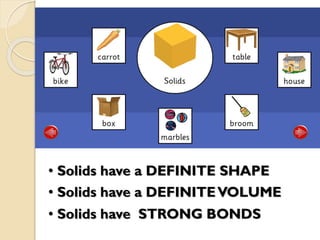
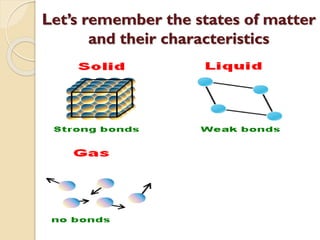
• Solids have a DEFINITE SHAPE
• Solids have a DEFINITEVOLUME
• Solids have STRONG BONDS
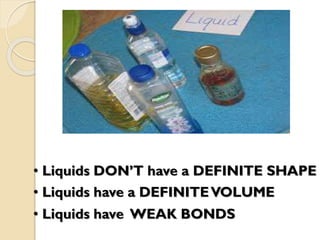
• Liquids DON’T have a DEFINITE SHAPE
• Liquids have a DEFINITEVOLUME
• Liquids have WEAK BONDS
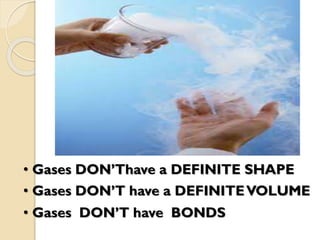
• Gases DON’Thave a DEFINITE SHAPE
• Gases DON’T have a DEFINITEVOLUME
• Gases DON’T have BONDS
Let’s remember the states of matter
and their characteristics
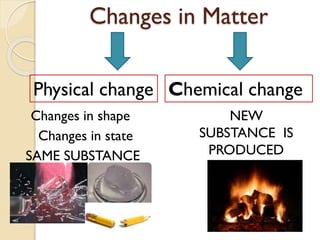
Changes in Matter
Physical change Chemical change
Changes in shape
Changes in state
SAME SUBSTANCE
NEW
SUBSTANCE IS
PRODUCED
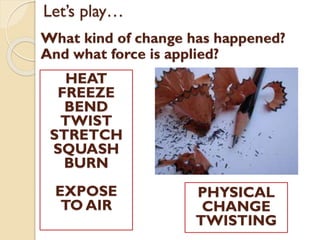
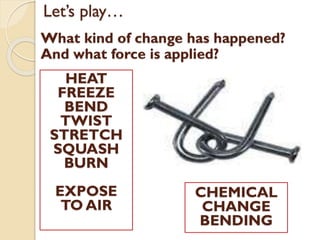
Let’s play…
What kind of change has happened?
And what force is applied?
PHYSICAL
CHANGE
TWISTING
HEAT
FREEZE
BEND
TWIST
STRETCH
SQUASH
BURN
EXPOSE
TO AIR
Let’s play…
What kind of change has happened?
And what force is applied?
HEAT
FREEZE
BEND
TWIST
STRETCH
SQUASH
BURN
EXPOSE
TO AIR
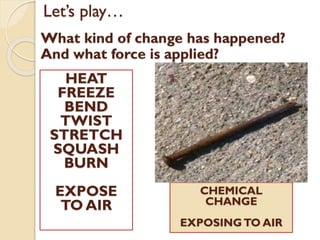
CHEMICAL
CHANGE
EXPOSINGTO AIR
Let’s play…
What kind of change has happened?
And what force is applied?
HEAT
FREEZE
BEND
TWIST
STRETCH
SQUASH
BURN
EXPOSE
TO AIR
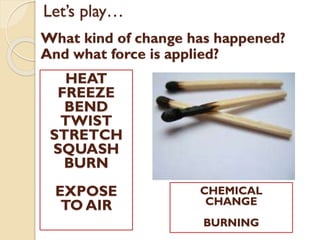
CHEMICAL
CHANGE
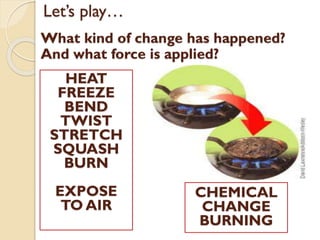
BURNING
Let’s play…
What kind of change has happened?
And what force is applied?
HEAT
FREEZE
BEND
TWIST
STRETCH
SQUASH
BURN
EXPOSE
TO AIR
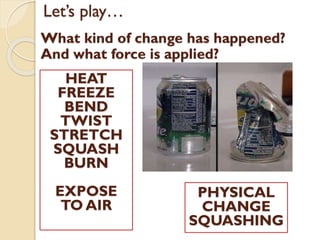
PHYSICAL
CHANGE
SQUASHING
Let’s play…
What kind of change has happened?
And what force is applied?
HEAT
FREEZE
BEND
TWIST
STRETCH
SQUASH
BURN
EXPOSE
TO AIR
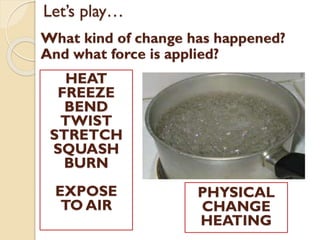
PHYSICAL
CHANGE
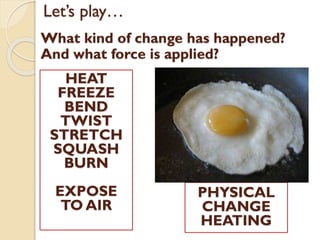
HEATING
Let’s play…
What kind of change has happened?
And what force is applied?
HEAT
FREEZE
BEND
TWIST
STRETCH
SQUASH
BURN
EXPOSE
TO AIR
PHYSICAL
CHANGE
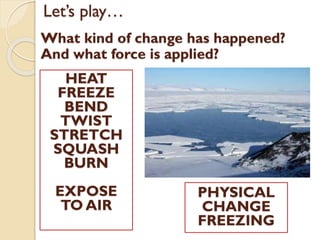
FREEZING
Let’s play…
What kind of change has happened?
And what force is applied?
HEAT
FREEZE
BEND
TWIST
STRETCH
SQUASH
BURN
EXPOSE
TO AIR
CHEMICAL
CHANGE
BURNING
Let’s play…
What kind of change has happened?
And what force is applied?
HEAT
FREEZE
BEND
TWIST
STRETCH
SQUASH
BURN
EXPOSE
TO AIR
PHYSICAL
CHANGE
HEATING
Let’s play…
What kind of change has happened?
And what force is applied?
HEAT
FREEZE
BEND
TWIST
STRETCH
SQUASH
BURN
EXPOSE
TO AIR CHEMICAL
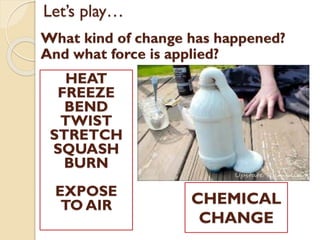
CHANGE
Let’s play…
What kind of change has happened?
And what force is applied?
HEAT
FREEZE
BEND
TWIST
STRETCH
SQUASH
BURN
EXPOSE
TO AIR
CHEMICAL
CHANGE
BENDING
Let’s play…
What kind of change has happened?
And what force is applied?
HEAT
FREEZE
BEND
TWIST
STRETCH
SQUASH
BURN
EXPOSE
TO AIR
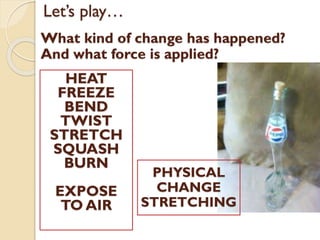
PHYSICAL
CHANGE
STRETCHING
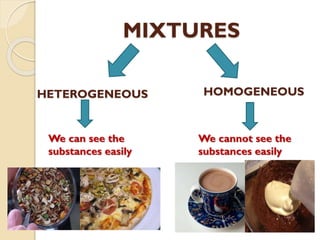
MIXTURES
HETEROGENEOUS HOMOGENEOUS
We can see the
substances easily
We cannot see the
substances easily
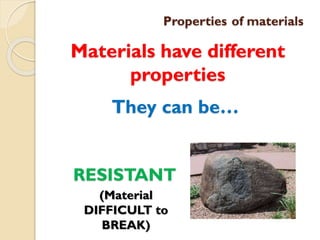
Properties of materials
Materials have different
properties
They can be…
RESISTANT
(Material
DIFFICULT to
BREAK)
Properties of materials
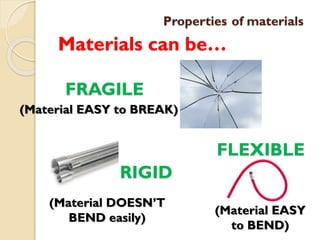
Materials can be…
FRAGILE
(Material EASY to BREAK)
RIGID
(Material DOESN’T
BEND easily)
FLEXIBLE
(Material EASY
to BEND)
Properties of materials
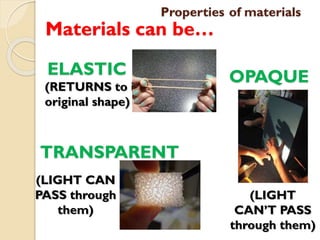
Materials can be…
ELASTIC
(RETURNS to its
original shape)
TRANSPARENT
(LIGHT CAN
PASS through
them)
OPAQUE
(LIGHT
CAN’T PASS
through them)
Properties of materials
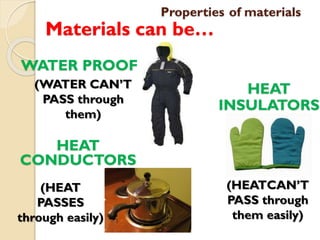
Materials can be…
WATER PROOF
(WATER CAN’T
PASS through
them)
HEAT
CONDUCTORS
(HEAT
PASSES
through easily)
HEAT
INSULATORS
(HEATCAN’T
PASS through
them easily)

Matter around us

  • 2.
  • 3.
    MATTER: features Mass: howmuch matter an object has. It is measured in gr. & kg. What object do you think have more amount of matter? Straw Iron
  • 4.
    MATTER: features Volume: theamount of space that matter takes up Which balloons take up more space? FULL Balloons EMPTY Balloons
  • 5.
  • 7.
    • Solids havea DEFINITE SHAPE • Solids have a DEFINITEVOLUME • Solids have STRONG BONDS
  • 8.
    • Liquids DON’Thave a DEFINITE SHAPE • Liquids have a DEFINITEVOLUME • Liquids have WEAK BONDS
  • 9.
    • Gases DON’Thavea DEFINITE SHAPE • Gases DON’T have a DEFINITEVOLUME • Gases DON’T have BONDS
  • 10.
    Let’s remember thestates of matter and their characteristics
  • 11.
    Changes in Matter Physicalchange Chemical change Changes in shape Changes in state SAME SUBSTANCE NEW SUBSTANCE IS PRODUCED
  • 12.
    Let’s play… What kindof change has happened? And what force is applied? PHYSICAL CHANGE TWISTING HEAT FREEZE BEND TWIST STRETCH SQUASH BURN EXPOSE TO AIR
  • 13.
    Let’s play… What kindof change has happened? And what force is applied? HEAT FREEZE BEND TWIST STRETCH SQUASH BURN EXPOSE TO AIR CHEMICAL CHANGE EXPOSINGTO AIR
  • 14.
    Let’s play… What kindof change has happened? And what force is applied? HEAT FREEZE BEND TWIST STRETCH SQUASH BURN EXPOSE TO AIR CHEMICAL CHANGE BURNING
  • 15.
    Let’s play… What kindof change has happened? And what force is applied? HEAT FREEZE BEND TWIST STRETCH SQUASH BURN EXPOSE TO AIR PHYSICAL CHANGE SQUASHING
  • 16.
    Let’s play… What kindof change has happened? And what force is applied? HEAT FREEZE BEND TWIST STRETCH SQUASH BURN EXPOSE TO AIR PHYSICAL CHANGE HEATING
  • 17.
    Let’s play… What kindof change has happened? And what force is applied? HEAT FREEZE BEND TWIST STRETCH SQUASH BURN EXPOSE TO AIR PHYSICAL CHANGE FREEZING
  • 18.
    Let’s play… What kindof change has happened? And what force is applied? HEAT FREEZE BEND TWIST STRETCH SQUASH BURN EXPOSE TO AIR CHEMICAL CHANGE BURNING
  • 19.
    Let’s play… What kindof change has happened? And what force is applied? HEAT FREEZE BEND TWIST STRETCH SQUASH BURN EXPOSE TO AIR PHYSICAL CHANGE HEATING
  • 20.
    Let’s play… What kindof change has happened? And what force is applied? HEAT FREEZE BEND TWIST STRETCH SQUASH BURN EXPOSE TO AIR CHEMICAL CHANGE
  • 21.
    Let’s play… What kindof change has happened? And what force is applied? HEAT FREEZE BEND TWIST STRETCH SQUASH BURN EXPOSE TO AIR CHEMICAL CHANGE BENDING
  • 22.
    Let’s play… What kindof change has happened? And what force is applied? HEAT FREEZE BEND TWIST STRETCH SQUASH BURN EXPOSE TO AIR PHYSICAL CHANGE STRETCHING
  • 23.
    MIXTURES HETEROGENEOUS HOMOGENEOUS We cansee the substances easily We cannot see the substances easily
  • 24.
    Properties of materials Materialshave different properties They can be… RESISTANT (Material DIFFICULT to BREAK)
  • 25.
    Properties of materials Materialscan be… FRAGILE (Material EASY to BREAK) RIGID (Material DOESN’T BEND easily) FLEXIBLE (Material EASY to BEND)
  • 26.
    Properties of materials Materialscan be… ELASTIC (RETURNS to its original shape) TRANSPARENT (LIGHT CAN PASS through them) OPAQUE (LIGHT CAN’T PASS through them)
  • 27.
    Properties of materials Materialscan be… WATER PROOF (WATER CAN’T PASS through them) HEAT CONDUCTORS (HEAT PASSES through easily) HEAT INSULATORS (HEATCAN’T PASS through them easily)