edwinxav@hotmail.com 
elapuerta@hotmail.com
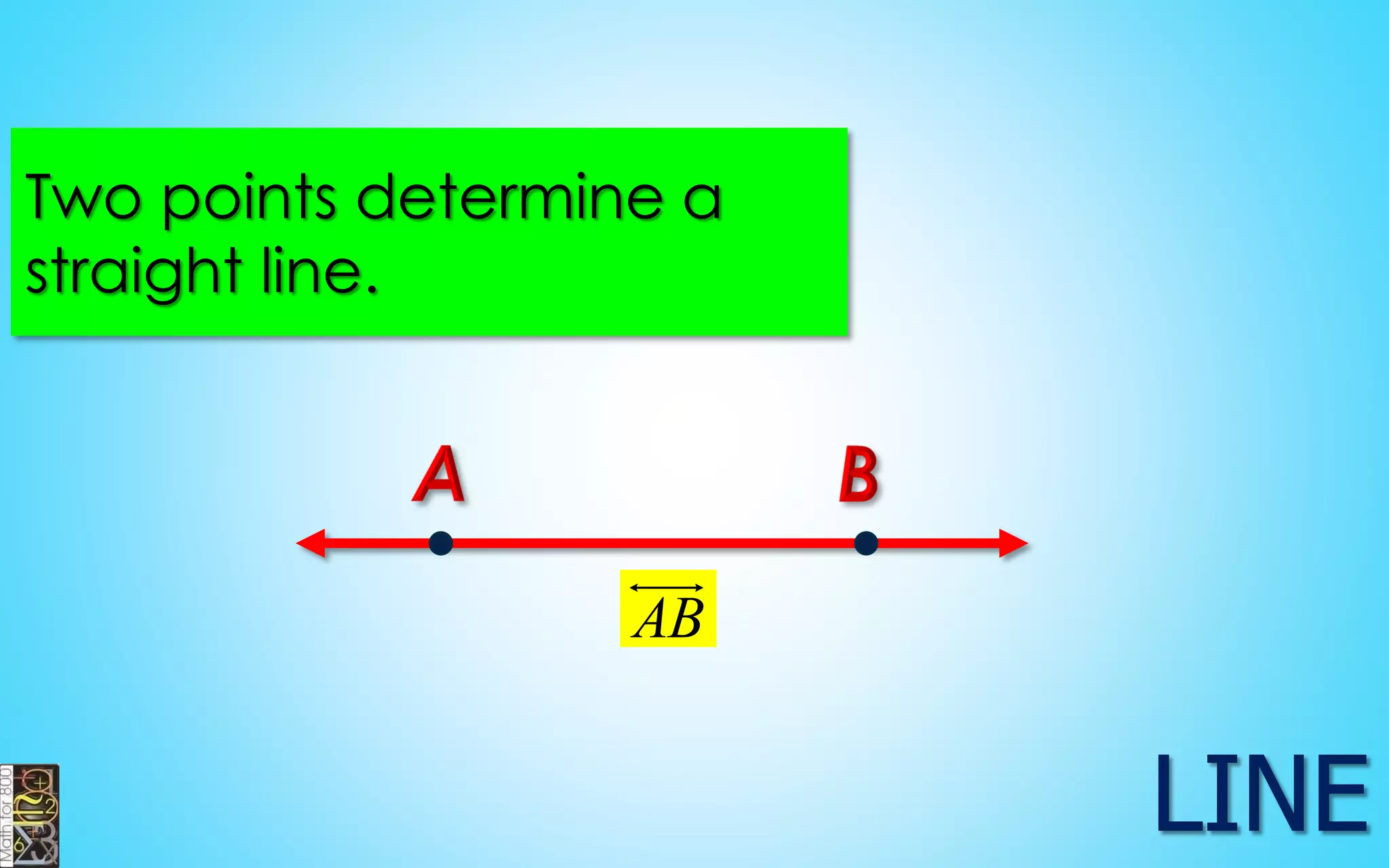
Two points determine a 
straight line. 
AB
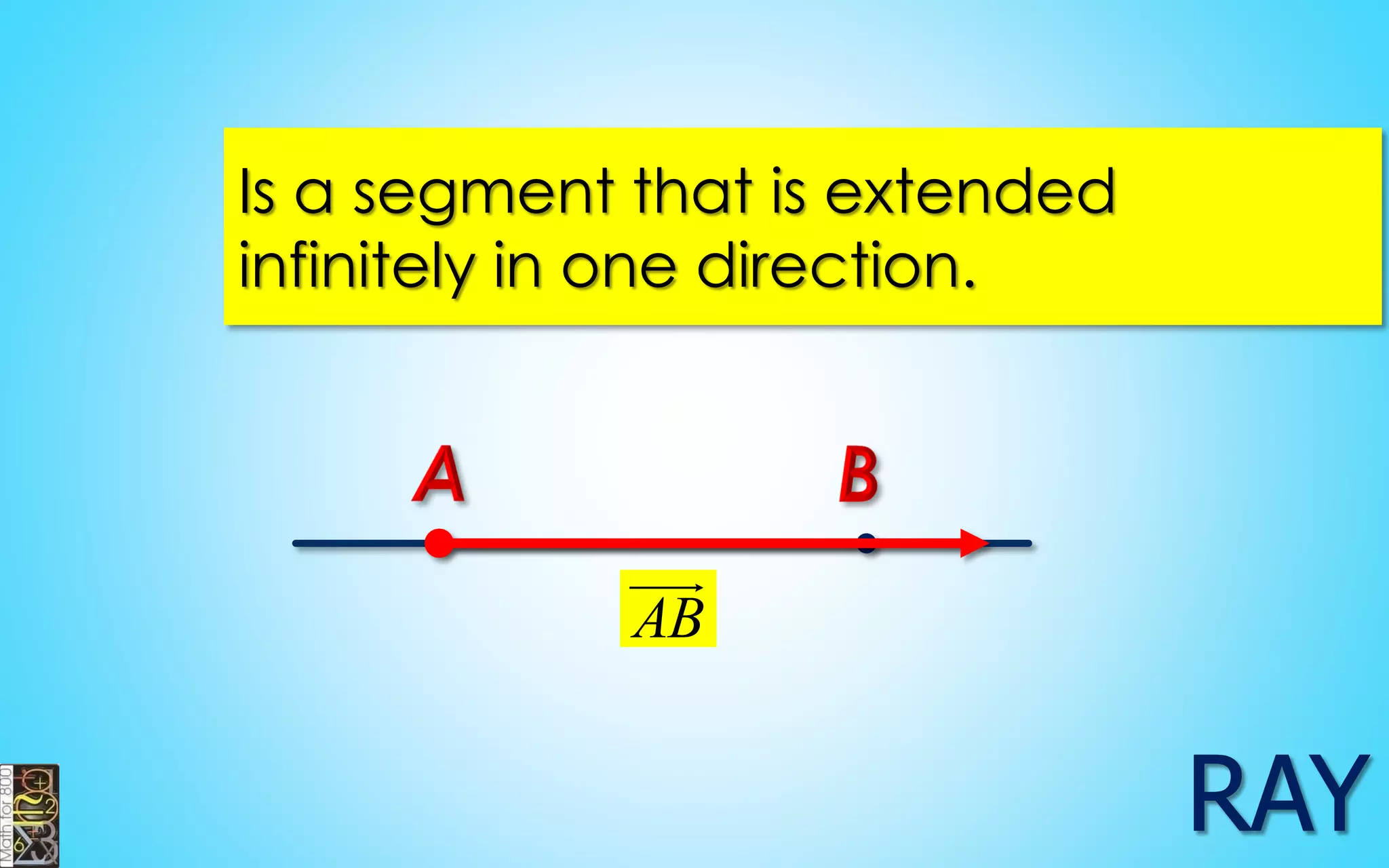
Is a segment that is extended 
infinitely in one direction. 
AB
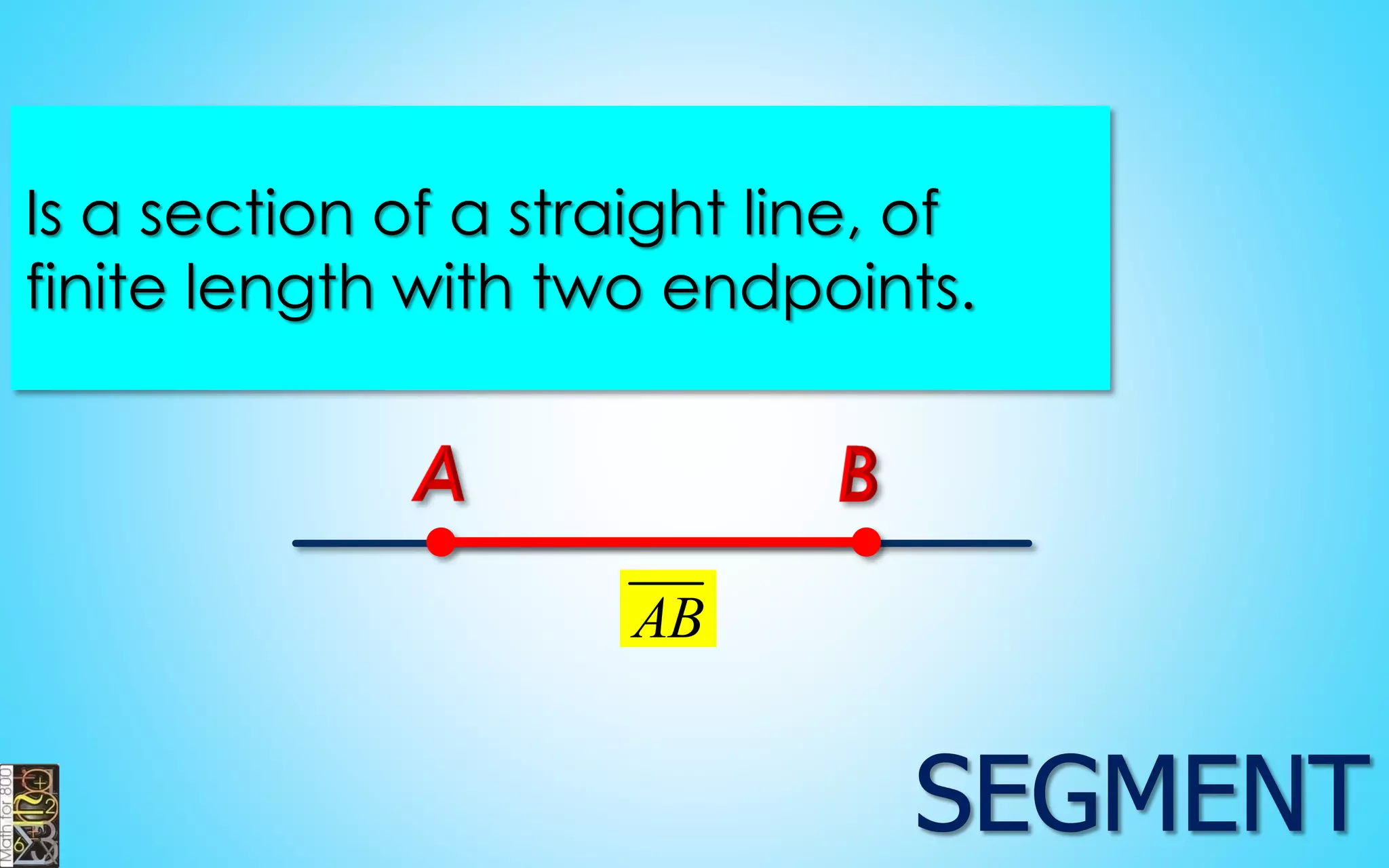
Is a section of a straight line, of finite length with two endpoints. 
AB
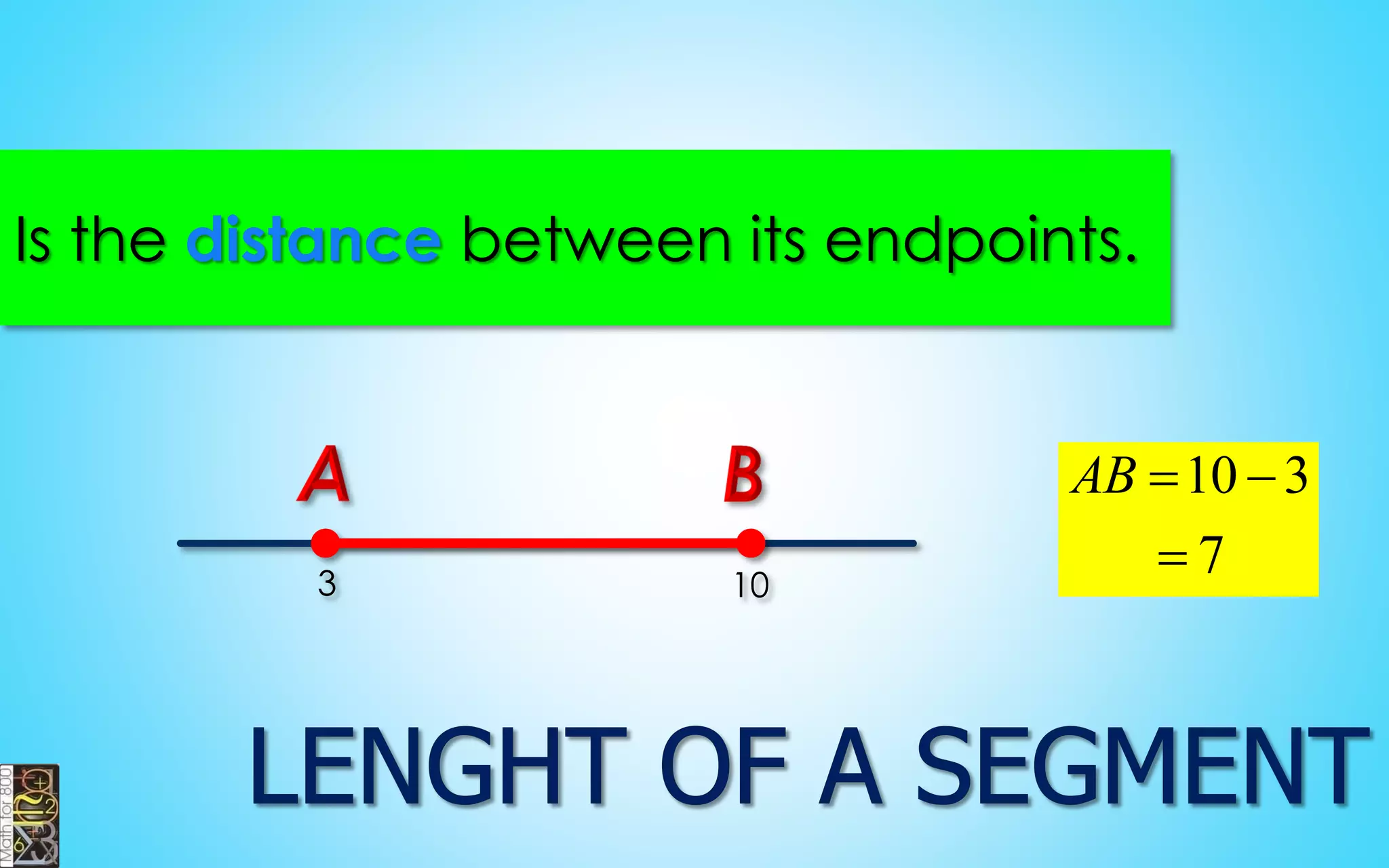
Is the distance between its endpoints. 
10 3 
7 
AB  
 
3 10
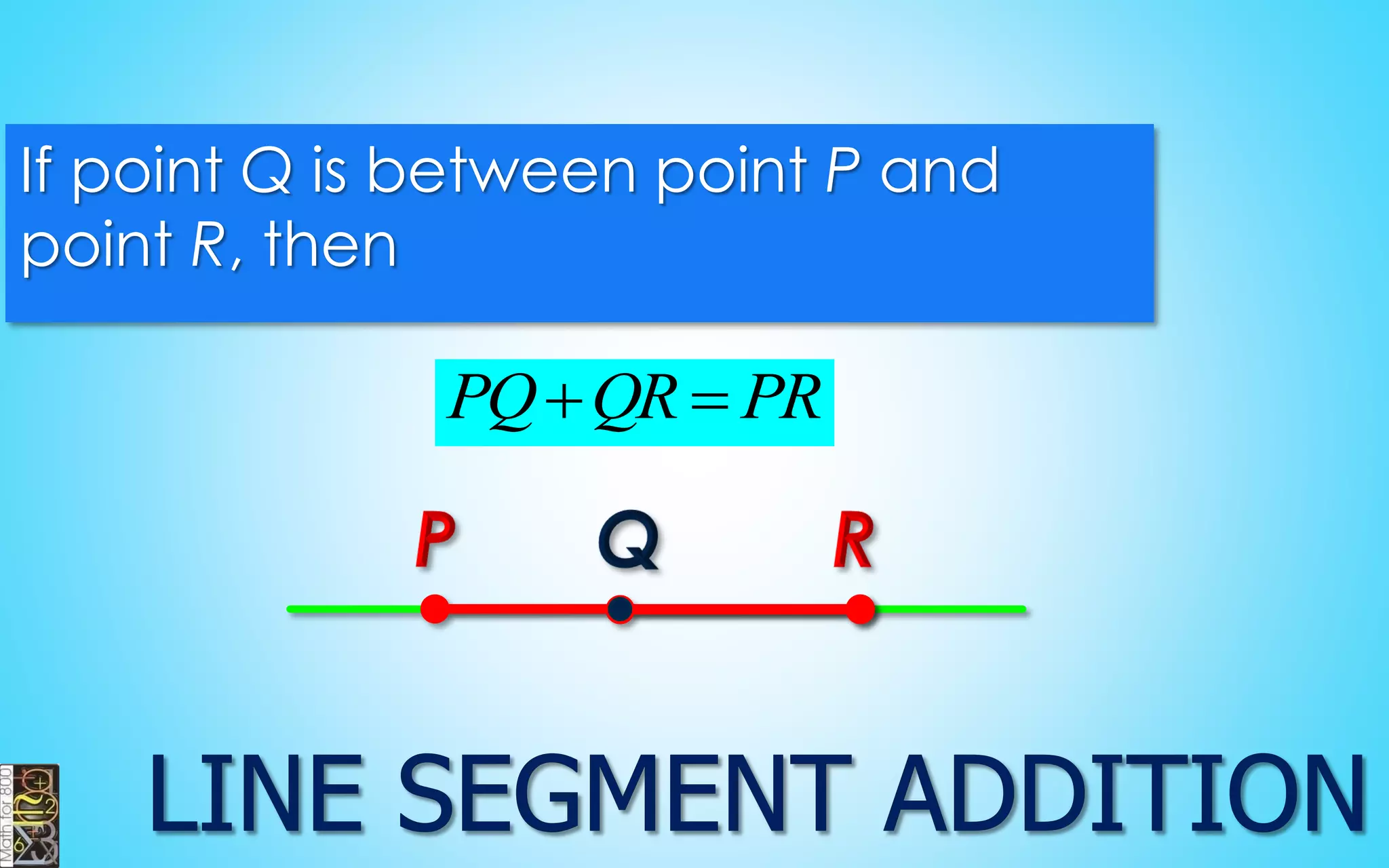
If point Q is between point P and 
point R, then 
PQQR  PR
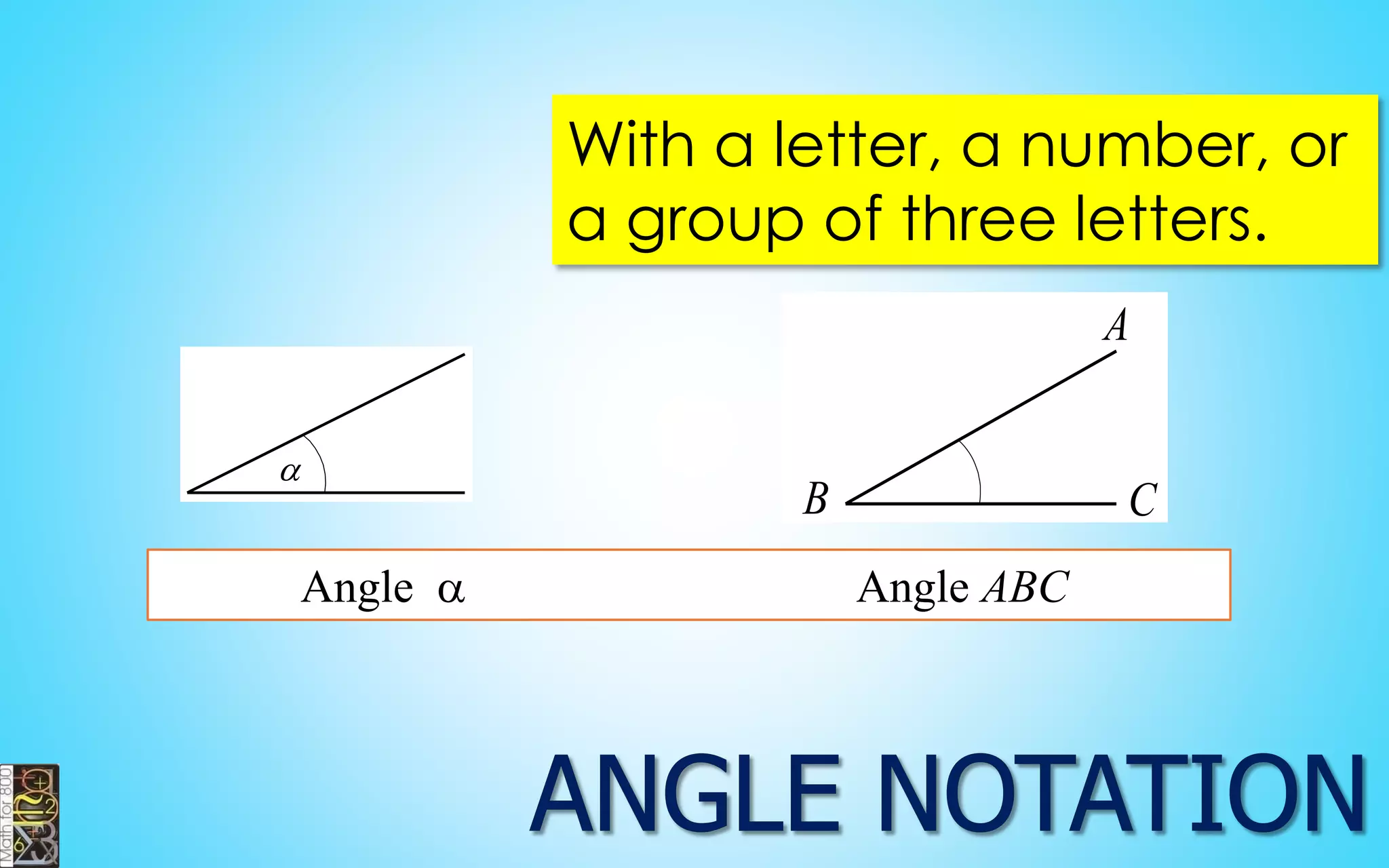
With a letter, a number, or 
a group of three letters. 
a 
A 
B C 
Angle a Angle ABC
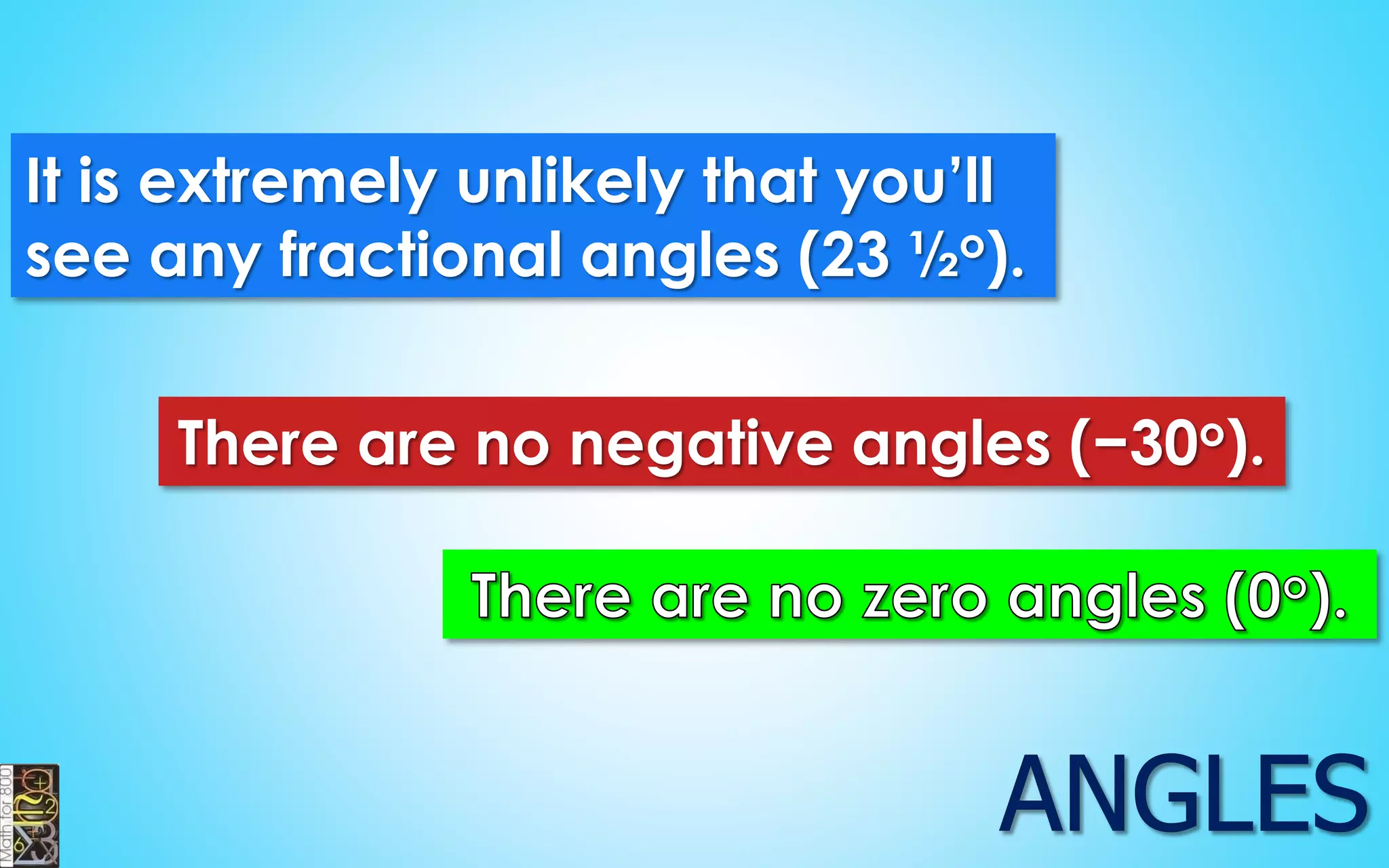
It is extremely unlikely that you’ll see any fractional angles (23 ½o). There are no negative angles (−30o).
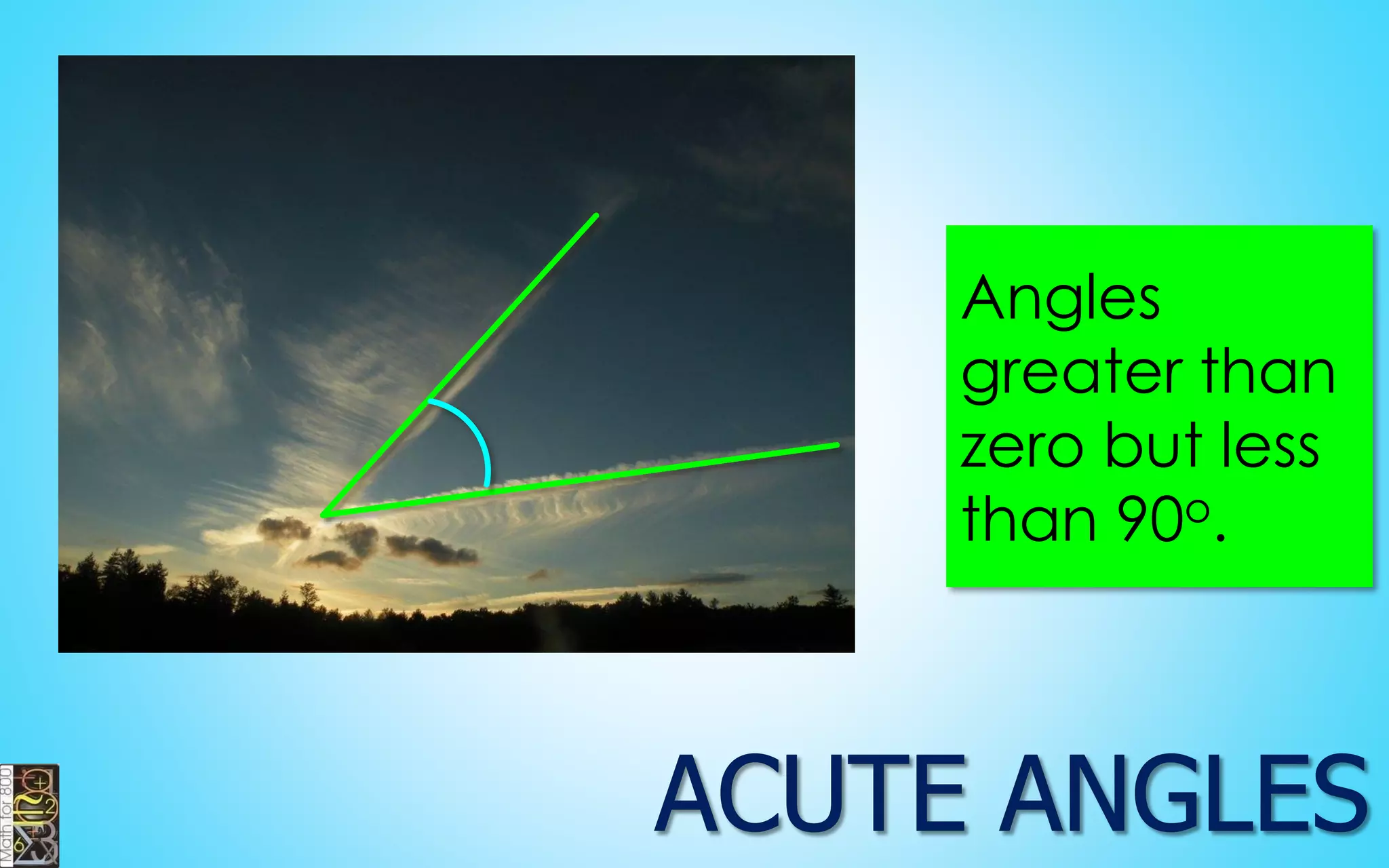
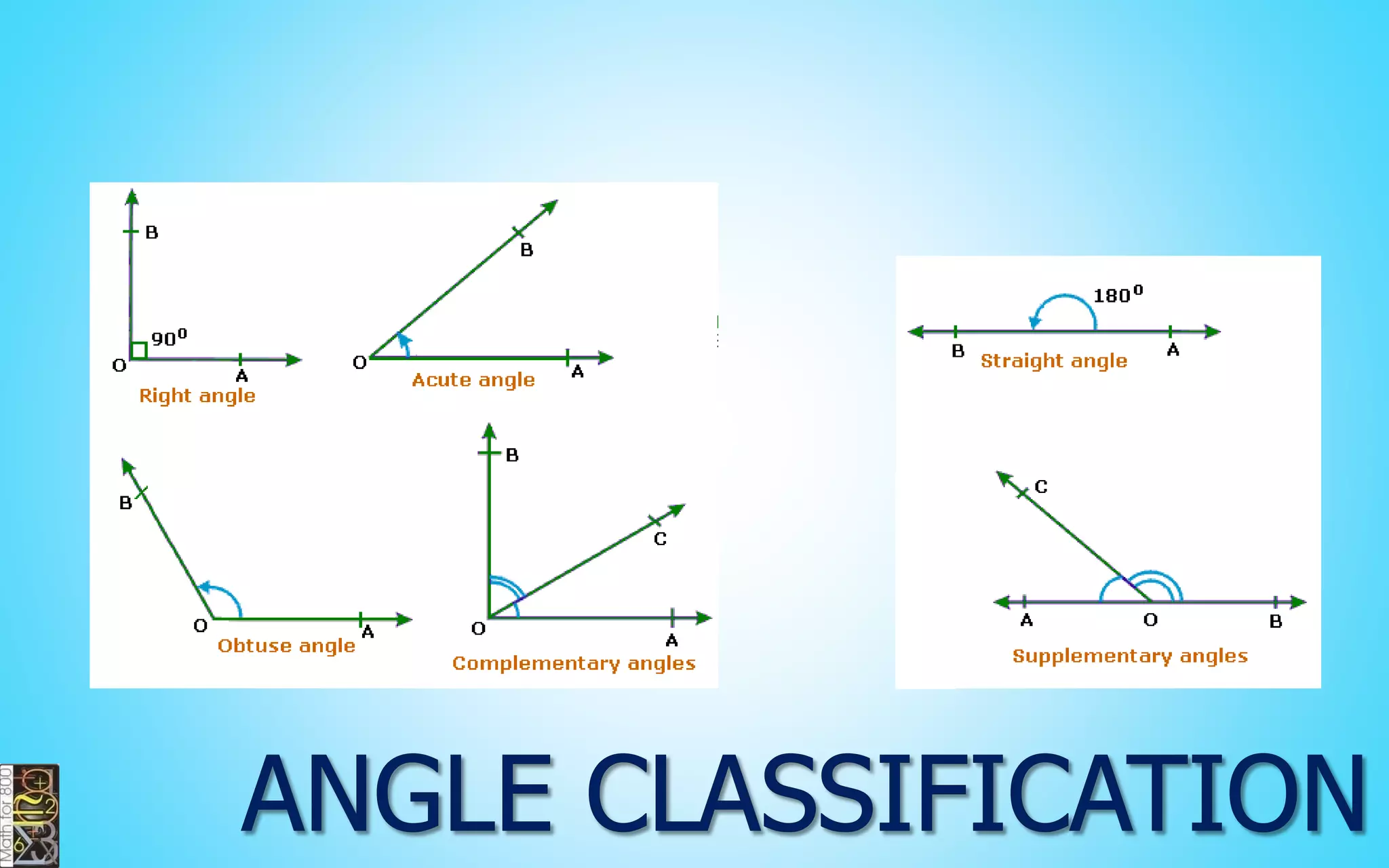
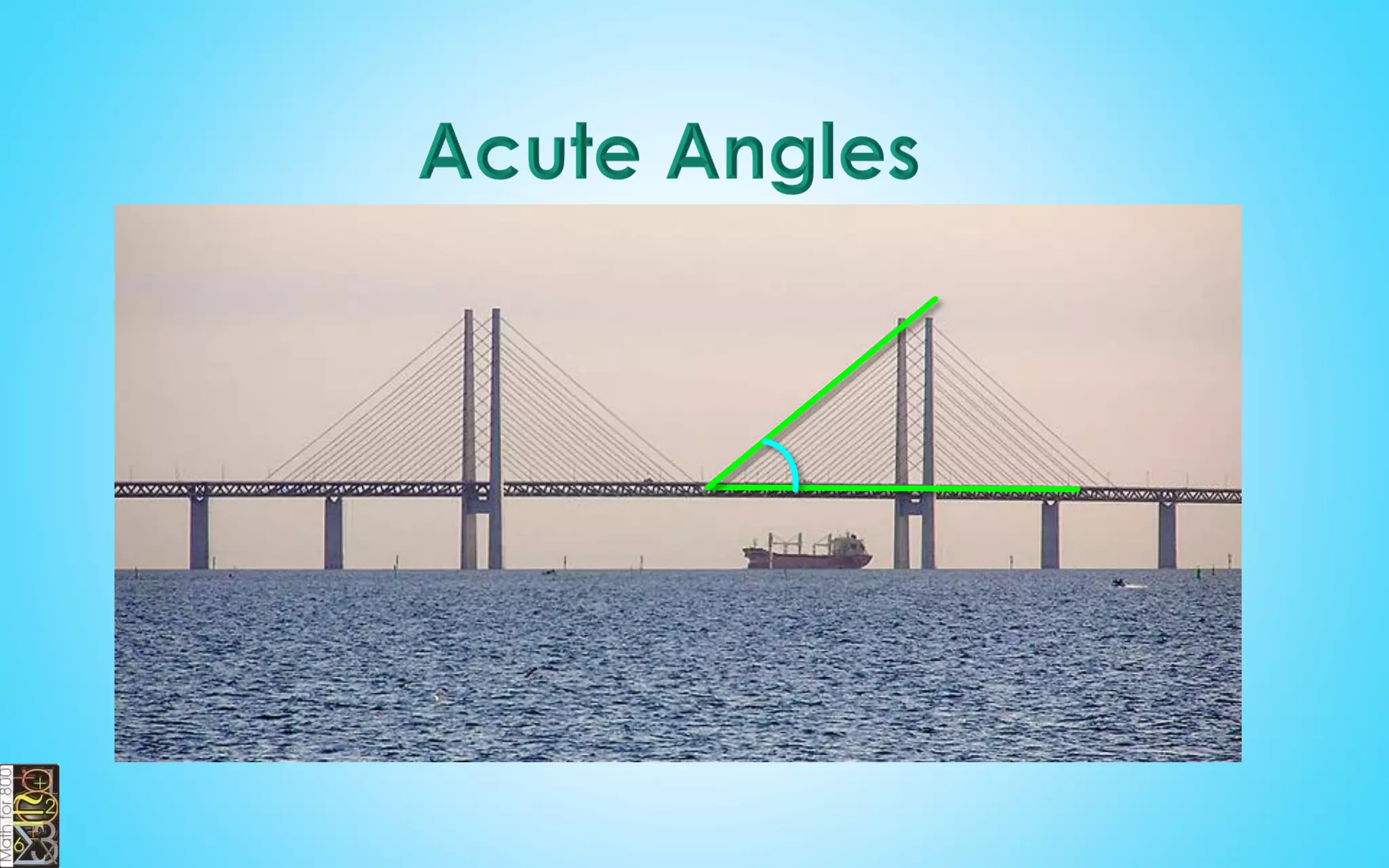
Angles greater than zero but less than 90o.
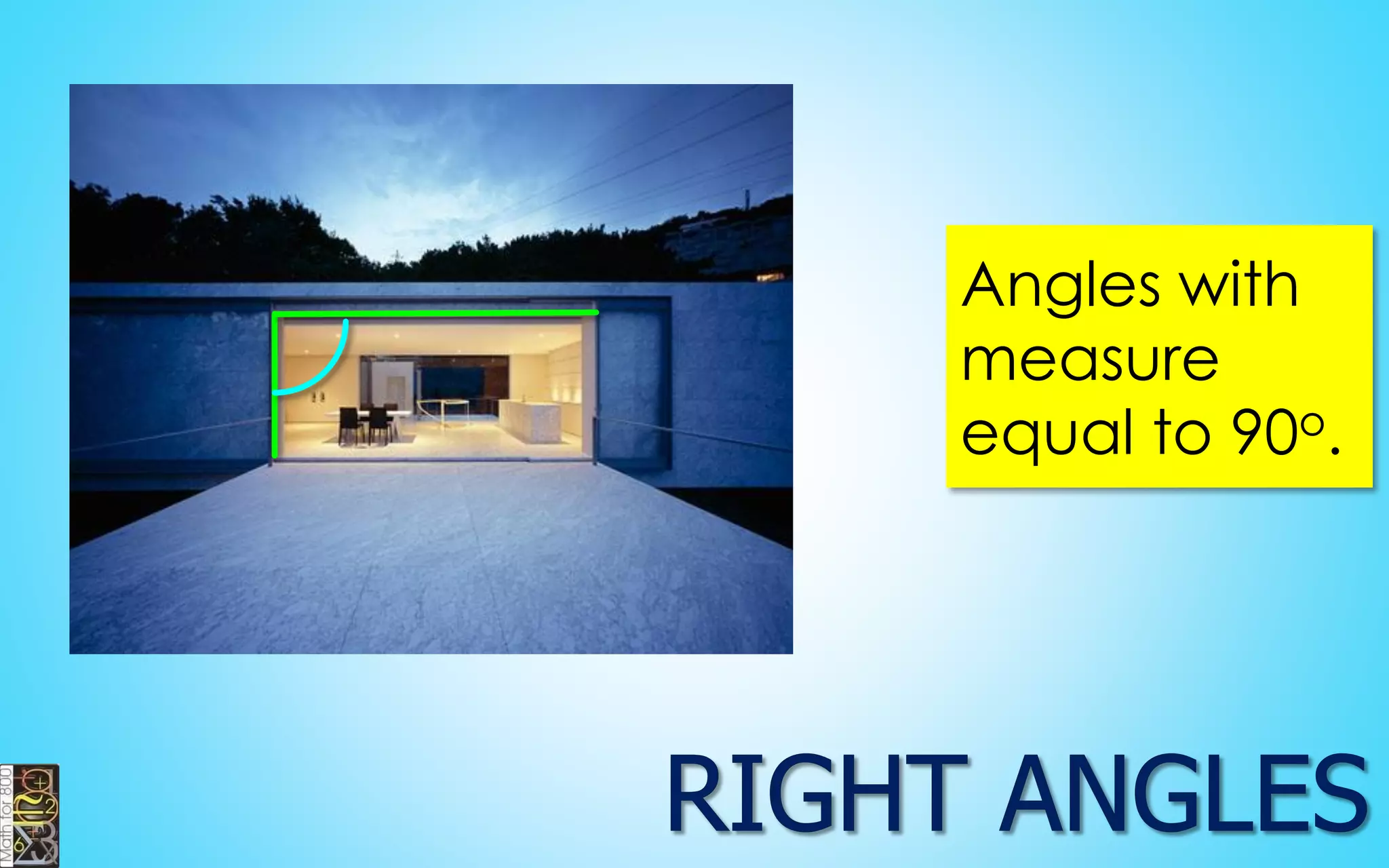
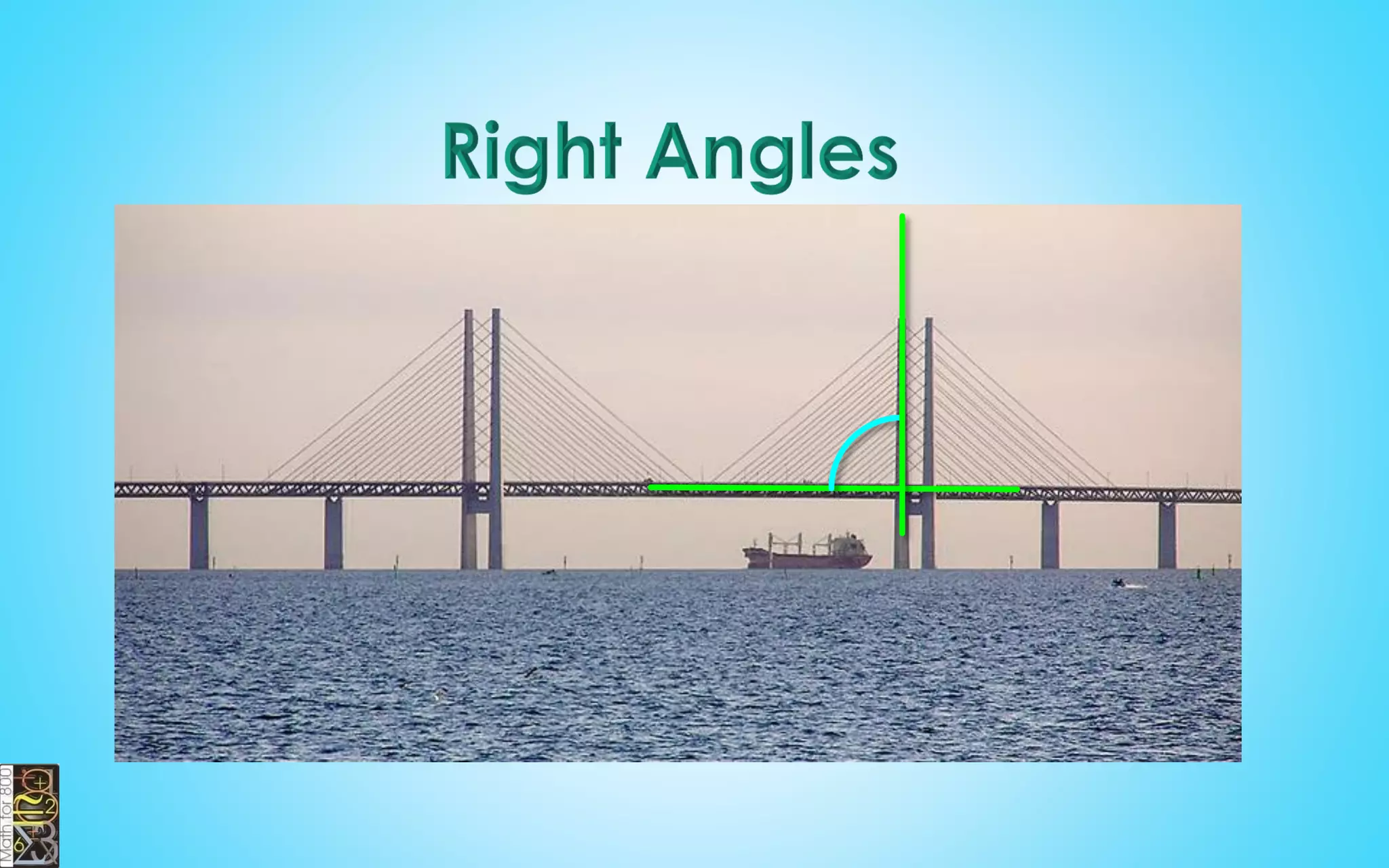
Angles with measure equal to 90o.
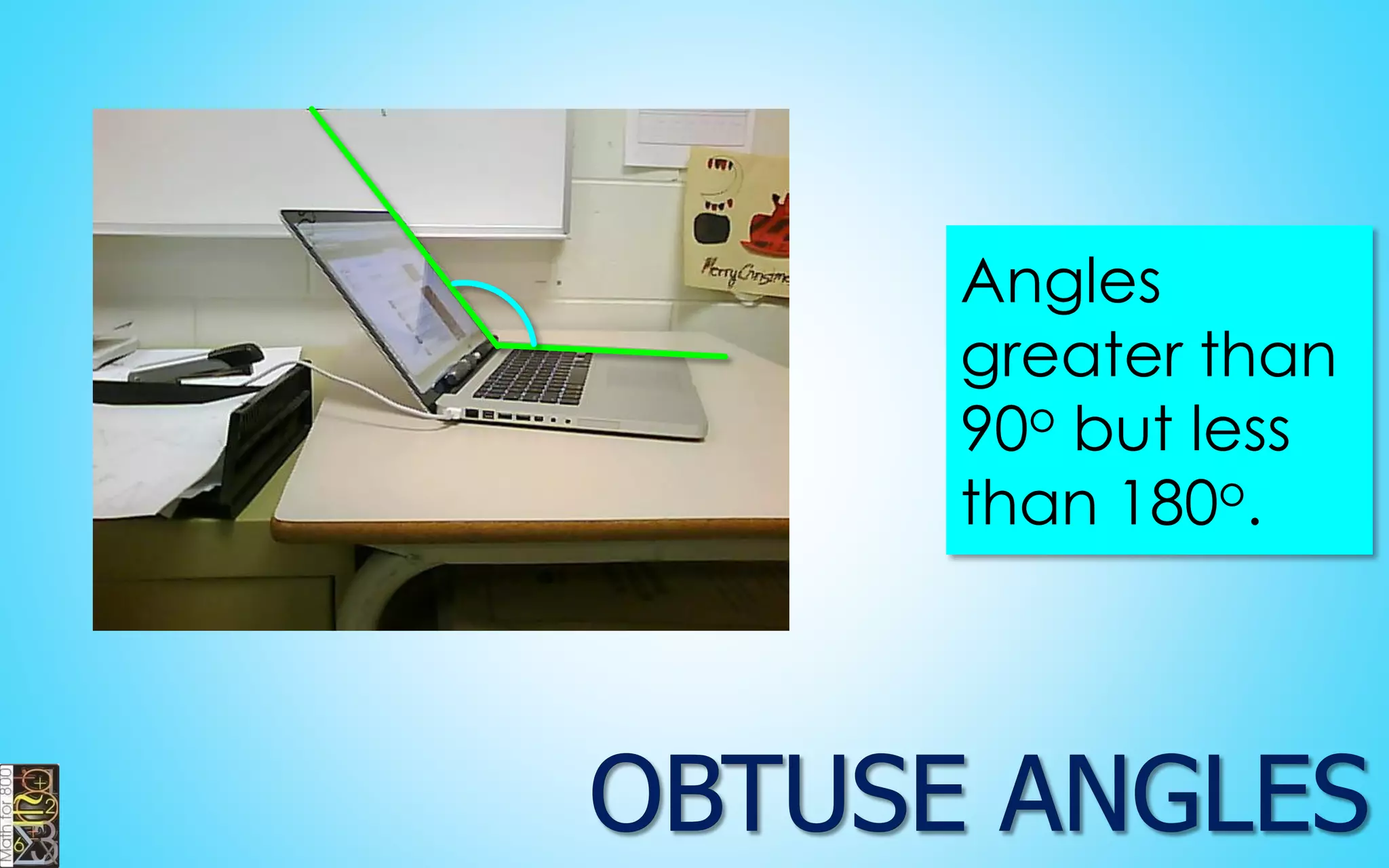
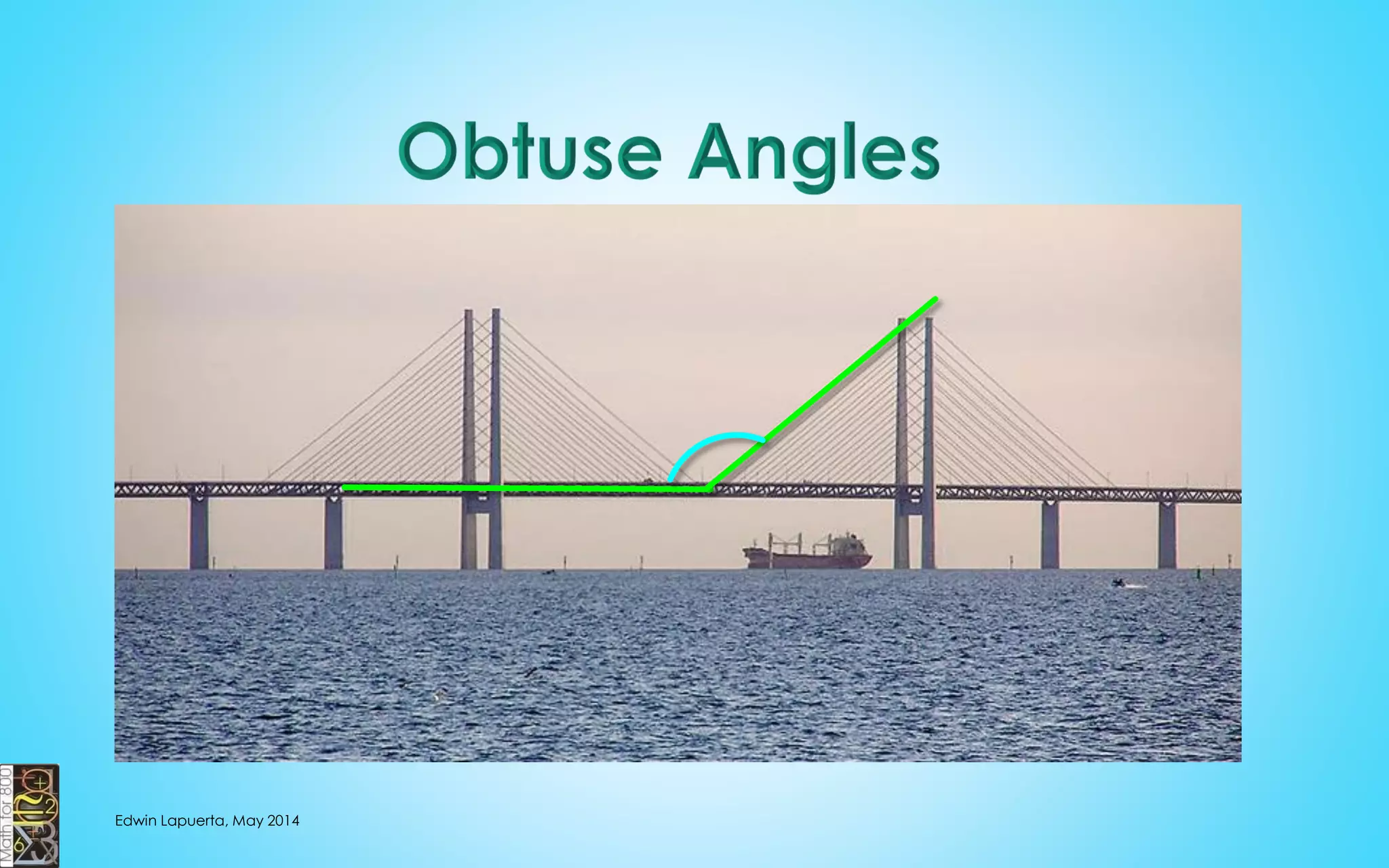
Angles greater than 90obut less than 180o.
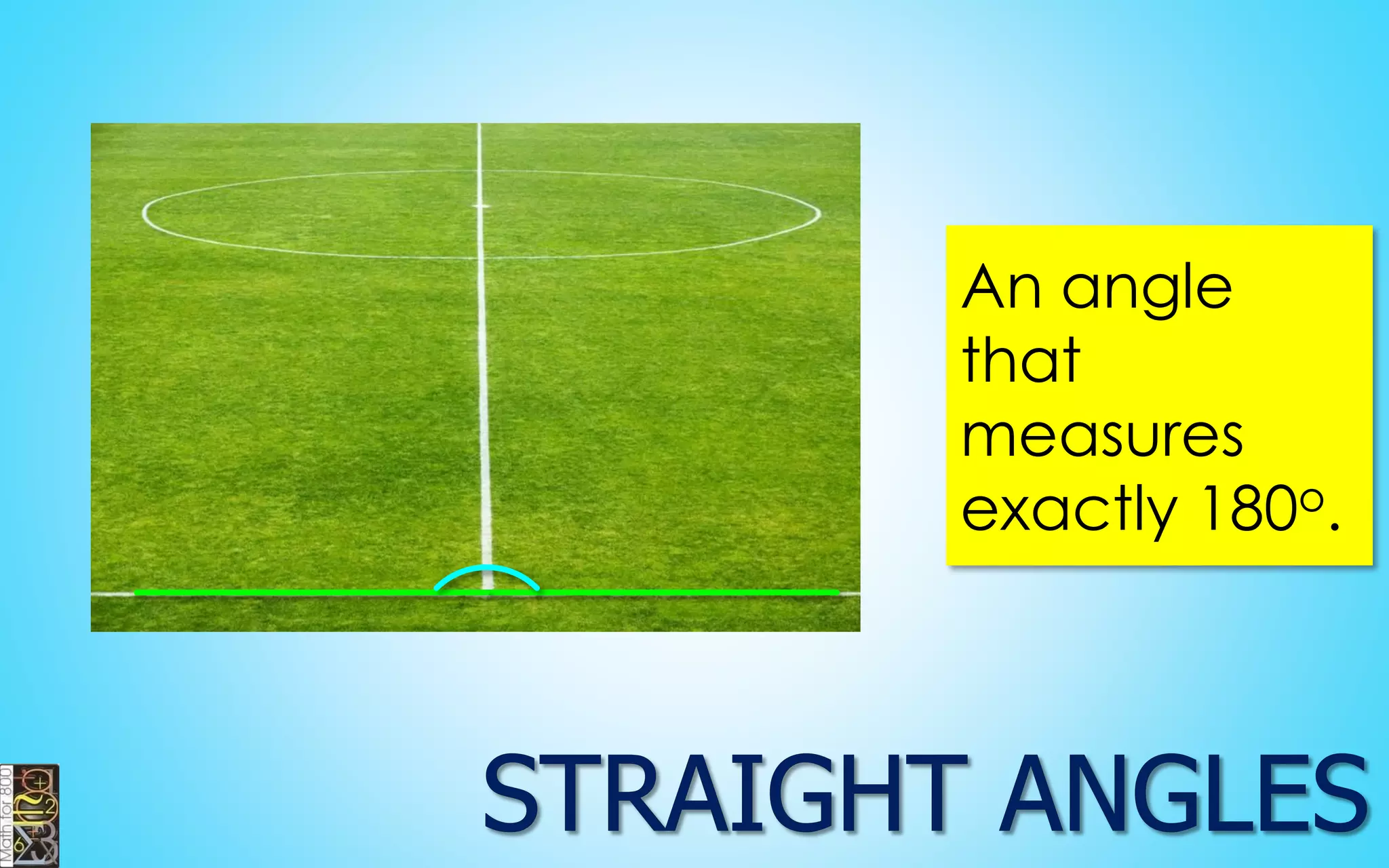
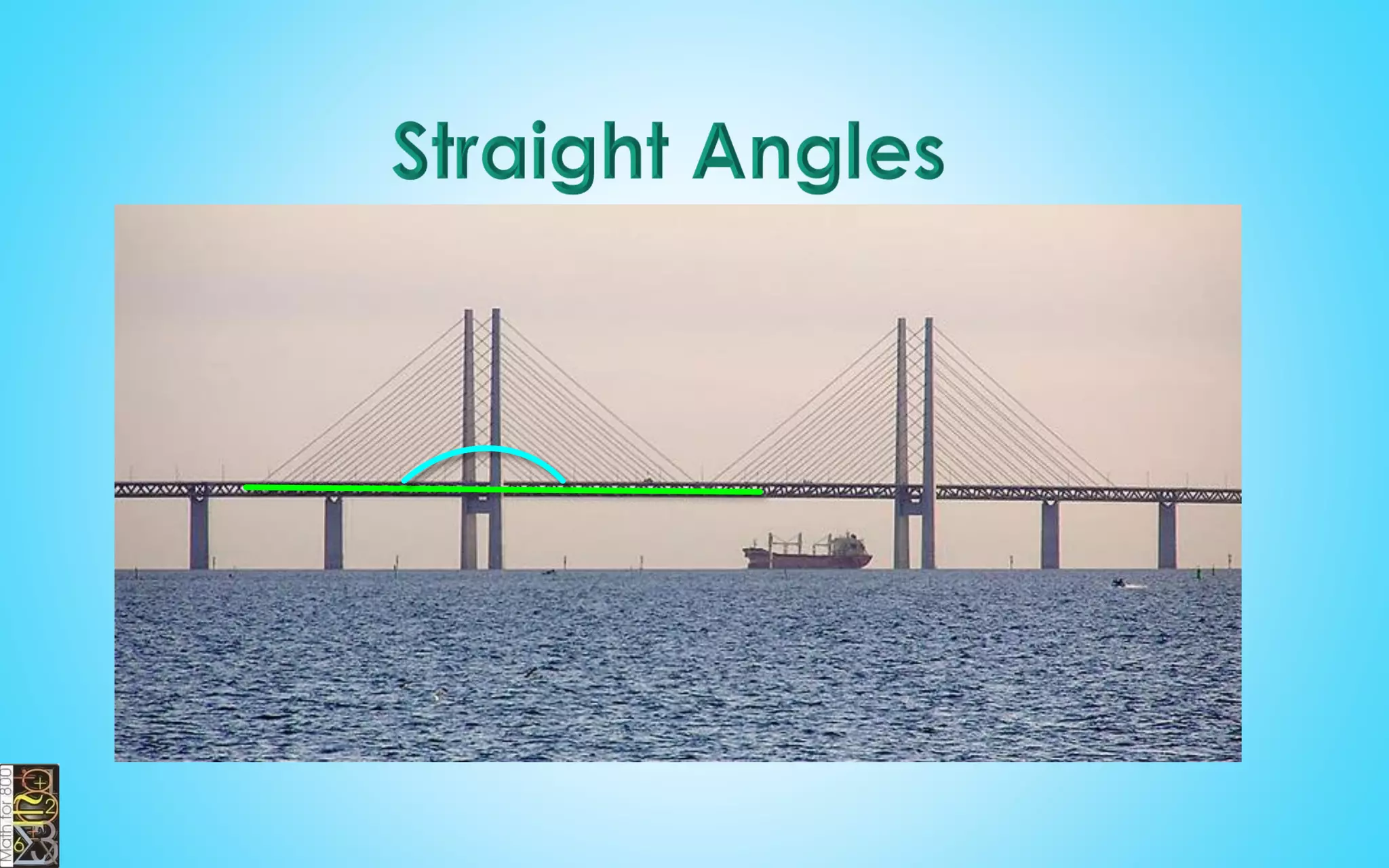
An angle that measures exactly 180o.
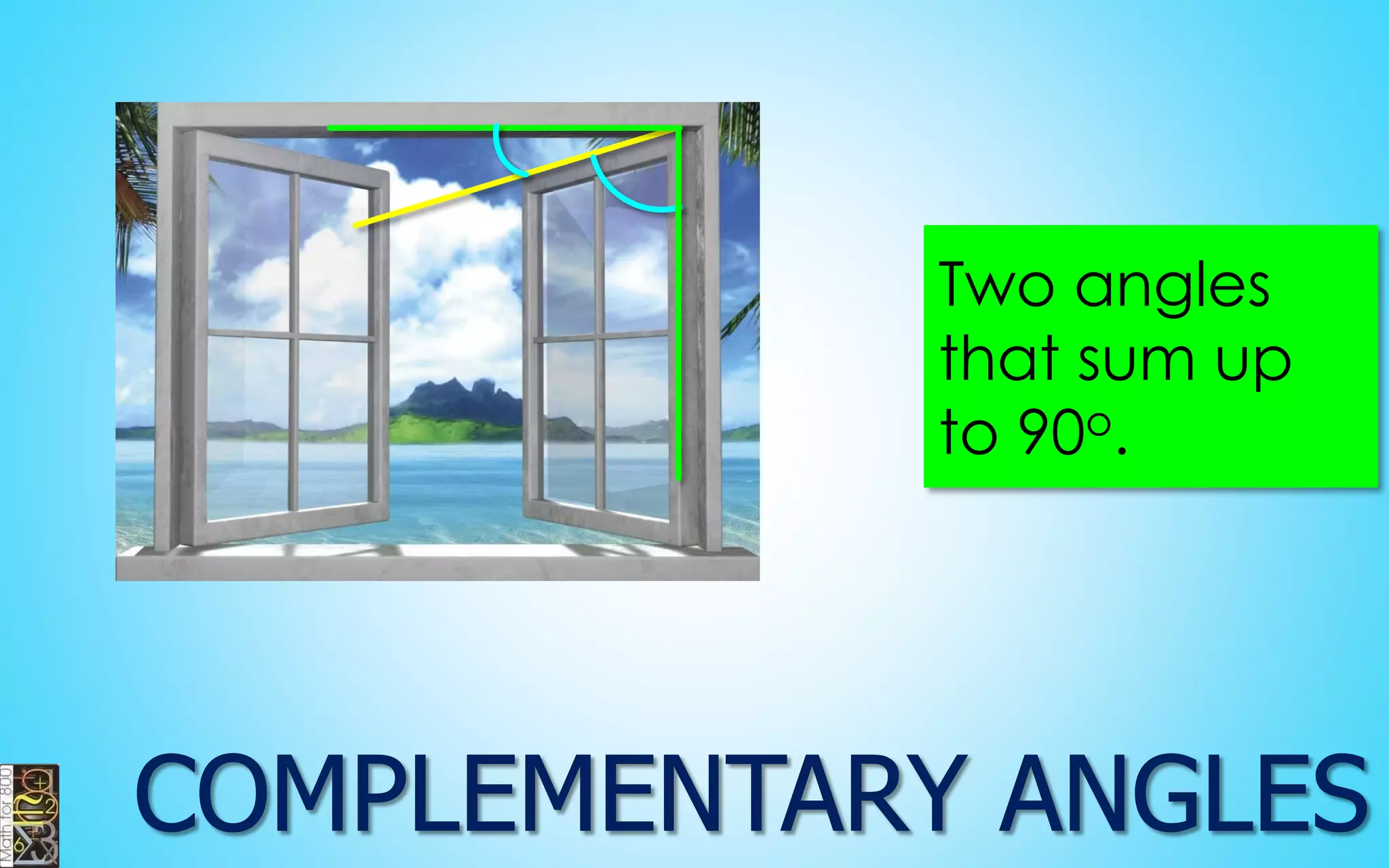
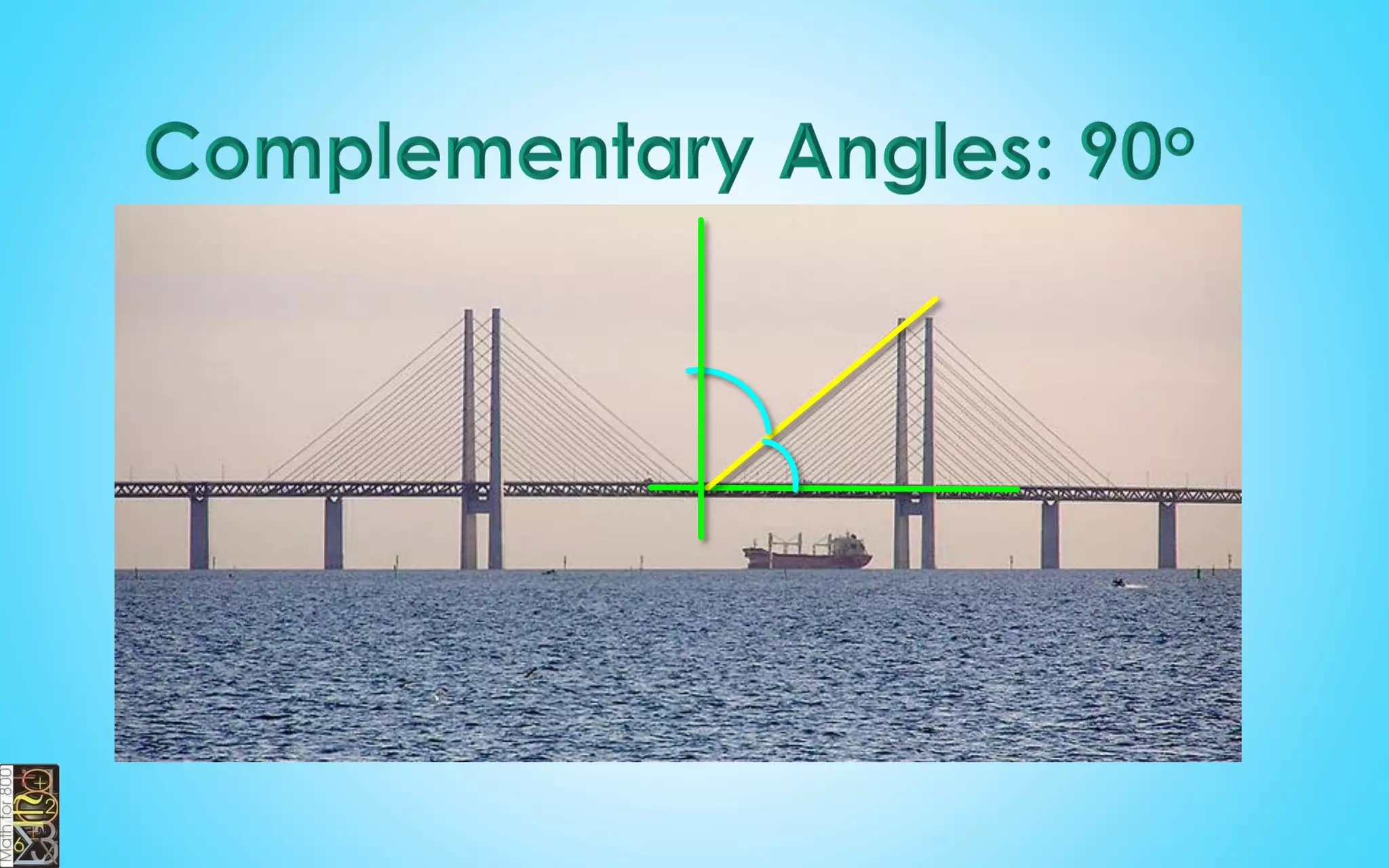
Two angles that sum up to 90o.
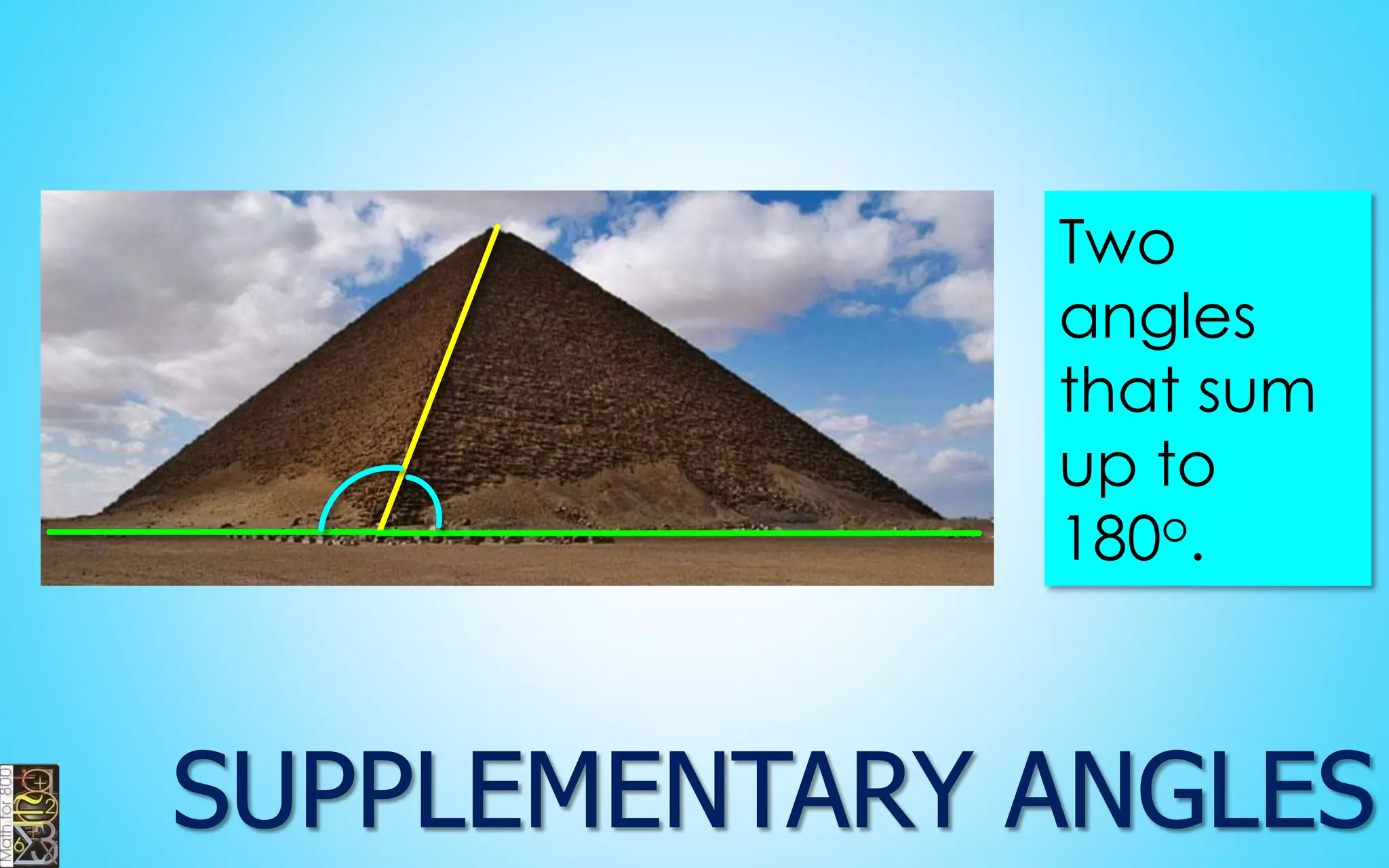
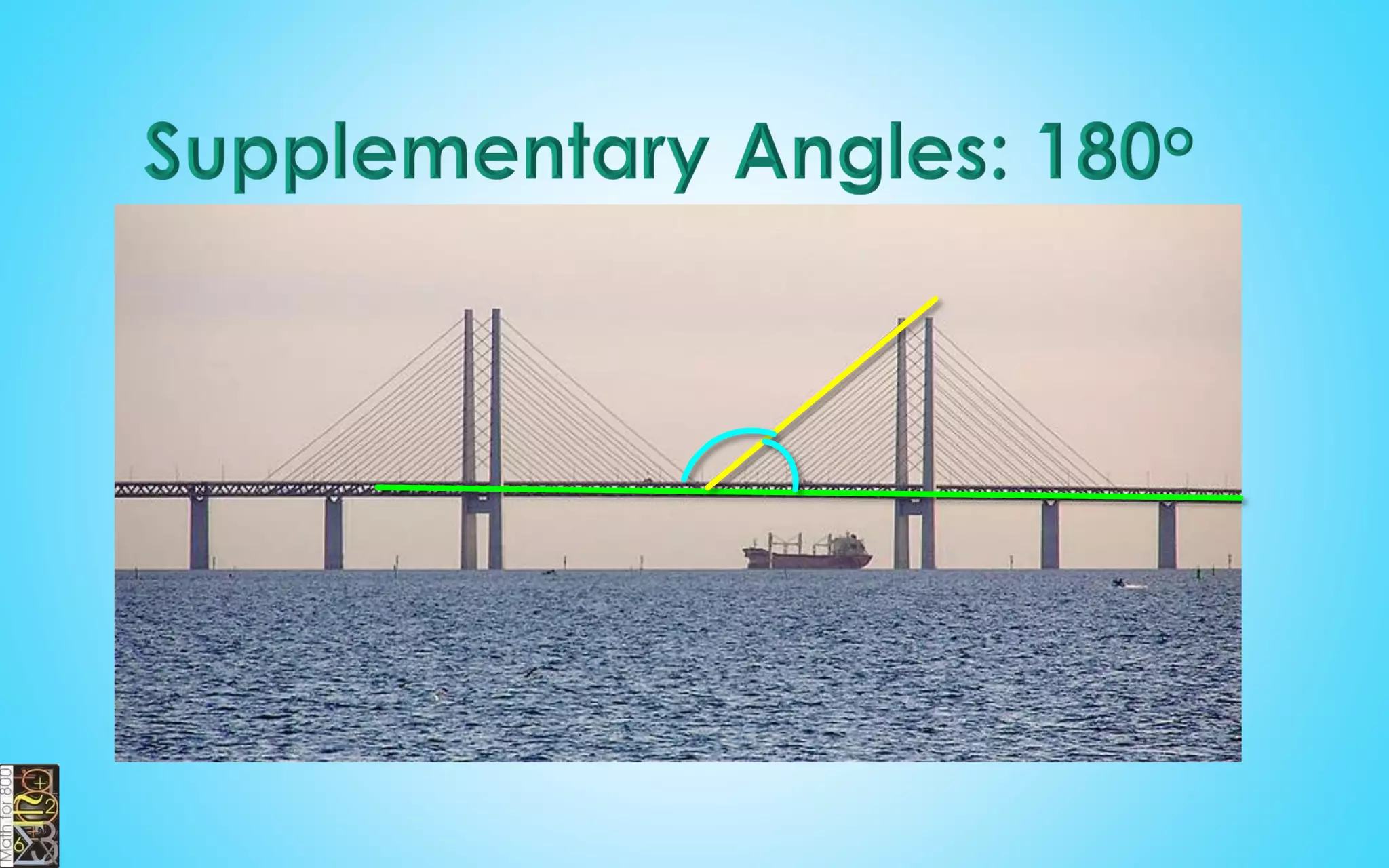
Two angles that sum up to 180o.
Edwin Lapuerta, May 2014
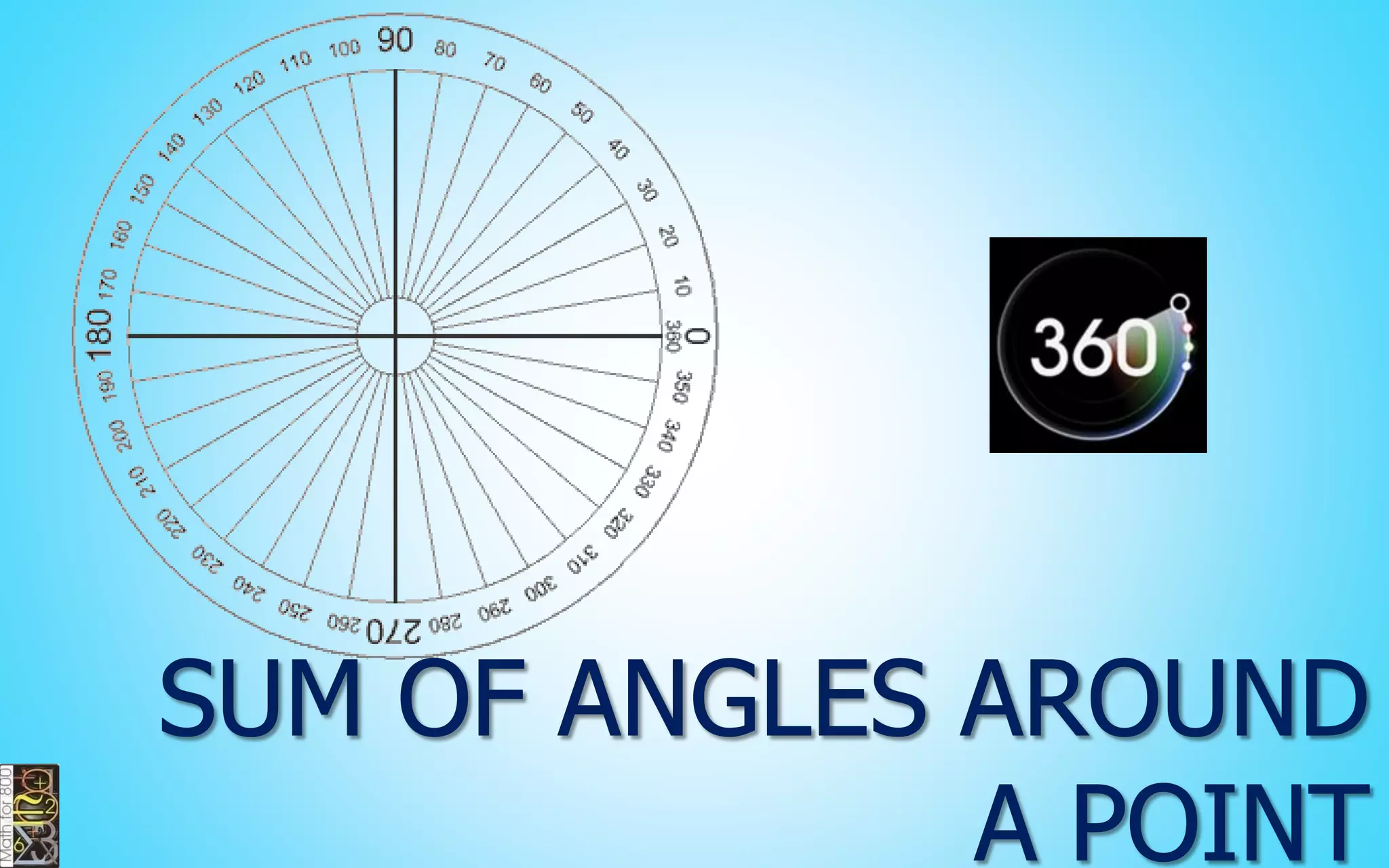
LINES AND ANGLES
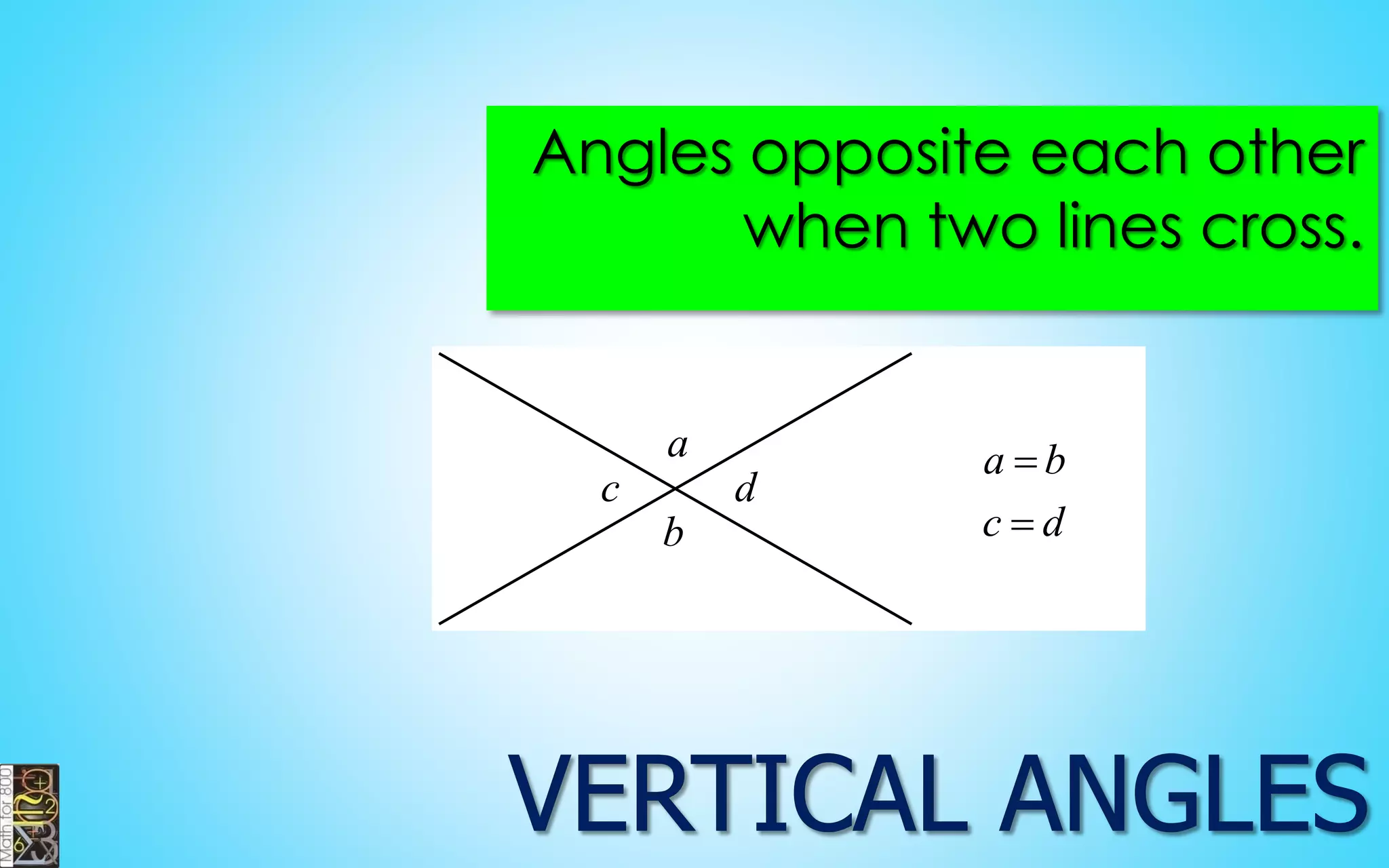
Angles opposite each other when two lines cross. 
acbdabcd  
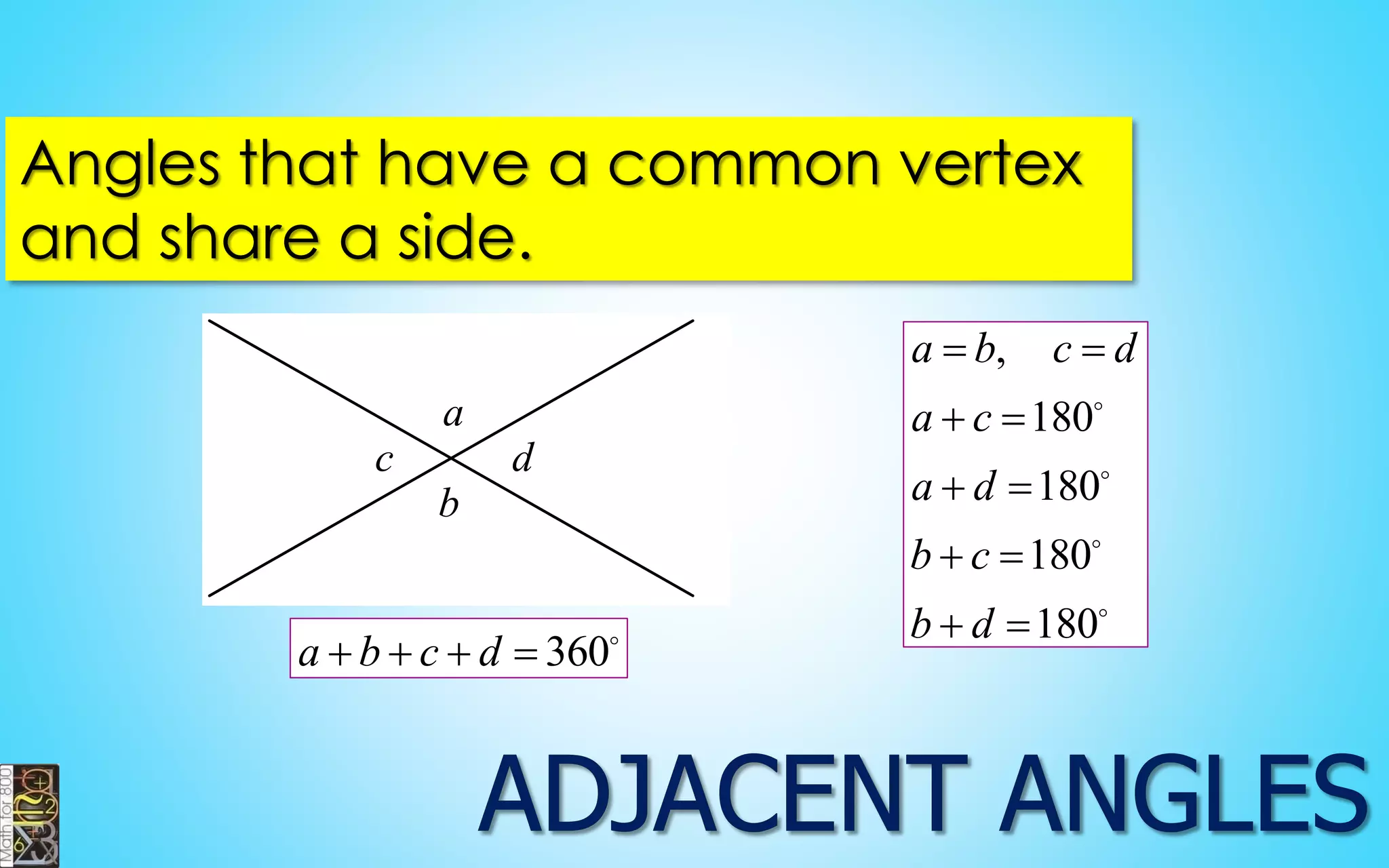
Angles that have a common vertex 
and share a side. 
a 
c 
b 
d 
, 
180 
180 
180 
180 
a b c d 
a c 
a d 
b c 
b d 
  
  
  
  
  
a  b  c  d  360
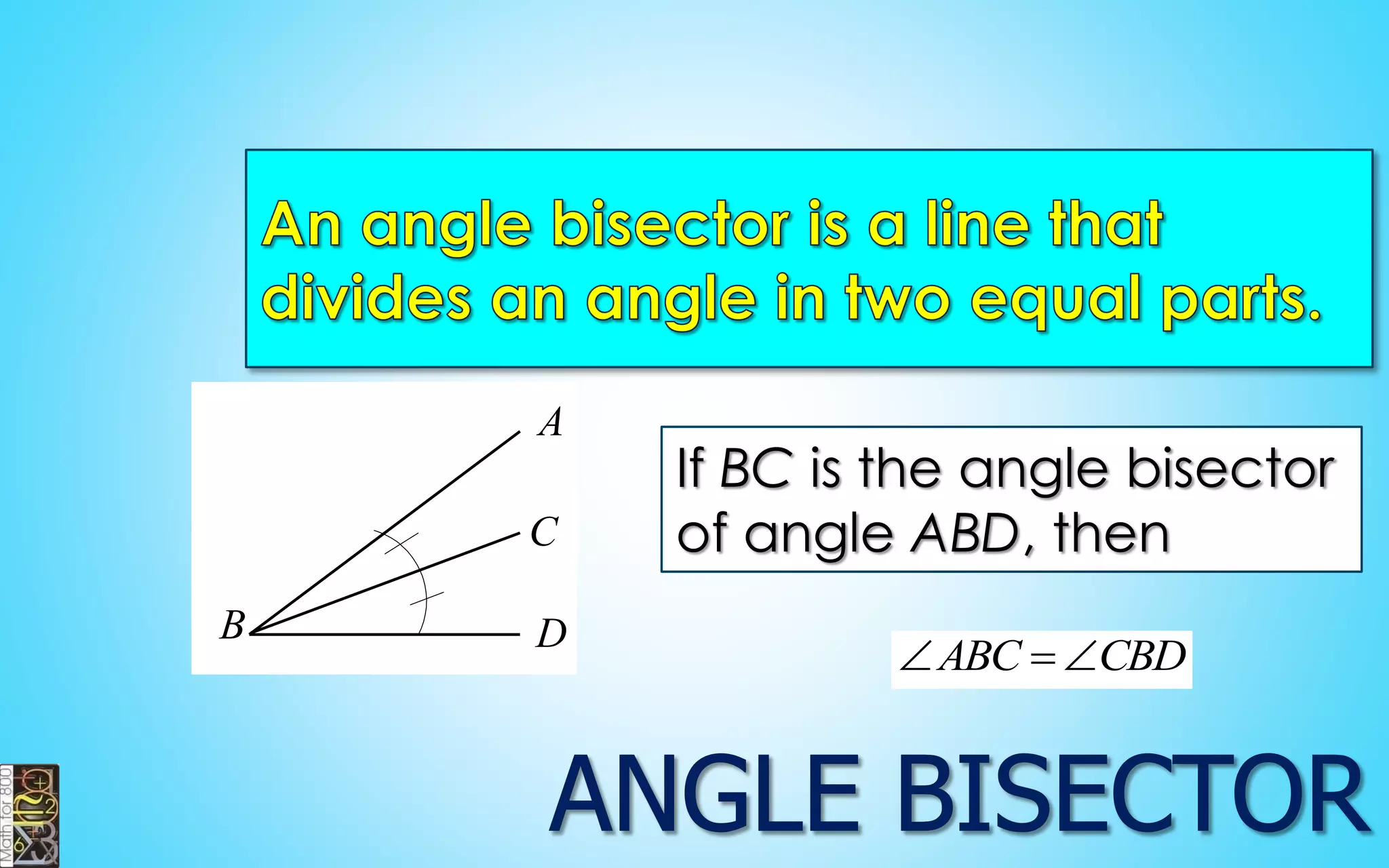
ABC CBD 
A 
B 
C 
D 
If BC is the angle bisector 
of angle ABD, then
L1L2
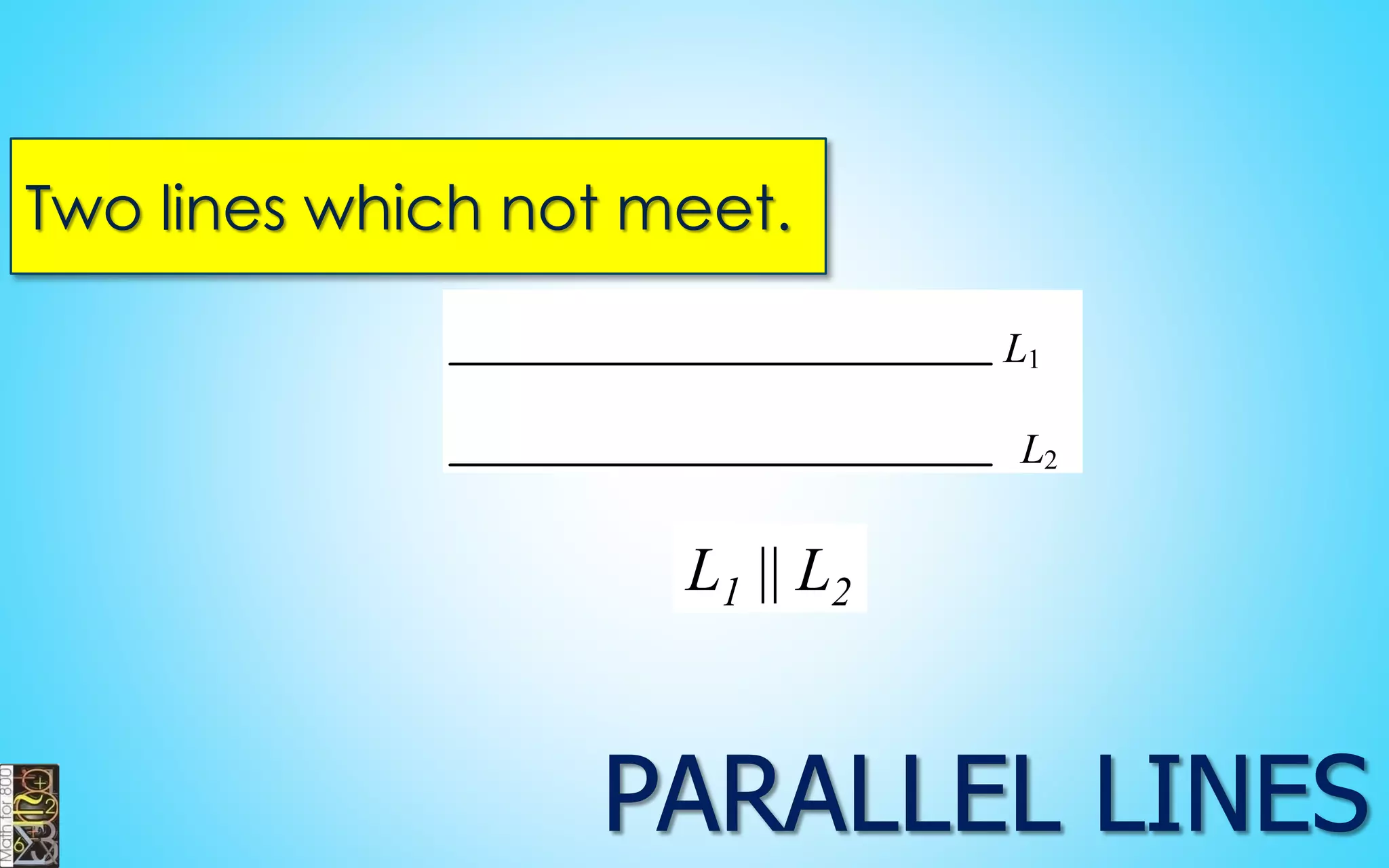
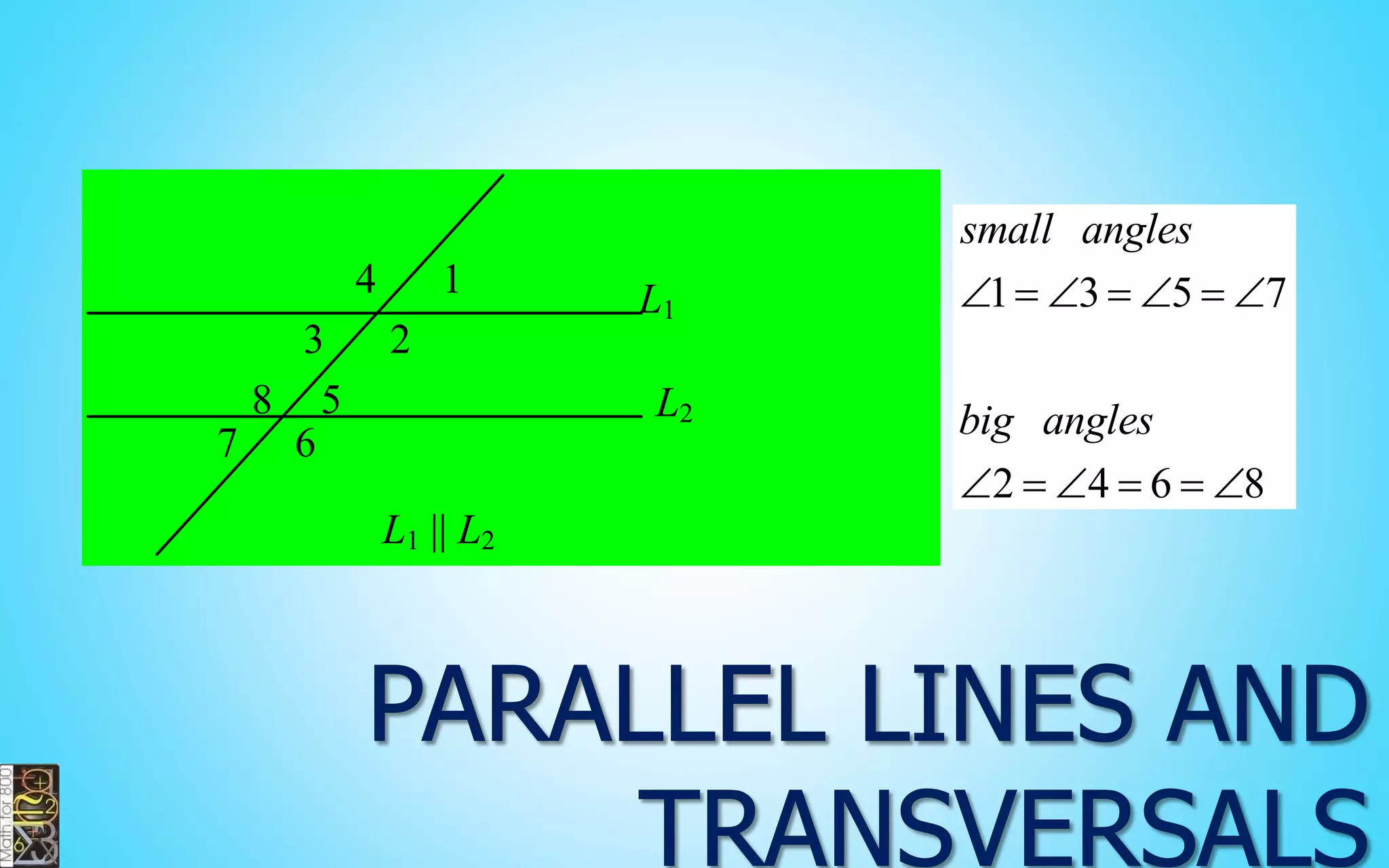
Two lines which not meet. 
L1 
L2 
L1 || L2
L1 
L2 
4 1 
3 2 
8 5 
7 6 
L1 || L2 
1 3 5 7 
2 4 6 8 
small angles 
big angles 
       
     
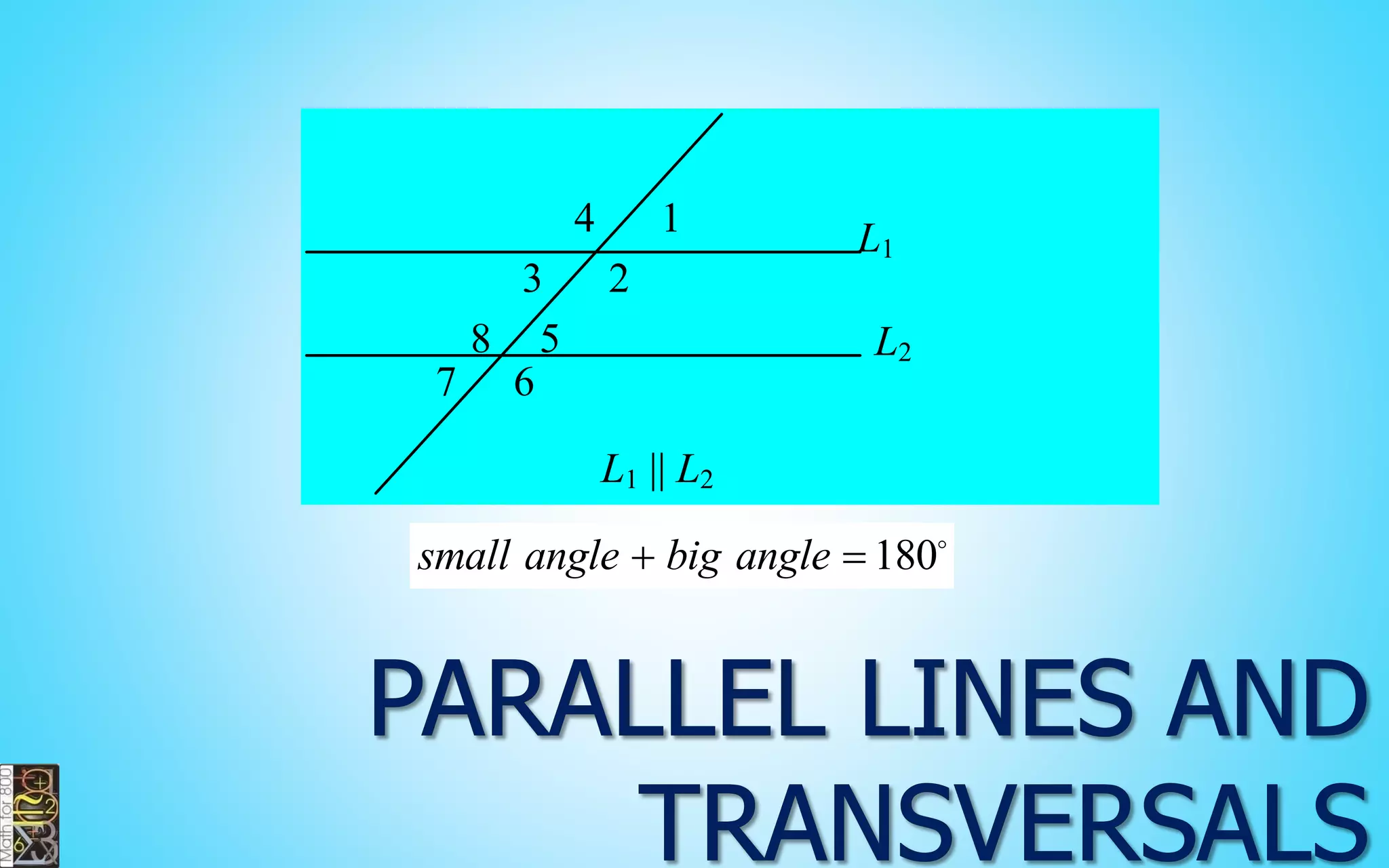
L1 
L2 
4 1 
3 2 
8 5 
7 6 
L1 || L2 
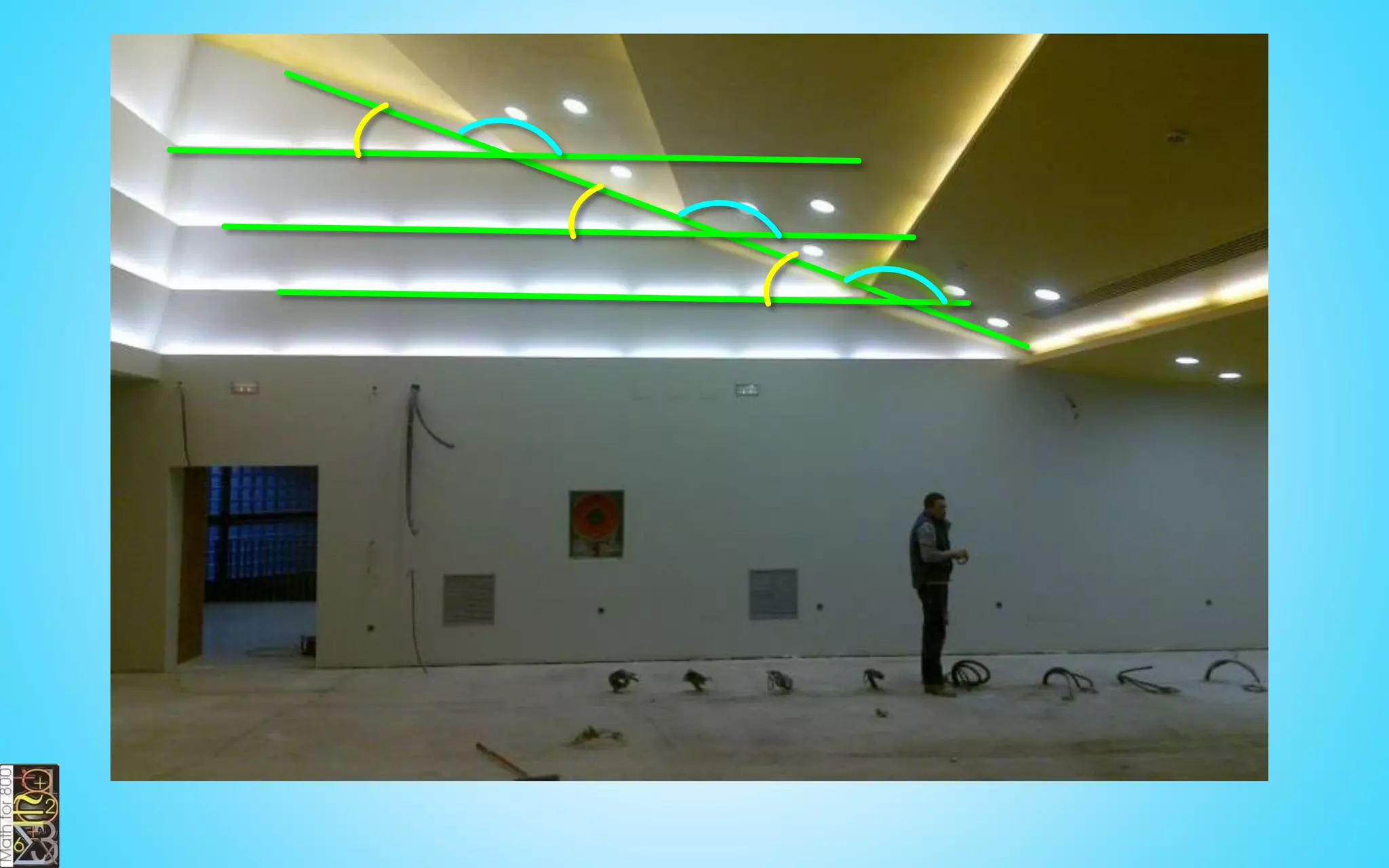
small angle  big angle  180
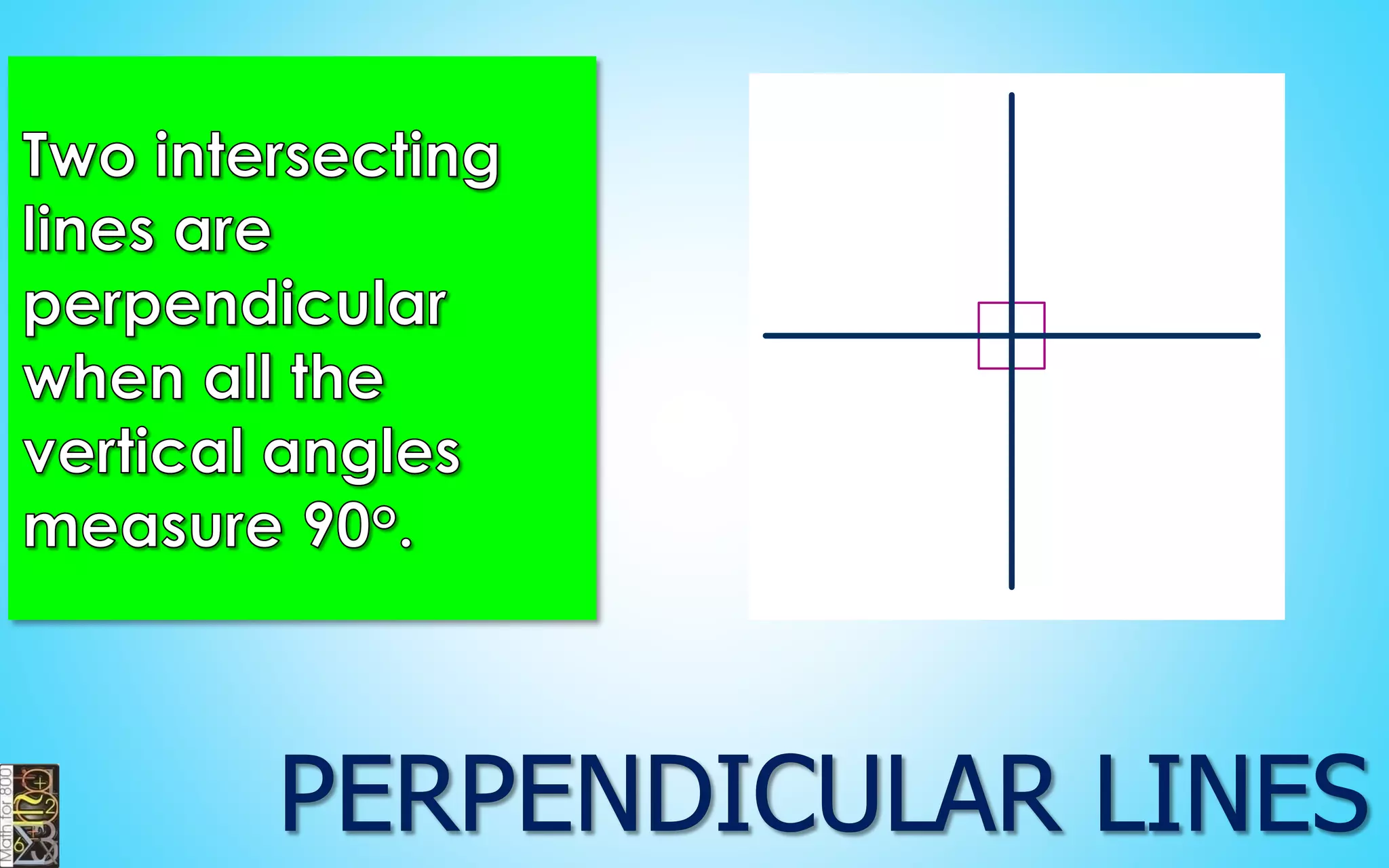
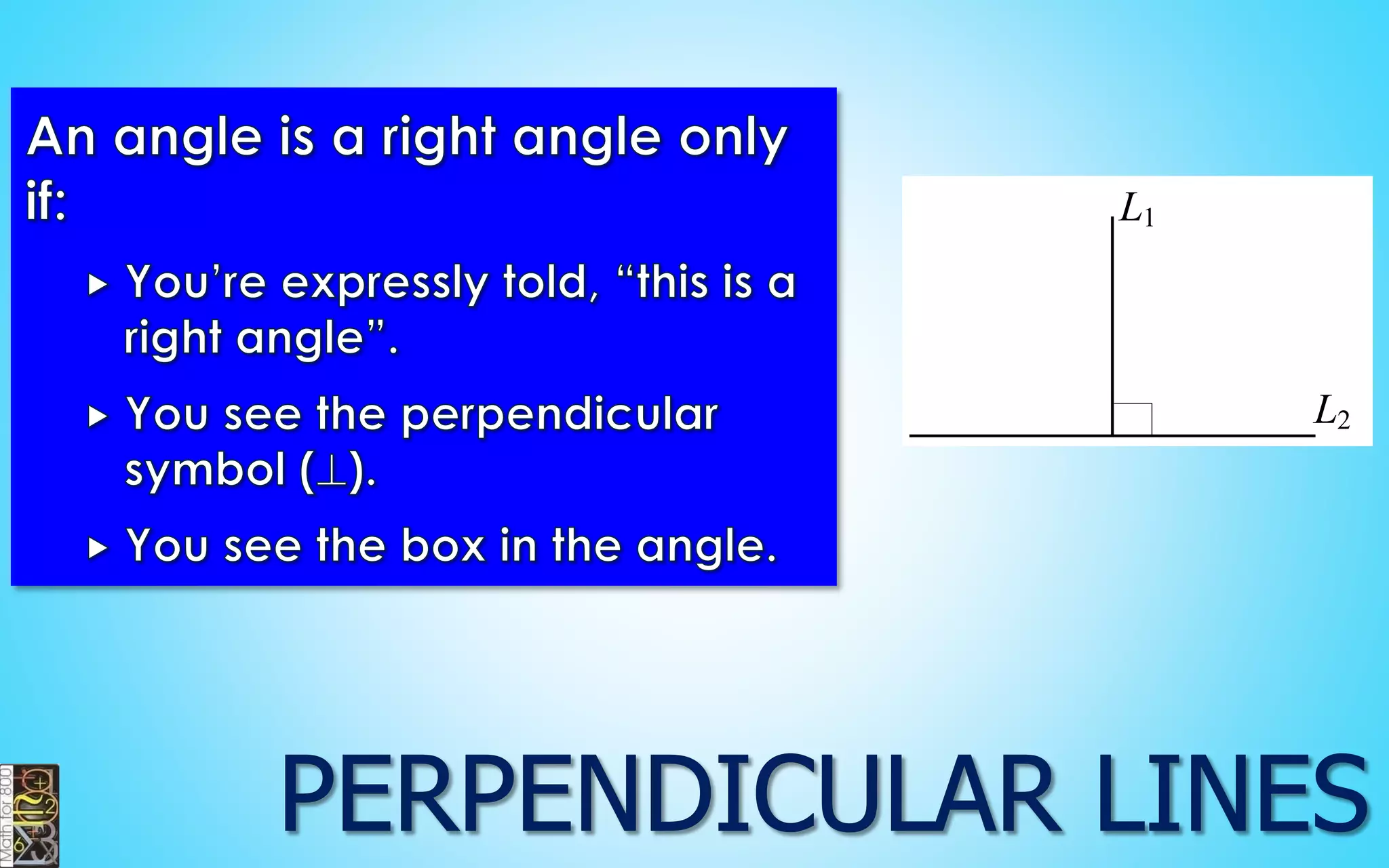
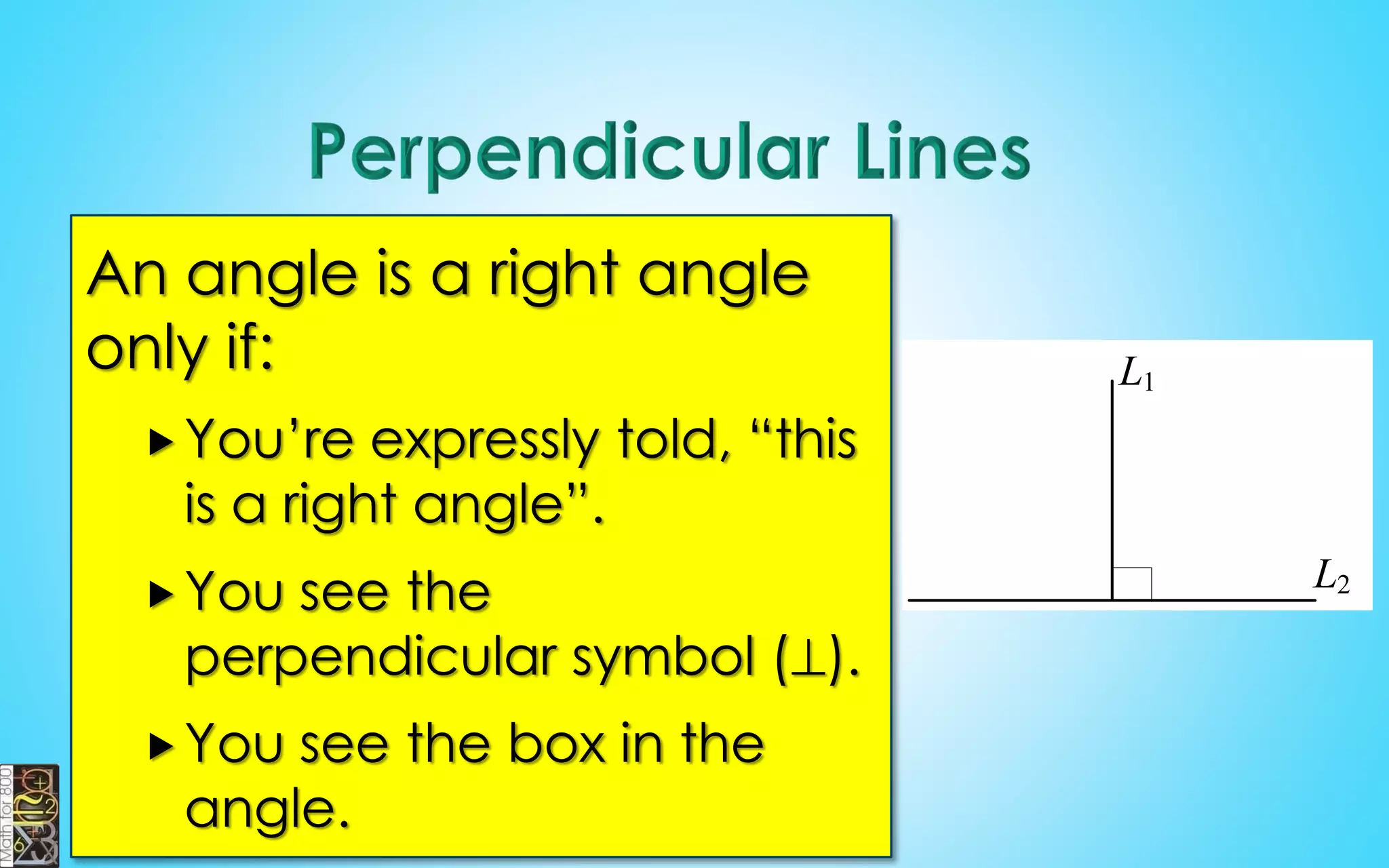
An angle is a right angle 
only if: 
 You’re expressly told, “this 
is a right angle”. 
You see the 
perpendicular symbol (). 
You see the box in the 
angle. 
L1 
L2
TRIANGLES
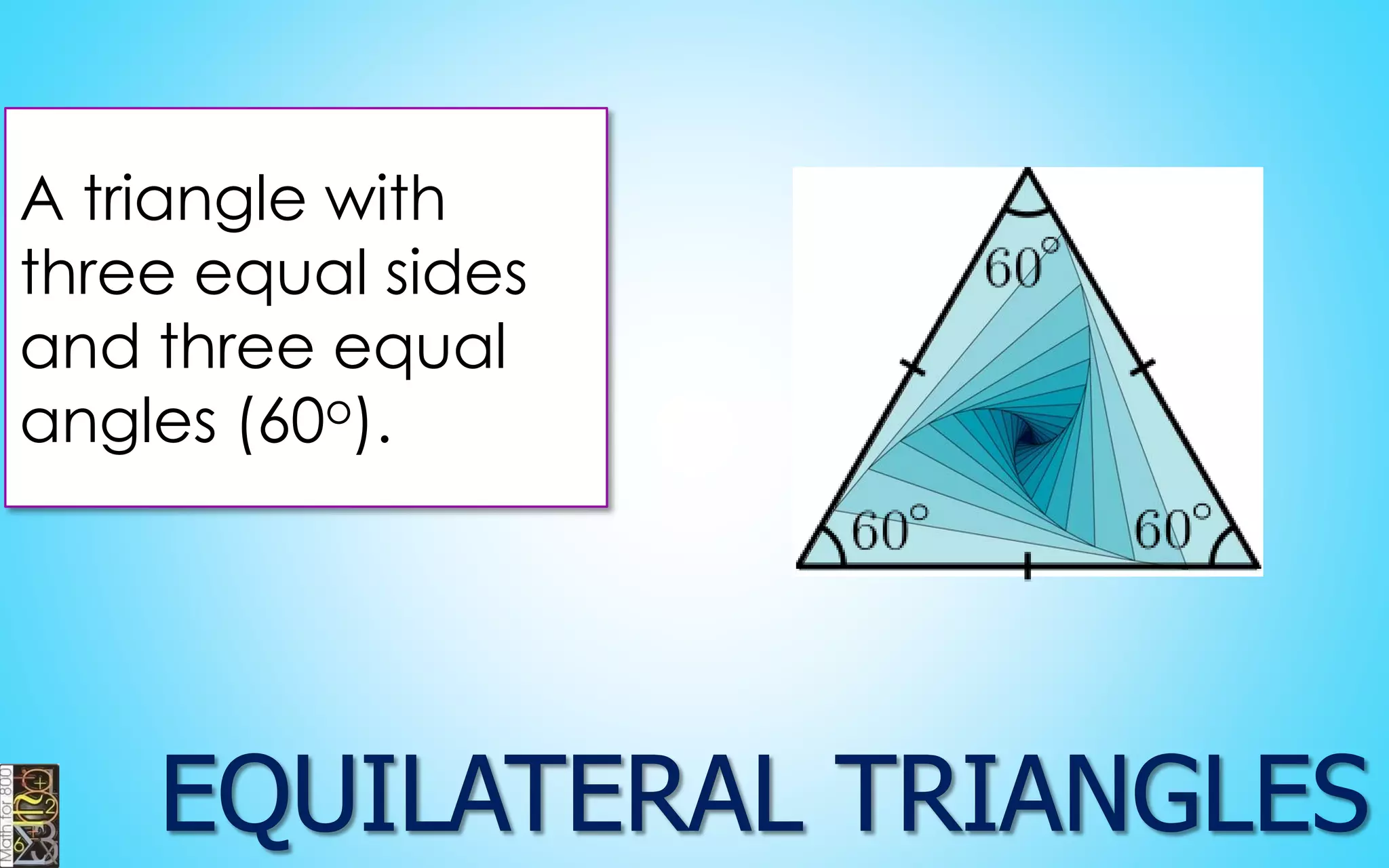
A triangle with three equal sides and three equal angles (60o).
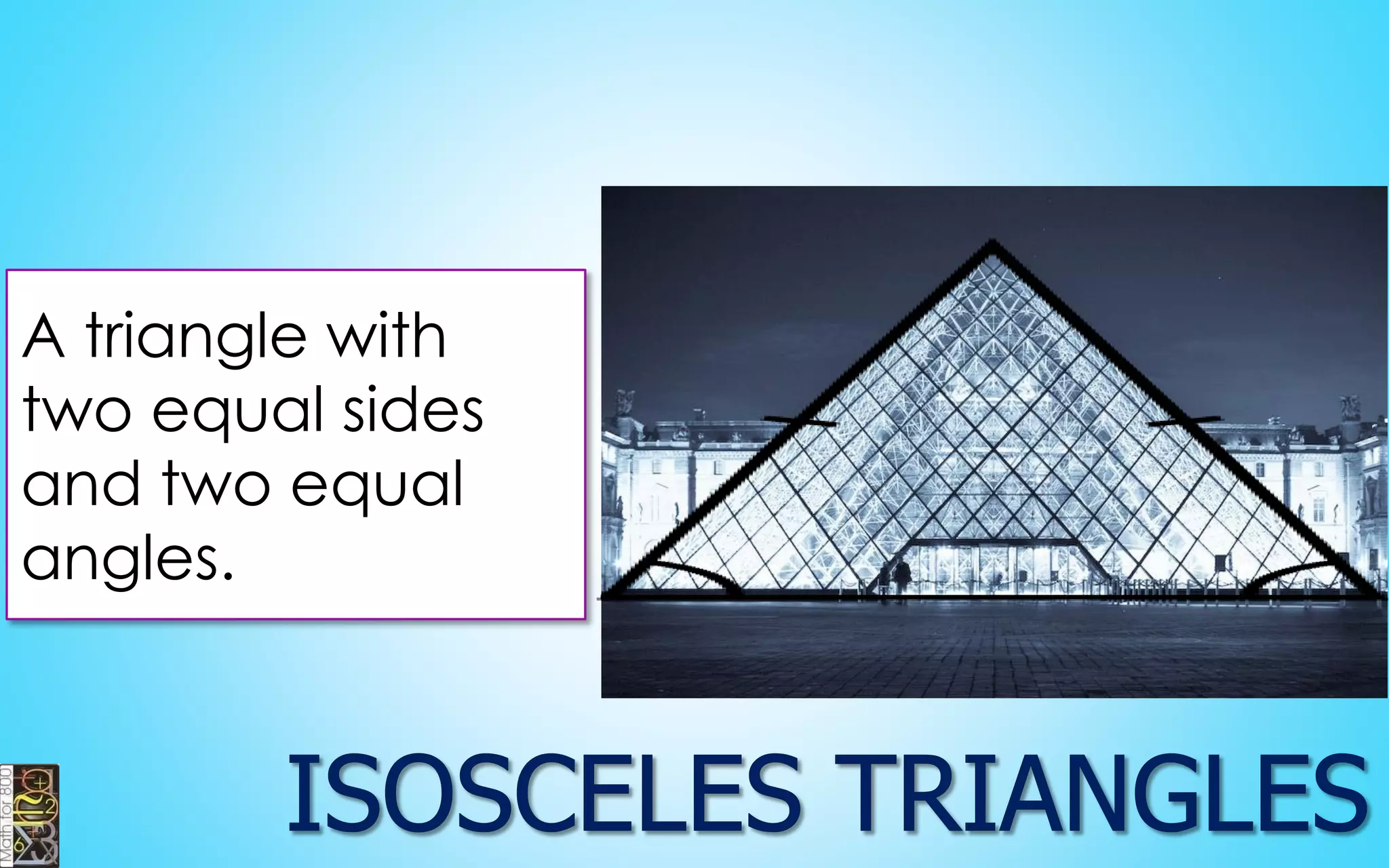
A triangle with two equal sides and two equal angles.
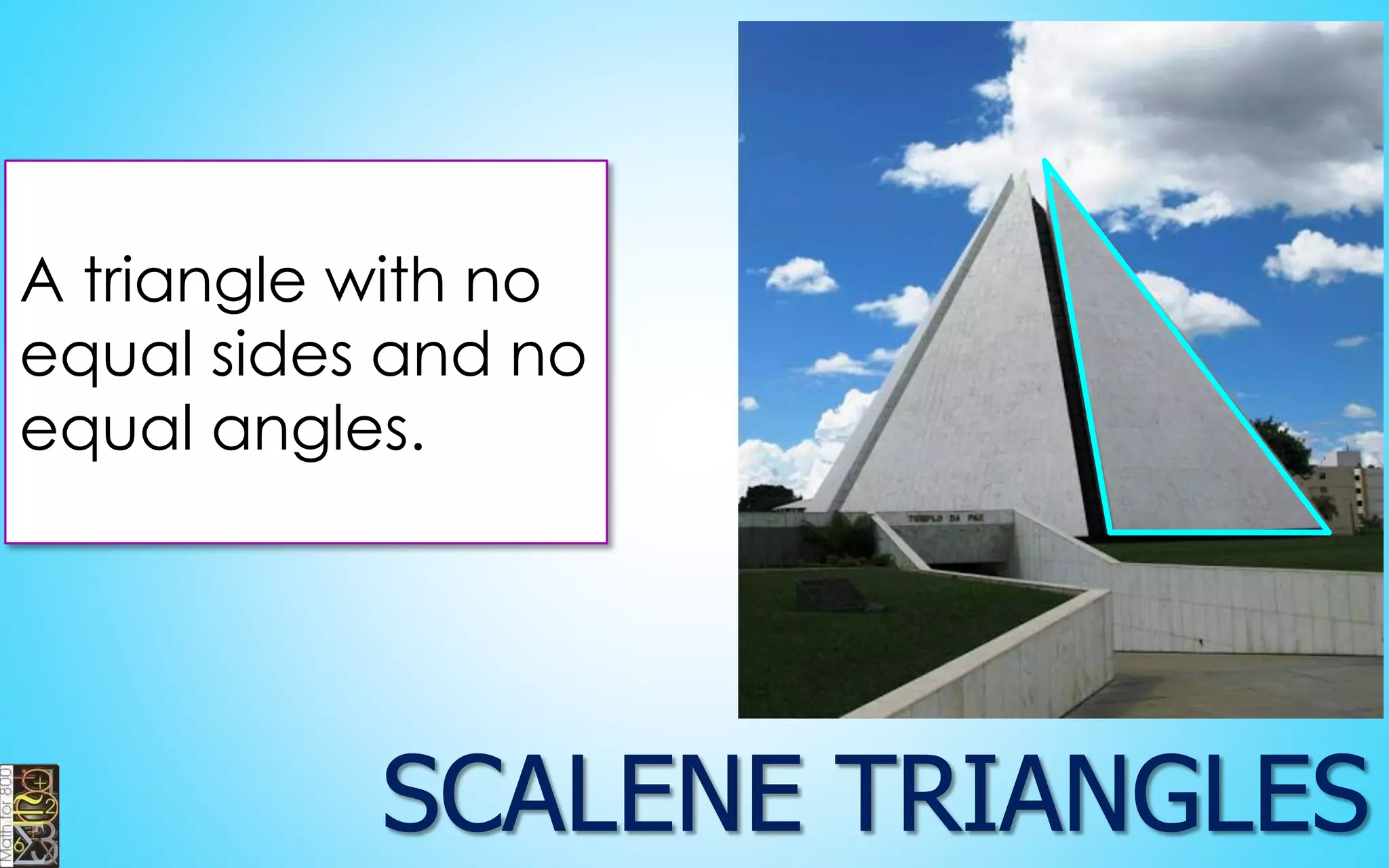
A triangle with no equal sides and no equal angles.
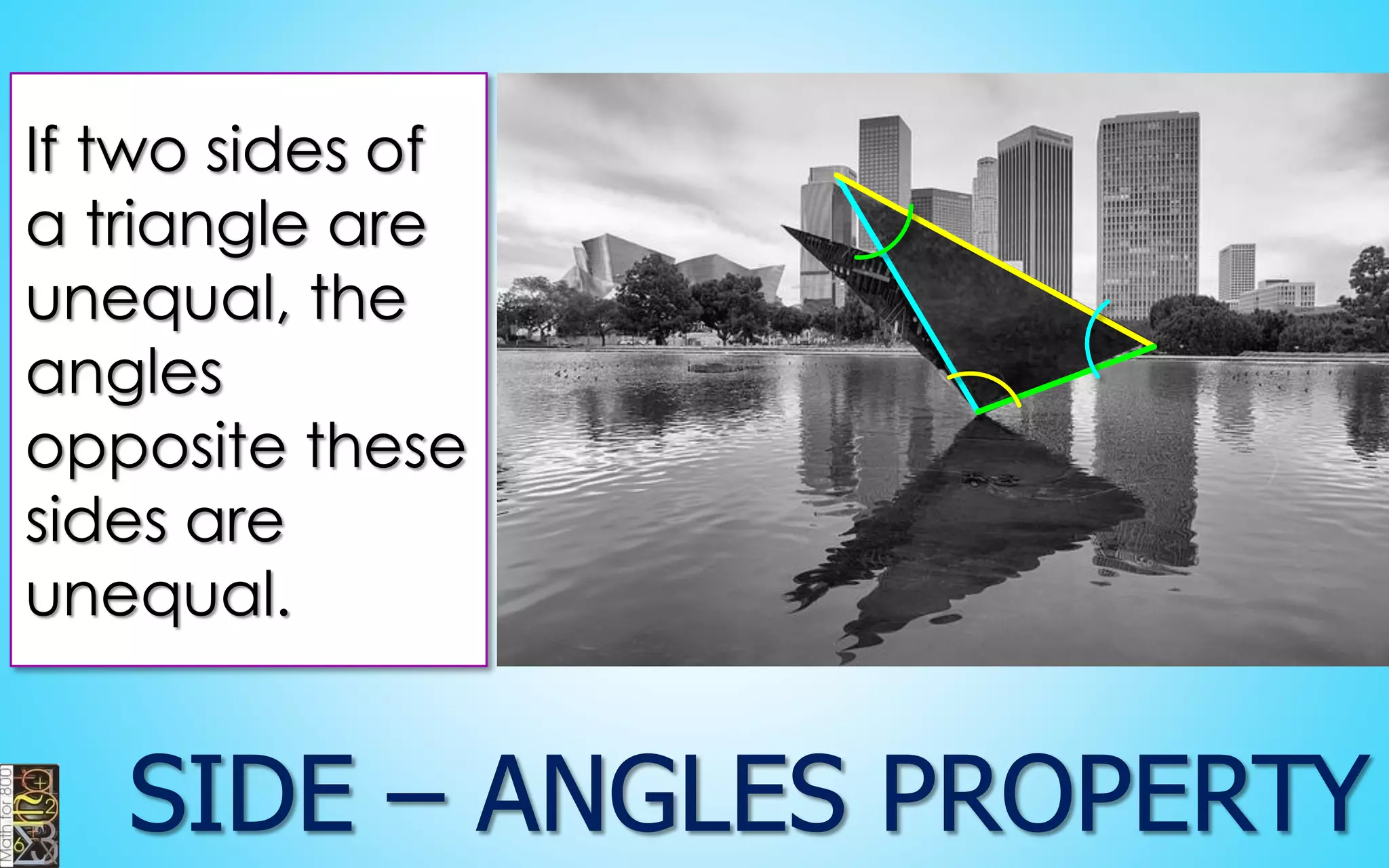
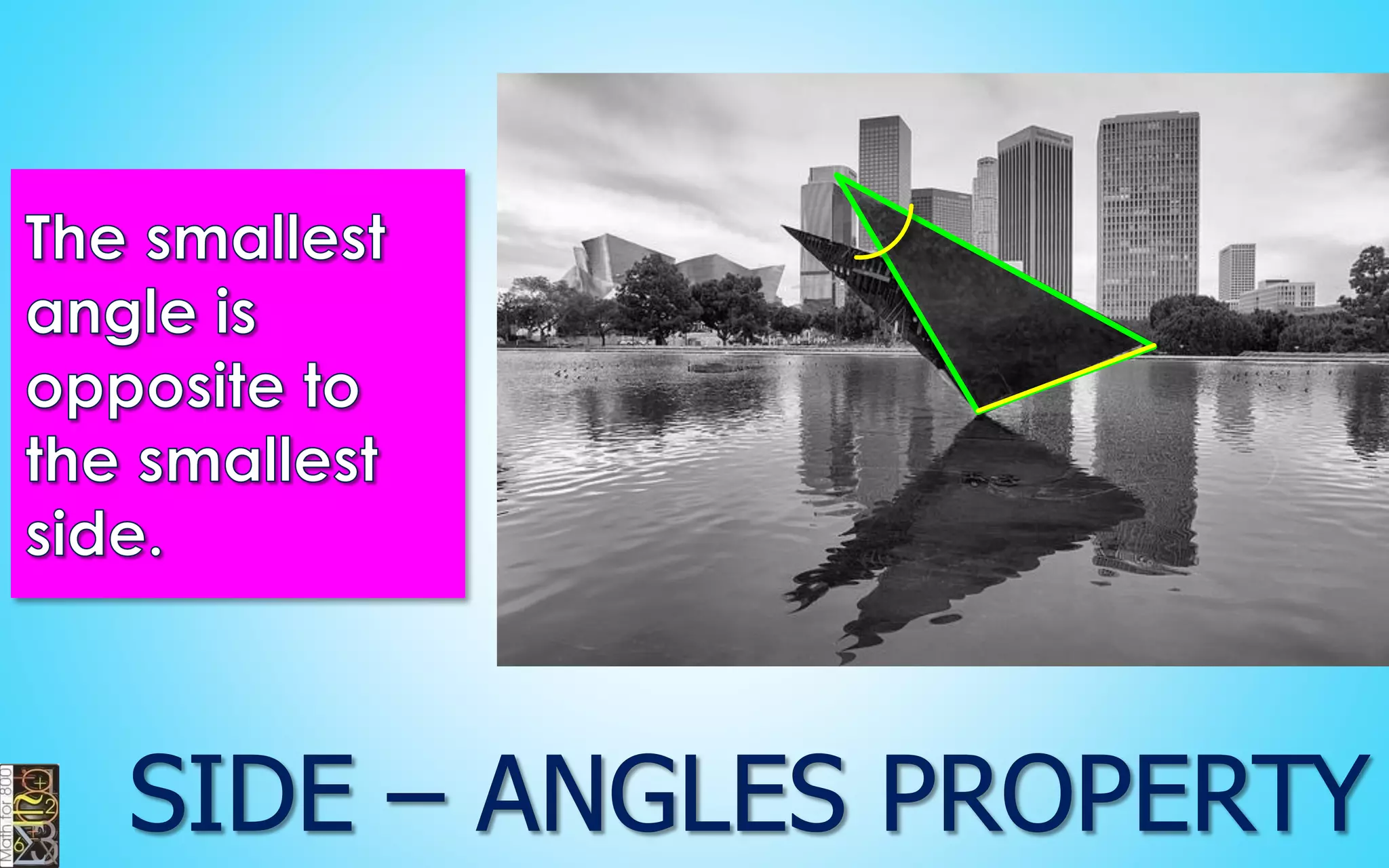
If two sides of a triangle are unequal, the angles opposite these sides are unequal.
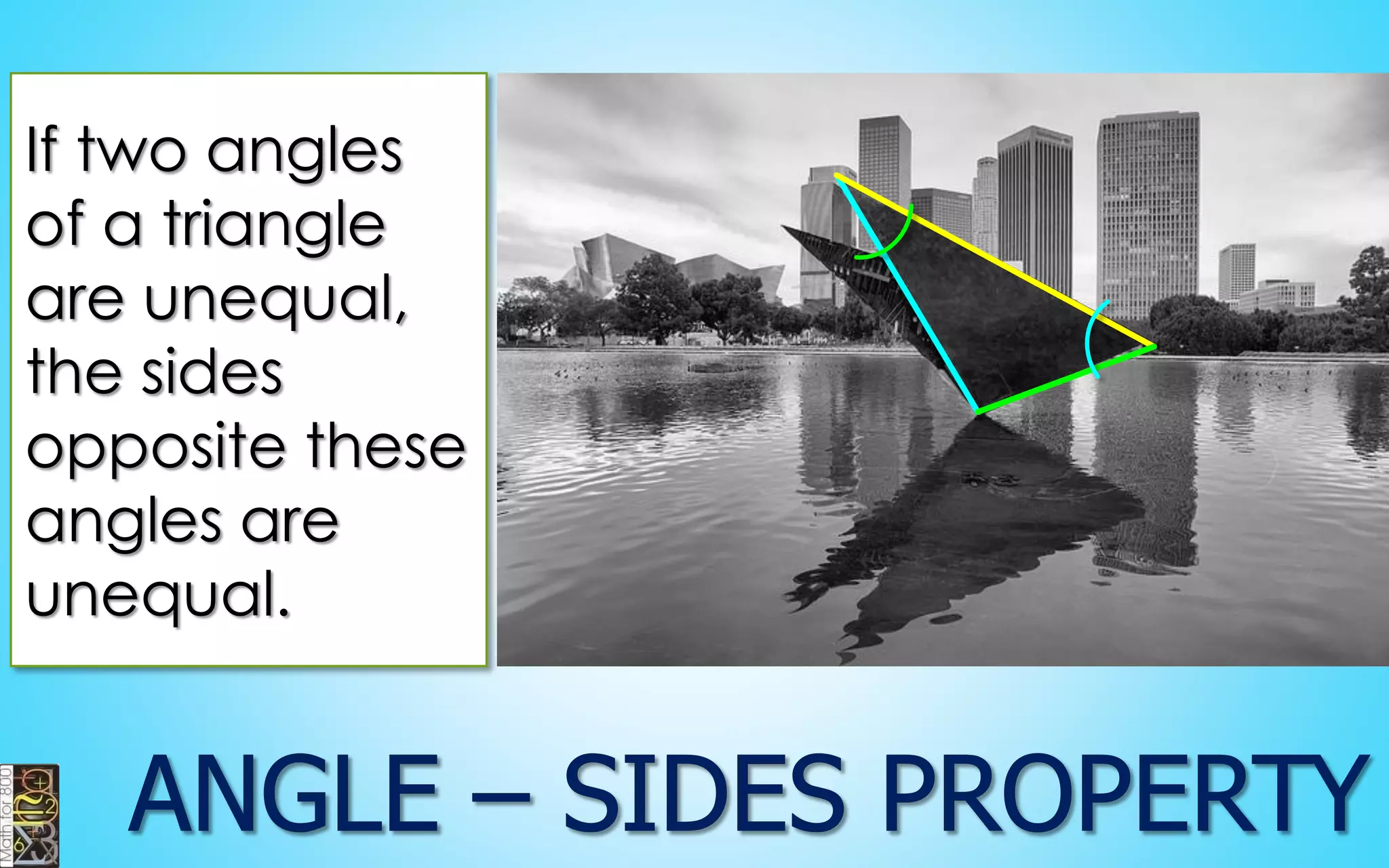
If two angles of a triangle are unequal, the sides opposite these angles are unequal.
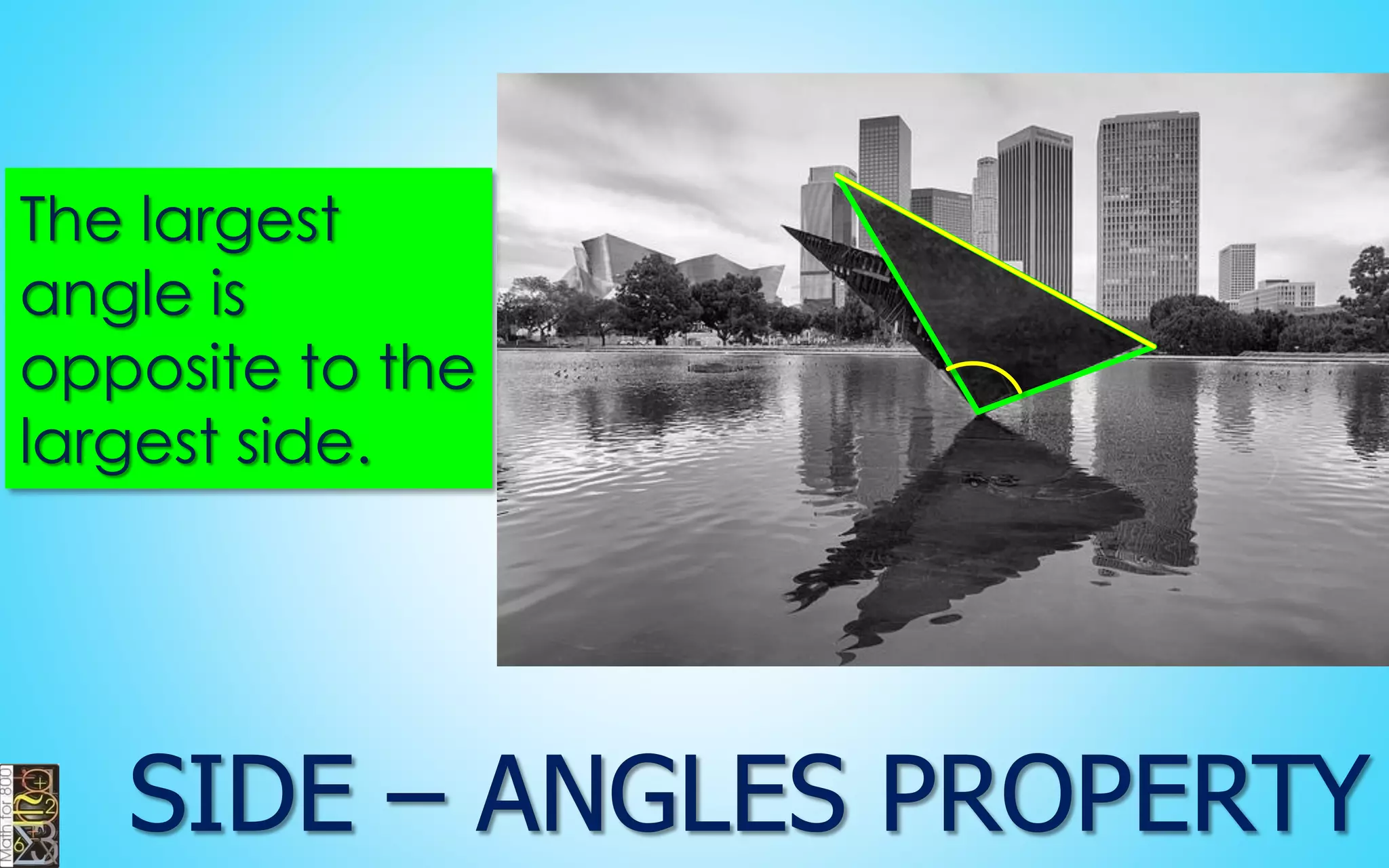
The largest angle is opposite to the largest side.
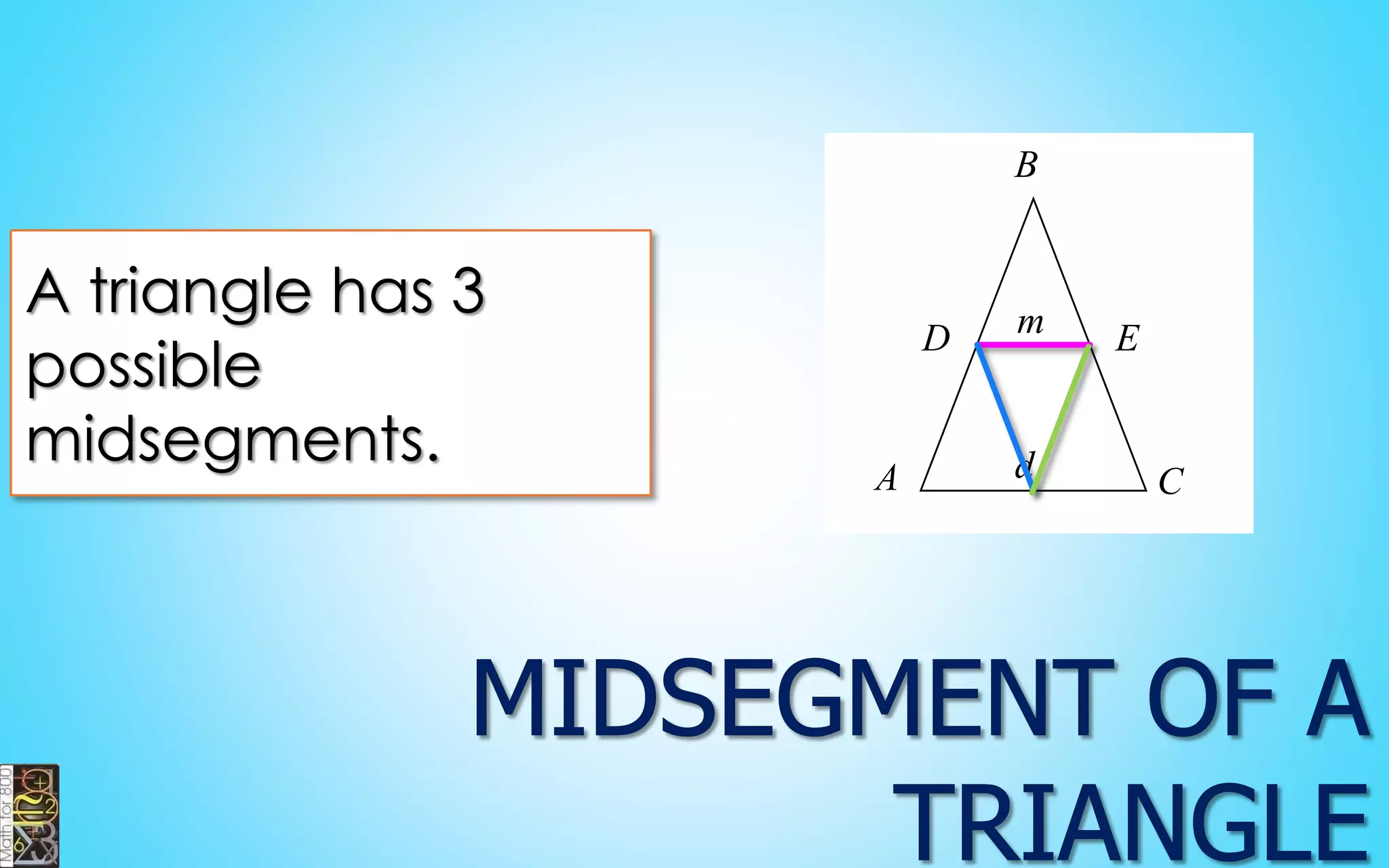
A triangle has 3 possible midsegments. 
d 
m 
E 
D 
B 
C 
A
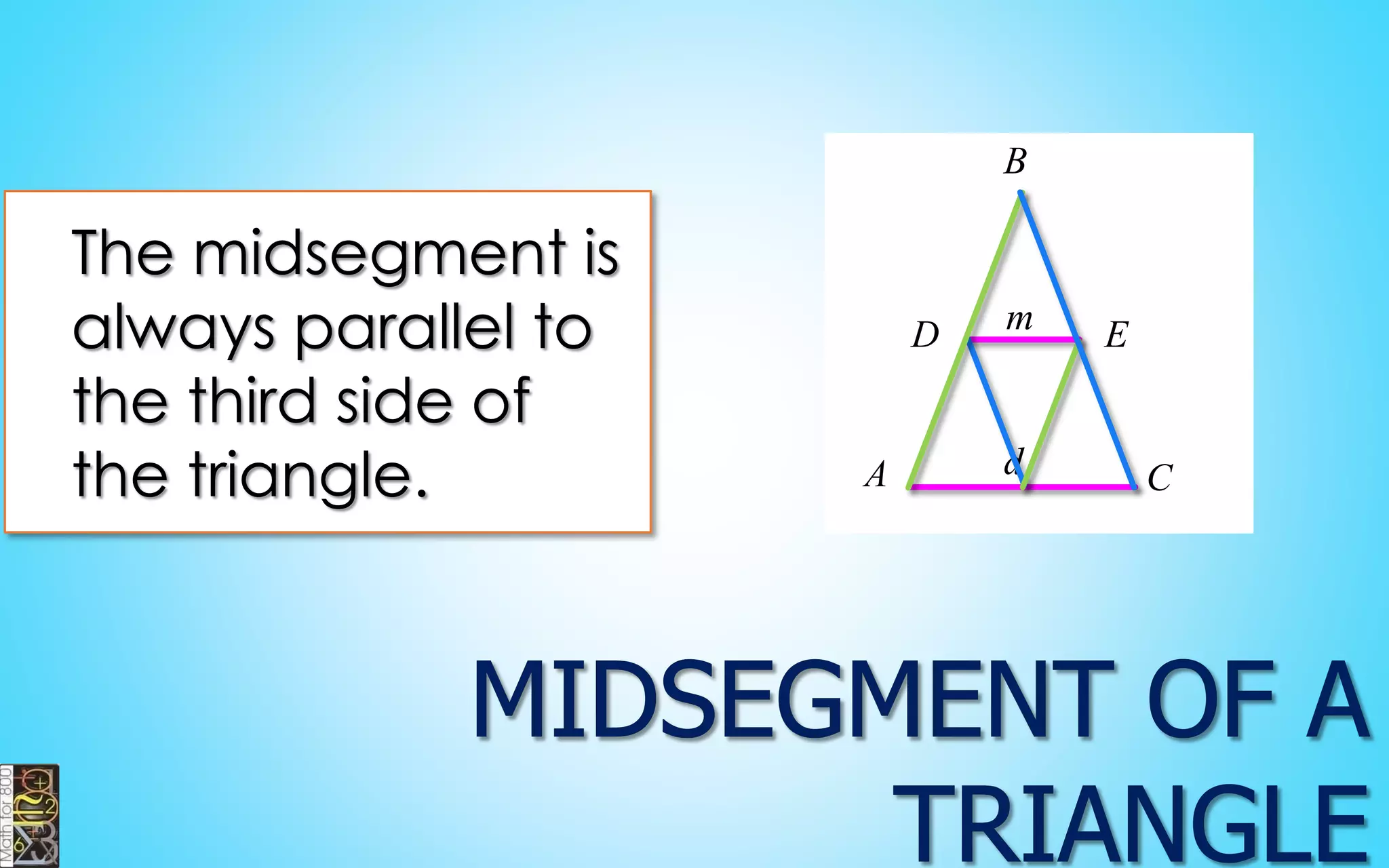
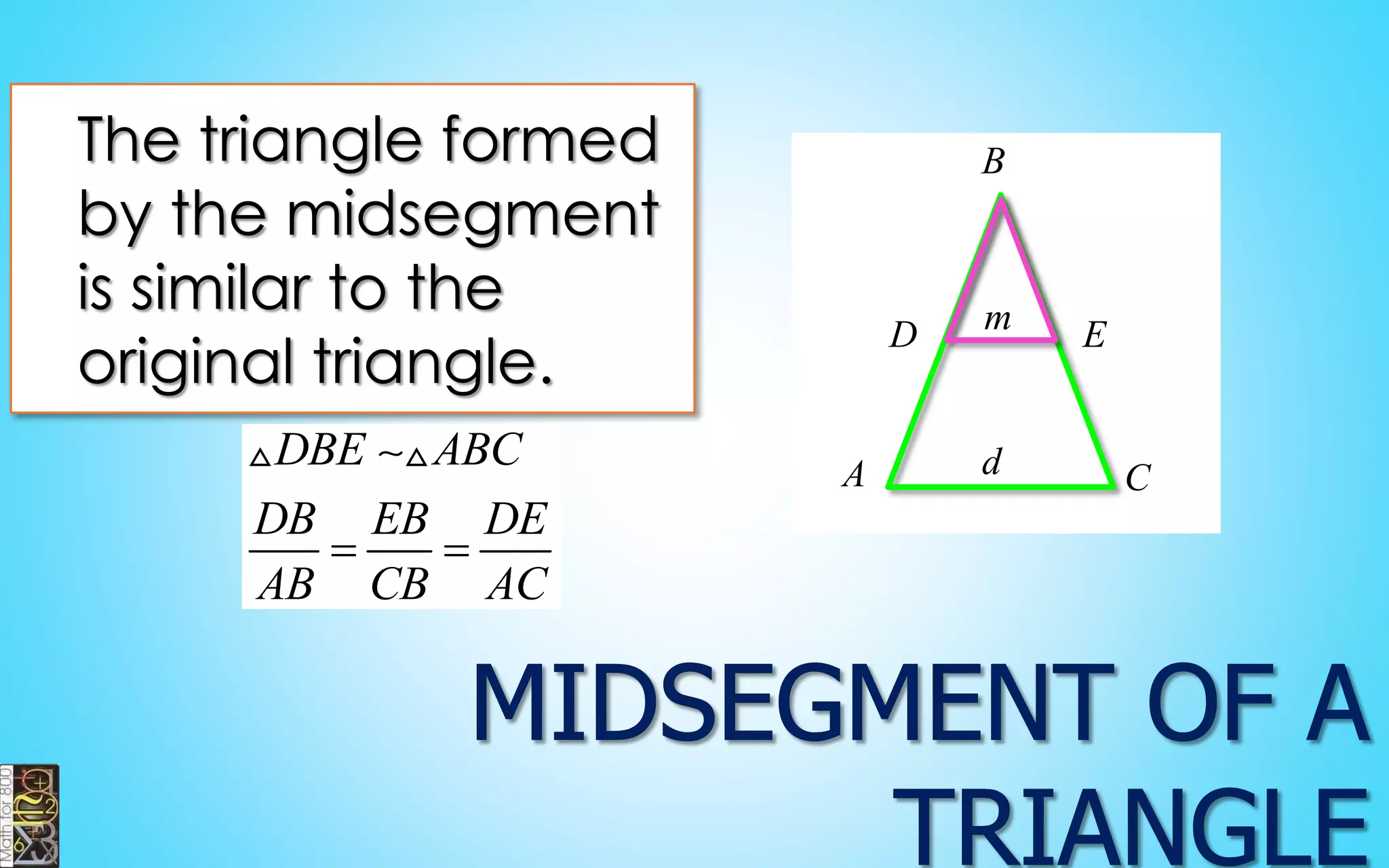
The midsegmentis always parallel to the third side of the triangle. 
d 
m 
E 
D 
B 
C 
A
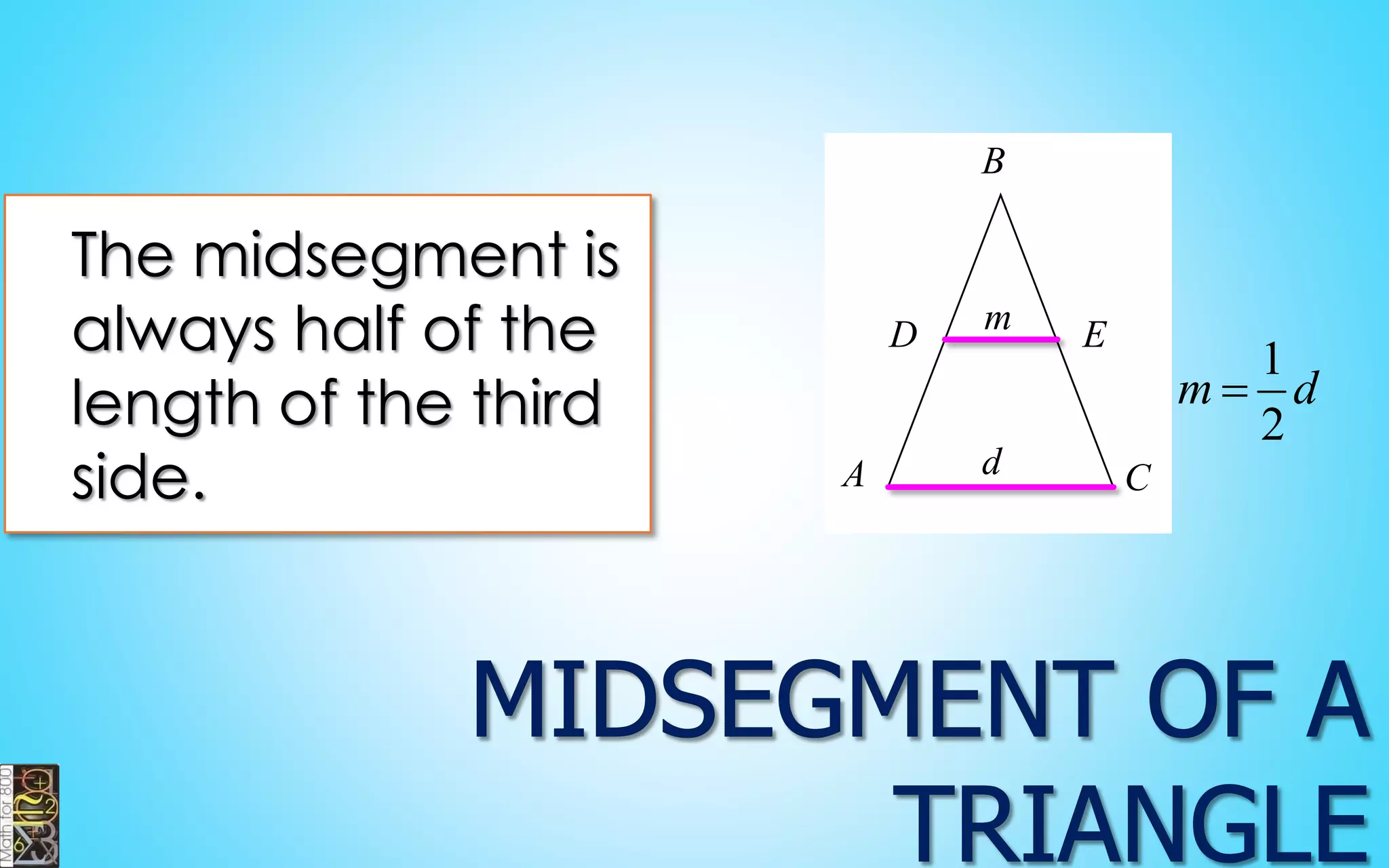
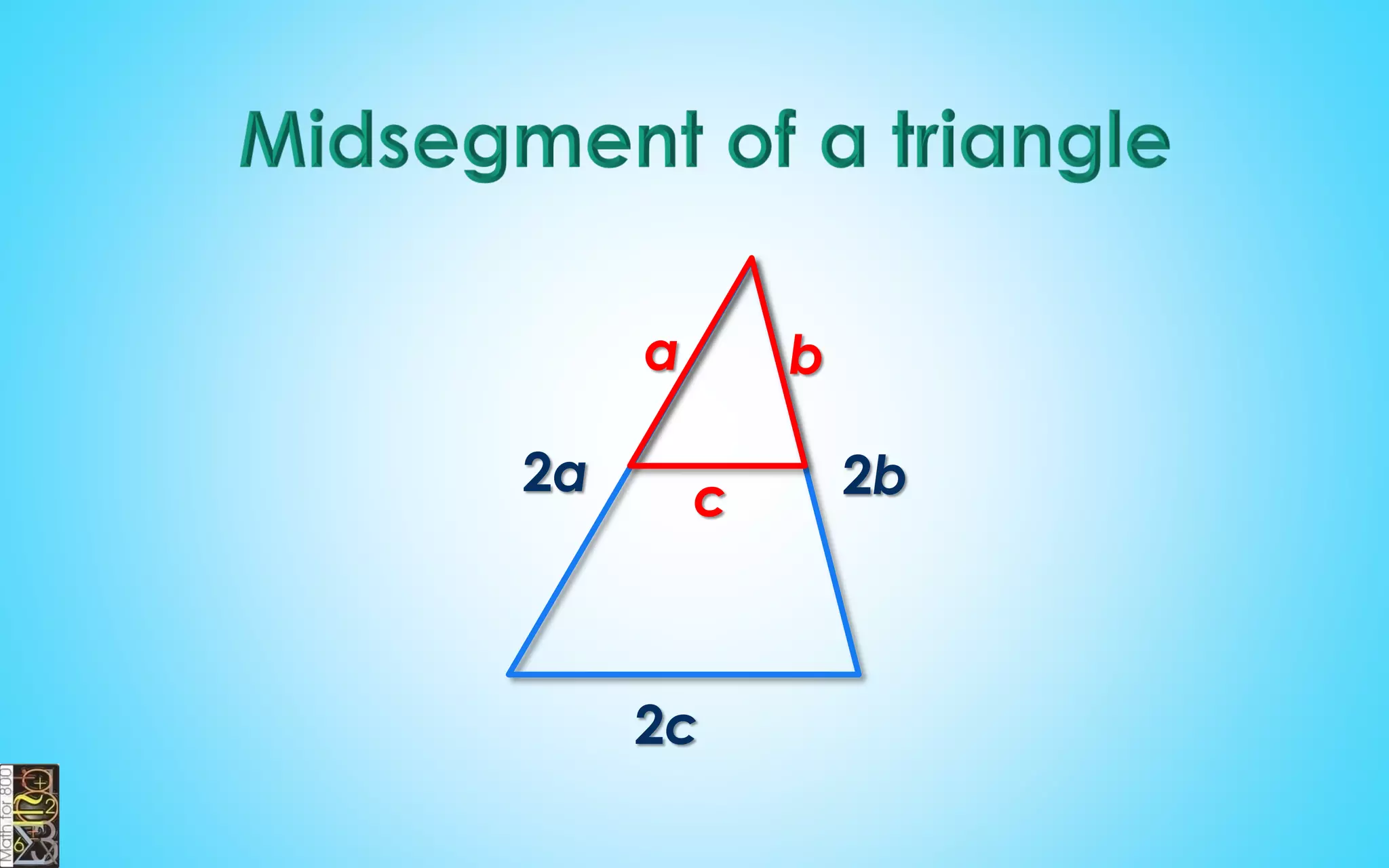
The midsegmentis always half of the length of the third side. 
d 
m 
E 
D 
B 
C 
A12md
d 
m 
D E 
B 
A C 
The triangle formed 
by the midsegment 
is similar to the 
original triangle. 
DBE ABC 
DB EB DE 
AB CB AC 
 
2a2b2cabc
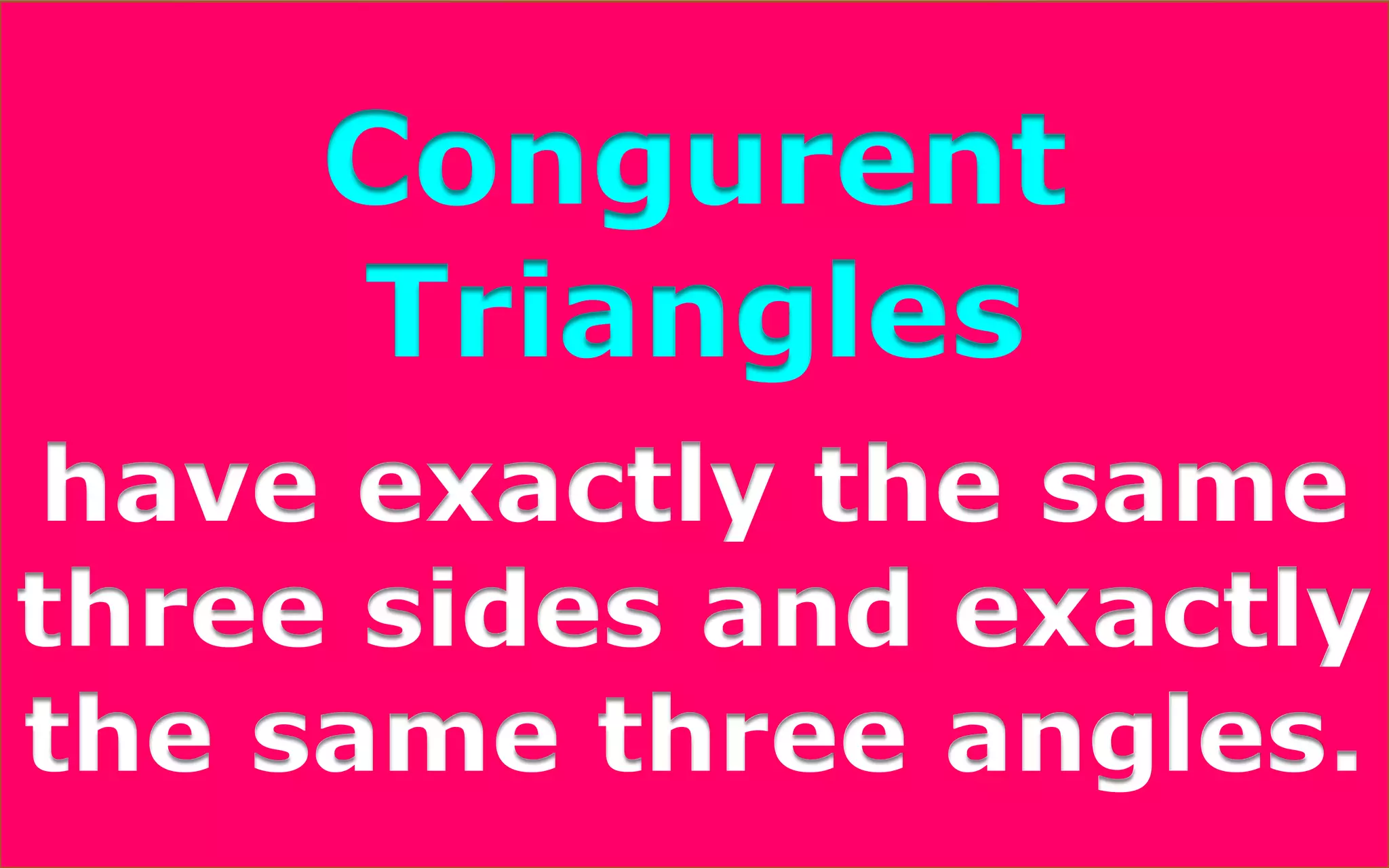
CongurentTriangles 
have exactly the same three sides and exactly the same three angles.
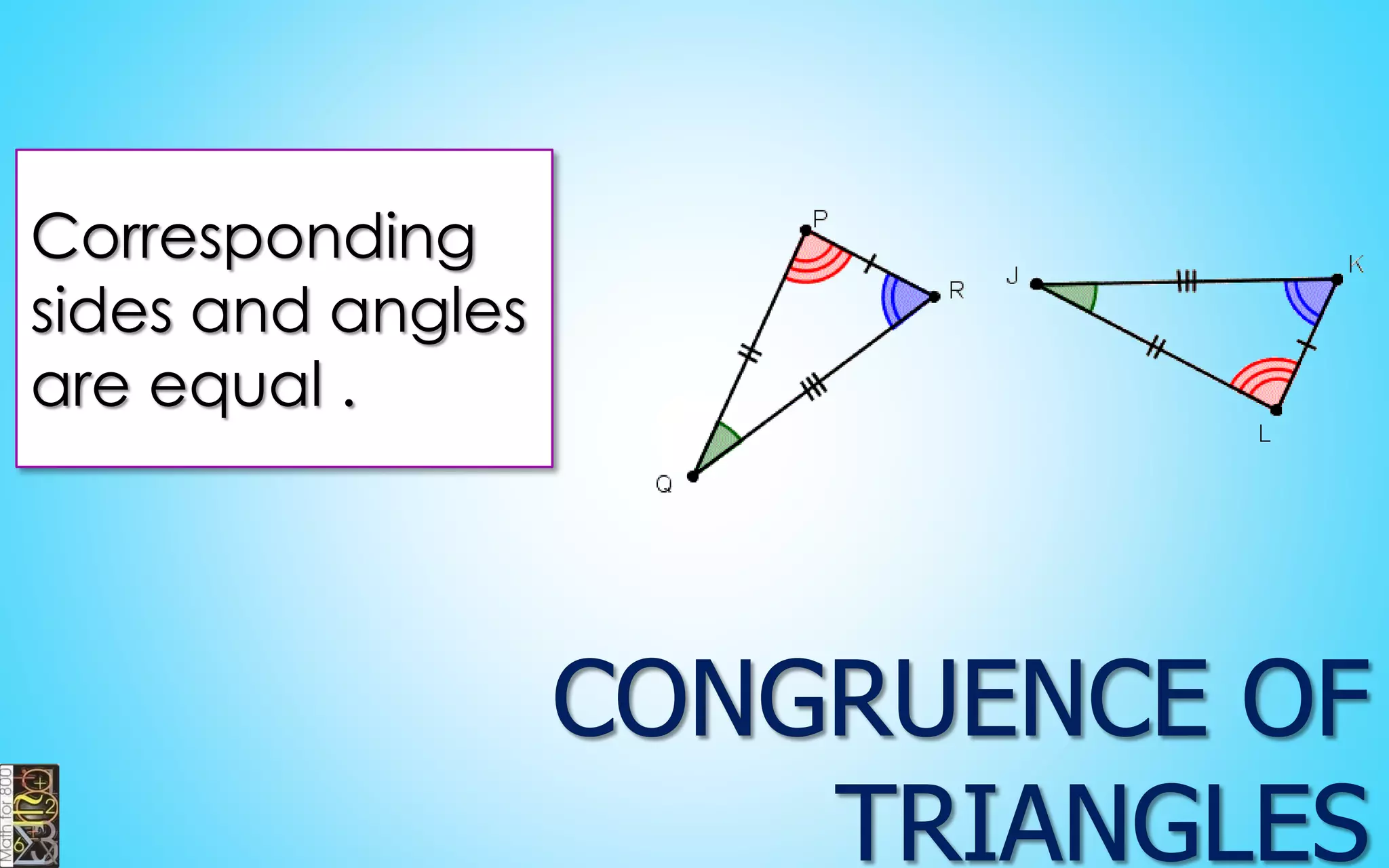
Corresponding sides and angles are equal .
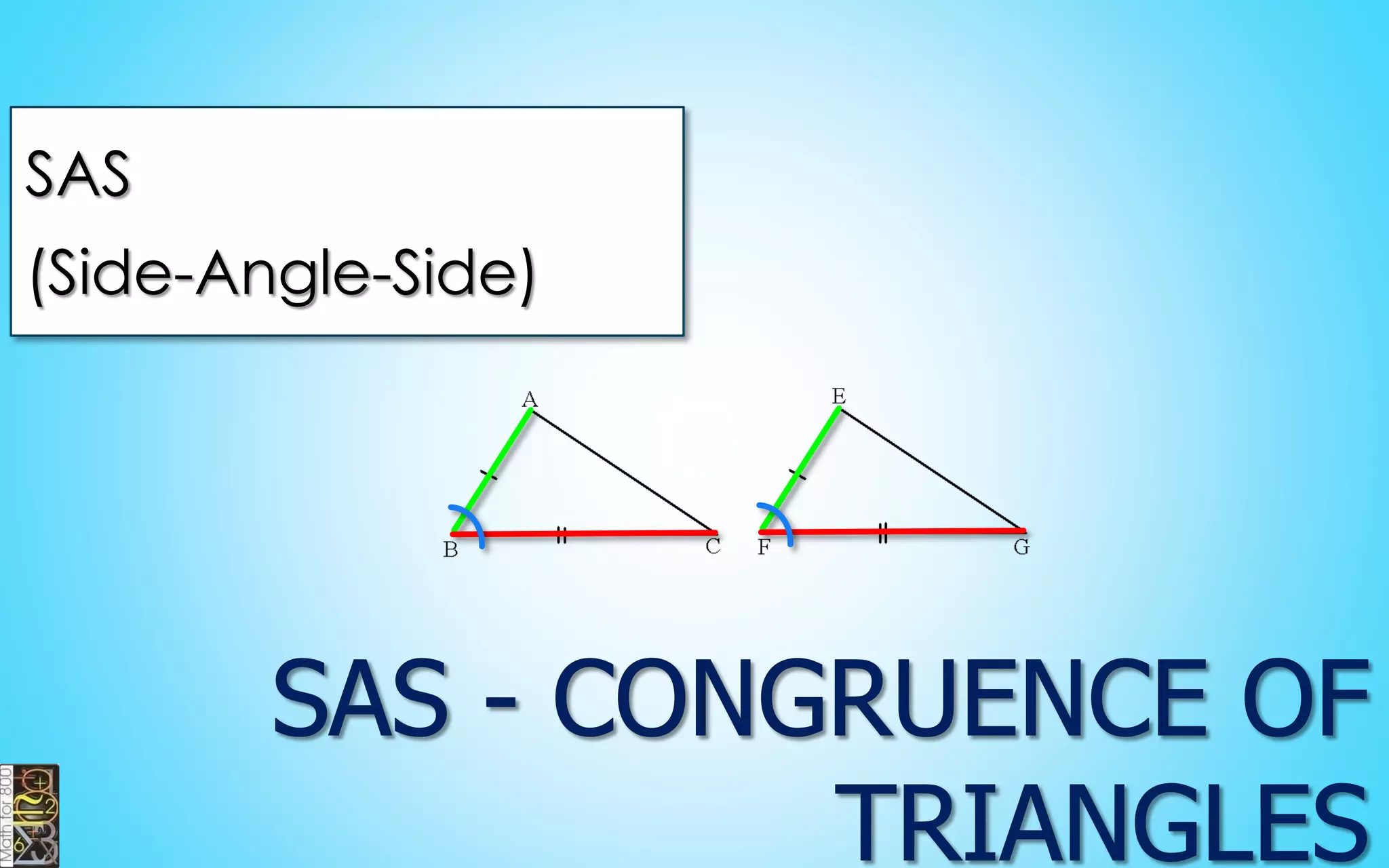
SAS(Side-Angle-Side)
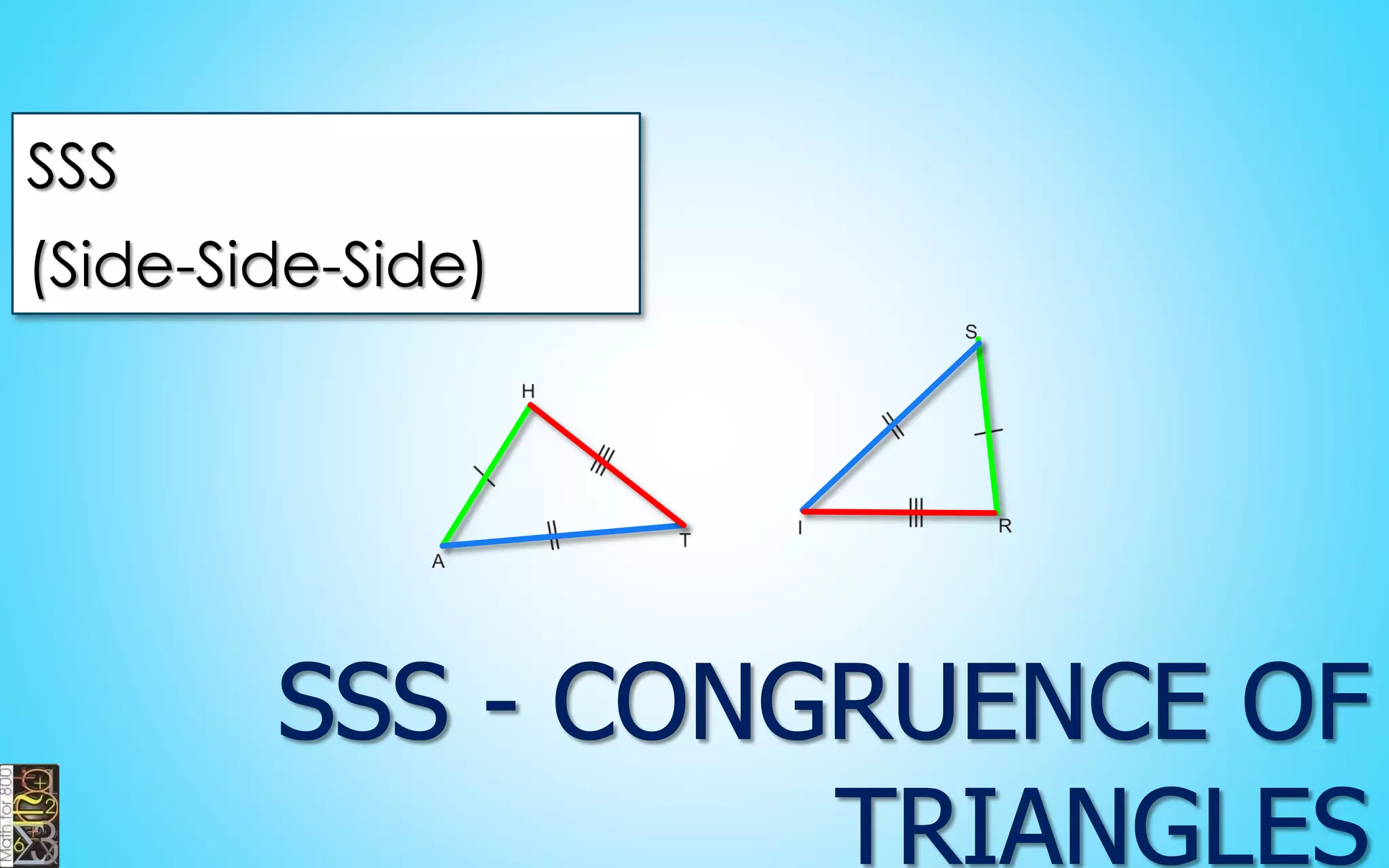
SSS (Side-Side-Side)
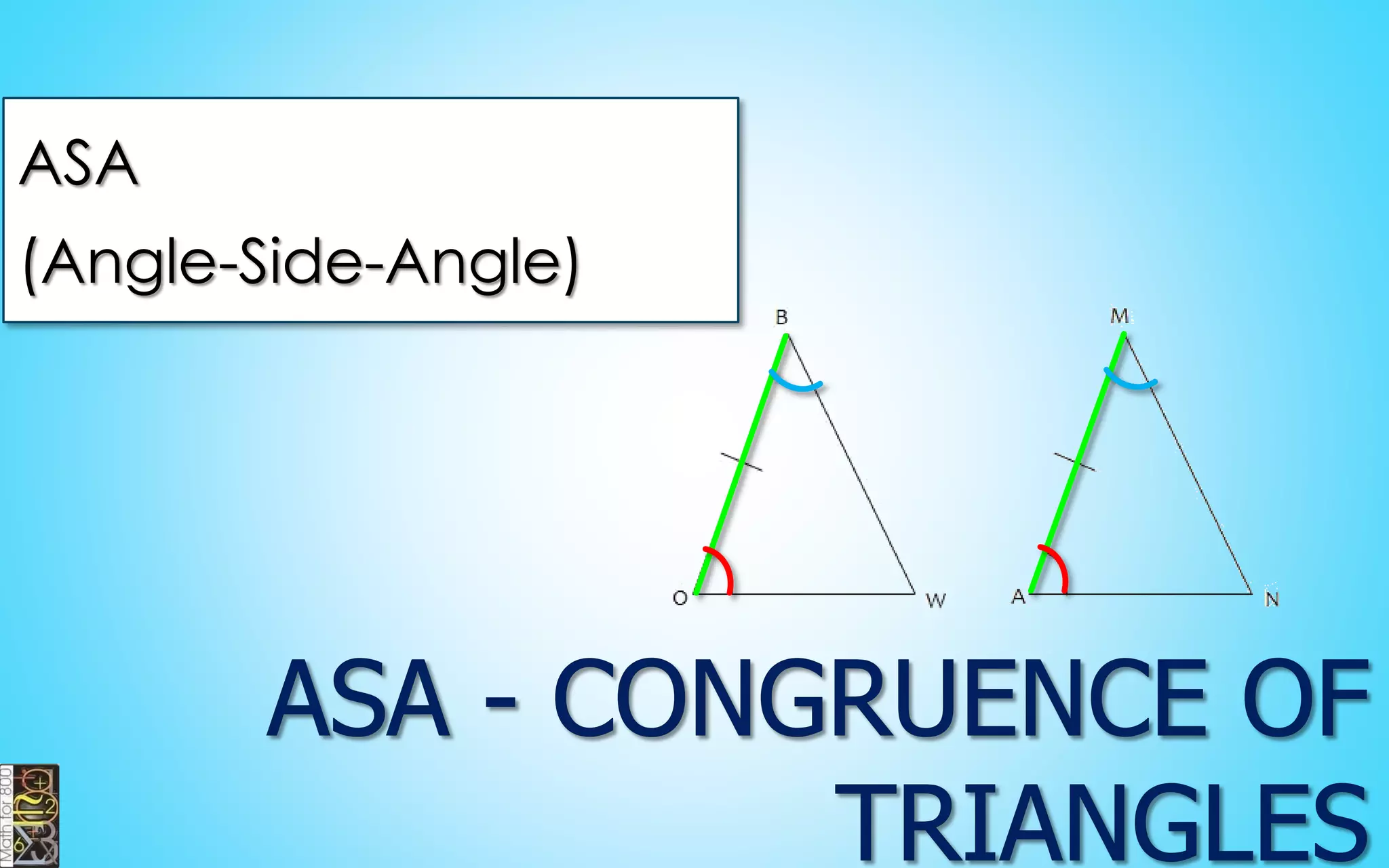
ASA (Angle-Side-Angle)
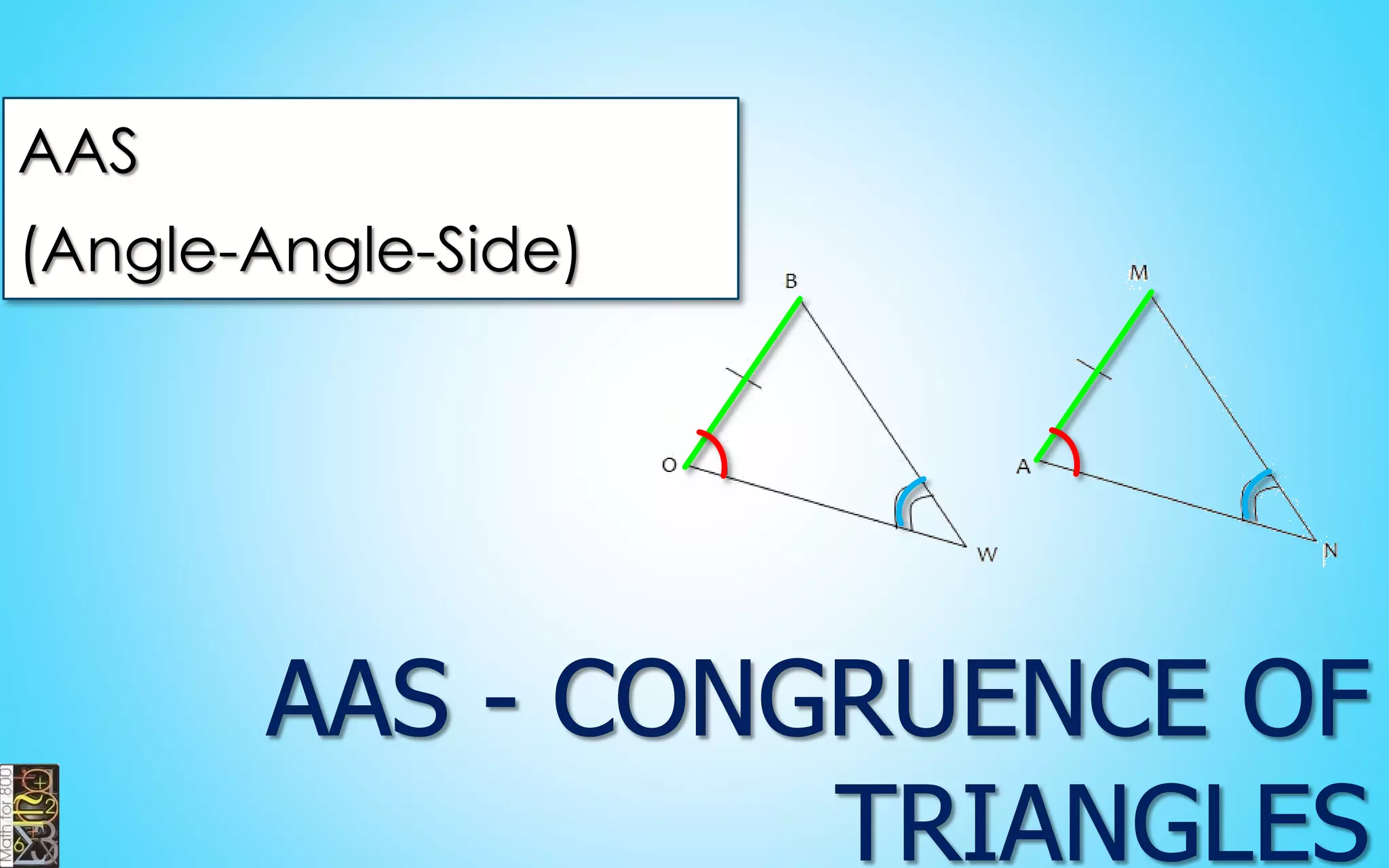
AAS (Angle-Angle-Side)
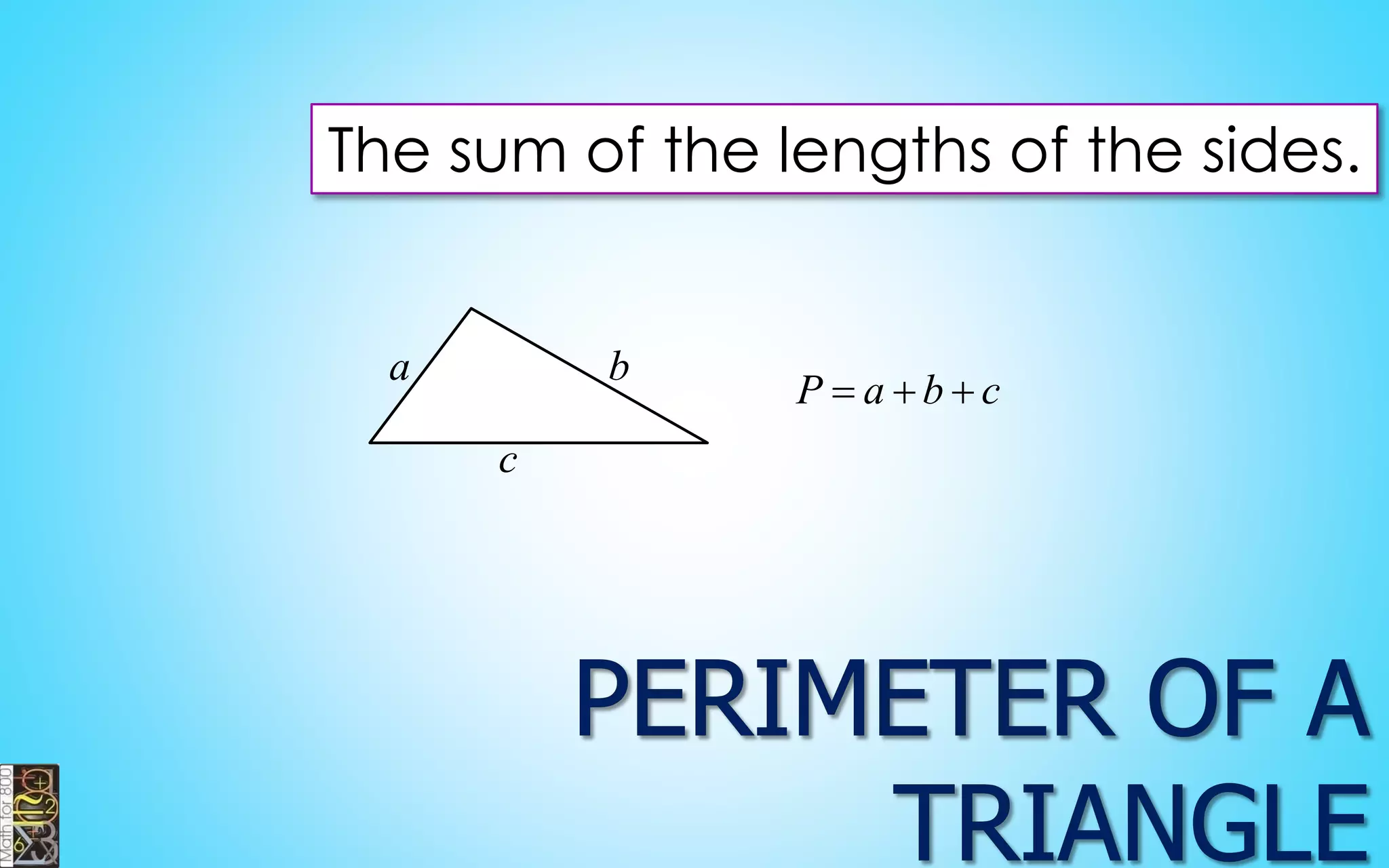
The sum of the lengths of the sides. 
abcPabc
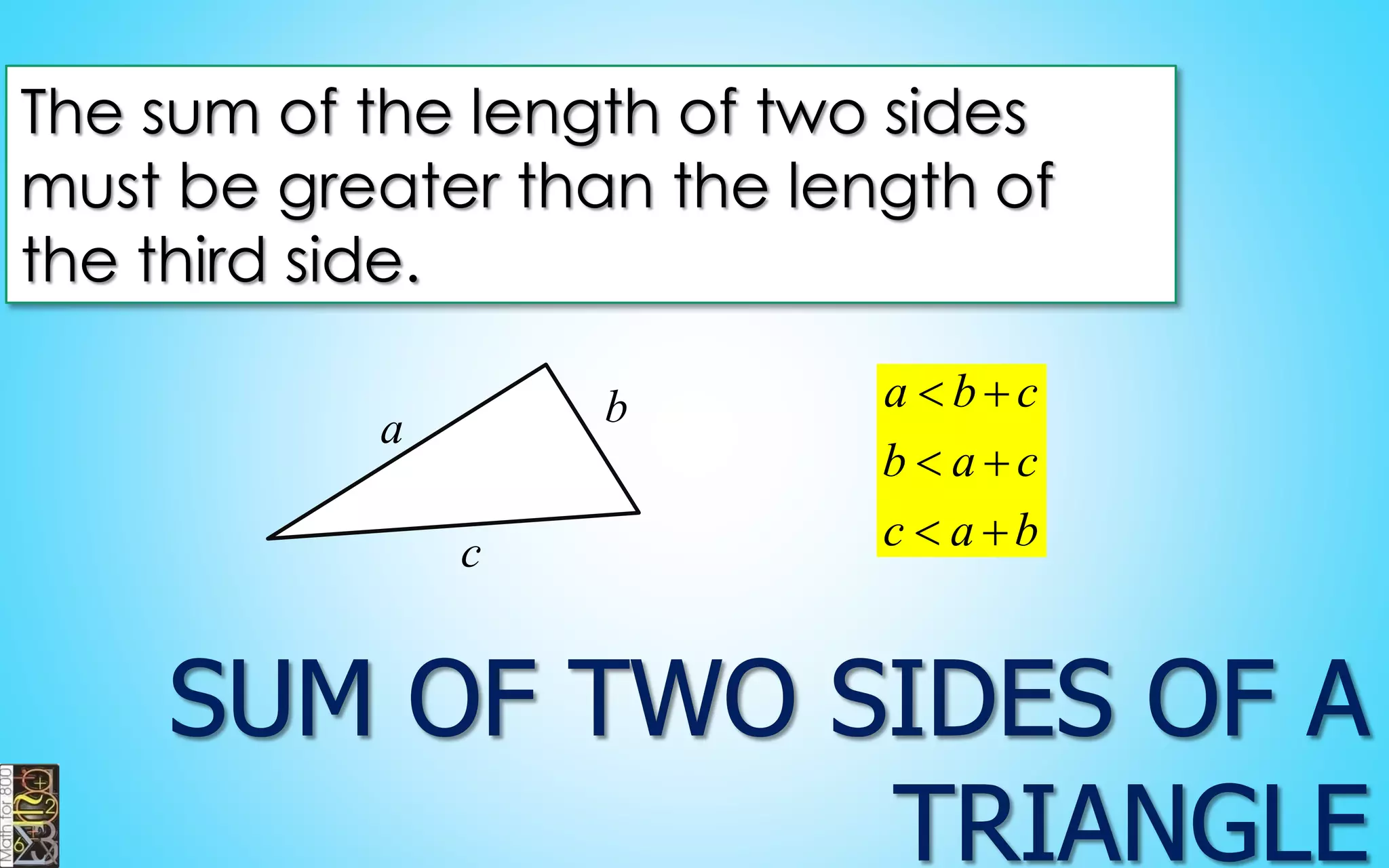
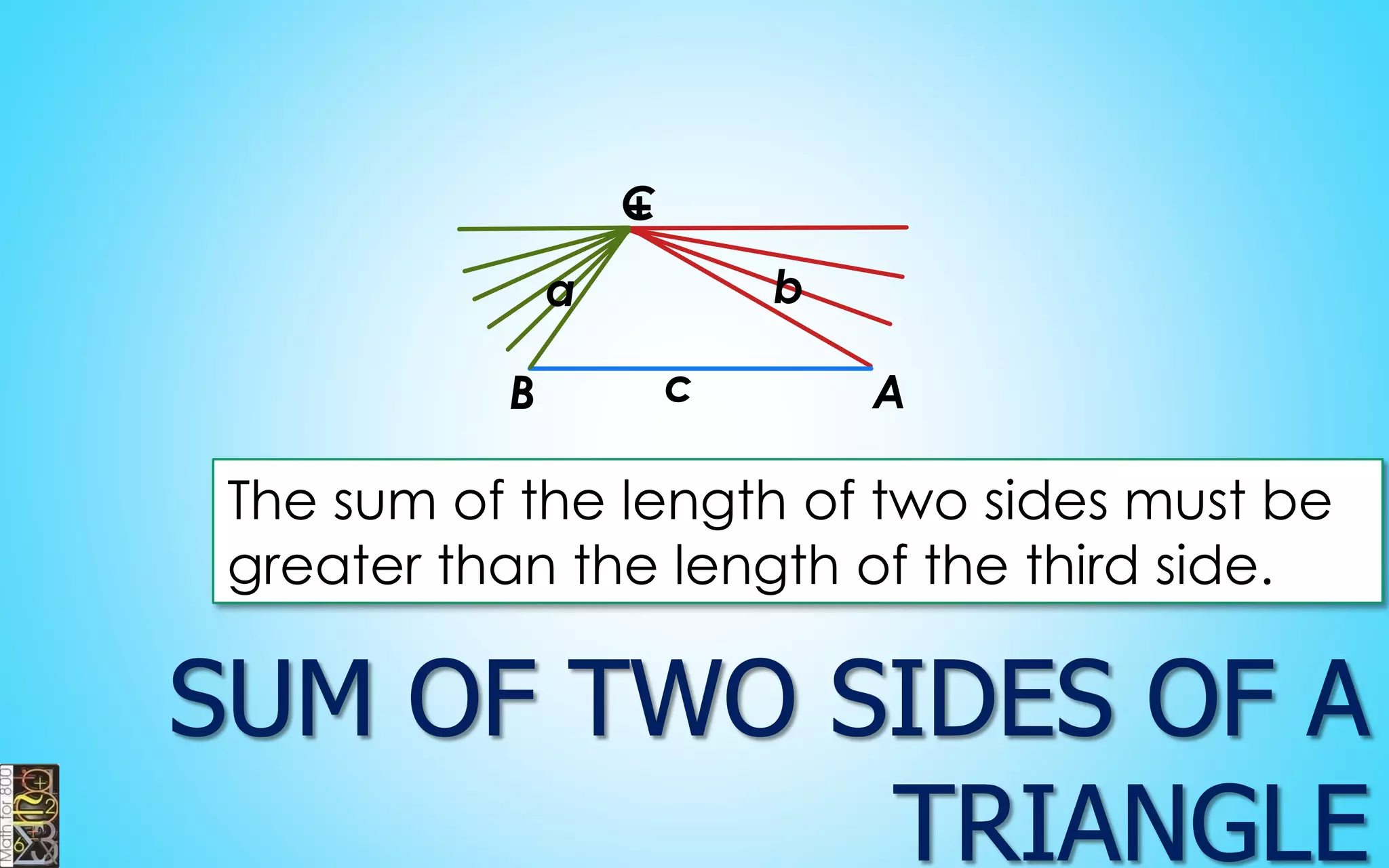
The sum of the length of two sides must be greater than the length of the third side. 
a 
b 
c 
abcbaccab   
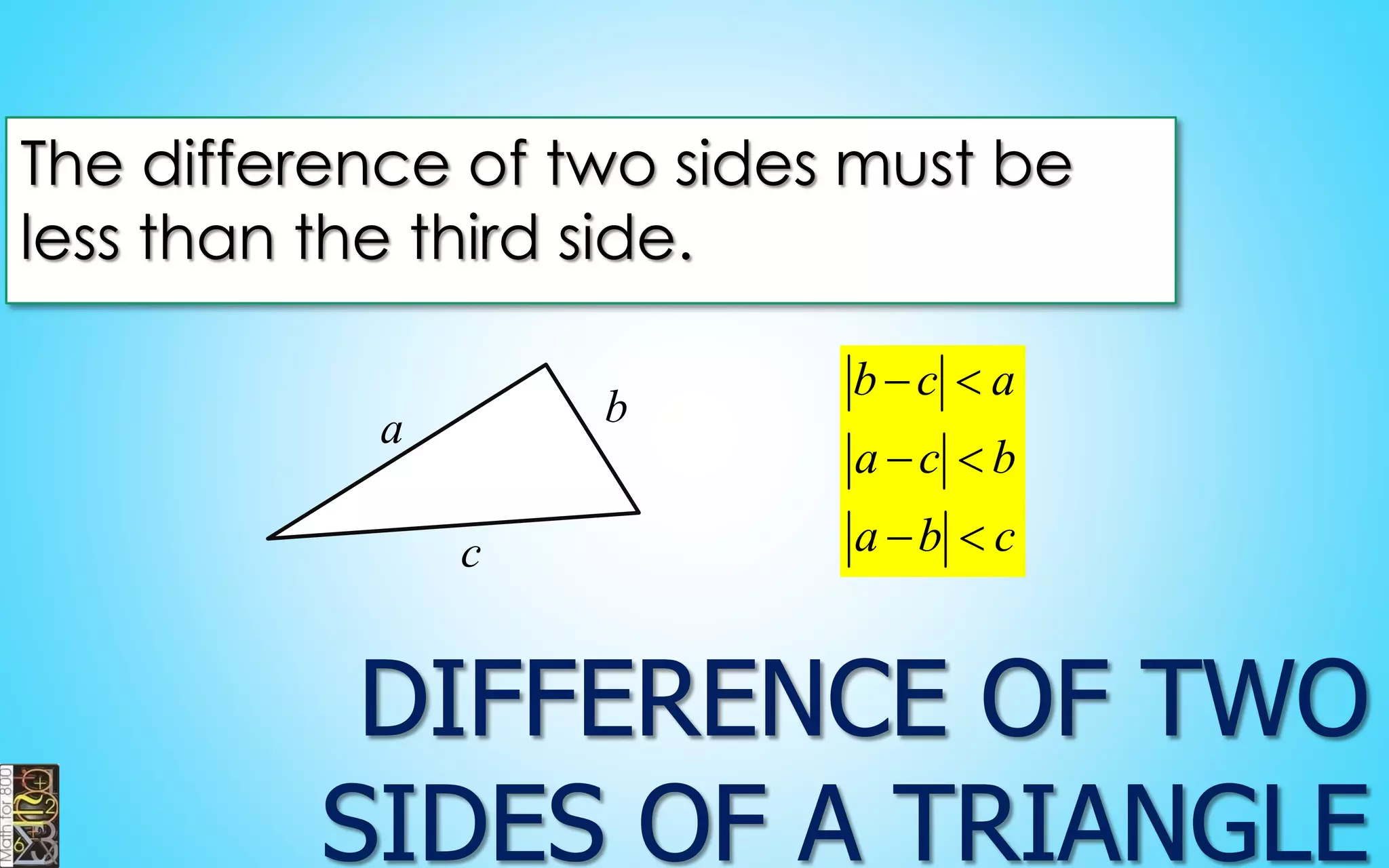
The difference of two sides must be less than the third side. 
a 
b 
cbcaacbabc   
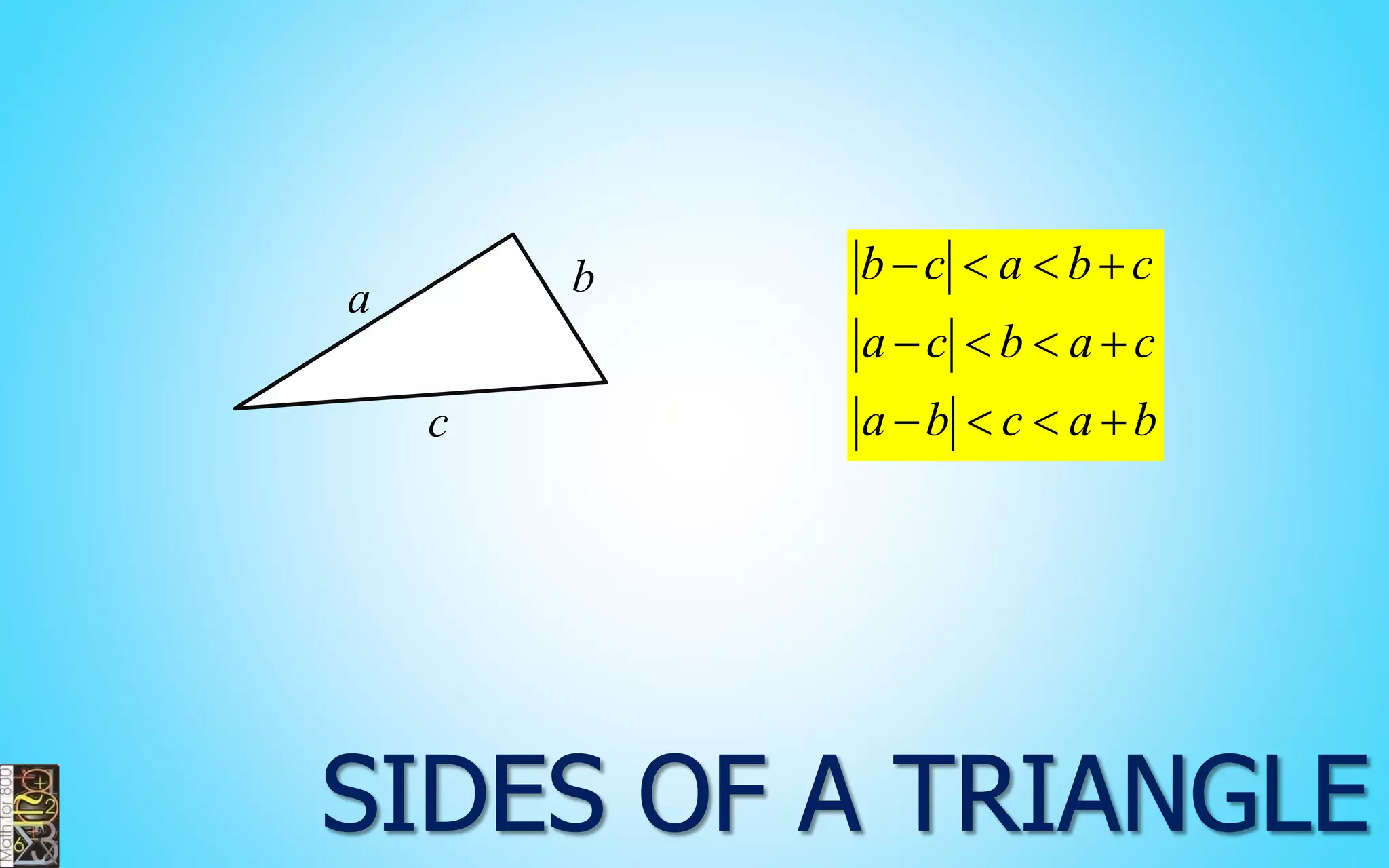
a 
b 
cbcabcacbacabcab   
a 
b 
c 
A 
B 
C 
The sum of the length of two sides must be greater than the length of the third side. 
+
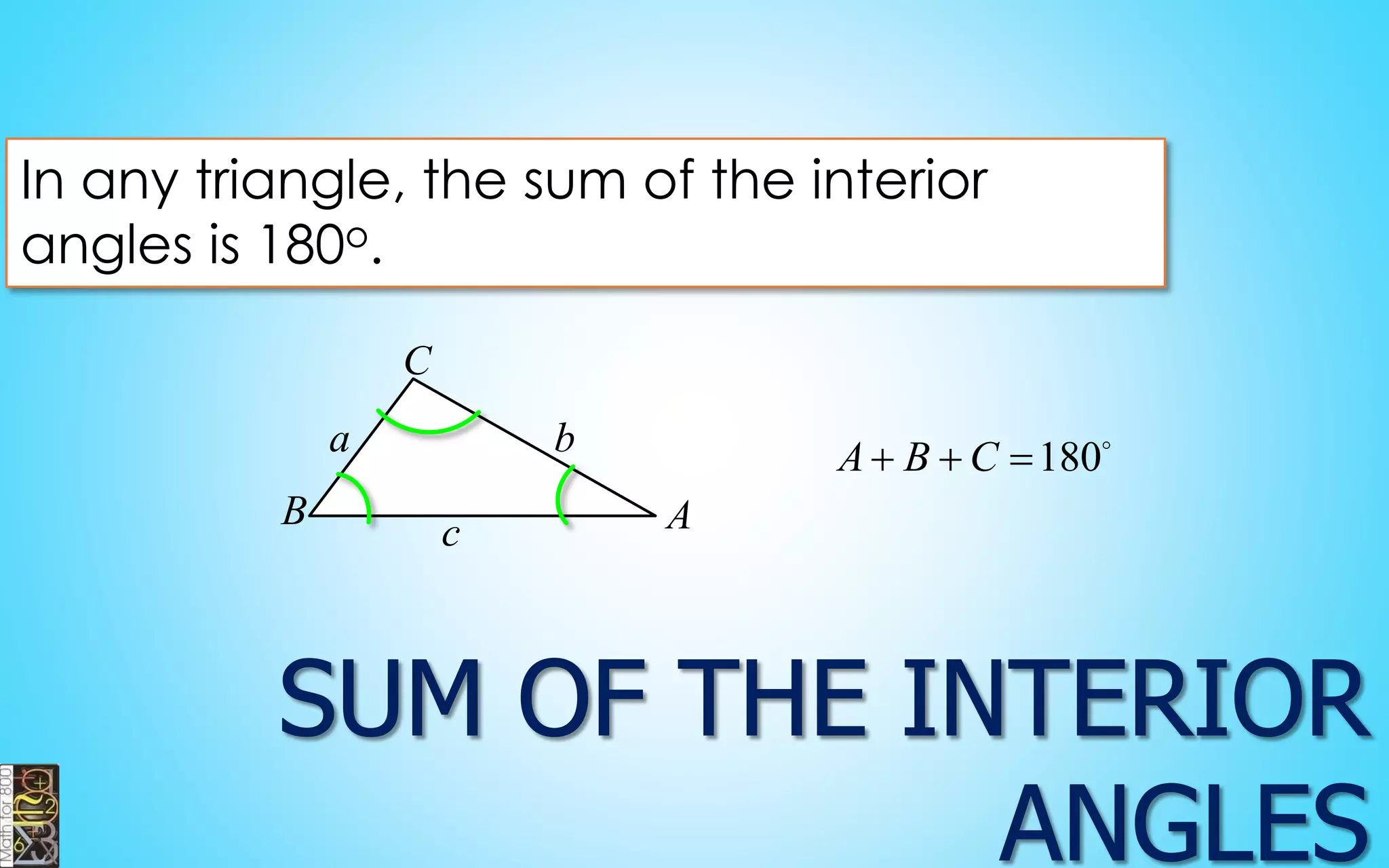
In any triangle, the sum of the interior 
angles is 180o. 
a b 
c A B 
C 
A B C 180
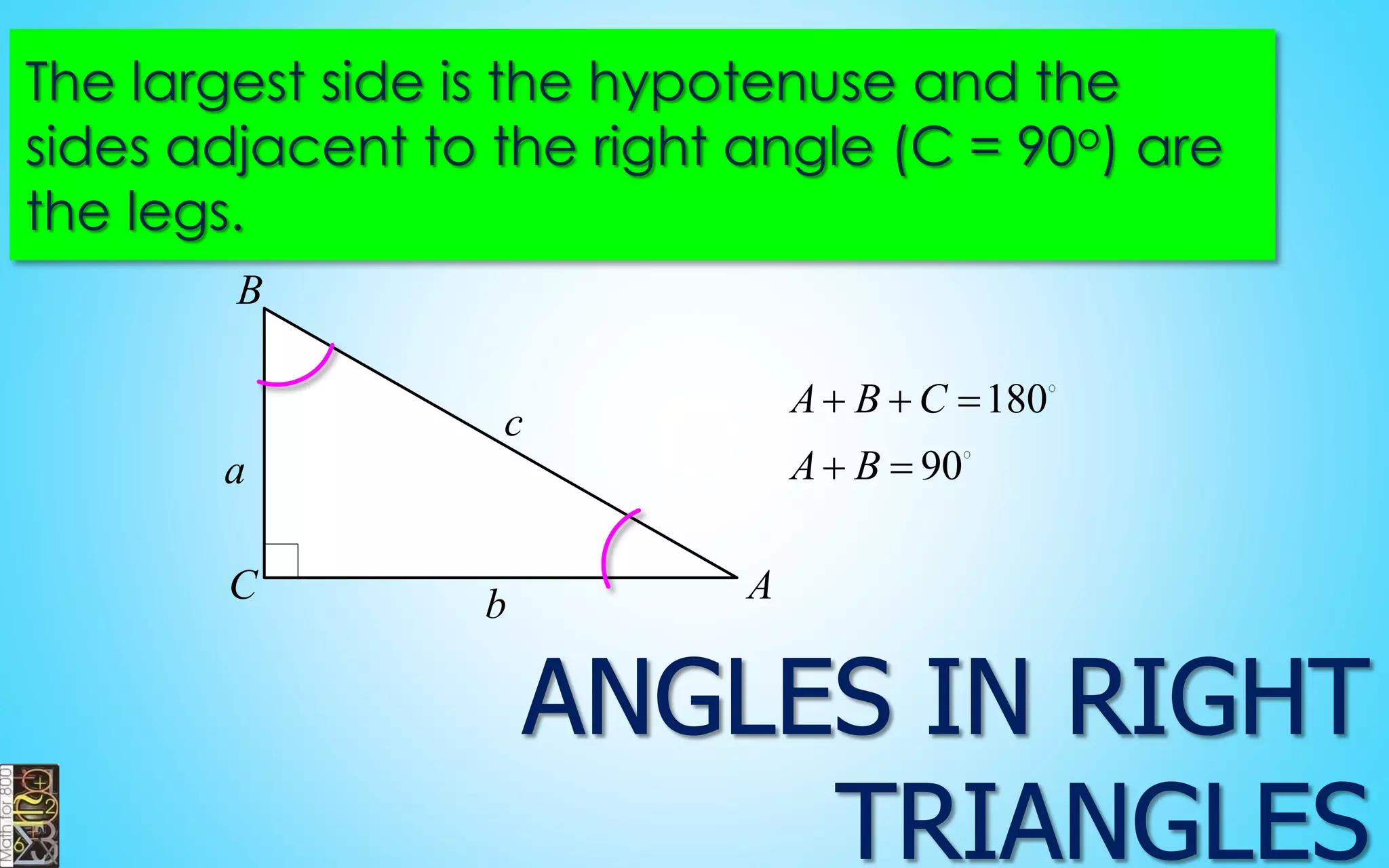
The largest side is the hypotenuse and the 
sides adjacent to the right angle (C = 90o) are 
the legs. 
C A 
B 
a 
c 
b 
180 
90 
A B C 
A B 
   
 
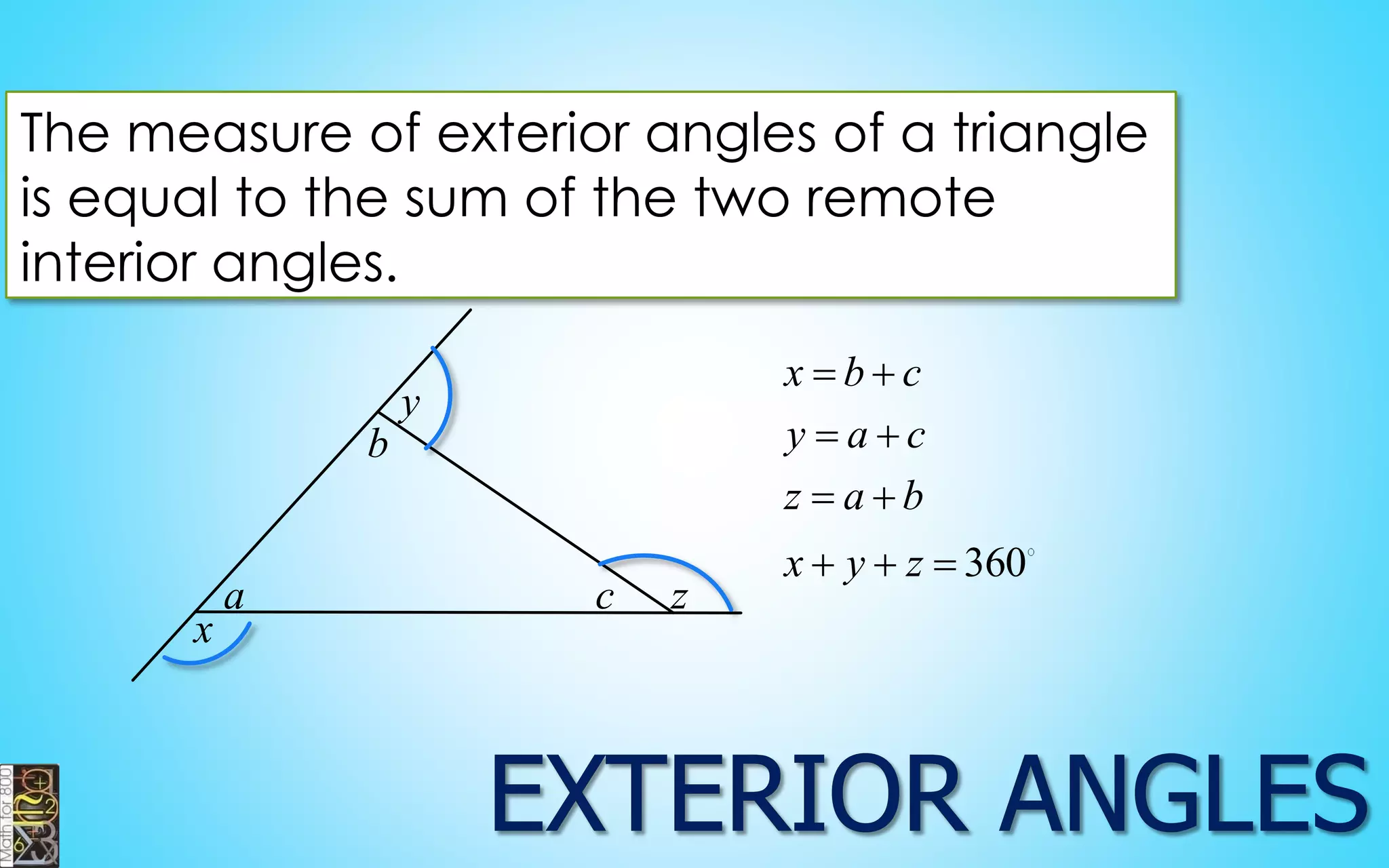
The measure of exterior angles of a triangle 
is equal to the sum of the two remote 
interior angles. 
a 
b 
c 
y 
x 
z 
360 
x b c 
y a c 
z a b 
x y z 
  
  
  
  
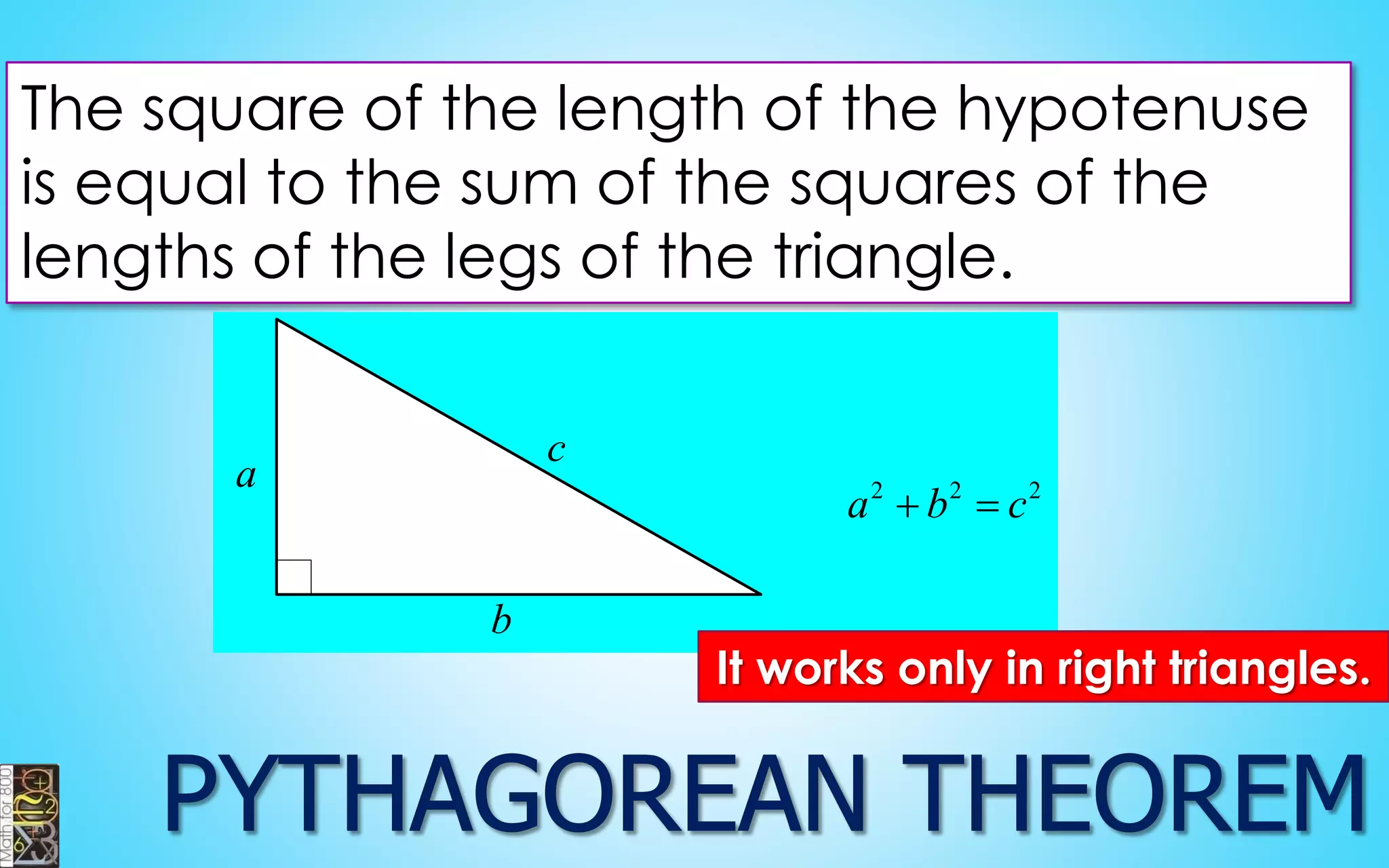
The square of the length of the hypotenuse 
is equal to the sum of the squares of the 
lengths of the legs of the triangle. 
a 
b 
c 
2 2 2 a  b  c 
It works only in right triangles.
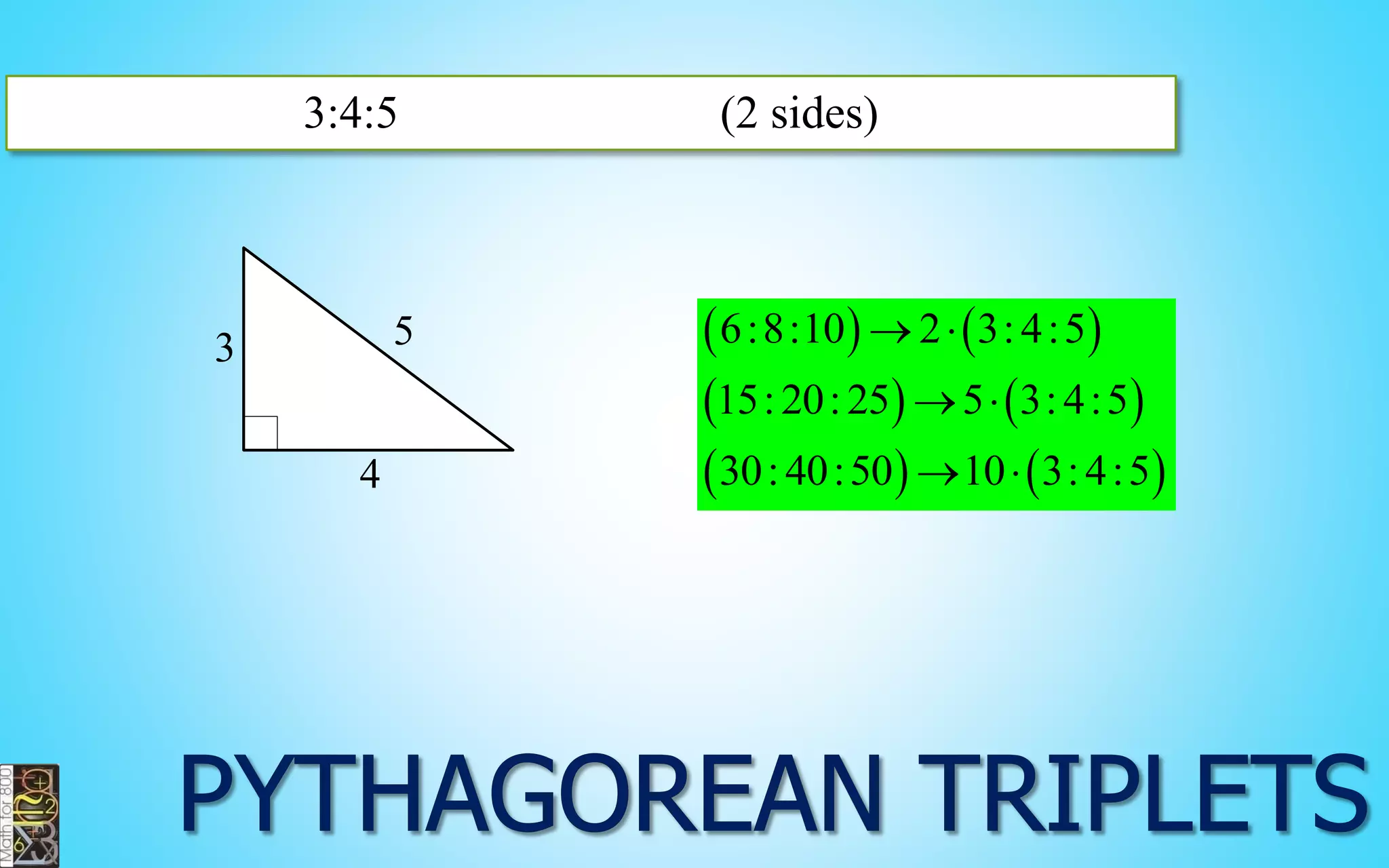
3:4:5 (2 sides) 
5 
4 
3     
    
    
6:8:10 2 3: 4:5 
15: 20: 25 5 3: 4:5 
30: 40:50 10 3: 4:5 
  
  
 
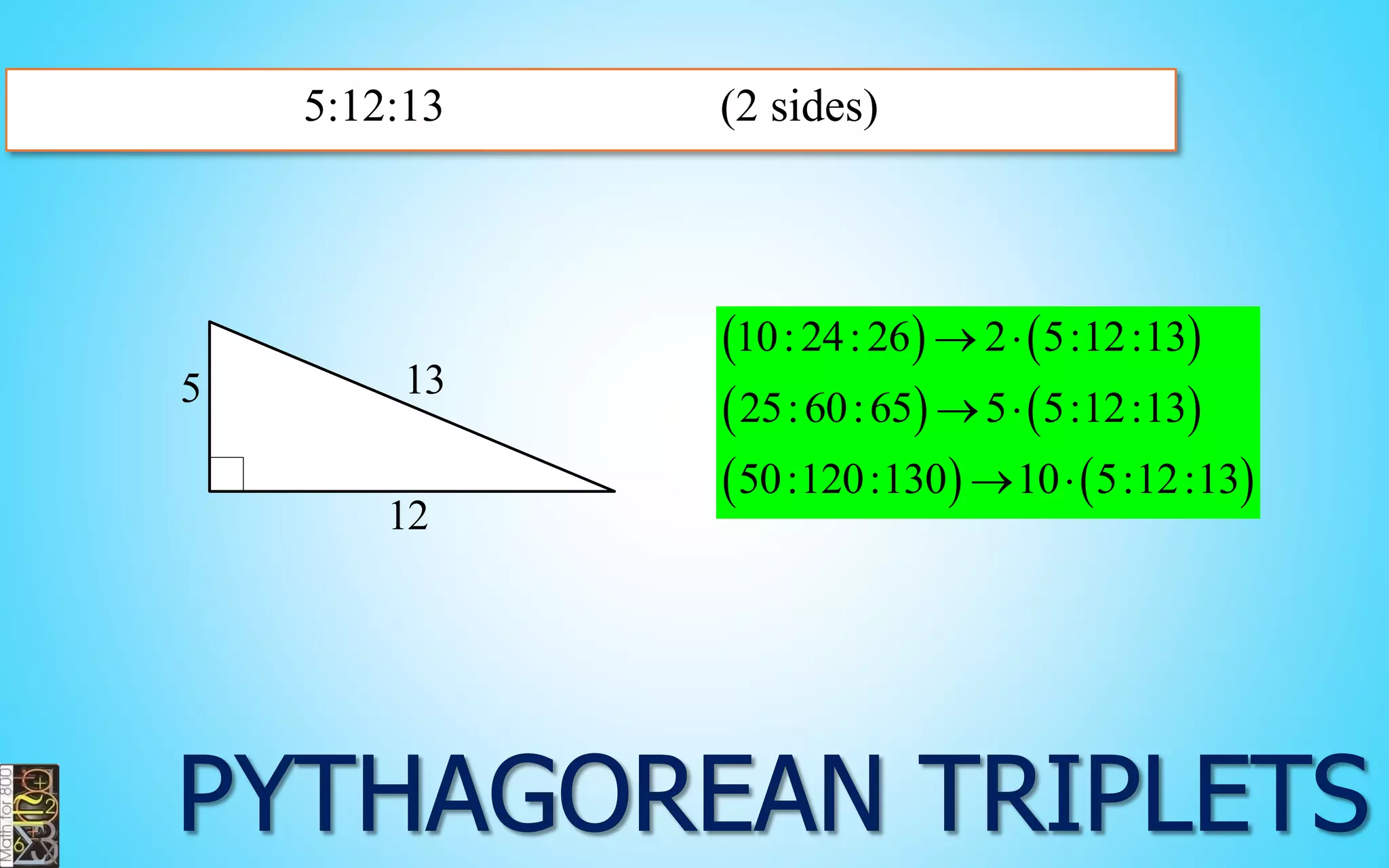
5:12:13 (2 sides) 
13 
12 
5 
    
    
    
10: 24: 26 2 5:12:13 
25:60:65 5 5:12:13 
50:120:130 10 5:12:13 
  
  
 
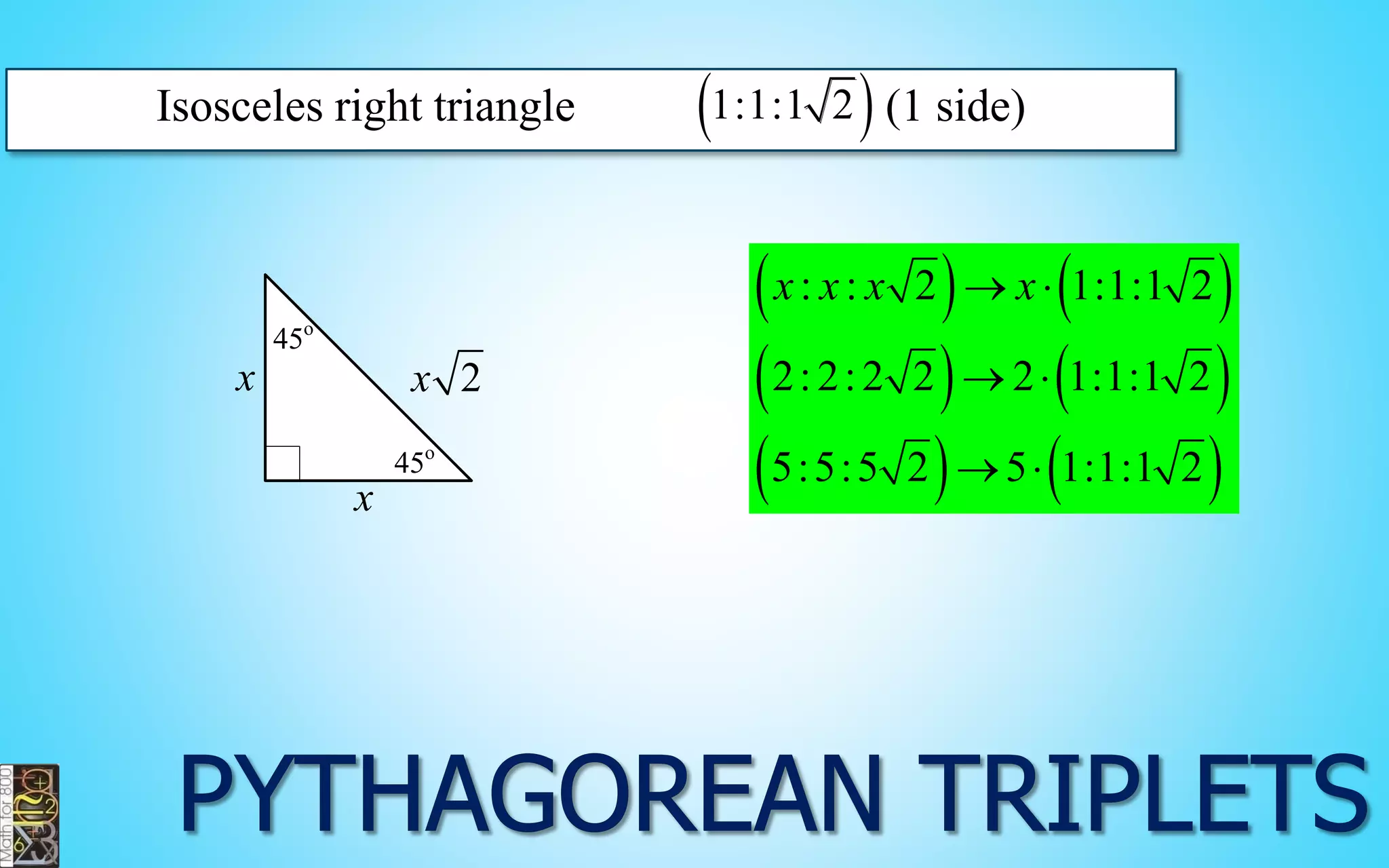
Isosceles right triangle 1:1:1 2  (1 side) 
x 
x x 2 
45o 
45o 
    
    
    
: : 2 1:1:1 2 
2: 2: 2 2 2 1:1:1 2 
5:5:5 2 5 1:1:1 2 
x x x x  
  
 
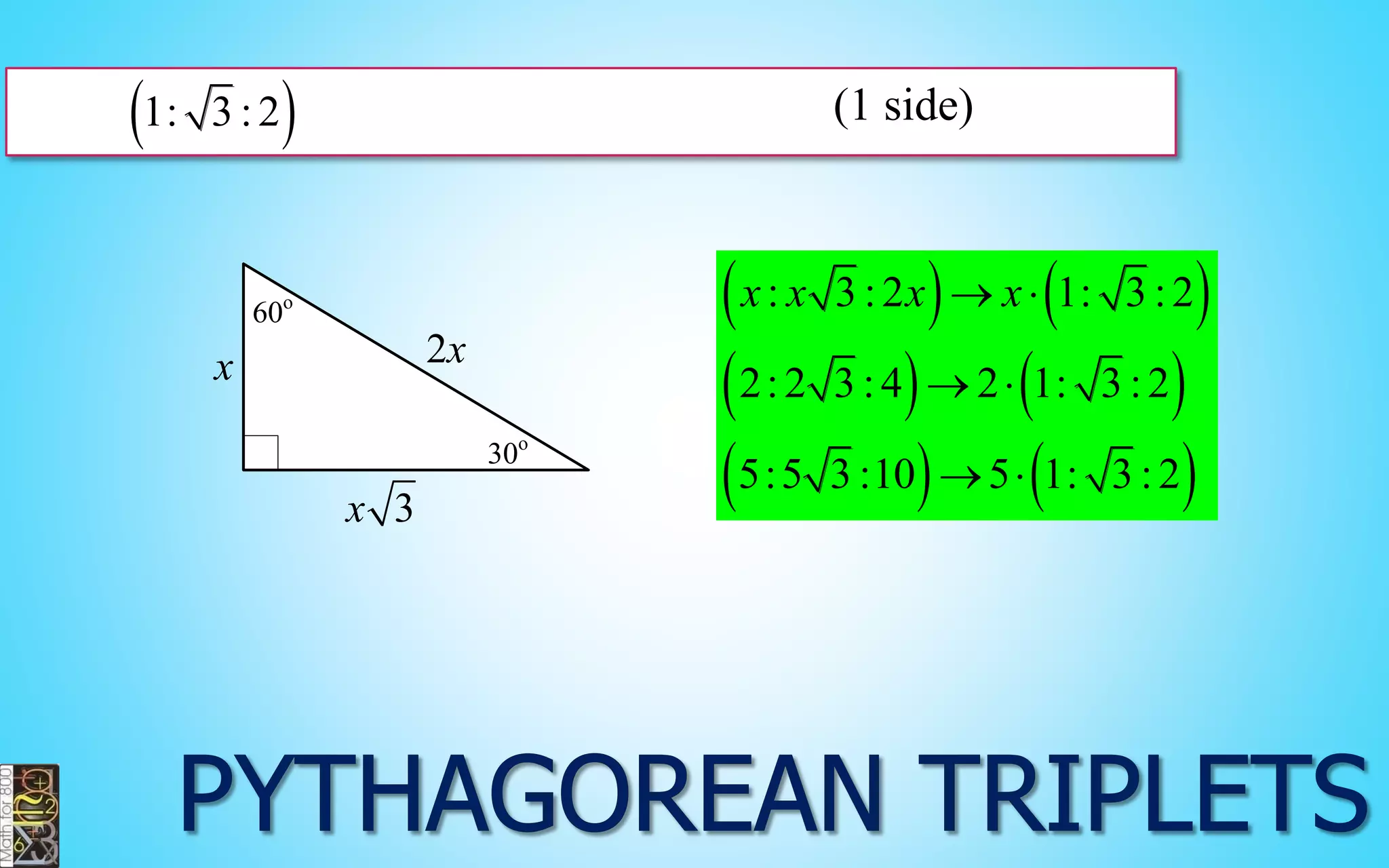
1: 3 : 2 (1 side) 
x 2x 
x 3 
30o 
60o     
    
    
: 3 : 2 1: 3 : 2 
2: 2 3 : 4 2 1: 3 : 2 
5:5 3 :10 5 1: 3 : 2 
x x x x  
  
 
    
1 
2 
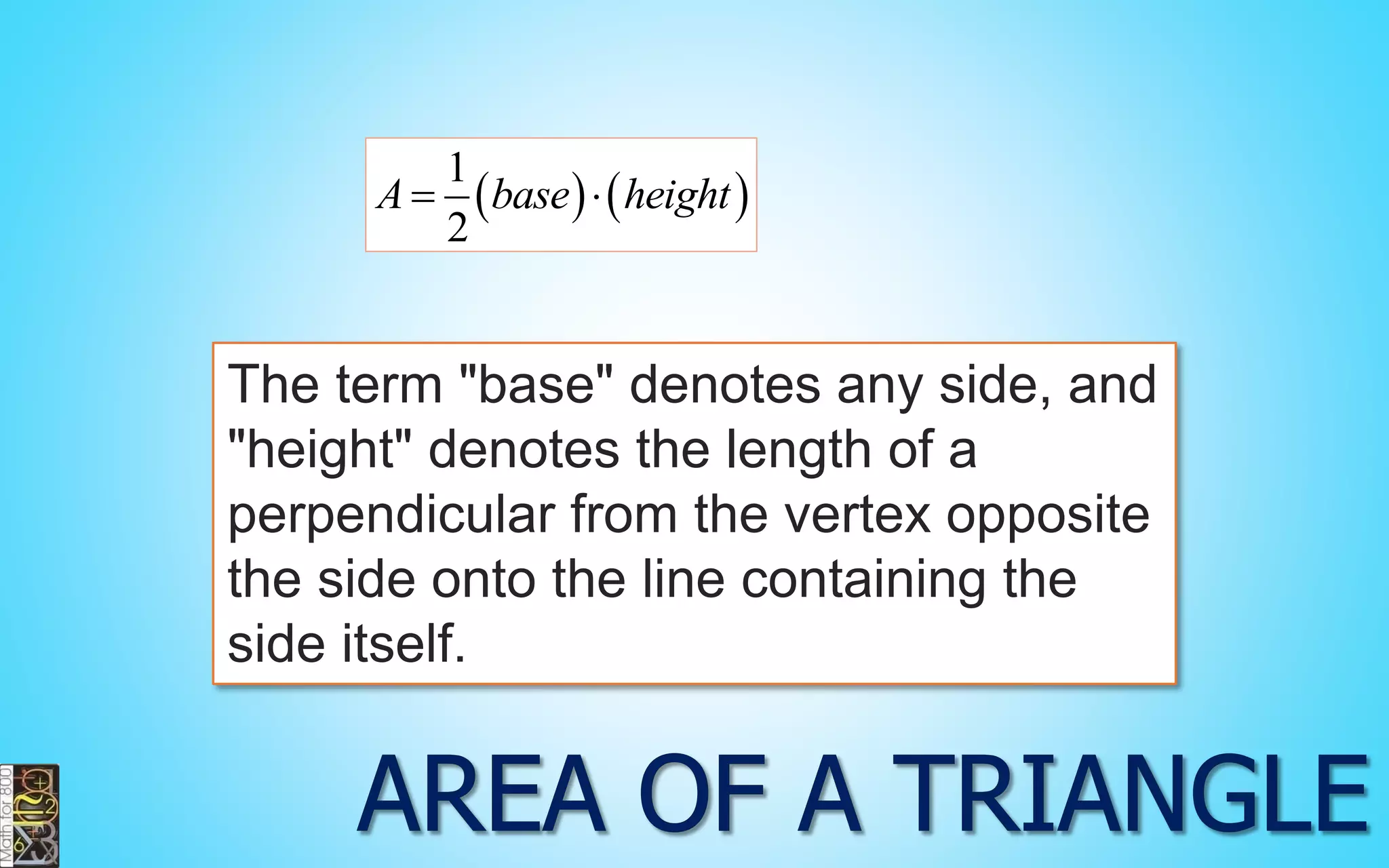
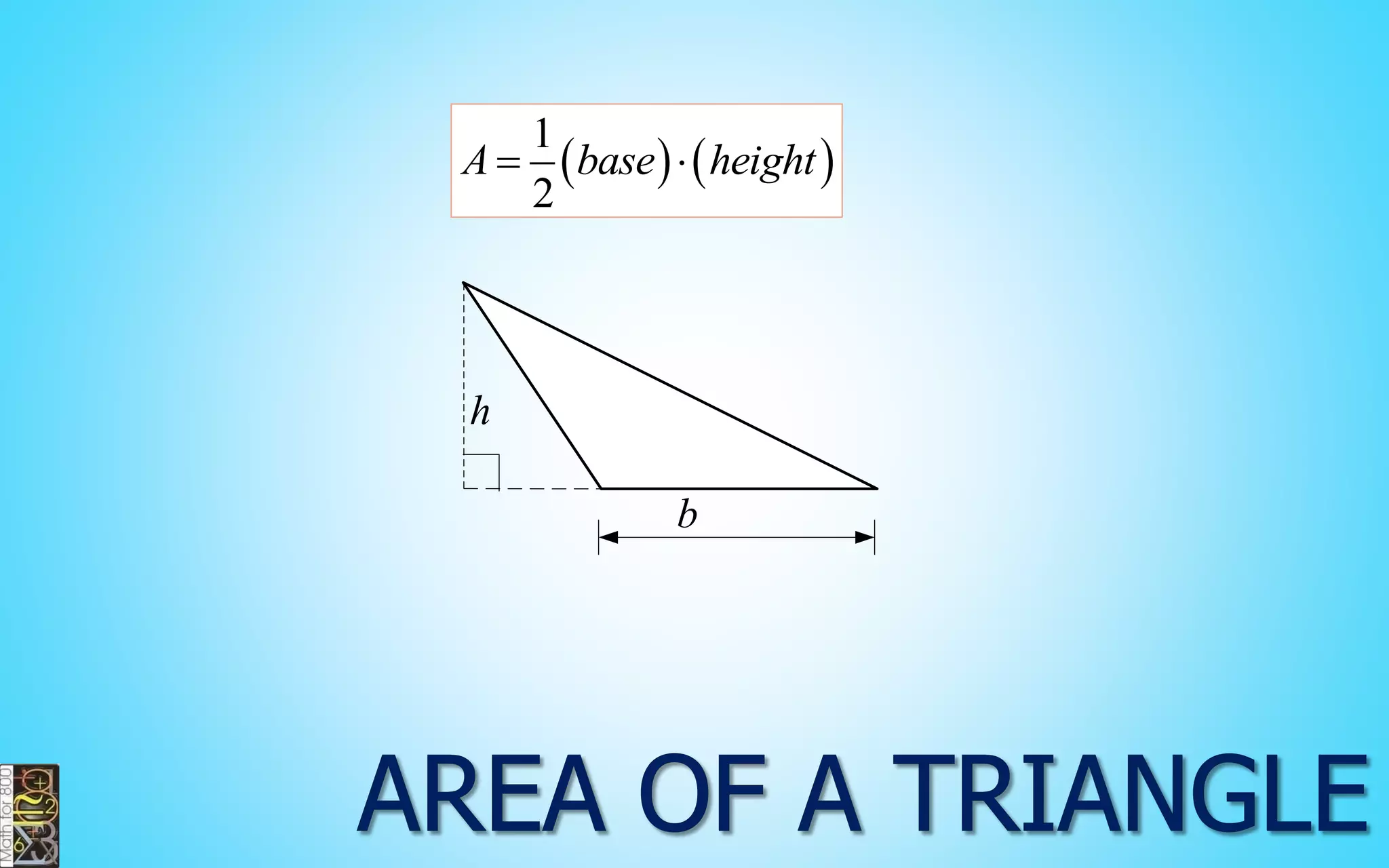
A  base  height 
The term "base" denotes any side, and 
"height" denotes the length of a 
perpendicular from the vertex opposite 
the side onto the line containing the 
side itself.
    
1 
2 
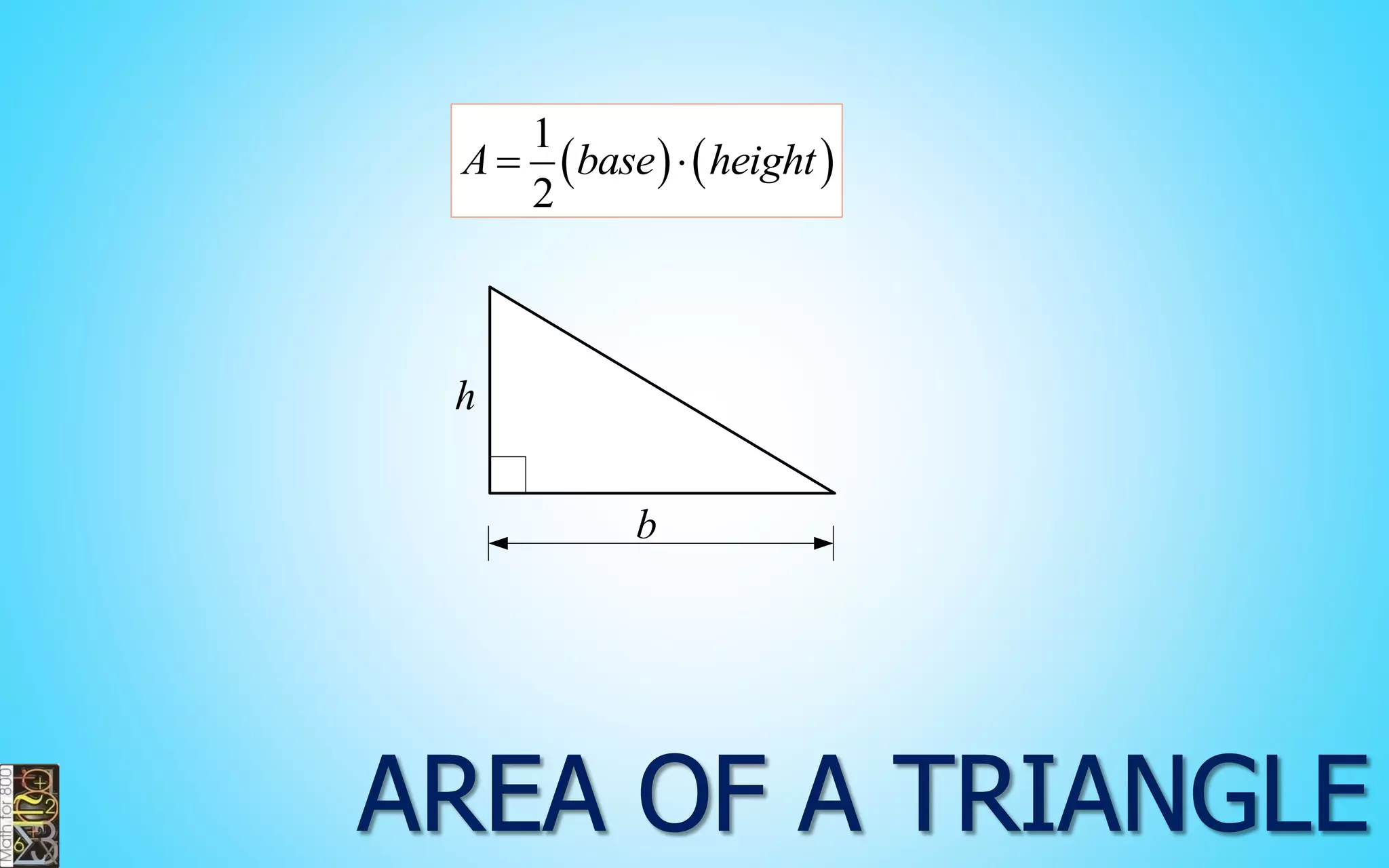
A  base  height 
h 
b
    
1 
2 
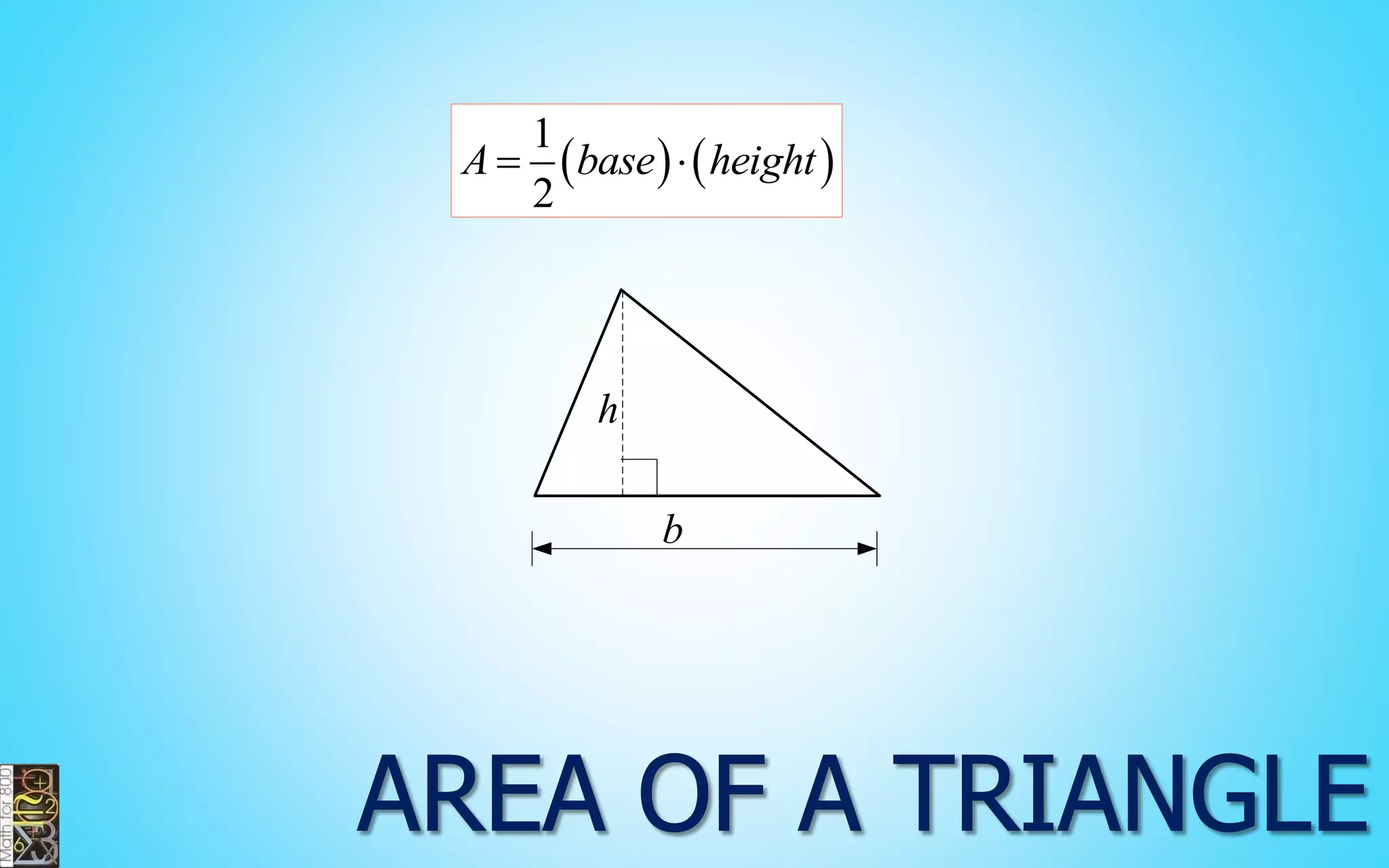
A  base  height 
h 
b
    
1 
2 
A  base  height 
h 
b
edwinxav@hotmail.com 
elapuerta@hotmail.com
Math for 800   10 lines, angles and triangles

Math for 800 10 lines, angles and triangles