Philip's Geometry Guide to Success   Lines Angles Triangles Quadrilaterals Circles
Lines Points Line Segments Rays Lines Intersecting Lines Perpendicular Lines Parallel Lines Skew Lines
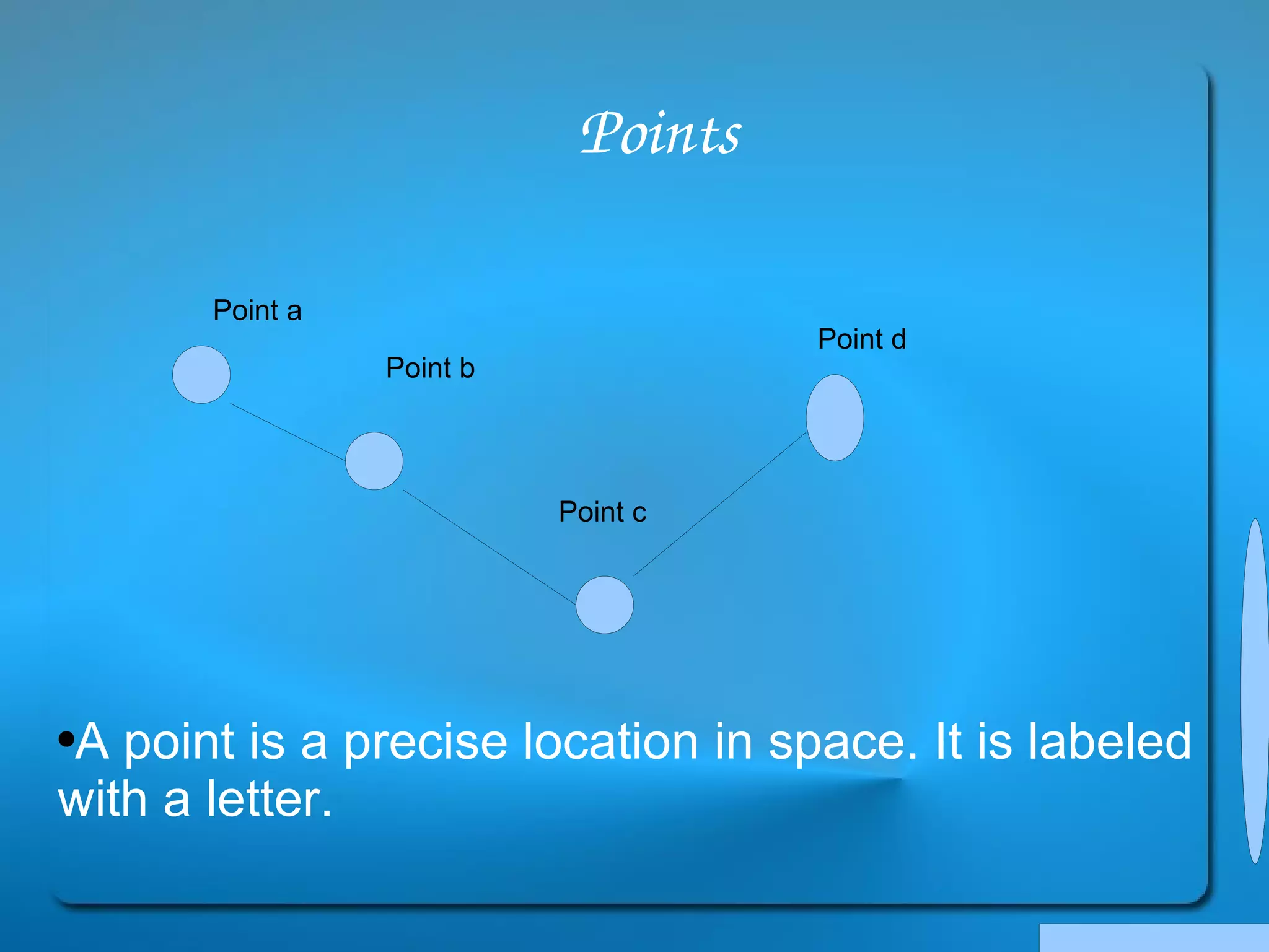
Points A point is a precise location in space. It is labeled with a letter. Point a Point b Point c Point d
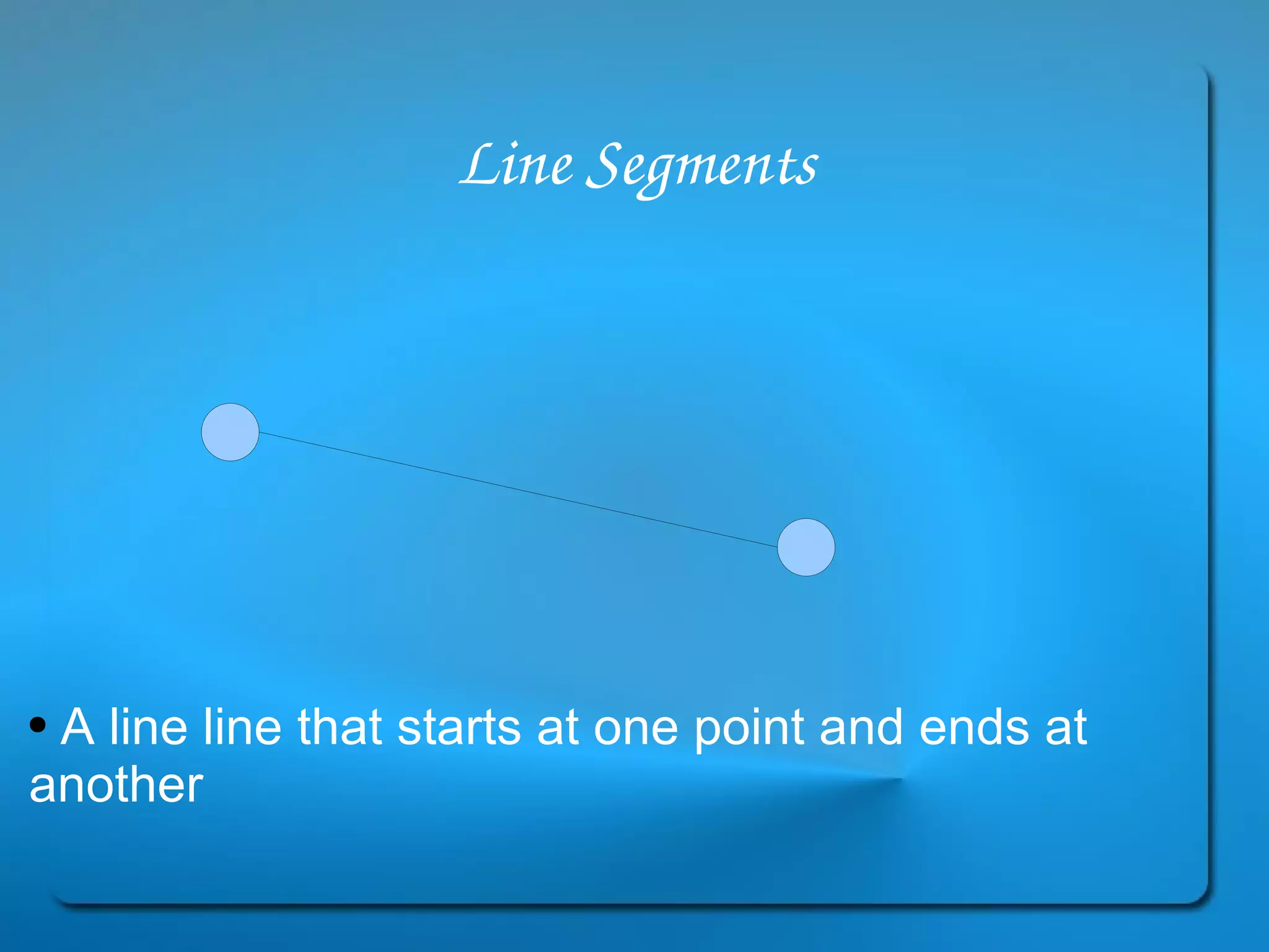
Line Segments A line line that starts at one point and ends at another
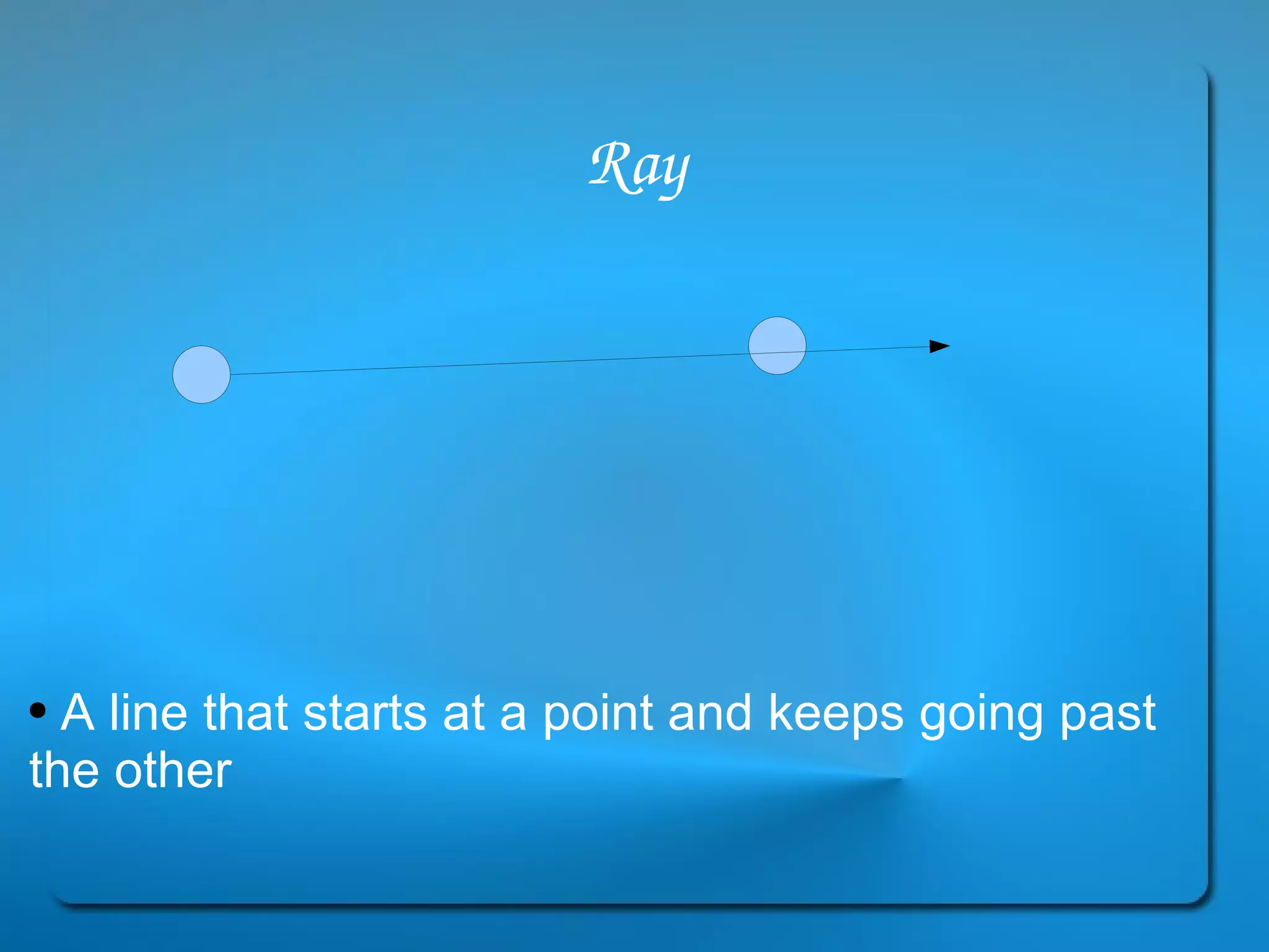
Ray A line that starts at a point and keeps going past the other
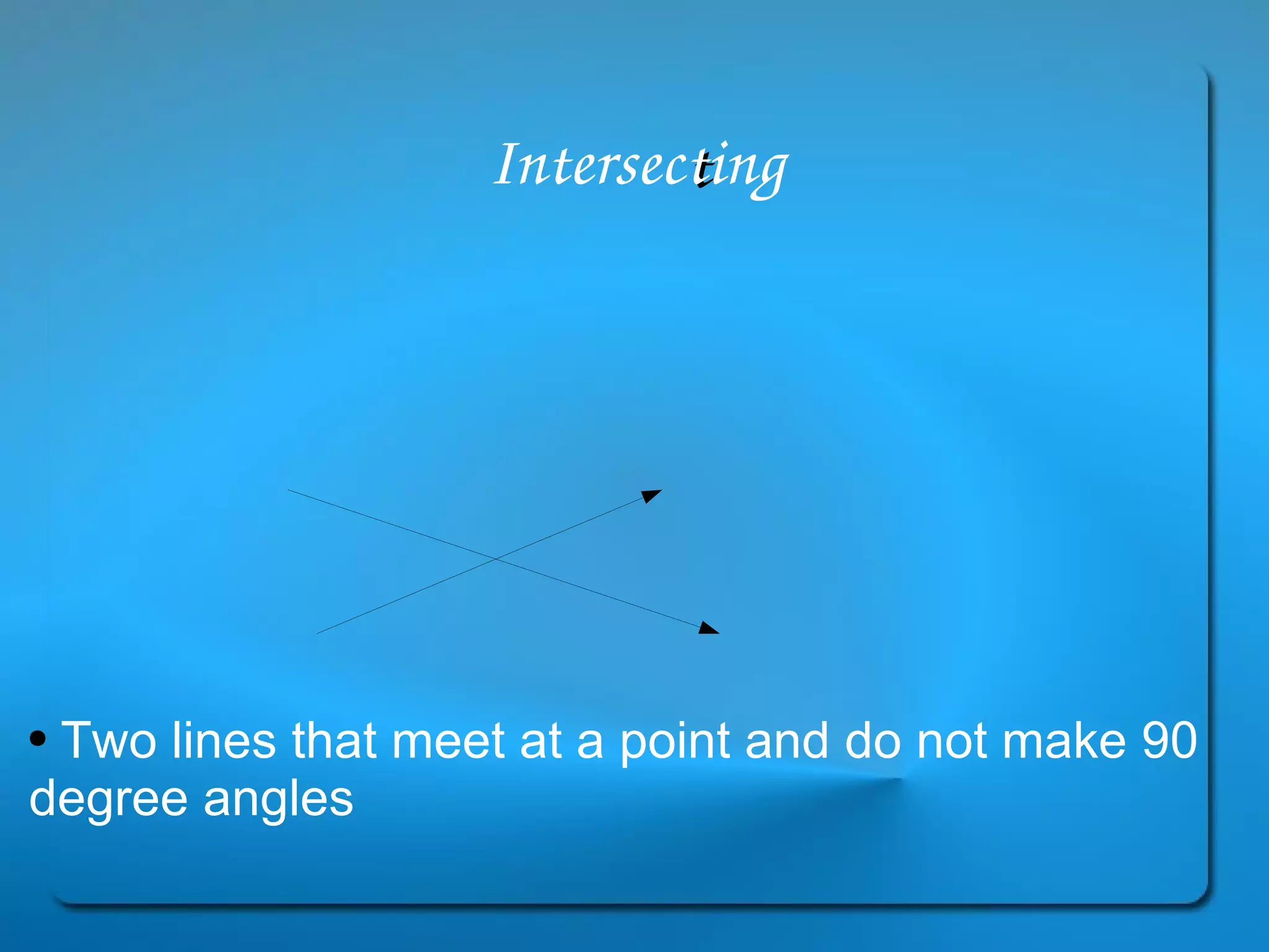
Intersec t ing Two lines that meet at a point and do not make 90 degree angles
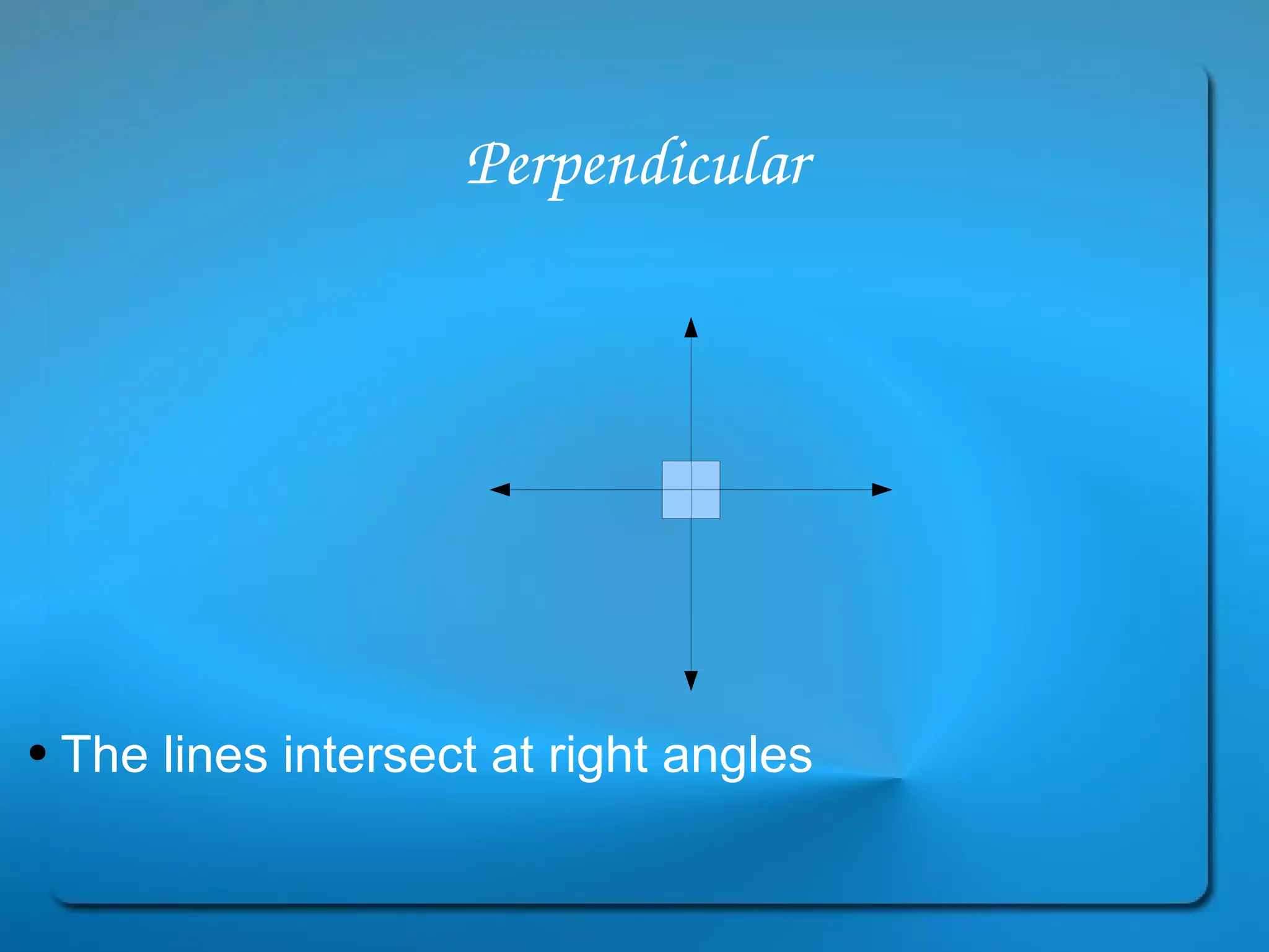
Perpendicular The lines intersect at right angles
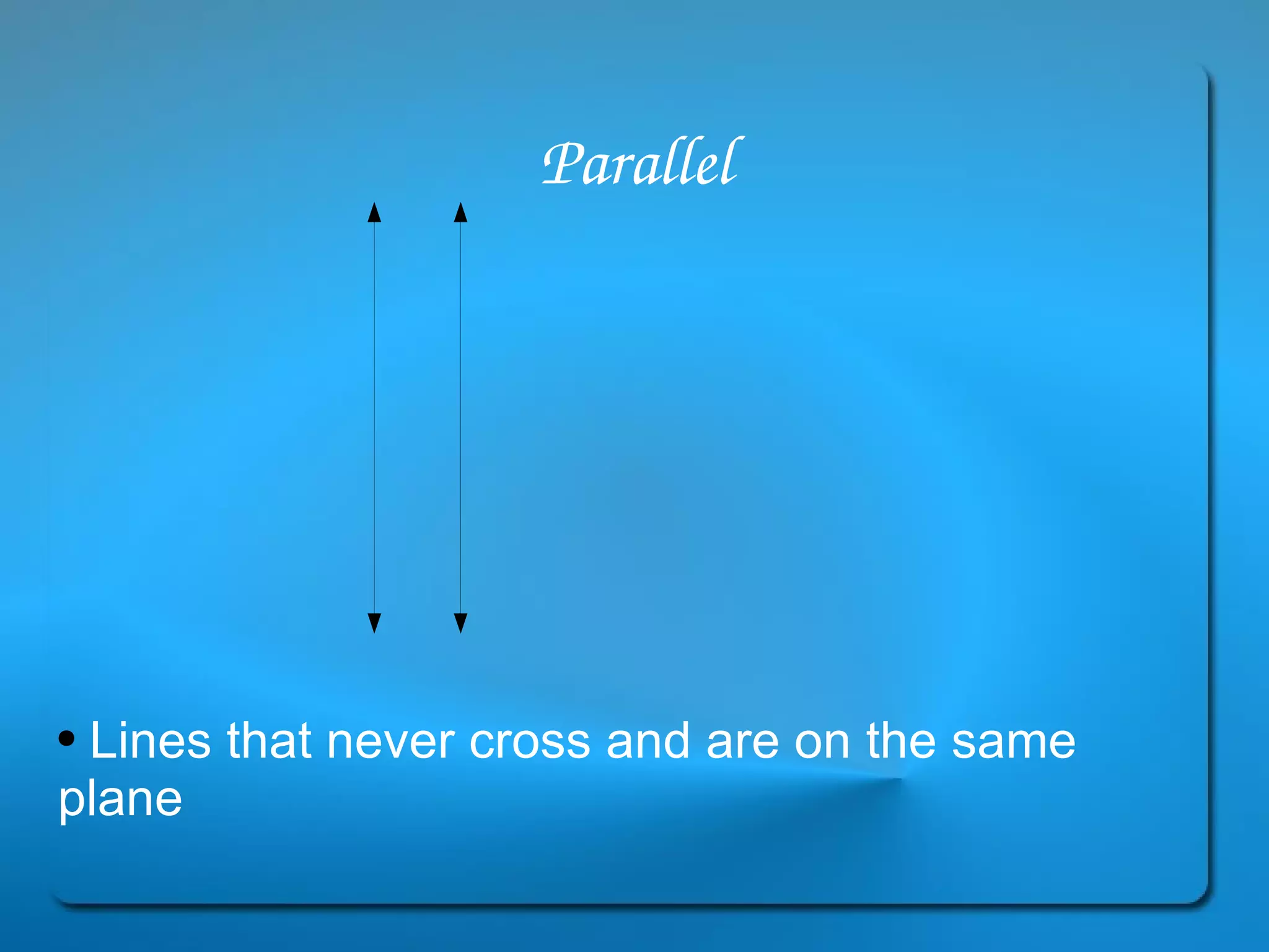
Parallel Lines that never cross and are on the same plane
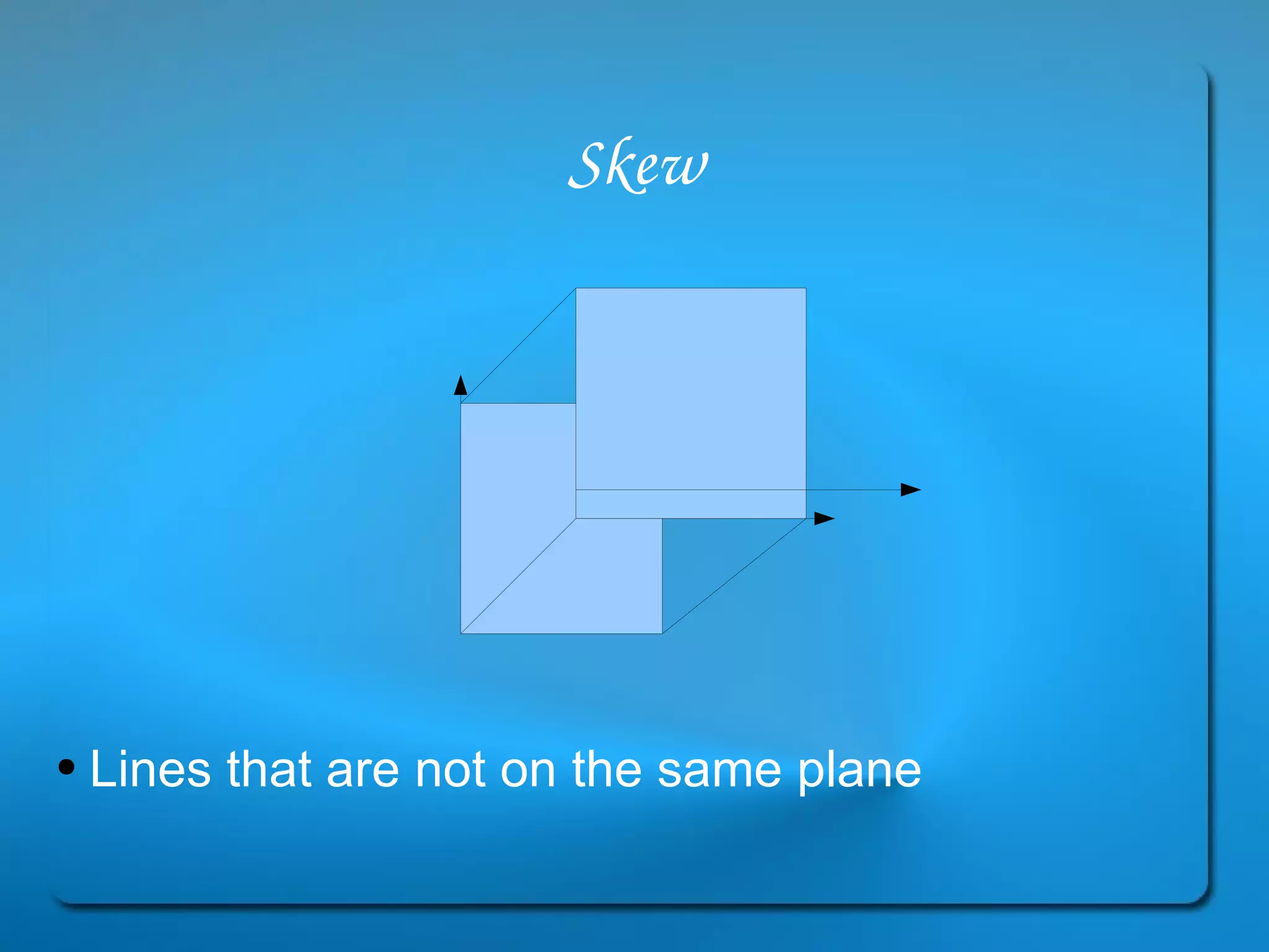
Skew Lines that are not on the same plane
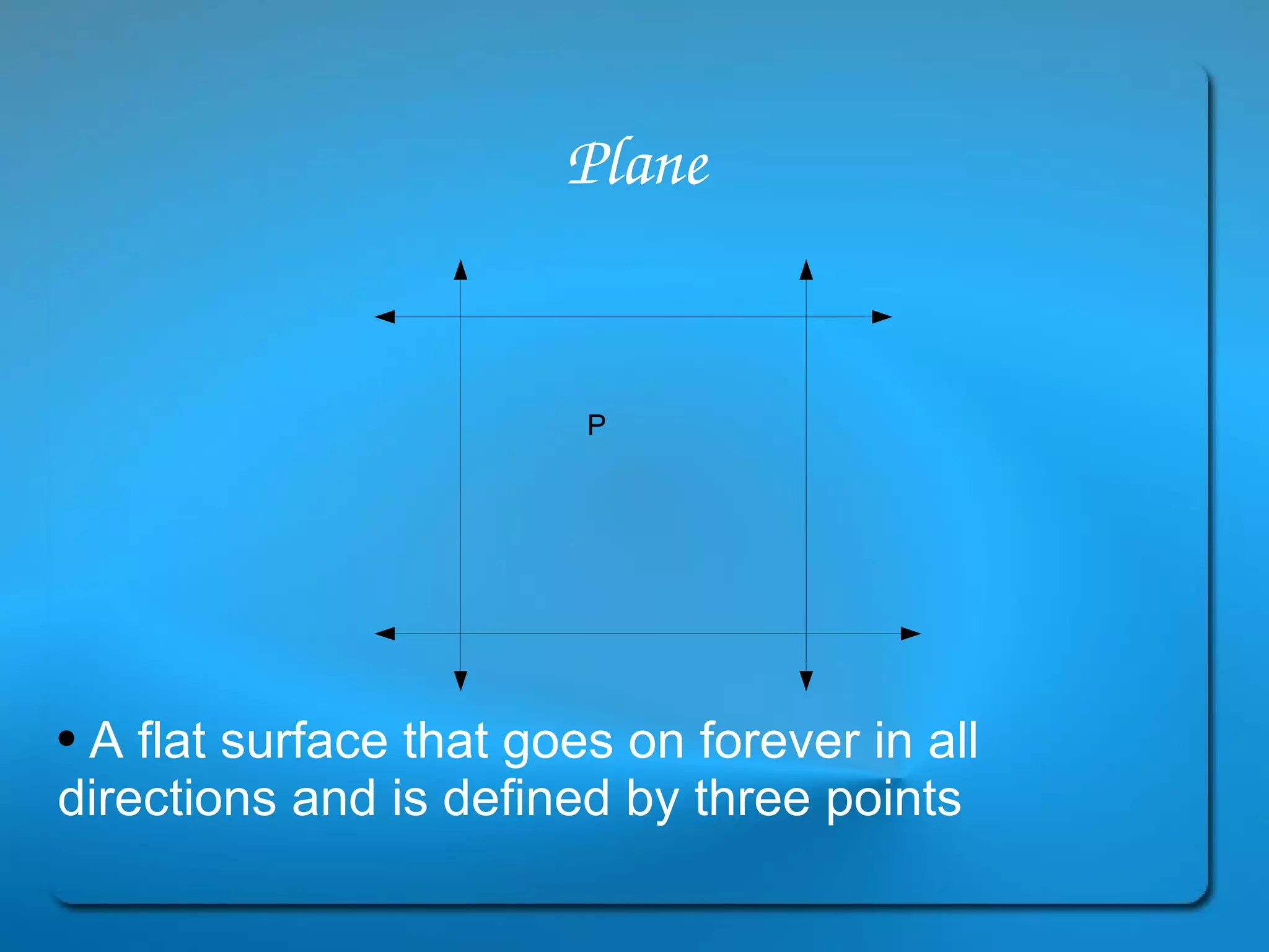
Plane A flat surface that goes on forever in all directions and is defined by three points P
Angles acute obtuse right straight vertex/vertices complementary supplementary vertical/ opposite adjacent
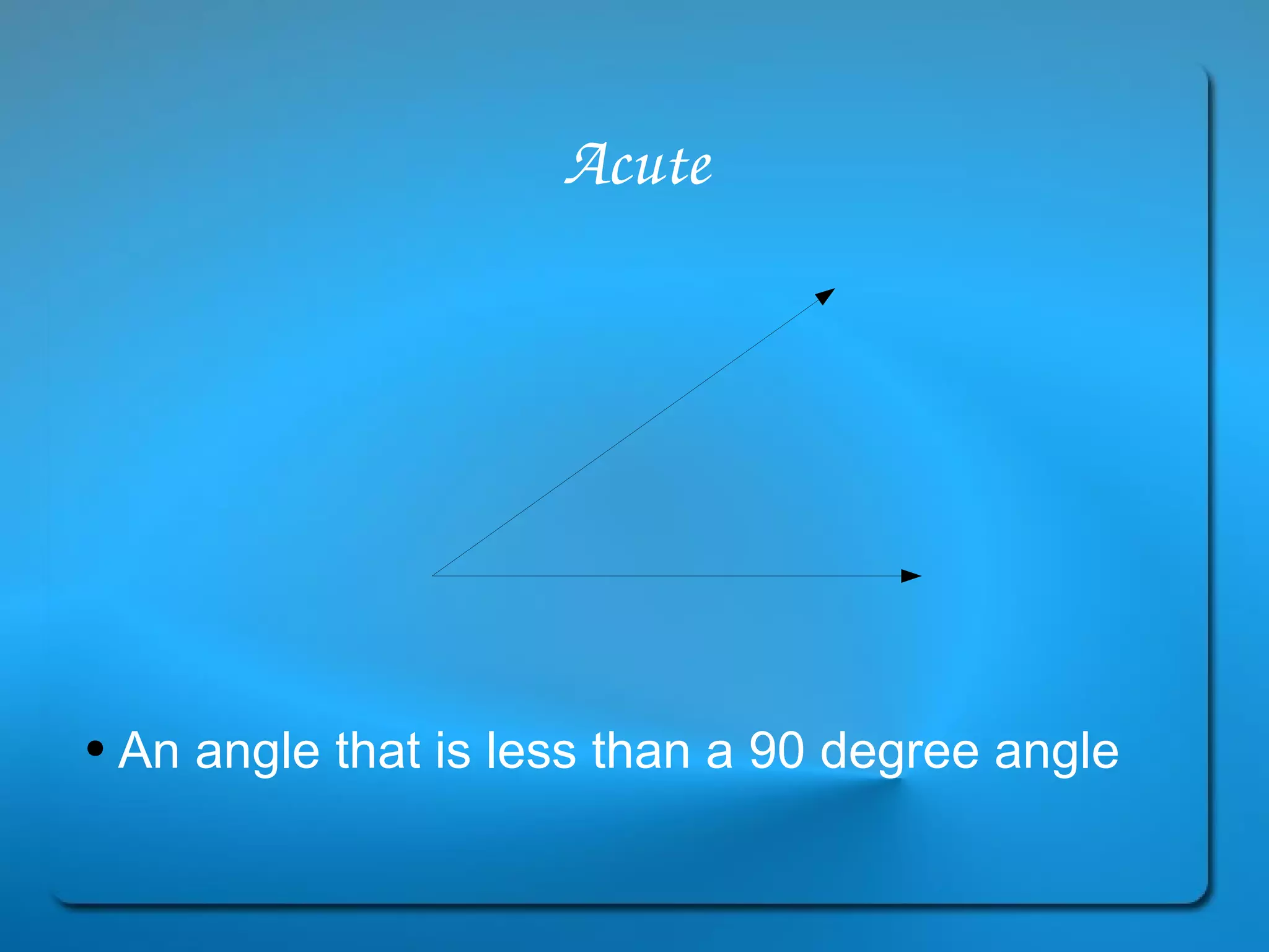
Acute An angle that is less than a 90 degree angle
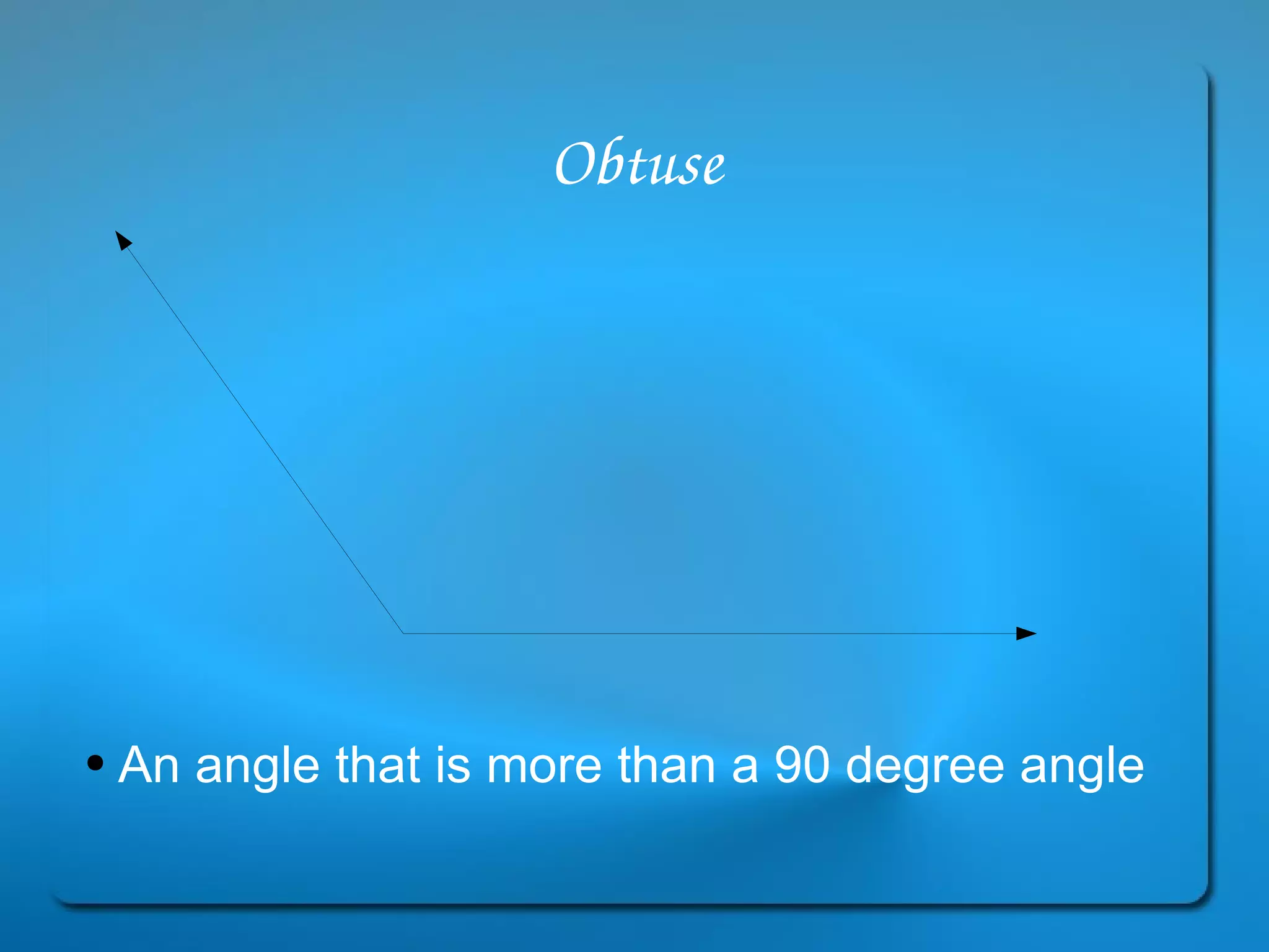
Obtuse An angle that is more than a 90 degree angle
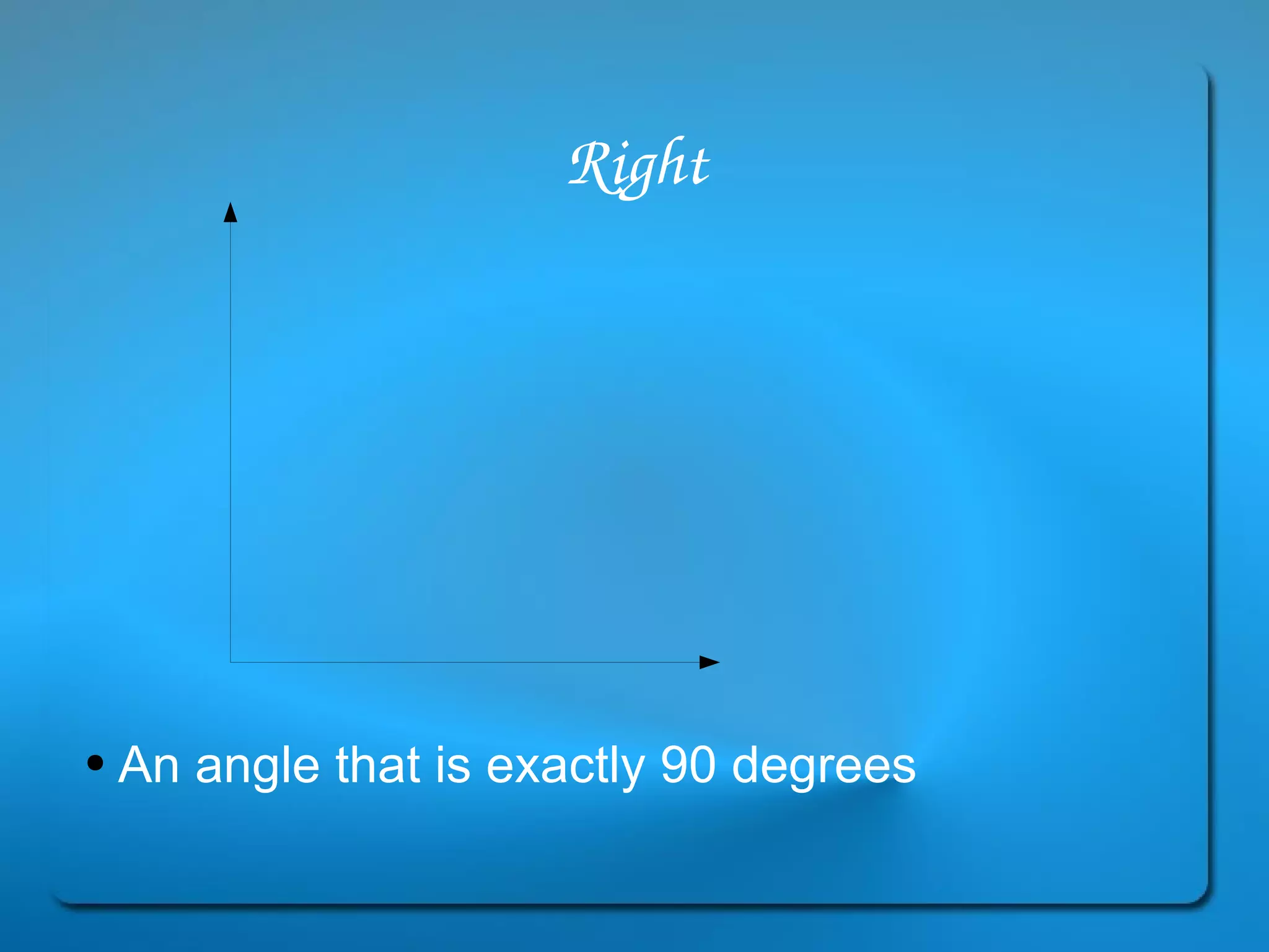
Right An angle that is exactly 90 degrees
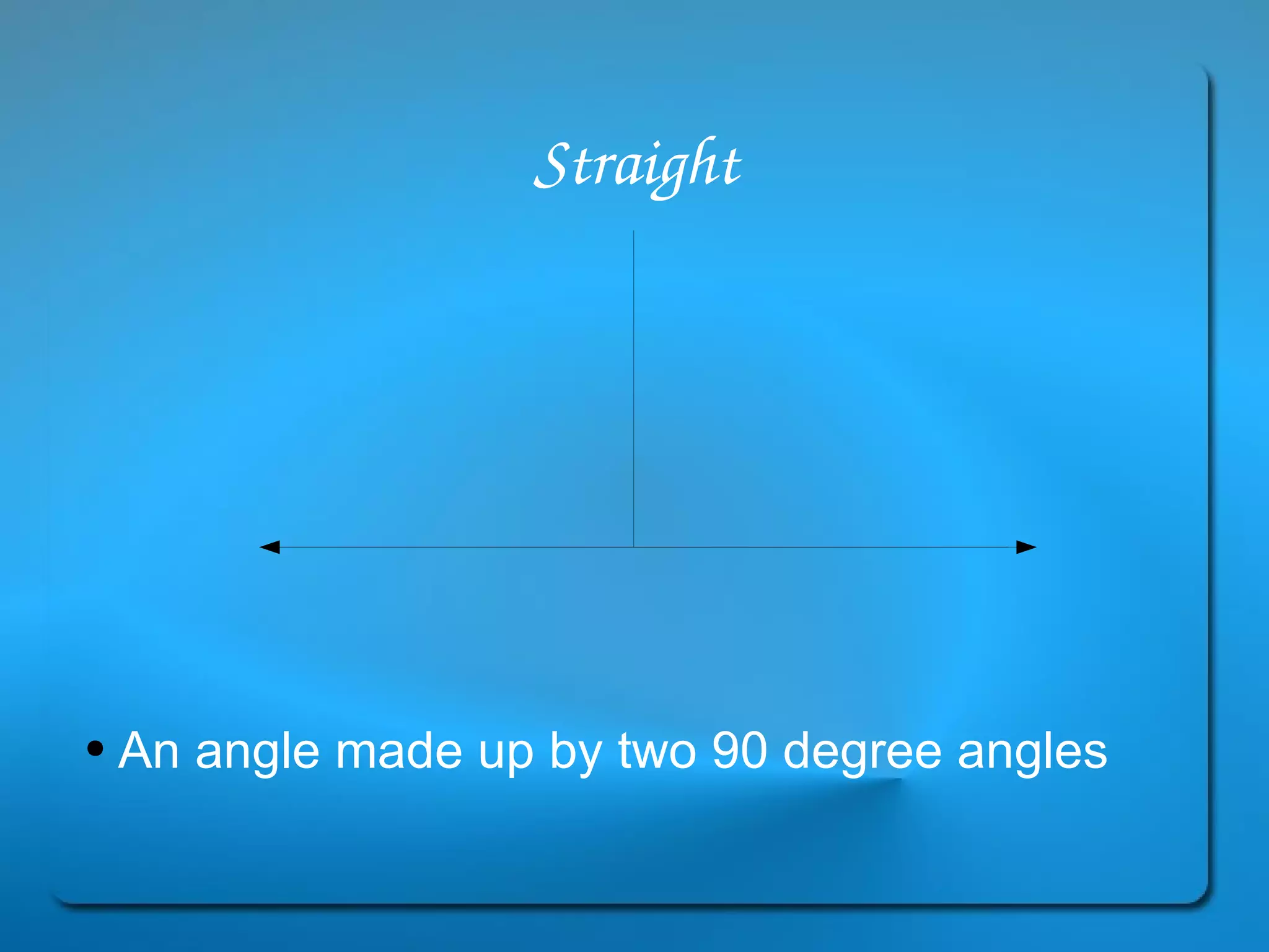
Straight An angle made up by two 90 degree angles
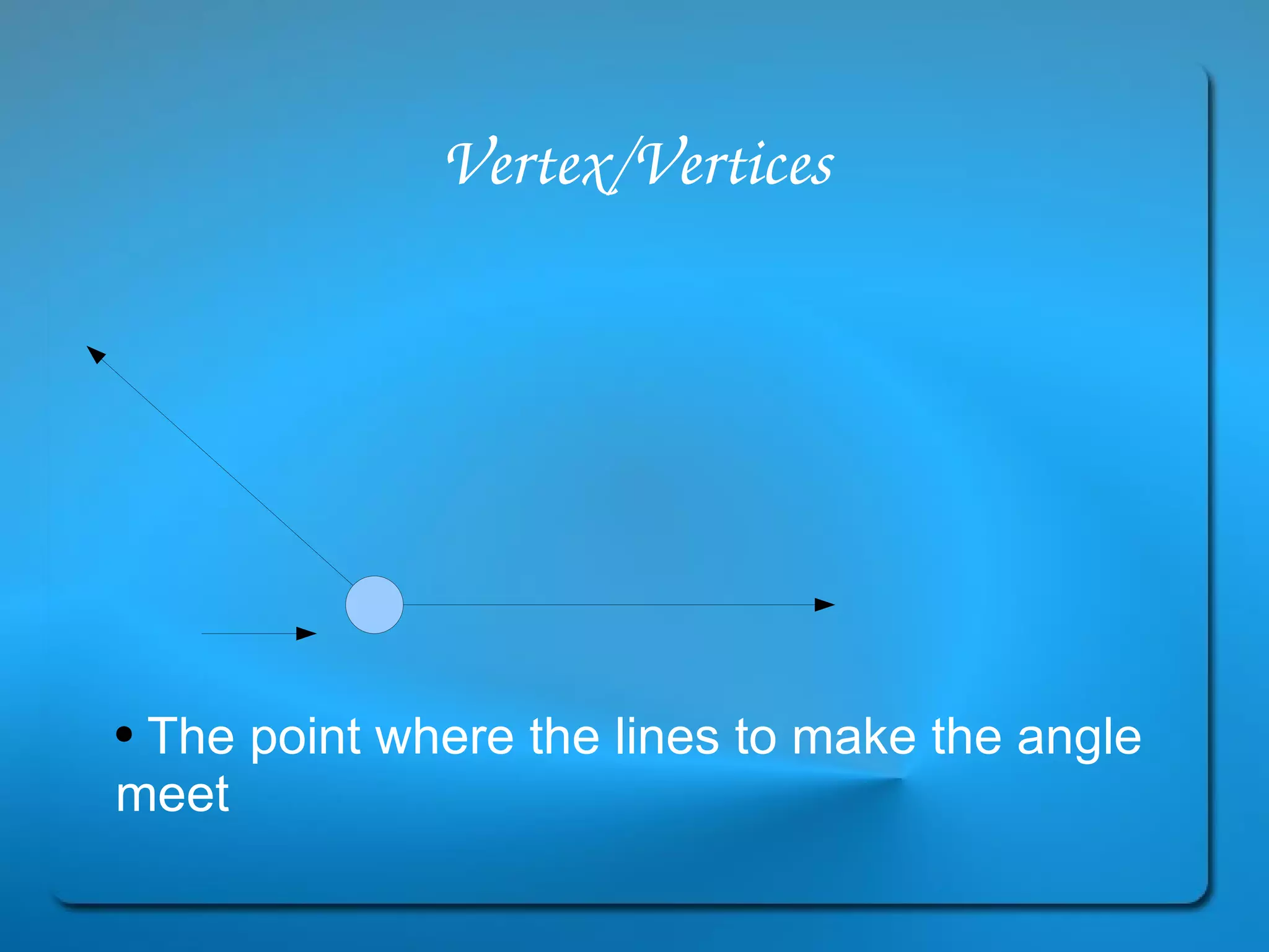
Vertex/Vertices The point where the lines to make the angle meet
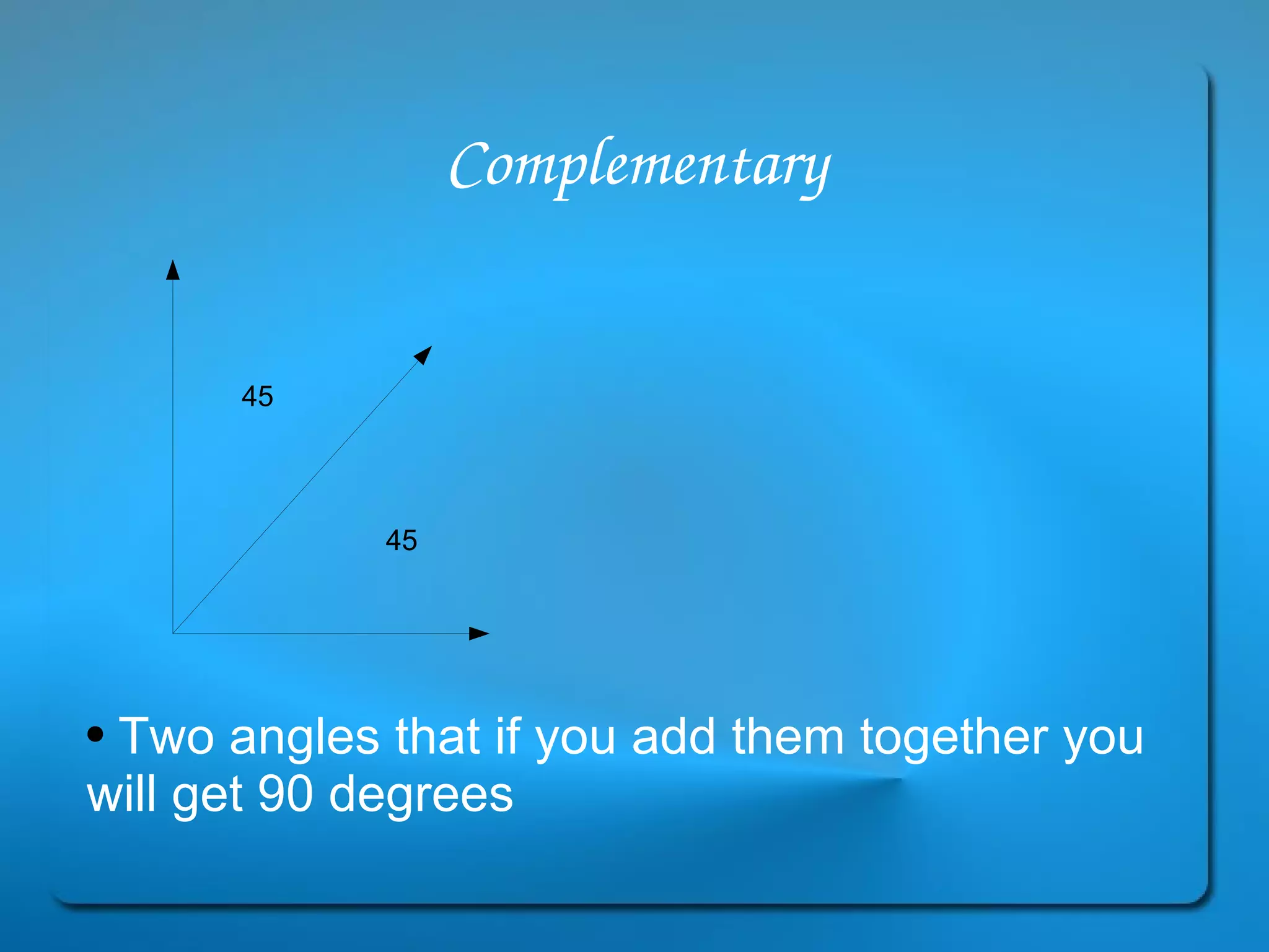
Complementary Two angles that if you add them together you will get 90 degrees 45  45
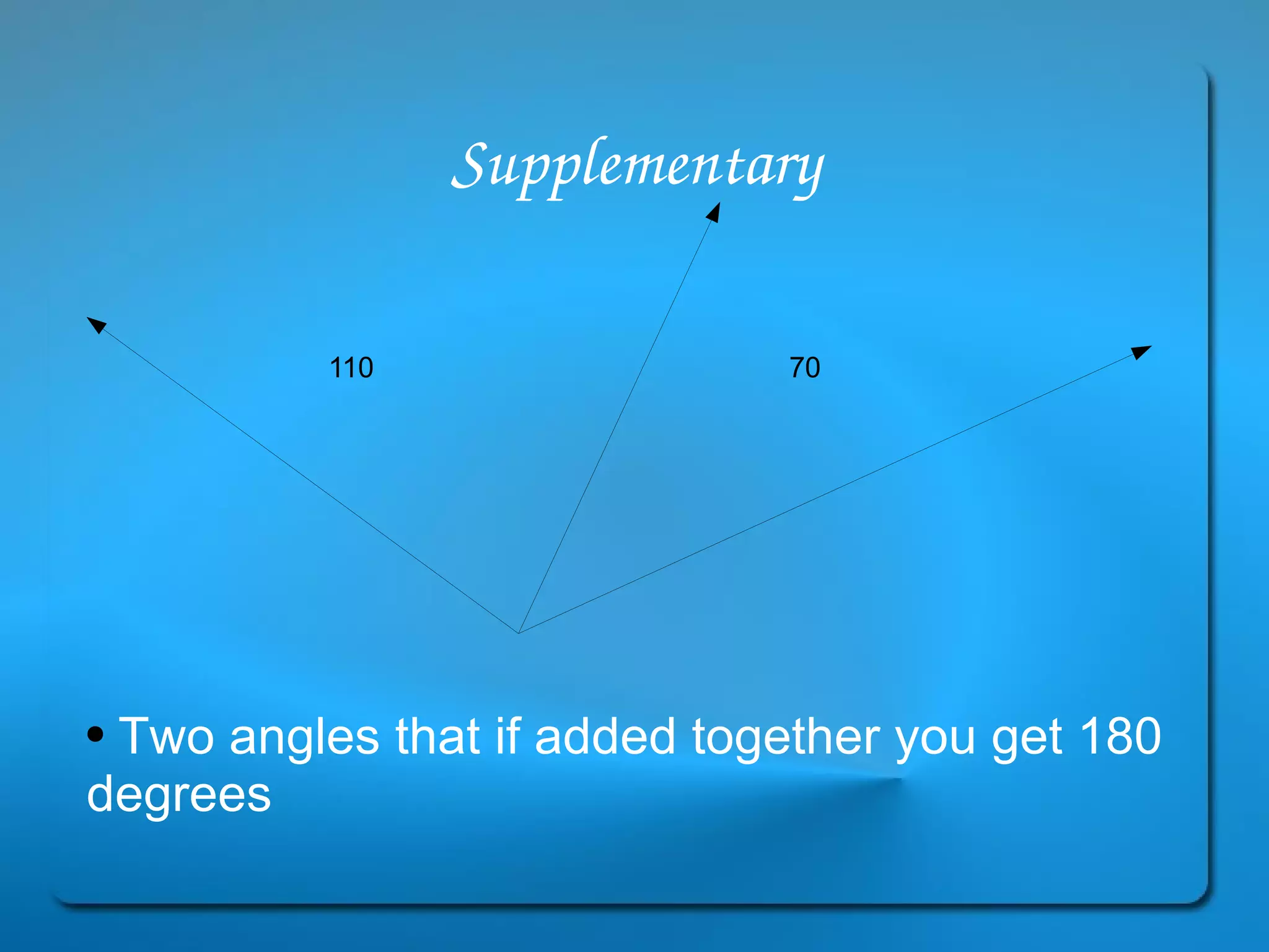
Supplementary Two angles that if added together you get 180 degrees 110 70
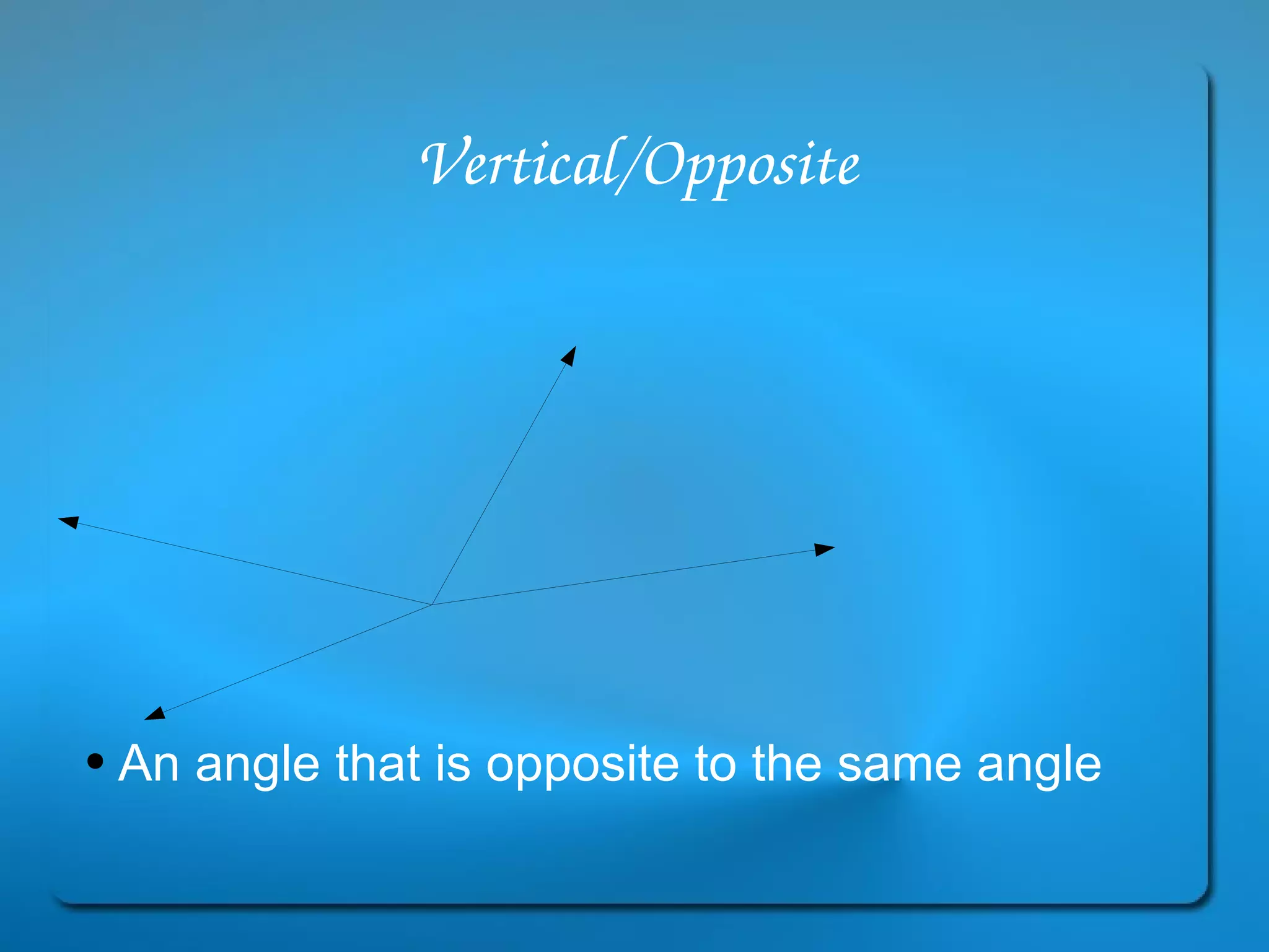
Vertical/Opposite An angle that is opposite to the same angle
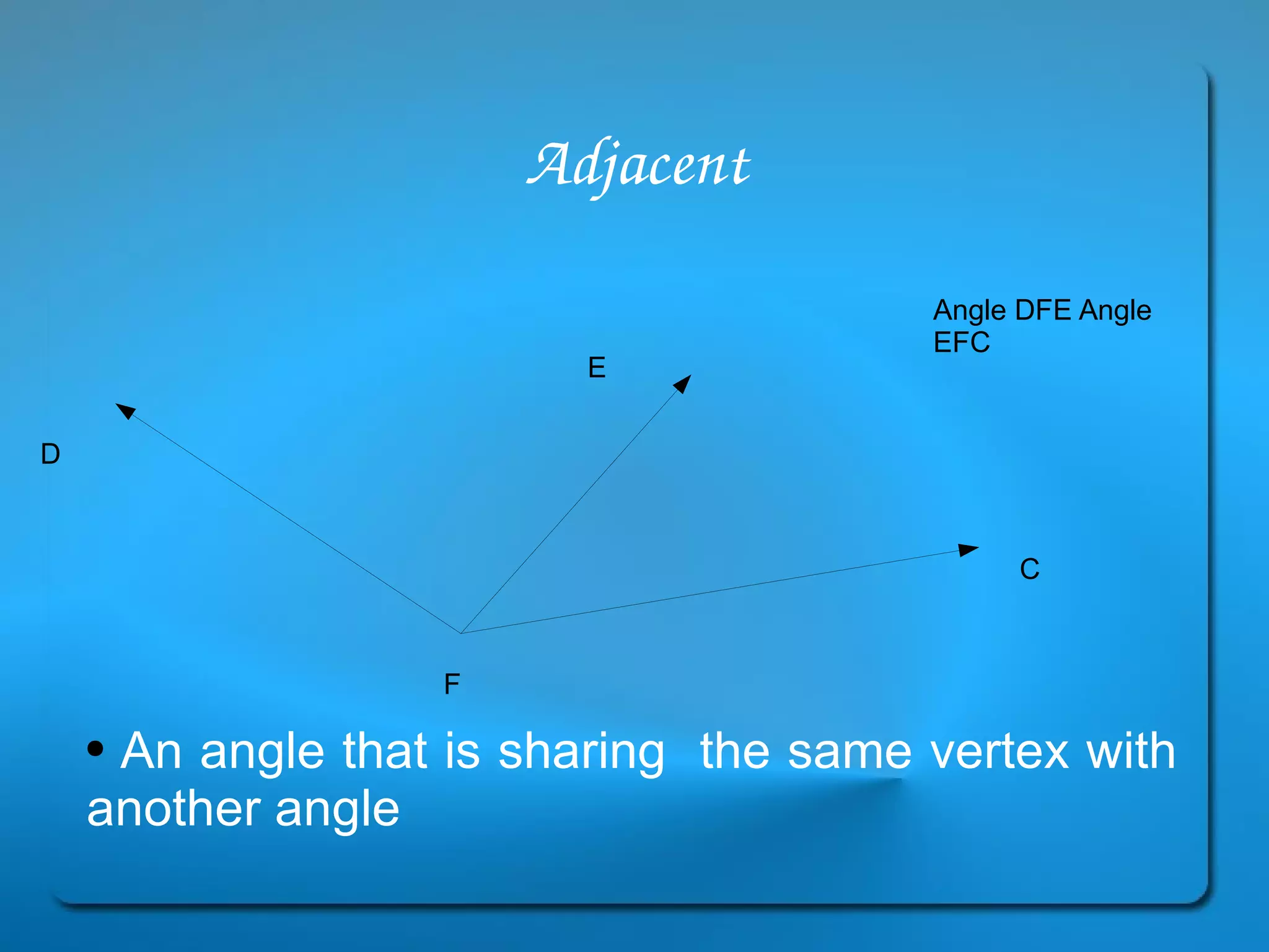
Adjacent An angle that is sharing  the same vertex with another angle F D E C Angle DFE Angle EFC
Triangles Right Obtuse Acute Scalene Isosceles Equilateral Sum of internal angles Perimeter Area
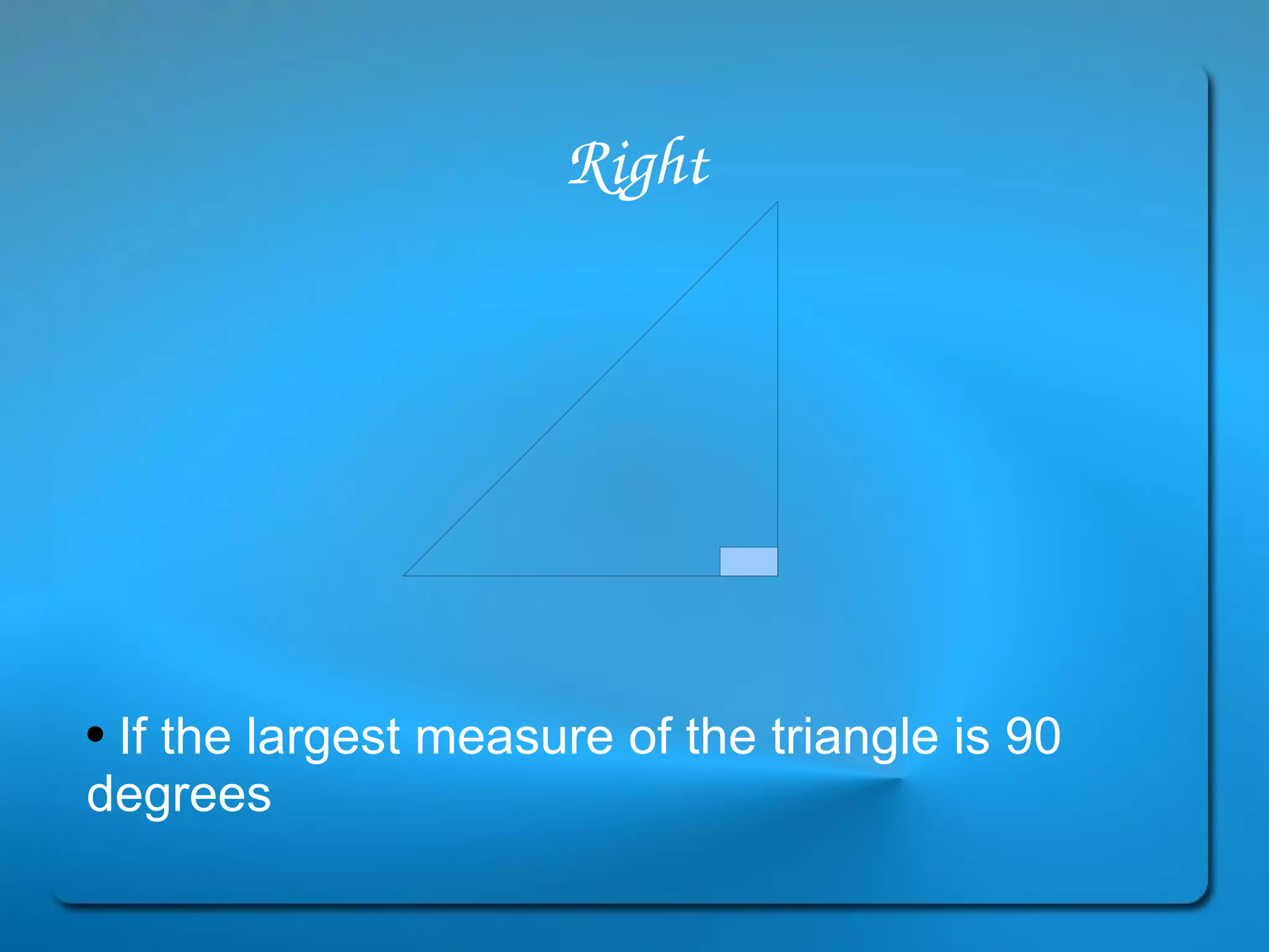
Right If the largest measure of the triangle is 90 degrees
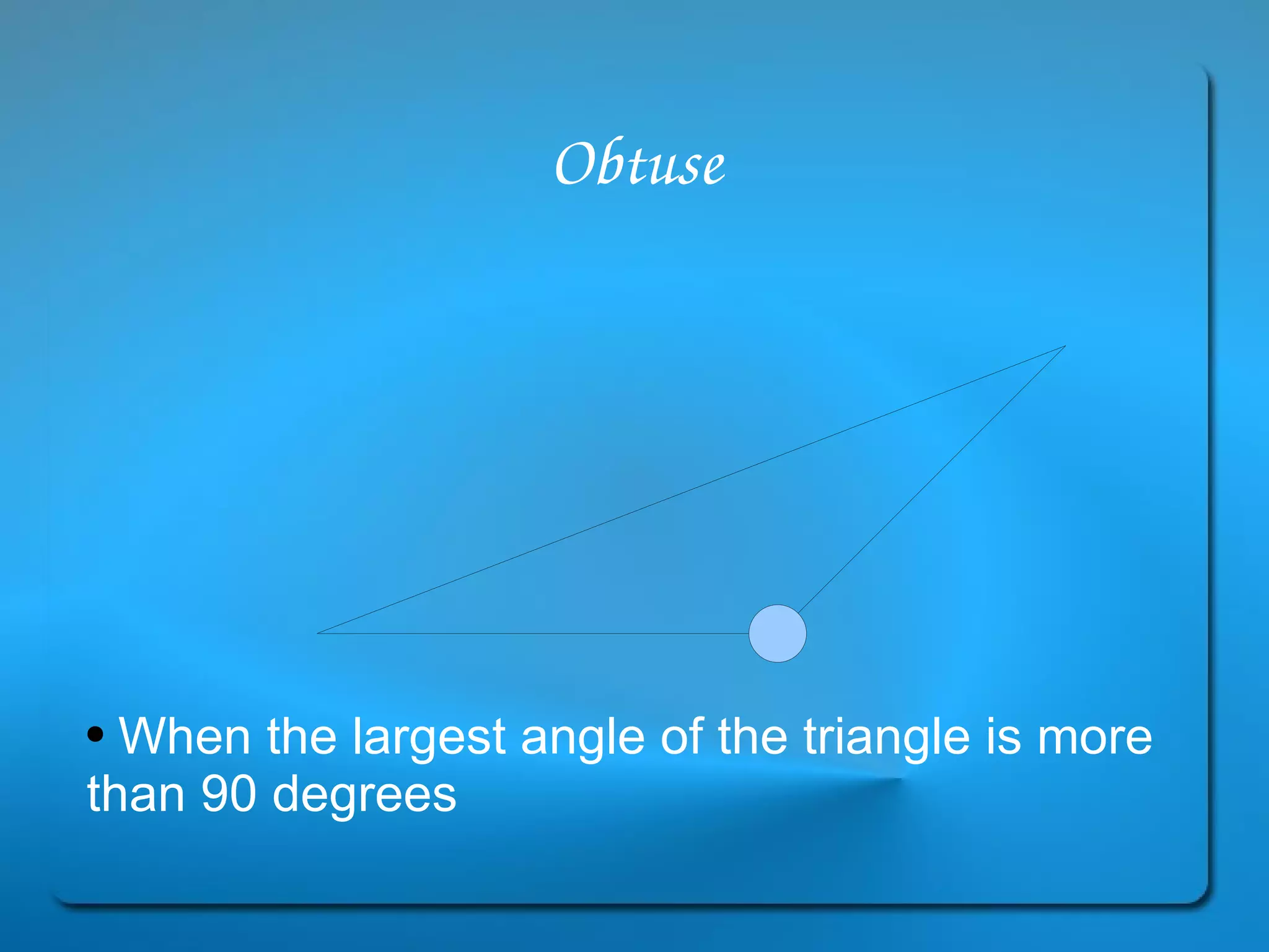
Obtuse When the largest angle of the triangle is more than 90 degrees
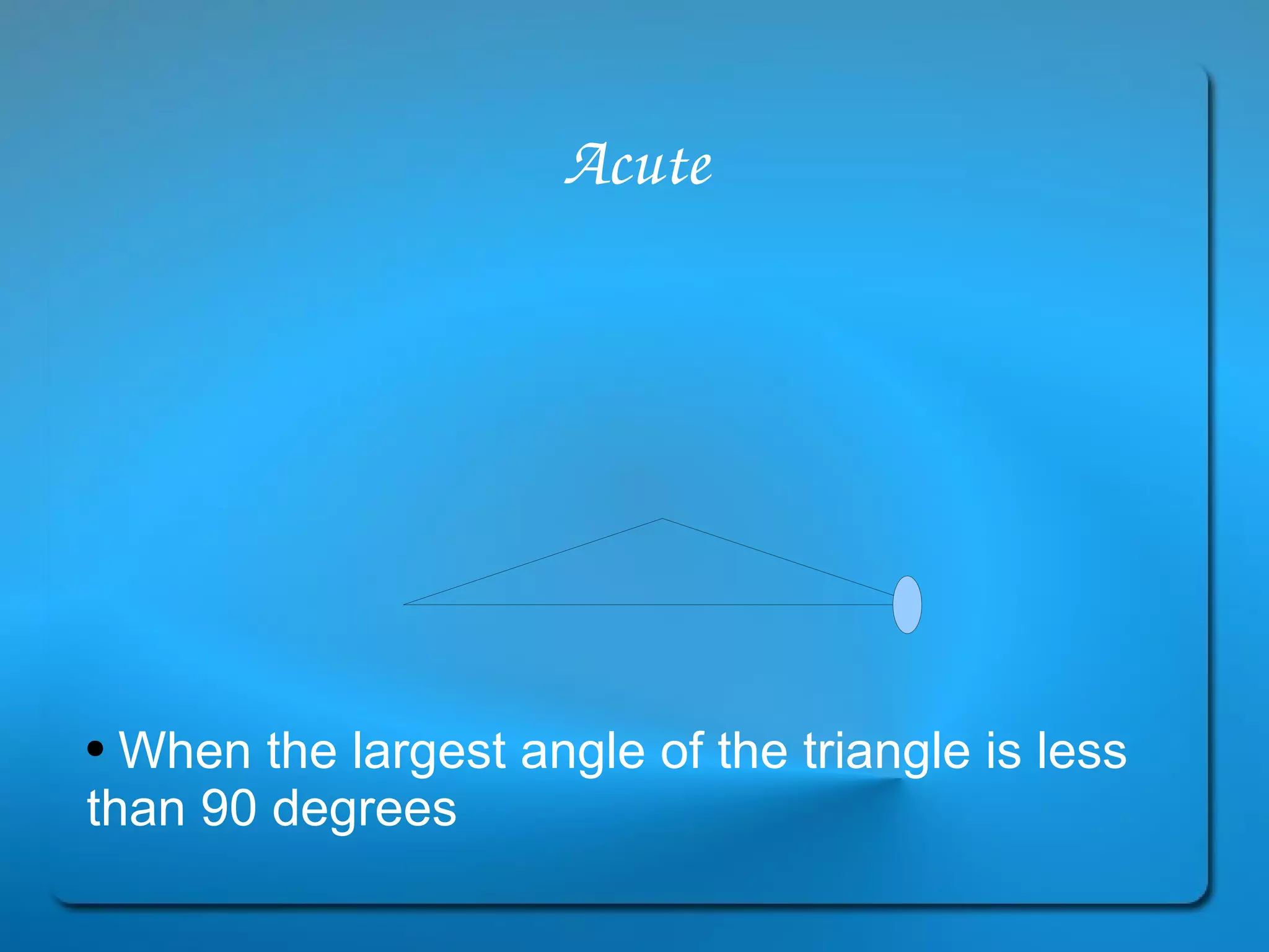
Acute When the largest angle of the triangle is less than 90 degrees
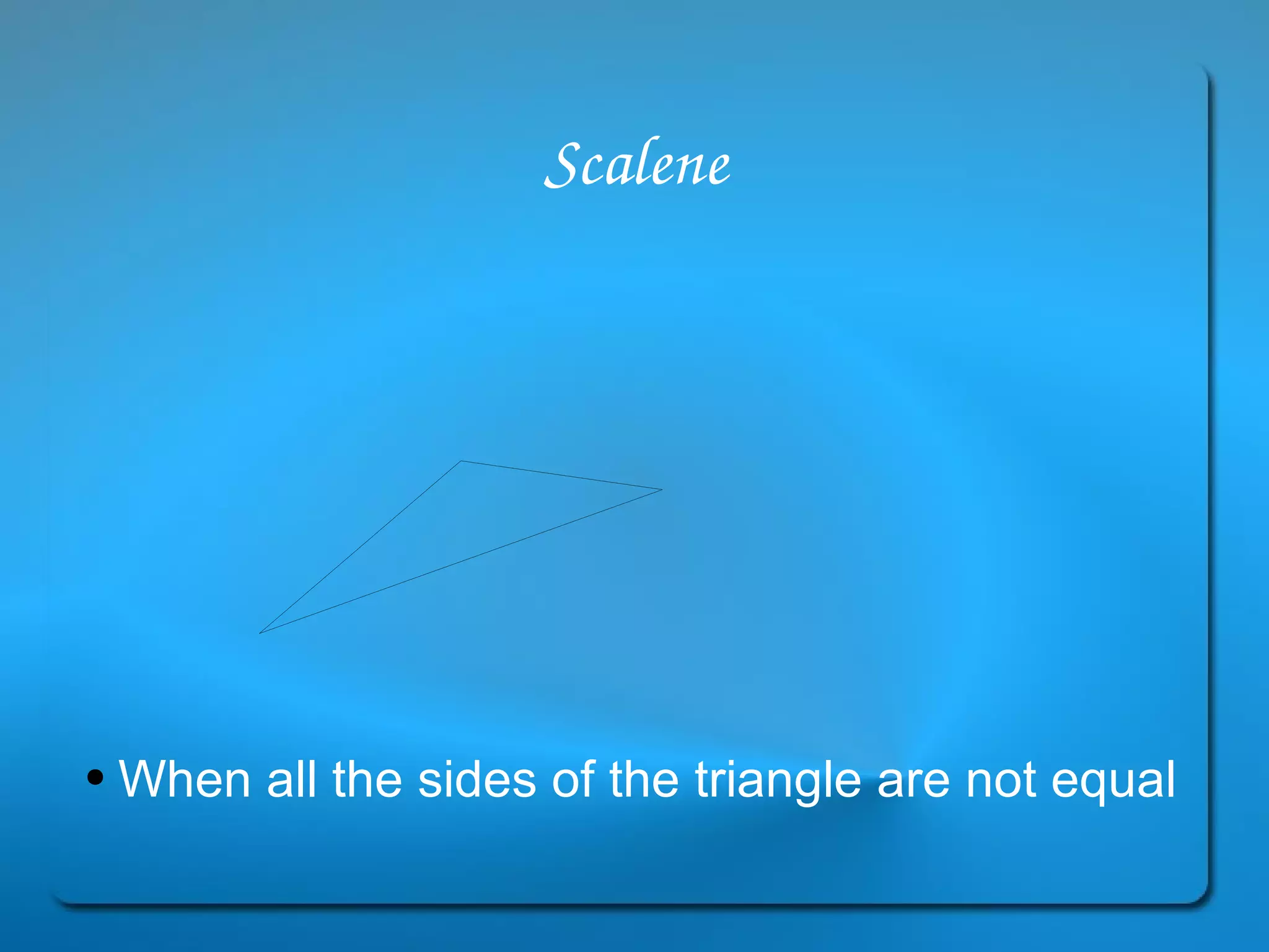
Scalene When all the sides of the triangle are not equal
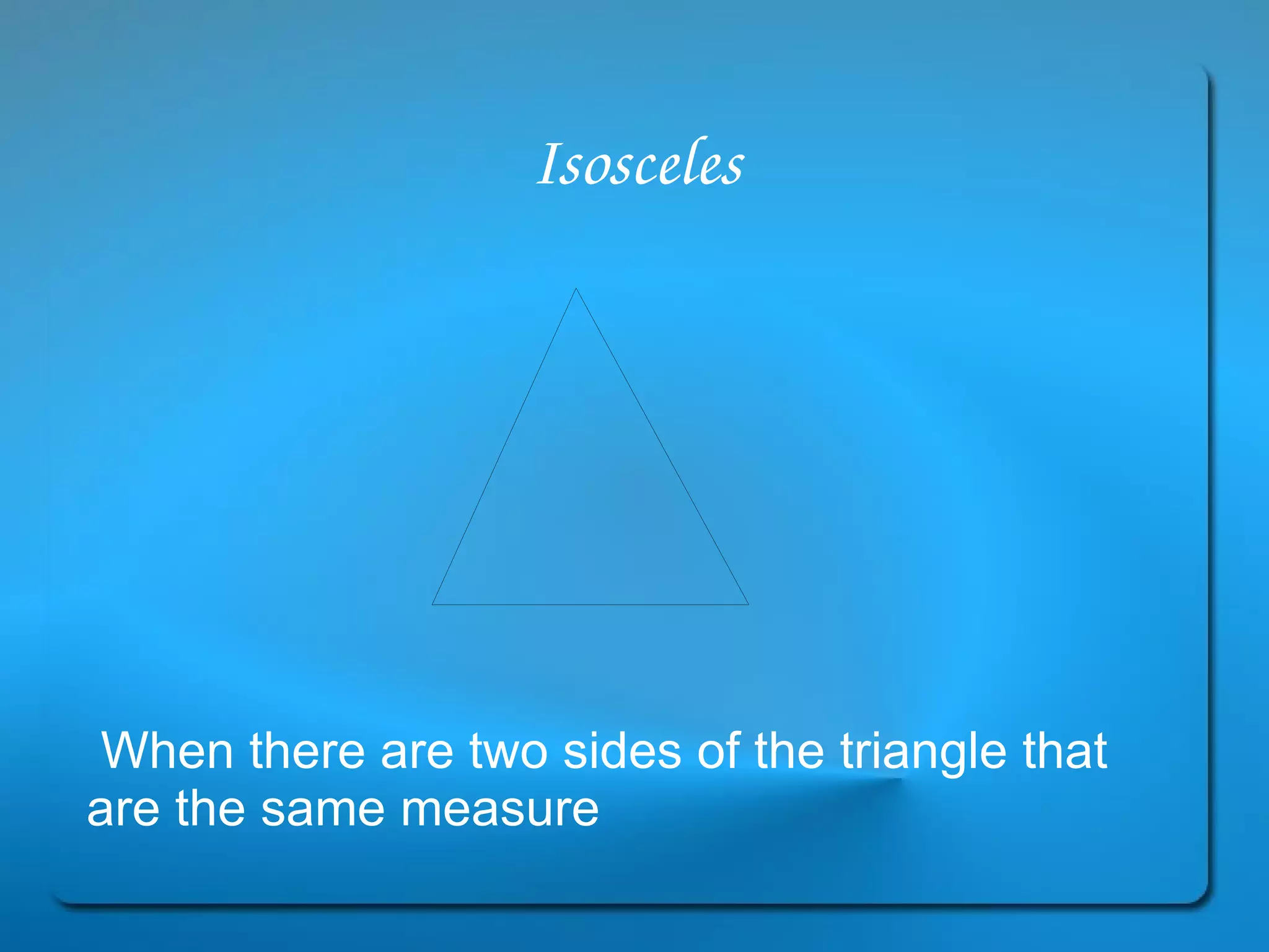
Isosceles When there are two sides of the triangle that are the same measure
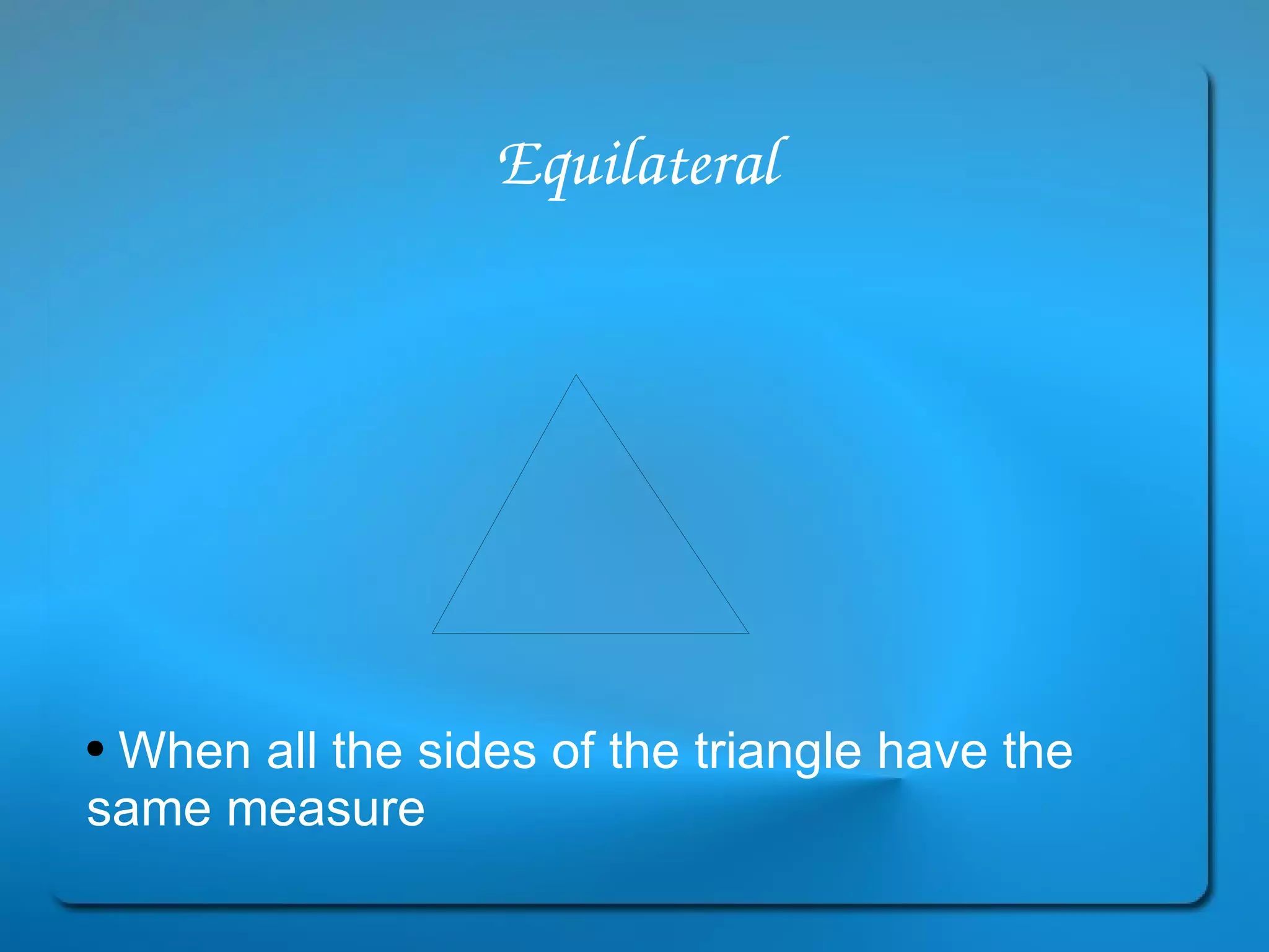
Equilateral When all the sides of the triangle have the same measure
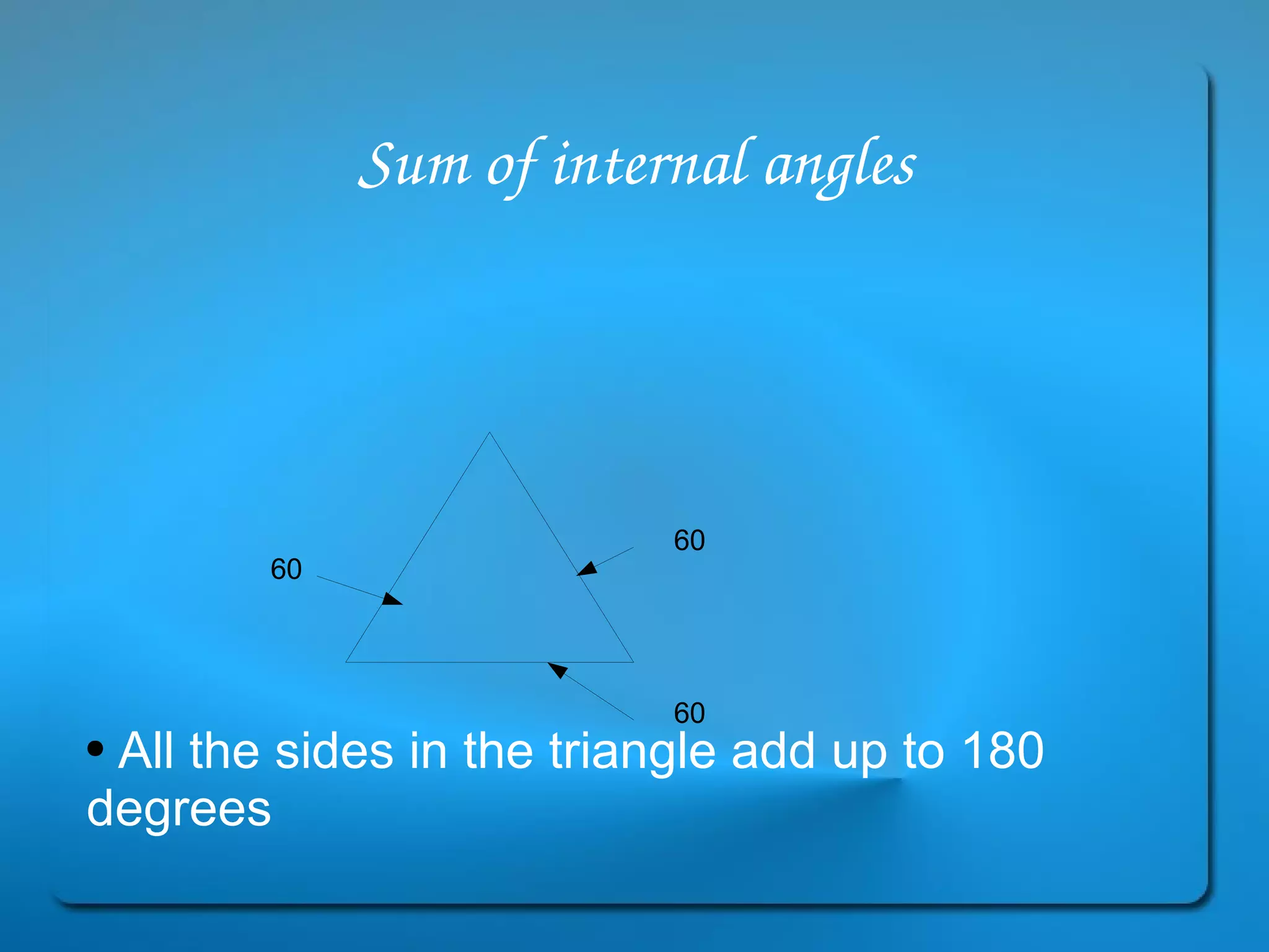
Sum of internal angles All the sides in the triangle add up to 180 degrees 60 60 60
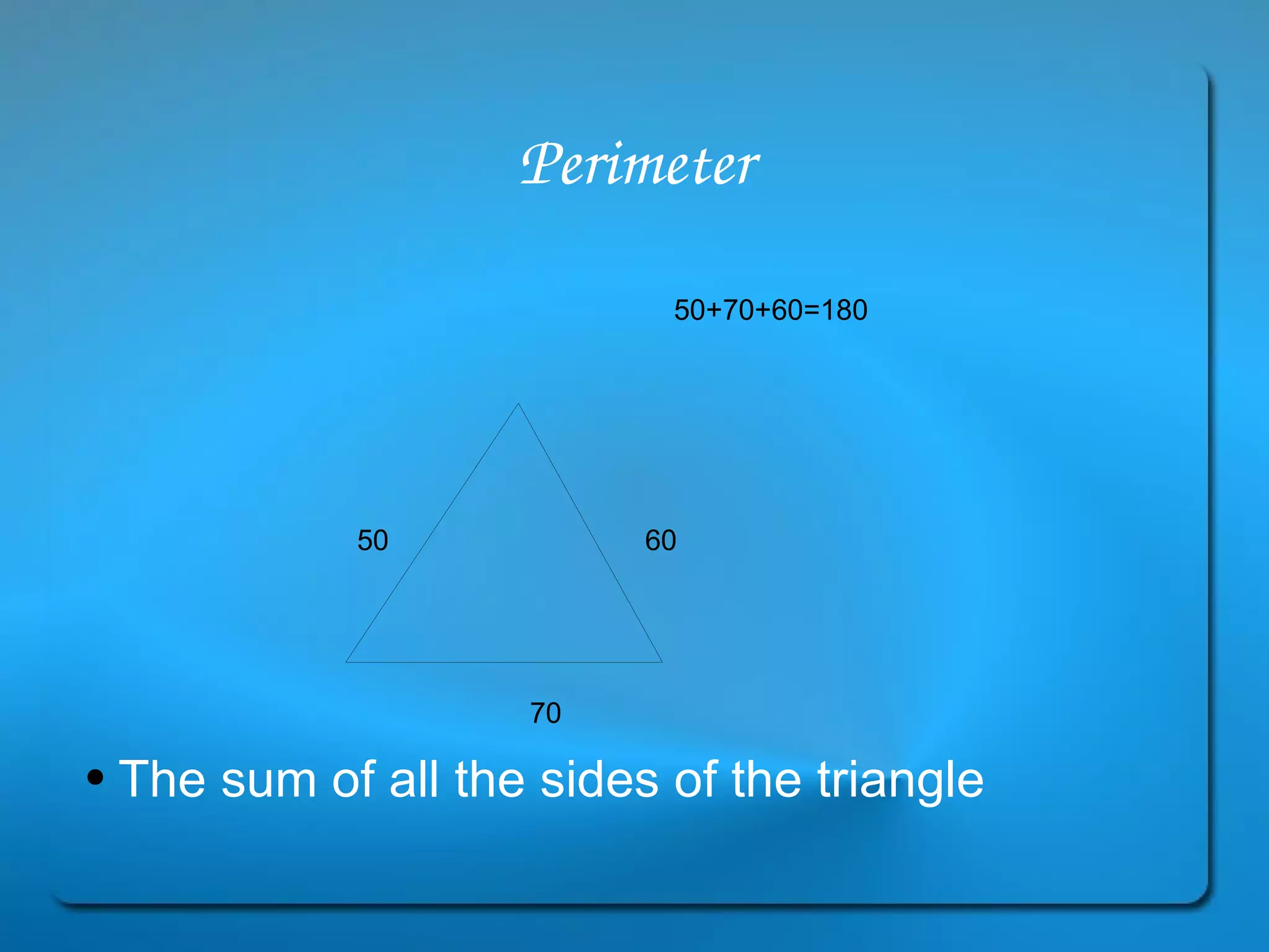
Perimeter The sum of all the sides of the triangle 50 70 60 50+70+60=180
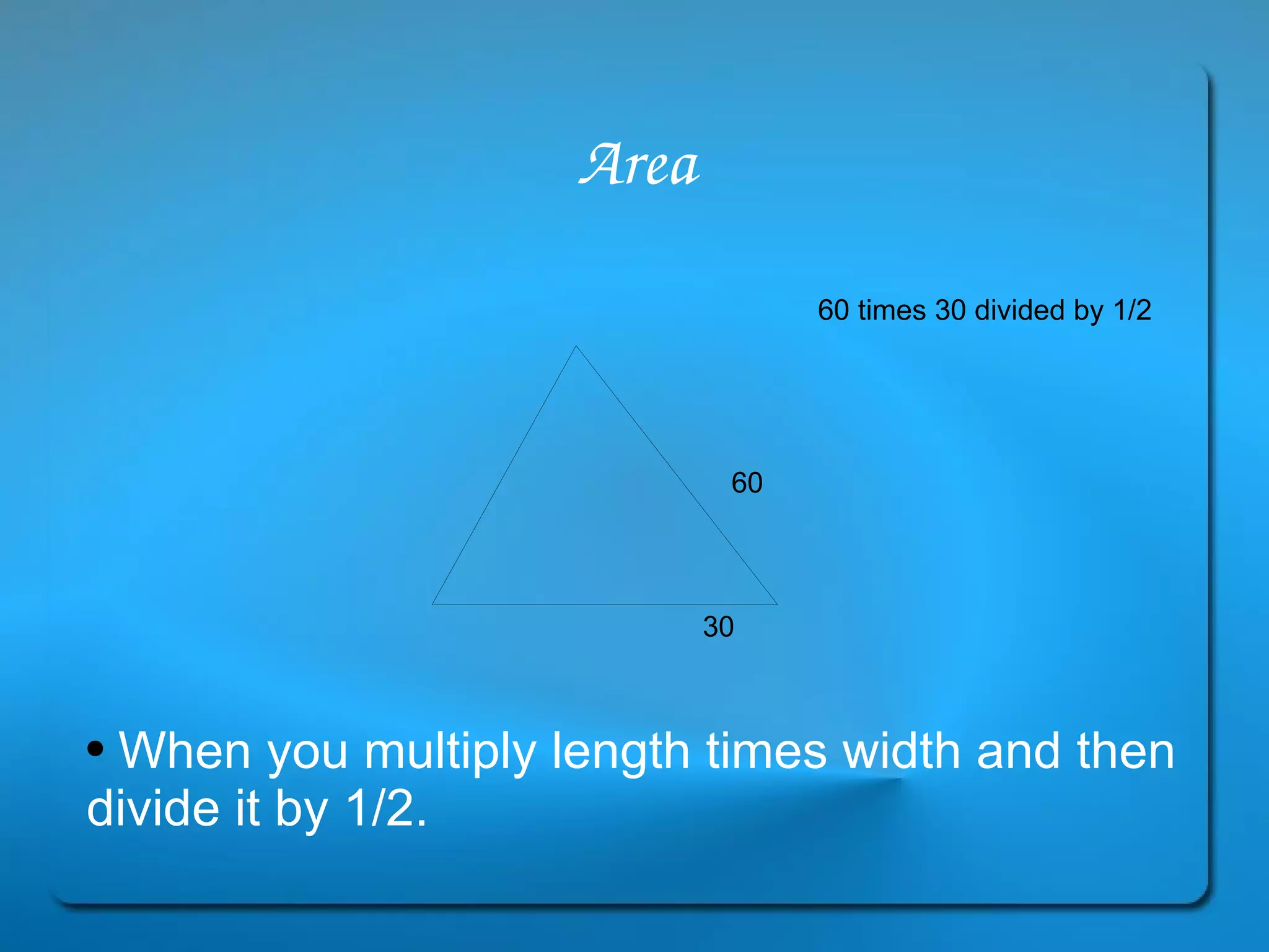
Area When you multiply length times width and then divide it by 1/2. 30 60 60 times 30 divided by 1/2
Quadrilaterals Quadrilaterals Trapezoid Parallelogram Rectangle Rhombus Square Area of a rectangle Area of a square Area of a  parallelogram Area of a  trapezoid
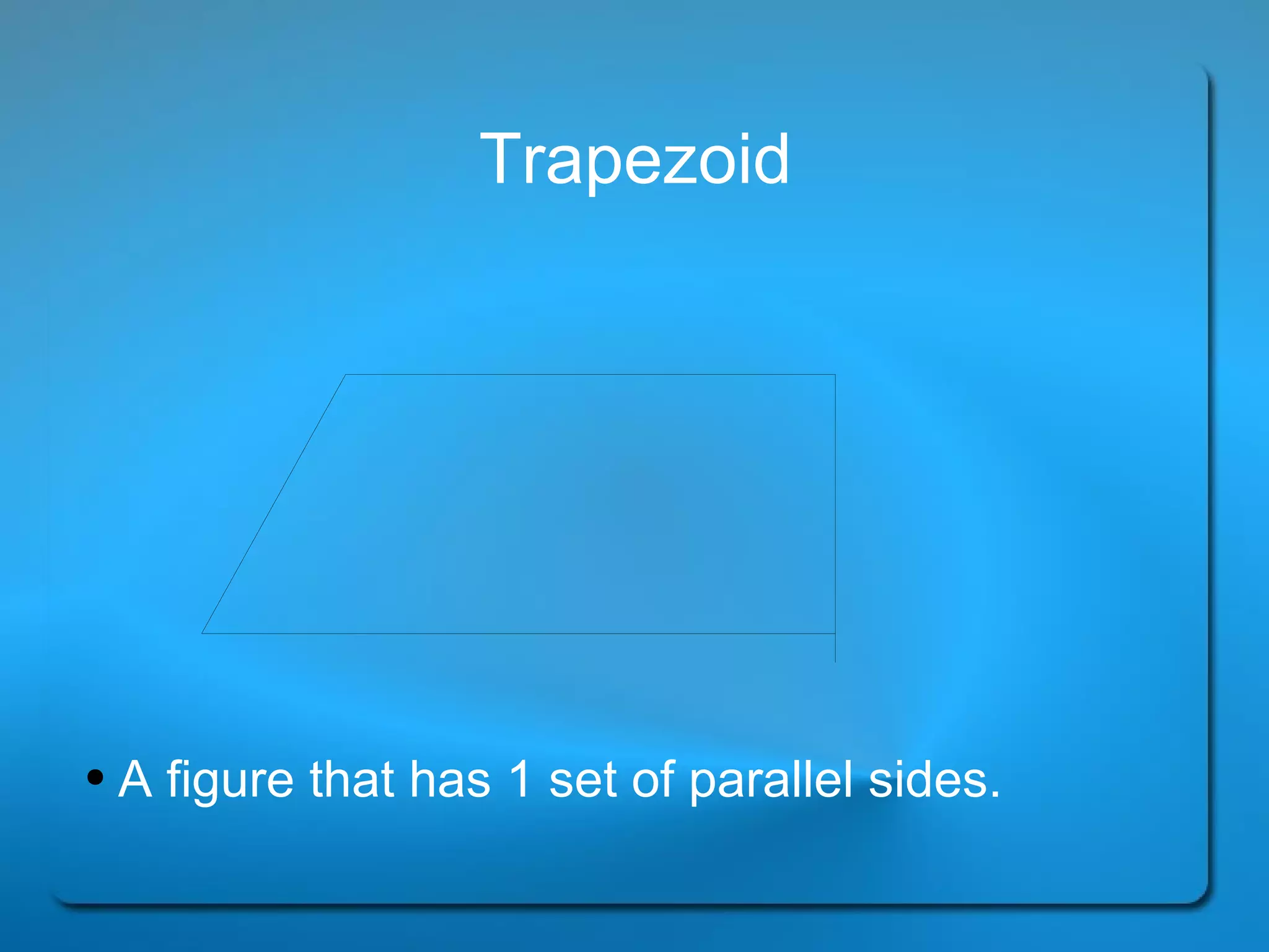
Trapezoid A figure that has 1 set of parallel sides.
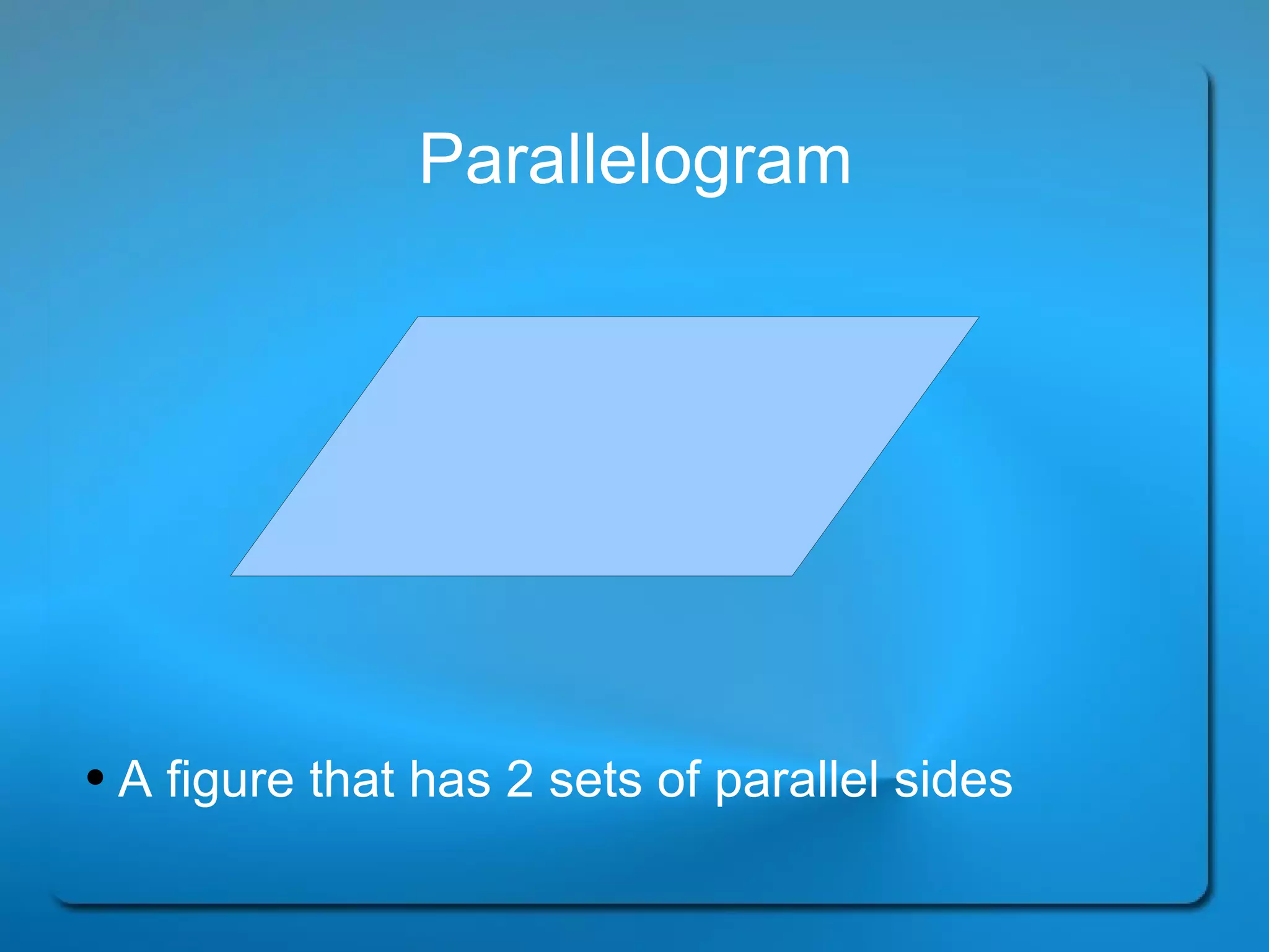
Parallelogram A figure that has 2 sets of parallel sides
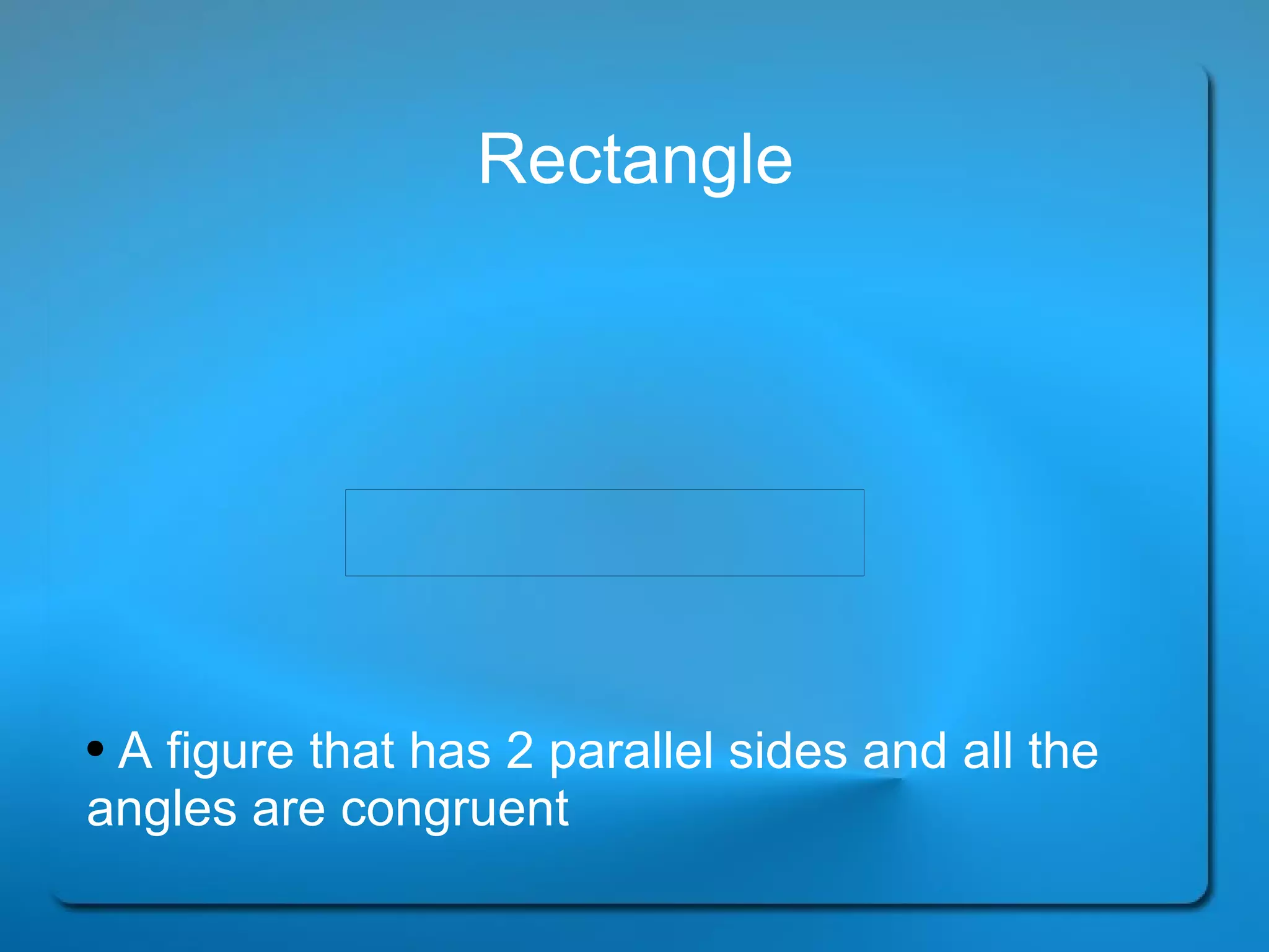
Rectangle A figure that has 2 parallel sides and all the angles are congruent
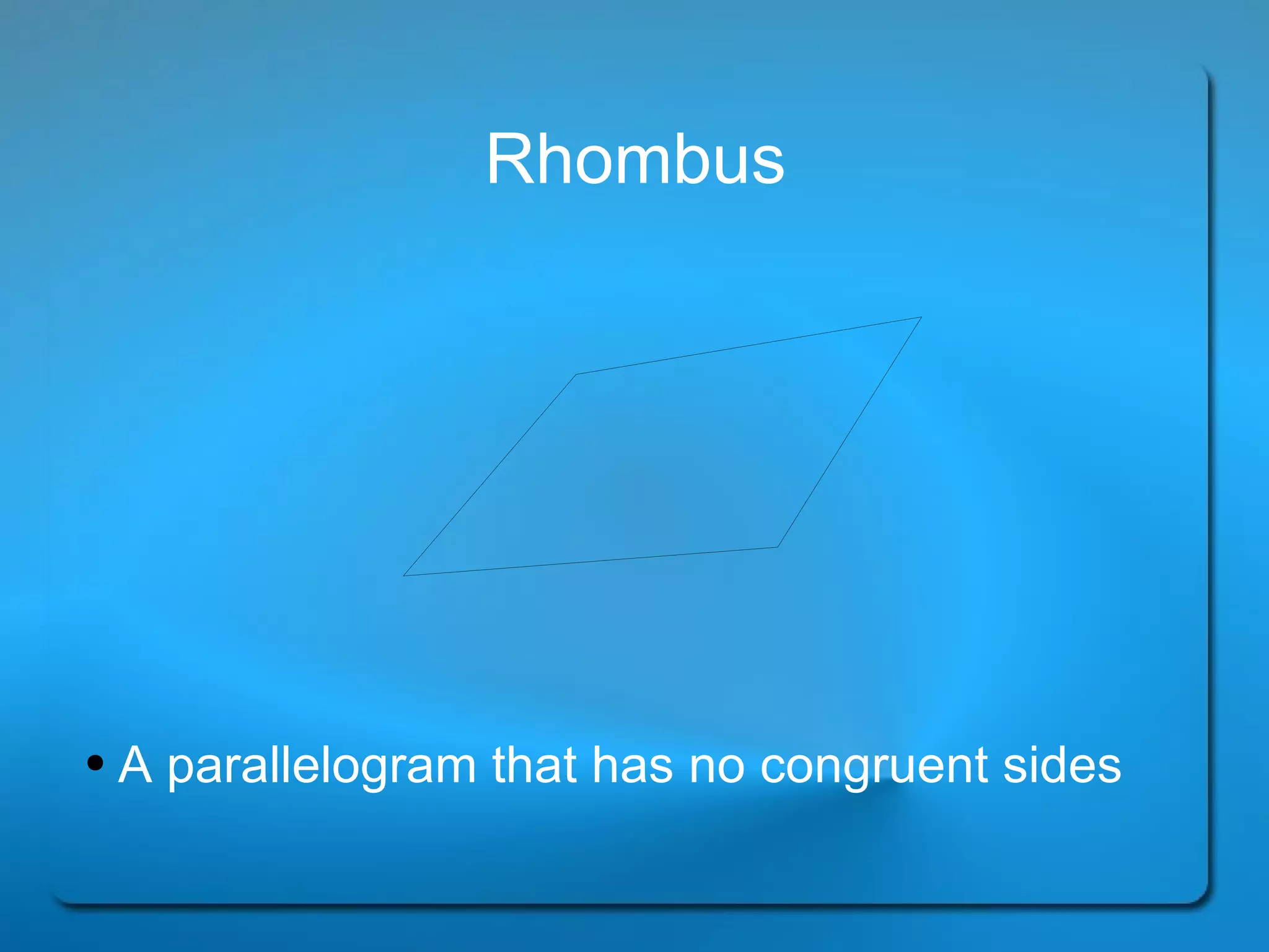
Rhombus A parallelogram that has no congruent sides
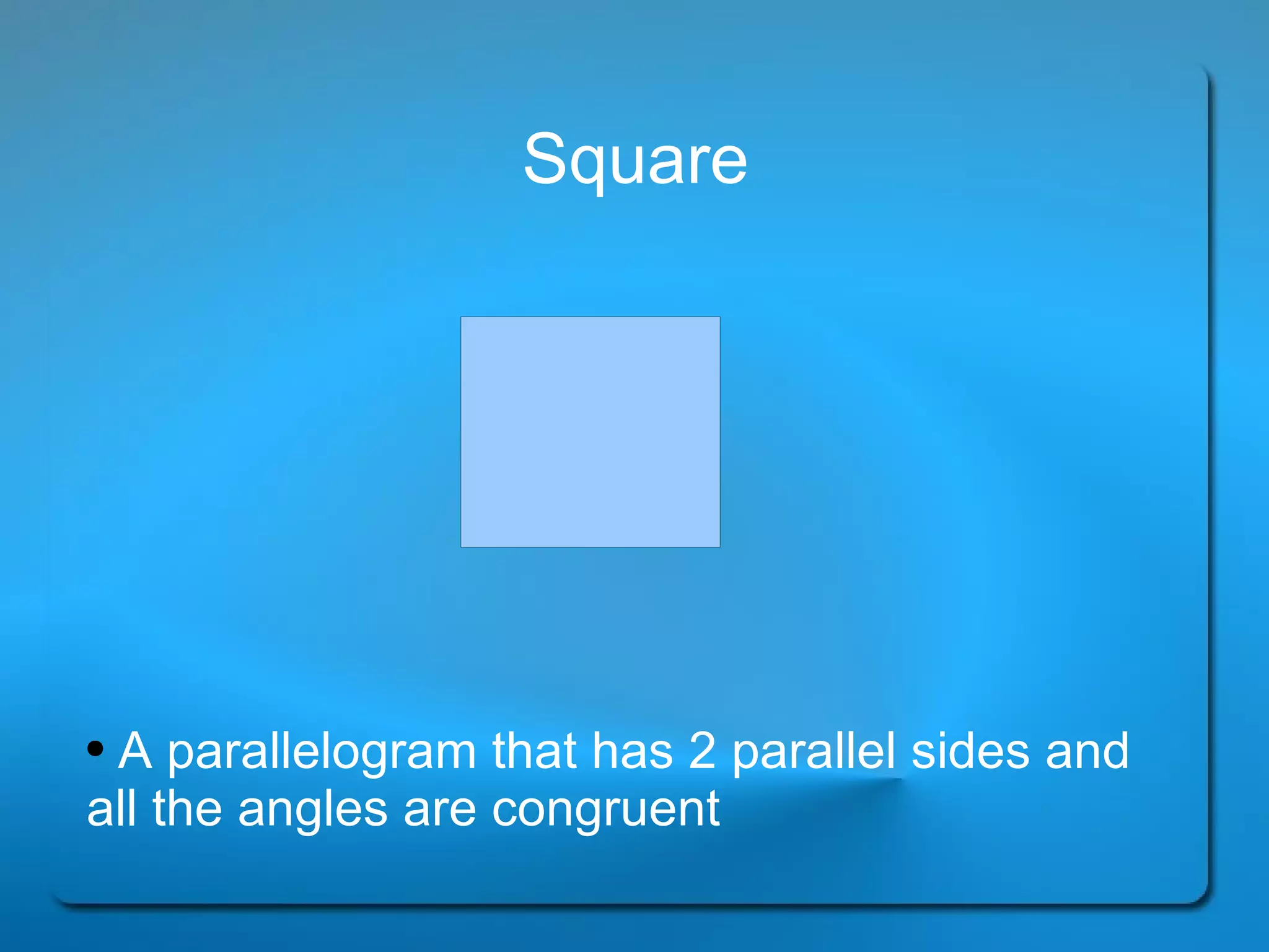
Square A parallelogram that has 2 parallel sides and all the angles are congruent
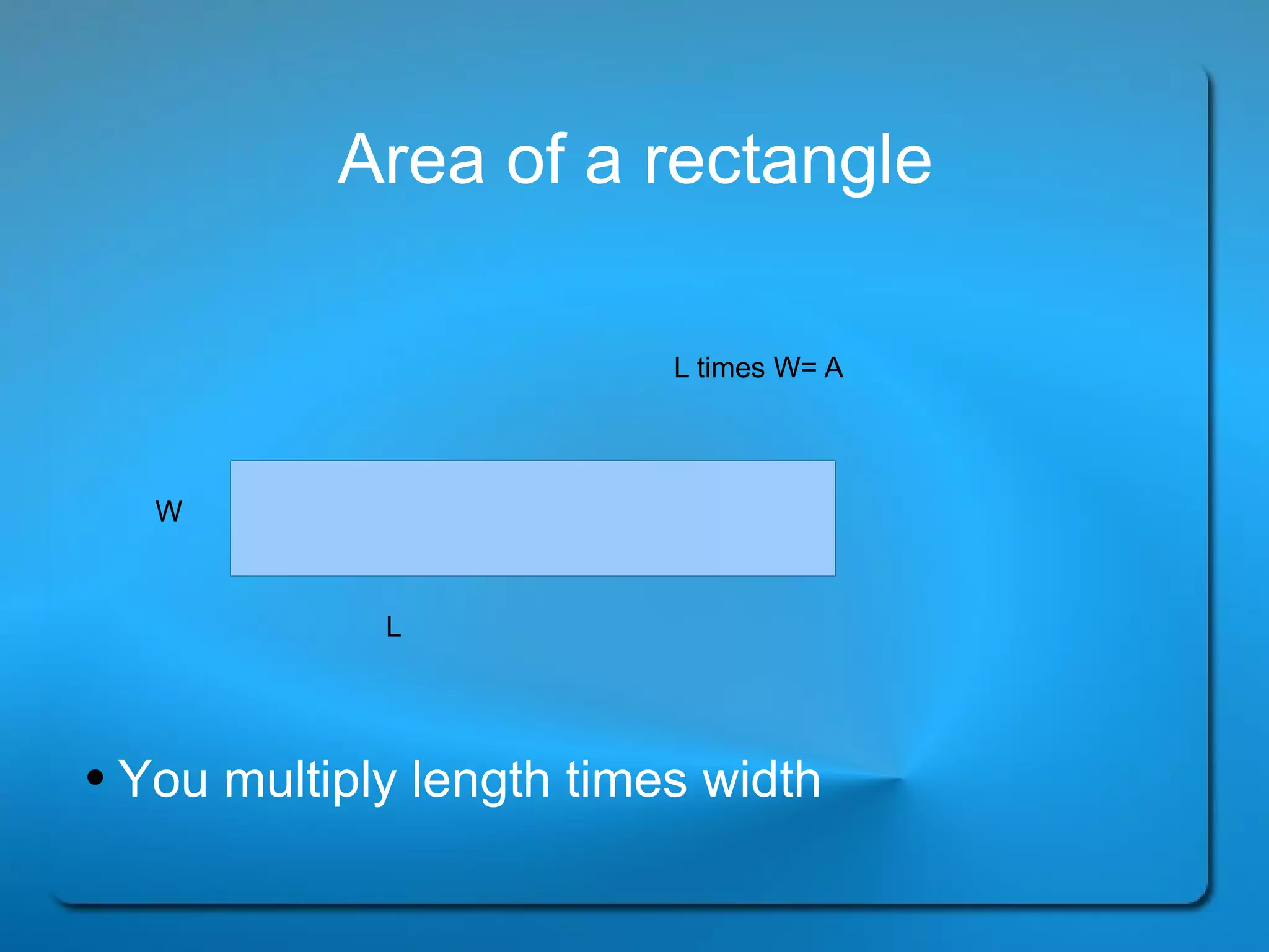
Area of a rectangle You multiply length times width  L W L times W= A
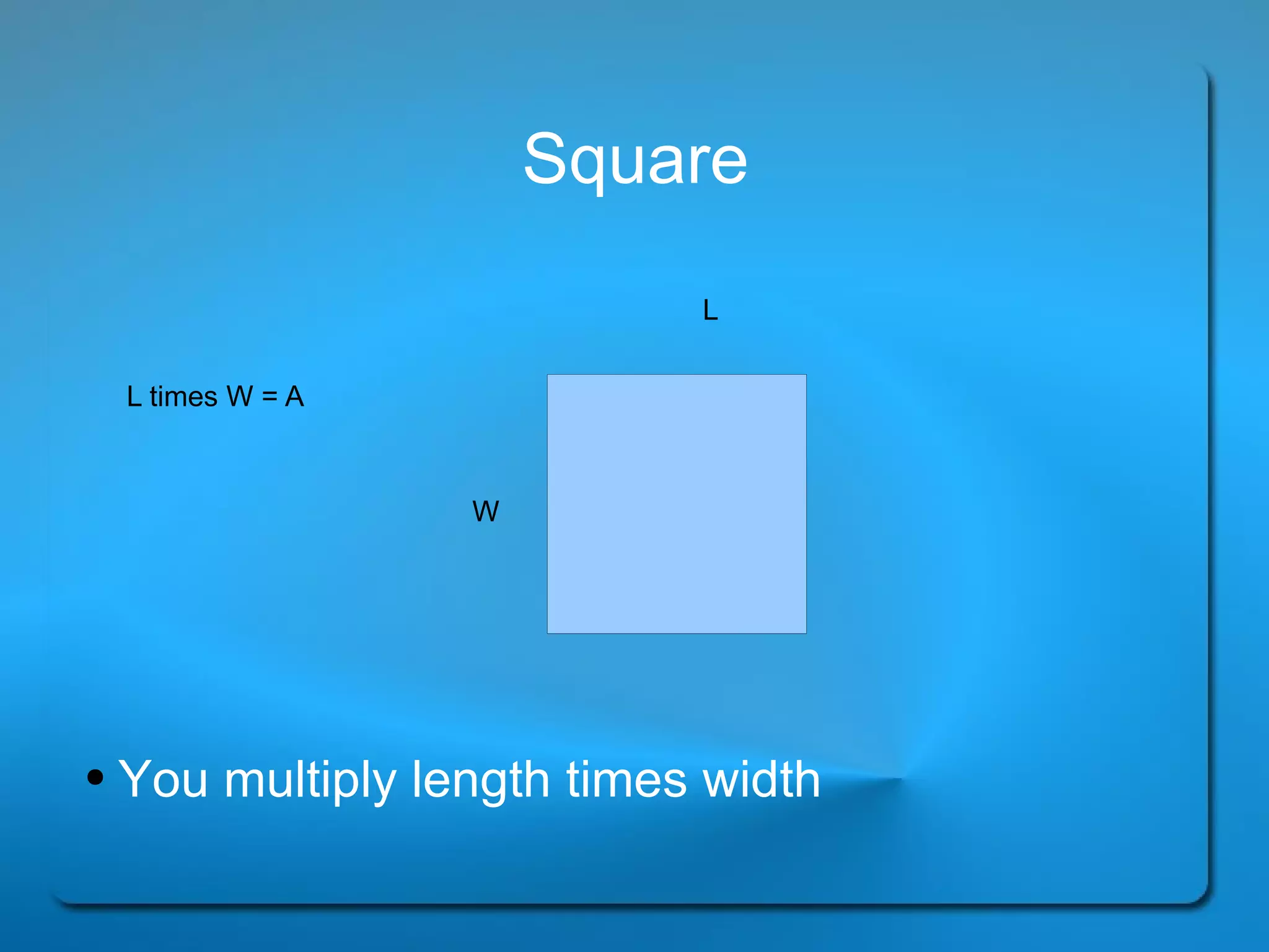
Square You multiply length times width L W L times W = A
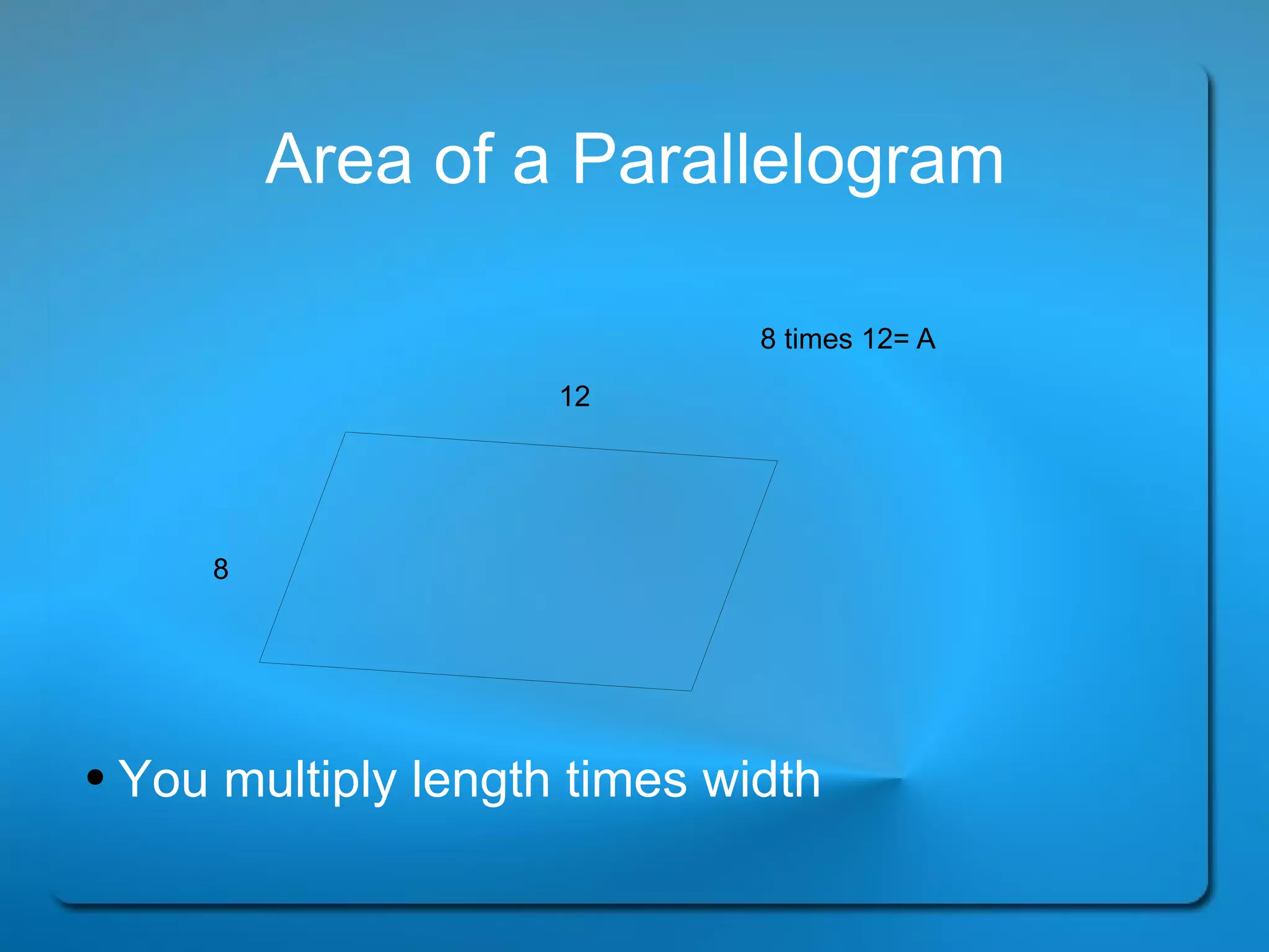
Area of a Parallelogram You multiply length times width  8 12 8 times 12= A
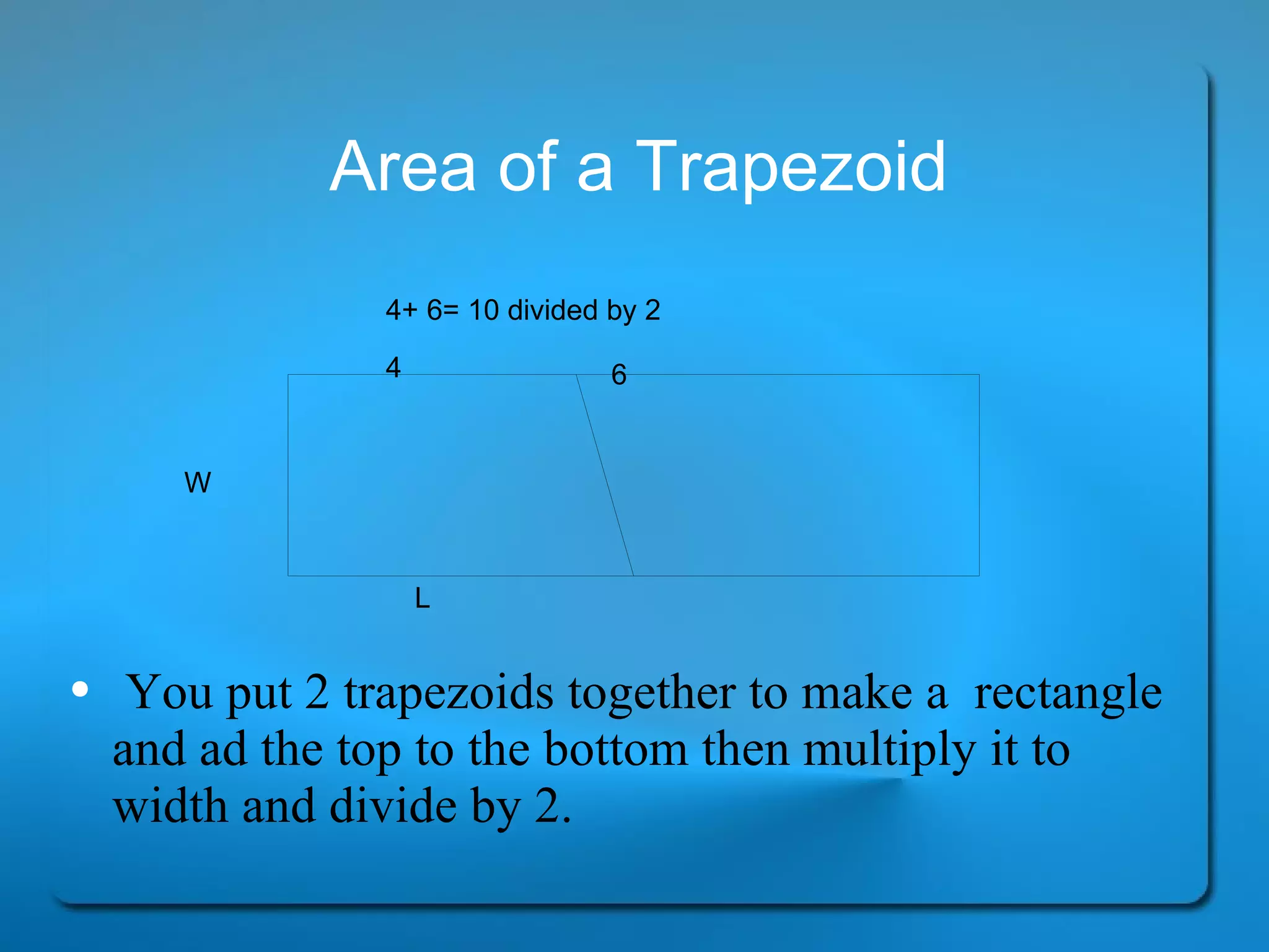
Area of a Trapezoid You put 2 trapezoids together to make a  rectangle and ad the top to the bottom then multiply it to width and divide by 2. W L 4+ 6= 10 divided by 2 4
Circles Chord Diameter Arc Radius Sector Circumference Area of a Circle
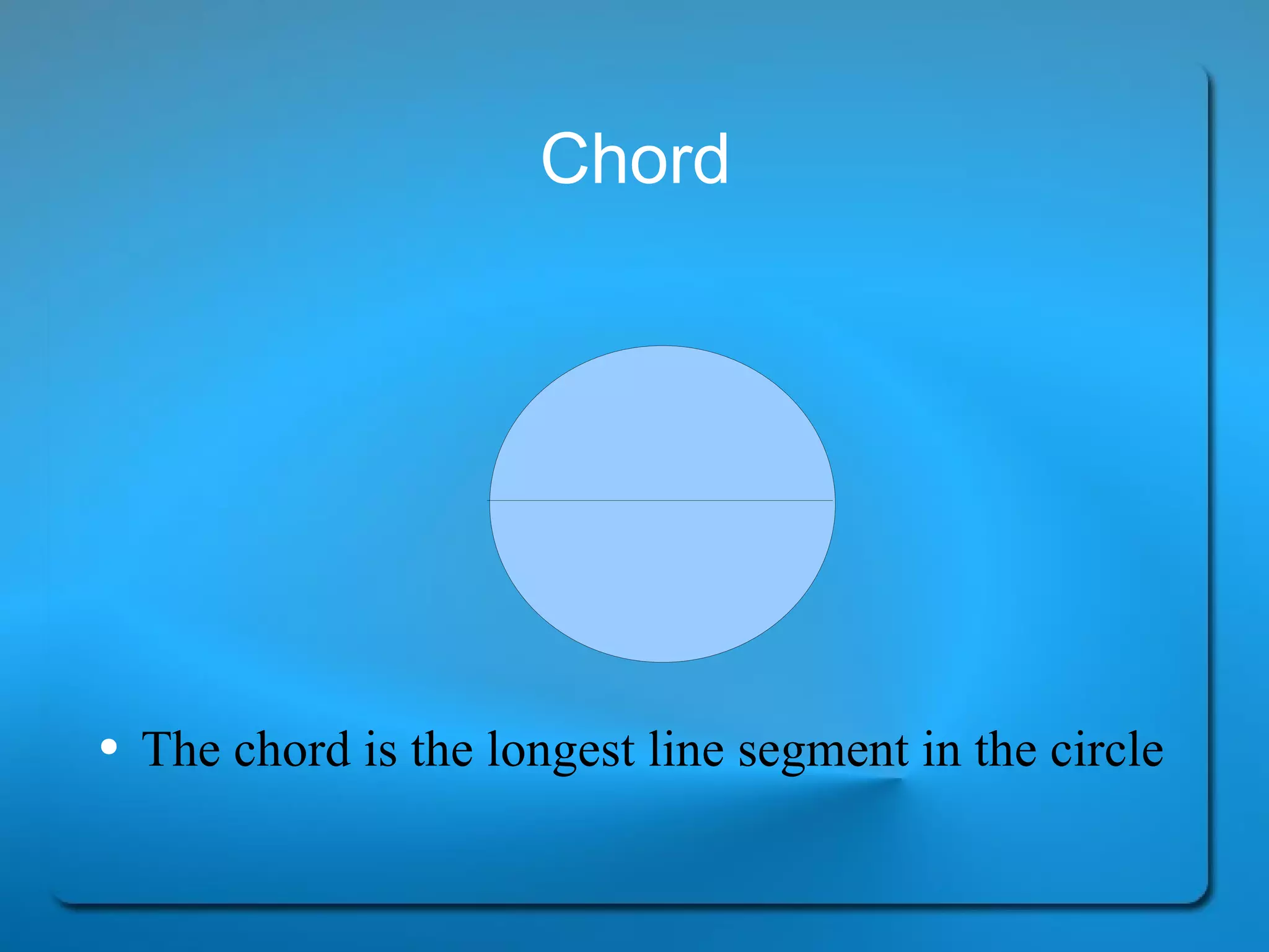
Chord The chord is the longest line segment in the circle
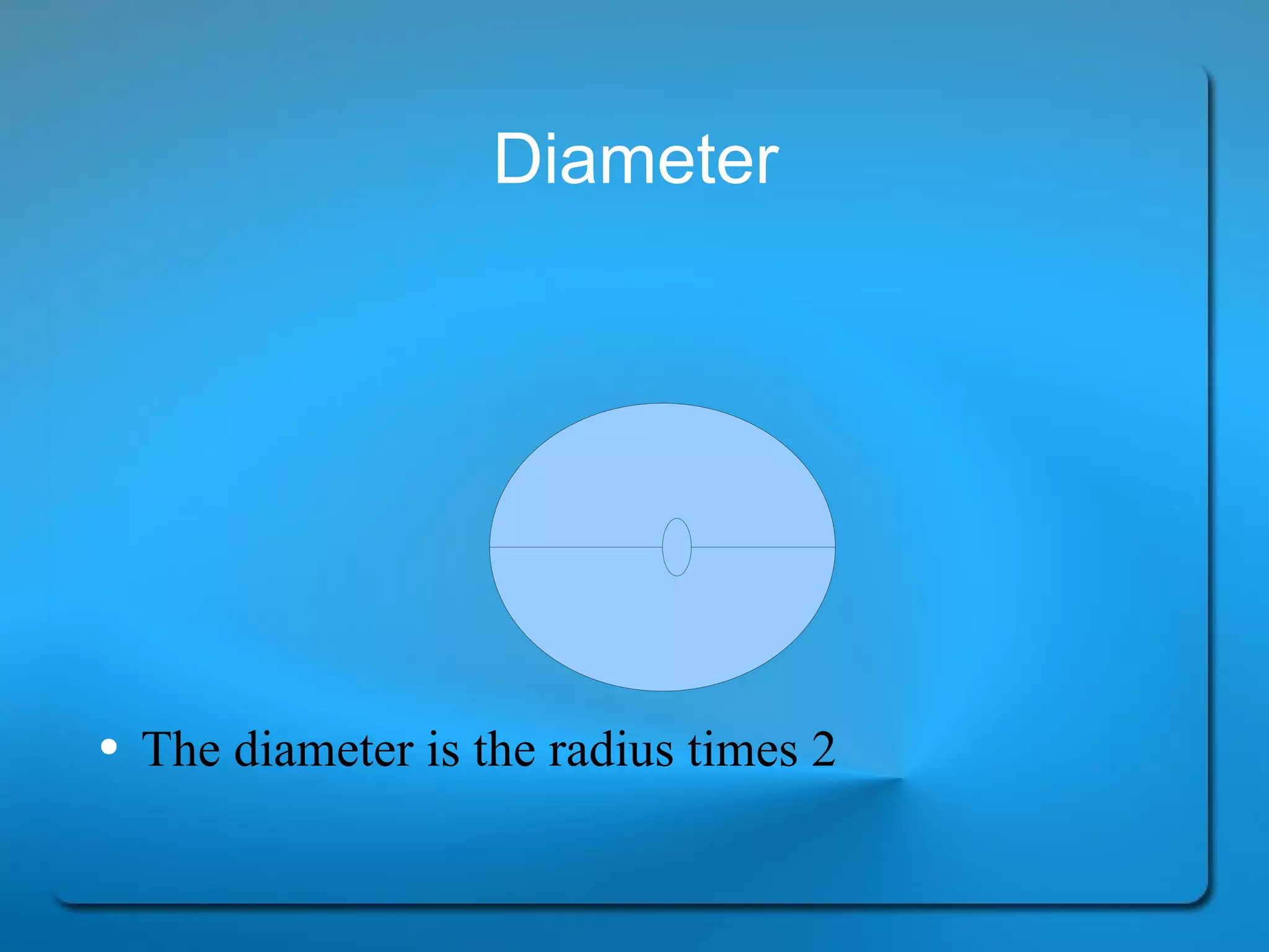
Diameter The diameter is the radius times 2
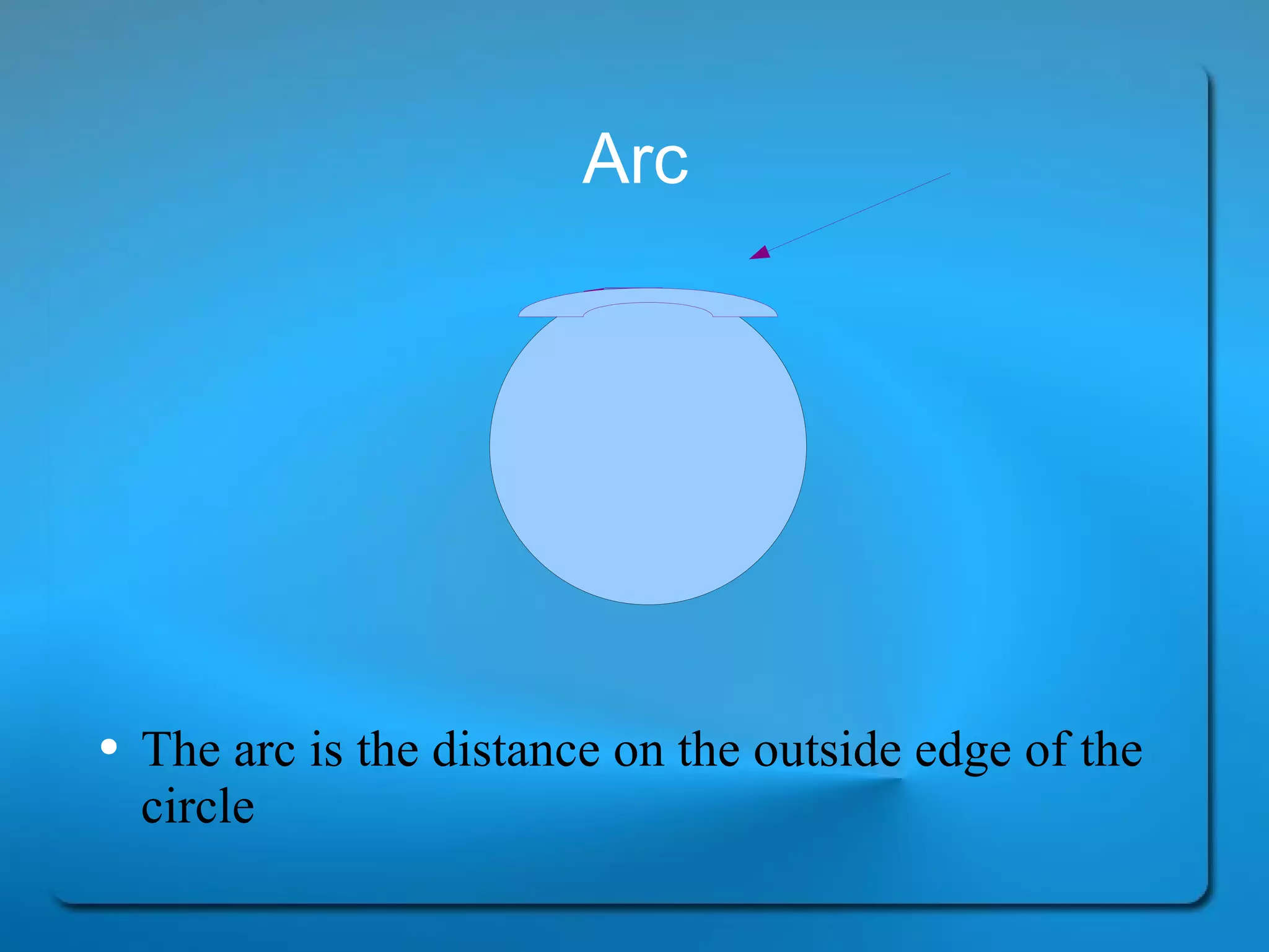
Arc The arc is the distance on the outside edge of the circle
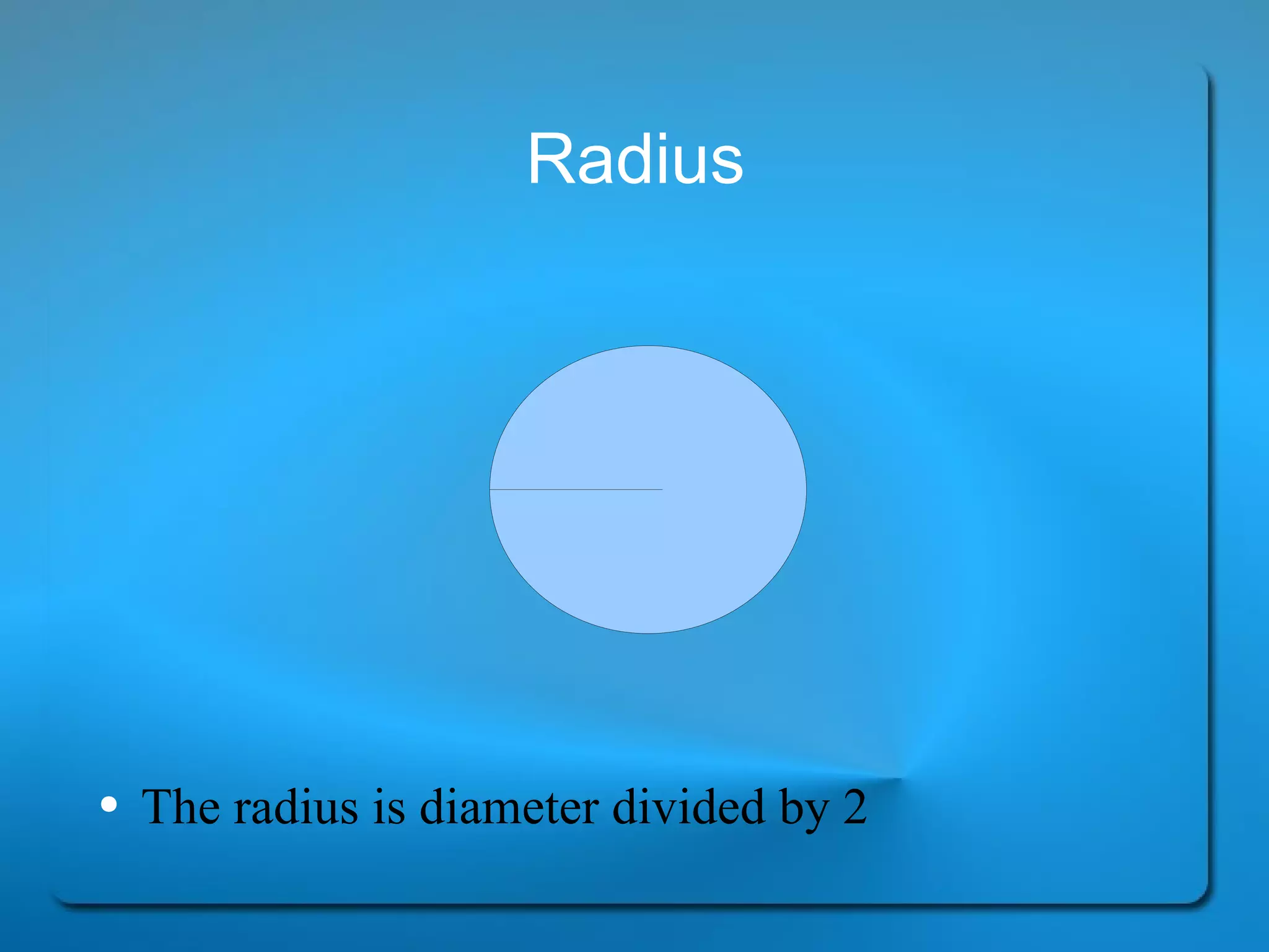
Radius The radius is diameter divided by 2
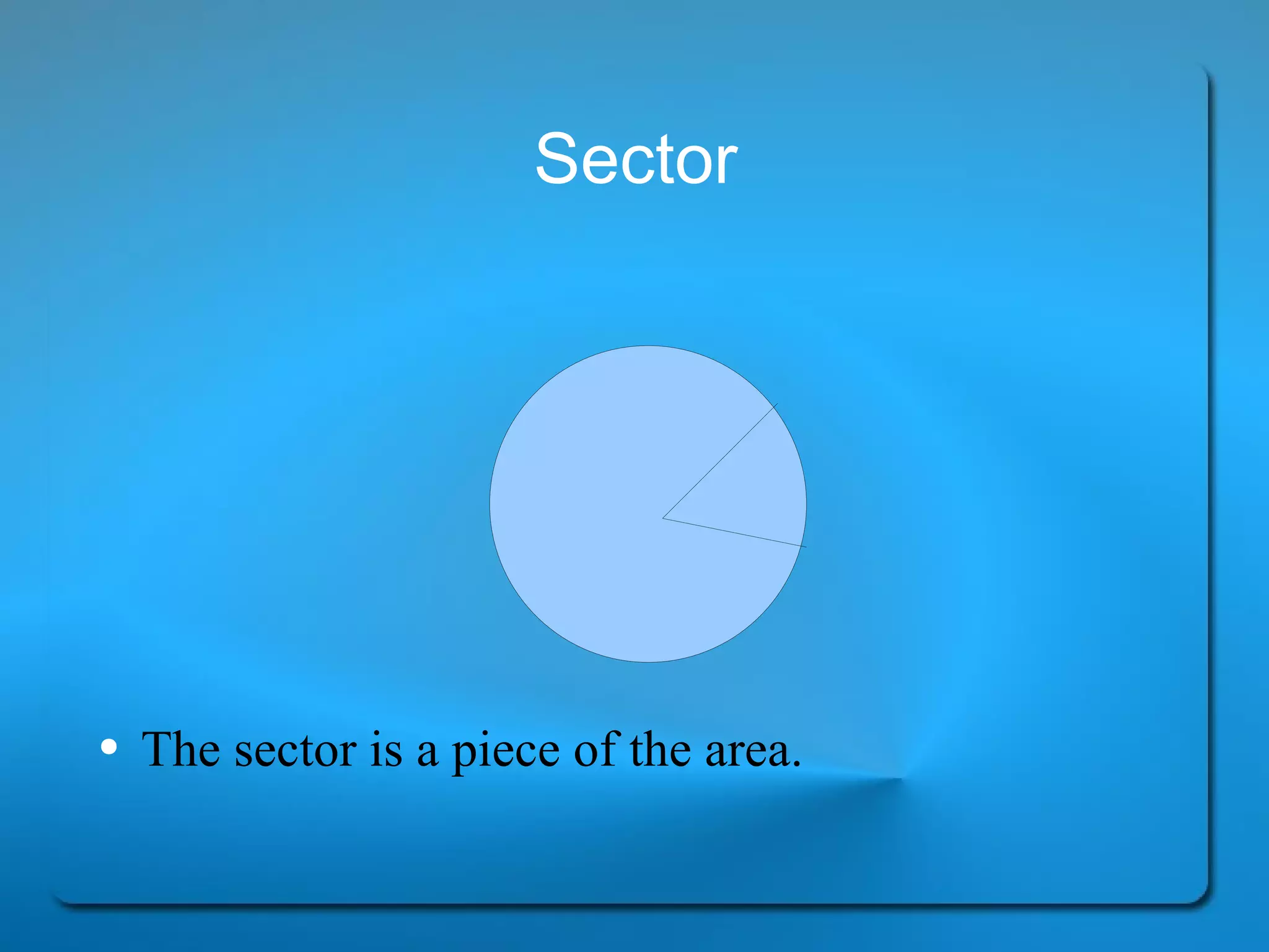
Sector The sector is a piece of the area.
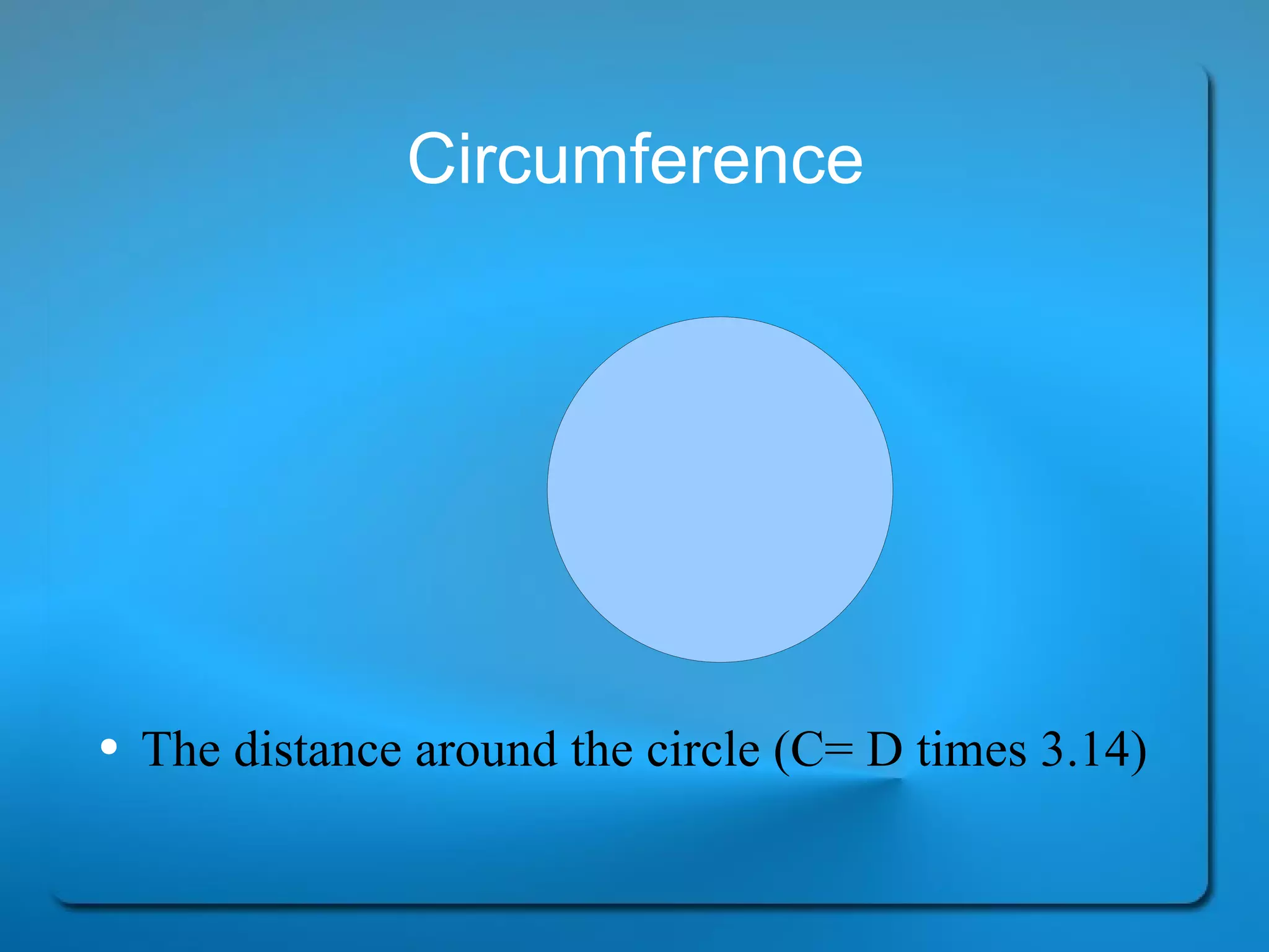
Circumference The distance around the circle (C= D times 3.14)
Other Polygons Hexagon Octagon Pentagon
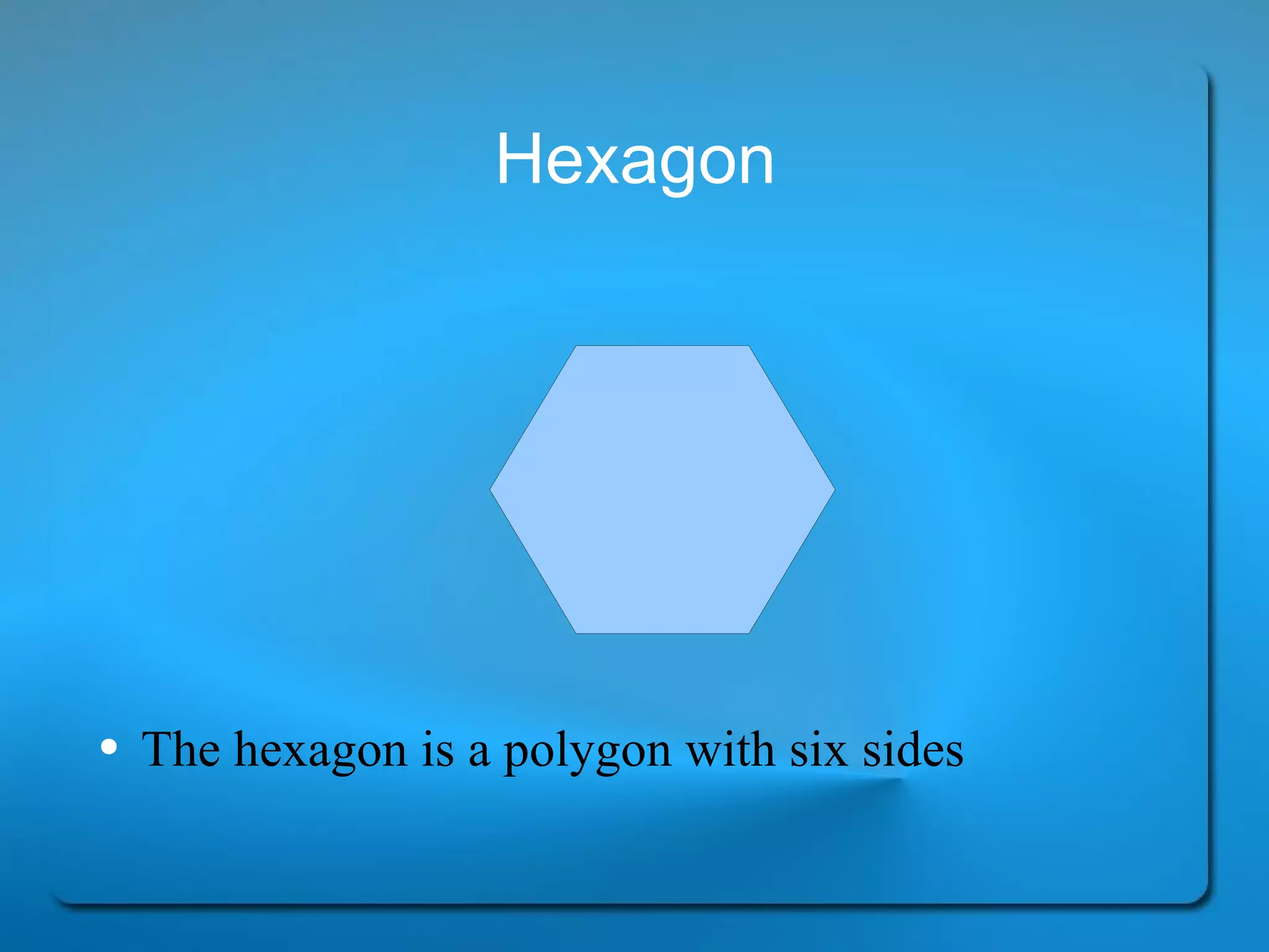
Hexagon The hexagon is a polygon with six sides
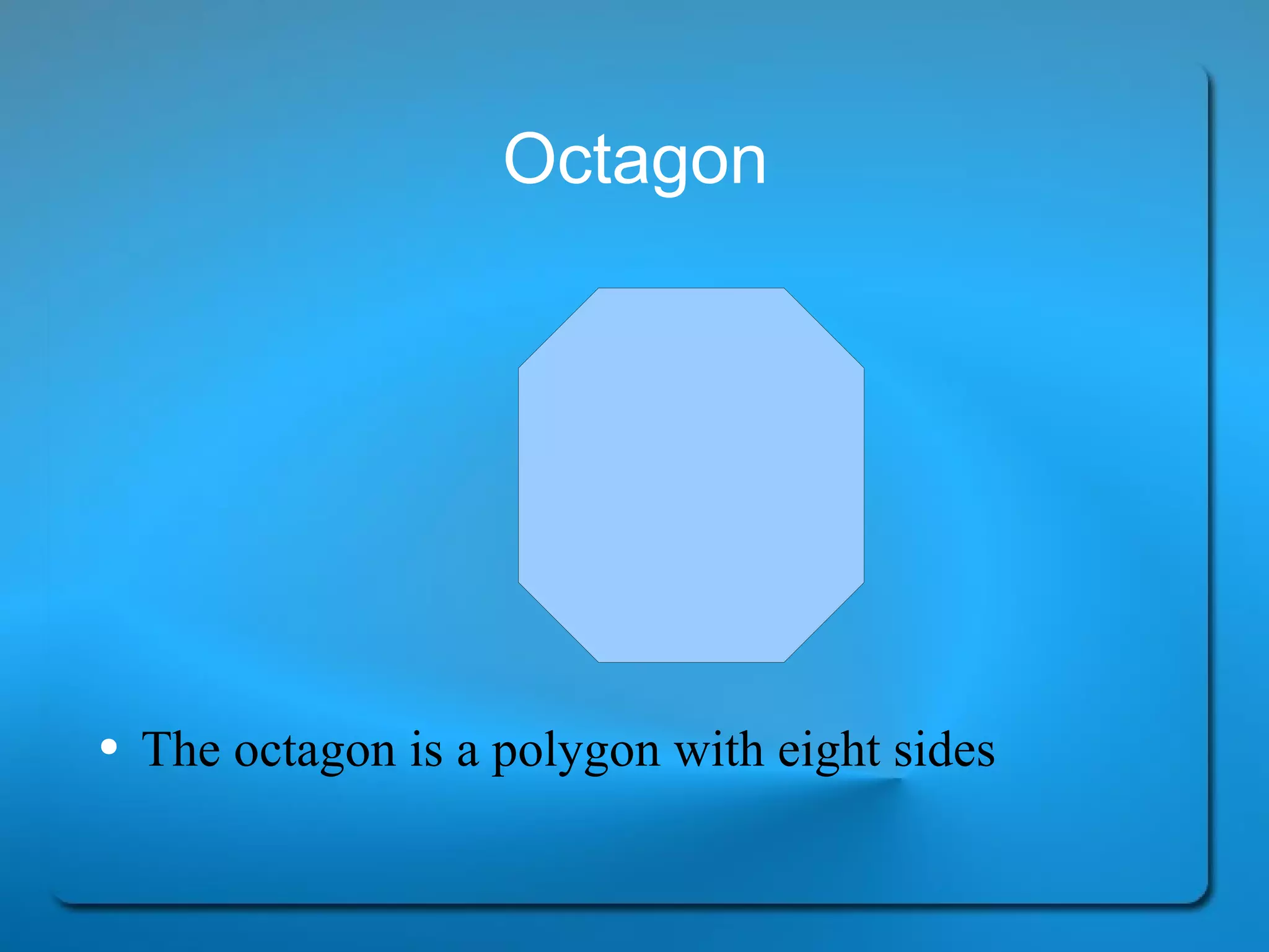
Octagon The octagon is a polygon with eight sides
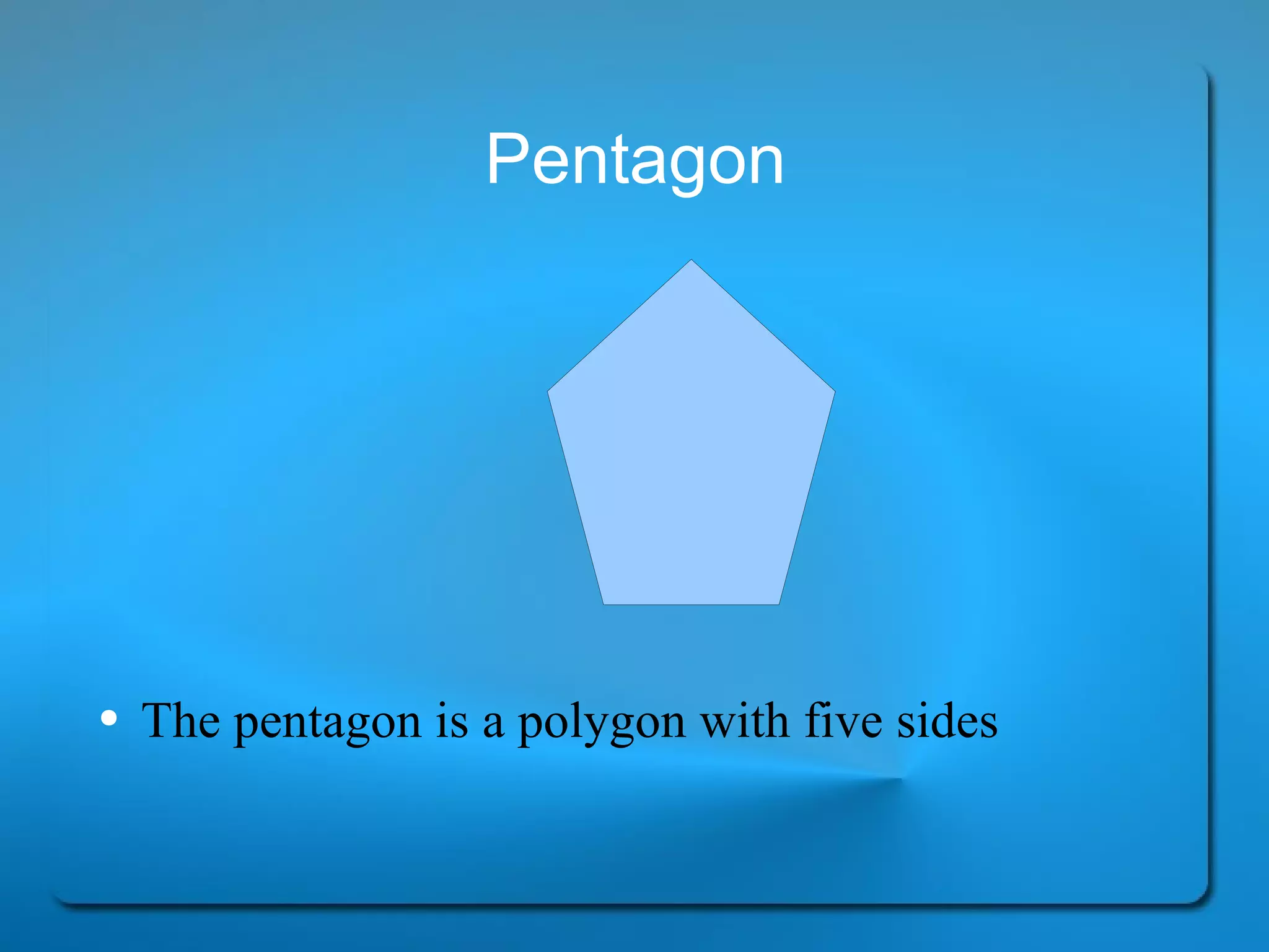
Pentagon The pentagon is a polygon with five sides
The End

Philips Geometry Guide To Success.Ppt