Math: Geometry
Review on algebra:
 3 Identities
 Linear Equation General Form / Slope
 Quadratic Equations and Formula for roots
 Modulus
 Exponents
 Inequalities
 Functions
Today’s Agenda: Geometry
 Co-ordinate Geometry / Functions 18
 Advanced Functions - Graphing (Plus) 20
 Circles (16 items) 2
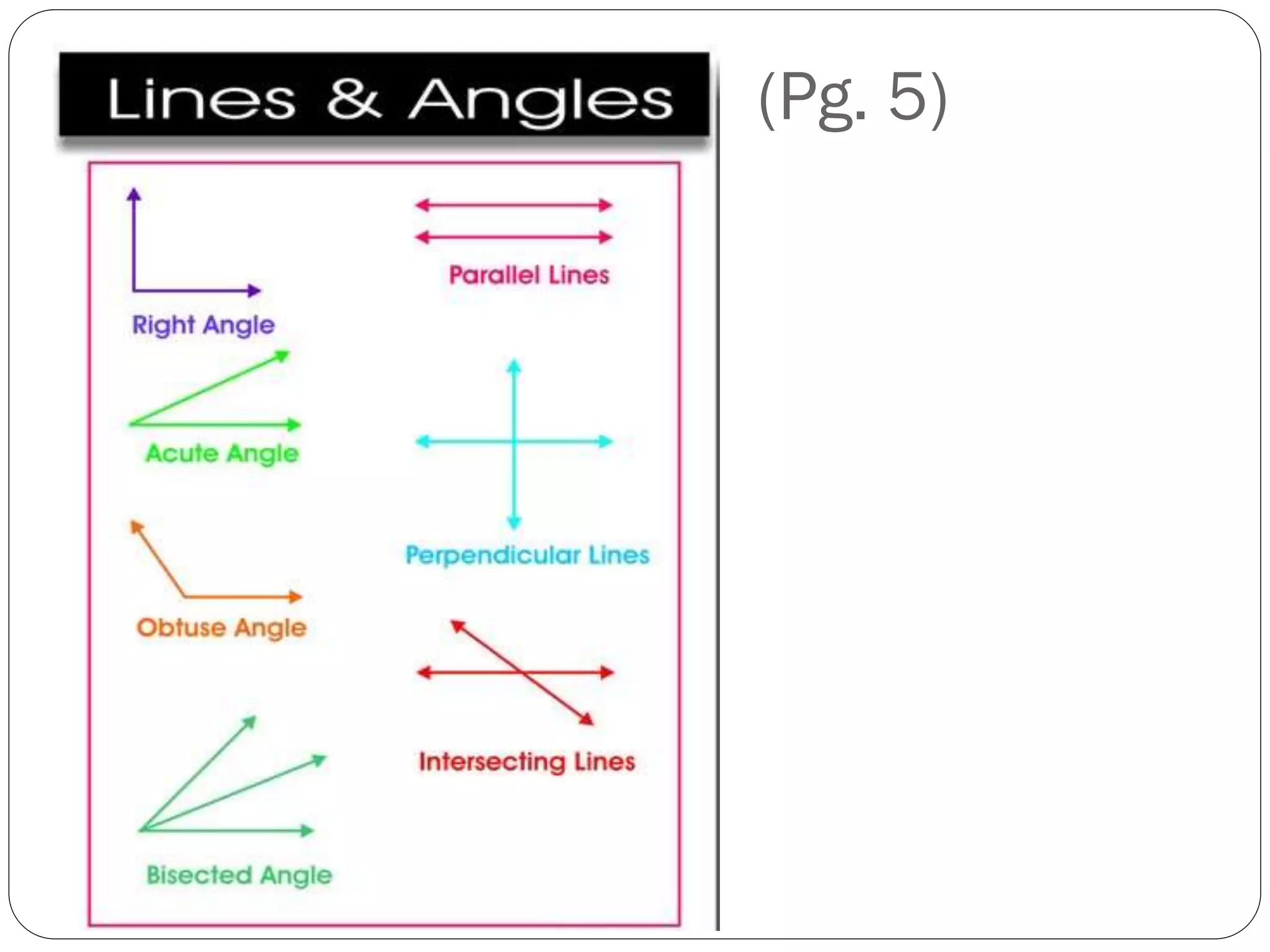
 Lines andAngles (23 items) 5
 Triangle Area/Perim/Pythag (11 items) 11
 Third Side Rule/Angle Side Rule (6 items)13
 SimilarTriangles (5 items) 15
 Rectangle Area/Perimeter 16
 Polygons (5 items) 24
 Solids (13 items) 25
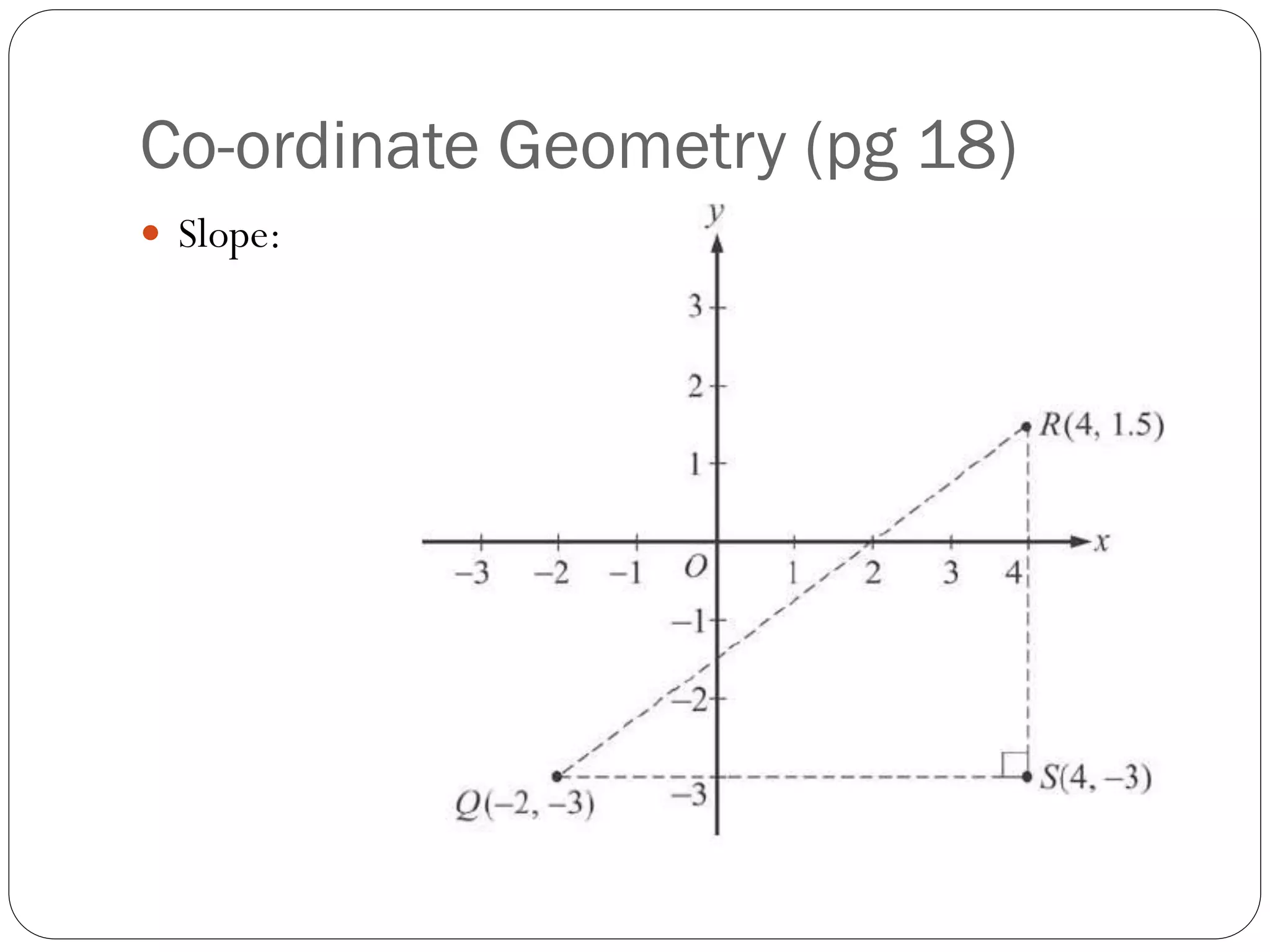
Co-ordinate Geometry (pg 18)
 Slope:
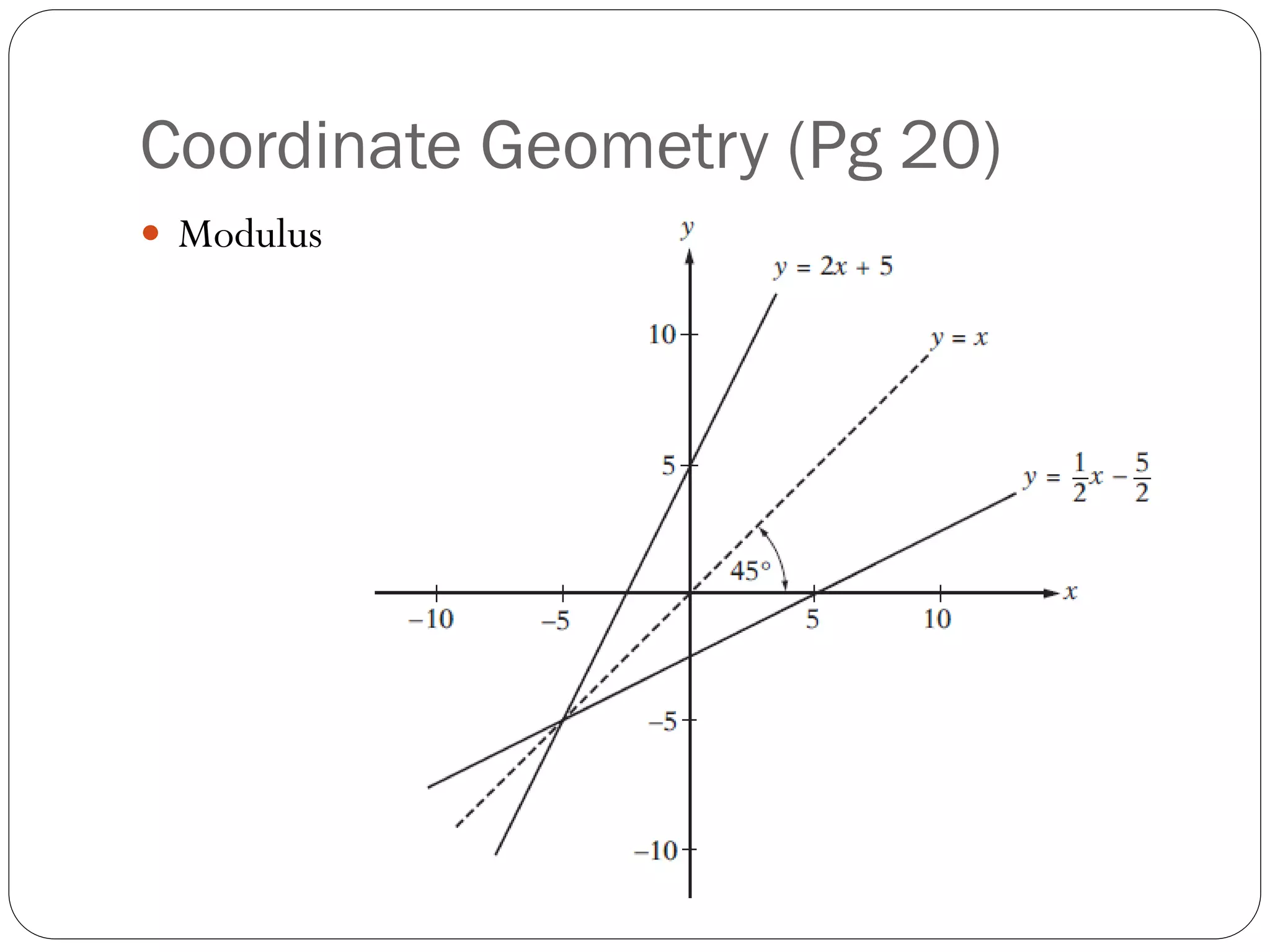
Coordinate Geometry (Pg 20)
 Modulus
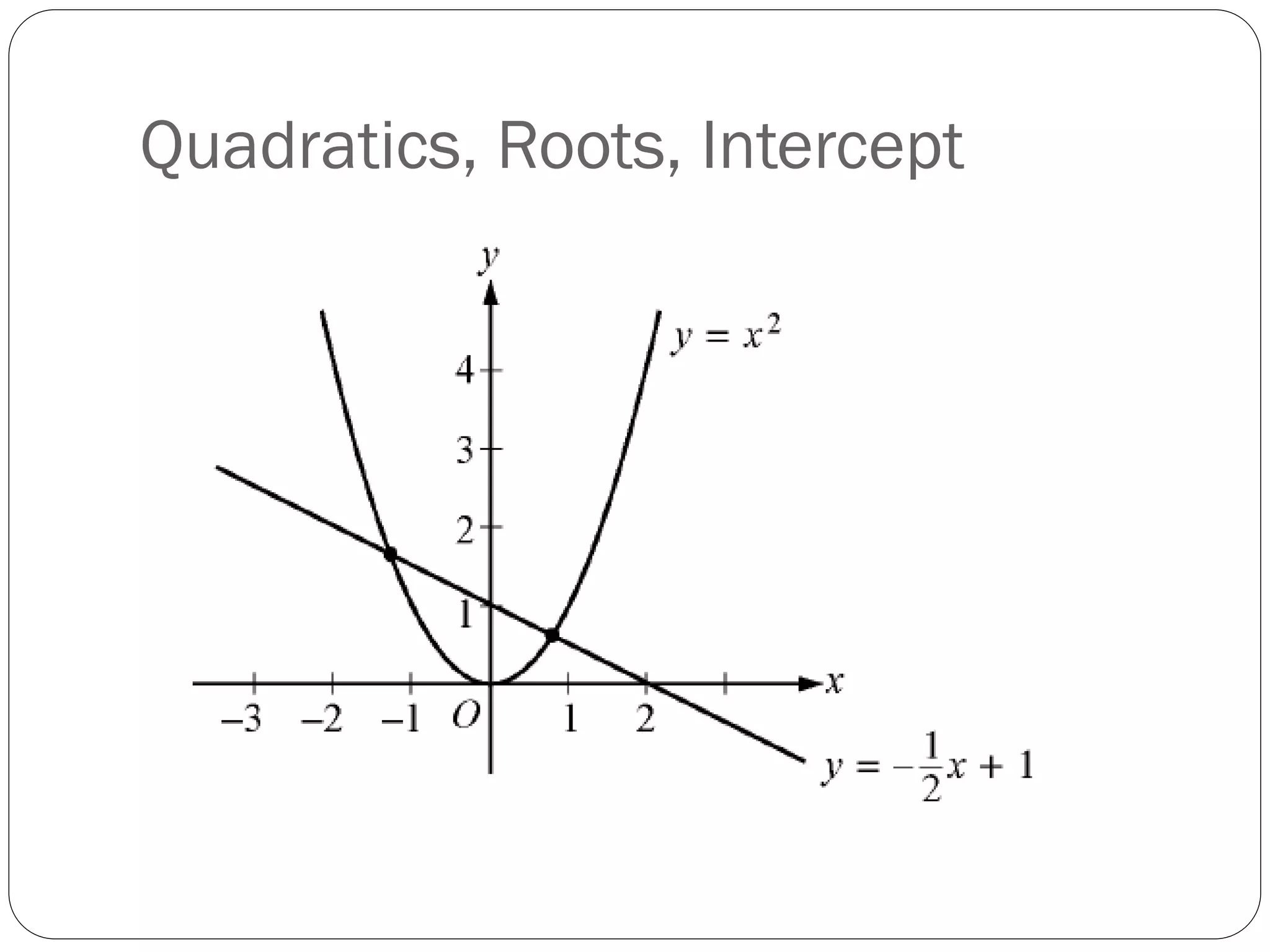
Quadratics, Roots, Intercept
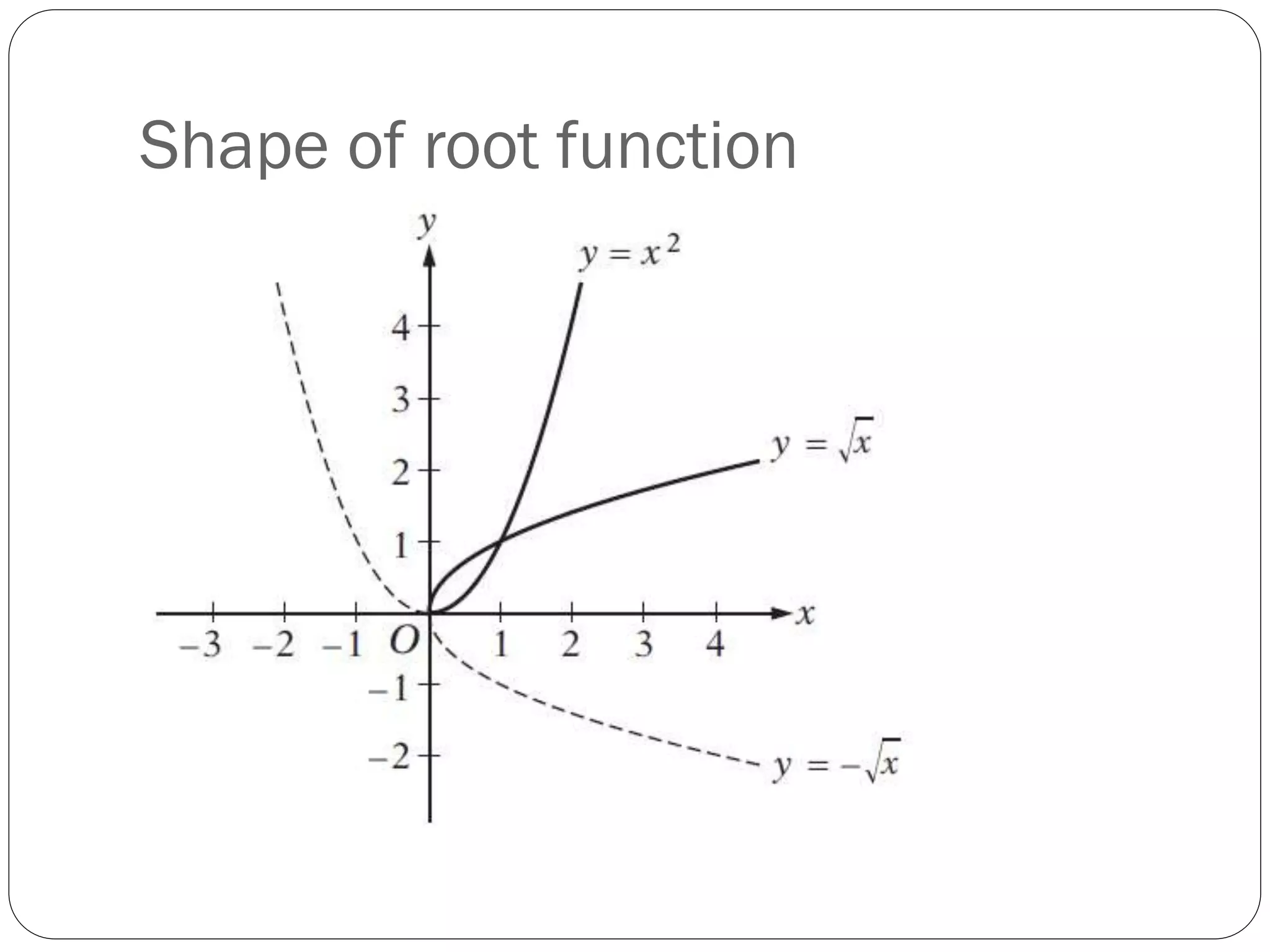
Shape of root function
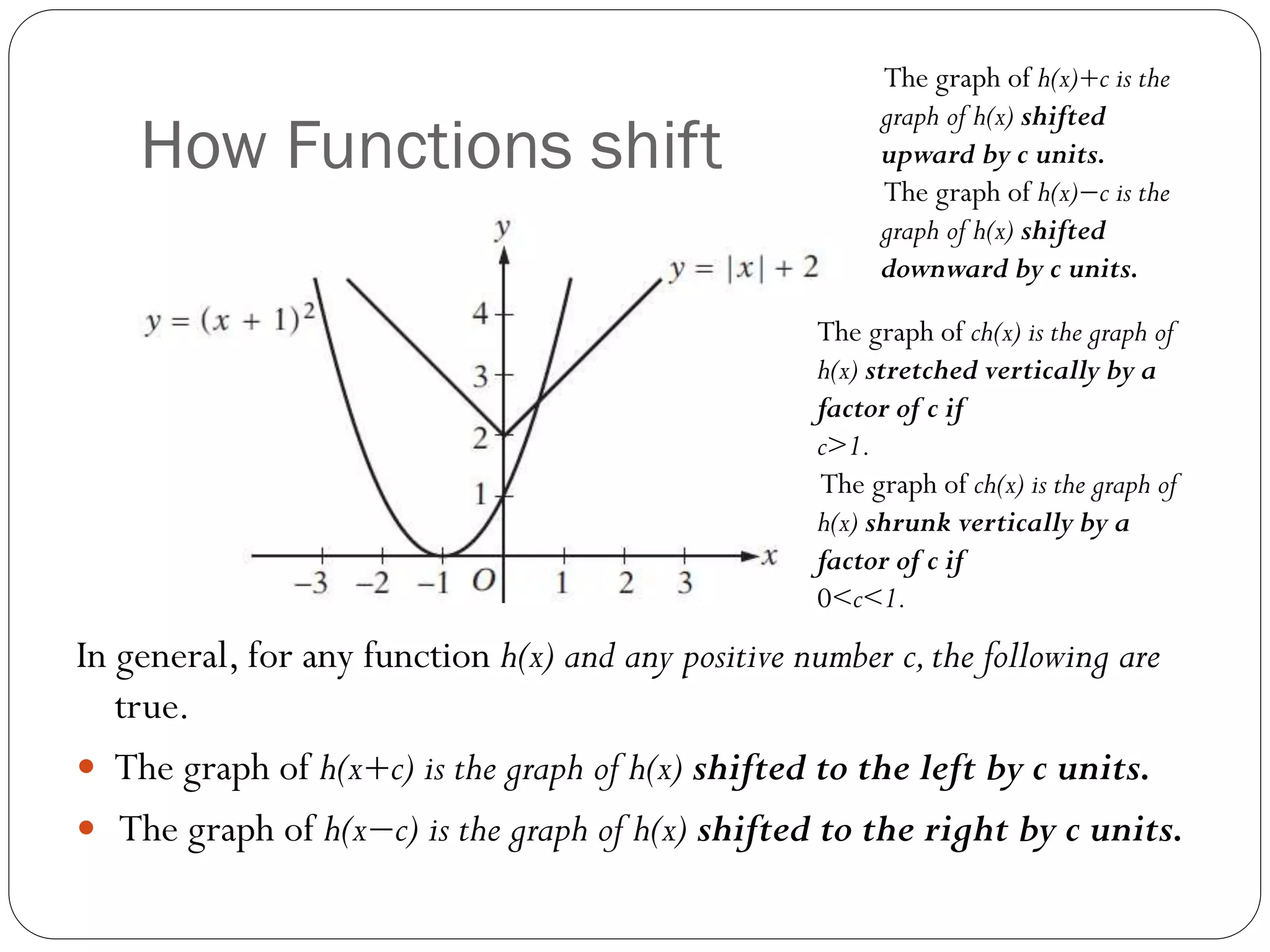
How Functions shift
In general, for any function h(x) and any positive number c,the following are
true.
 The graph of h(x+c) is the graph of h(x) shifted to the left by c units.
 The graph of h(x−c) is the graph of h(x) shifted to the right by c units.
The graph of h(x)+c is the
graph of h(x) shifted
upward by c units.
The graph of h(x)−c is the
graph of h(x) shifted
downward by c units.
The graph of ch(x) is the graph of
h(x) stretched vertically by a
factor of c if
c>1.
The graph of ch(x) is the graph of
h(x) shrunk vertically by a
factor of c if
0<c<1.
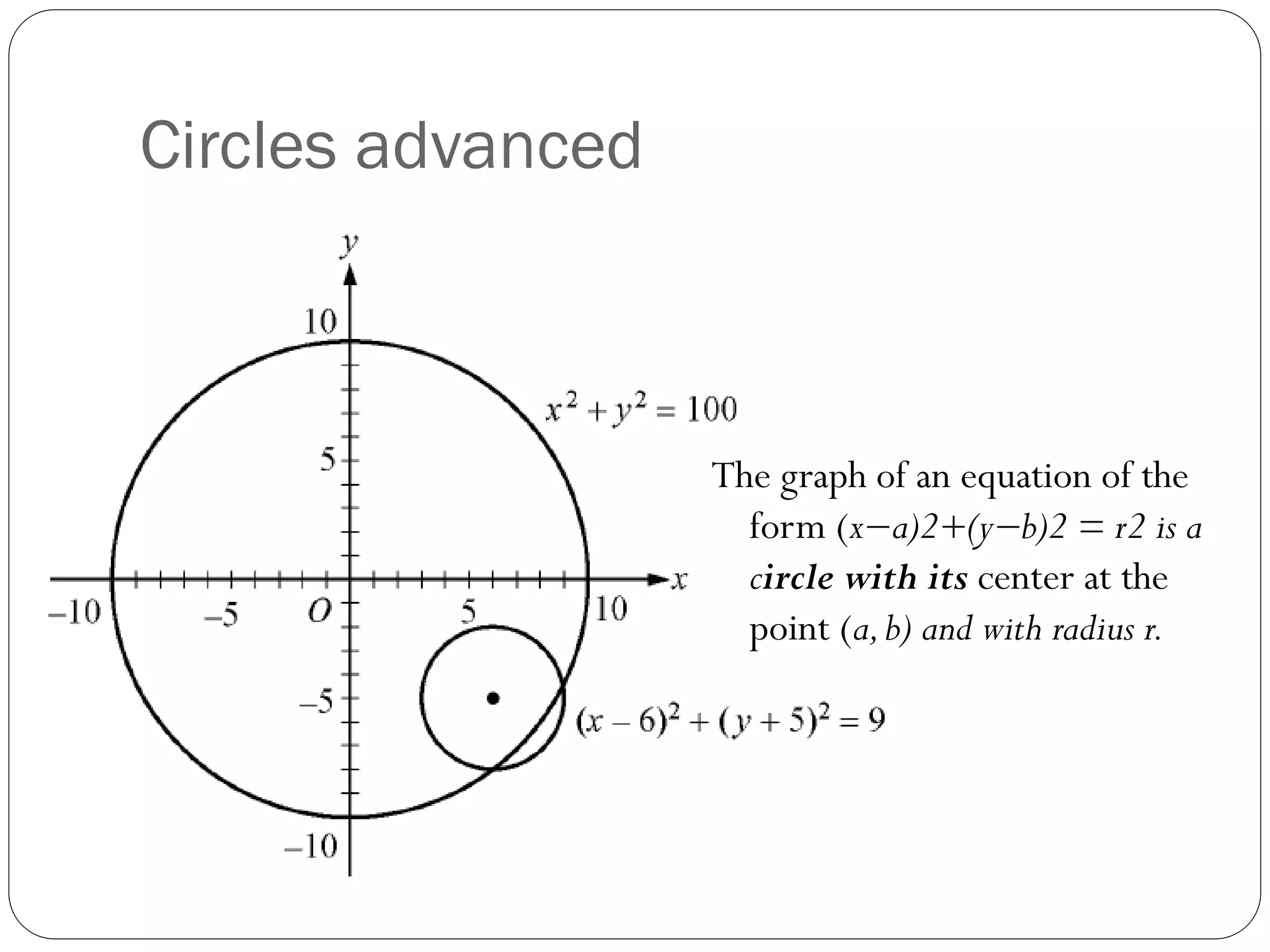
Circles advanced
The graph of an equation of the
form (x−a)2+(y−b)2 = r2 is a
circle with its center at the
point (a,b) and with radius r.
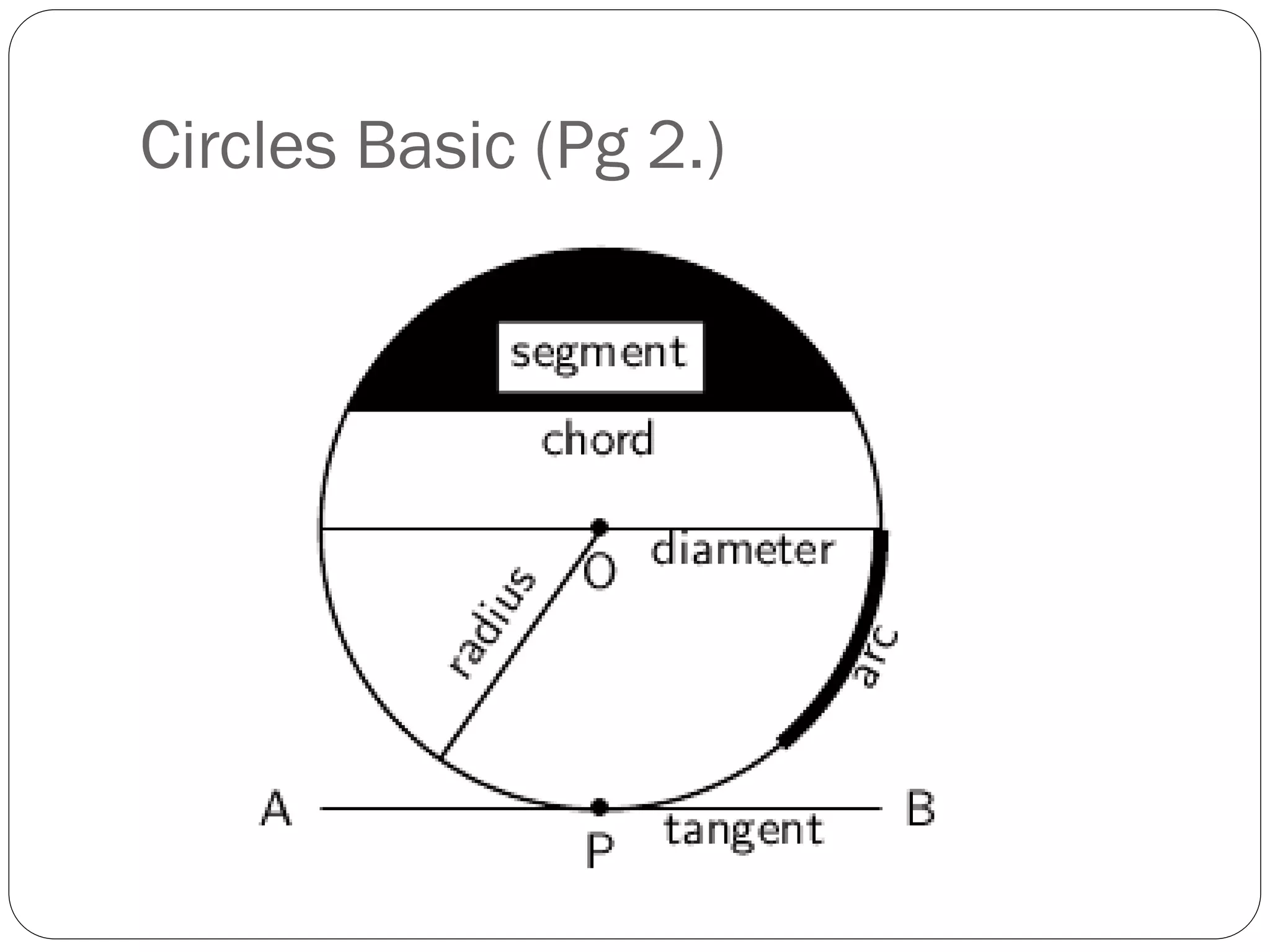
Circles Basic (Pg 2.)
Circles Exercises
1. What is the area of a circle with radius 8?
2. What is the area of a circle with diameter 12?
3. What is the area of a circle with radius
4. What is the area of a circle with circumference 8π?
5. What is the diameter of a circle with area 49π?
6. What is the circumference of a circle with area 18π?
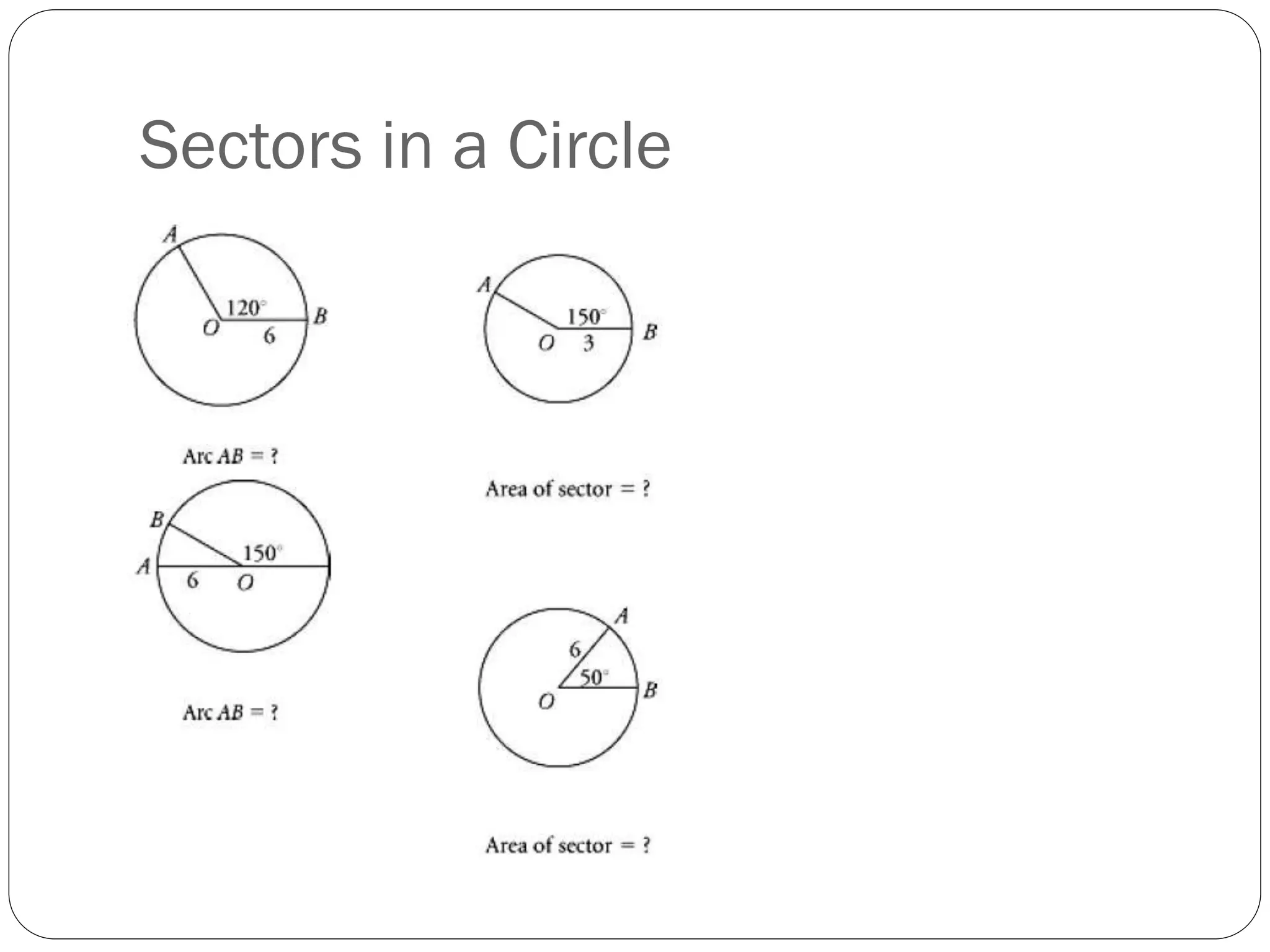
Sectors in a Circle
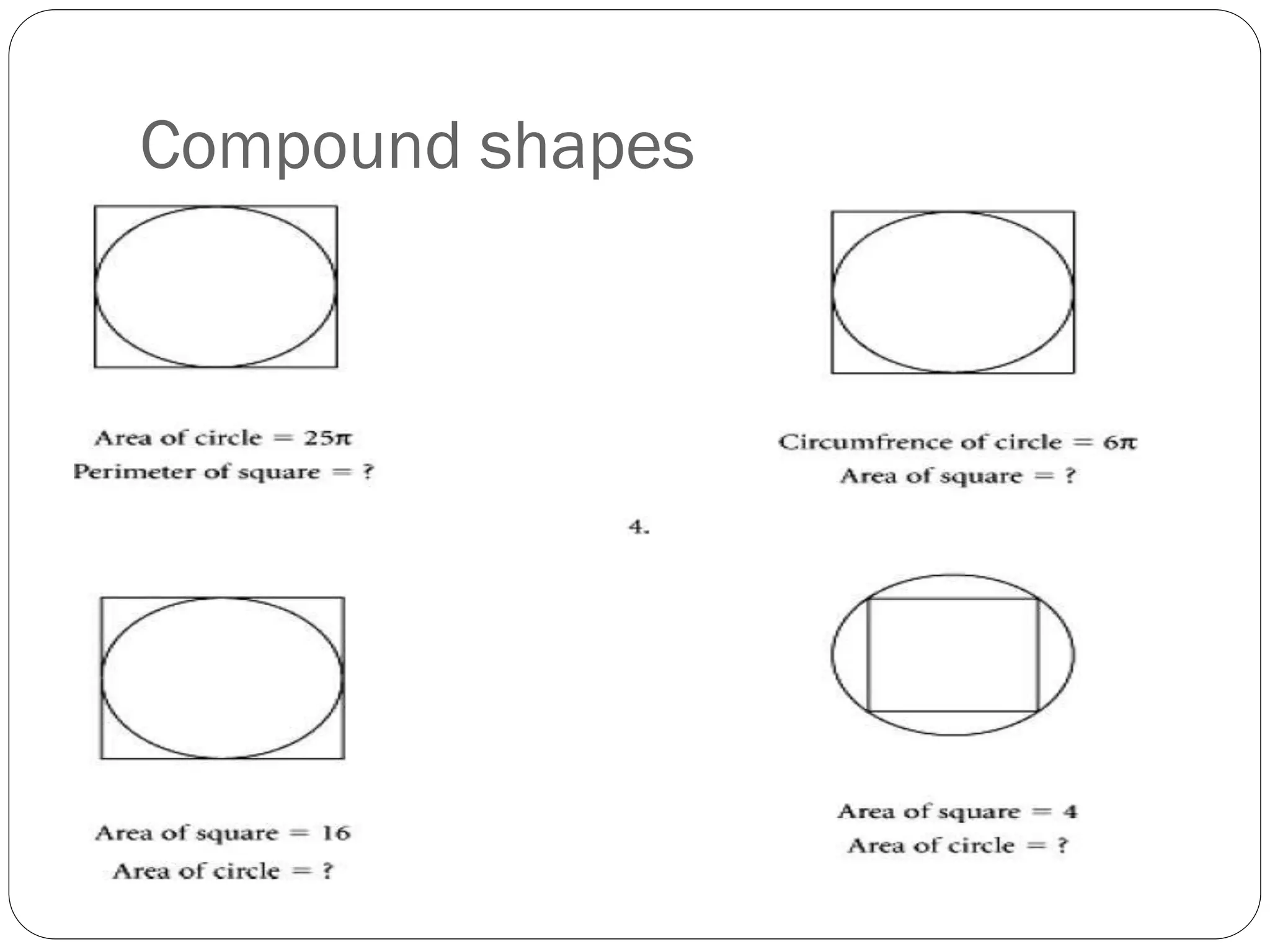
Compound shapes
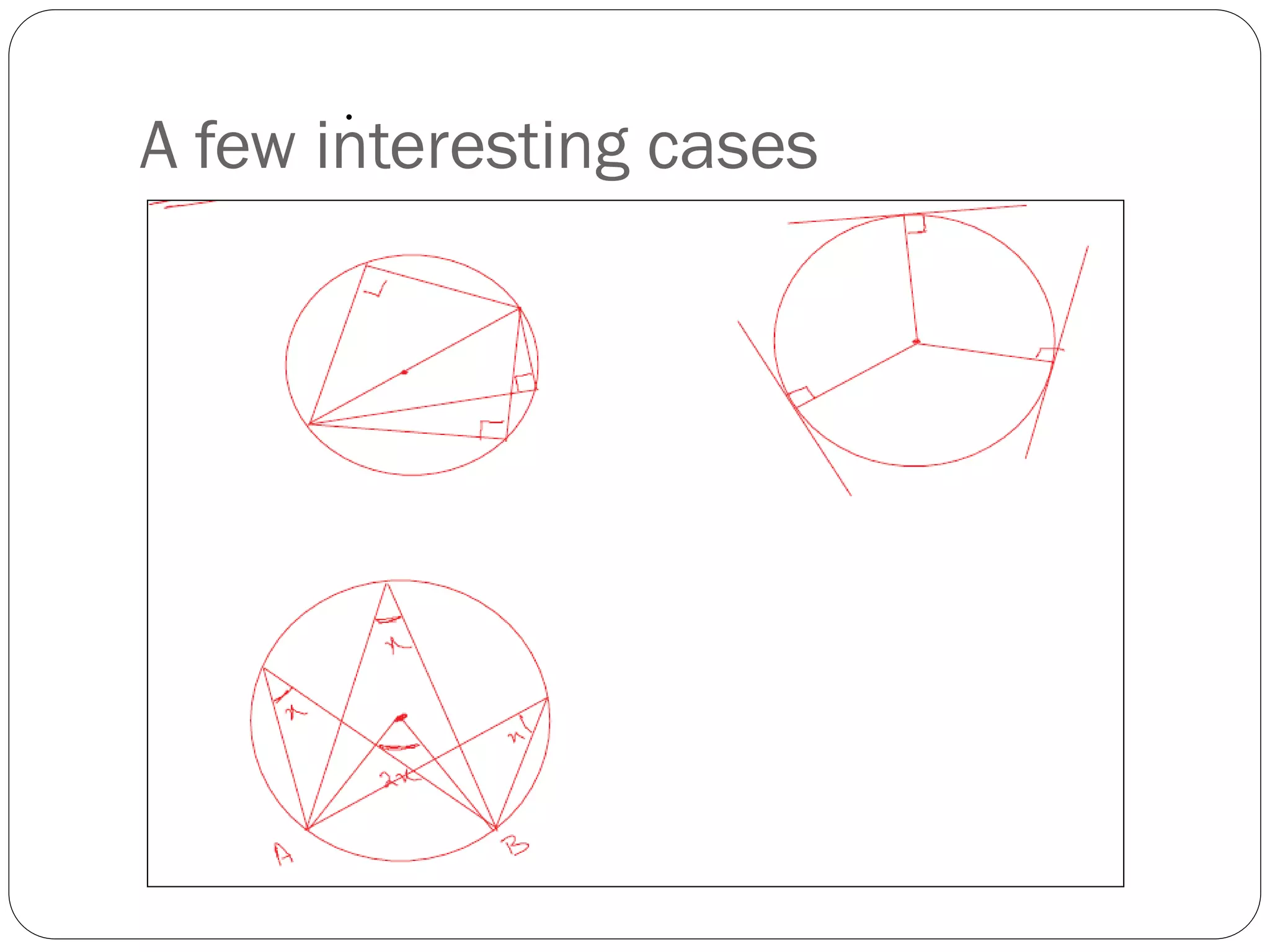
A few interesting cases
.
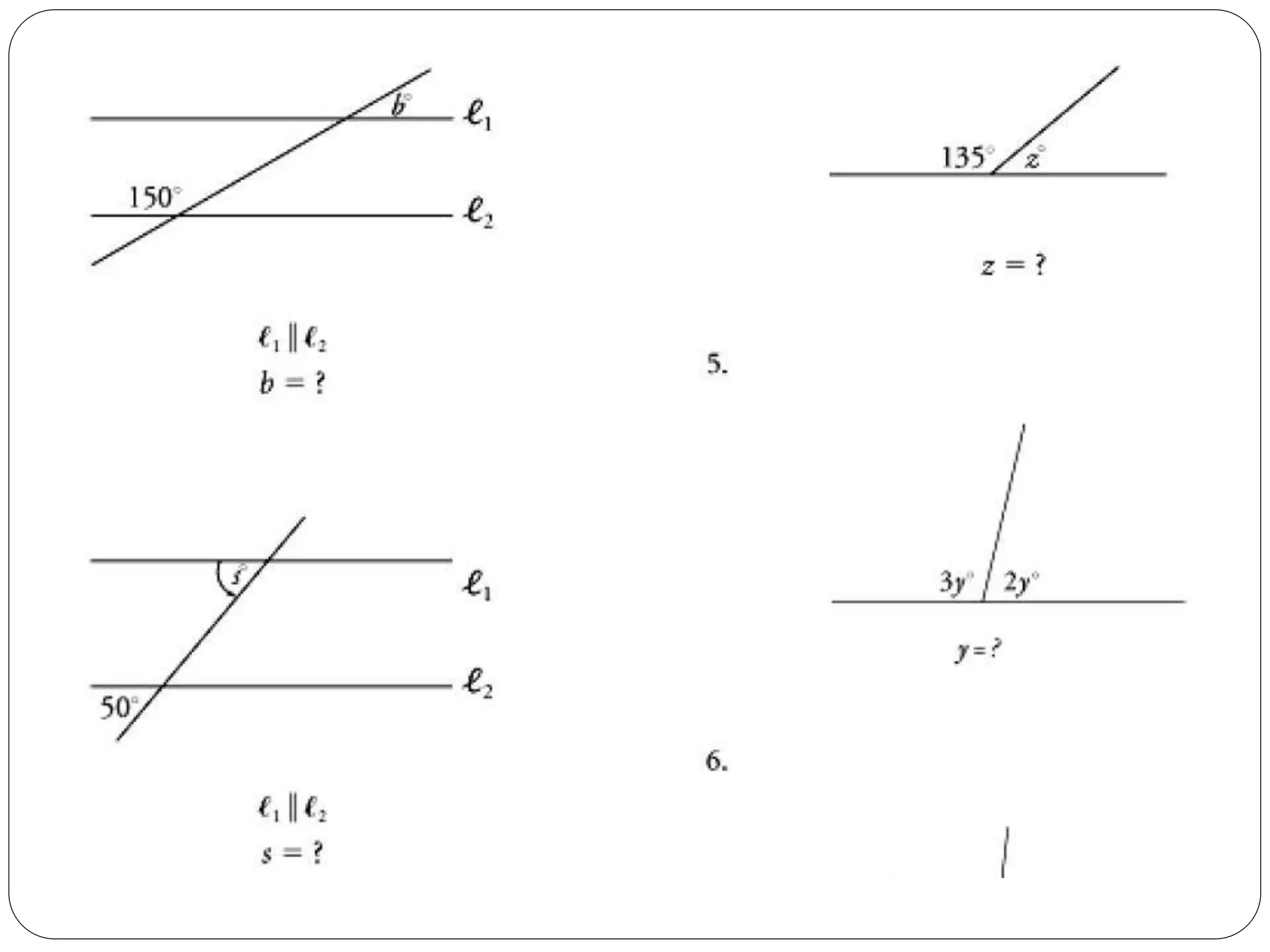
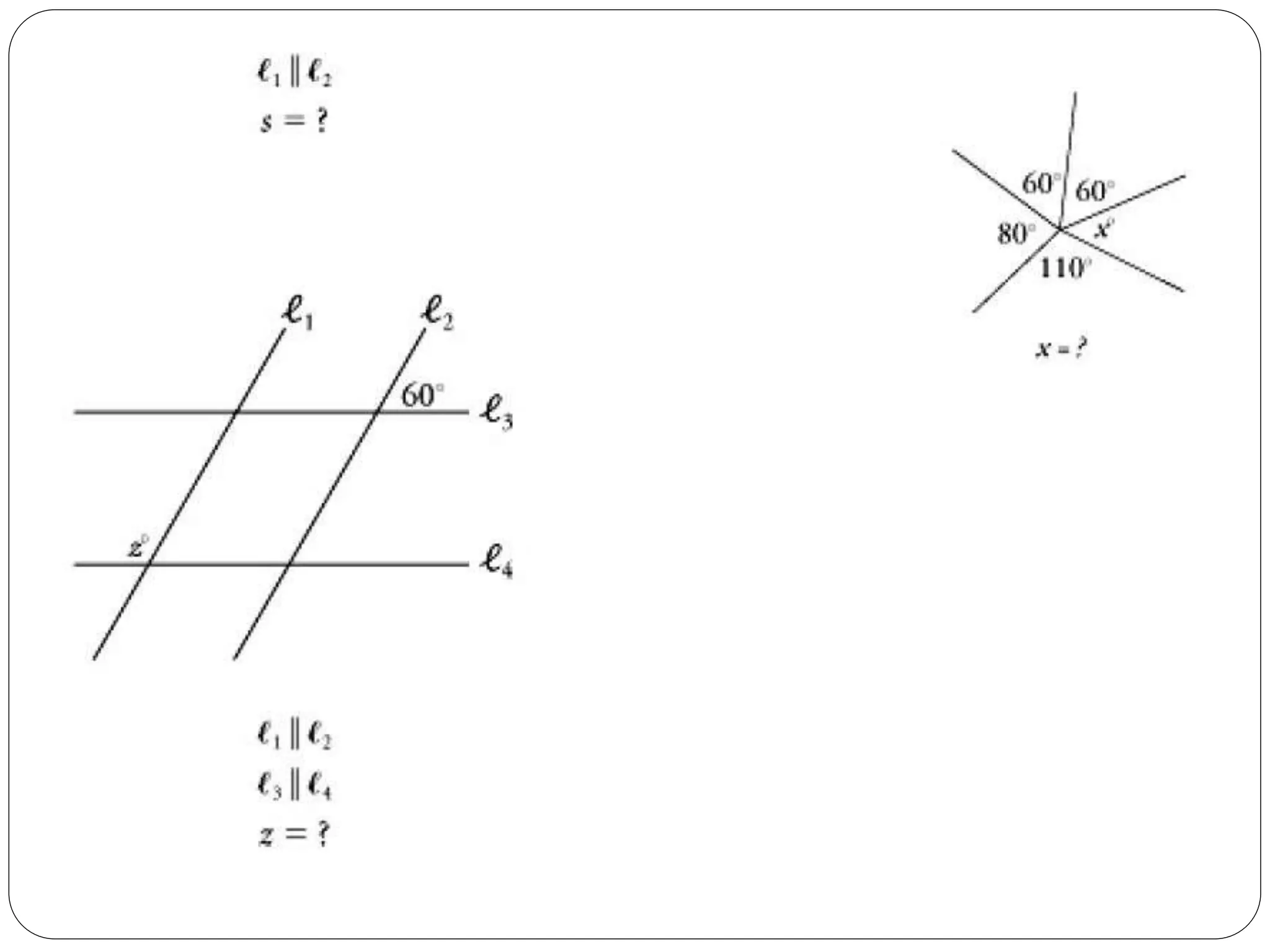
(Pg. 5)
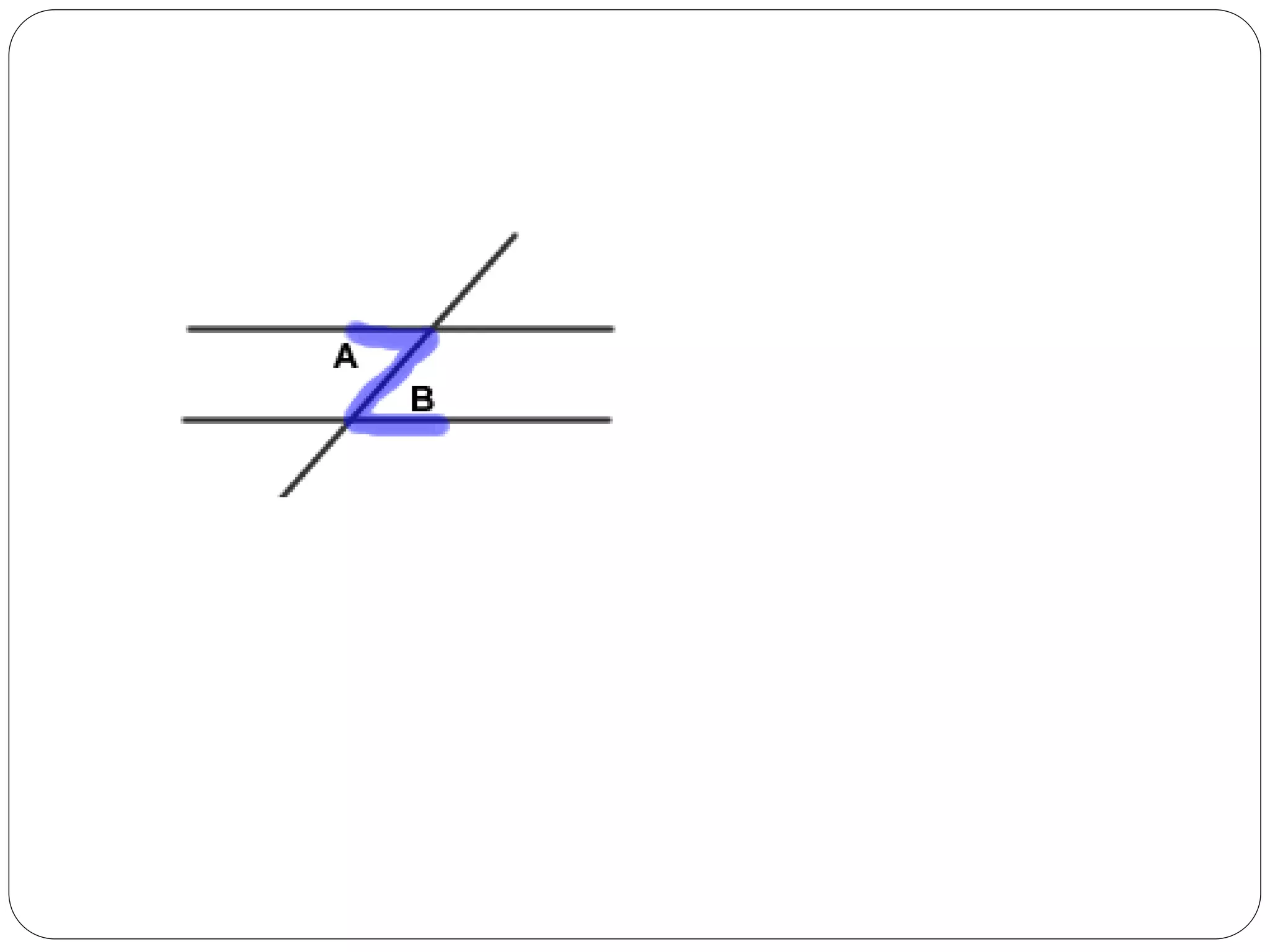
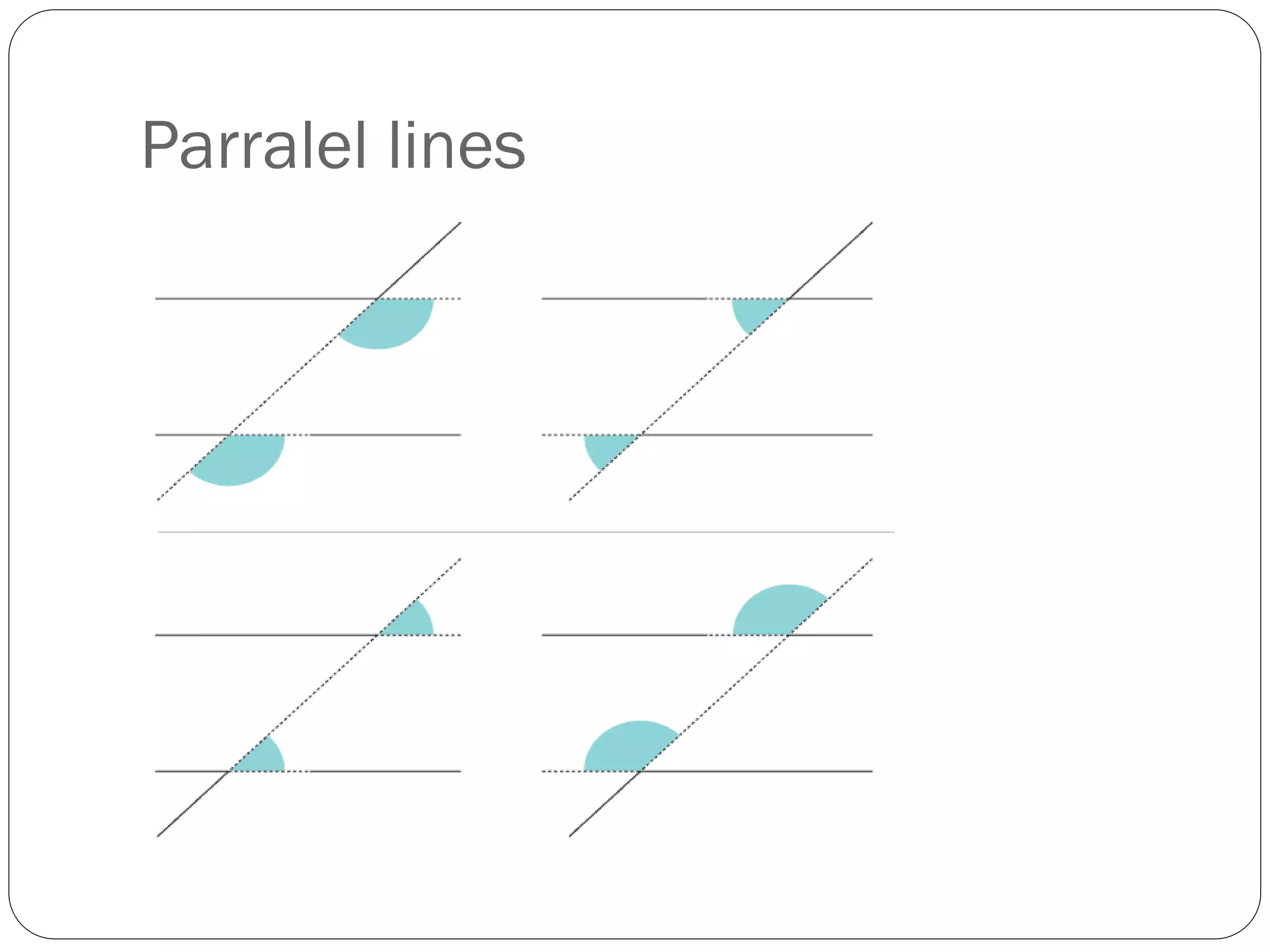
Parralel lines
Triangle (pgs 11-15)
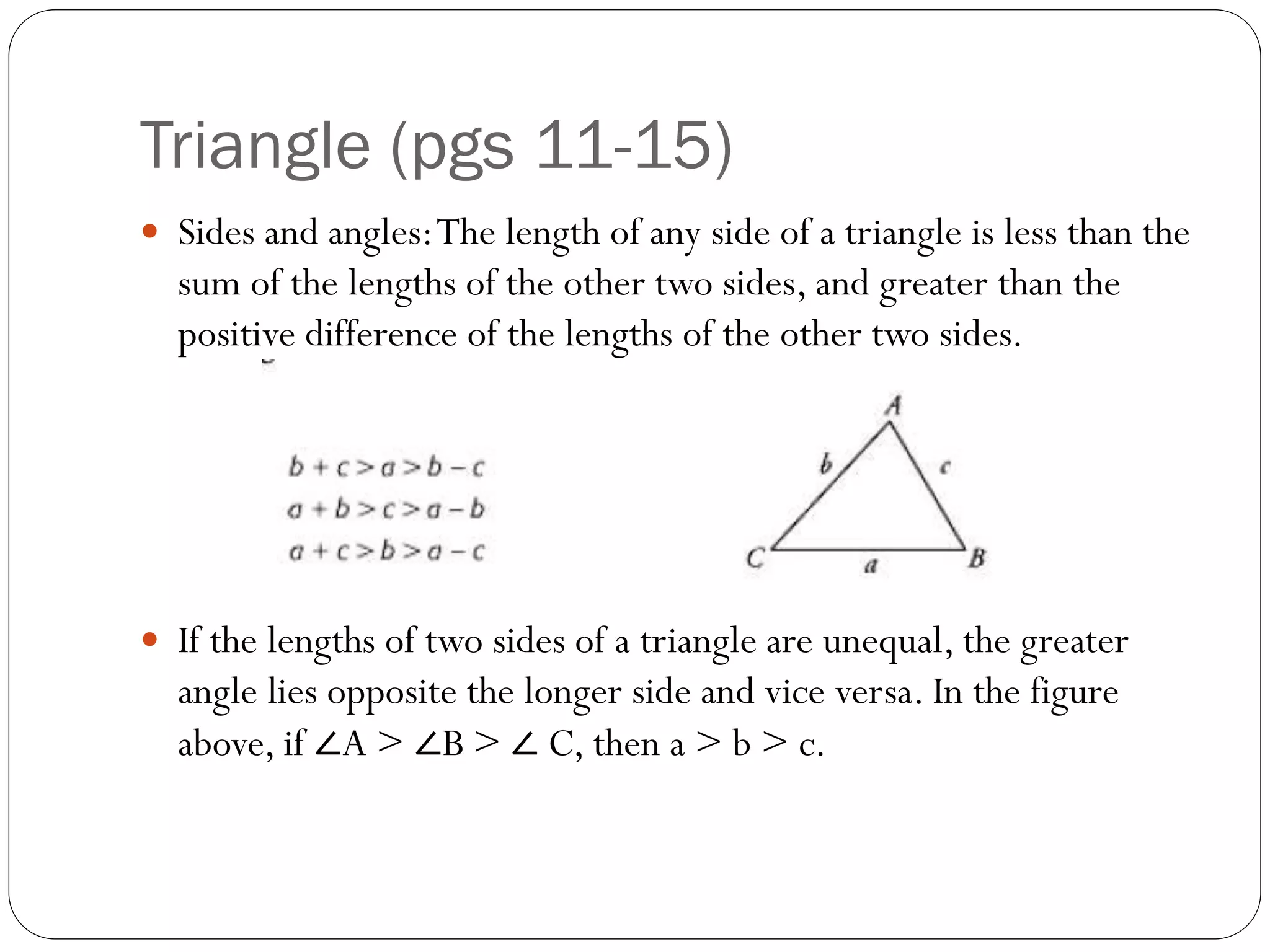
 Sides and angles:The length of any side of a triangle is less than the
sum of the lengths of the other two sides, and greater than the
positive difference of the lengths of the other two sides.
 If the lengths of two sides of a triangle are unequal, the greater
angle lies opposite the longer side and vice versa. In the figure
above, if ∠A > ∠B > ∠ C, then a > b > c.
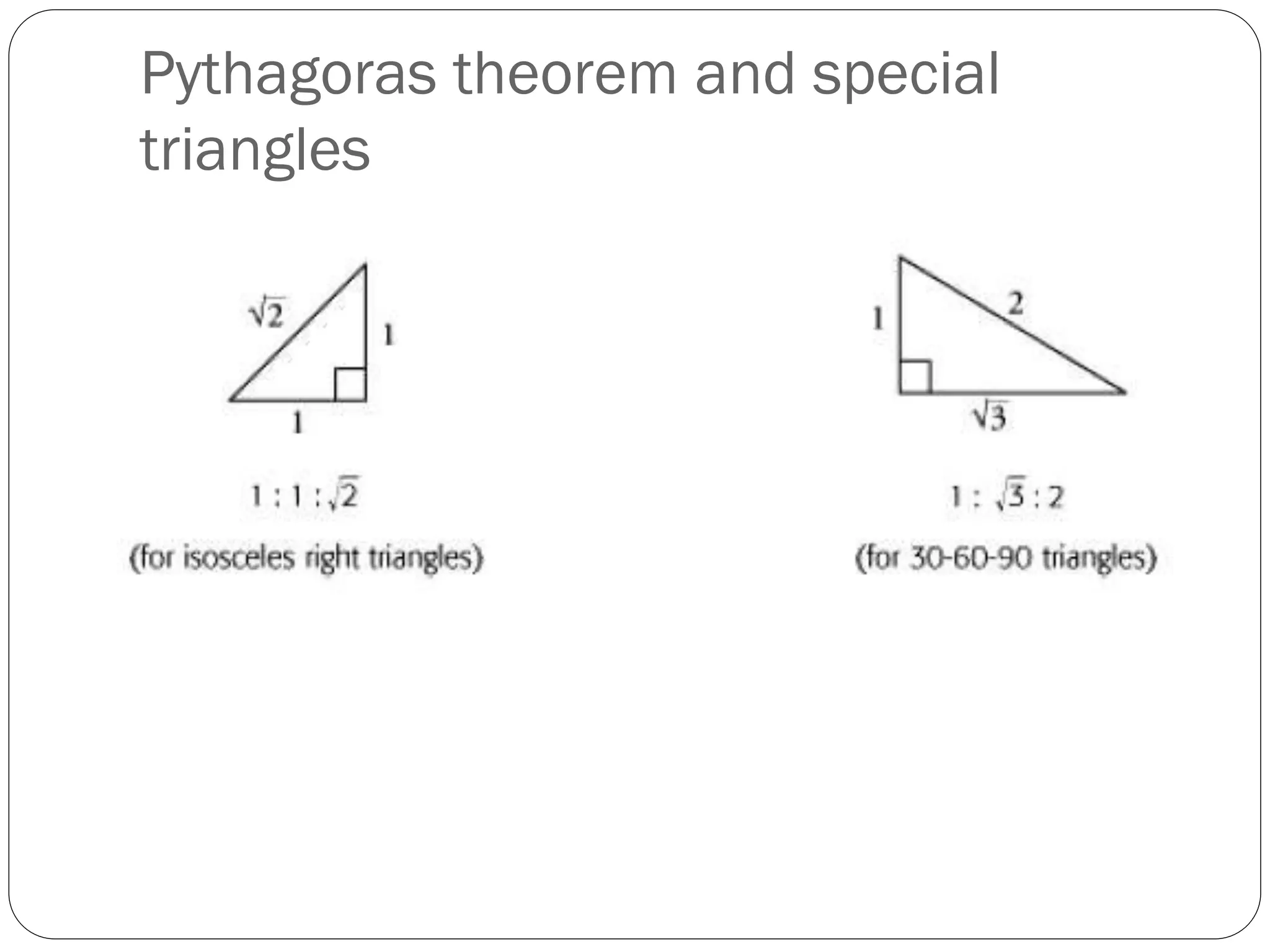
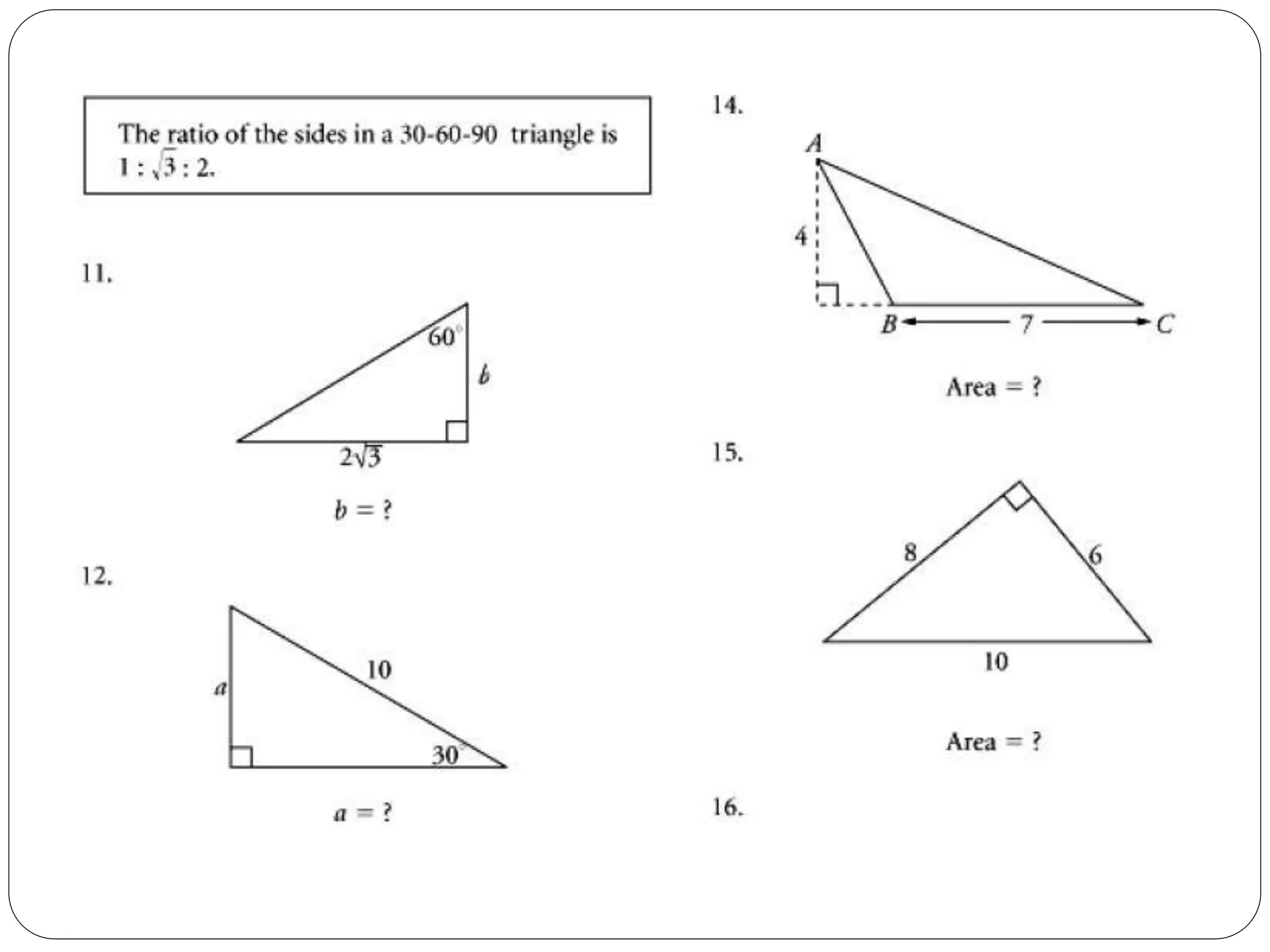
Pythagoras theorem and special
triangles
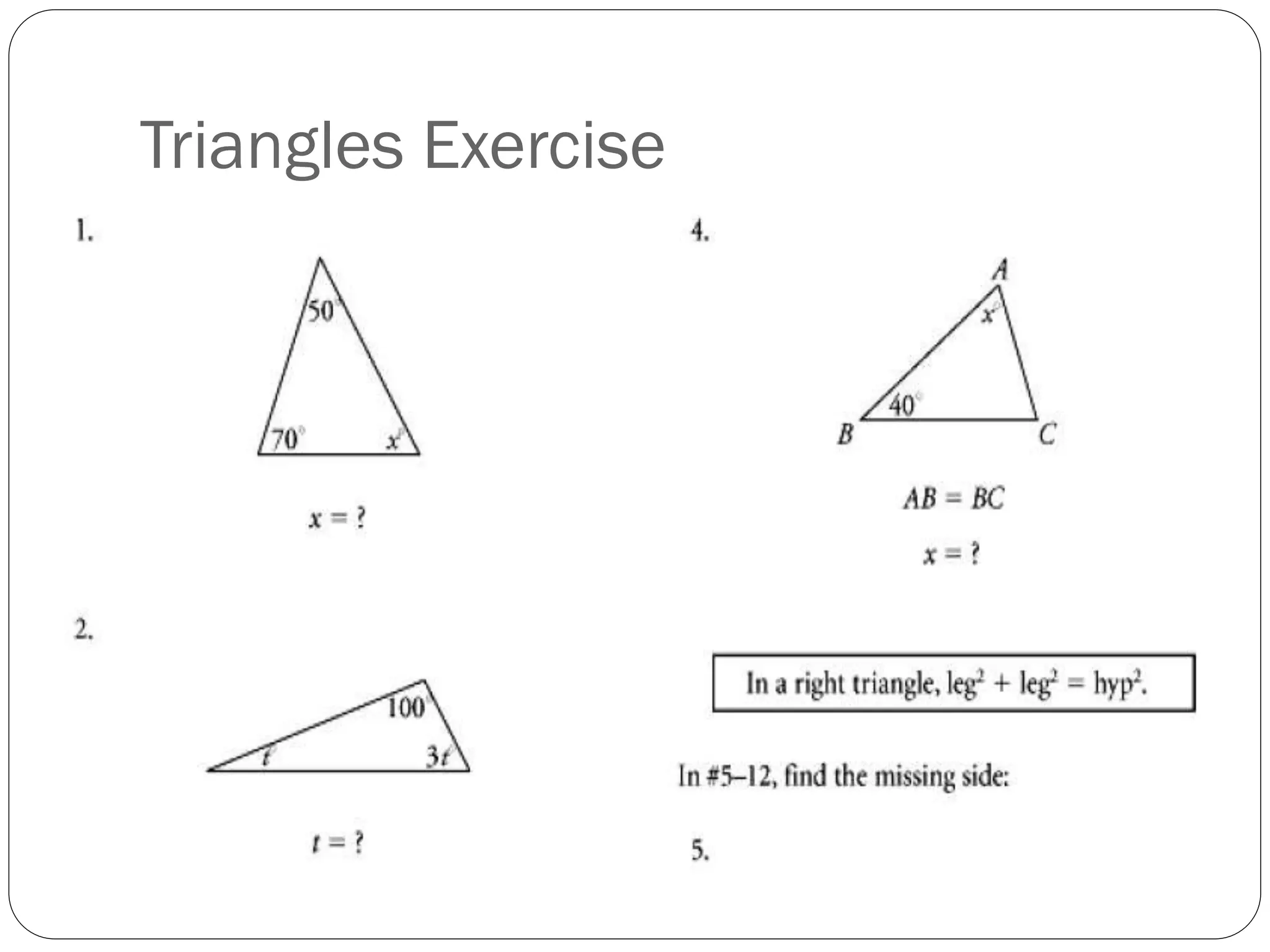
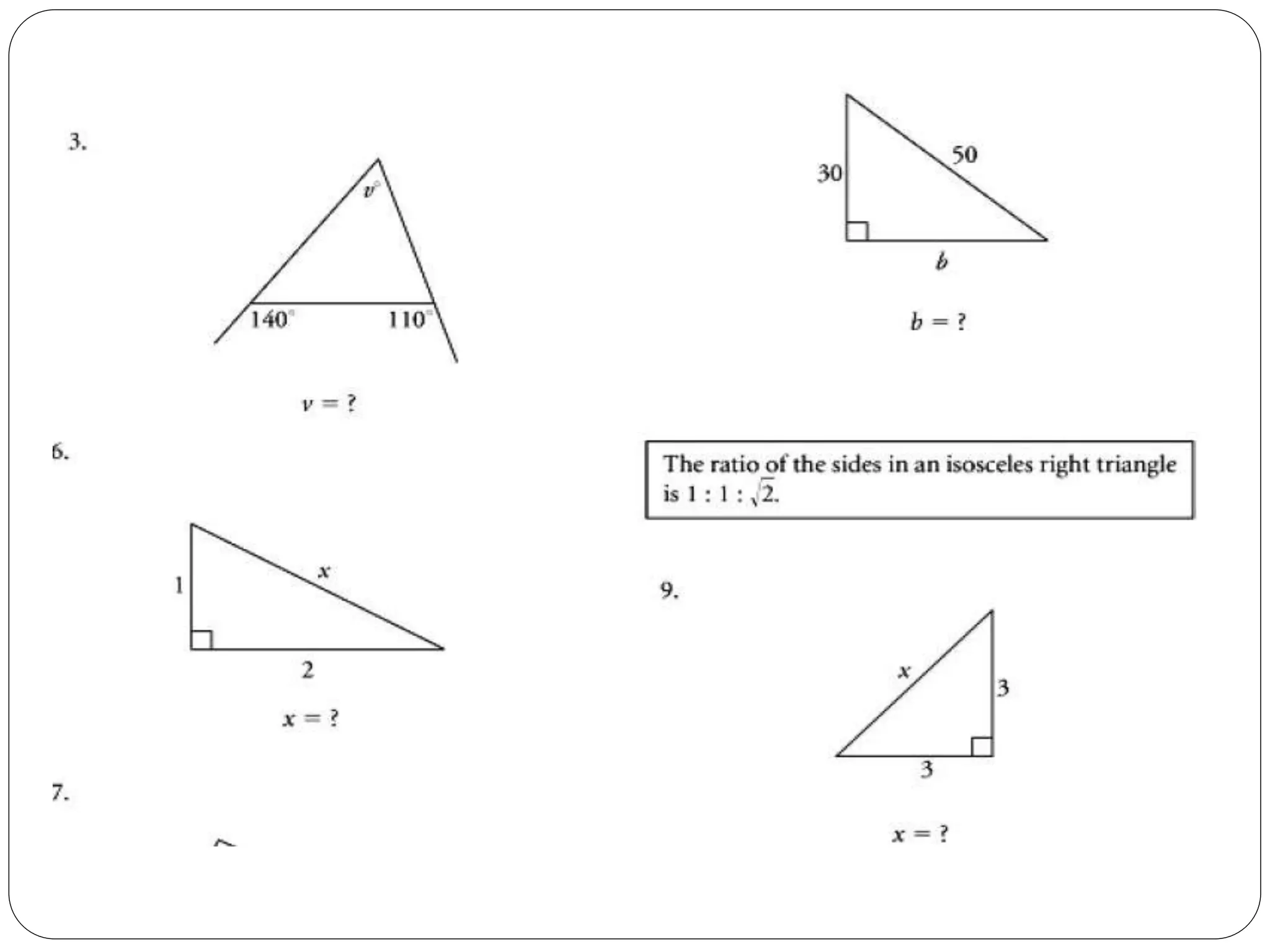
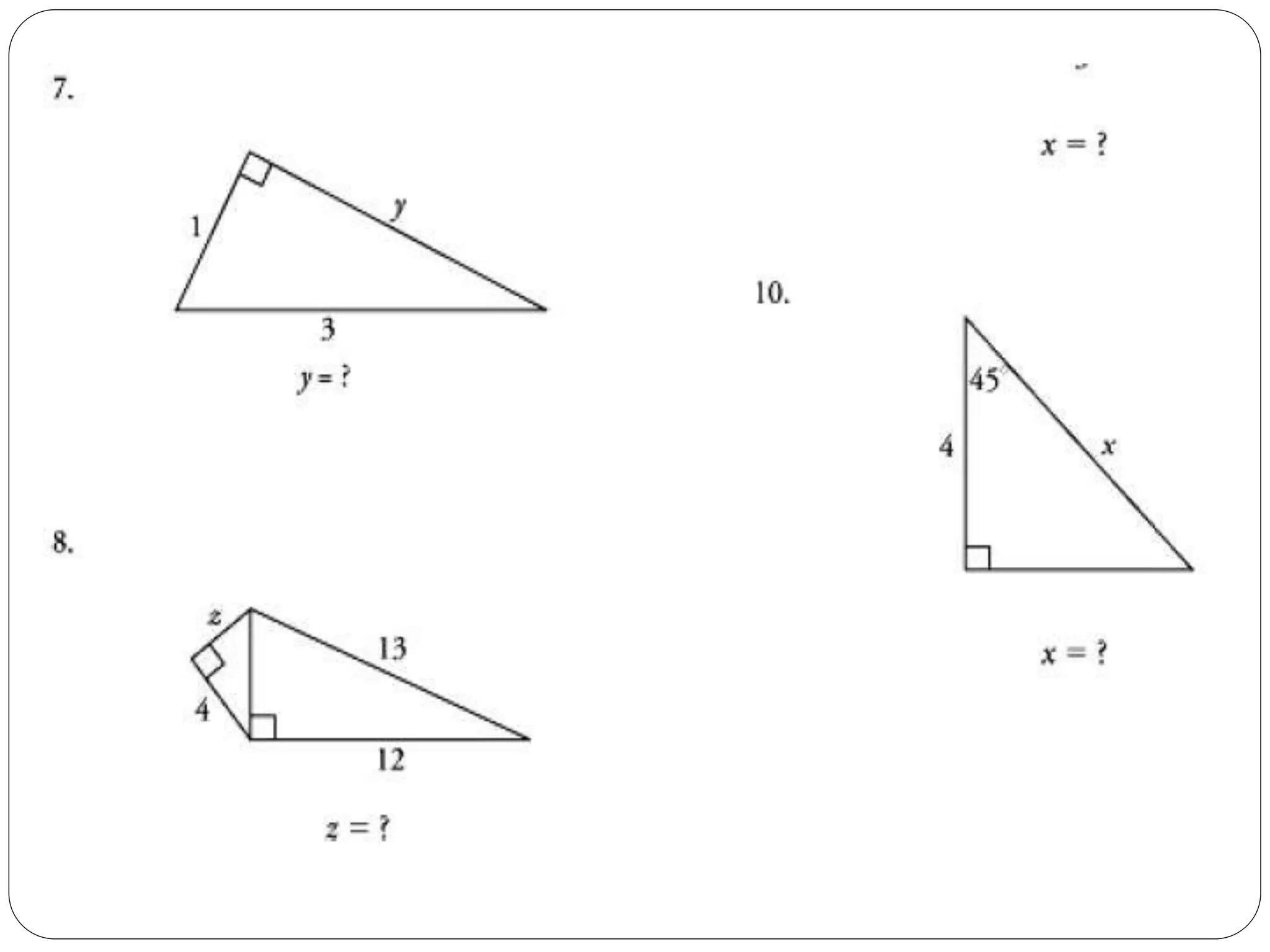
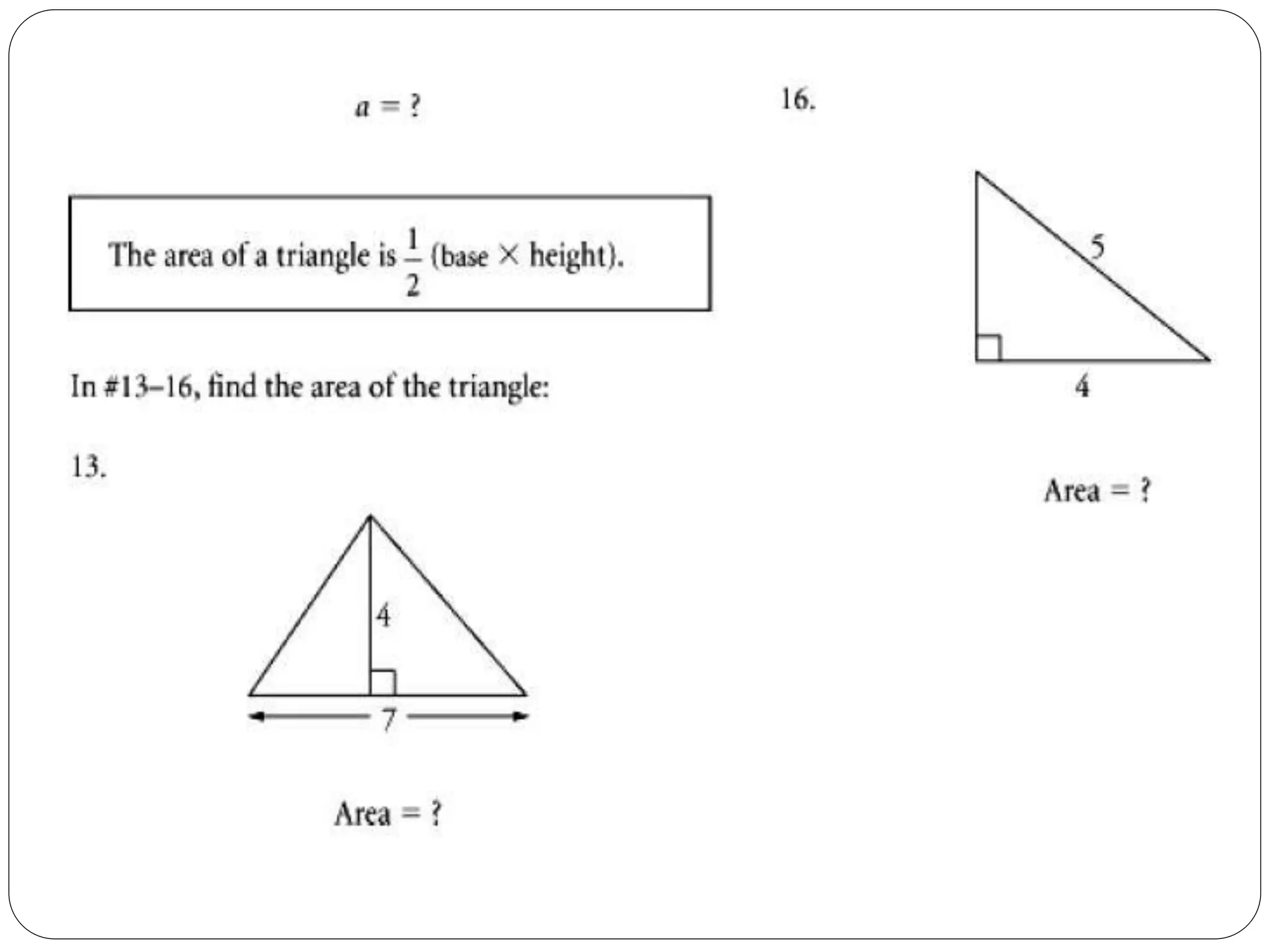
Triangles Exercise
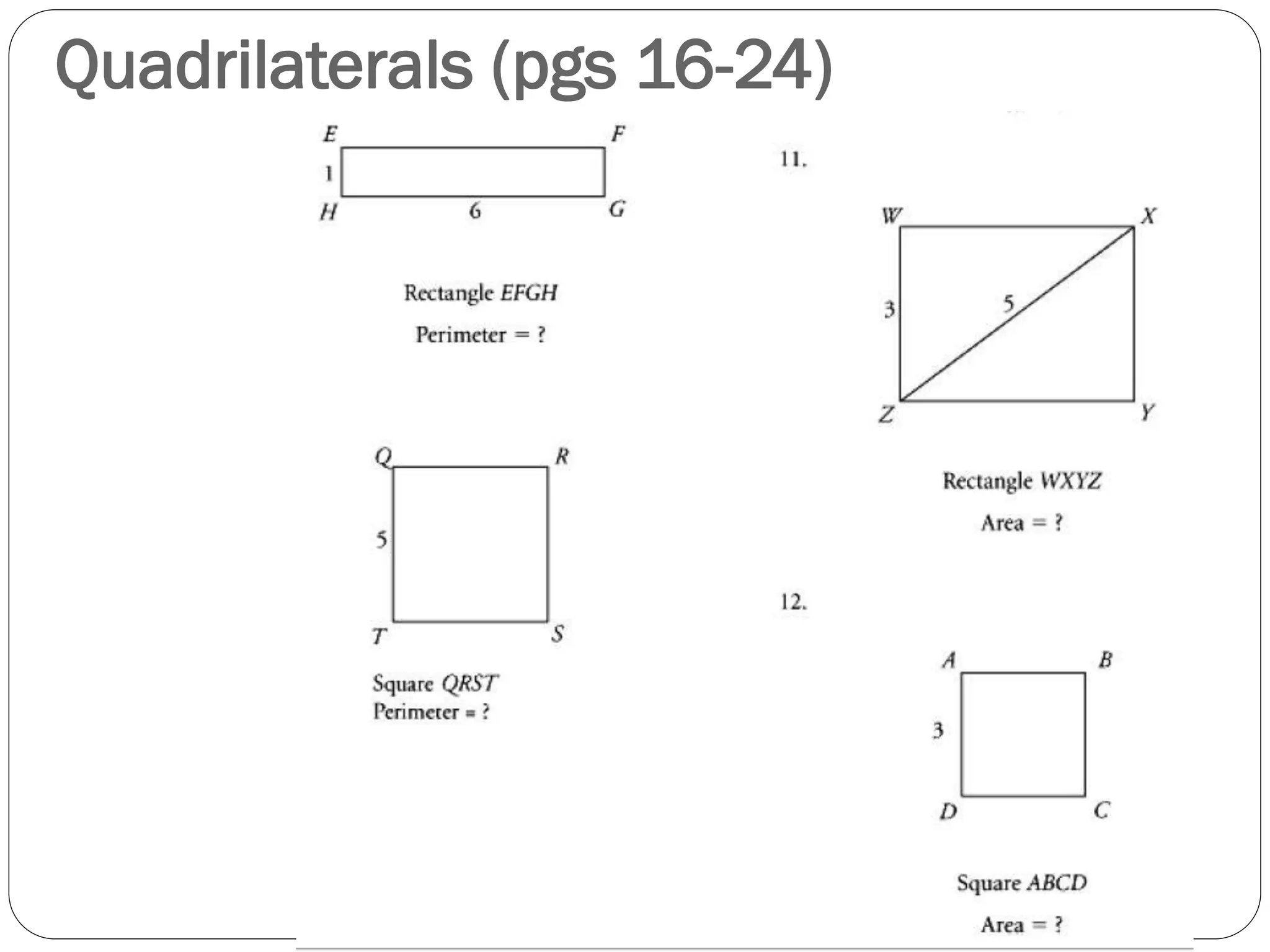
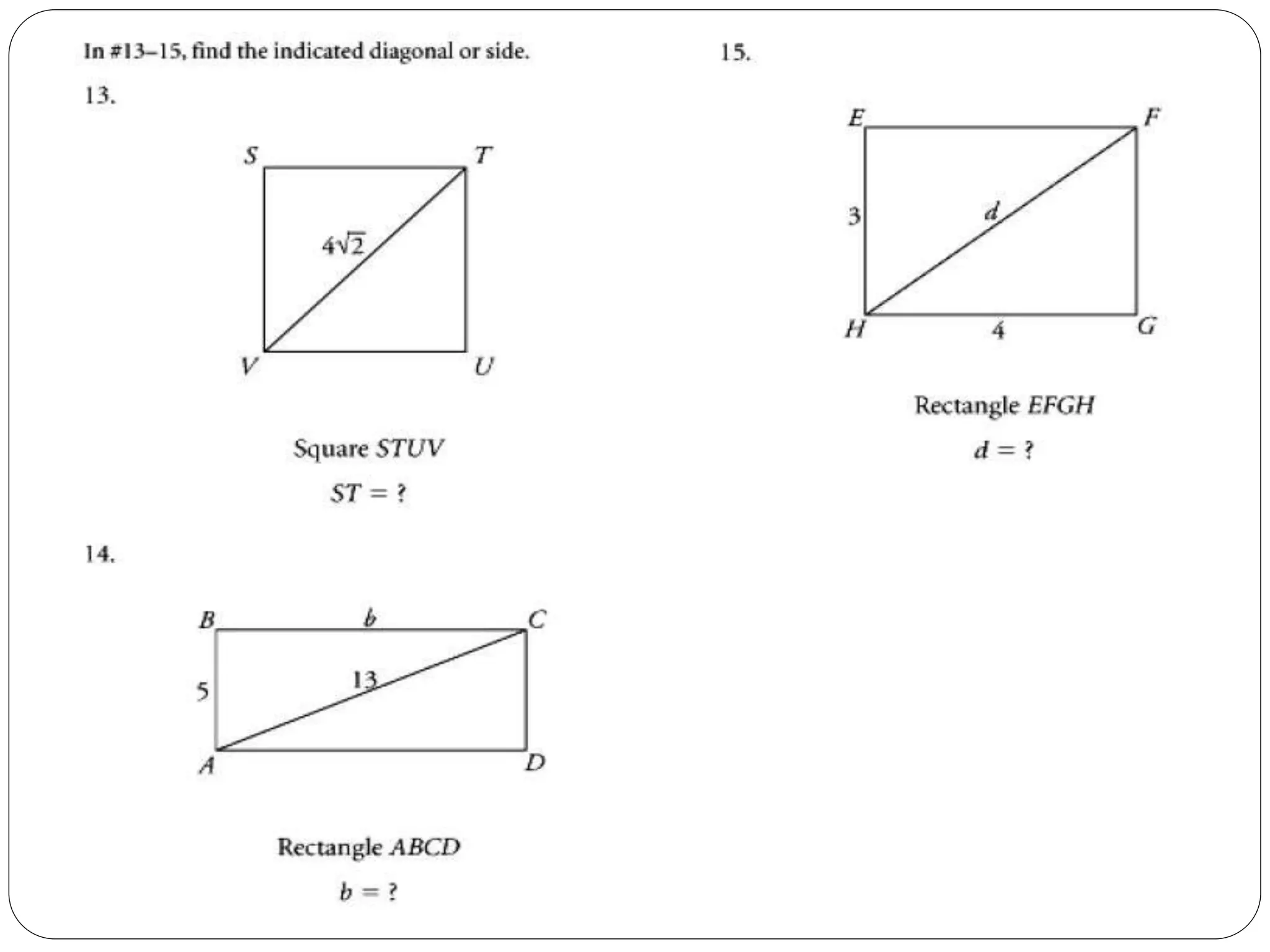
Quadrilaterals (pgs 16-24)
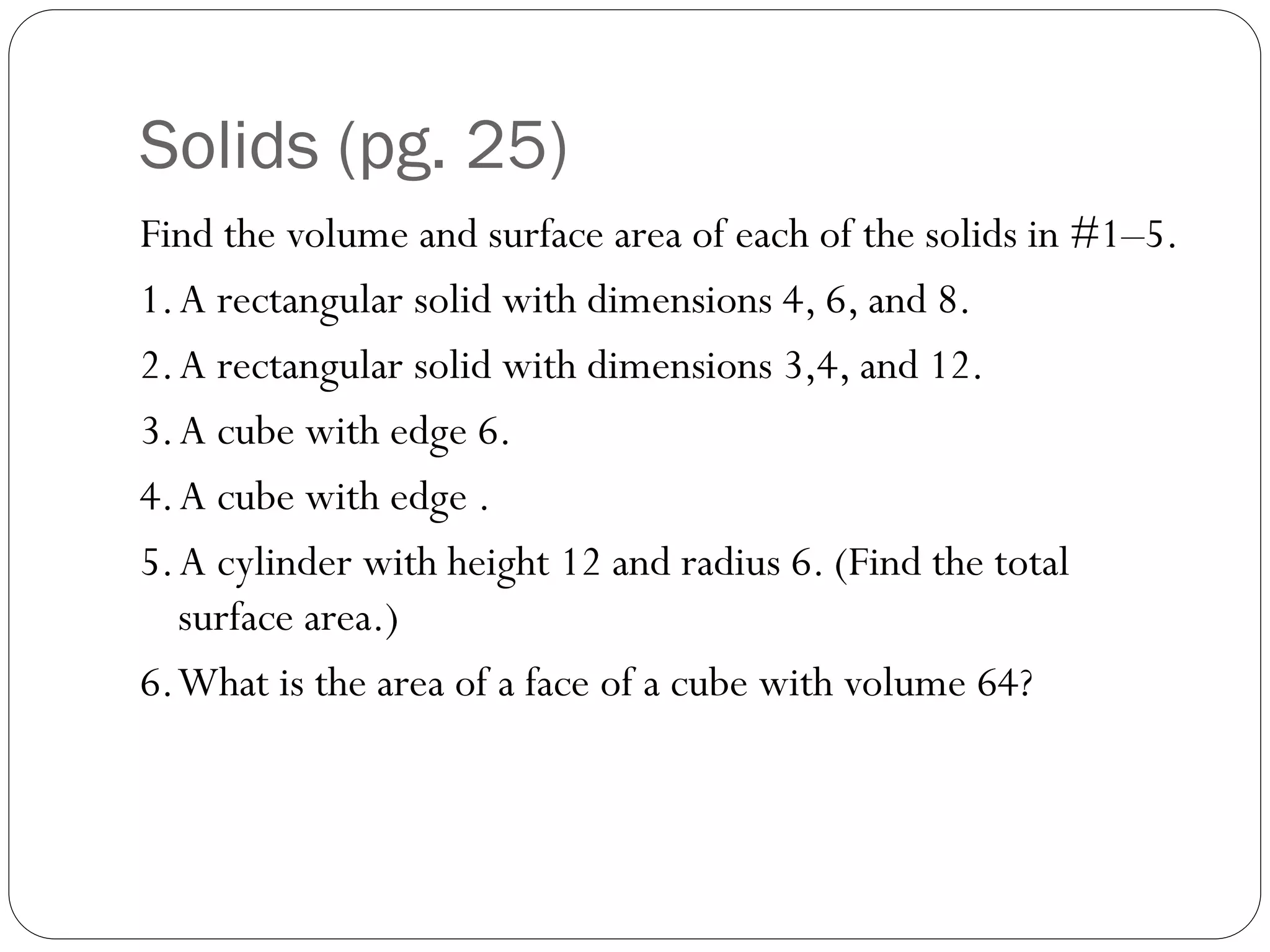
Solids (pg. 25)
Find the volume and surface area of each of the solids in #1–5.
1.A rectangular solid with dimensions 4, 6, and 8.
2.A rectangular solid with dimensions 3,4, and 12.
3.A cube with edge 6.
4.A cube with edge .
5.A cylinder with height 12 and radius 6. (Find the total
surface area.)
6.What is the area of a face of a cube with volume 64?

Math class 3 geometry part 1

  • 1.
  • 2.
    Review on algebra: 3 Identities  Linear Equation General Form / Slope  Quadratic Equations and Formula for roots  Modulus  Exponents  Inequalities  Functions
  • 3.
    Today’s Agenda: Geometry Co-ordinate Geometry / Functions 18  Advanced Functions - Graphing (Plus) 20  Circles (16 items) 2  Lines andAngles (23 items) 5  Triangle Area/Perim/Pythag (11 items) 11  Third Side Rule/Angle Side Rule (6 items)13  SimilarTriangles (5 items) 15  Rectangle Area/Perimeter 16  Polygons (5 items) 24  Solids (13 items) 25
  • 4.
  • 5.
    Coordinate Geometry (Pg20)  Modulus
  • 6.
  • 7.
    Shape of rootfunction
  • 8.
    How Functions shift Ingeneral, for any function h(x) and any positive number c,the following are true.  The graph of h(x+c) is the graph of h(x) shifted to the left by c units.  The graph of h(x−c) is the graph of h(x) shifted to the right by c units. The graph of h(x)+c is the graph of h(x) shifted upward by c units. The graph of h(x)−c is the graph of h(x) shifted downward by c units. The graph of ch(x) is the graph of h(x) stretched vertically by a factor of c if c>1. The graph of ch(x) is the graph of h(x) shrunk vertically by a factor of c if 0<c<1.
  • 9.
    Circles advanced The graphof an equation of the form (x−a)2+(y−b)2 = r2 is a circle with its center at the point (a,b) and with radius r.
  • 10.
  • 11.
    Circles Exercises 1. Whatis the area of a circle with radius 8? 2. What is the area of a circle with diameter 12? 3. What is the area of a circle with radius 4. What is the area of a circle with circumference 8π? 5. What is the diameter of a circle with area 49π? 6. What is the circumference of a circle with area 18π?
  • 12.
  • 13.
  • 14.
  • 15.
  • 17.
  • 20.
    Triangle (pgs 11-15) Sides and angles:The length of any side of a triangle is less than the sum of the lengths of the other two sides, and greater than the positive difference of the lengths of the other two sides.  If the lengths of two sides of a triangle are unequal, the greater angle lies opposite the longer side and vice versa. In the figure above, if ∠A > ∠B > ∠ C, then a > b > c.
  • 21.
    Pythagoras theorem andspecial triangles
  • 22.
  • 27.
  • 29.
    Solids (pg. 25) Findthe volume and surface area of each of the solids in #1–5. 1.A rectangular solid with dimensions 4, 6, and 8. 2.A rectangular solid with dimensions 3,4, and 12. 3.A cube with edge 6. 4.A cube with edge . 5.A cylinder with height 12 and radius 6. (Find the total surface area.) 6.What is the area of a face of a cube with volume 64?