Pertemuan 9
Selasa, 20 November 2012
INTANGIBLE ASSETS
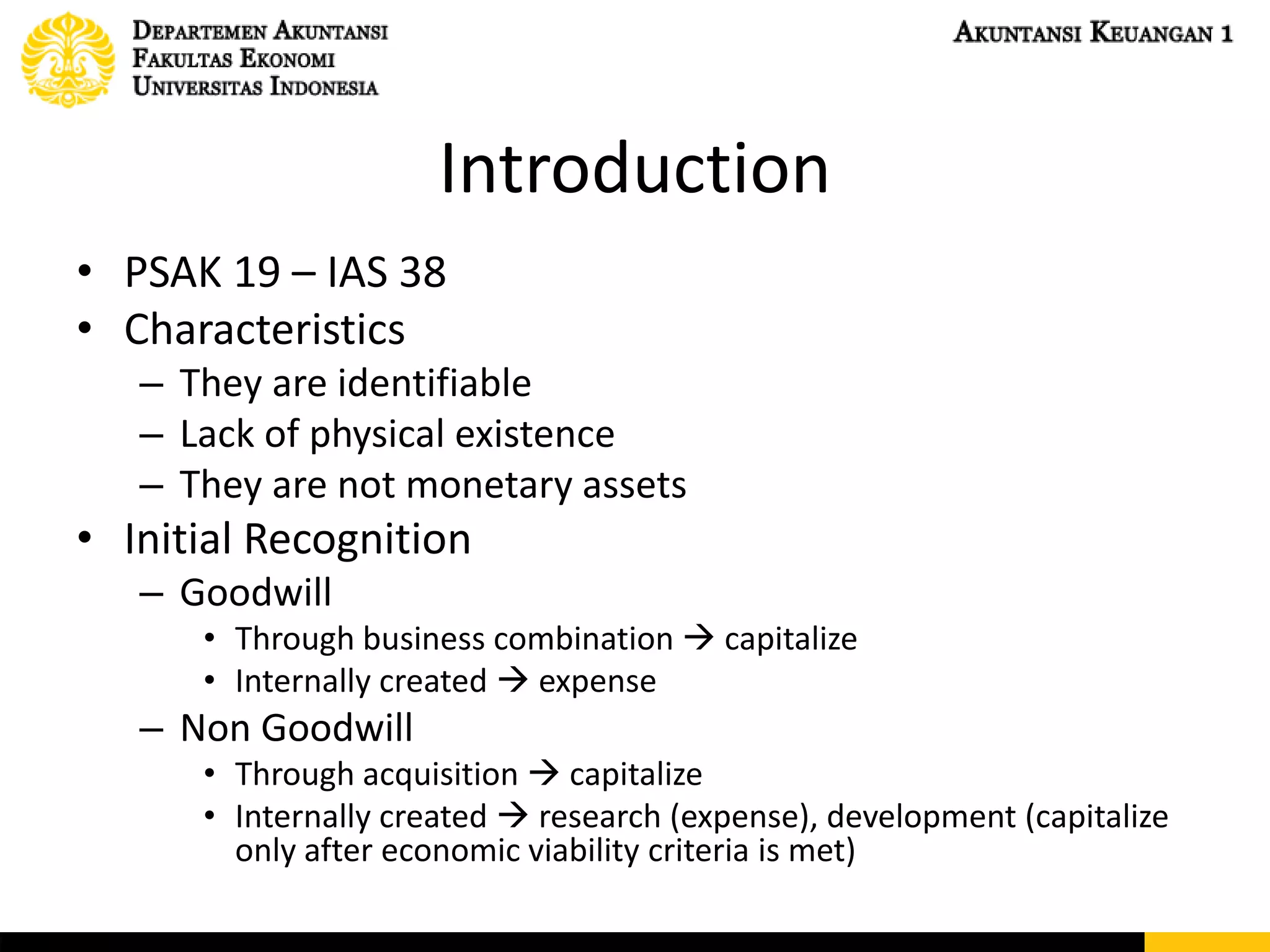
Introduction
• PSAK 19 – IAS 38
• Characteristics
– They are identifiable
– Lack of physical existence
– They are not monetary assets
• Initial Recognition
– Goodwill
• Through business combination  capitalize
• Internally created  expense
– Non Goodwill
• Through acquisition  capitalize
• Internally created  research (expense), development (capitalize
only after economic viability criteria is met)
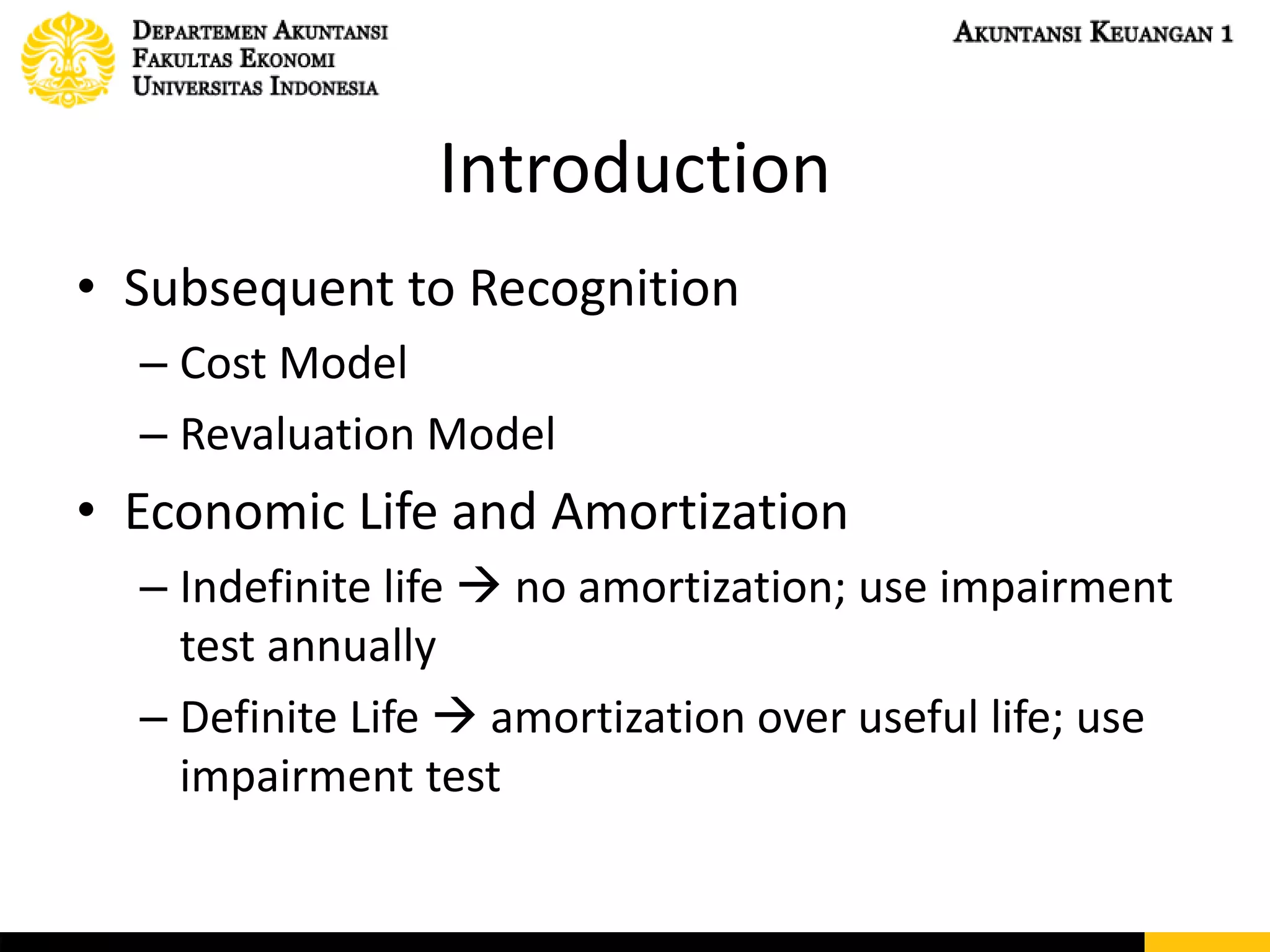
Introduction
• Subsequent to Recognition
– Cost Model
– Revaluation Model
• Economic Life and Amortization
– Indefinite life  no amortization; use impairment
test annually
– Definite Life  amortization over useful life; use
impairment test
Introduction
• Types of Intangible Assets
– Marketing Related
– Customer Related
– Artistic Related
– Contract Related
– Technology Related
– Goodwill
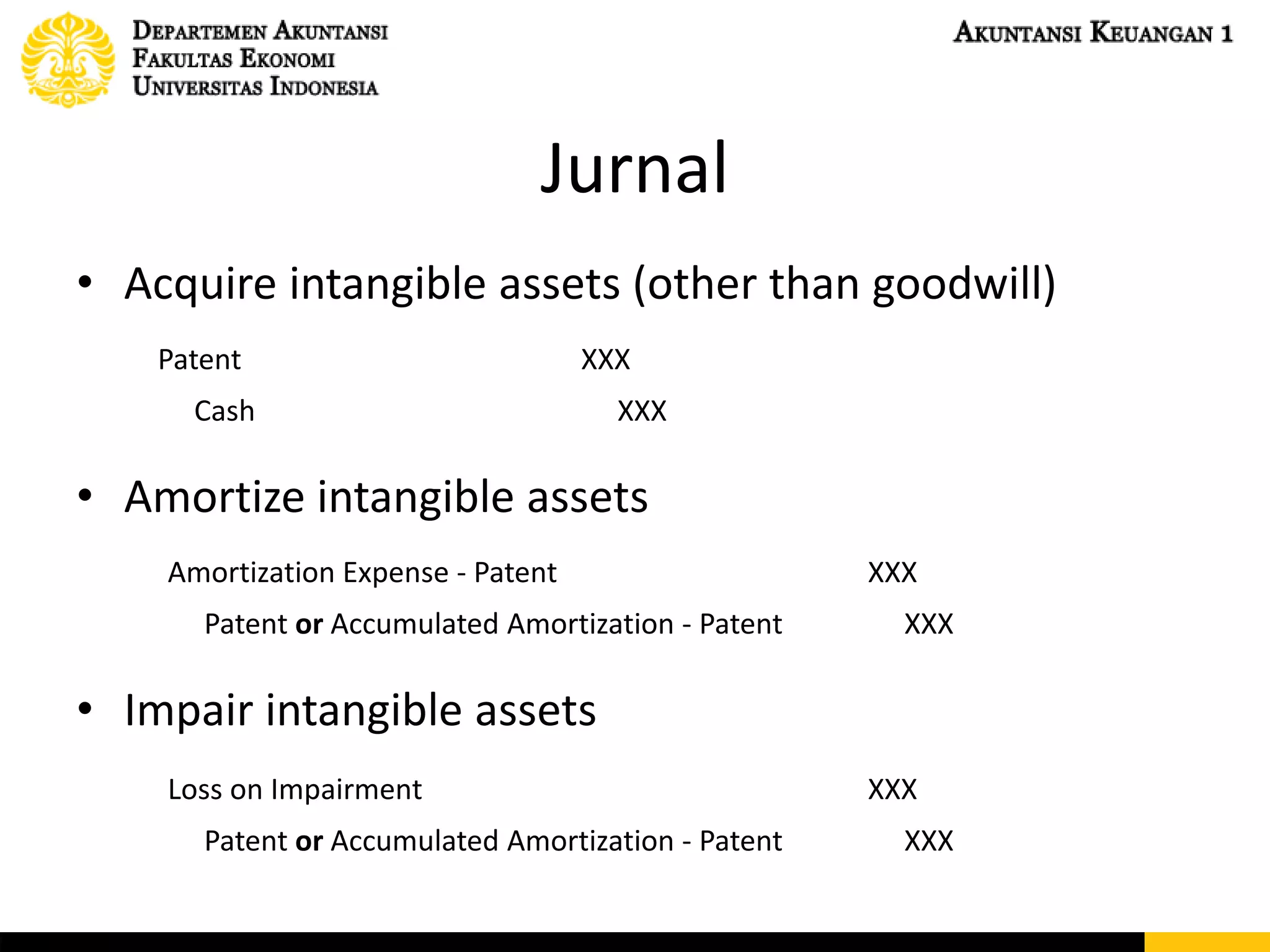
Jurnal
• Acquire intangible assets (other than goodwill)
• Amortize intangible assets
• Impair intangible assets
Patent XXX
Cash XXX
Amortization Expense - Patent XXX
Patent or Accumulated Amortization - Patent XXX
Loss on Impairment XXX
Patent or Accumulated Amortization - Patent XXX
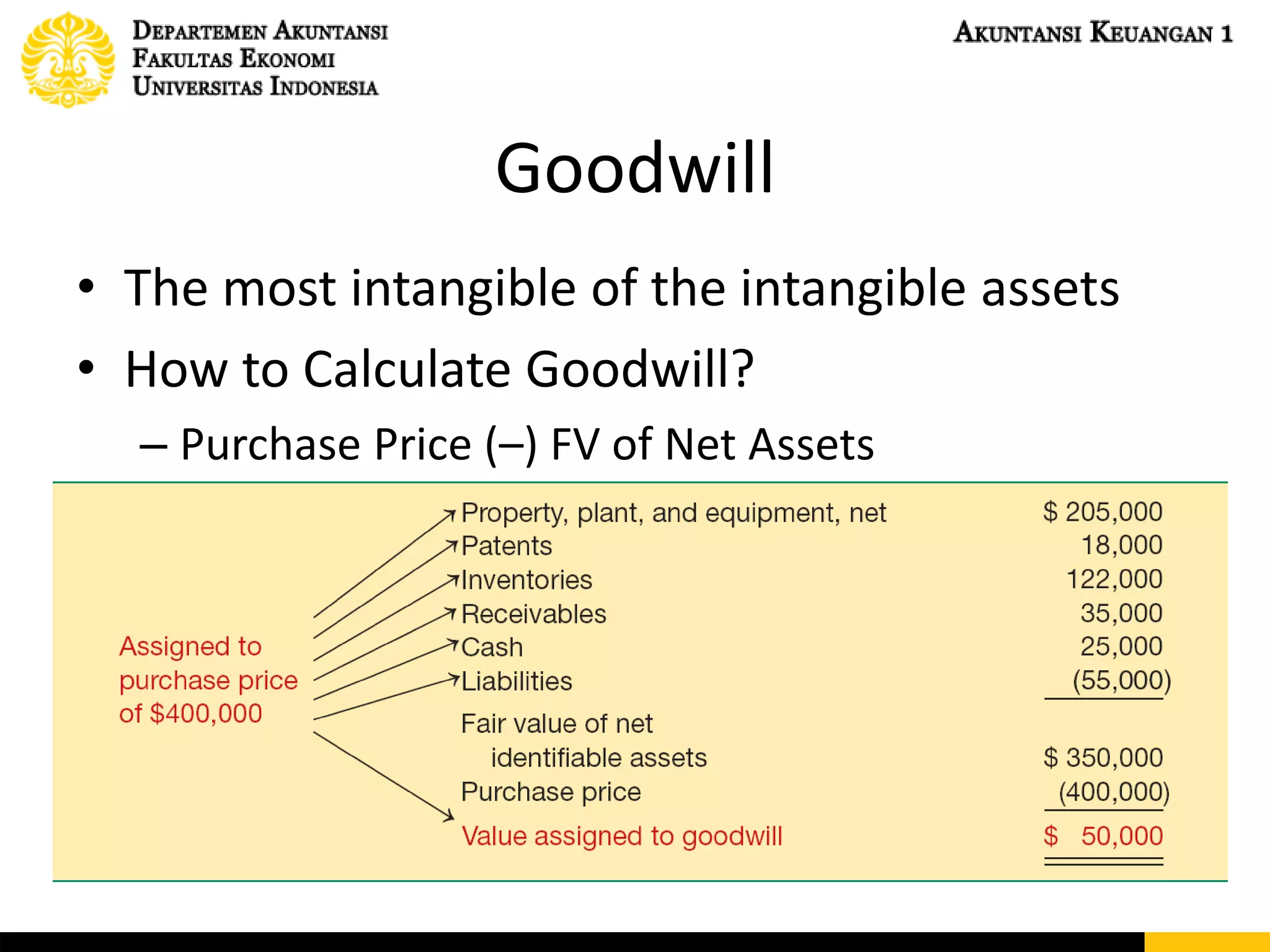
Goodwill
• The most intangible of the intangible assets
• How to Calculate Goodwill?
– Purchase Price (–) FV of Net Assets
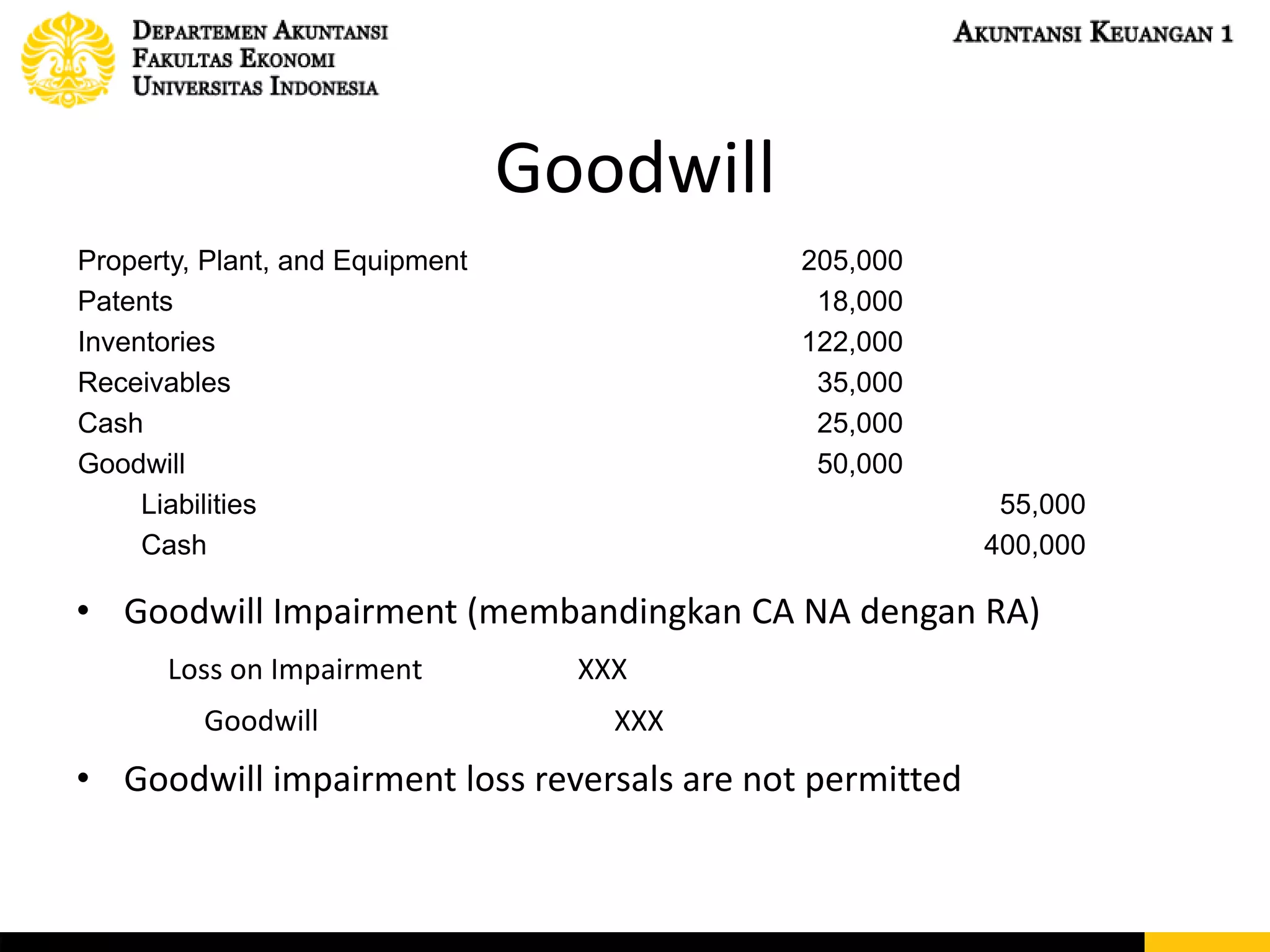
Goodwill
• Goodwill Impairment (membandingkan CA NA dengan RA)
• Goodwill impairment loss reversals are not permitted
Property, Plant, and Equipment 205,000
Patents 18,000
Inventories 122,000
Receivables 35,000
Cash 25,000
Goodwill 50,000
Liabilities 55,000
Cash 400,000
Loss on Impairment XXX
Goodwill XXX
Economic Viability
• The project achieves technical feasibility of
completing the intangible assets so that it will
be available for use or sale
• Company intends, and has the ability, to
complete the intangible assets and use or sell
it
• Intangible assets will generate probable future
economic benefit
Economic Viability
• The company has adequate technical, financial
and other resources to complete the
development of the intangible assets
• The company can measure reliably the
development costs associated with the
intangible assets to be developed

Intangible Assets

  • 1.
  • 2.
  • 3.
    Introduction • PSAK 19– IAS 38 • Characteristics – They are identifiable – Lack of physical existence – They are not monetary assets • Initial Recognition – Goodwill • Through business combination  capitalize • Internally created  expense – Non Goodwill • Through acquisition  capitalize • Internally created  research (expense), development (capitalize only after economic viability criteria is met)
  • 4.
    Introduction • Subsequent toRecognition – Cost Model – Revaluation Model • Economic Life and Amortization – Indefinite life  no amortization; use impairment test annually – Definite Life  amortization over useful life; use impairment test
  • 5.
    Introduction • Types ofIntangible Assets – Marketing Related – Customer Related – Artistic Related – Contract Related – Technology Related – Goodwill
  • 6.
    Jurnal • Acquire intangibleassets (other than goodwill) • Amortize intangible assets • Impair intangible assets Patent XXX Cash XXX Amortization Expense - Patent XXX Patent or Accumulated Amortization - Patent XXX Loss on Impairment XXX Patent or Accumulated Amortization - Patent XXX
  • 7.
    Goodwill • The mostintangible of the intangible assets • How to Calculate Goodwill? – Purchase Price (–) FV of Net Assets
  • 8.
    Goodwill • Goodwill Impairment(membandingkan CA NA dengan RA) • Goodwill impairment loss reversals are not permitted Property, Plant, and Equipment 205,000 Patents 18,000 Inventories 122,000 Receivables 35,000 Cash 25,000 Goodwill 50,000 Liabilities 55,000 Cash 400,000 Loss on Impairment XXX Goodwill XXX
  • 9.
    Economic Viability • Theproject achieves technical feasibility of completing the intangible assets so that it will be available for use or sale • Company intends, and has the ability, to complete the intangible assets and use or sell it • Intangible assets will generate probable future economic benefit
  • 10.
    Economic Viability • Thecompany has adequate technical, financial and other resources to complete the development of the intangible assets • The company can measure reliably the development costs associated with the intangible assets to be developed