Classification of Eumycota
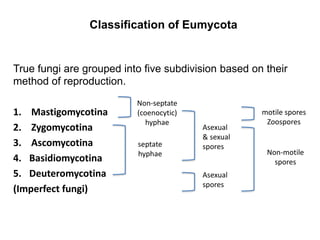
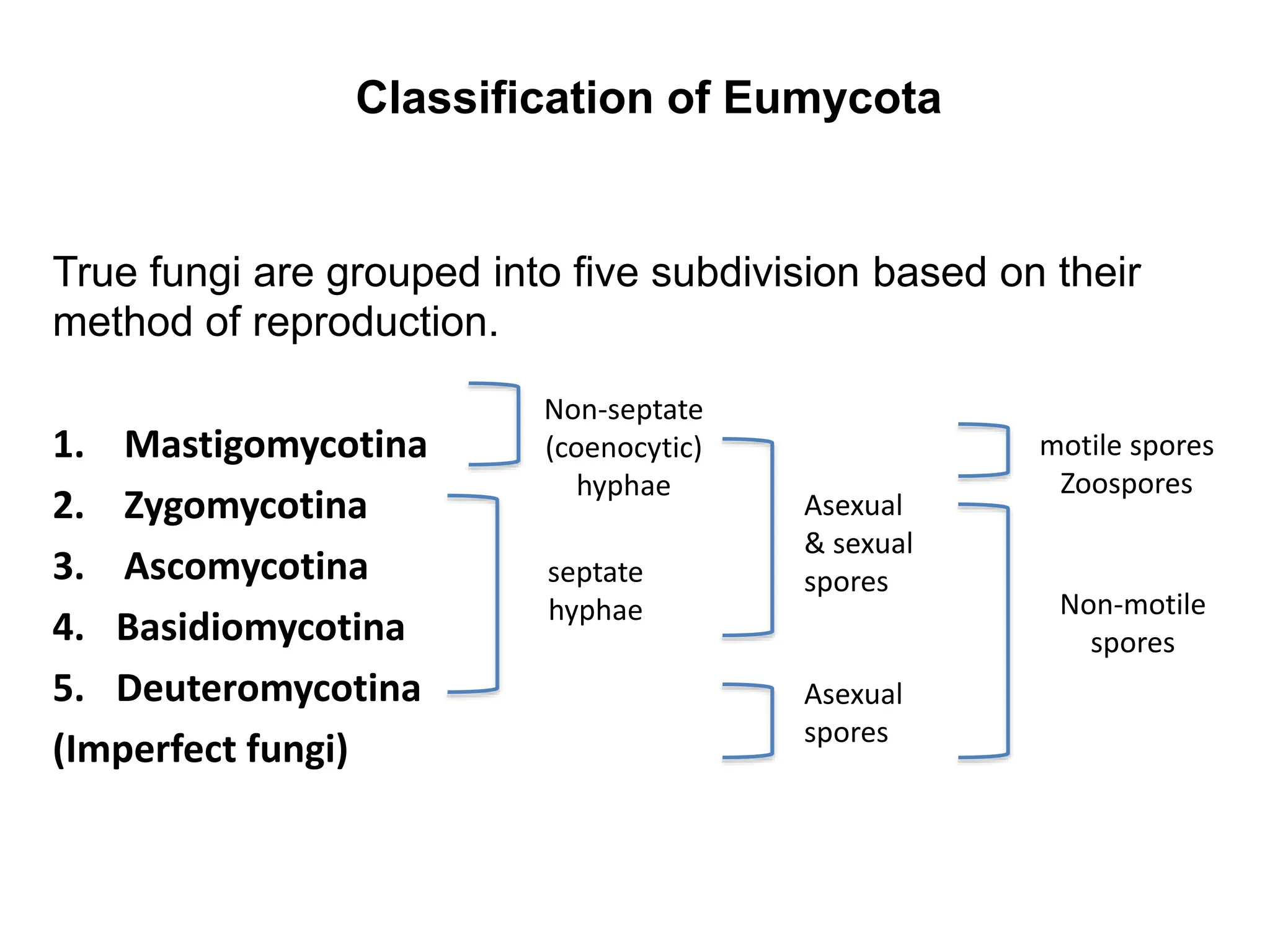
True fungi are grouped into five subdivision based on their
method of reproduction.
1. Mastigomycotina
2. Zygomycotina
3. Ascomycotina
4. Basidiomycotina
5. Deuteromycotina
(Imperfect fungi)
Asexual
& sexual
spores
Non-motile
spores
motile spores
Zoospores
Asexual
spores
septate
hyphae
Non-septate
(coenocytic)
hyphae
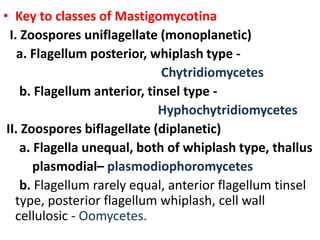
• Key to classes of Mastigomycotina
I. Zoospores uniflagellate (monoplanetic)
a. Flagellum posterior, whiplash type -
Chytridiomycetes
b. Flagellum anterior, tinsel type -
Hyphochytridiomycetes
II. Zoospores biflagellate (diplanetic)
a. Flagella unequal, both of whiplash type, thallus
plasmodial– plasmodiophoromycetes
b. Flagellum rarely equal, anterior flagellum tinsel
type, posterior flagellum whiplash, cell wall
cellulosic - Oomycetes.
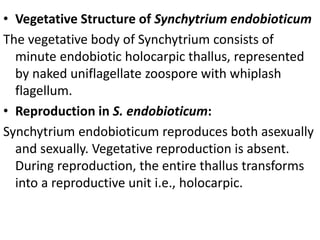
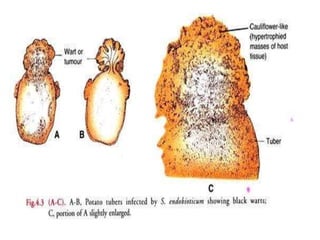
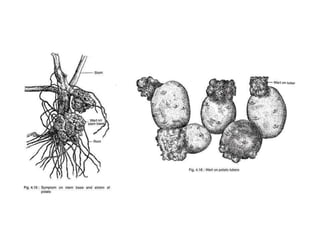
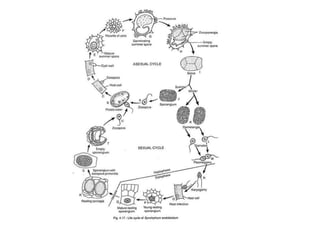
• Vegetative Structure of Synchytrium endobioticum
The vegetative body of Synchytrium consists of
minute endobiotic holocarpic thallus, represented
by naked uniflagellate zoospore with whiplash
flagellum.
• Reproduction in S. endobioticum:
Synchytrium endobioticum reproduces both asexually
and sexually. Vegetative reproduction is absent.
During reproduction, the entire thallus transforms
into a reproductive unit i.e., holocarpic.
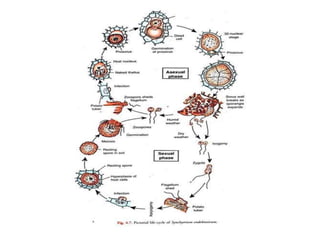
• Asexual Reproduction:
• Asexual reproduction generally occurs during
favourable condition, i.e., in spring season. minute
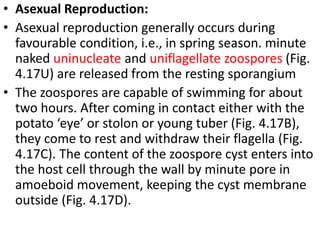
naked uninucleate and uniflagellate zoospores (Fig.
4.17U) are released from the resting sporangium
• The zoospores are capable of swimming for about
two hours. After coming in contact either with the
potato ‘eye’ or stolon or young tuber (Fig. 4.17B),
they come to rest and withdraw their flagella (Fig.
4.17C). The content of the zoospore cyst enters into
the host cell through the wall by minute pore in
amoeboid movement, keeping the cyst membrane
outside (Fig. 4.17D).
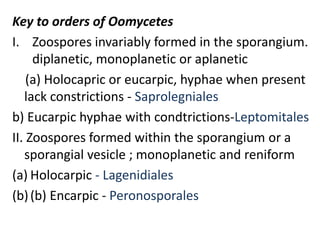
Key to orders of Oomycetes
I. Zoospores invariably formed in the sporangium.
diplanetic, monoplanetic or aplanetic
(a) Holocapric or eucarpic, hyphae when present
lack constrictions - Saprolegniales
b) Eucarpic hyphae with condtrictions-Leptomitales
II. Zoospores formed within the sporangium or a
sporangial vesicle ; monoplanetic and reniform
(a) Holocarpic - Lagenidiales
(b)(b) Encarpic - Peronosporales
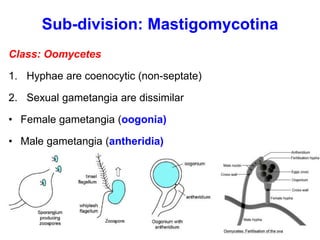
Sub-division: Mastigomycotina
Class: Oomycetes
1. Hyphae are coenocytic (non-septate)
2. Sexual gametangia are dissimilar
• Female gametangia (oogonia)
• Male gametangia (antheridia)
Class : Oomycetes
General characteristics
They range form unicellular, holocarpic, endobiotic parasite having well
developed mycelium
They produce laterally biflagellate, reniform zoospore
They contain cellulose in their cell wall
They show oogamous type of sexual reproduction usually involving a club
shaped antheridium and globose oogonium containing one or more non mobile
female gametes called oosphere or egg. The male gametes fuse with female
gamete or egg resulting in thick walled zygote called oospore.
Orders of Oomycetes
• I. Zoospores invariably formed in the sporan
• Saprolegniales
• Euic hyphae with constrictionstomitales
• (a) Holocarpic - Lagenidiales (b) Encarpic - Peronosporales
– es are the most primitive among the Oomycetes, while the Peronosporales are the most
advanced. orales
• General characteristics : - They are more
• 24
• - The intercel
• order is divided into three families on the characteristics of sporangiophore and
sporangia
• 1) Pythiaceae Albuginaceae
• 3) Peronosporaceae
• Pythiaceae
• lular hyphae of parasitic genera form haustoria which enter host cells and absorb
nutrients The 2) Family : The fam n Pythium and Gen This -rot and “damping off”
di fruits (prominent g usually on the ground). The m ustoria are produced in
some species. The hyphae which bear the sporangia are m in most species. In
some species, however definite sporangiophores are formed. Life cycle of host
tissu n in t ti H re rod e ova unspecialized hyphae (Fig. 17).
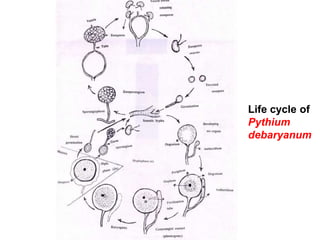
Life cycle of
Pythium
debaryanum
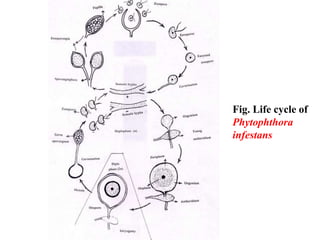
Fig. Life cycle of
Phytophthora
infestans
Zygomycotina
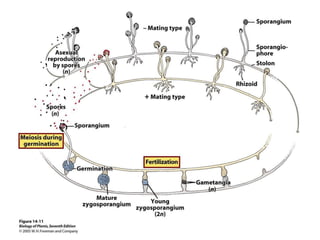
1. Hyphae are coenocytic (non-septate).
2. The hyphae are filled or lined with continuous multinucleated
protoplasm.
3. This includes both parasitic and saprophytic species.
3. Sexual gametangia are similar
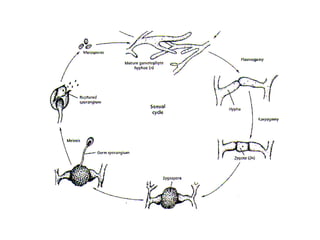
4. Sexual reproduction is by conjugation (fusing) hyphae from two
different strains, followed by plasmogamy, karyogamy, meiosis
and then the production of Zygospores.
5. For example: Rhizopus
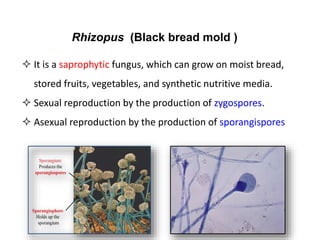
Rhizopus (Black bread mold )
 It is a saprophytic fungus, which can grow on moist bread,
stored fruits, vegetables, and synthetic nutritive media.
 Sexual reproduction by the production of zygospores.
 Asexual reproduction by the production of sporangispores
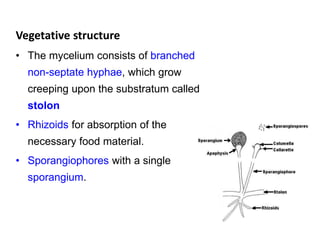
Vegetative structure
• The mycelium consists of branched
non-septate hyphae, which grow
creeping upon the substratum called
stolon
• Rhizoids for absorption of the
necessary food material.
• Sporangiophores with a single
sporangium.
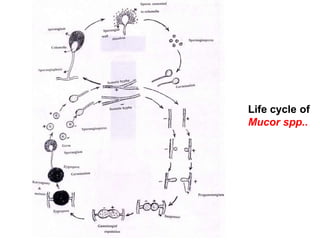
Life cycle of
Mucor spp..

Mastigomycotina-handout.pptx

  • 1.
    Classification of Eumycota Truefungi are grouped into five subdivision based on their method of reproduction. 1. Mastigomycotina 2. Zygomycotina 3. Ascomycotina 4. Basidiomycotina 5. Deuteromycotina (Imperfect fungi) Asexual & sexual spores Non-motile spores motile spores Zoospores Asexual spores septate hyphae Non-septate (coenocytic) hyphae
  • 2.
    • Key toclasses of Mastigomycotina I. Zoospores uniflagellate (monoplanetic) a. Flagellum posterior, whiplash type - Chytridiomycetes b. Flagellum anterior, tinsel type - Hyphochytridiomycetes II. Zoospores biflagellate (diplanetic) a. Flagella unequal, both of whiplash type, thallus plasmodial– plasmodiophoromycetes b. Flagellum rarely equal, anterior flagellum tinsel type, posterior flagellum whiplash, cell wall cellulosic - Oomycetes.
  • 3.
    • Vegetative Structureof Synchytrium endobioticum The vegetative body of Synchytrium consists of minute endobiotic holocarpic thallus, represented by naked uniflagellate zoospore with whiplash flagellum. • Reproduction in S. endobioticum: Synchytrium endobioticum reproduces both asexually and sexually. Vegetative reproduction is absent. During reproduction, the entire thallus transforms into a reproductive unit i.e., holocarpic.
  • 4.
    • Asexual Reproduction: •Asexual reproduction generally occurs during favourable condition, i.e., in spring season. minute naked uninucleate and uniflagellate zoospores (Fig. 4.17U) are released from the resting sporangium • The zoospores are capable of swimming for about two hours. After coming in contact either with the potato ‘eye’ or stolon or young tuber (Fig. 4.17B), they come to rest and withdraw their flagella (Fig. 4.17C). The content of the zoospore cyst enters into the host cell through the wall by minute pore in amoeboid movement, keeping the cyst membrane outside (Fig. 4.17D).
  • 9.
    Key to ordersof Oomycetes I. Zoospores invariably formed in the sporangium. diplanetic, monoplanetic or aplanetic (a) Holocapric or eucarpic, hyphae when present lack constrictions - Saprolegniales b) Eucarpic hyphae with condtrictions-Leptomitales II. Zoospores formed within the sporangium or a sporangial vesicle ; monoplanetic and reniform (a) Holocarpic - Lagenidiales (b)(b) Encarpic - Peronosporales
  • 10.
    Sub-division: Mastigomycotina Class: Oomycetes 1.Hyphae are coenocytic (non-septate) 2. Sexual gametangia are dissimilar • Female gametangia (oogonia) • Male gametangia (antheridia)
  • 11.
    Class : Oomycetes Generalcharacteristics They range form unicellular, holocarpic, endobiotic parasite having well developed mycelium They produce laterally biflagellate, reniform zoospore They contain cellulose in their cell wall They show oogamous type of sexual reproduction usually involving a club shaped antheridium and globose oogonium containing one or more non mobile female gametes called oosphere or egg. The male gametes fuse with female gamete or egg resulting in thick walled zygote called oospore.
  • 12.
    Orders of Oomycetes •I. Zoospores invariably formed in the sporan • Saprolegniales • Euic hyphae with constrictionstomitales • (a) Holocarpic - Lagenidiales (b) Encarpic - Peronosporales – es are the most primitive among the Oomycetes, while the Peronosporales are the most advanced. orales • General characteristics : - They are more • 24 • - The intercel • order is divided into three families on the characteristics of sporangiophore and sporangia • 1) Pythiaceae Albuginaceae • 3) Peronosporaceae • Pythiaceae • lular hyphae of parasitic genera form haustoria which enter host cells and absorb nutrients The 2) Family : The fam n Pythium and Gen This -rot and “damping off” di fruits (prominent g usually on the ground). The m ustoria are produced in some species. The hyphae which bear the sporangia are m in most species. In some species, however definite sporangiophores are formed. Life cycle of host tissu n in t ti H re rod e ova unspecialized hyphae (Fig. 17).
  • 13.
  • 14.
    Fig. Life cycleof Phytophthora infestans
  • 15.
    Zygomycotina 1. Hyphae arecoenocytic (non-septate). 2. The hyphae are filled or lined with continuous multinucleated protoplasm. 3. This includes both parasitic and saprophytic species. 3. Sexual gametangia are similar 4. Sexual reproduction is by conjugation (fusing) hyphae from two different strains, followed by plasmogamy, karyogamy, meiosis and then the production of Zygospores. 5. For example: Rhizopus
  • 18.
    Rhizopus (Black breadmold )  It is a saprophytic fungus, which can grow on moist bread, stored fruits, vegetables, and synthetic nutritive media.  Sexual reproduction by the production of zygospores.  Asexual reproduction by the production of sporangispores
  • 19.
    Vegetative structure • Themycelium consists of branched non-septate hyphae, which grow creeping upon the substratum called stolon • Rhizoids for absorption of the necessary food material. • Sporangiophores with a single sporangium.
  • 20.