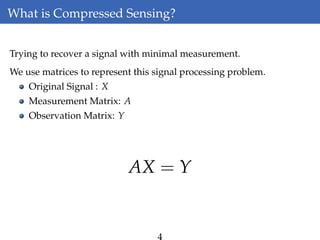
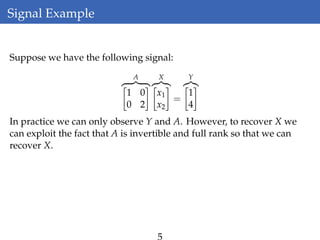
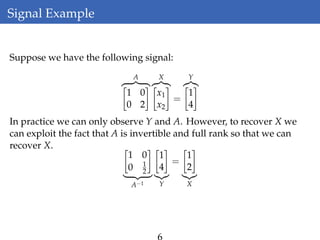
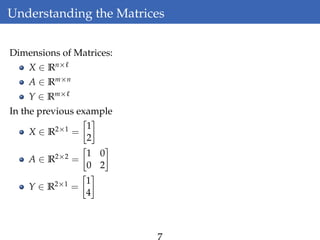
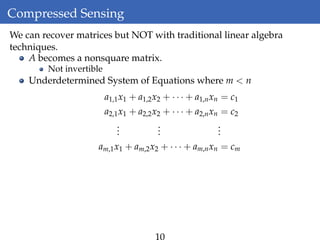
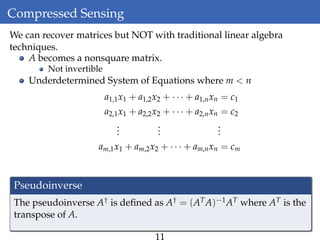
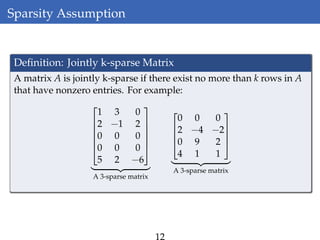
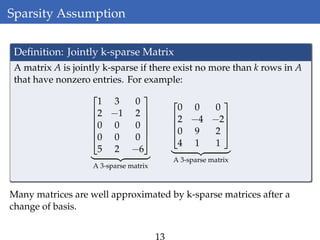
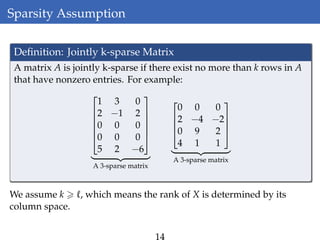
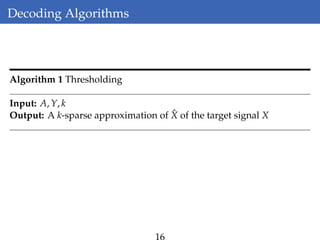
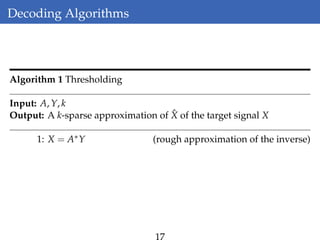
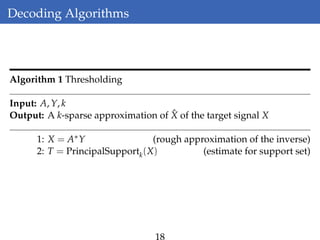
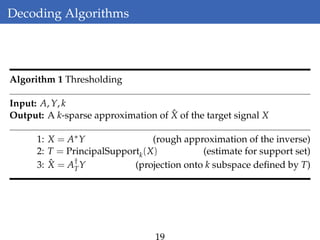
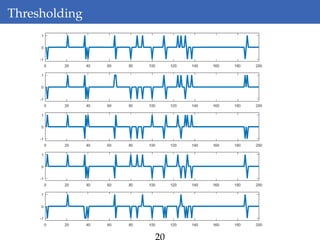
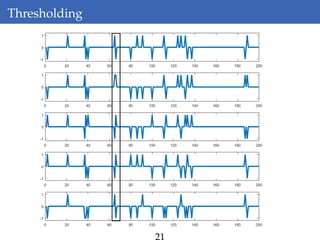
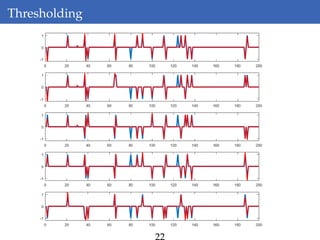
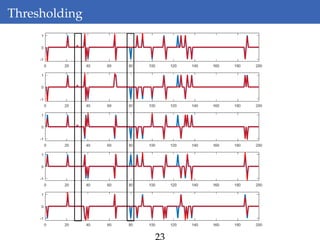
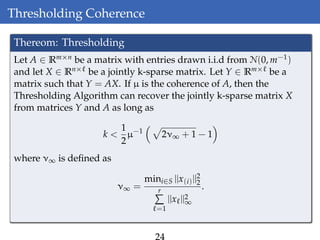
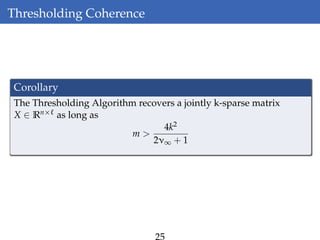
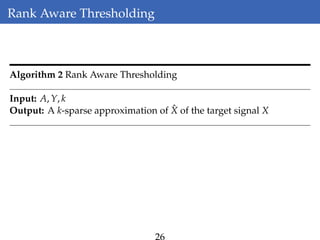
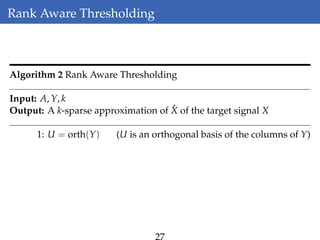
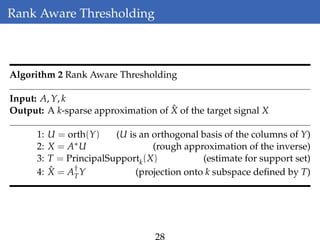
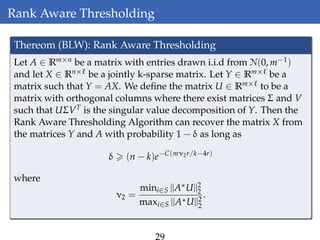
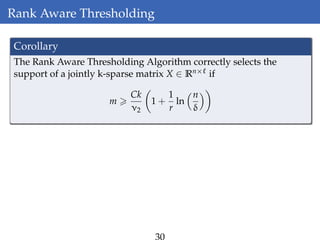
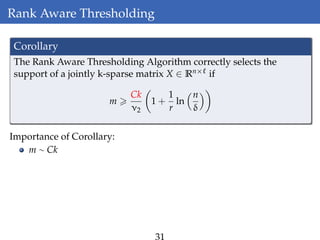
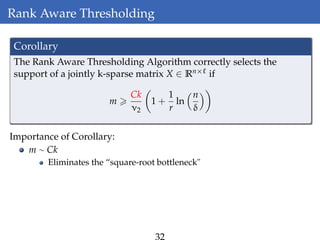
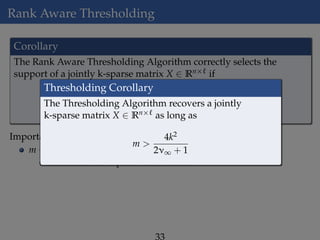
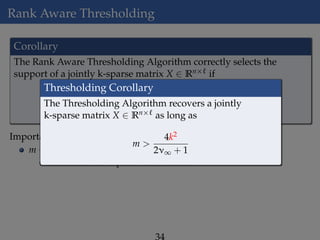
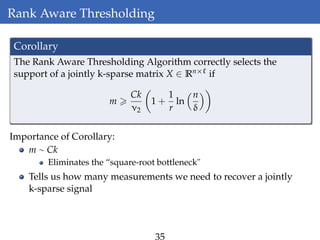
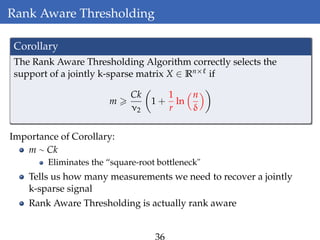
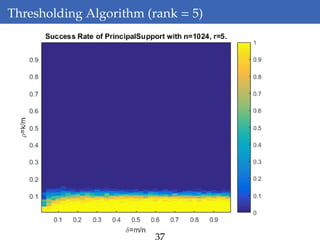
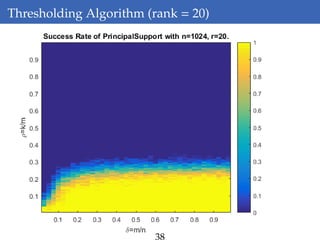
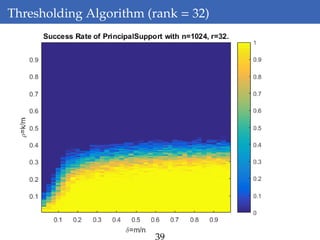
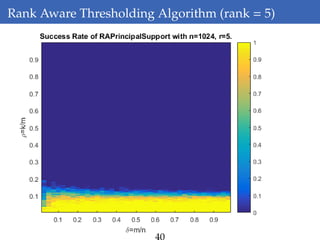
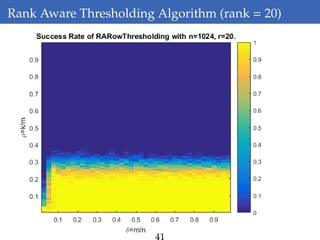
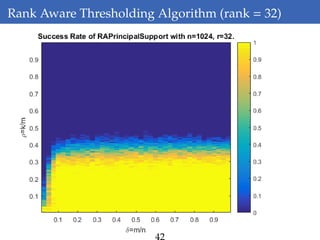
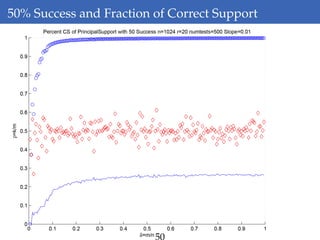
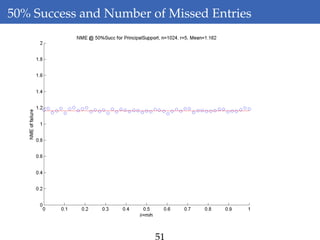
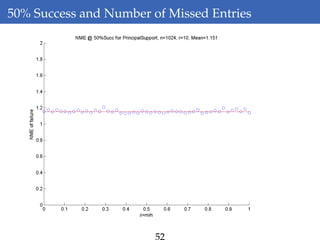
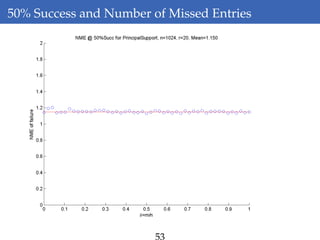
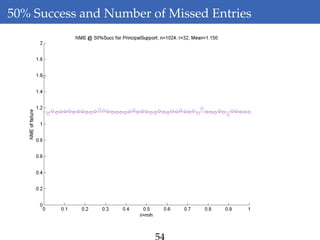
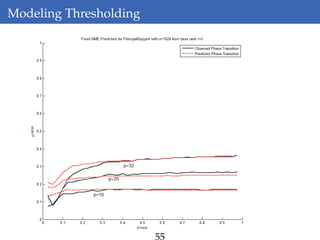
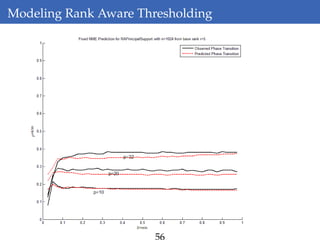
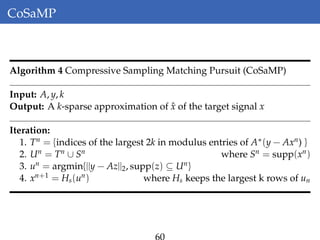
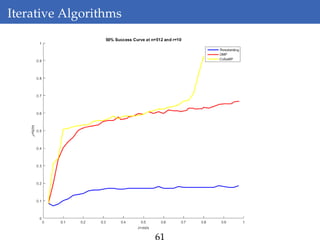
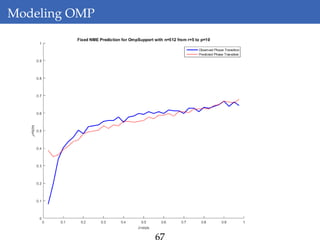
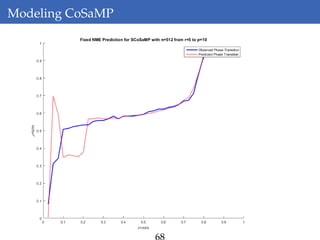
This document discusses rank-aware thresholding algorithms for compressed sensing. It begins by introducing compressed sensing and explaining how traditional linear algebra techniques cannot be used to recover sparse signals from undersampled measurements. It then describes how thresholding and rank-aware thresholding algorithms work by exploiting the sparsity of signals. The key points are that rank-aware thresholding outperforms standard thresholding by eliminating the "square-root bottleneck" and requires only O(k) measurements, versus O(k^2) for thresholding. Simulation results demonstrate this improvement. The document concludes by discussing modeling techniques to predict algorithm performance on very large problems that are impractical to simulate directly.