MARKETING
 PLANNING
Sohaib Rabbani Khan
      MS (Marketing),
      PhD (In progress)
 sohaibrabbani@yahoo.com
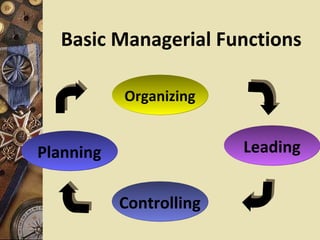
Basic Managerial Functions

           Organizing


Planning                 Leading


           Controlling
Well Plan is half done

Planning is a mental predisposition to
  do things in an orderly way, to think
  before acting and to act in the light
  of facts rather than guesses.
  Planning is deciding best alternatives
  among others to perform different
  managerial functions in order to
  achieve predetermined goals.
  (Urwick)
According to Koontz and O’ Donnell,

“Planning is deciding in advance
what to do, how to do and who
 is to do it. Planning bridges the
 gap between where we are to,
 where we want to go. It makes
 possible things to occur, which
  would not otherwise occur.”
Planning
Planning involves tasks that must
  be performed to attain
  organizational goals, outlining
  how the tasks must be
  performed, and indicating when
  they should be performed.
Steps in planning function:
1.Establishment of objectives
2.Establishment of planning premises
3.Choice of alternative course of action
4.Formulation of derivative plans
5.Securing cooperation
6.Follow up / Appraisal of plans
Proper planning accomplishes the
  following
1.Managing uncertainty
2.Better focus
3.Improves coordination
4.Basis for control
5.Improves effectiveness
Type of Plans
Long term and short term plan
Formal and informal plans
Proactive and reactive plans
Strategic and operational plans
The Planning Process:
1. Goal setting: Identification and
  formulation of objective
2. Developing plans: Choice
  between alternative plans
3. Implementation: Execution of
  the plan
Successful planning process:
1. Everyone participates
2. Board and staff educated in
  planning
3. Board and staff explore new ideas
4. Board takes advantage of
  opportunities
5. Necessary resources available
Making planning effective
Linked to long term objectives
Consistency
Everyone participates
Feasible
Flexibility
Simple
Top management support
What is an objective?

“Objectives are goals,
aims or purposes that
organization wish over
varying periods of time “
Controlling
Controlling involves
monitoring actual
performance, comparing
actual to standards, and
taking actions if necessary.
MBO
 A method by which managers
and employees define objectives
 for every department, project
  and person, and use them to
      monitor subsequent
         performance
Five step MBO Process
1.Organizational objectives
reviewed
2. Employee objectives set
3.Progress monitored
4.Performance evaluated
5.Achievers rewarded
The nature and purpose of MBO
MBO is concerned with goal setting and
planning for individual managers and their units

The essence of MBO is a process of joint goal
setting between a supervisor and a subordinate

Managers work with their subordinates to
establish performance goals that are consistent
with higher organizational objectives

MBO helps to clarify hierarchy of objectives as
a series of well defined means-ends chains.
Decisional Roles
Roles that revolve around making choices.
-     Entrepreneur – Seeks opportunities.
Basically they search for change, respond to it,
and exploit it.
-      Negotiator – Represents the organization at
major negotiations.
-      Resource Allocator – Makes or approves all
significant decisions related to the allocation of
resources.
-      Disturbance Handler – Responsible for
corrective action when the organization faces
disturbances.
Essential steps for MBO
1. Set goals : The most difficult step
2. Develop Action Plan: For both work
     groups and individuals
3. Review progress / take corrective
actions : Periodic during the year
4. Appraise overall performance :
Review annual goals
Advantages :
 Better communication and coordination –
  Frequent reviews and interactions
  between superiors and subordinates
 Motivation – involving employees in the
  whole process of goal setting and
  increasing employee empowerment
 Clarity of goals
 Subordinates tend to have a higher
  commitment to objectives
Disadvantages:
 Time consuming
 Volume of paper work
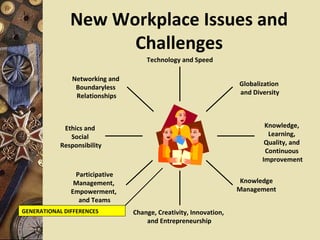
New Workplace Issues and
                     Challenges
                                     Technology and Speed

                Networking and
                 Boundaryless                                      Globalization
                 Relationships                                     and Diversity


             Ethics and                                                    Knowledge,
               Social                                                       Learning,
            Responsibility                                                 Quality, and
                                                                           Continuous
                                                                          Improvement

                Participative
                Management,                                         Knowledge
               Empowerment,                                        Management
                 and Teams
GENERATIONAL DIFFERENCES         Change, Creativity, Innovation,
                                     and Entrepreneurship

Marketing Planning

  • 1.
    MARKETING PLANNING Sohaib RabbaniKhan MS (Marketing), PhD (In progress) sohaibrabbani@yahoo.com
  • 2.
    Basic Managerial Functions Organizing Planning Leading Controlling
  • 3.
    Well Plan ishalf done Planning is a mental predisposition to do things in an orderly way, to think before acting and to act in the light of facts rather than guesses. Planning is deciding best alternatives among others to perform different managerial functions in order to achieve predetermined goals. (Urwick)
  • 4.
    According to Koontzand O’ Donnell, “Planning is deciding in advance what to do, how to do and who is to do it. Planning bridges the gap between where we are to, where we want to go. It makes possible things to occur, which would not otherwise occur.”
  • 5.
    Planning Planning involves tasksthat must be performed to attain organizational goals, outlining how the tasks must be performed, and indicating when they should be performed.
  • 6.
    Steps in planningfunction: 1.Establishment of objectives 2.Establishment of planning premises 3.Choice of alternative course of action 4.Formulation of derivative plans 5.Securing cooperation 6.Follow up / Appraisal of plans
  • 7.
    Proper planning accomplishesthe following 1.Managing uncertainty 2.Better focus 3.Improves coordination 4.Basis for control 5.Improves effectiveness
  • 8.
    Type of Plans Longterm and short term plan Formal and informal plans Proactive and reactive plans Strategic and operational plans
  • 9.
    The Planning Process: 1.Goal setting: Identification and formulation of objective 2. Developing plans: Choice between alternative plans 3. Implementation: Execution of the plan
  • 10.
    Successful planning process: 1.Everyone participates 2. Board and staff educated in planning 3. Board and staff explore new ideas 4. Board takes advantage of opportunities 5. Necessary resources available
  • 11.
    Making planning effective Linkedto long term objectives Consistency Everyone participates Feasible Flexibility Simple Top management support
  • 12.
    What is anobjective? “Objectives are goals, aims or purposes that organization wish over varying periods of time “
  • 13.
    Controlling Controlling involves monitoring actual performance,comparing actual to standards, and taking actions if necessary.
  • 14.
    MBO A methodby which managers and employees define objectives for every department, project and person, and use them to monitor subsequent performance
  • 15.
    Five step MBOProcess 1.Organizational objectives reviewed 2. Employee objectives set 3.Progress monitored 4.Performance evaluated 5.Achievers rewarded
  • 16.
    The nature andpurpose of MBO MBO is concerned with goal setting and planning for individual managers and their units The essence of MBO is a process of joint goal setting between a supervisor and a subordinate Managers work with their subordinates to establish performance goals that are consistent with higher organizational objectives MBO helps to clarify hierarchy of objectives as a series of well defined means-ends chains.
  • 17.
    Decisional Roles Roles thatrevolve around making choices. - Entrepreneur – Seeks opportunities. Basically they search for change, respond to it, and exploit it. - Negotiator – Represents the organization at major negotiations. - Resource Allocator – Makes or approves all significant decisions related to the allocation of resources. - Disturbance Handler – Responsible for corrective action when the organization faces disturbances.
  • 18.
    Essential steps forMBO 1. Set goals : The most difficult step 2. Develop Action Plan: For both work groups and individuals 3. Review progress / take corrective actions : Periodic during the year 4. Appraise overall performance : Review annual goals
  • 19.
    Advantages :  Bettercommunication and coordination – Frequent reviews and interactions between superiors and subordinates  Motivation – involving employees in the whole process of goal setting and increasing employee empowerment  Clarity of goals  Subordinates tend to have a higher commitment to objectives
  • 20.
  • 21.
    New Workplace Issuesand Challenges Technology and Speed Networking and Boundaryless Globalization Relationships and Diversity Ethics and Knowledge, Social Learning, Responsibility Quality, and Continuous Improvement Participative Management, Knowledge Empowerment, Management and Teams GENERATIONAL DIFFERENCES Change, Creativity, Innovation, and Entrepreneurship

Editor's Notes

  • #16 Uated xxxxxxxxxxxxxxxxxxxxxxxxxxxxxxxxxxxxxxxx
  • #19 goals