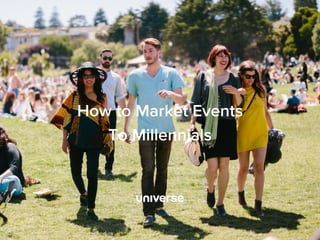
How to Market Events
To Millennials
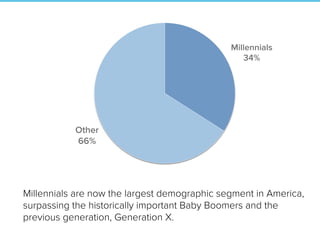
Millennials are now the largest demographic segment in America,
surpassing the historically important Baby Boomers and the
previous generation, Generation X.
Millennials
34%
Other
66%
Your event marketing needs to keep up with millennials, which
means using new channels and methods, and a fundamental shift
in your thoughts about marketing.
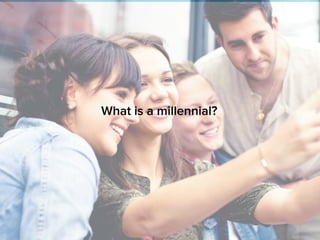
What is a millennial?
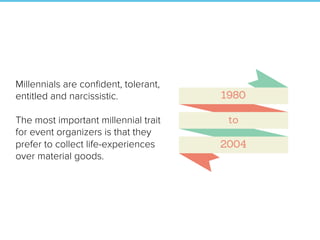
Millennials are confident, tolerant,
entitled and narcissistic.
The most important millennial trait
for event organizers is that they
prefer to collect life-experiences
over material goods.
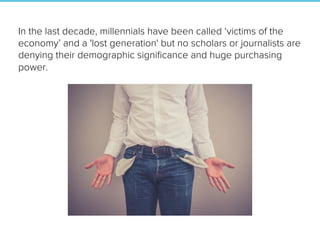
In the last decade, millennials have been called ‘victims of the
economy’ and a 'lost generation' but no scholars or journalists are
denying their demographic significance and huge purchasing
power.
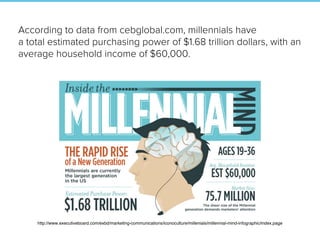
According to data from cebglobal.com, millennials have
a total estimated purchasing power of $1.68 trillion dollars, with an
average household income of $60,000.
http://www.executiveboard.com/exbd/marketing-communications/iconoculture/millenials/millennial-mind-infographic/index.page
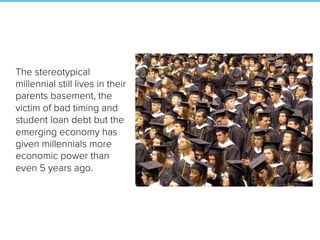
The stereotypical
millennial still lives in their
parents basement, the
victim of bad timing and
student loan debt but the
emerging economy has
given millennials more
economic power than
even 5 years ago.
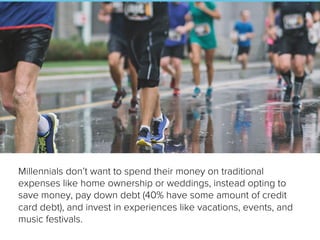
Millennials don’t want to spend their money on traditional
expenses like home ownership or weddings, instead opting to
save money, pay down debt (40% have some amount of credit
card debt), and invest in experiences like vacations, events, and
music festivals.
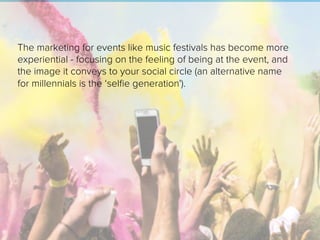
The marketing for events like music festivals has become more
experiential - focusing on the feeling of being at the event, and
the image it conveys to your social circle (an alternative name
for millennials is the ‘selfie generation').
FOMO is the anxiety that you are missing an opportunity for social
interaction or new experiences. FOMO rose with the increased
usage of smartphones and social networks.
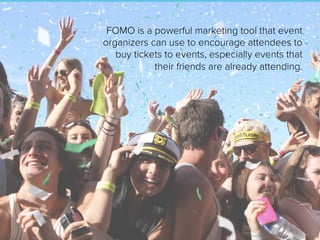
FOMO is a powerful marketing tool that event
organizers can use to encourage attendees to
buy tickets to events, especially events that
their friends are already attending.
So what does it mean to market to millennials? In short your
marketing must be:
Personal - millennials expect customized marketing messages
that are highly relevant to them, no more ‘one size fits all’
messaging
Social - it should be shareable and worth sharing, which means
high quality design and copy
Appropriate - millennials want native advertising on smartphones
and social networks, not TV, radio, or banner ads
Sell Tickets
Anywhere
Process
Payments
Advanced
Ticketing
Social Data
Tools

Marketing Events To Millennials

  • 1.
    How to MarketEvents To Millennials
  • 2.
    Millennials are nowthe largest demographic segment in America, surpassing the historically important Baby Boomers and the previous generation, Generation X. Millennials 34% Other 66%
  • 3.
    Your event marketingneeds to keep up with millennials, which means using new channels and methods, and a fundamental shift in your thoughts about marketing.
  • 4.
    What is amillennial?
  • 5.
    Millennials are confident,tolerant, entitled and narcissistic. The most important millennial trait for event organizers is that they prefer to collect life-experiences over material goods.
  • 6.
    In the lastdecade, millennials have been called ‘victims of the economy’ and a 'lost generation' but no scholars or journalists are denying their demographic significance and huge purchasing power.
  • 7.
    According to datafrom cebglobal.com, millennials have a total estimated purchasing power of $1.68 trillion dollars, with an average household income of $60,000. http://www.executiveboard.com/exbd/marketing-communications/iconoculture/millenials/millennial-mind-infographic/index.page
  • 8.
    The stereotypical millennial still livesin their parents basement, the victim of bad timing and student loan debt but the emerging economy has given millennials more economic power than even 5 years ago.
  • 9.
    Millennials don’t wantto spend their money on traditional expenses like home ownership or weddings, instead opting to save money, pay down debt (40% have some amount of credit card debt), and invest in experiences like vacations, events, and music festivals.
  • 10.
    The marketing forevents like music festivals has become more experiential - focusing on the feeling of being at the event, and the image it conveys to your social circle (an alternative name for millennials is the ‘selfie generation').
  • 11.
    FOMO is theanxiety that you are missing an opportunity for social interaction or new experiences. FOMO rose with the increased usage of smartphones and social networks.
  • 12.
    FOMO is apowerful marketing tool that event organizers can use to encourage attendees to buy tickets to events, especially events that their friends are already attending.
  • 13.
    So what doesit mean to market to millennials? In short your marketing must be:
  • 14.
    Personal - millennialsexpect customized marketing messages that are highly relevant to them, no more ‘one size fits all’ messaging
  • 15.
    Social - itshould be shareable and worth sharing, which means high quality design and copy
  • 16.
    Appropriate - millennialswant native advertising on smartphones and social networks, not TV, radio, or banner ads
  • 17.