MARKETING PLANMARKETING PLAN
Applicable into the Tourism Indsutry
DefinitionDefinition
A marketing plan is a comprehensive blueprint which
outlines an organization's overall marketing efforts.
The marketing plan can function from two points: strategy
and tactics (P. Kotler, K.L. Keller). In most organizations,
"strategic planning" is an annual process, typically
covering just the year ahead. Occasionally, a few
organizations may look at a practical plan which stretches
three or more years ahead.
Marketing planning aimsMarketing planning aims
Behind the corporate objectives, which in themselves
offer the main context for the marketing plan, will lie
the "corporate mission," in turn provides the context
for these corporate objectives. In a sales-oriented
organization, the marketing planning function designs
incentive pay plans to not only motivate and reward
frontline staff fairly but also to align marketing
activities with corporate mission. The marketing plan
basically aims to make the business provide the
solution with the awareness with the expected
customers.
Marketing planning aimsMarketing planning aims
This "corporate mission" can be thought of as a
definition of what the organization is, or what it does:
"Our business is ...". This definition should not be too
narrow, or it will constrict the development of the
organization; a too rigorous concentration on the view
that "We are in the business of making meat-scales,"
as IBM was during the early 1900s, might have limited
its subsequent development into other areas. On the
other hand, it should not be too wide or it will become
meaningless; "We want to make a profit" is not too
helpful in developing specific plans.
Detailed plansDetailed plans
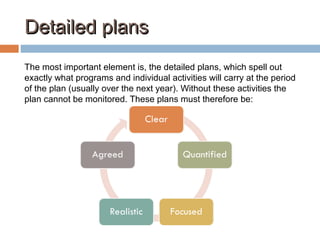
The most important element is, the detailed plans, which spell out
exactly what programs and individual activities will carry at the period
of the plan (usually over the next year). Without these activities the
plan cannot be monitored. These plans must therefore be:
ContentContent
Marketing plan for a small business typically includes Small
Business Administration Description of competitors,
including the level of demand for the product or service and
the strengths and weaknesses of competitors
Description of the product or service, including special
features
Marketing budget, including the advertising and
promotional plan
Description of the business location,
including advantages and disadvantages
for marketing
Pricing strategy
Market Segmentation
Market SummaryMarket Summary
 Market: Past, present, and future
 Review changes in market share, leadership,
players, market shifts, costs, pricing, and
competition
Product DefinitionProduct Definition
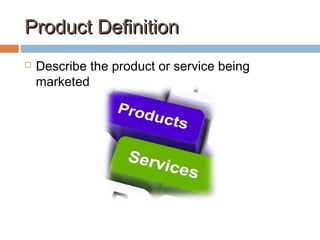
 Describe the product or service being
marketed
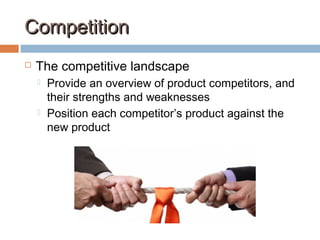
CompetitionCompetition
 The competitive landscape
 Provide an overview of product competitors, and
their strengths and weaknesses
 Position each competitor’s product against the
new product
PositioningPositioning
 Positioning of product or service
 Statement that distinctly defines the product in its
market and against its competition over time
 Consumer promise
 Statement summarizing the benefit of the product
or service to the consumer
Communication StrategiesCommunication Strategies
 Messaging by audience
 Target consumer demographics
Launch StrategiesLaunch Strategies
 Launch plan
 If product is being
announced
 Promotion budget
Public RelationsPublic Relations
 Strategy and execution
 PR strategies
 PR plan highlights
 Have backup PR plan including editorial
calendars, speaking engagements, conference
schedules, etc.
AdvertisingAdvertising
 Strategy and execution
 Overview of strategy
 Overview of media and timing
 Overview of ad spending
Other PromotionOther Promotion
 Direct marketing
 Overview of strategy, vehicles, and timing
 Overview of response targets, goals, and budget
 Third-party marketing
 Co-marketing arrangements with other
companies
 Marketing programs
 Other promotional programs
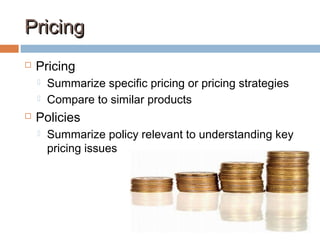
PricingPricing
 Pricing
 Summarize specific pricing or pricing strategies
 Compare to similar products
 Policies
 Summarize policy relevant to understanding key
pricing issues
DistributionDistribution
 Distribution strategy
 Channels of distribution
 Summarize channels of distribution
 Distribution by channel
 Show plan of what percent share of
distribution will be contributed by each channel
– a pie chart might be helpful
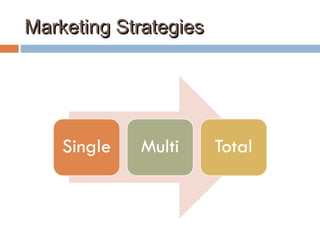
Marketing StrategiesMarketing Strategies
Single Market StrategySingle Market Strategy
 Concentration of effort in a single segment
 Avoid Competition with establish firm
 Serve the Market heartedly despite initial
difficulties
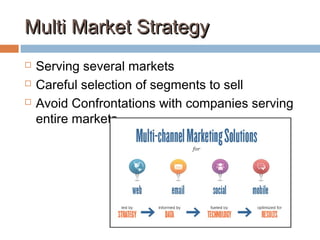
Multi Market StrategyMulti Market Strategy
 Serving several markets
 Careful selection of segments to sell
 Avoid Confrontations with companies serving
entire markets
Total StrategyTotal Strategy
 Selling the entire spectrum of the market by
selling differentiated products fo different
segments in the market.
 Top maganement commitment to embrace
entire market
 Strong financial position
ScheduleSchedule
 12-month schedule highlights
 Timing
 Isolate timing dependencies critical to success
Strategies makerStrategies maker
 Strategies based on market dominance - In
this scheme, firms are classified based on
their market share or dominance of an
industry. Typically there are four types of
market dominance strategies:
 Leader
 Challenger
 Follower
 Nicher

Marketing

  • 1.
    MARKETING PLANMARKETING PLAN Applicableinto the Tourism Indsutry
  • 2.
    DefinitionDefinition A marketing planis a comprehensive blueprint which outlines an organization's overall marketing efforts. The marketing plan can function from two points: strategy and tactics (P. Kotler, K.L. Keller). In most organizations, "strategic planning" is an annual process, typically covering just the year ahead. Occasionally, a few organizations may look at a practical plan which stretches three or more years ahead.
  • 3.
    Marketing planning aimsMarketingplanning aims Behind the corporate objectives, which in themselves offer the main context for the marketing plan, will lie the "corporate mission," in turn provides the context for these corporate objectives. In a sales-oriented organization, the marketing planning function designs incentive pay plans to not only motivate and reward frontline staff fairly but also to align marketing activities with corporate mission. The marketing plan basically aims to make the business provide the solution with the awareness with the expected customers.
  • 4.
    Marketing planning aimsMarketingplanning aims This "corporate mission" can be thought of as a definition of what the organization is, or what it does: "Our business is ...". This definition should not be too narrow, or it will constrict the development of the organization; a too rigorous concentration on the view that "We are in the business of making meat-scales," as IBM was during the early 1900s, might have limited its subsequent development into other areas. On the other hand, it should not be too wide or it will become meaningless; "We want to make a profit" is not too helpful in developing specific plans.
  • 5.
    Detailed plansDetailed plans Themost important element is, the detailed plans, which spell out exactly what programs and individual activities will carry at the period of the plan (usually over the next year). Without these activities the plan cannot be monitored. These plans must therefore be:
  • 6.
    ContentContent Marketing plan fora small business typically includes Small Business Administration Description of competitors, including the level of demand for the product or service and the strengths and weaknesses of competitors Description of the product or service, including special features Marketing budget, including the advertising and promotional plan Description of the business location, including advantages and disadvantages for marketing Pricing strategy Market Segmentation
  • 7.
    Market SummaryMarket Summary Market: Past, present, and future  Review changes in market share, leadership, players, market shifts, costs, pricing, and competition
  • 8.
    Product DefinitionProduct Definition Describe the product or service being marketed
  • 9.
    CompetitionCompetition  The competitivelandscape  Provide an overview of product competitors, and their strengths and weaknesses  Position each competitor’s product against the new product
  • 10.
    PositioningPositioning  Positioning ofproduct or service  Statement that distinctly defines the product in its market and against its competition over time  Consumer promise  Statement summarizing the benefit of the product or service to the consumer
  • 11.
    Communication StrategiesCommunication Strategies Messaging by audience  Target consumer demographics
  • 12.
    Launch StrategiesLaunch Strategies Launch plan  If product is being announced  Promotion budget
  • 13.
    Public RelationsPublic Relations Strategy and execution  PR strategies  PR plan highlights  Have backup PR plan including editorial calendars, speaking engagements, conference schedules, etc.
  • 14.
    AdvertisingAdvertising  Strategy andexecution  Overview of strategy  Overview of media and timing  Overview of ad spending
  • 15.
    Other PromotionOther Promotion Direct marketing  Overview of strategy, vehicles, and timing  Overview of response targets, goals, and budget  Third-party marketing  Co-marketing arrangements with other companies  Marketing programs  Other promotional programs
  • 16.
    PricingPricing  Pricing  Summarizespecific pricing or pricing strategies  Compare to similar products  Policies  Summarize policy relevant to understanding key pricing issues
  • 17.
    DistributionDistribution  Distribution strategy Channels of distribution  Summarize channels of distribution  Distribution by channel  Show plan of what percent share of distribution will be contributed by each channel – a pie chart might be helpful
  • 18.
  • 19.
    Single Market StrategySingleMarket Strategy  Concentration of effort in a single segment  Avoid Competition with establish firm  Serve the Market heartedly despite initial difficulties
  • 20.
    Multi Market StrategyMultiMarket Strategy  Serving several markets  Careful selection of segments to sell  Avoid Confrontations with companies serving entire markets
  • 21.
    Total StrategyTotal Strategy Selling the entire spectrum of the market by selling differentiated products fo different segments in the market.  Top maganement commitment to embrace entire market  Strong financial position
  • 22.
    ScheduleSchedule  12-month schedulehighlights  Timing  Isolate timing dependencies critical to success
  • 23.
    Strategies makerStrategies maker Strategies based on market dominance - In this scheme, firms are classified based on their market share or dominance of an industry. Typically there are four types of market dominance strategies:  Leader  Challenger  Follower  Nicher