KFC


Case study of KFC
Source:www.icmrindia.org/casestudies/.../business%20ethics/BECG044.
HTML
BACKGROUND OF KENTUCKY FRIED
              CHICKENS(KFC)
• KFC is based in Louisville, Kentucky, and is the world’s most
  popular chicken restaurant.
• Founded by Colonel Harland Sanders in the early 1930s by
  cooking & serving food for hungry travellers. In 1952 Sanders
  started franchising his chicken business & named it as
  KENTUCKY FRIED CHICKEN.
• KFC is the world’s largest restaurant company in terms of
  system restaurants, with more than 36,000 locations around the
  world.
• KFC operates more than 5,200 restaurants in the U.S. and more
  than 15,000 units around the world.
• 109 countries and territories around the world.
• Every day, more than 12million customers are served at KFC
  restaurants.
KFC’S ENTRY IN INDIA

• KFC was the first fast food multinational to
  enter INDIA, after the economic liberalization
  policy of the Indian Govt. in early 1990s.
• KFC received permission to open 30 new
  outlets across the country & Opened first fast
  food outlet in Bangalore in June 1995 by
  targeting upper middle class population.
• Pepsi Co planned to open 60KFC and Pizza
  Hut outlets in next 7 years in the country.
ISSUES
• Understand the significance of cultural, economic,
  regulatory and ecological issues while
  establishing business in a foreign country.
• Appreciate the need for protecting animal rights
  in developed and developing countries like India.
• Understand the importance of ethics in doing
  business.
• Examine the reasons for protests of PETS( People
  for Ethical Treatment of Animals)
• Identify solutions for KFC’s problems in India
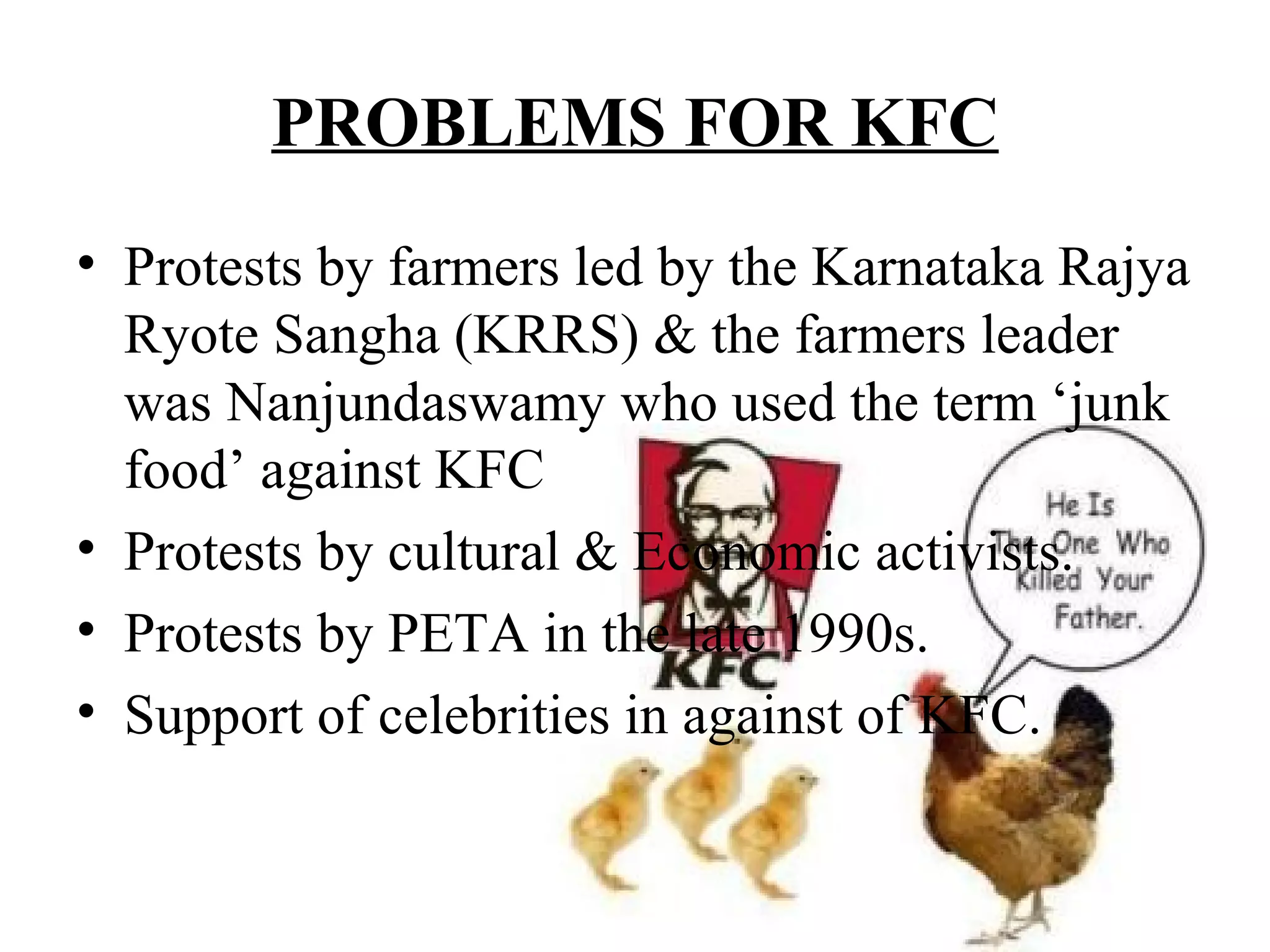
PROBLEMS FOR KFC
• Protests by farmers led by the Karnataka Rajya
  Ryote Sangha (KRRS) & the farmers leader
  was Nanjundaswamy who used the term ‘junk
  food’ against KFC
• Protests by cultural & Economic activists.
• Protests by PETA in the late 1990s.
• Support of celebrities in against of KFC.
SWOT ANALYSIS
          STRENGTH                         WEAKNESSES
• Ranks highest among all chicken
  restaurants for its convenience and  • Presence of Multinational
  menu variety.                          competitors in the market
• Oldest and finest in business.         e.g.
• High goodwill does not have any core   McDonalds(specialized
  competitor in chicken serving.
• Large number of outlets at prime       not in chicken serving but
  locations .                            in burgers)
• Serves variety of items under singly • Imported raw material
  menu .
                                         rise their prime cost.
• Loyal customers.
• Faces numerous advantages of being
  a multinational organization e.g.
  economies of scale, government
  incentives etc..
SWOT ANALYSIS
        OPPORTUNITES                        THREATS
• Cheap and easy availability     • Entrance of new competitors
  of labour.                        into the market.
• Increase consumption of fast    • High political instability
  food has increased the            Uncertainty.
  market size.
• Consumer prefer “All under
  one roof” in order to
  increase their sales turnover
  they can increase or add the
  served items.
CONCLUSION
• Finally, we can understand from the case that
  every business organization should understand the
  importance of ethics by understanding the culture,
  regulatory and ecological issues in different
  countries.

• KFC should implement a farm level guideline &
  audit program – a program which is industry
  leading in the areas of poultry care and handling,
  mainly for their suppliers in the broiler industry.
PRESENTED BY :
                 ANUPAMA.J
                 ANUSHA
                 APARNA
                 ASHA.K
          K.
ASHA R.

Ppt of kfc case study

  • 1.
    KFC Case study ofKFC Source:www.icmrindia.org/casestudies/.../business%20ethics/BECG044. HTML
  • 2.
    BACKGROUND OF KENTUCKYFRIED CHICKENS(KFC) • KFC is based in Louisville, Kentucky, and is the world’s most popular chicken restaurant. • Founded by Colonel Harland Sanders in the early 1930s by cooking & serving food for hungry travellers. In 1952 Sanders started franchising his chicken business & named it as KENTUCKY FRIED CHICKEN. • KFC is the world’s largest restaurant company in terms of system restaurants, with more than 36,000 locations around the world. • KFC operates more than 5,200 restaurants in the U.S. and more than 15,000 units around the world. • 109 countries and territories around the world. • Every day, more than 12million customers are served at KFC restaurants.
  • 3.
    KFC’S ENTRY ININDIA • KFC was the first fast food multinational to enter INDIA, after the economic liberalization policy of the Indian Govt. in early 1990s. • KFC received permission to open 30 new outlets across the country & Opened first fast food outlet in Bangalore in June 1995 by targeting upper middle class population. • Pepsi Co planned to open 60KFC and Pizza Hut outlets in next 7 years in the country.
  • 4.
    ISSUES • Understand thesignificance of cultural, economic, regulatory and ecological issues while establishing business in a foreign country. • Appreciate the need for protecting animal rights in developed and developing countries like India. • Understand the importance of ethics in doing business. • Examine the reasons for protests of PETS( People for Ethical Treatment of Animals) • Identify solutions for KFC’s problems in India
  • 5.
    PROBLEMS FOR KFC •Protests by farmers led by the Karnataka Rajya Ryote Sangha (KRRS) & the farmers leader was Nanjundaswamy who used the term ‘junk food’ against KFC • Protests by cultural & Economic activists. • Protests by PETA in the late 1990s. • Support of celebrities in against of KFC.
  • 6.
    SWOT ANALYSIS STRENGTH WEAKNESSES • Ranks highest among all chicken restaurants for its convenience and • Presence of Multinational menu variety. competitors in the market • Oldest and finest in business. e.g. • High goodwill does not have any core McDonalds(specialized competitor in chicken serving. • Large number of outlets at prime not in chicken serving but locations . in burgers) • Serves variety of items under singly • Imported raw material menu . rise their prime cost. • Loyal customers. • Faces numerous advantages of being a multinational organization e.g. economies of scale, government incentives etc..
  • 7.
    SWOT ANALYSIS OPPORTUNITES THREATS • Cheap and easy availability • Entrance of new competitors of labour. into the market. • Increase consumption of fast • High political instability food has increased the Uncertainty. market size. • Consumer prefer “All under one roof” in order to increase their sales turnover they can increase or add the served items.
  • 8.
    CONCLUSION • Finally, wecan understand from the case that every business organization should understand the importance of ethics by understanding the culture, regulatory and ecological issues in different countries. • KFC should implement a farm level guideline & audit program – a program which is industry leading in the areas of poultry care and handling, mainly for their suppliers in the broiler industry.
  • 9.
    PRESENTED BY : ANUPAMA.J ANUSHA APARNA ASHA.K K. ASHA R.