
P e t e r Senkus
A n e t a Senkus
MARKETING
3.0
Applied to agriculture enterprise
Farmer food producer means of production supplier
Kaunas, 18 September 2013
…a little bit about us
Piotr Senkus Ph. D. M. Eng.
Poznan University of Life Sciences
• Engineer – agriculture
• Masters – agriculture economics
• Ph.D. in economy (organization and management, marketing);
• Interests in: Sustainability, Process management etc.
• IRCA Lead Auditor, Management Analyst.
: +48.604.645.154; : piotr.senkus@gmail.com
Aneta Wysokioska-Senkus Ph. D.
Poznan University of Life Sciences
• Ph.D. in management (quality management);
• Interests in: Sustainability, management systems etc.
• IRCA Lead Auditor, Management Analyst.
: +48.604.753.457; : aneta.senkus@gmail.com
We appreciate the help of:
EPEA INTERNATIONALE UMWELTFORSCHUNG GMBH
Head Office
Trostbrücke 4
20457 Hamburg, Germany
T. +49 40 43 13 49 0
F. +49 40 43 13 49 49
Email: epea@epea.com
www.epea.com
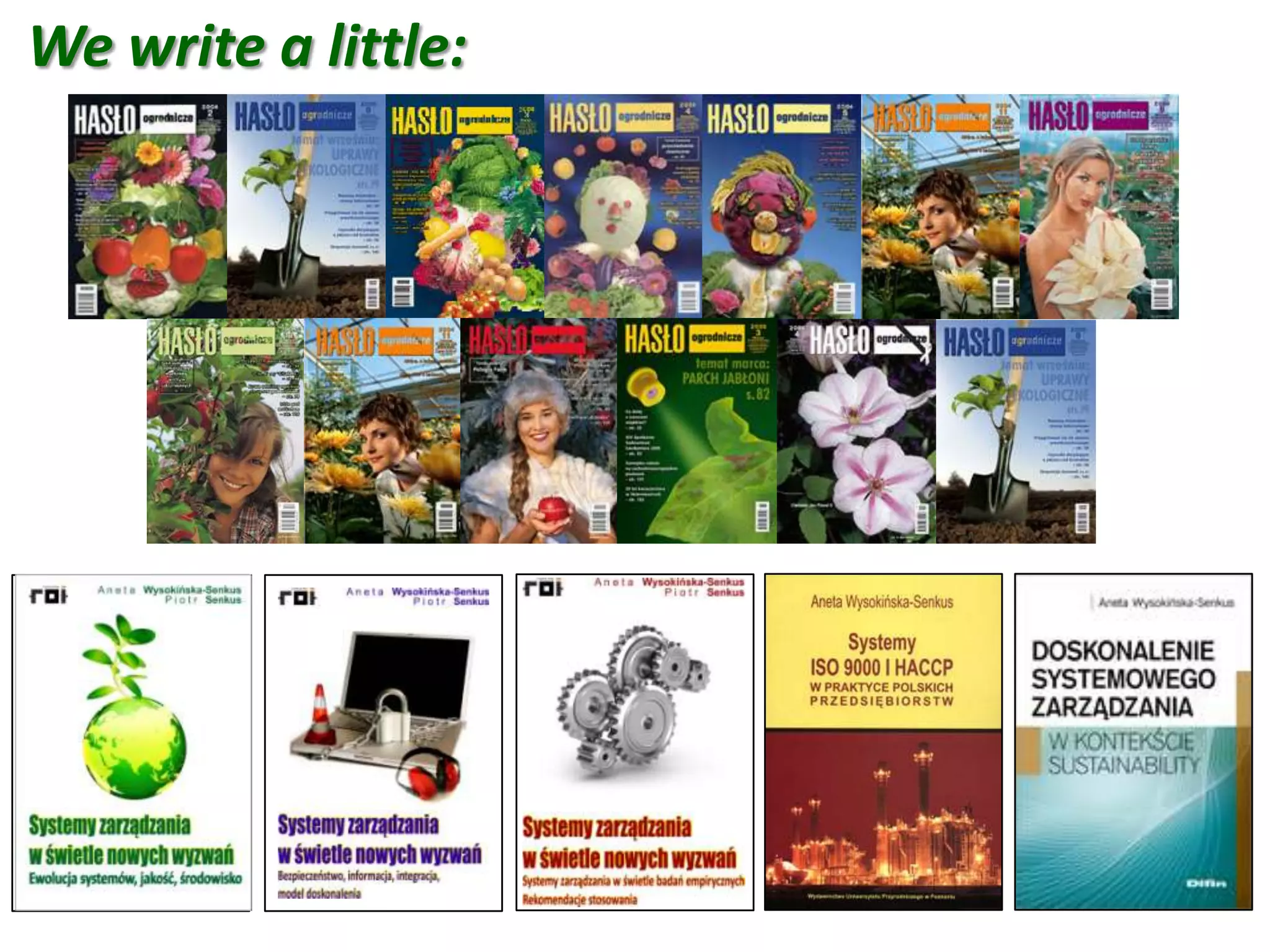
We write a little:
We have some work experience:
Why
MARKETING
3.0
? ? ?
http://zoelorimer.wordpress.com/2013/01/29/times-square/
Can You count commercials ?
http://www.thepinnaclelist.com/
… and now … and they are constantly changing !!!
“Within five years.
If you’re in the same business
you are in now (if You do not
change), you’re going to be out
of business.”
Philip Kotler
Change
To the next generation of Marketers who will enhance the social and environmental
contributions of the marketing discipline
„... The only constant is …. change”
Heraclitus/Peter F. Drucker
Change
“It is not the strongest species
that survive, nor the most
intelligent, but the ones most
responsive to change.”
Charles Robert Darwin
Change
“if you do not change you re
dead”
Jack Welsh, former CEO GE
Change
“If change is happening on the outside faster than on the inside the end is in sight.”
Jack Welsh, former CEO GE
0
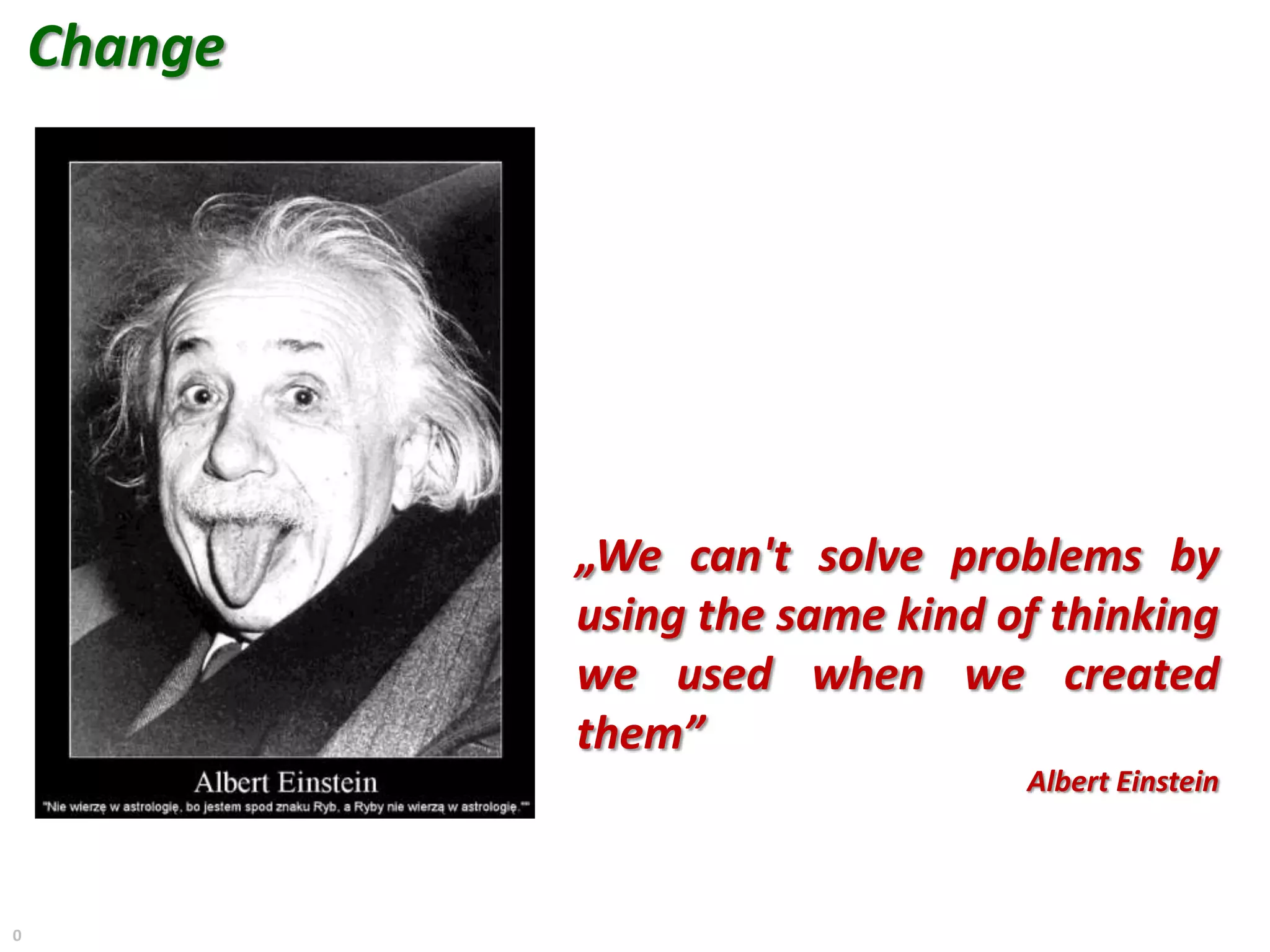
„We can't solve problems by
using the same kind of thinking
we used when we created
them”
Albert Einstein
Change
So the …
MARKETING
… had to change …
0
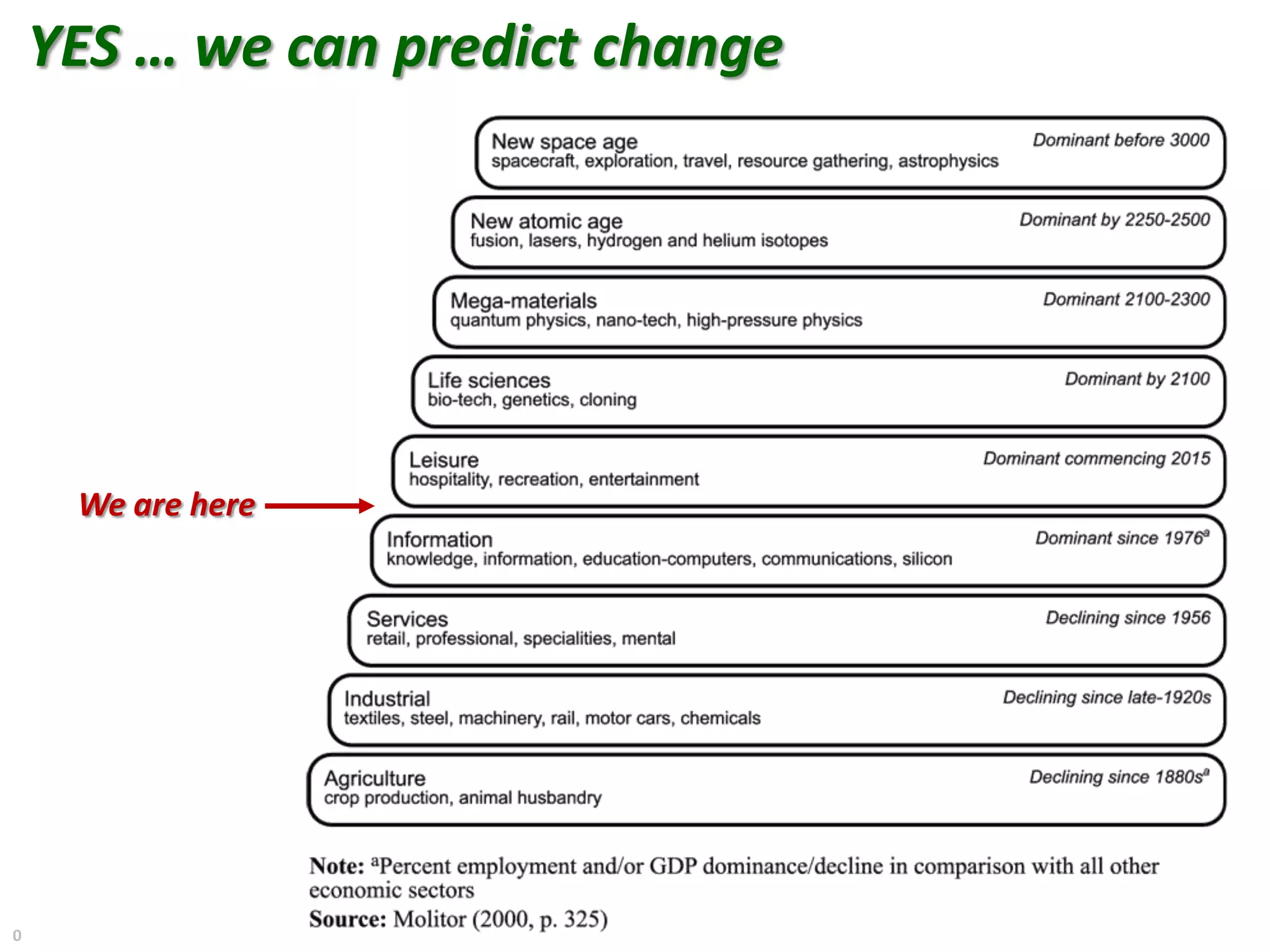
YES … we can predict change
We are here
N.O. MARKETING
„Any customer can have a car painted any color
that he wants so long as it is black”
Henry Ford
1.O. MARKETING
Postwar
Soaring
Turbulent
Uncertain
1950s 1960s 1970s 1980s
POSTWAR
• The Marketing Mix
• Product Life Cycle
• Brand Image
• Market Segmentation
• The Marketing Concept
• The Marketing Audit
SOARING
• The Four Ps
• Marketing Myopia
• Lifestyle Marketing
• The Broadened Concept
of Marketing
TURBULENT
• Targeting
• Positioning
• Strategic Marketing
• Service Marketing
• Social Marketing
• Societal Marketing
• Macro-Marketing
UNCERTAIN
• Marketing Warfare
• Global Marketing
• Local Marketing
• Mega-Marketing
• Direct Marketing
• Customer Relationship
Marketing
• Internal Marketing
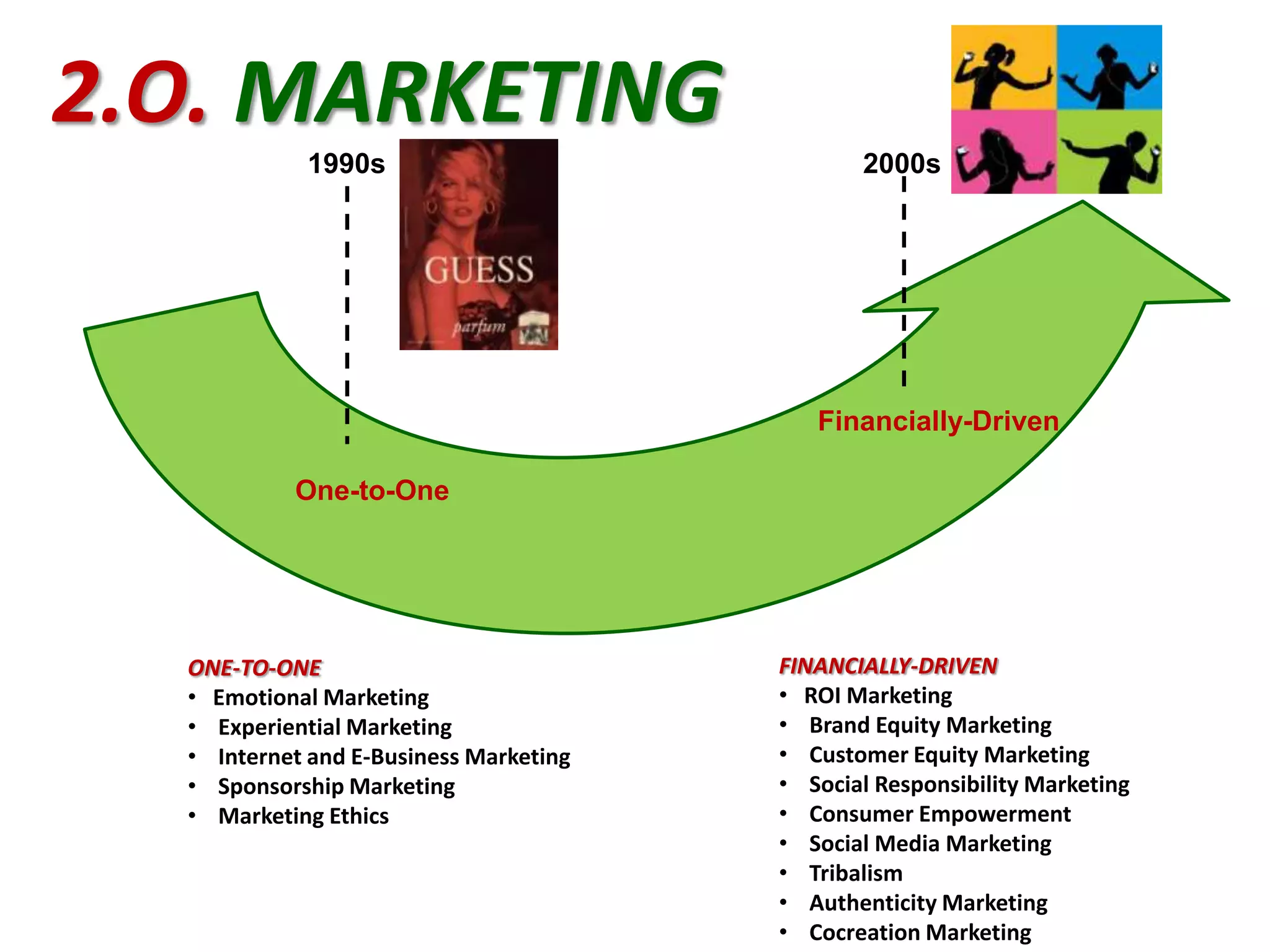
2.O. MARKETING
One-to-One
Financially-Driven
1990s 2000s
ONE-TO-ONE
• Emotional Marketing
• Experiential Marketing
• Internet and E-Business Marketing
• Sponsorship Marketing
• Marketing Ethics
FINANCIALLY-DRIVEN
• ROI Marketing
• Brand Equity Marketing
• Customer Equity Marketing
• Social Responsibility Marketing
• Consumer Empowerment
• Social Media Marketing
• Tribalism
• Authenticity Marketing
• Cocreation Marketing
„Social Media Revolution” - film
2.O. MARKETING
2.O. MARKETING – “side effect”
Source: Philip Kotler, 2011
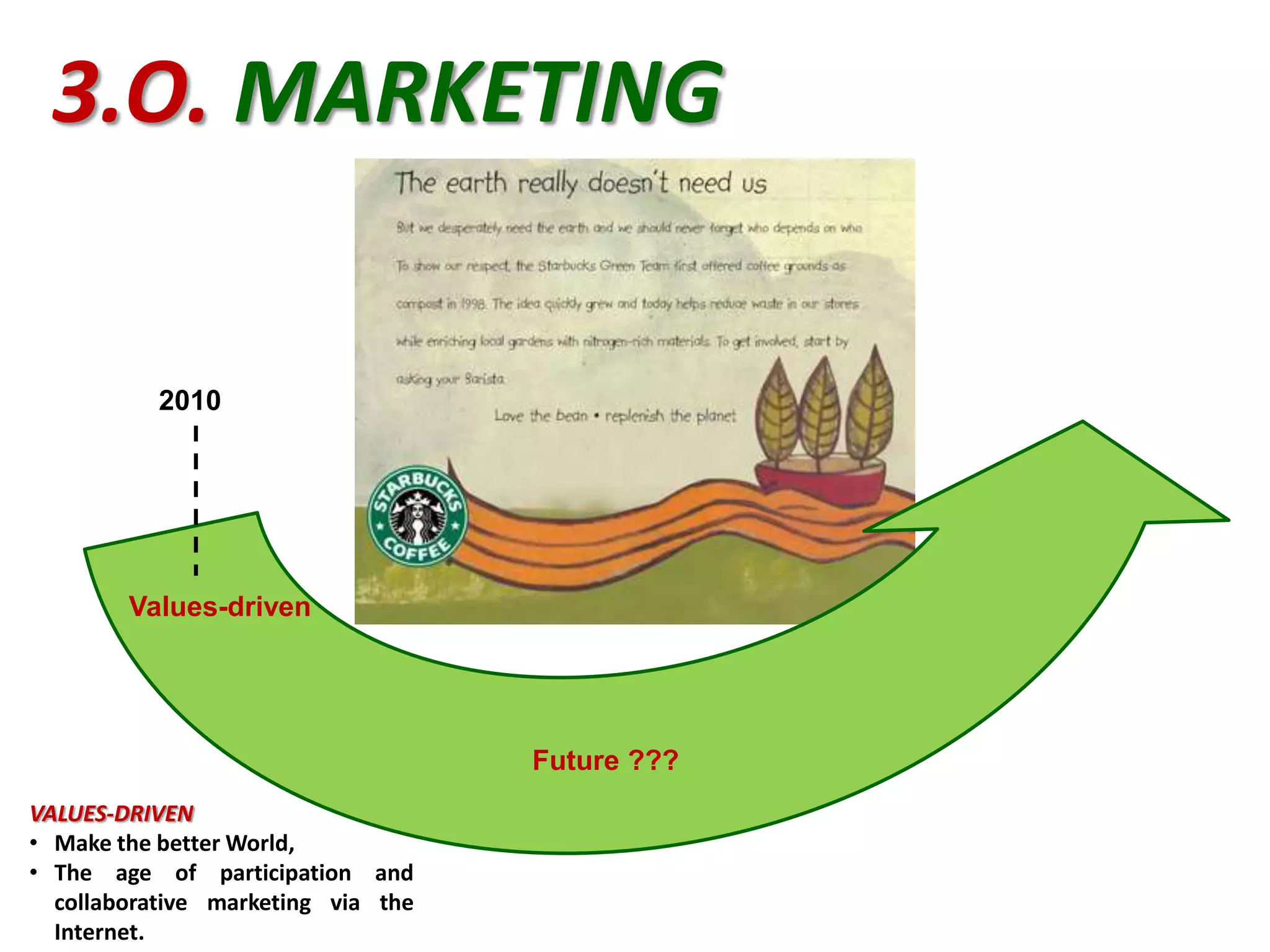
3.O. MARKETING
Values-driven
2010
Future ???
VALUES-DRIVEN
• Make the better World,
• The age of participation and
collaborative marketing via the
Internet.
3.O. MARKETING
What can be done for “better world”
• Avon - Breast cancer
• General Mills - Better nutrition
• General Motors - Traffic safety
• Home Depot - Habatat for Humanity
• Kraft - Reducing obesity
• Levi Strauss - Preventing AIDS
• Motorola - Reducing solid waste
• Pepsi Cola - Staying active
• Shell - Coastal cleanup
• Petsmart - Animal adoption
• Aleve - Arthritis
• British Airways - Children in need
• Starbucks - Tropical rainforests
• Best Buy - Recycle used electronics
See Philip Kotler and Nancy Lee, Corporate Social Responsibility: Doing the Most Good for Your Company and Your Cause, Wiley 2005.
3.O. MARKETING
Old philosophy vs. New philosophy
Old philosophy:
“What is good for business is good for society!”
The simple act of profit maximization is good enough.
New philosophy:
“What is good for society is good for business.” (GE)
Every company should figure out not only how to improve its
output but also its outcomes. A food company should improve
nutrition; an energy company should improve energy; a bank
should improve sound savings.
Michael Porter and Michael Kramer, “The Big Idea: Creating Shared Value,” Harvard Business Review, January/February 2011.
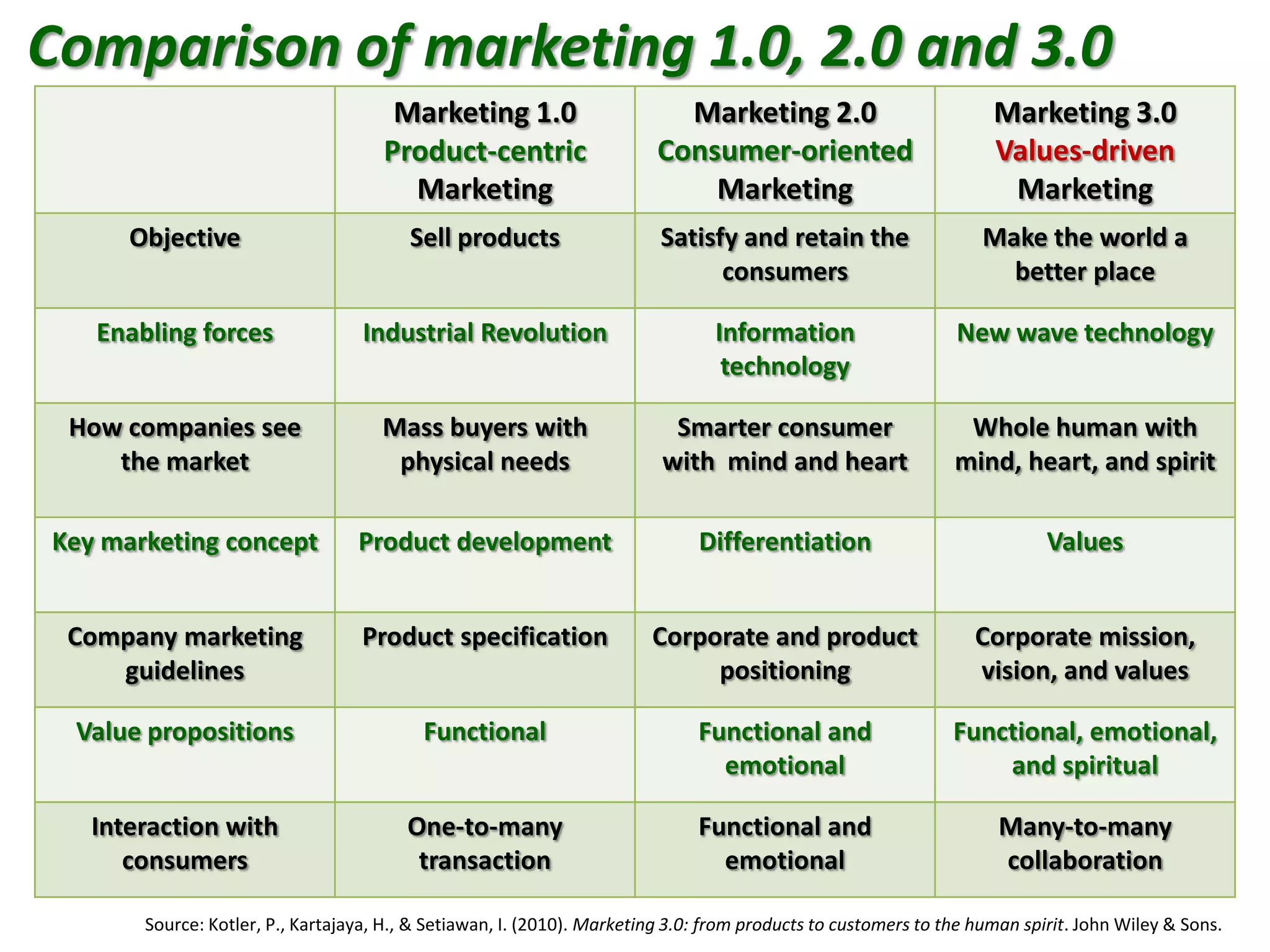
Comparison of marketing 1.0, 2.0 and 3.0
Marketing 1.0
Product-centric
Marketing
Marketing 2.0
Consumer-oriented
Marketing
Marketing 3.0
Values-driven
Marketing
Objective Sell products Satisfy and retain the
consumers
Make the world a
better place
Enabling forces Industrial Revolution Information
technology
New wave technology
How companies see
the market
Mass buyers with
physical needs
Smarter consumer
with mind and heart
Whole human with
mind, heart, and spirit
Key marketing concept Product development Differentiation Values
Company marketing
guidelines
Product specification Corporate and product
positioning
Corporate mission,
vision, and values
Value propositions Functional Functional and
emotional
Functional, emotional,
and spiritual
Interaction with
consumers
One-to-many
transaction
Functional and
emotional
Many-to-many
collaboration
Source: Kotler, P., Kartajaya, H., & Setiawan, I. (2010). Marketing 3.0: from products to customers to the human spirit. John Wiley & Sons.
Marketing change drivers
• Globalization and Chindia
• Regionalization
• Internet and social media
• Shorter product life cycles
• Commoditization
• Retail transformation
• Environmental concerns
• Consumer empowerment
• Recession and turbulence
• Hypercompetition
• Media proliferation
Source: Kotler, P., Kartajaya, H., & Setiawan, I. (2010). Marketing 3.0: from products to customers to the human spirit. John Wiley & Sons.
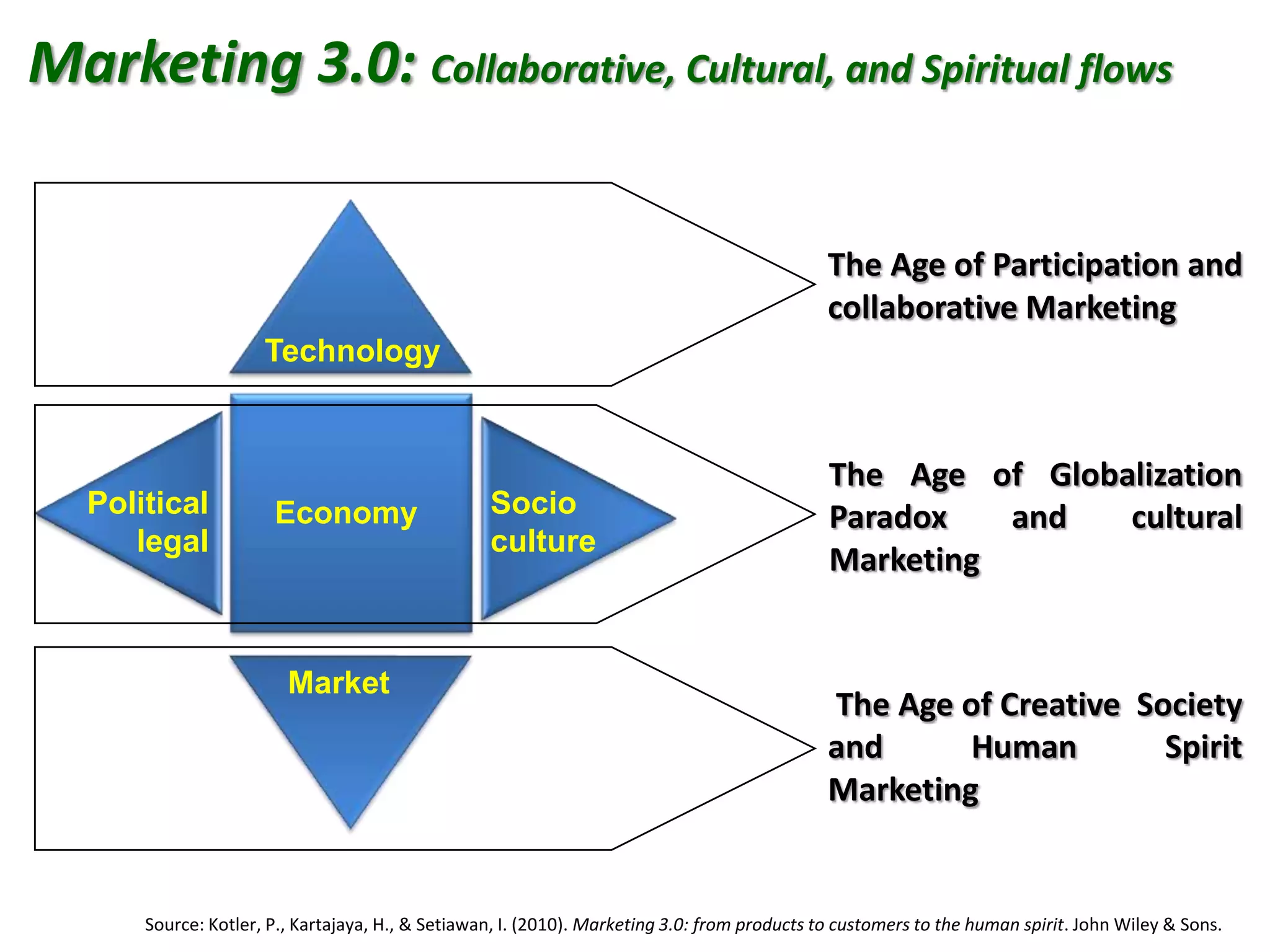
Marketing 3.0: Collaborative, Cultural, and Spiritual flows
The Age of Participation and
collaborative Marketing
The Age of Globalization
Paradox and cultural
Marketing
The Age of Creative Society
and Human Spirit
Marketing
Technology
Market
Political
legal
Socio
culture
Economy
Source: Kotler, P., Kartajaya, H., & Setiawan, I. (2010). Marketing 3.0: from products to customers to the human spirit. John Wiley & Sons.
Values-Based Matrix Model
INDIVIDUAL
COMPANY
Deliver
SATISFACTION
Realize
ASPIRATION
Practice
COMPASSION
Profitability Returnability Sustainability
Be Better DIFFERENTIATE
Make a
DIFFERENCE
Mind Heart Spirit
Mission
(Why)
Vision
(What)
Values
(How)
For SC Johnson, creating
sustainable economic value
means helping
communities prosper while
achieving profitable growth
for the company.
Sustaining Values:
SC Johnson Public
Report
We believe our
fundamental
strength lies in our
people.
MIND HEART SPIRIT
Promoting reusable
shopping bags Base of the Pyramid
Mission
Contributing to the community
well –being as well as
sustaining and protecting the
environment
Vision
To be a world leader in
delivering innovative solutions
to meet human needs through
sustainability principles
Values
Sustainability
We create economic value
We strive for environmental
health
We advance social progress
Source: Kotler, P., Kartajaya, H., & Setiawan, I. (2010). Marketing 3.0: from products to customers to the human spirit. John Wiley & Sons.
S. C. JOHNSON Values-Based Matrix
Sources of New Ideas
• Scientists and Engineers
• Motorola and Philips
• Employees
• Whirlpool,
• Shell
• Samsung
• Customers
• Problems in present products
• Dream products
• Enthusiasts
• Other partners in the company network
Source: Kotler, P., Kartajaya, H., & Setiawan, I. (2010). Marketing 3.0: from products to customers to the human spirit. John Wiley & Sons.
Hmm … but …
most agriculture products
…
are not
consumer products
The idea of “Brand Within the Brand”
“Ingredient Branding“ or InBranding
Source: Kotler, P., Pfoertsh, W. (2010). Ingredient Branding, Springer.
… does it work for agriculture – film (Meat Without Drugs.mp4)
“It is possible to brand
sand, wheat, beef, bricks, metals, concrete, chemicals, corn
grits, bananas, apples, aspirin, …”
(Sam Hill, How to Brand Sand).
You can also … Develop a Memorable Brand Slogan
• BA, “The World’s Favorite Airline”
• American Express, “The Natural Choice”
• AT&T, “The Right Choice”
• Budweiser, “King of Beers”
Source: Kotler, P., Kartajaya, H., & Setiawan, I. (2010). Marketing 3.0: from products to customers to the human spirit. John Wiley & Sons.
Hypothetical Starbucks brand positioning
Consumer
Target
Discerning
Coffee
Drinker
Consumer
Insight
Coffee and the
drinking
experience is often
unsatisfying
Consumer
Need State
Desire for better
coffee and a better
consumption
experience
Competitive
Product Set
Local cafes
Fast food &
convenience shops
Consumer
Takeaway
Starbucks gives me
the richest possible
sensory experience
drinking coffee
Brand Mantra
Rich, Rewarding
Coffee Experience
ContemporaryCaring Thoughtful
colors Logo
Totally integrated system
Stock options / health benefits or baristas
24 hour training of baristas
Triple Filtrated Water
Source: Philip Kotler, 2011
IN OUT
Responsible, locally involved
Convenient, friendly service
… can be fundament for
Agriculture Marketing 3.0
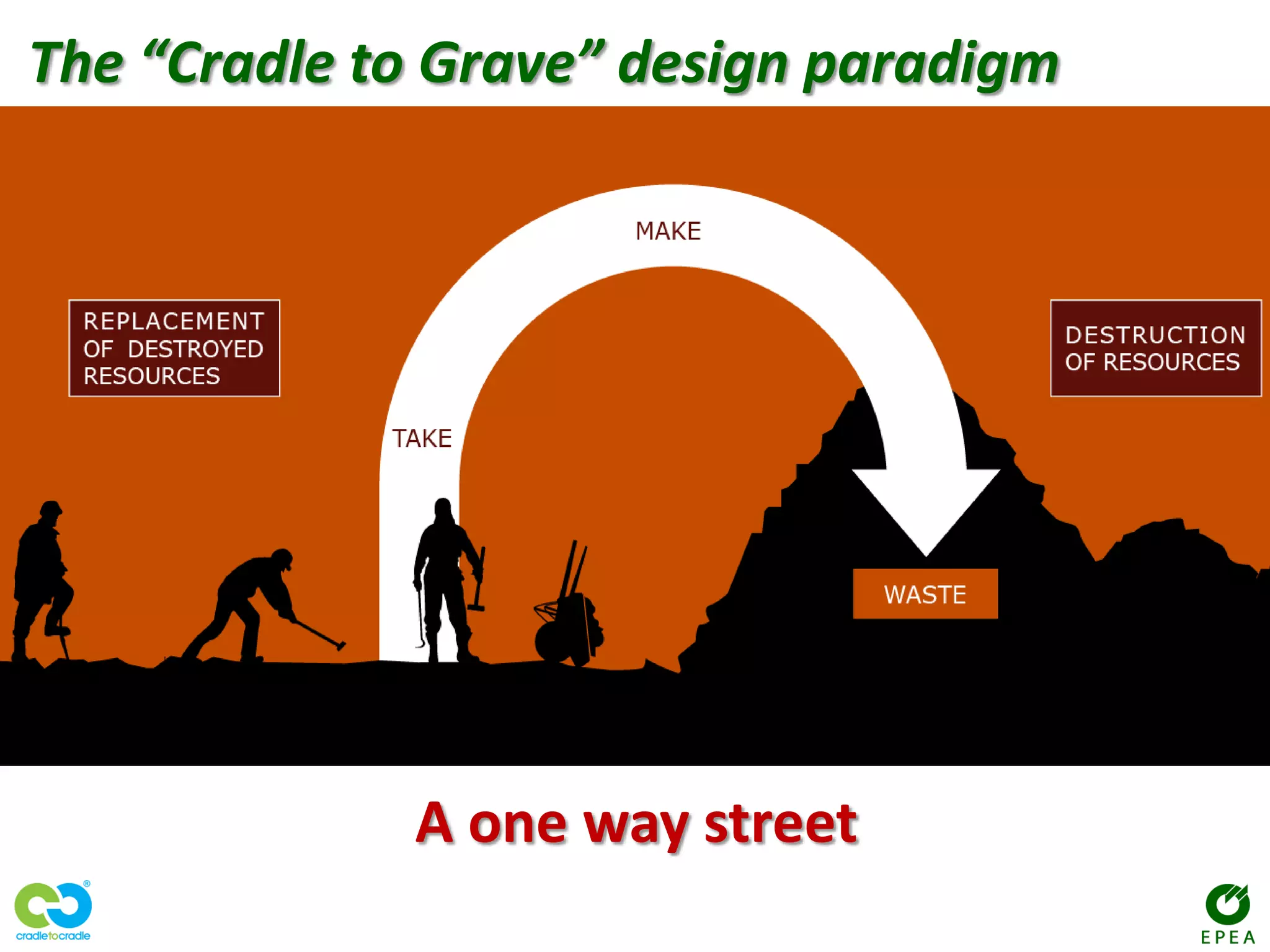
The “Cradle to Grave” design paradigm
A one way street
The basis of C2C
Nutrient metabolisms.
The basis for applying C2C principles & goals
&
Principles of the Cradle to Cradle®
design paradigm
WASTE EQUALS FOOD
Nutrients become nutrients again
or
Everything is a resource for something else
USE CURRENT SOLAR INCOME
Renewable sources powered by sun
CELEBRATE DIVERSITY
Biodiversity
Cultural diversity
Conceptual diversity
Food production depends on soil.
Soil takes tens of thousands of years to form.
Loss of topsoil
More than half of agricultural soil is lost or seriously degraded
Loss of topsoil due to:
Intensive
over-farming
Incineration & landfilling
of nutrients
Urbanization
Every year we lose 4000 – 6000 times more humus
… than we build up.
In the European regions it takes 100 to 300 years
to build a Layer of 1 cm of Humus.
25 cm of Humus are needed
to have soil which is fertile enough to be used for food production.
Loss of topsoil
Summary
• The 2008+ recession has changed consumer behavior forever.
• The Internet Revolution gave the Consumers more power than
ever before.
• To achieve success there is the need to stop using outdated
marketing and realign processes around the stakeholders, not
company.
• To design the better world you have to think as customer
(stakeholder) … not as marketer.
0
Summary
Summary
http://www.thepinnaclelist.com/
Build Holistic Marketing
Manage the Present
Cut the fat, drop unprofitable products, segments, customers and geographical areas.
Make operational improvements.
Right sizing.
Selectively Forget the Past
Work on new products that are ready.
Move into opportunities.
Exploit nonlinear changes.
Create the Future
Develop a big new strategic intent (an efficient electric car, a cure for cancer…)
A strategic intent will have direction, motivation, and challenge.
http://www.thepinnaclelist.com/
Summary
Make evolution changes
The 3.0 Marketing organization characteristics
• They align the interests of all stakeholder groups
• executive salaries are relatively modest
• They operate an open door policy to reach top management
• Their employee compensation and benefits are high for the category; their
employee training is longer; and their employee turnover is lower
• They hire people who are passionate about customers
• They view suppliers as true partners who collaborate in improving
productivity and quality and lowering costs
• They believe that their corporate culture is their greatest asset and primary
source of competitive advantage.
• Their marketing costs are much lower than their peers while customer
satisfaction and retention is much higher.
0
Summary

Marketing 3.0

  • 1.
    P e te r Senkus A n e t a Senkus MARKETING 3.0 Applied to agriculture enterprise Farmer food producer means of production supplier Kaunas, 18 September 2013
  • 2.
    …a little bitabout us Piotr Senkus Ph. D. M. Eng. Poznan University of Life Sciences • Engineer – agriculture • Masters – agriculture economics • Ph.D. in economy (organization and management, marketing); • Interests in: Sustainability, Process management etc. • IRCA Lead Auditor, Management Analyst. : +48.604.645.154; : piotr.senkus@gmail.com Aneta Wysokioska-Senkus Ph. D. Poznan University of Life Sciences • Ph.D. in management (quality management); • Interests in: Sustainability, management systems etc. • IRCA Lead Auditor, Management Analyst. : +48.604.753.457; : aneta.senkus@gmail.com We appreciate the help of: EPEA INTERNATIONALE UMWELTFORSCHUNG GMBH Head Office Trostbrücke 4 20457 Hamburg, Germany T. +49 40 43 13 49 0 F. +49 40 43 13 49 49 Email: epea@epea.com www.epea.com
  • 3.
    We write alittle:
  • 4.
    We have somework experience:
  • 5.
  • 6.
  • 7.
    http://www.thepinnaclelist.com/ … and now… and they are constantly changing !!!
  • 8.
    “Within five years. Ifyou’re in the same business you are in now (if You do not change), you’re going to be out of business.” Philip Kotler Change To the next generation of Marketers who will enhance the social and environmental contributions of the marketing discipline
  • 9.
    „... The onlyconstant is …. change” Heraclitus/Peter F. Drucker Change
  • 10.
    “It is notthe strongest species that survive, nor the most intelligent, but the ones most responsive to change.” Charles Robert Darwin Change
  • 11.
    “if you donot change you re dead” Jack Welsh, former CEO GE Change “If change is happening on the outside faster than on the inside the end is in sight.” Jack Welsh, former CEO GE
  • 12.
    0 „We can't solveproblems by using the same kind of thinking we used when we created them” Albert Einstein Change
  • 13.
    So the … MARKETING …had to change …
  • 14.
    0 YES … wecan predict change We are here
  • 15.
    N.O. MARKETING „Any customercan have a car painted any color that he wants so long as it is black” Henry Ford
  • 16.
    1.O. MARKETING Postwar Soaring Turbulent Uncertain 1950s 1960s1970s 1980s POSTWAR • The Marketing Mix • Product Life Cycle • Brand Image • Market Segmentation • The Marketing Concept • The Marketing Audit SOARING • The Four Ps • Marketing Myopia • Lifestyle Marketing • The Broadened Concept of Marketing TURBULENT • Targeting • Positioning • Strategic Marketing • Service Marketing • Social Marketing • Societal Marketing • Macro-Marketing UNCERTAIN • Marketing Warfare • Global Marketing • Local Marketing • Mega-Marketing • Direct Marketing • Customer Relationship Marketing • Internal Marketing
  • 17.
    2.O. MARKETING One-to-One Financially-Driven 1990s 2000s ONE-TO-ONE •Emotional Marketing • Experiential Marketing • Internet and E-Business Marketing • Sponsorship Marketing • Marketing Ethics FINANCIALLY-DRIVEN • ROI Marketing • Brand Equity Marketing • Customer Equity Marketing • Social Responsibility Marketing • Consumer Empowerment • Social Media Marketing • Tribalism • Authenticity Marketing • Cocreation Marketing
  • 18.
    „Social Media Revolution”- film 2.O. MARKETING
  • 19.
    2.O. MARKETING –“side effect” Source: Philip Kotler, 2011
  • 20.
    3.O. MARKETING Values-driven 2010 Future ??? VALUES-DRIVEN •Make the better World, • The age of participation and collaborative marketing via the Internet.
  • 21.
    3.O. MARKETING What canbe done for “better world” • Avon - Breast cancer • General Mills - Better nutrition • General Motors - Traffic safety • Home Depot - Habatat for Humanity • Kraft - Reducing obesity • Levi Strauss - Preventing AIDS • Motorola - Reducing solid waste • Pepsi Cola - Staying active • Shell - Coastal cleanup • Petsmart - Animal adoption • Aleve - Arthritis • British Airways - Children in need • Starbucks - Tropical rainforests • Best Buy - Recycle used electronics See Philip Kotler and Nancy Lee, Corporate Social Responsibility: Doing the Most Good for Your Company and Your Cause, Wiley 2005.
  • 22.
    3.O. MARKETING Old philosophyvs. New philosophy Old philosophy: “What is good for business is good for society!” The simple act of profit maximization is good enough. New philosophy: “What is good for society is good for business.” (GE) Every company should figure out not only how to improve its output but also its outcomes. A food company should improve nutrition; an energy company should improve energy; a bank should improve sound savings. Michael Porter and Michael Kramer, “The Big Idea: Creating Shared Value,” Harvard Business Review, January/February 2011.
  • 23.
    Comparison of marketing1.0, 2.0 and 3.0 Marketing 1.0 Product-centric Marketing Marketing 2.0 Consumer-oriented Marketing Marketing 3.0 Values-driven Marketing Objective Sell products Satisfy and retain the consumers Make the world a better place Enabling forces Industrial Revolution Information technology New wave technology How companies see the market Mass buyers with physical needs Smarter consumer with mind and heart Whole human with mind, heart, and spirit Key marketing concept Product development Differentiation Values Company marketing guidelines Product specification Corporate and product positioning Corporate mission, vision, and values Value propositions Functional Functional and emotional Functional, emotional, and spiritual Interaction with consumers One-to-many transaction Functional and emotional Many-to-many collaboration Source: Kotler, P., Kartajaya, H., & Setiawan, I. (2010). Marketing 3.0: from products to customers to the human spirit. John Wiley & Sons.
  • 24.
    Marketing change drivers •Globalization and Chindia • Regionalization • Internet and social media • Shorter product life cycles • Commoditization • Retail transformation • Environmental concerns • Consumer empowerment • Recession and turbulence • Hypercompetition • Media proliferation Source: Kotler, P., Kartajaya, H., & Setiawan, I. (2010). Marketing 3.0: from products to customers to the human spirit. John Wiley & Sons.
  • 25.
    Marketing 3.0: Collaborative,Cultural, and Spiritual flows The Age of Participation and collaborative Marketing The Age of Globalization Paradox and cultural Marketing The Age of Creative Society and Human Spirit Marketing Technology Market Political legal Socio culture Economy Source: Kotler, P., Kartajaya, H., & Setiawan, I. (2010). Marketing 3.0: from products to customers to the human spirit. John Wiley & Sons.
  • 26.
    Values-Based Matrix Model INDIVIDUAL COMPANY Deliver SATISFACTION Realize ASPIRATION Practice COMPASSION ProfitabilityReturnability Sustainability Be Better DIFFERENTIATE Make a DIFFERENCE Mind Heart Spirit Mission (Why) Vision (What) Values (How)
  • 27.
    For SC Johnson,creating sustainable economic value means helping communities prosper while achieving profitable growth for the company. Sustaining Values: SC Johnson Public Report We believe our fundamental strength lies in our people. MIND HEART SPIRIT Promoting reusable shopping bags Base of the Pyramid Mission Contributing to the community well –being as well as sustaining and protecting the environment Vision To be a world leader in delivering innovative solutions to meet human needs through sustainability principles Values Sustainability We create economic value We strive for environmental health We advance social progress Source: Kotler, P., Kartajaya, H., & Setiawan, I. (2010). Marketing 3.0: from products to customers to the human spirit. John Wiley & Sons. S. C. JOHNSON Values-Based Matrix
  • 28.
    Sources of NewIdeas • Scientists and Engineers • Motorola and Philips • Employees • Whirlpool, • Shell • Samsung • Customers • Problems in present products • Dream products • Enthusiasts • Other partners in the company network Source: Kotler, P., Kartajaya, H., & Setiawan, I. (2010). Marketing 3.0: from products to customers to the human spirit. John Wiley & Sons.
  • 29.
    Hmm … but… most agriculture products … are not consumer products
  • 30.
    The idea of“Brand Within the Brand” “Ingredient Branding“ or InBranding Source: Kotler, P., Pfoertsh, W. (2010). Ingredient Branding, Springer. … does it work for agriculture – film (Meat Without Drugs.mp4) “It is possible to brand sand, wheat, beef, bricks, metals, concrete, chemicals, corn grits, bananas, apples, aspirin, …” (Sam Hill, How to Brand Sand).
  • 31.
    You can also… Develop a Memorable Brand Slogan • BA, “The World’s Favorite Airline” • American Express, “The Natural Choice” • AT&T, “The Right Choice” • Budweiser, “King of Beers” Source: Kotler, P., Kartajaya, H., & Setiawan, I. (2010). Marketing 3.0: from products to customers to the human spirit. John Wiley & Sons.
  • 32.
    Hypothetical Starbucks brandpositioning Consumer Target Discerning Coffee Drinker Consumer Insight Coffee and the drinking experience is often unsatisfying Consumer Need State Desire for better coffee and a better consumption experience Competitive Product Set Local cafes Fast food & convenience shops Consumer Takeaway Starbucks gives me the richest possible sensory experience drinking coffee Brand Mantra Rich, Rewarding Coffee Experience ContemporaryCaring Thoughtful colors Logo Totally integrated system Stock options / health benefits or baristas 24 hour training of baristas Triple Filtrated Water Source: Philip Kotler, 2011 IN OUT Responsible, locally involved Convenient, friendly service
  • 33.
    … can befundament for Agriculture Marketing 3.0
  • 34.
    The “Cradle toGrave” design paradigm A one way street
  • 35.
    The basis ofC2C Nutrient metabolisms. The basis for applying C2C principles & goals &
  • 36.
    Principles of theCradle to Cradle® design paradigm WASTE EQUALS FOOD Nutrients become nutrients again or Everything is a resource for something else USE CURRENT SOLAR INCOME Renewable sources powered by sun CELEBRATE DIVERSITY Biodiversity Cultural diversity Conceptual diversity
  • 37.
    Food production dependson soil. Soil takes tens of thousands of years to form. Loss of topsoil More than half of agricultural soil is lost or seriously degraded
  • 38.
    Loss of topsoildue to: Intensive over-farming Incineration & landfilling of nutrients Urbanization
  • 39.
    Every year welose 4000 – 6000 times more humus … than we build up. In the European regions it takes 100 to 300 years to build a Layer of 1 cm of Humus. 25 cm of Humus are needed to have soil which is fertile enough to be used for food production. Loss of topsoil
  • 40.
  • 41.
    • The 2008+recession has changed consumer behavior forever. • The Internet Revolution gave the Consumers more power than ever before. • To achieve success there is the need to stop using outdated marketing and realign processes around the stakeholders, not company. • To design the better world you have to think as customer (stakeholder) … not as marketer. 0 Summary
  • 42.
  • 43.
    Manage the Present Cutthe fat, drop unprofitable products, segments, customers and geographical areas. Make operational improvements. Right sizing. Selectively Forget the Past Work on new products that are ready. Move into opportunities. Exploit nonlinear changes. Create the Future Develop a big new strategic intent (an efficient electric car, a cure for cancer…) A strategic intent will have direction, motivation, and challenge. http://www.thepinnaclelist.com/ Summary Make evolution changes
  • 44.
    The 3.0 Marketingorganization characteristics • They align the interests of all stakeholder groups • executive salaries are relatively modest • They operate an open door policy to reach top management • Their employee compensation and benefits are high for the category; their employee training is longer; and their employee turnover is lower • They hire people who are passionate about customers • They view suppliers as true partners who collaborate in improving productivity and quality and lowering costs • They believe that their corporate culture is their greatest asset and primary source of competitive advantage. • Their marketing costs are much lower than their peers while customer satisfaction and retention is much higher. 0 Summary