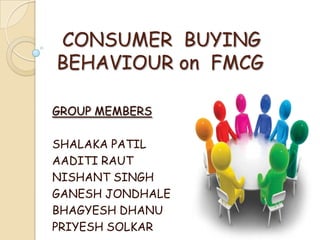

CONSUMER BUYING
BEHAVIOUR on FMCG
GROUP MEMBERS
SHALAKA PATIL
AADITI RAUT
NISHANT SINGH
GANESH JONDHALE
BHAGYESH DHANU
PRIYESH SOLKAR
Consumer Buying Behavior
 Consumer Buying Behavior
The buying behavior of final consumers
(individuals & households) who buy
goods and services for personal
consumption.
 Study consumer behavior to answer:
“How do consumers respond to
marketing efforts the company might
use?”
Why do we need to study
Consumer Behavior ?
Because no longer can we take the
customer/consumer for the
granted.
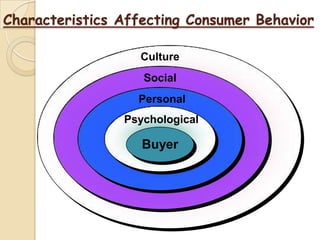
Characteristics Affecting Consumer Behavior
Buyer
Psychological
Personal
Social
Culture
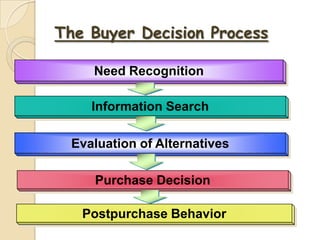
Need Recognition
Information Search
Evaluation of Alternatives
Purchase Decision
Postpurchase Behavior
The Buyer Decision Process
Fast Moving Consumer Goods
 Fast Moving Consumer Goods
(FMCG) – or Consumer Packaged
Goods (CPG) – are products that are
sold quickly and at relatively low
cost.
 A type of good that is consumed
every day by the average consumer.
Introduction
Also known as Consumer Packaged Goods (CPG)
Well established distribution network,
Low penetration levels,
Absolute profit made on FMCG products is relatively
small but they sell in large quantity & earn large
profits,
Intense competition between the organized and
unorganized segments,
Lower per capital consumption &
Low operating cost.
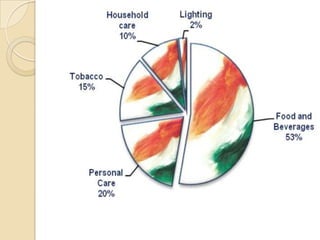
FMCG Category & Products
 Household Care
e.g. laundry soaps, mosquito repellents, dish cleaners etc.
 Food & beverages
e.g. soft drinks, bakery products, tea, coffee, vegetables
etc.
 Personal Care
e.g. oral care, hair care, skin
care, cosmetics, deodorants, perfumes etc.
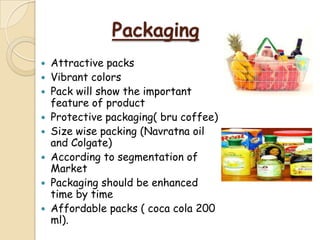
Packaging
 Attractive packs
 Vibrant colors
 Pack will show the important
feature of product
 Protective packaging( bru coffee)
 Size wise packing (Navratna oil
and Colgate)
 According to segmentation of
Market
 Packaging should be enhanced
time by time
 Affordable packs ( coca cola 200
ml).
Advertisement
 Huge investment on advertisement
 Frequent broadcast
 Specially during peak hours
 During live matches
 During popular TV shows
 Target TV channels
 Through banners, posters, trial
packs, events, hoardings, radio etc.
 Based on Market Research
Why Advertisement?
 As a reminder
 To inform about our product
 To show the success of brand
 To attract the customers
 To hamper the unsecured mind of
consumer (e.g. Saffola, Dettol)
 To arise the need purposely
 To attach consumer emotionally with
product
 To show facts and figures of products
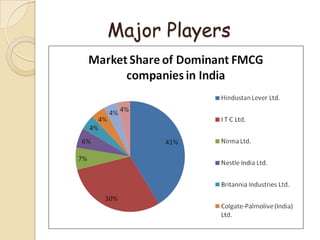
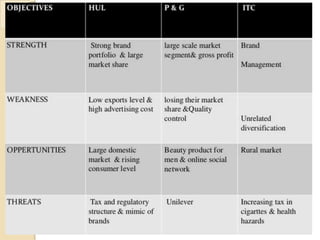
Earlier known as Hindustan lever limited.
It was formed in 1933 as lever brothers India limited Headquartered in Mumbai.
Hul is the market leader in Indian products such as tea, soaps, detergentsetc.
The company’s statement of corporate purpose is to meet the everyday needs of
people, everywhere.
The company was renamed in late June 2007 to Hindustan unilever limited.
Hul holds 100 factories across India for manufacturing its diverse product range.
 ITC is one of India's foremost private sector companies with a market
capitalization of over US $ 30 bln and a turnover of US $ 6 bln.
 ITC ranks among India's 10 Most Valuable (company)Brands.
 While ITC is an outstanding market leader in
cigarettes, Hotels, Paperboards, Packaging and Agri-Export.
 ITC is rated among the World's Best Big Companies.
Major Players
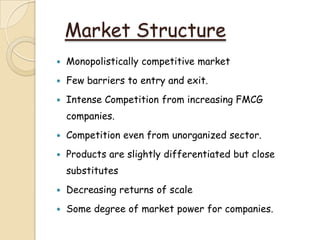
Market Structure
 Monopolistically competitive market
 Few barriers to entry and exit.
 Intense Competition from increasing FMCG
companies.
 Competition even from unorganized sector.
 Products are slightly differentiated but close
substitutes
 Decreasing returns of scale
 Some degree of market power for companies.
Price Determinants
 Rising prices of raw material due to inflation
 Increase in Labor cost.
 Price sensitivity of consumers.
 Intense competition.
 More choices for consumers.
 Price War.
Marketing Strategy
 Huge investment on advertising.
 Increased spending on advertisement and
promotion: From 8-9% to 12-14%
 Marketing plays significant role in Brand
building.
 Marketing mix - T.V, Radio and
Newspapers, Banners, posters, trial
packs, events, hoardings, Internet and e-
initiatives are gaining ground.
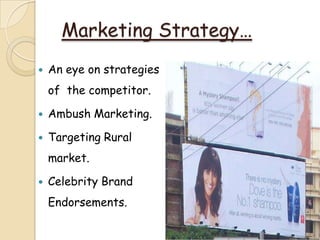
Marketing Strategy…
 An eye on strategies
of the competitor.
 Ambush Marketing.
 Targeting Rural
market.
 Celebrity Brand
Endorsements.
DRAWING CONCLUSION
Sns

Sns

  • 1.
    CONSUMER BUYING BEHAVIOUR onFMCG GROUP MEMBERS SHALAKA PATIL AADITI RAUT NISHANT SINGH GANESH JONDHALE BHAGYESH DHANU PRIYESH SOLKAR
  • 2.
  • 3.
    Consumer Buying Behavior Consumer Buying Behavior The buying behavior of final consumers (individuals & households) who buy goods and services for personal consumption.  Study consumer behavior to answer: “How do consumers respond to marketing efforts the company might use?”
  • 4.
    Why do weneed to study Consumer Behavior ? Because no longer can we take the customer/consumer for the granted.
  • 5.
    Characteristics Affecting ConsumerBehavior Buyer Psychological Personal Social Culture
  • 6.
    Need Recognition Information Search Evaluationof Alternatives Purchase Decision Postpurchase Behavior The Buyer Decision Process
  • 7.
  • 8.
    Fast Moving ConsumerGoods  Fast Moving Consumer Goods (FMCG) – or Consumer Packaged Goods (CPG) – are products that are sold quickly and at relatively low cost.  A type of good that is consumed every day by the average consumer.
  • 9.
    Introduction Also known asConsumer Packaged Goods (CPG) Well established distribution network, Low penetration levels, Absolute profit made on FMCG products is relatively small but they sell in large quantity & earn large profits, Intense competition between the organized and unorganized segments, Lower per capital consumption & Low operating cost.
  • 10.
    FMCG Category &Products  Household Care e.g. laundry soaps, mosquito repellents, dish cleaners etc.  Food & beverages e.g. soft drinks, bakery products, tea, coffee, vegetables etc.  Personal Care e.g. oral care, hair care, skin care, cosmetics, deodorants, perfumes etc.
  • 12.
    Packaging  Attractive packs Vibrant colors  Pack will show the important feature of product  Protective packaging( bru coffee)  Size wise packing (Navratna oil and Colgate)  According to segmentation of Market  Packaging should be enhanced time by time  Affordable packs ( coca cola 200 ml).
  • 13.
    Advertisement  Huge investmenton advertisement  Frequent broadcast  Specially during peak hours  During live matches  During popular TV shows  Target TV channels  Through banners, posters, trial packs, events, hoardings, radio etc.  Based on Market Research
  • 14.
    Why Advertisement?  Asa reminder  To inform about our product  To show the success of brand  To attract the customers  To hamper the unsecured mind of consumer (e.g. Saffola, Dettol)  To arise the need purposely  To attach consumer emotionally with product  To show facts and figures of products
  • 15.
    Earlier known asHindustan lever limited. It was formed in 1933 as lever brothers India limited Headquartered in Mumbai. Hul is the market leader in Indian products such as tea, soaps, detergentsetc. The company’s statement of corporate purpose is to meet the everyday needs of people, everywhere. The company was renamed in late June 2007 to Hindustan unilever limited. Hul holds 100 factories across India for manufacturing its diverse product range.
  • 16.
     ITC isone of India's foremost private sector companies with a market capitalization of over US $ 30 bln and a turnover of US $ 6 bln.  ITC ranks among India's 10 Most Valuable (company)Brands.  While ITC is an outstanding market leader in cigarettes, Hotels, Paperboards, Packaging and Agri-Export.  ITC is rated among the World's Best Big Companies.
  • 17.
  • 20.
    Market Structure  Monopolisticallycompetitive market  Few barriers to entry and exit.  Intense Competition from increasing FMCG companies.  Competition even from unorganized sector.  Products are slightly differentiated but close substitutes  Decreasing returns of scale  Some degree of market power for companies.
  • 21.
    Price Determinants  Risingprices of raw material due to inflation  Increase in Labor cost.  Price sensitivity of consumers.  Intense competition.  More choices for consumers.  Price War.
  • 22.
    Marketing Strategy  Hugeinvestment on advertising.  Increased spending on advertisement and promotion: From 8-9% to 12-14%  Marketing plays significant role in Brand building.  Marketing mix - T.V, Radio and Newspapers, Banners, posters, trial packs, events, hoardings, Internet and e- initiatives are gaining ground.
  • 23.
    Marketing Strategy…  Aneye on strategies of the competitor.  Ambush Marketing.  Targeting Rural market.  Celebrity Brand Endorsements.
  • 24.