Marine Debris:
A Growing Global Issue
Marsha Sisney
Environmental Stewardship
Miami University
The hypothesis proposed that a greater
abundance of land-based marine debris would be
observed along the shorelines of sandy beaches.
Is there a significant difference between
the abundance of land-based as
compared to sea-based sources of
marine debris accumulating on beaches
along fresh and saltwater shorelines?
Question & Hypothesis
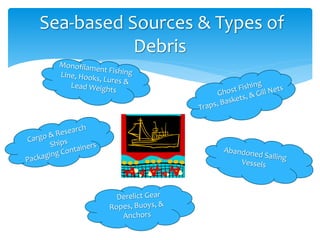
Sea-based Sources & Types of
Debris
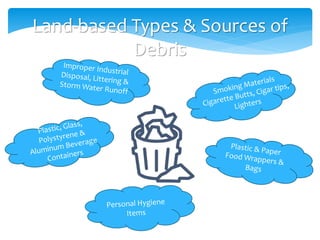
Land-based Types & Sources of
Debris
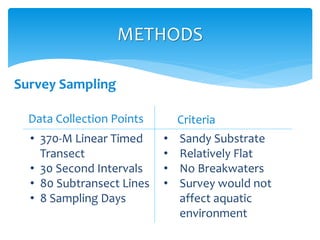
Survey Sampling
METHODS
Data Collection Points Criteria
• 370-M Linear Timed
Transect
• 30 Second Intervals
• 80 Subtransect Lines
• 8 Sampling Days
• Sandy Substrate
• Relatively Flat
• No Breakwaters
• Survey would not
affect aquatic
environment
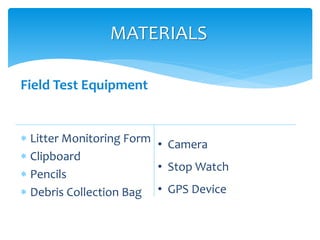
Field Test Equipment
 Litter Monitoring Form
 Clipboard
 Pencils
 Debris Collection Bag
MATERIALS
• Camera
• Stop Watch
• GPS Device
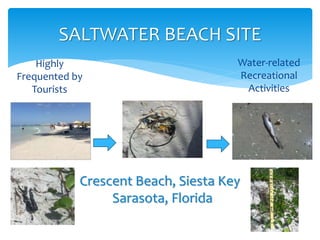
SALTWATER BEACH SITE
Crescent Beach, Siesta Key
Sarasota, Florida
Highly
Frequented by
Tourists
Water-related
Recreational
Activities
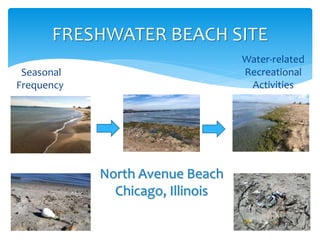
FRESHWATER BEACH SITE
North Avenue Beach
Chicago, Illinois
Seasonal
Frequency
Water-related
Recreational
Activities
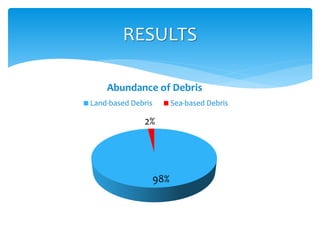
RESULTS
98%
2%
Abundance of Debris
Land-based Debris Sea-based Debris
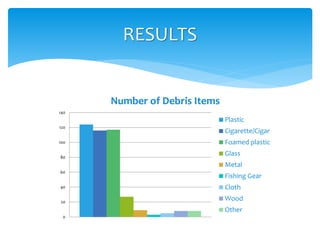
RESULTS
0
20
40
60
80
100
120
140
Number of Debris Items
Plastic
Cigarette/Cigar
Foamed plastic
Glass
Metal
Fishing Gear
Cloth
Wood
Other
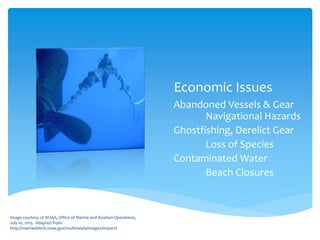
Economic Issues
Abandoned Vessels & Gear
Navigational Hazards
Ghostfishing, Derelict Gear
Loss of Species
Contaminated Water
Beach Closures
Image courtesy of NOAA, Office of Marine and Aviation Operations,
July 10, 2013. Adapted from:
http://marinedebris.noaa.gov/multimedia/images/impacts
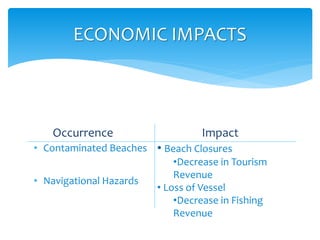
• Contaminated Beaches
• Navigational Hazards
ECONOMIC IMPACTS
Occurrence Impact
• Beach Closures
•Decrease in Tourism
Revenue
• Loss of Vessel
•Decrease in Fishing
Revenue
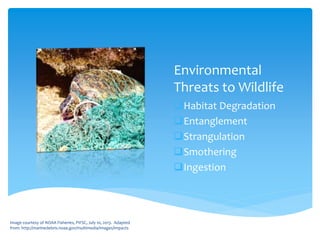
Environmental
Threats to Wildlife
Habitat Degradation
Entanglement
Strangulation
Smothering
Ingestion
Image courtesy of NOAA Fisheries, PIFSC, July 10, 2013. Adapted
from: http://marinedebris.noaa.gov/multimedia/images/impacts
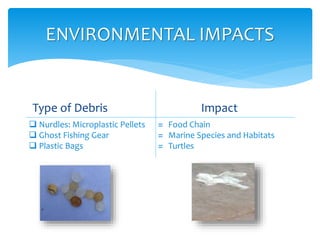
Type of Debris Impact
ENVIRONMENTAL IMPACTS
 Nurdles: Microplastic Pellets
 Ghost Fishing Gear
 Plastic Bags
≈ Food Chain
≈ Marine Species and Habitats
≈ Turtles
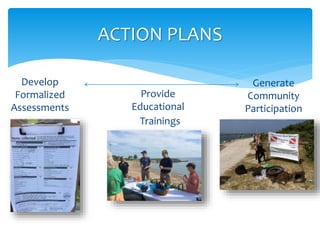
ACTION PLANS
Develop
Formalized
Assessments
Generate
Community
Participation
Provide
Educational
Trainings
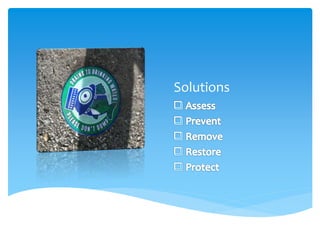
Solutions
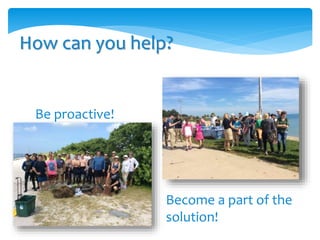
Be proactive!
How can you help?
Become a part of the
solution!
 Commit more global resources to the protection and restoration
of marine ecosystems
 Increase research and assessments on the abundance,
accumulation rates and impact of marine debris on land and in
water
 Develop universal action plan to manage human impact
 Educate and create community awareness on sources of debris
 Promote global responsibility
 Change the culture and encourage citizens to reduce, reuse,
recycle
 Be proactive and become a part of the solution
REFLECTION ON MARINE DEBRIS
Thank You for Listening!

Marine Debris PowerPoint

  • 1.
    Marine Debris: A GrowingGlobal Issue Marsha Sisney Environmental Stewardship Miami University
  • 2.
    The hypothesis proposedthat a greater abundance of land-based marine debris would be observed along the shorelines of sandy beaches. Is there a significant difference between the abundance of land-based as compared to sea-based sources of marine debris accumulating on beaches along fresh and saltwater shorelines? Question & Hypothesis
  • 3.
    Sea-based Sources &Types of Debris
  • 4.
    Land-based Types &Sources of Debris
  • 5.
    Survey Sampling METHODS Data CollectionPoints Criteria • 370-M Linear Timed Transect • 30 Second Intervals • 80 Subtransect Lines • 8 Sampling Days • Sandy Substrate • Relatively Flat • No Breakwaters • Survey would not affect aquatic environment
  • 6.
    Field Test Equipment Litter Monitoring Form  Clipboard  Pencils  Debris Collection Bag MATERIALS • Camera • Stop Watch • GPS Device
  • 7.
    SALTWATER BEACH SITE CrescentBeach, Siesta Key Sarasota, Florida Highly Frequented by Tourists Water-related Recreational Activities
  • 8.
    FRESHWATER BEACH SITE NorthAvenue Beach Chicago, Illinois Seasonal Frequency Water-related Recreational Activities
  • 9.
  • 10.
    RESULTS 0 20 40 60 80 100 120 140 Number of DebrisItems Plastic Cigarette/Cigar Foamed plastic Glass Metal Fishing Gear Cloth Wood Other
  • 11.
    Economic Issues Abandoned Vessels& Gear Navigational Hazards Ghostfishing, Derelict Gear Loss of Species Contaminated Water Beach Closures Image courtesy of NOAA, Office of Marine and Aviation Operations, July 10, 2013. Adapted from: http://marinedebris.noaa.gov/multimedia/images/impacts
  • 12.
    • Contaminated Beaches •Navigational Hazards ECONOMIC IMPACTS Occurrence Impact • Beach Closures •Decrease in Tourism Revenue • Loss of Vessel •Decrease in Fishing Revenue
  • 13.
    Environmental Threats to Wildlife HabitatDegradation Entanglement Strangulation Smothering Ingestion Image courtesy of NOAA Fisheries, PIFSC, July 10, 2013. Adapted from: http://marinedebris.noaa.gov/multimedia/images/impacts
  • 14.
    Type of DebrisImpact ENVIRONMENTAL IMPACTS  Nurdles: Microplastic Pellets  Ghost Fishing Gear  Plastic Bags ≈ Food Chain ≈ Marine Species and Habitats ≈ Turtles
  • 15.
  • 16.
  • 17.
    Be proactive! How canyou help? Become a part of the solution!
  • 18.
     Commit moreglobal resources to the protection and restoration of marine ecosystems  Increase research and assessments on the abundance, accumulation rates and impact of marine debris on land and in water  Develop universal action plan to manage human impact  Educate and create community awareness on sources of debris  Promote global responsibility  Change the culture and encourage citizens to reduce, reuse, recycle  Be proactive and become a part of the solution REFLECTION ON MARINE DEBRIS
  • 19.
    Thank You forListening!