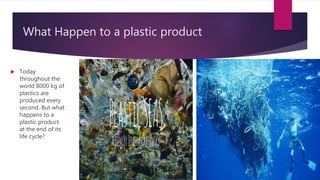
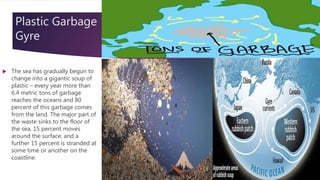
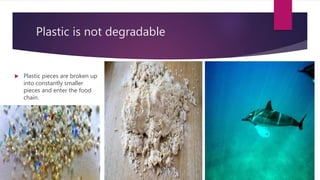
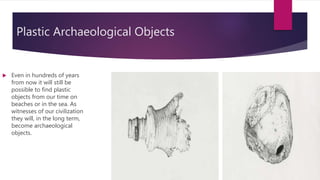
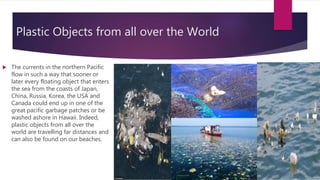
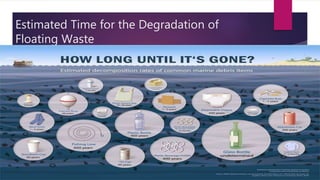
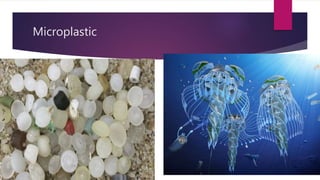
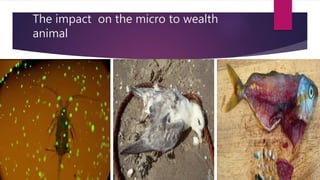
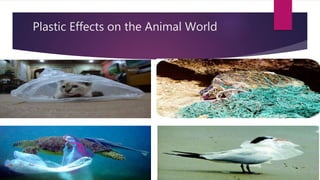
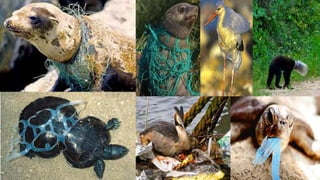
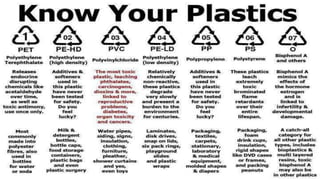
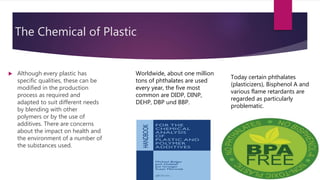
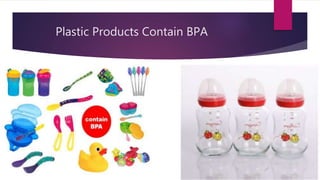
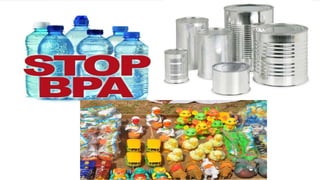
This document discusses the issue of plastic pollution and its effects. It notes that over 8,000 kg of plastics are produced every second but most plastic is not biodegradable and instead breaks down into microplastics that enter the food chain. Much of the plastic waste ends up polluting the oceans, with 6.4 metric tons entering oceans each year, where it can travel long distances and persist for hundreds of years as microplastics and potential archaeological findings on beaches in the future. This plastic pollution impacts wildlife through ingestion and entanglement. The document examines some solutions but notes the health and environmental concerns around certain chemicals used in plastics like phthalates and bisphenol A.