Counting and sizing microplastic
fibres, the accurate and easy way
Kunnen, T. H.
Gerber, G.
Coote, M. W.
Moodley, G. K.
Robertson-Andersson, D. V.
University of KwaZulu-Natal, School of Life Science
Introduction
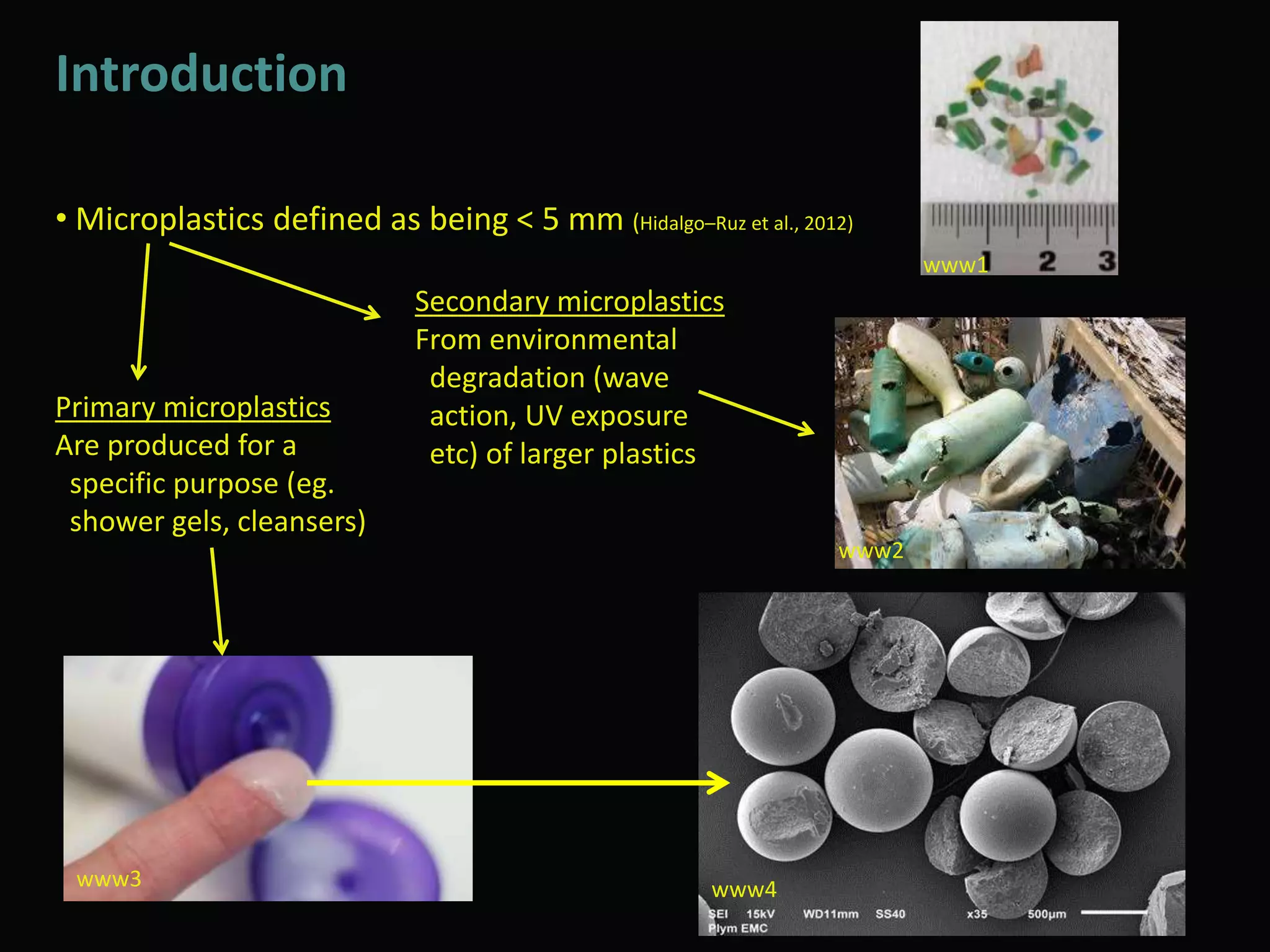
• Microplastics defined as being < 5 mm (Hidalgo–Ruz et al., 2012)
www1
www2
www4
Primary microplastics
Are produced for a
specific purpose (eg.
shower gels, cleansers)
Secondary microplastics
From environmental
degradation (wave
action, UV exposure
etc) of larger plastics
www3
• Global demand for plastic production is not decreasing
• Last estimated at over 311 million tonnes per year (PlasticsEurope, 2015)
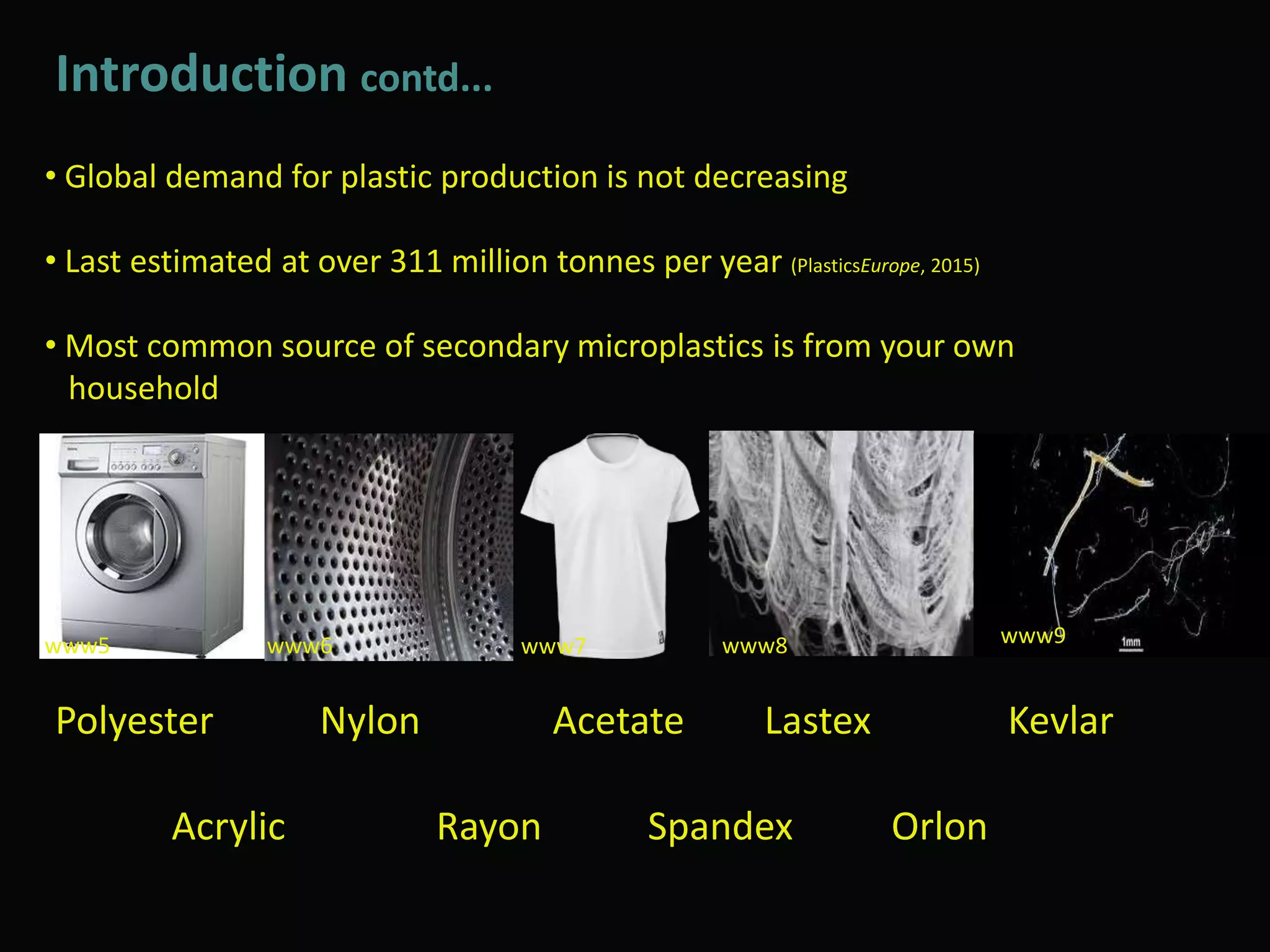
• Most common source of secondary microplastics is from your own
household
Introduction contd...
Polyester Lastex
Spandex
Acetate
Rayon
Nylon
Acrylic
Kevlar
Orlon
www5 www6 www7 www8 www9
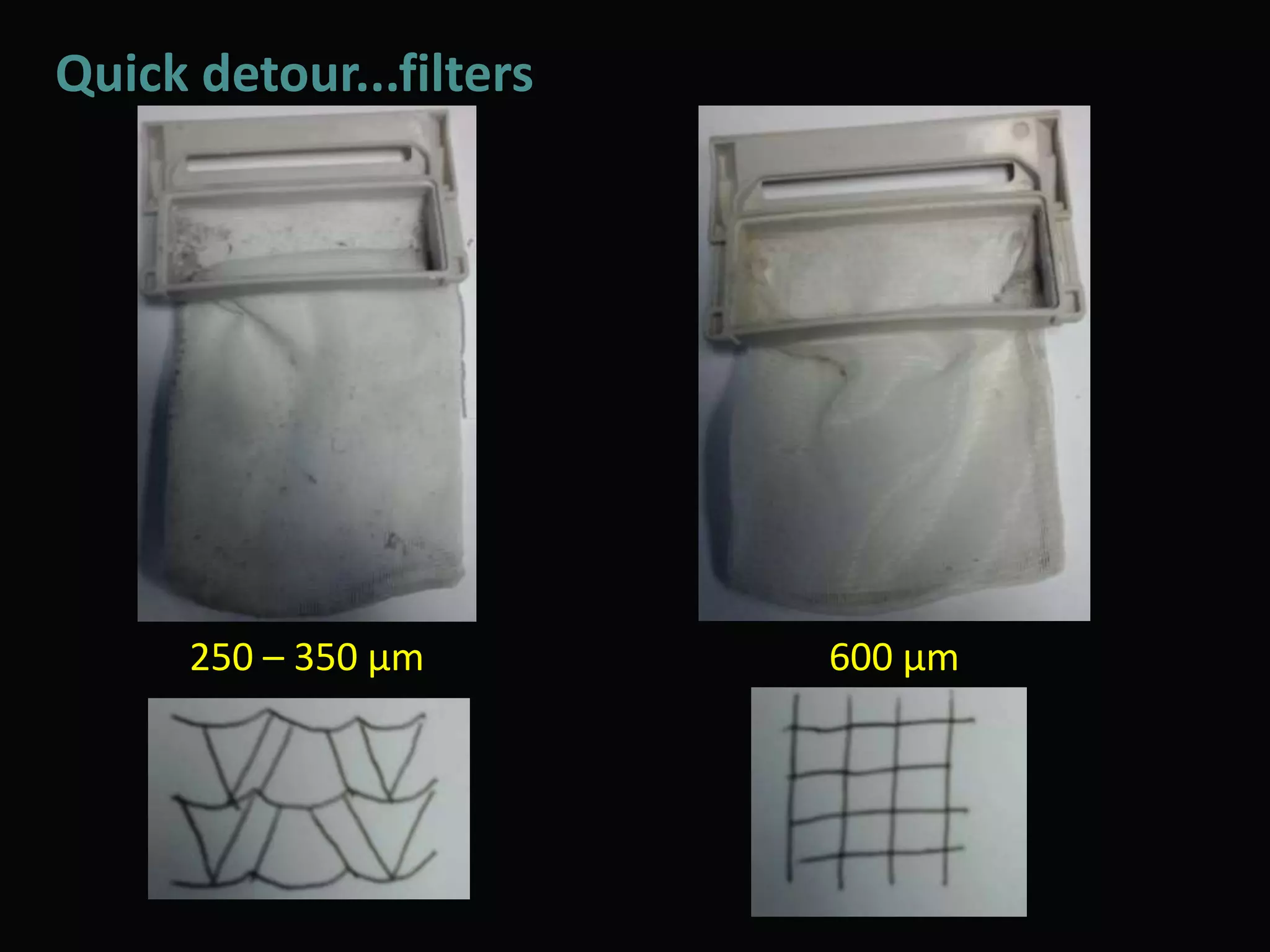
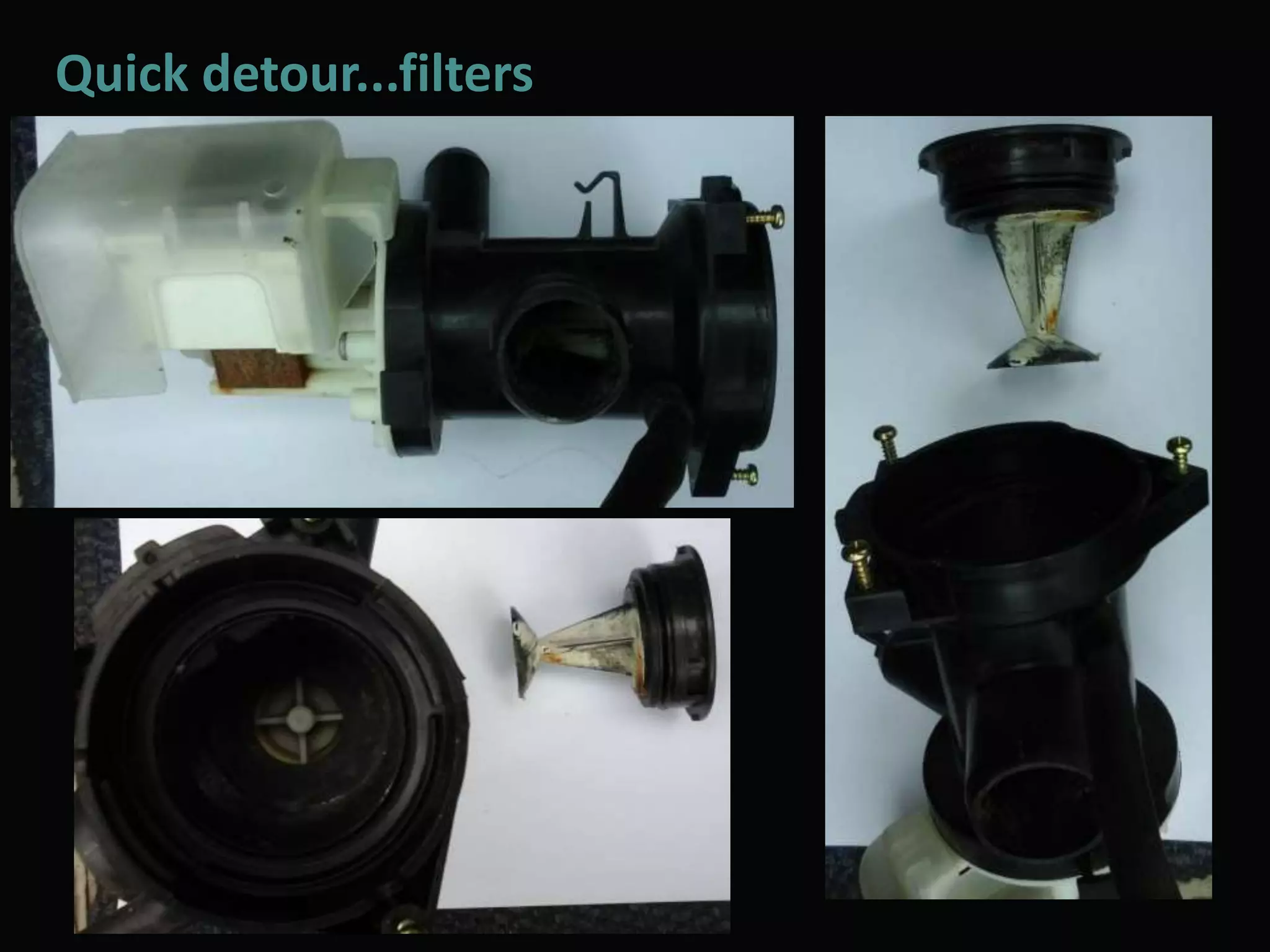
Quick detour...filters
250 – 350 µm 600 µm
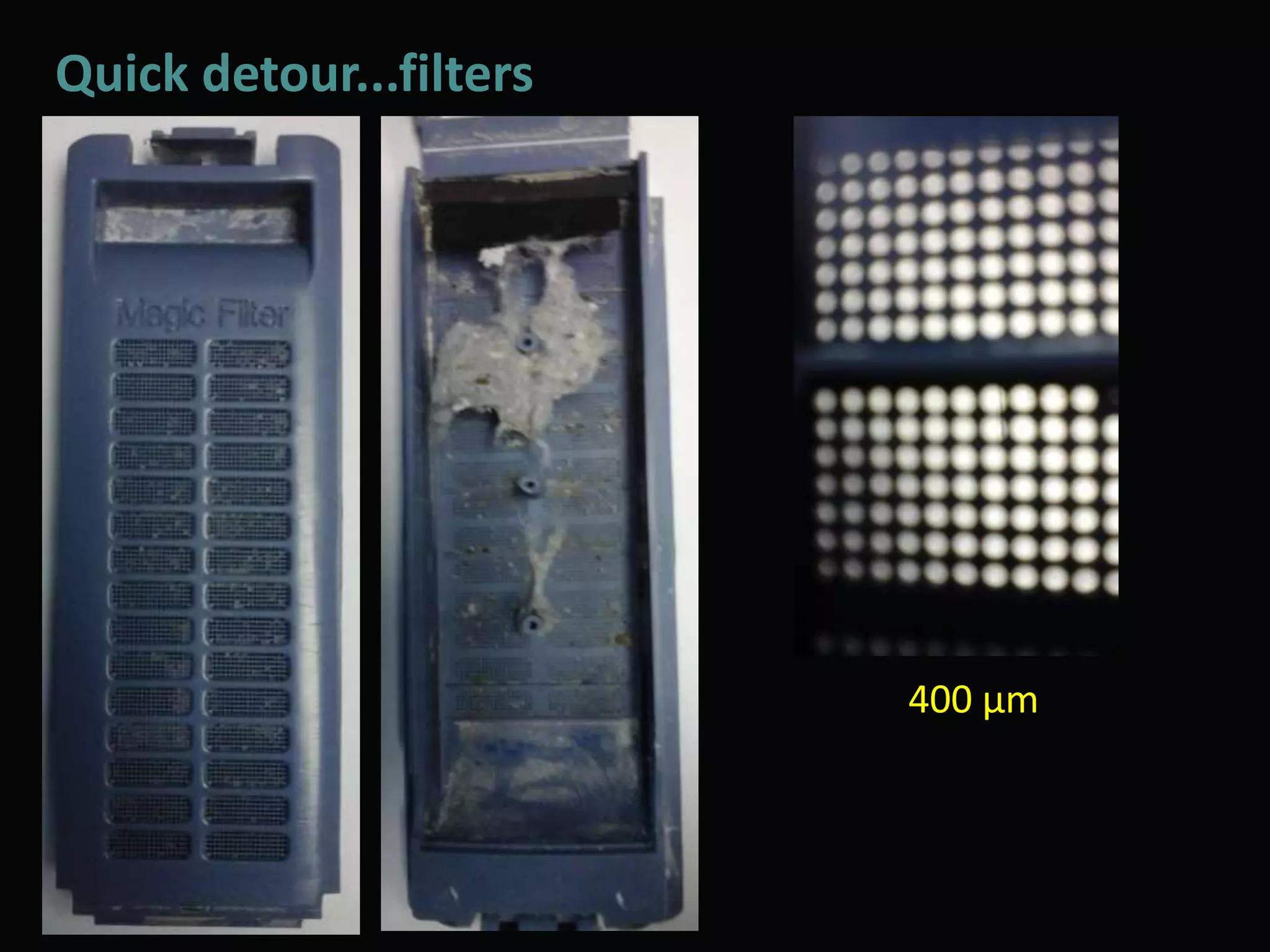
Quick detour...filters
400 µm
Quick detour...filters
Introduction contd...
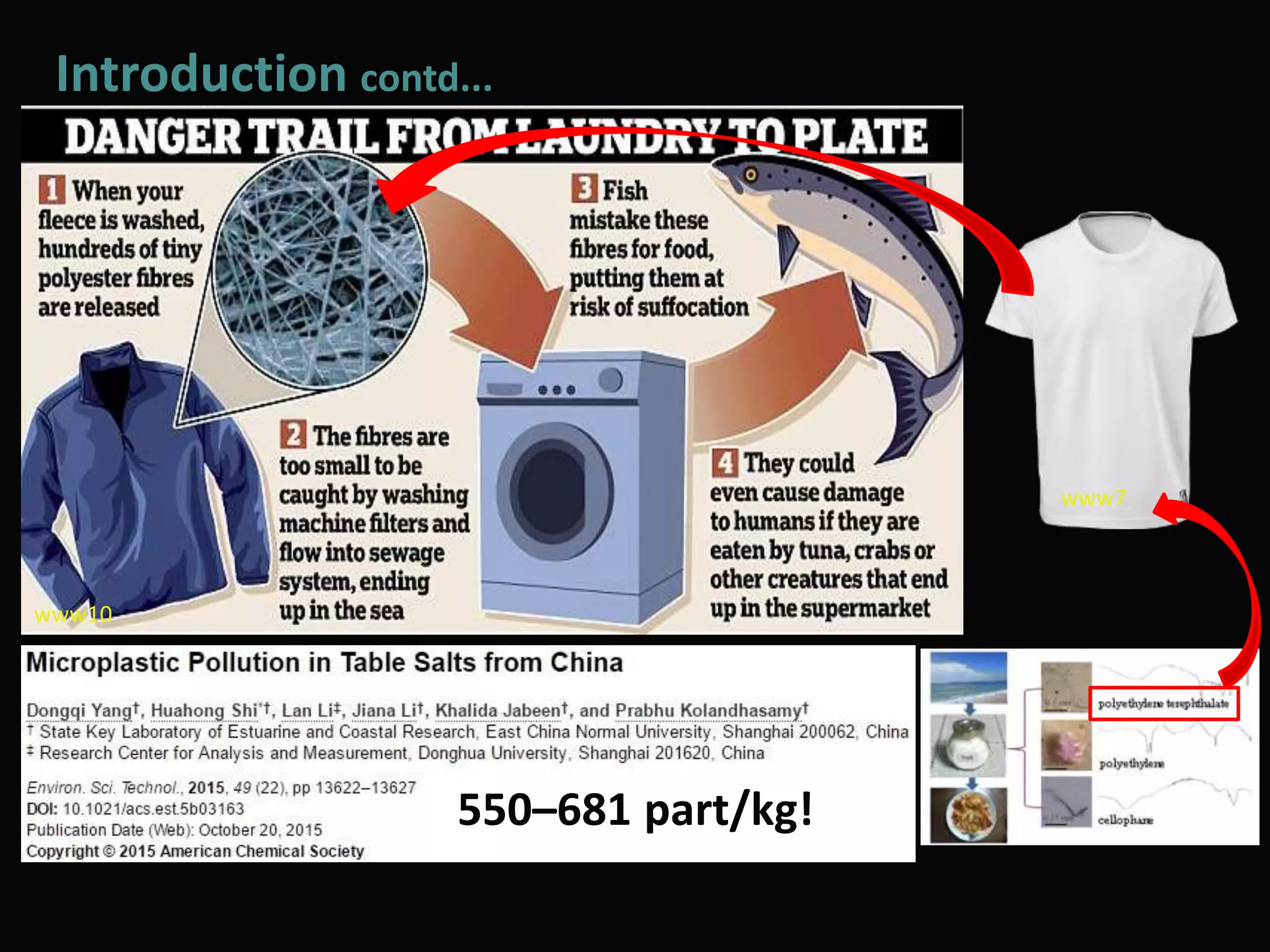
www10
550–681 part/kg!
www7
Introduction contd...
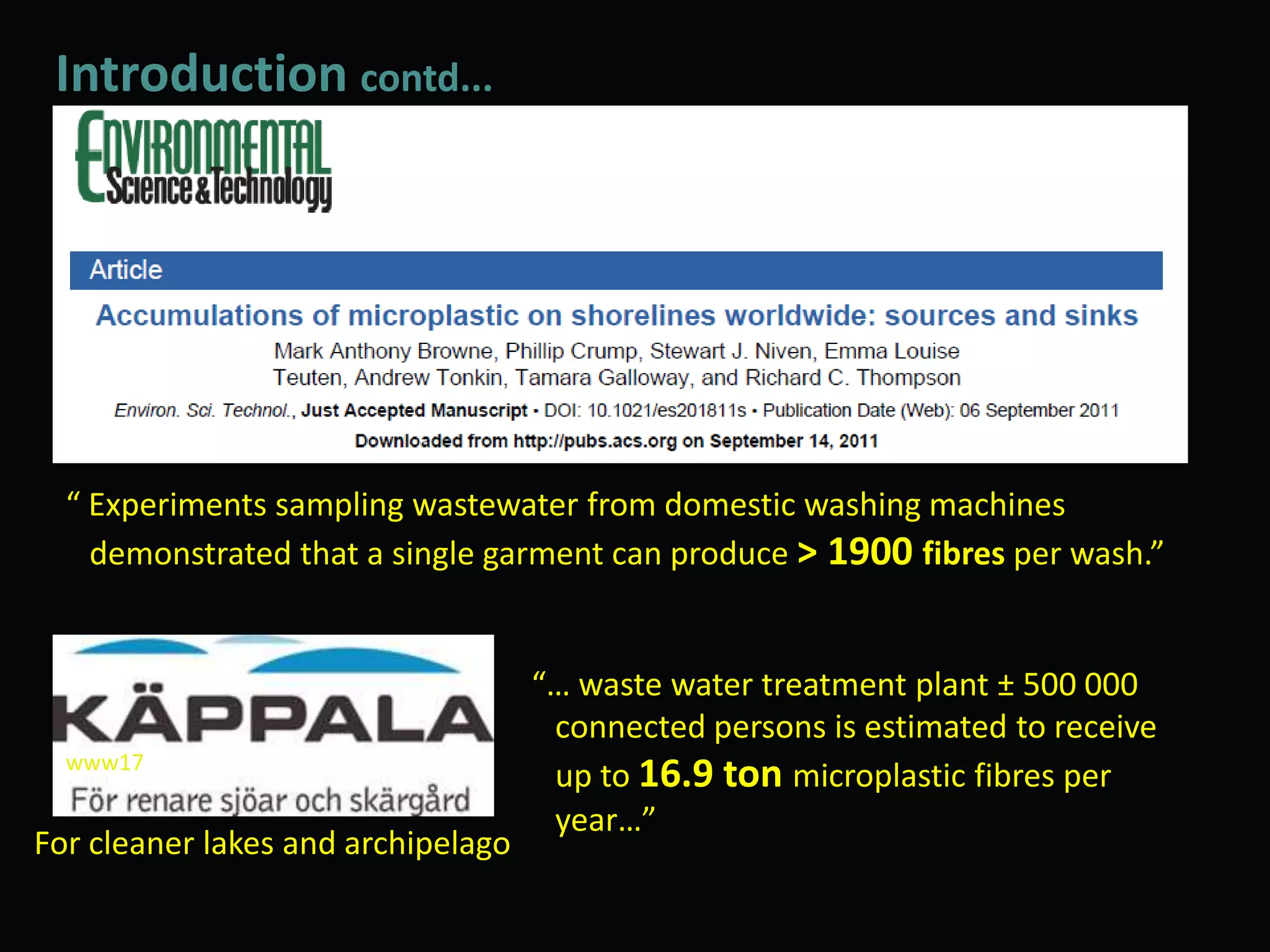
“ Experiments sampling wastewater from domestic washing machines
demonstrated that a single garment can produce > 1900 fibres per wash.”
www17
For cleaner lakes and archipelago
“… waste water treatment plant ± 500 000
connected persons is estimated to receive
up to 16.9 ton microplastic fibres per
year…”
Materials and Methods
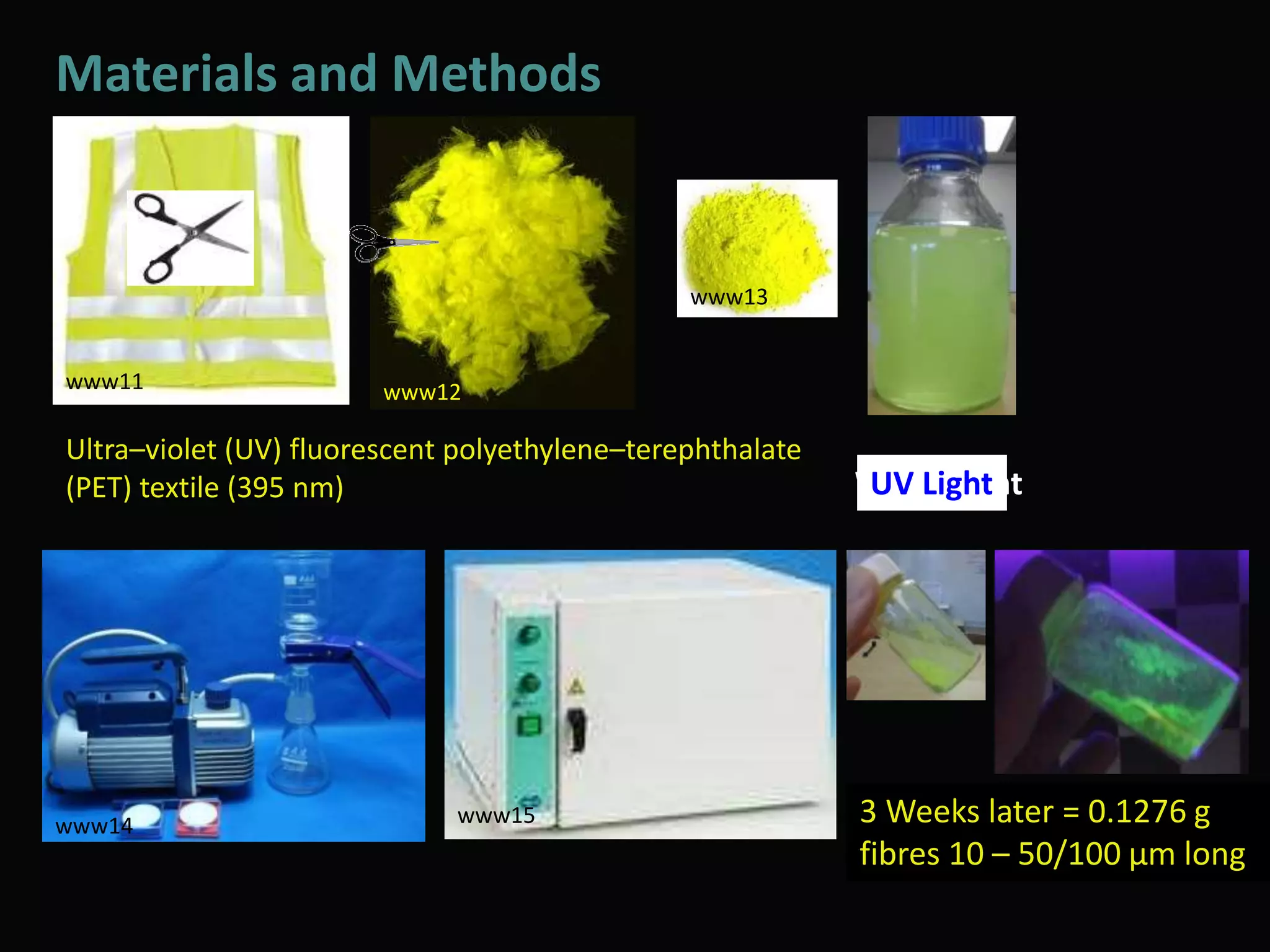
3 Weeks later = 0.1276 g
fibres 10 – 50/100 µm long
Ultra–violet (UV) fluorescent polyethylene–terephthalate
(PET) textile (395 nm)
www11 www12
www13
www14 www15
White LightUV Light
Materials and Methods contd...
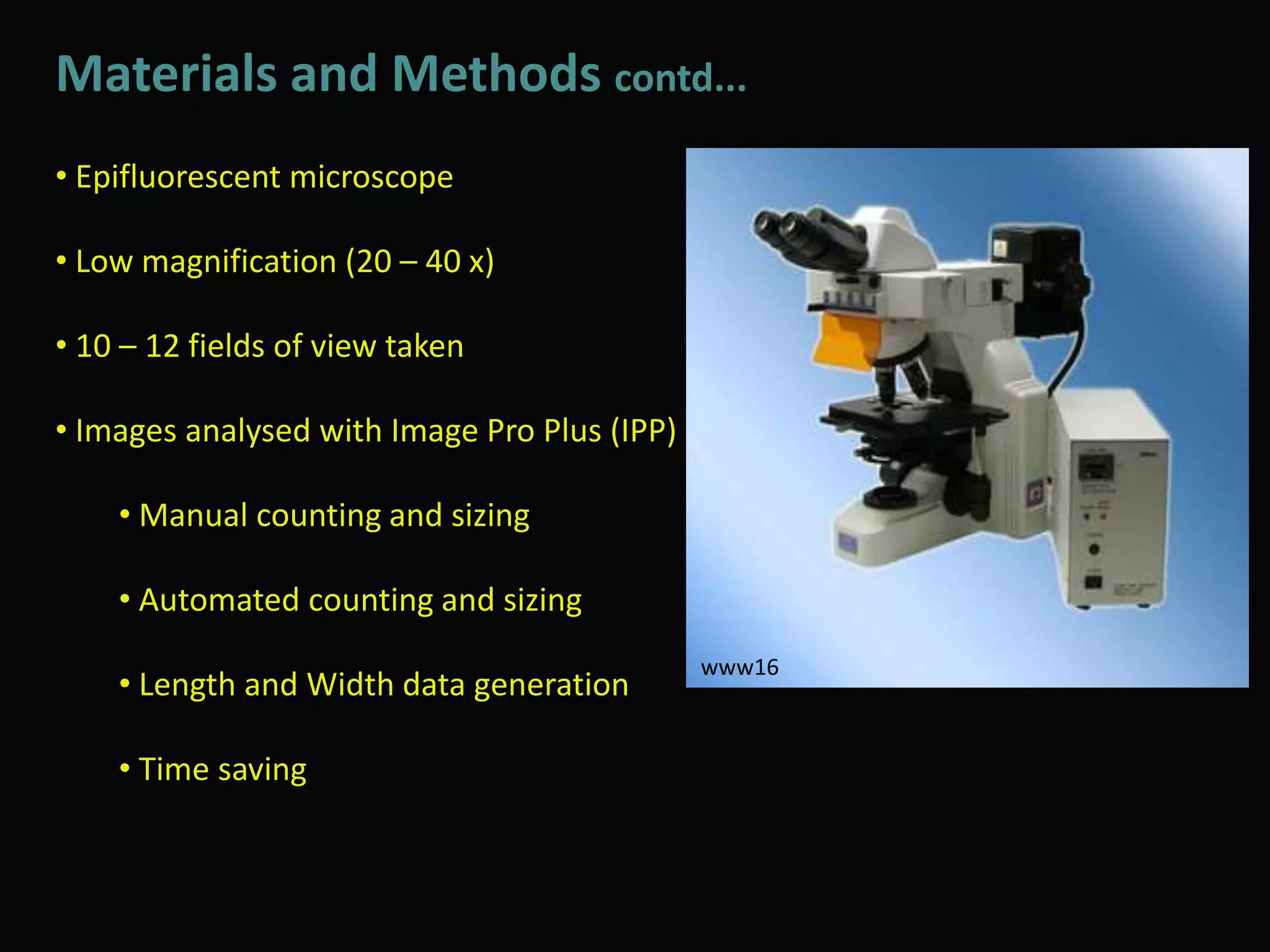
• Epifluorescent microscope
• Low magnification (20 – 40 x)
• 10 – 12 fields of view taken
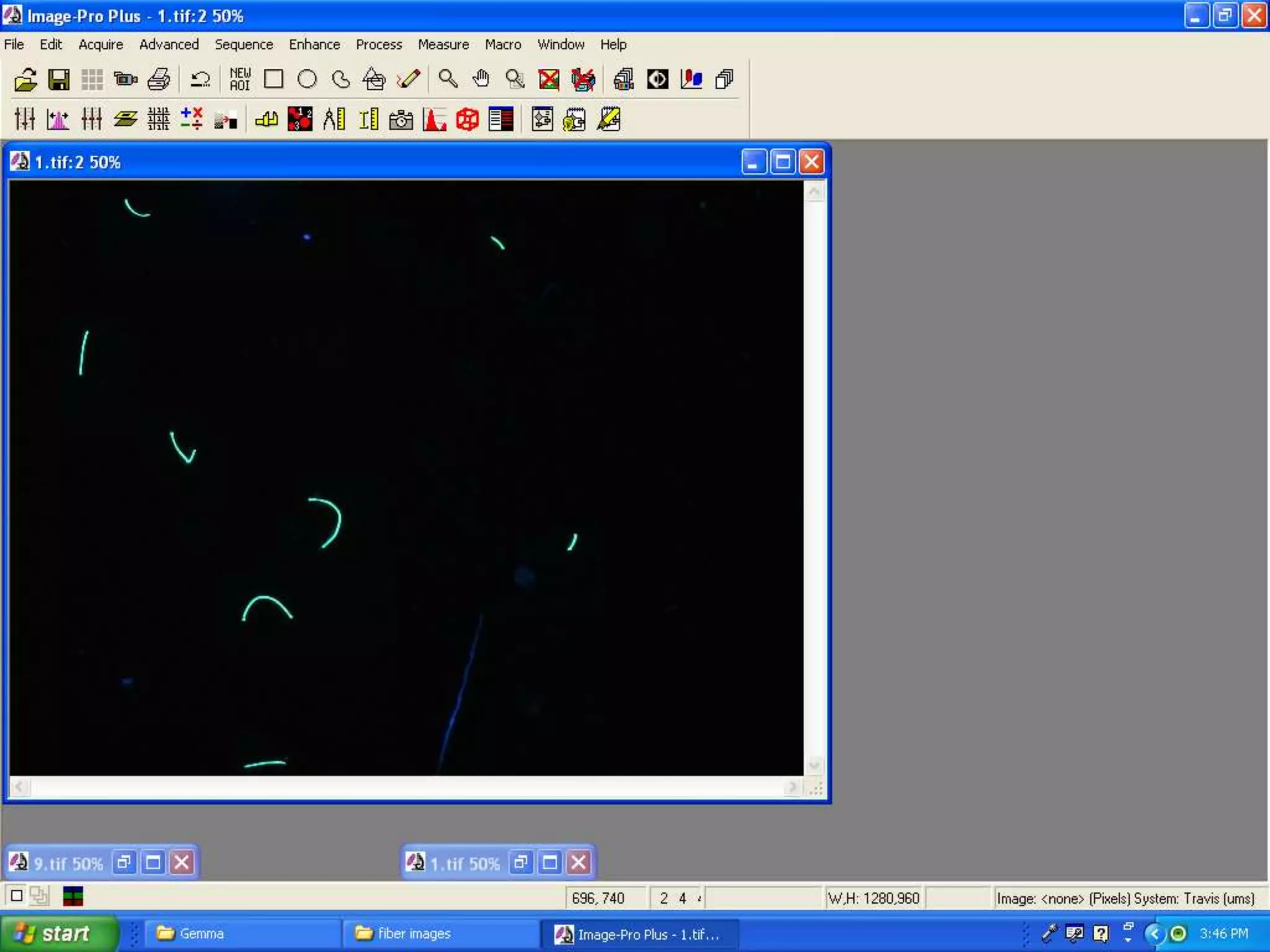
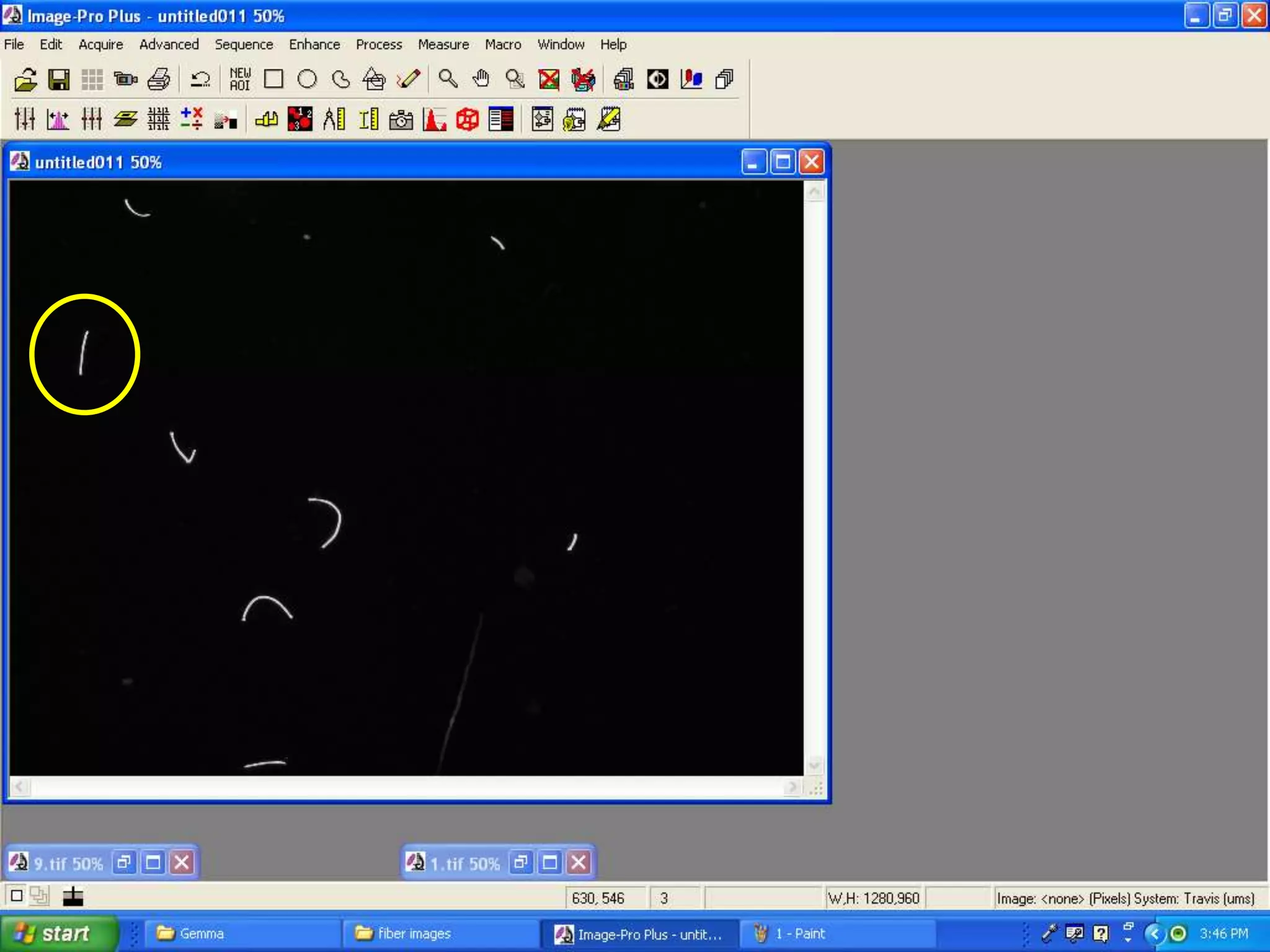
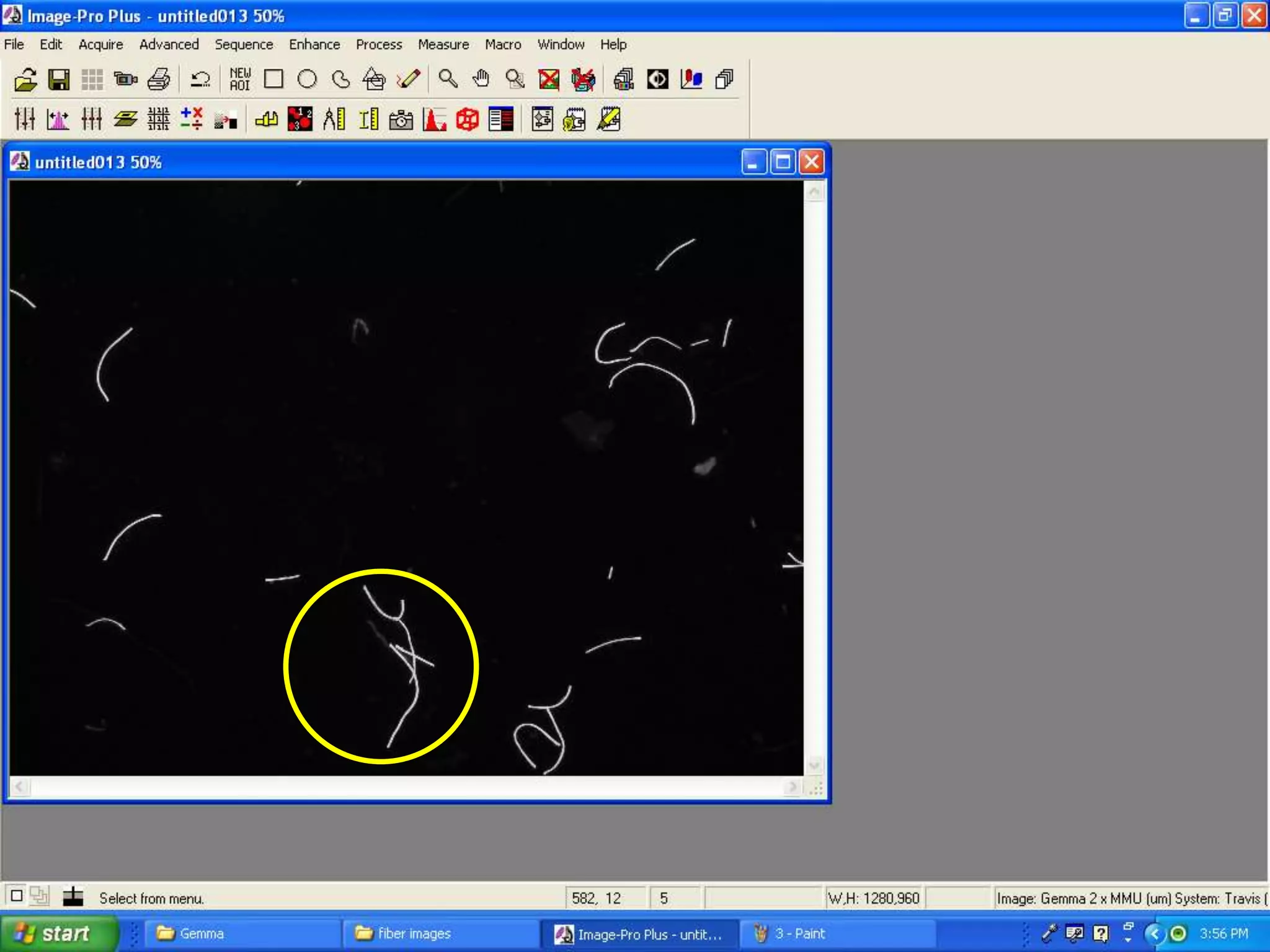
• Images analysed with Image Pro Plus (IPP)
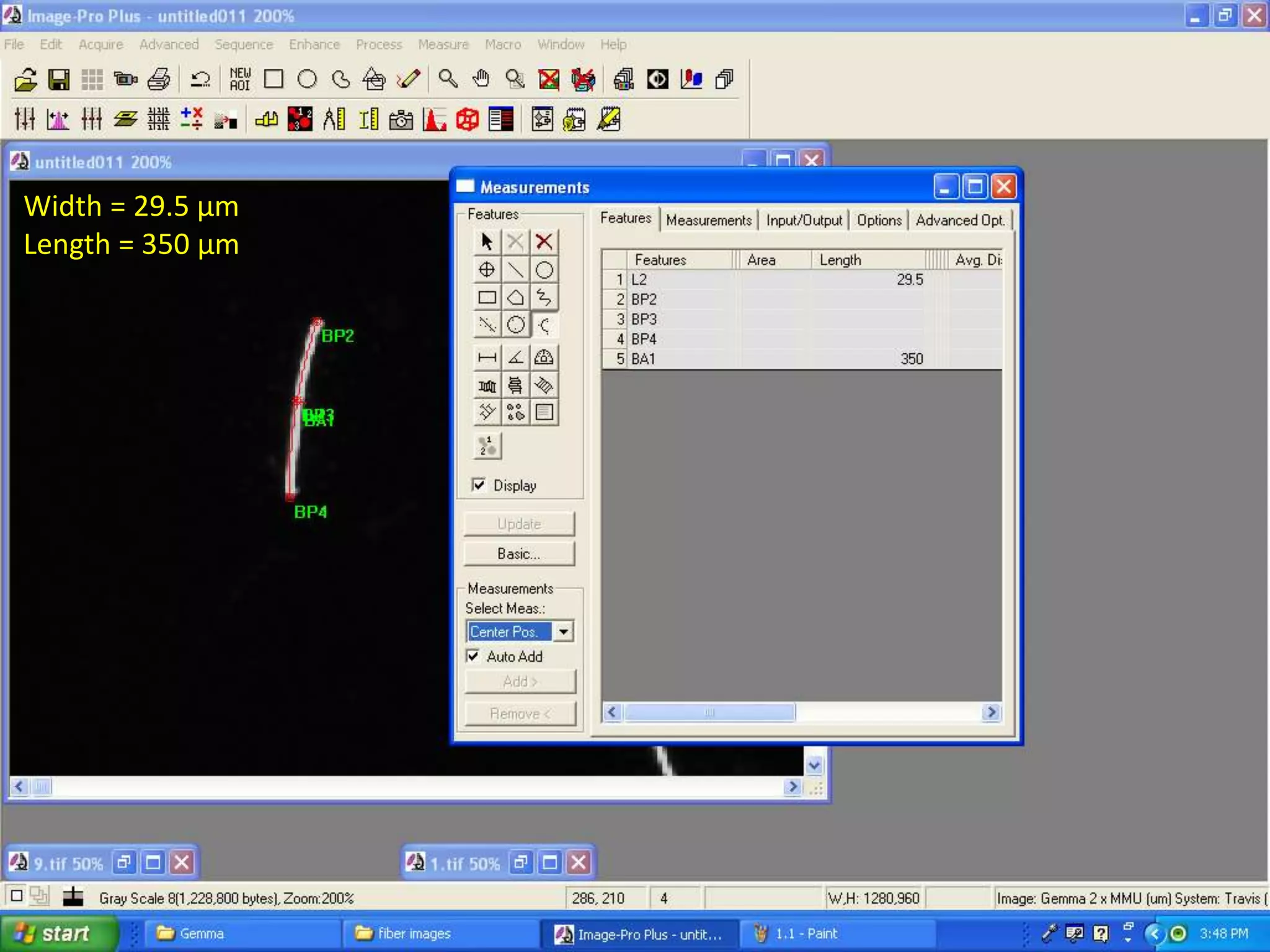
• Manual counting and sizing
• Automated counting and sizing
• Length and Width data generation
• Time saving
www16
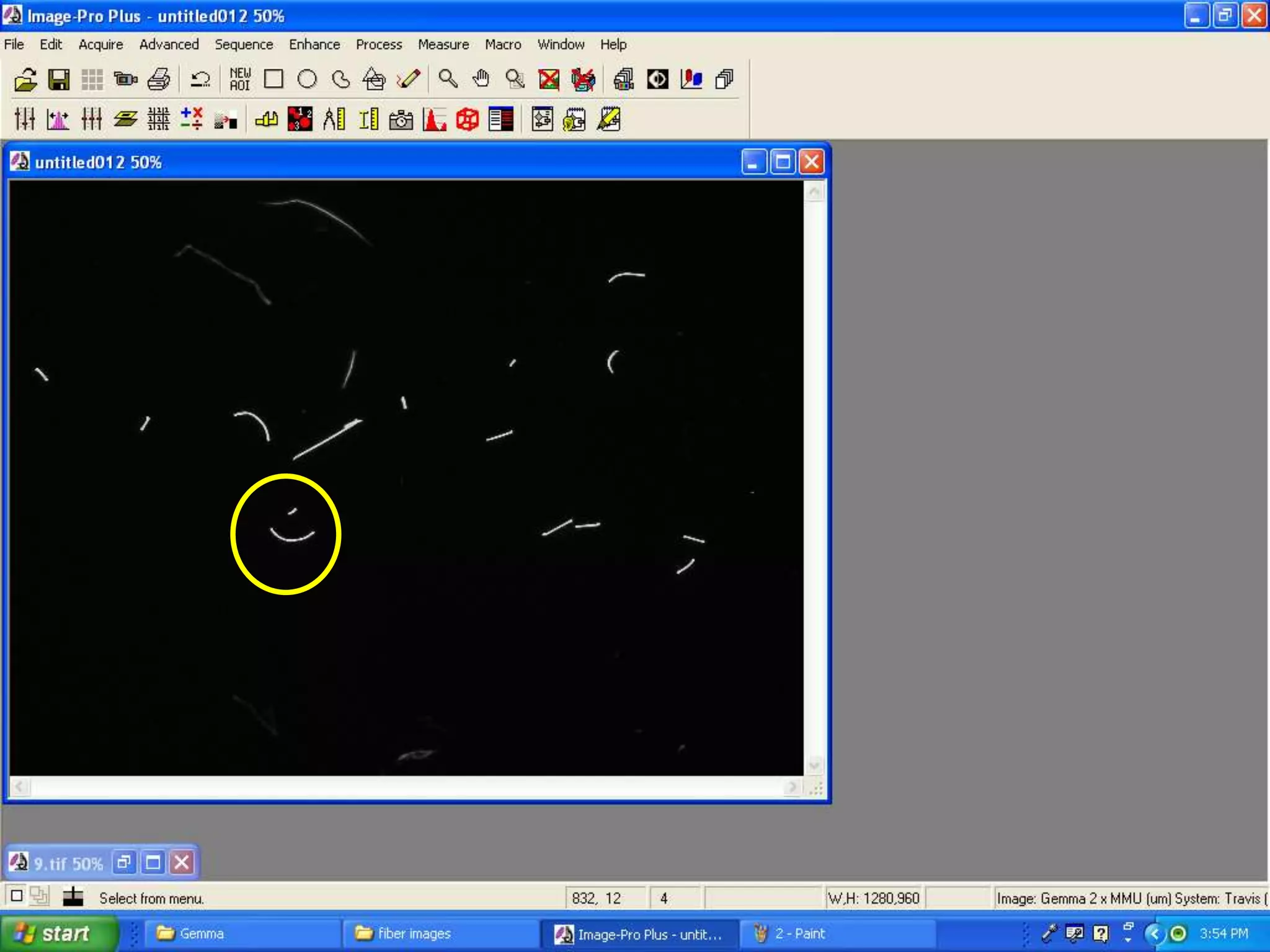
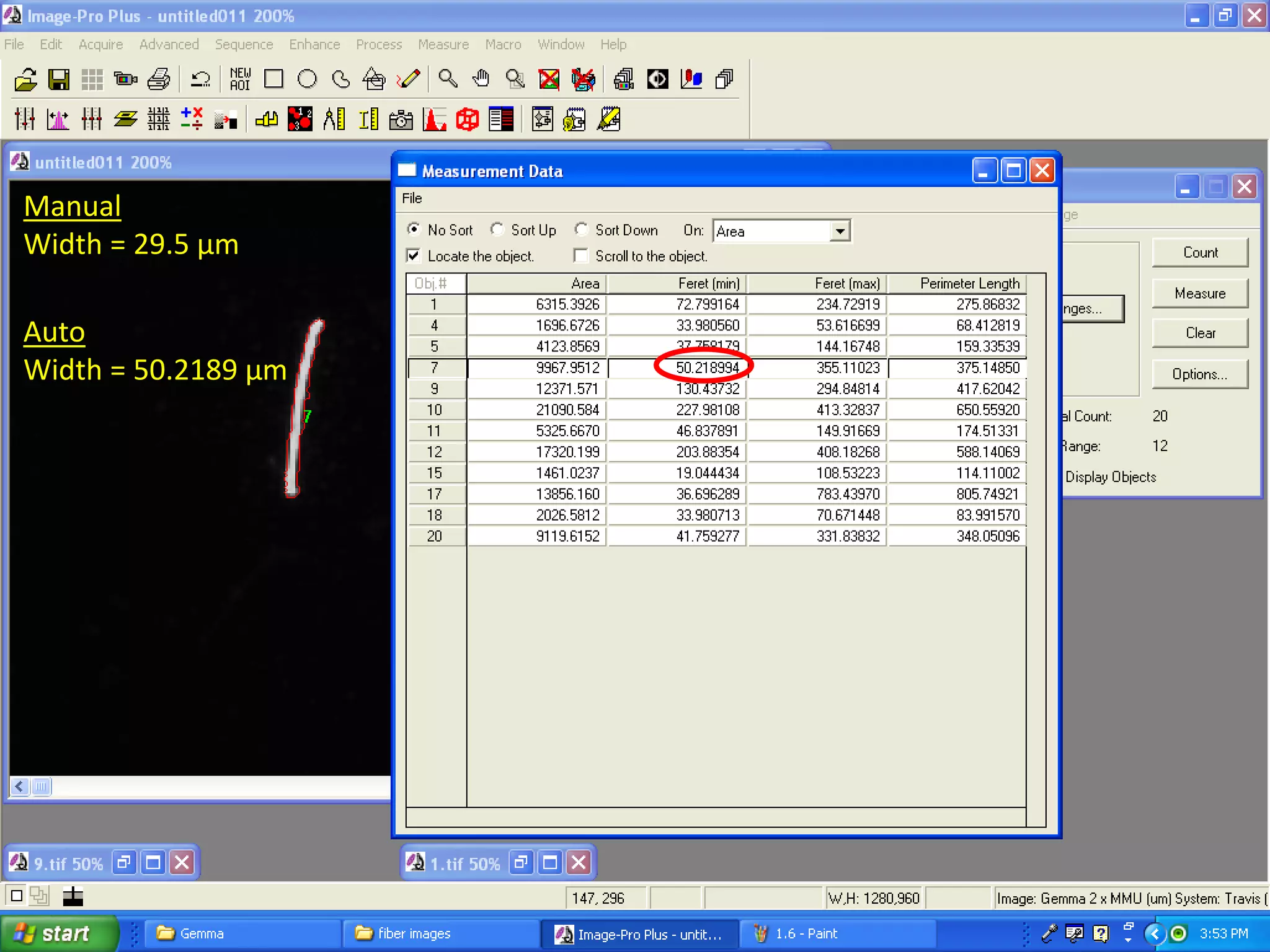
Width = 29.5 µm
Length = 350 µm
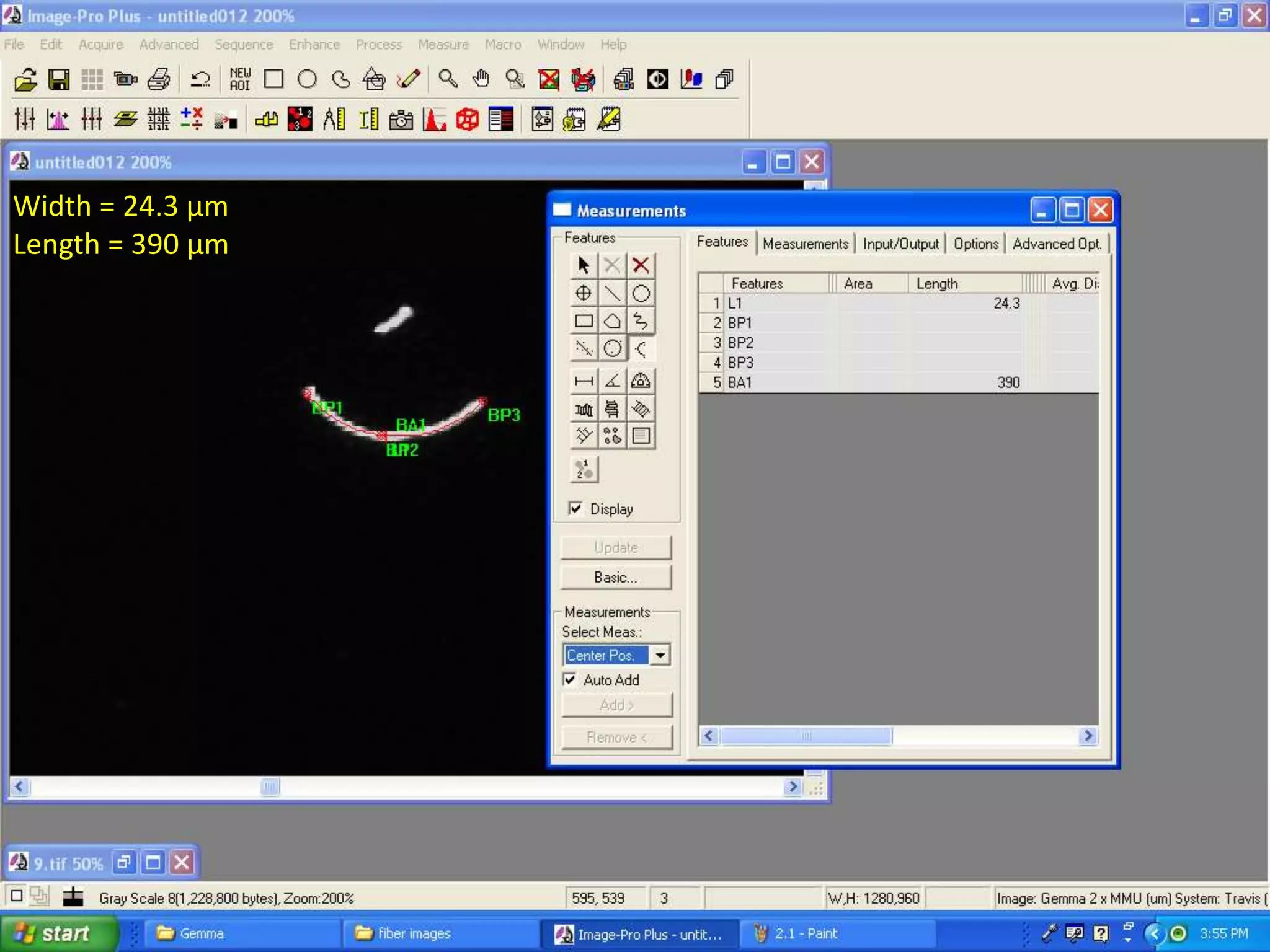
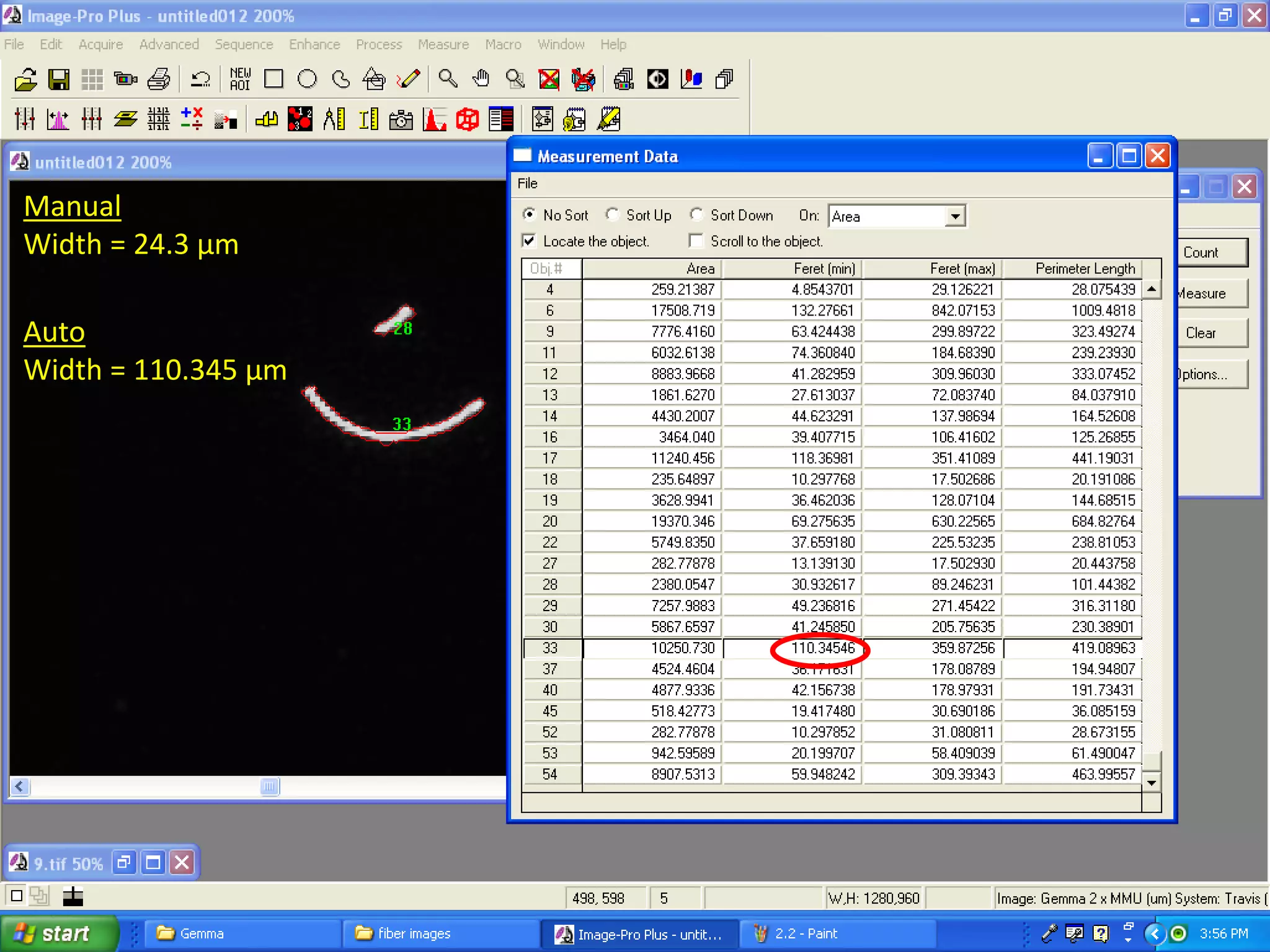
Width = 24.3 µm
Length = 390 µm
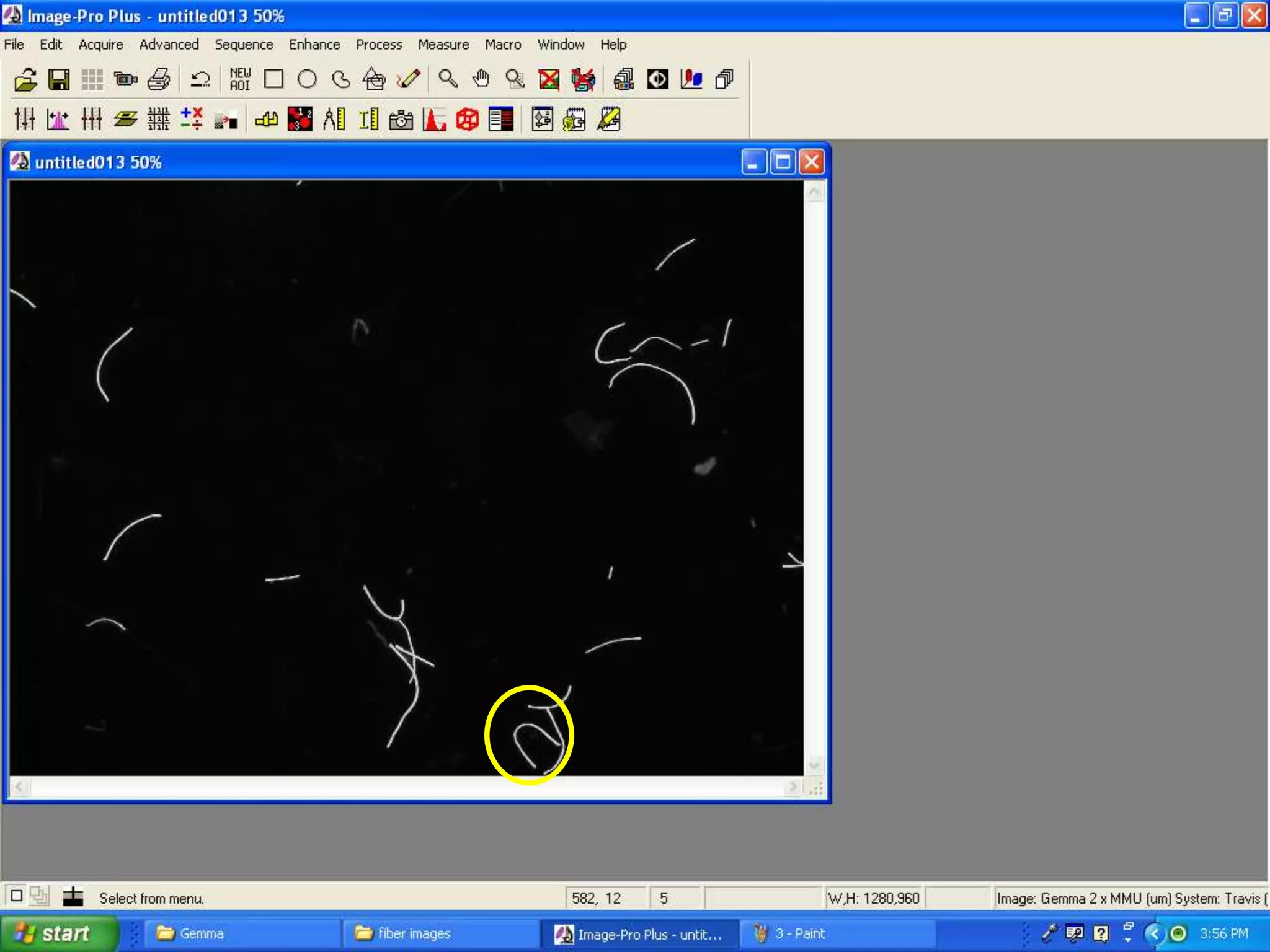
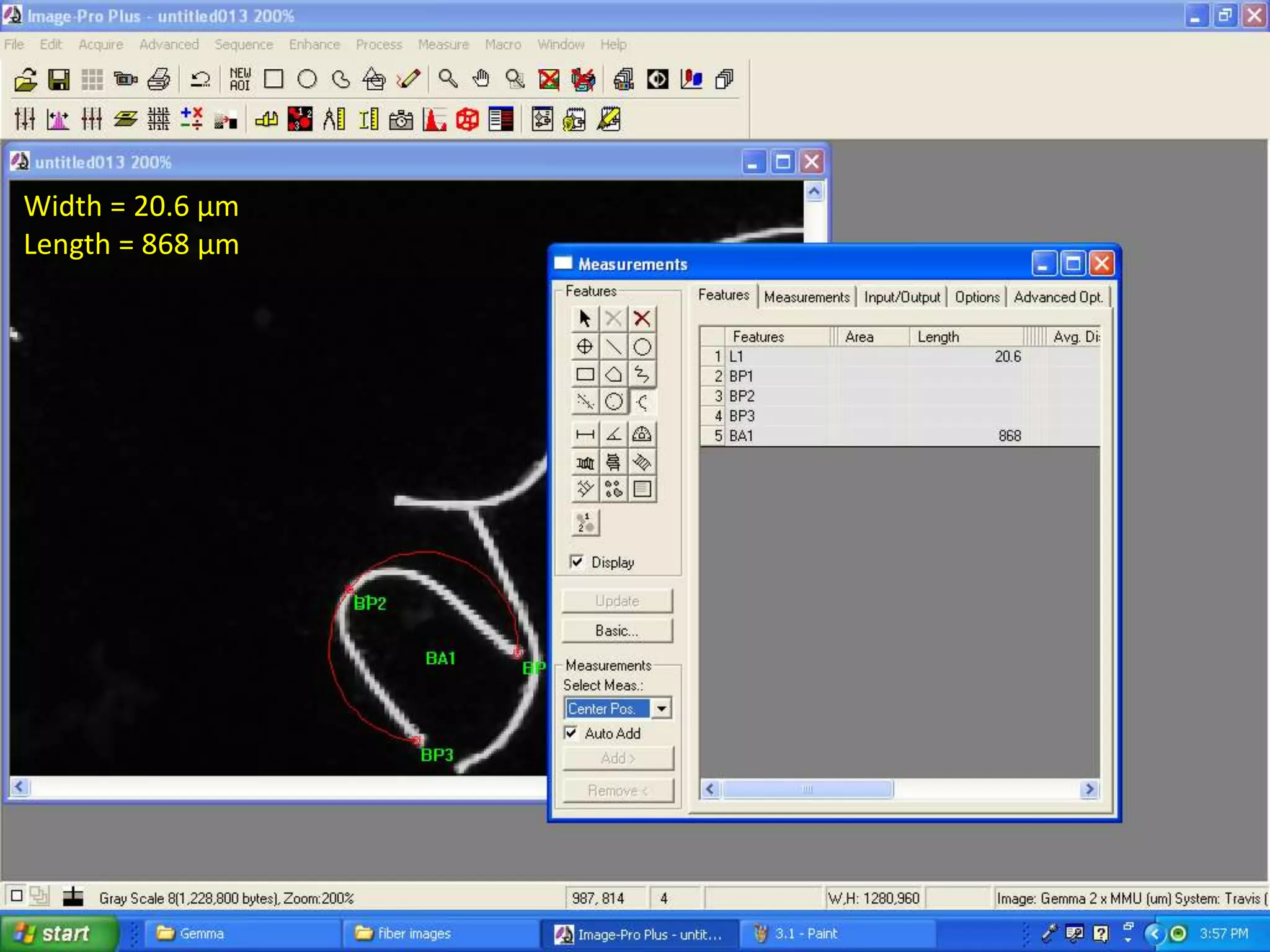
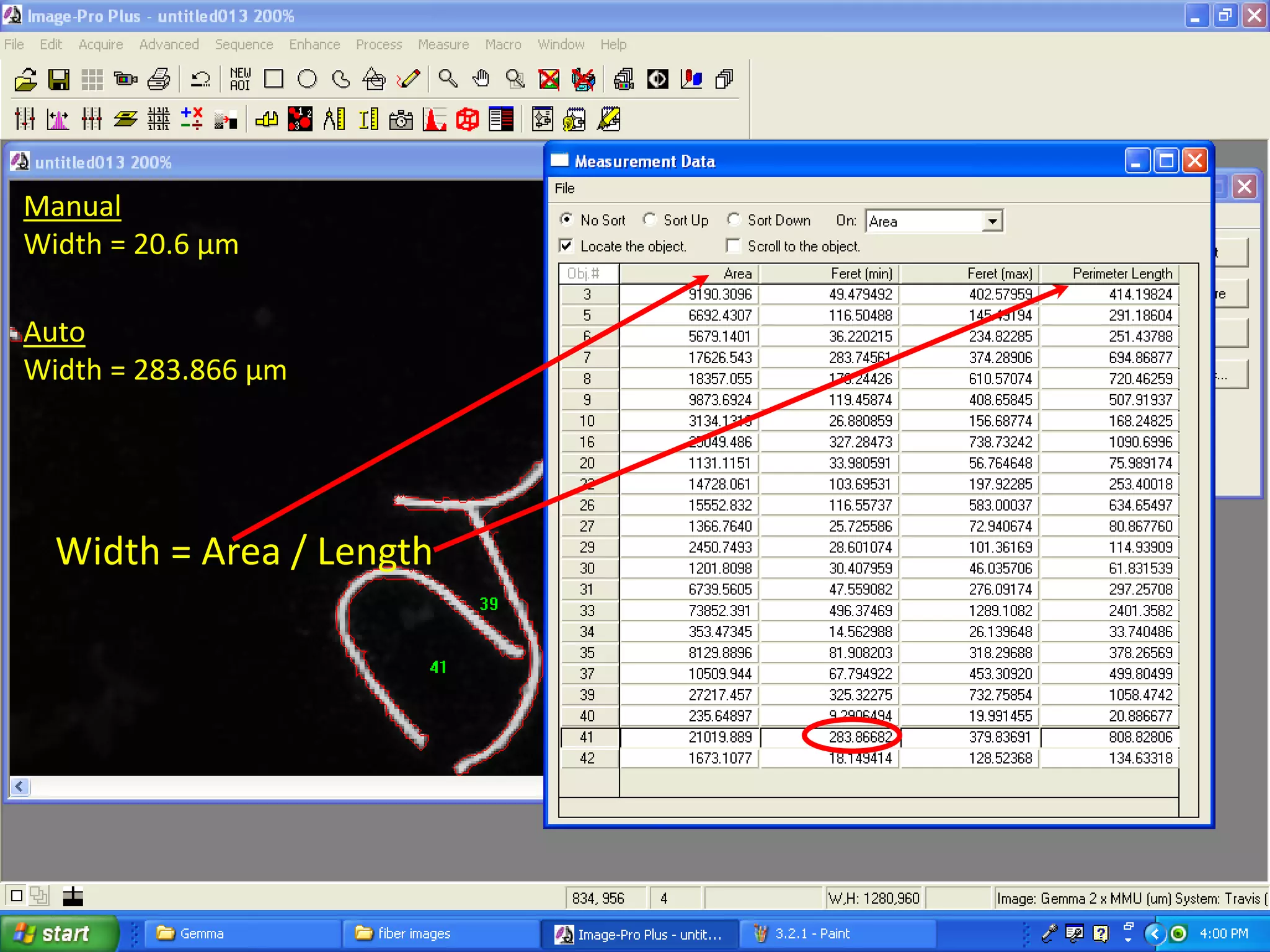
Width = 20.6 µm
Length = 868 µm
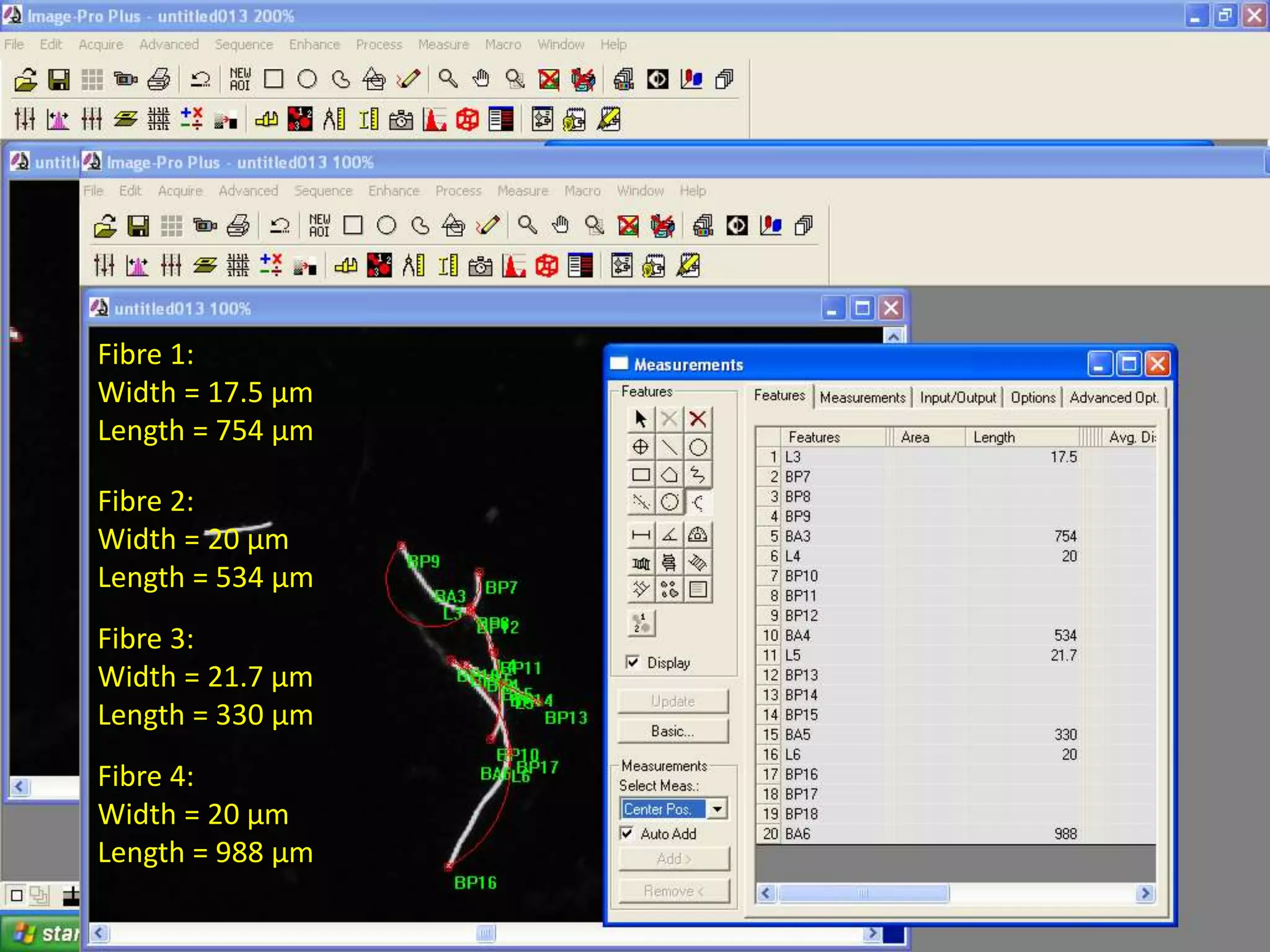
Fibre 1:
Width = 17.5 µm
Length = 754 µm
Fibre 2:
Width = 20 µm
Length = 534 µm
Fibre 3:
Width = 21.7 µm
Length = 330 µm
Fibre 4:
Width = 20 µm
Length = 988 µm
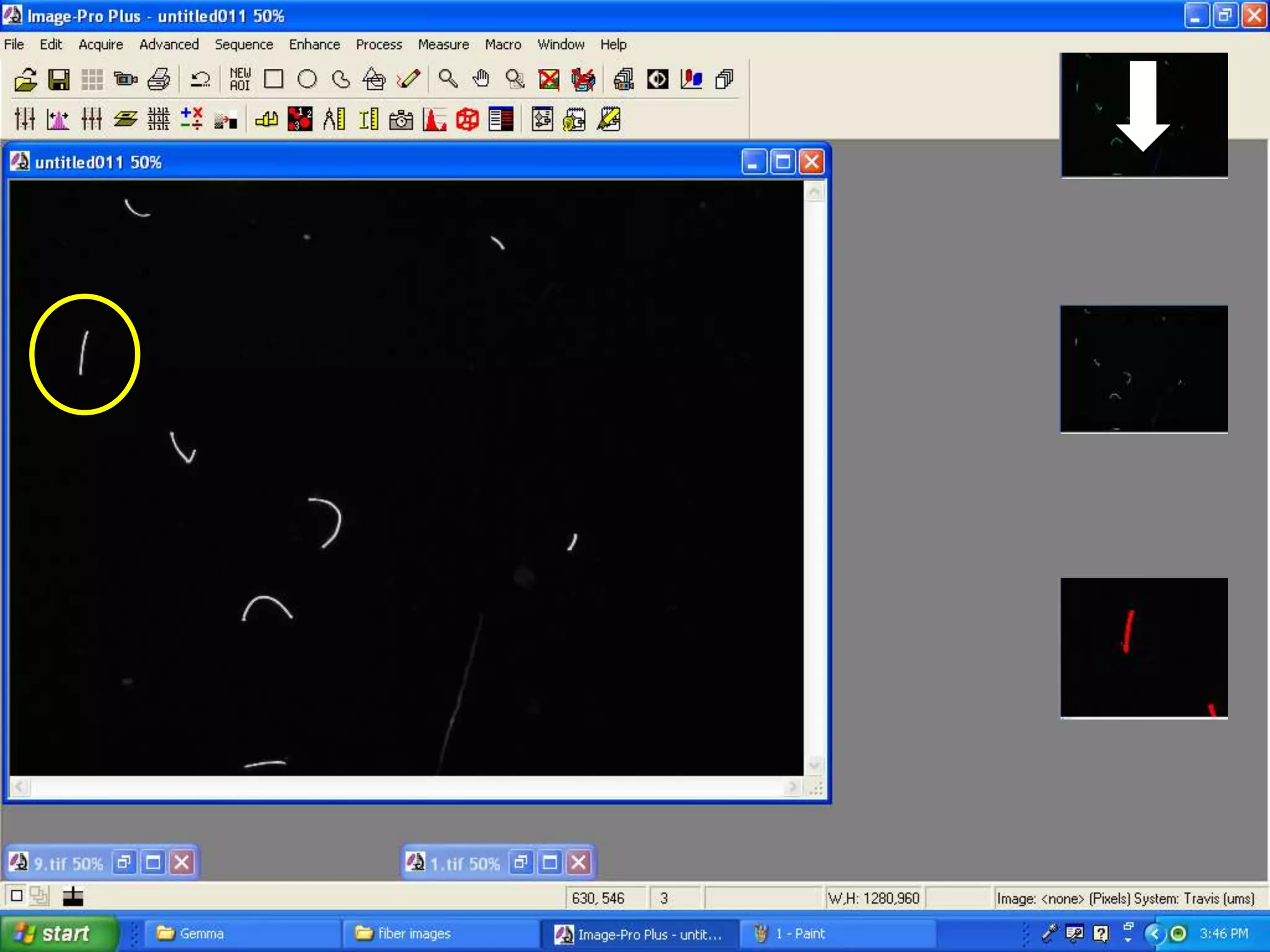
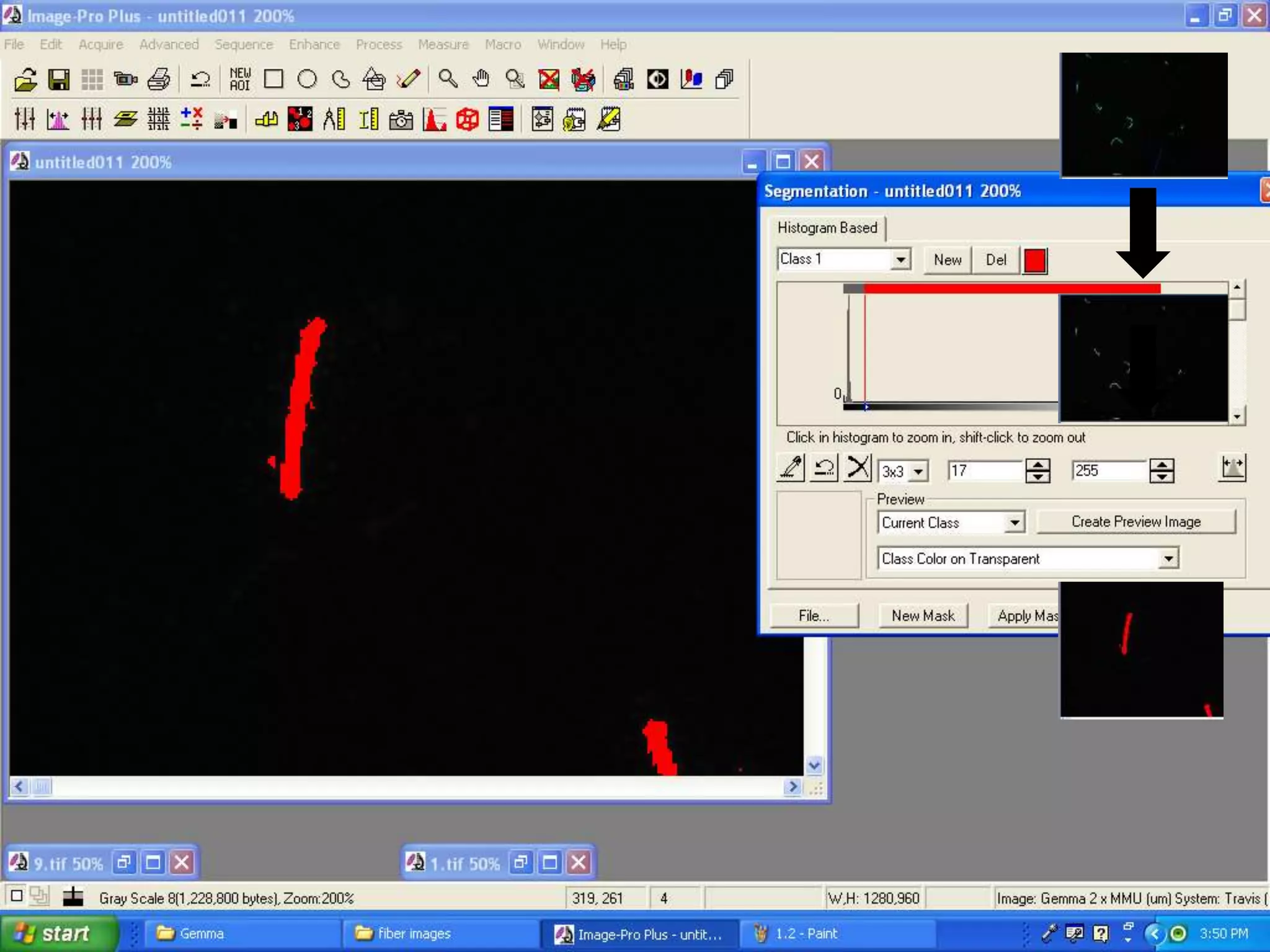
Automated image analysis by
Binary Segmentation and
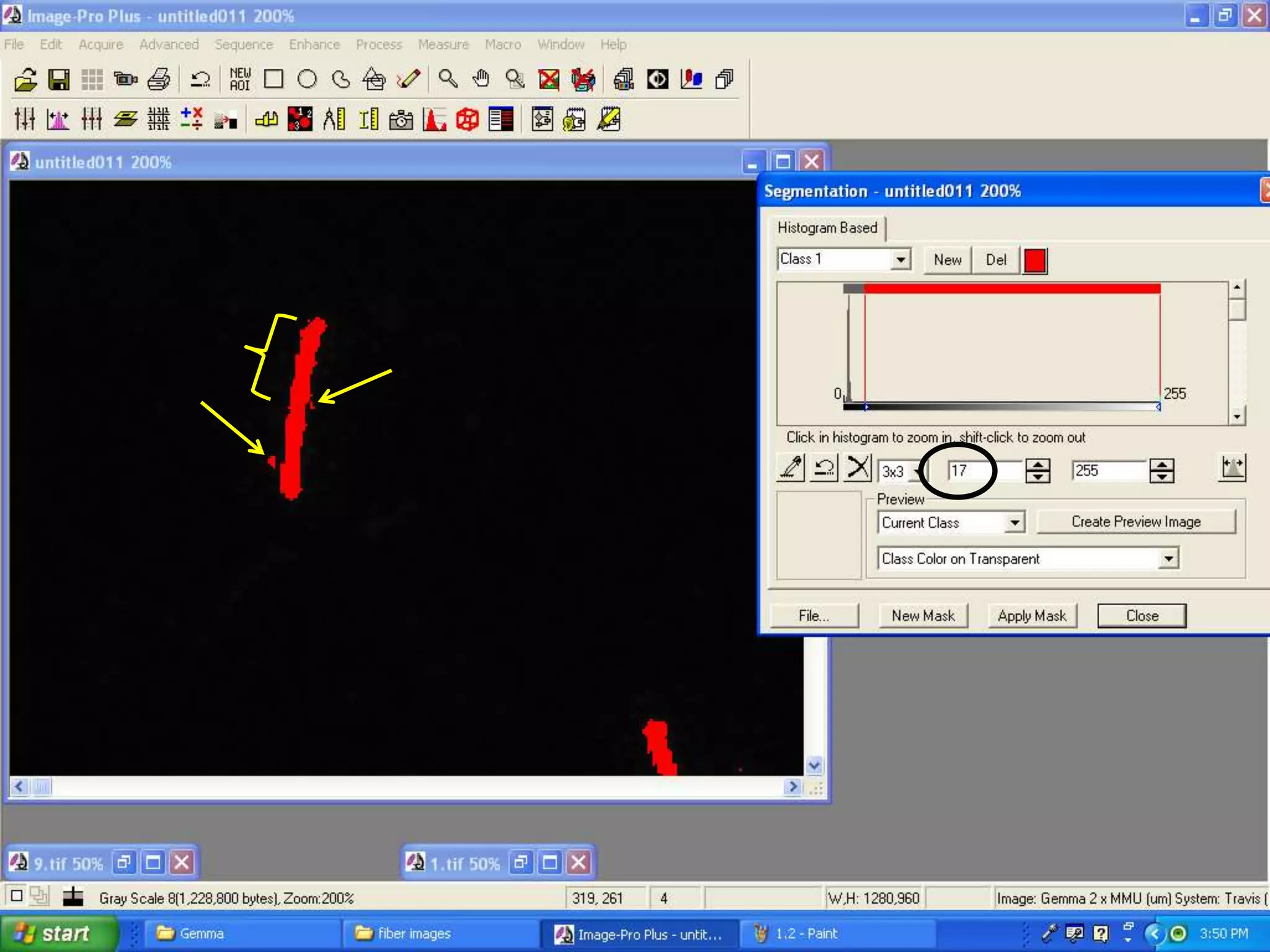
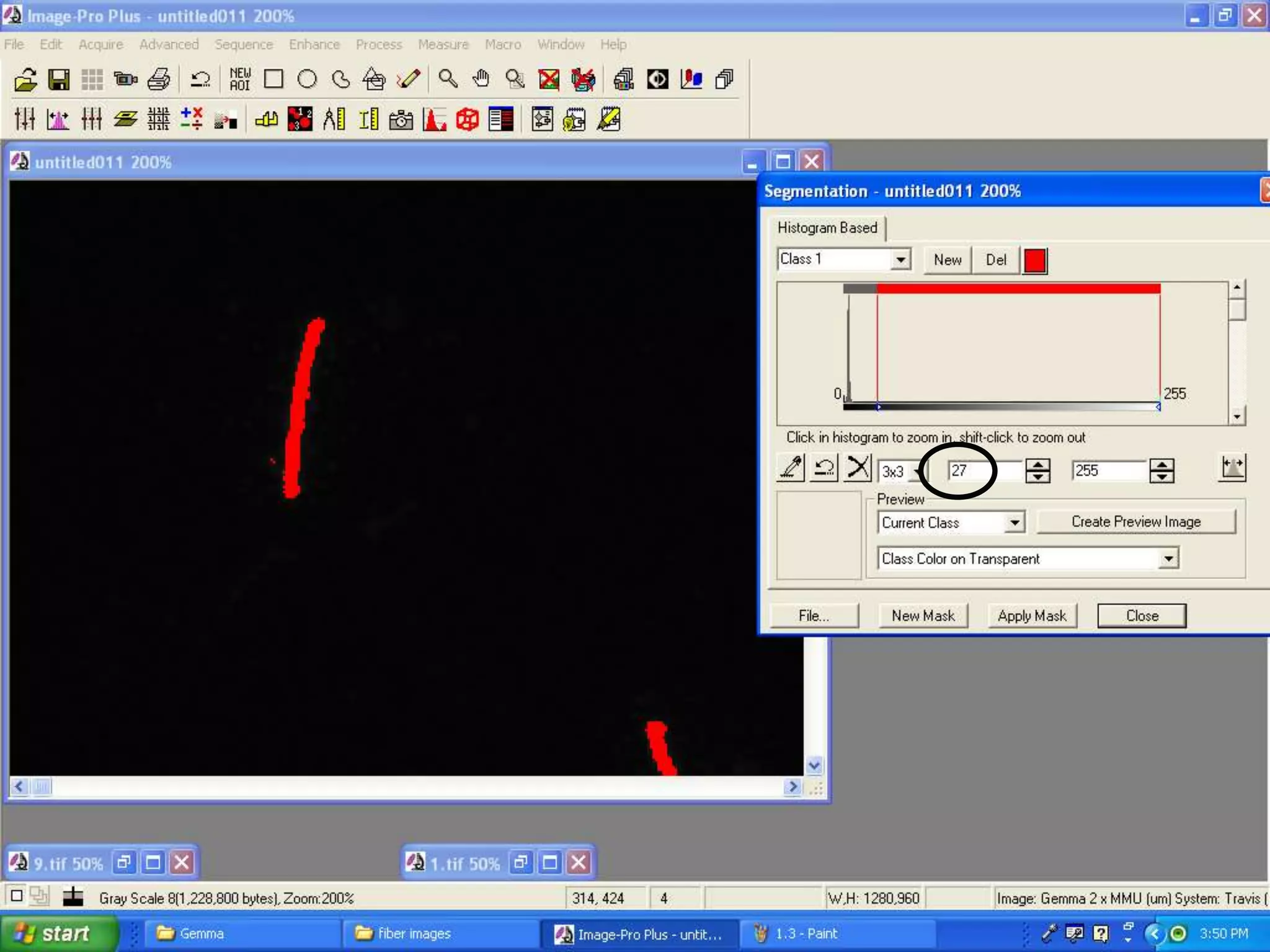
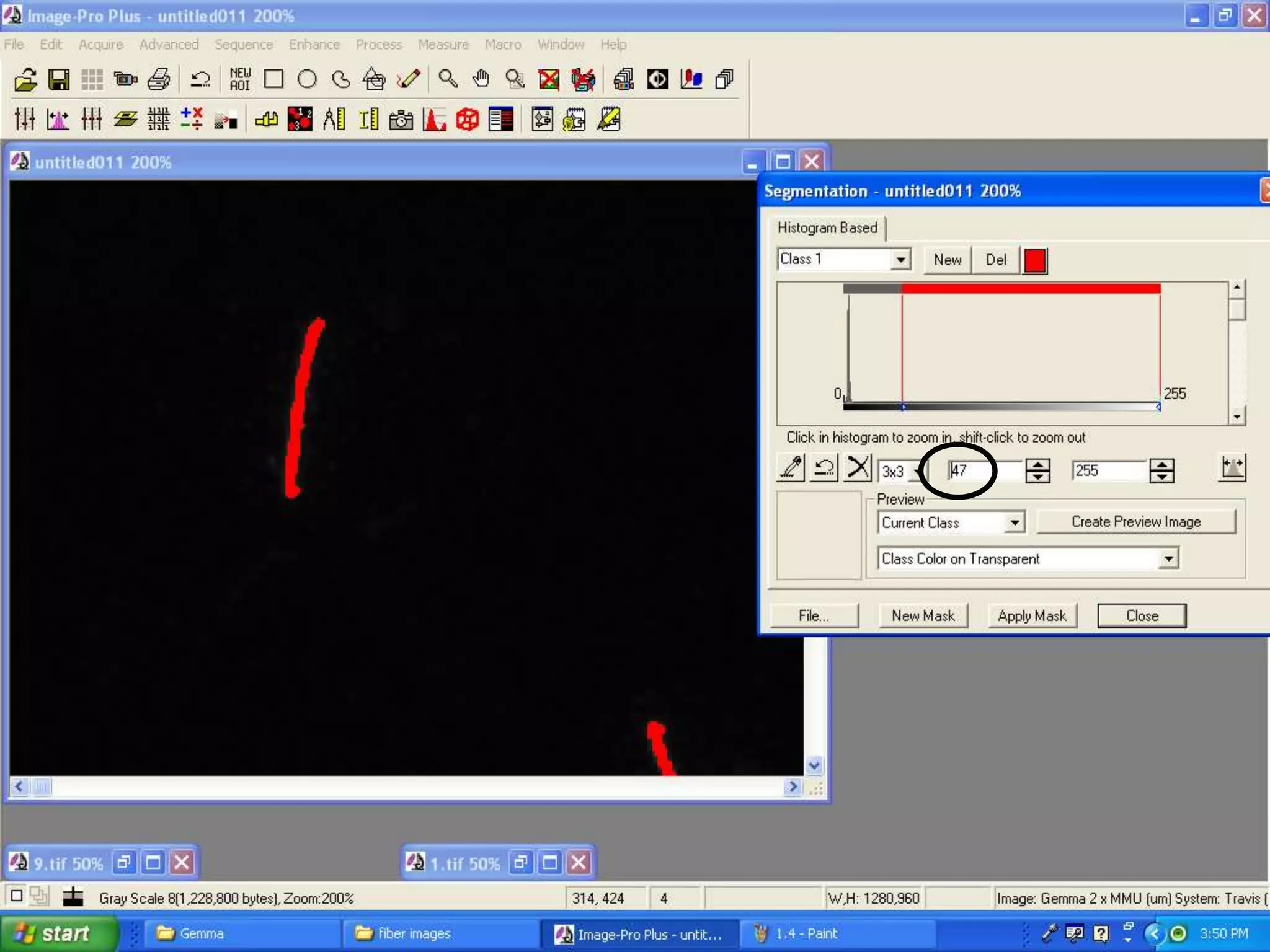
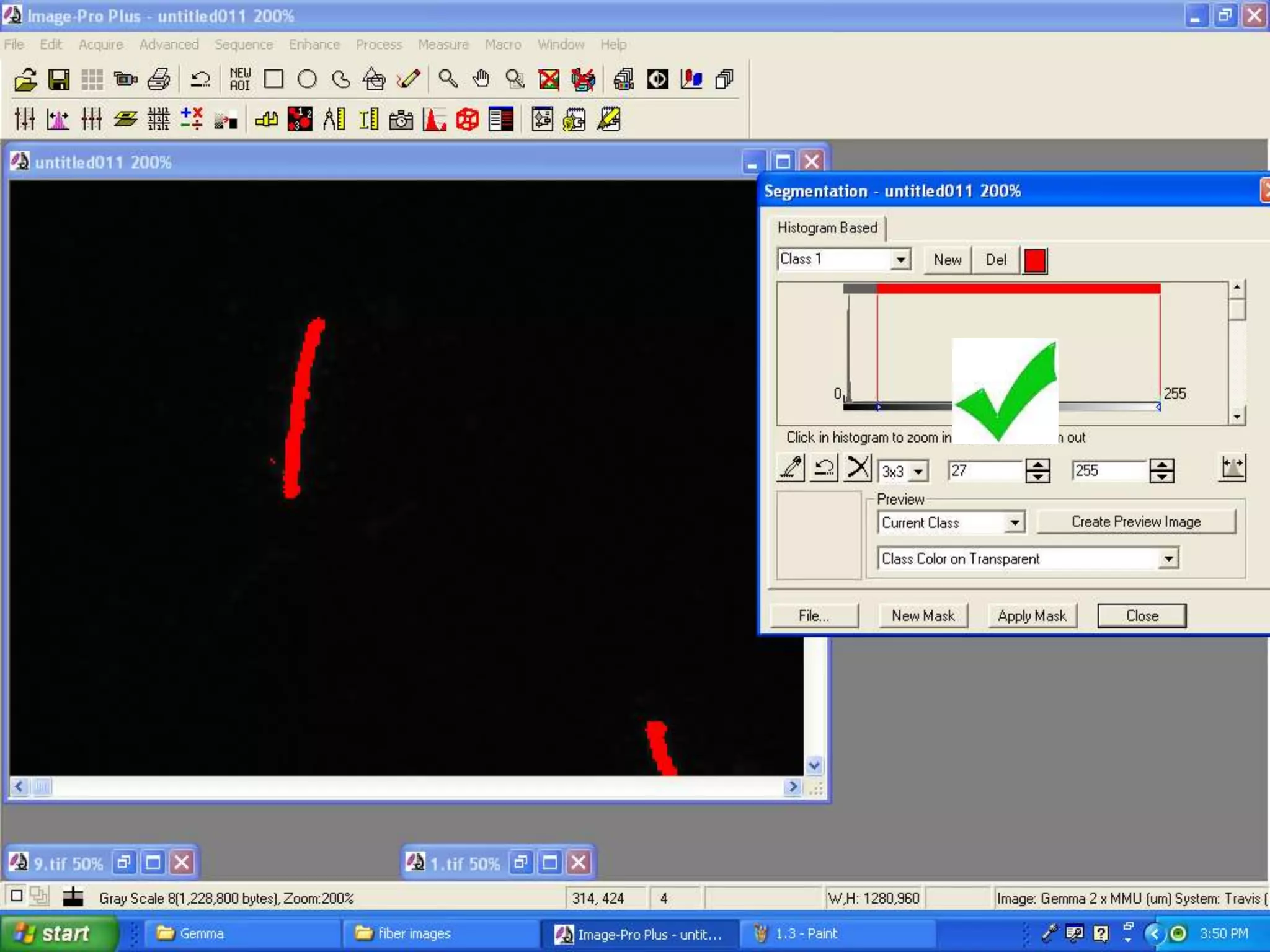
Histogram Selection
Materials and Methods contd...
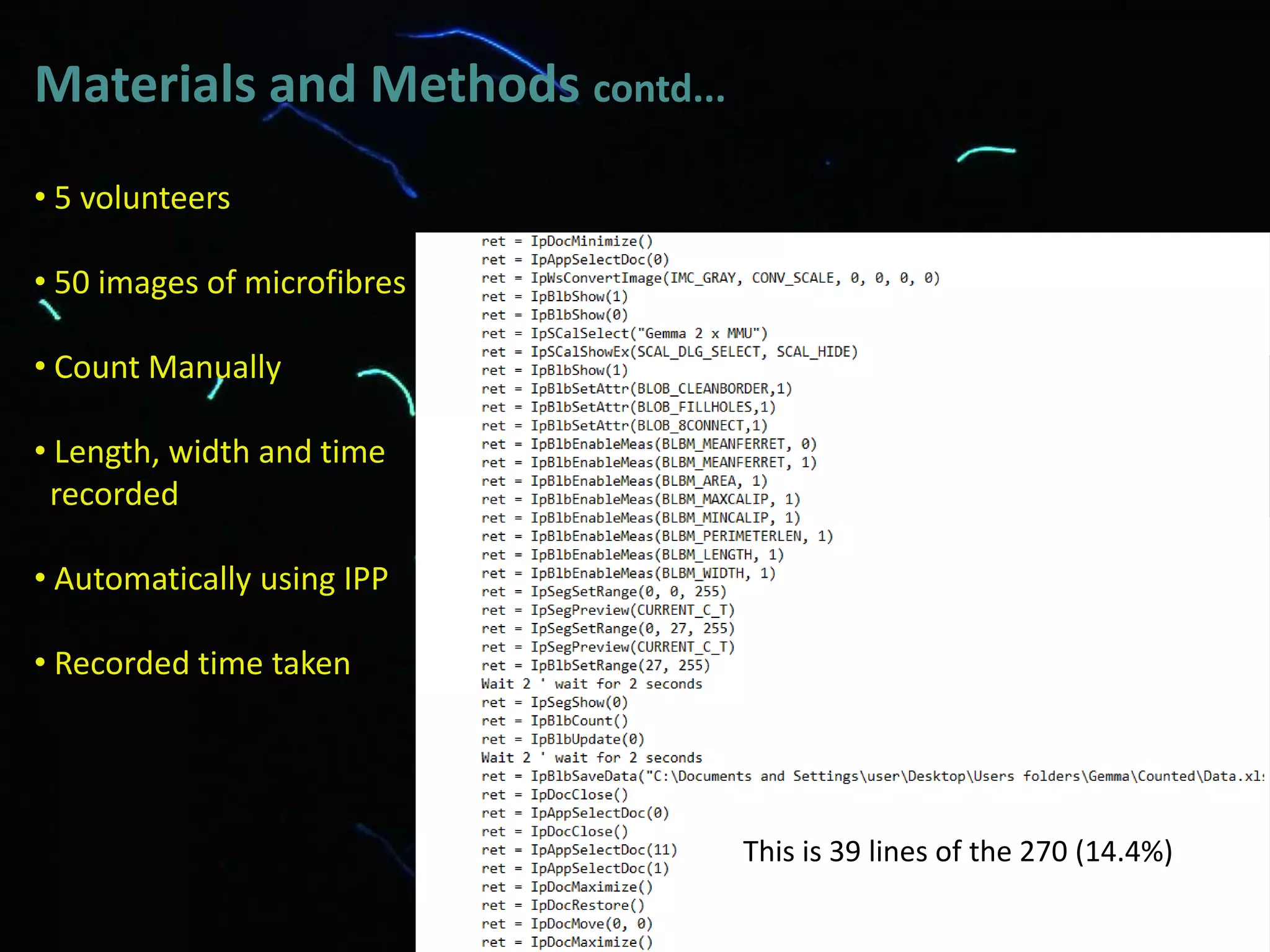
• 5 volunteers
• 50 images of microfibres
• Count Manually
• Length, width and time
recorded
• Automatically using IPP
• Recorded time taken
This is 39 lines of the 270 (14.4%)
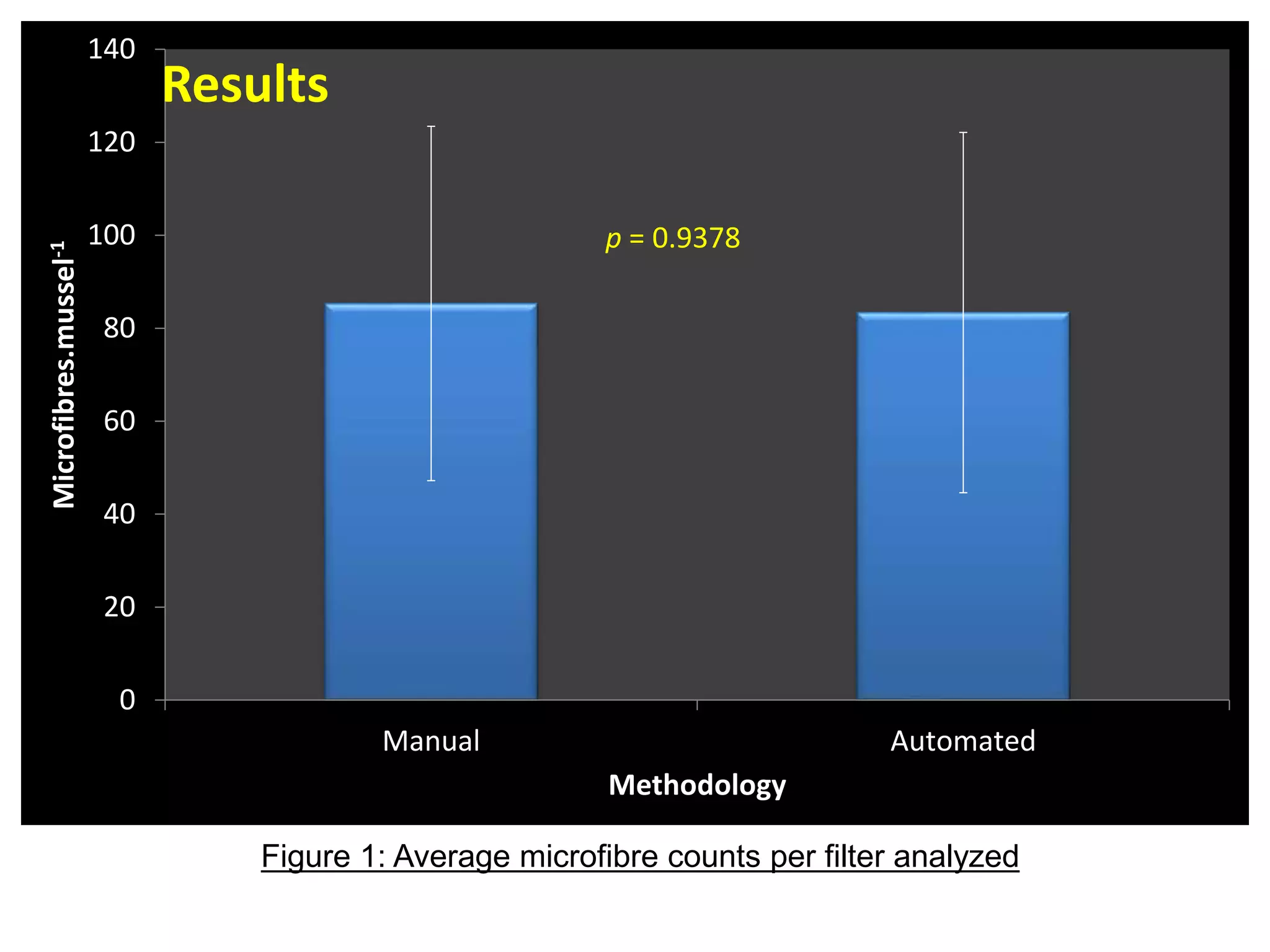
Figure 1: Average microfibre counts per filter analyzed
0
20
40
60
80
100
120
140
Manual Automated
Microfibres.mussel-1
Methodology
p = 0.9378
Results
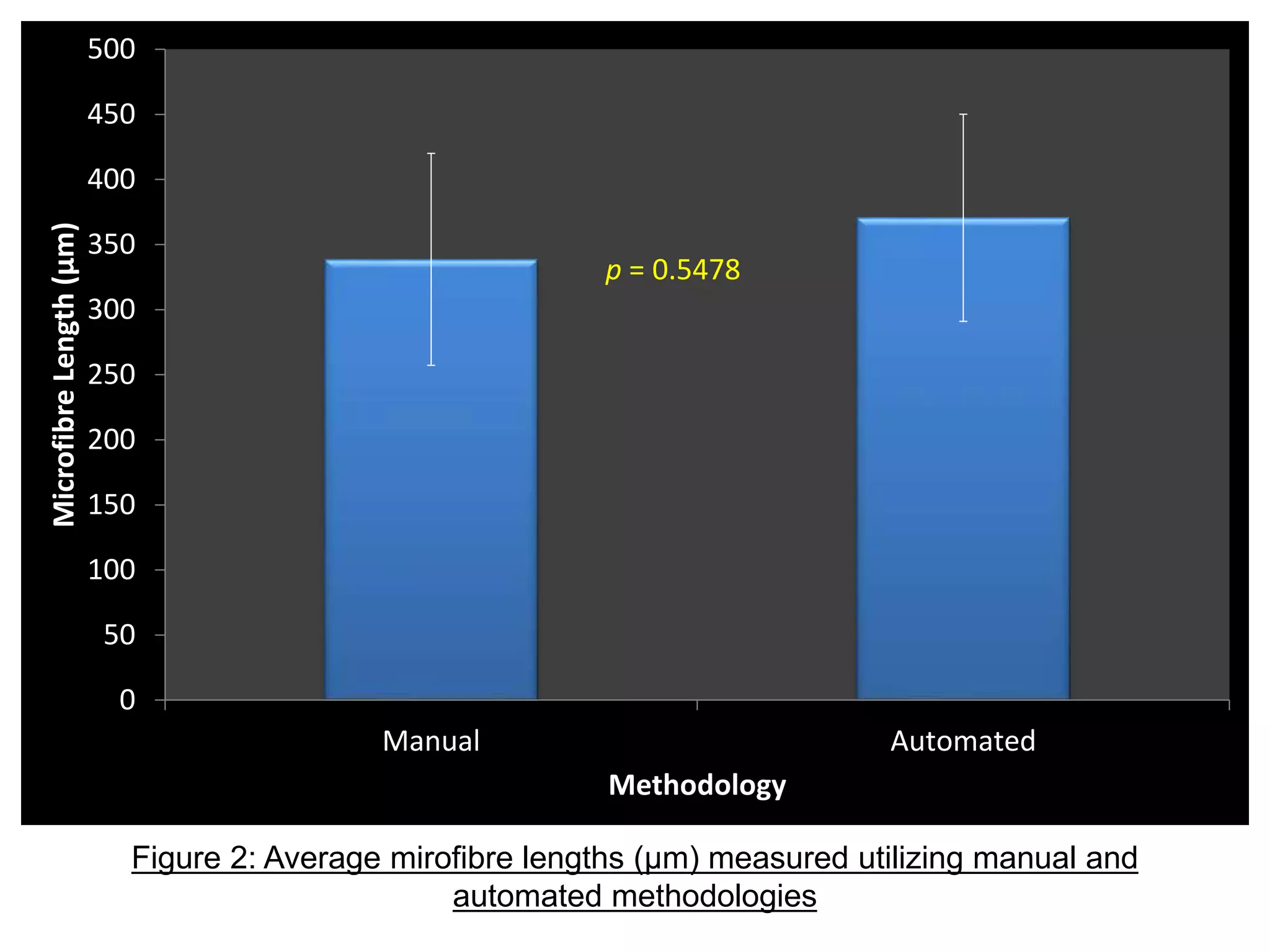
0
50
100
150
200
250
300
350
400
450
500
Manual Automated
MicrofibreLength(µm)
Methodology
p = 0.5478
Figure 2: Average mirofibre lengths (µm) measured utilizing manual and
automated methodologies
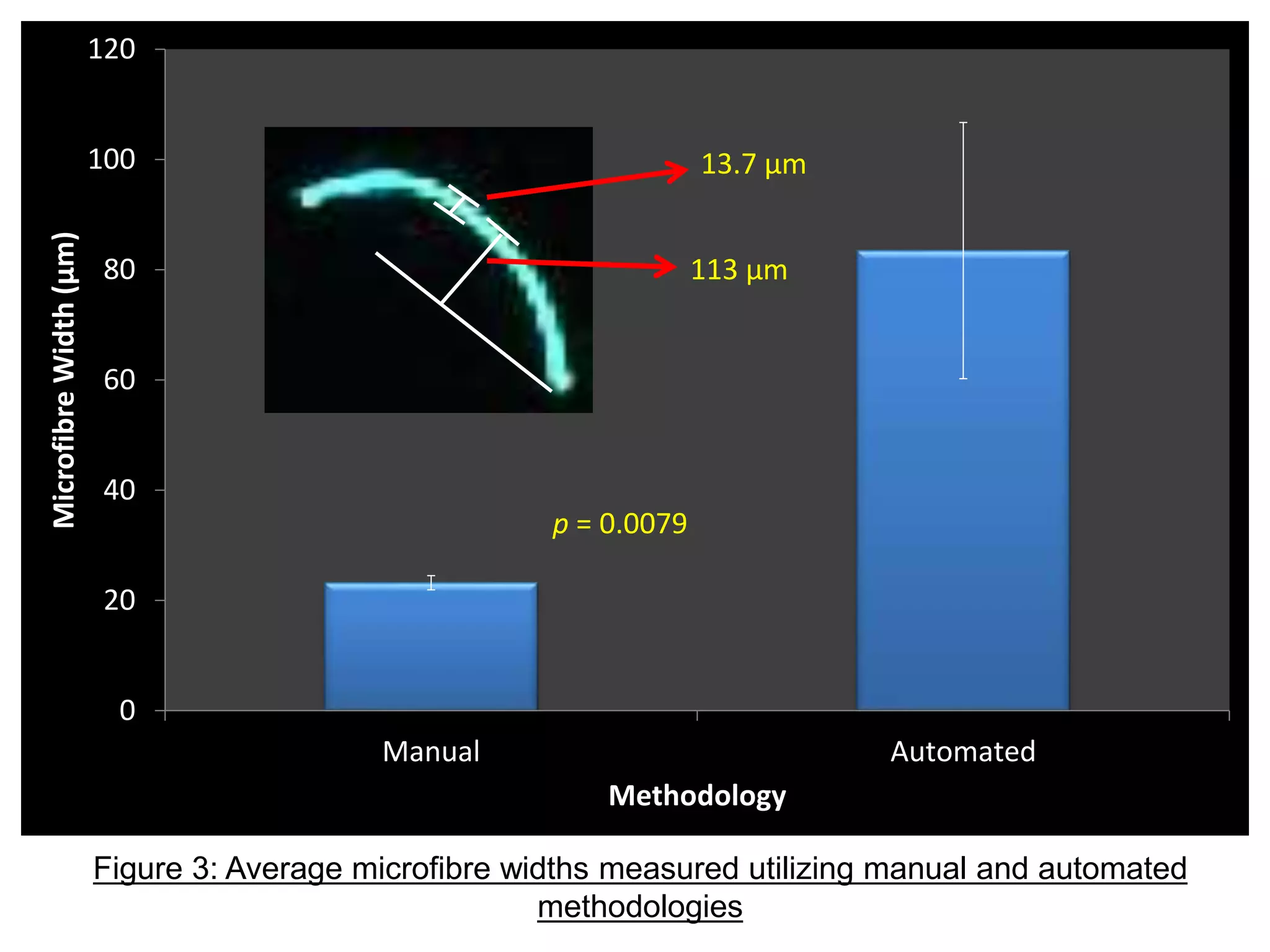
0
20
40
60
80
100
120
Manual Automated
MicrofibreWidth(µm)
Methodology
p = 0.0079
Figure 3: Average microfibre widths measured utilizing manual and automated
methodologies
13.7 µm
113 µm
Auto
Width = 50.2189 µm
Manual
Width = 29.5 µm
Auto
Width = 110.345 µm
Manual
Width = 24.3 µm
Auto
Width = 283.866 µm
Manual
Width = 20.6 µm
Width = Area / Length
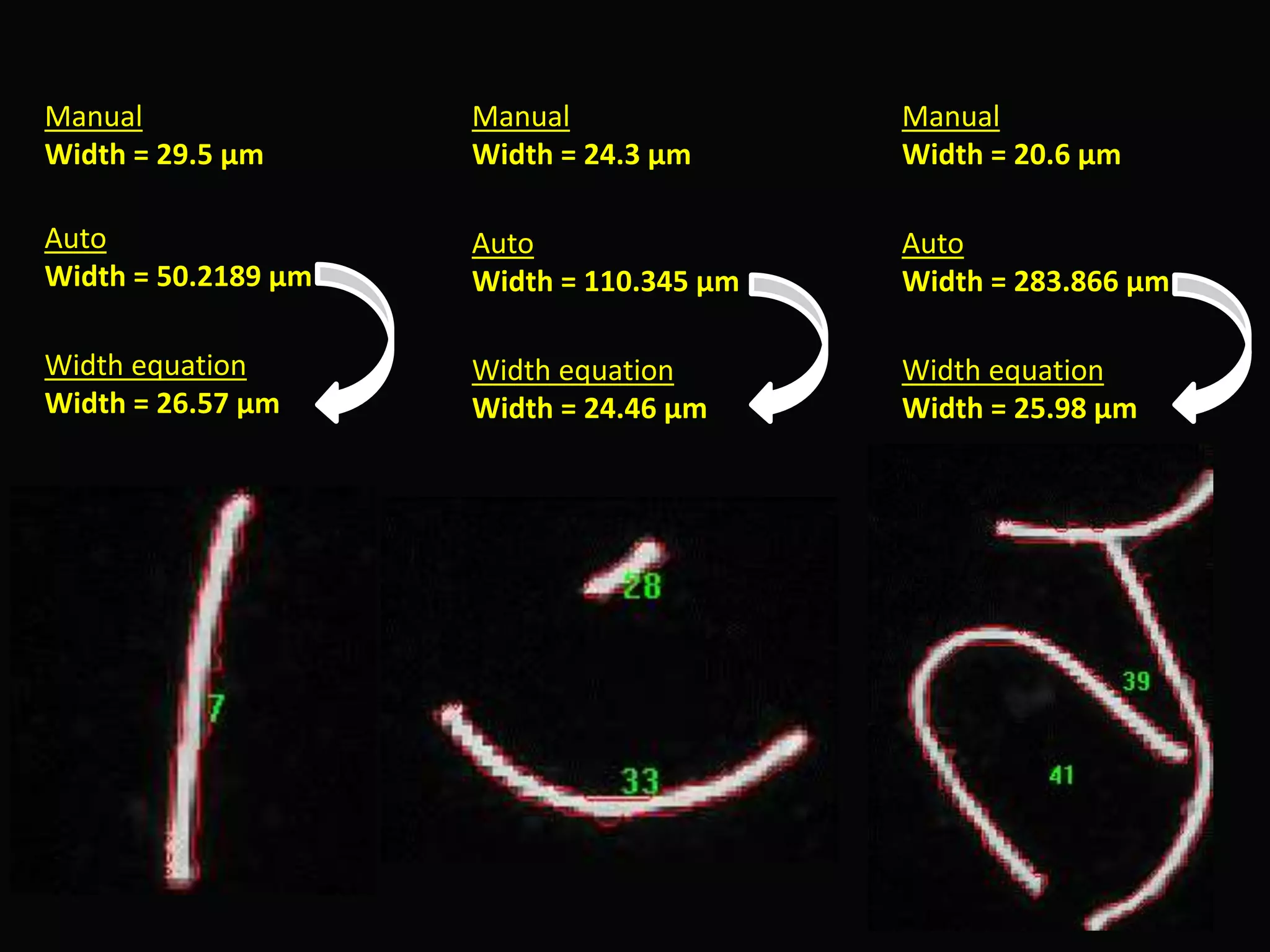
Auto
Width = 50.2189 µm
Manual
Width = 29.5 µm
Width equation
Width = 26.57 µm
Auto
Width = 110.345 µm
Manual
Width = 24.3 µm
Width equation
Width = 24.46 µm
Auto
Width = 283.866 µm
Manual
Width = 20.6 µm
Width equation
Width = 25.98 µm
0
5
10
15
20
25
30
Manual Auto Calculated
MicrofibreWidth(µm)
Methodology
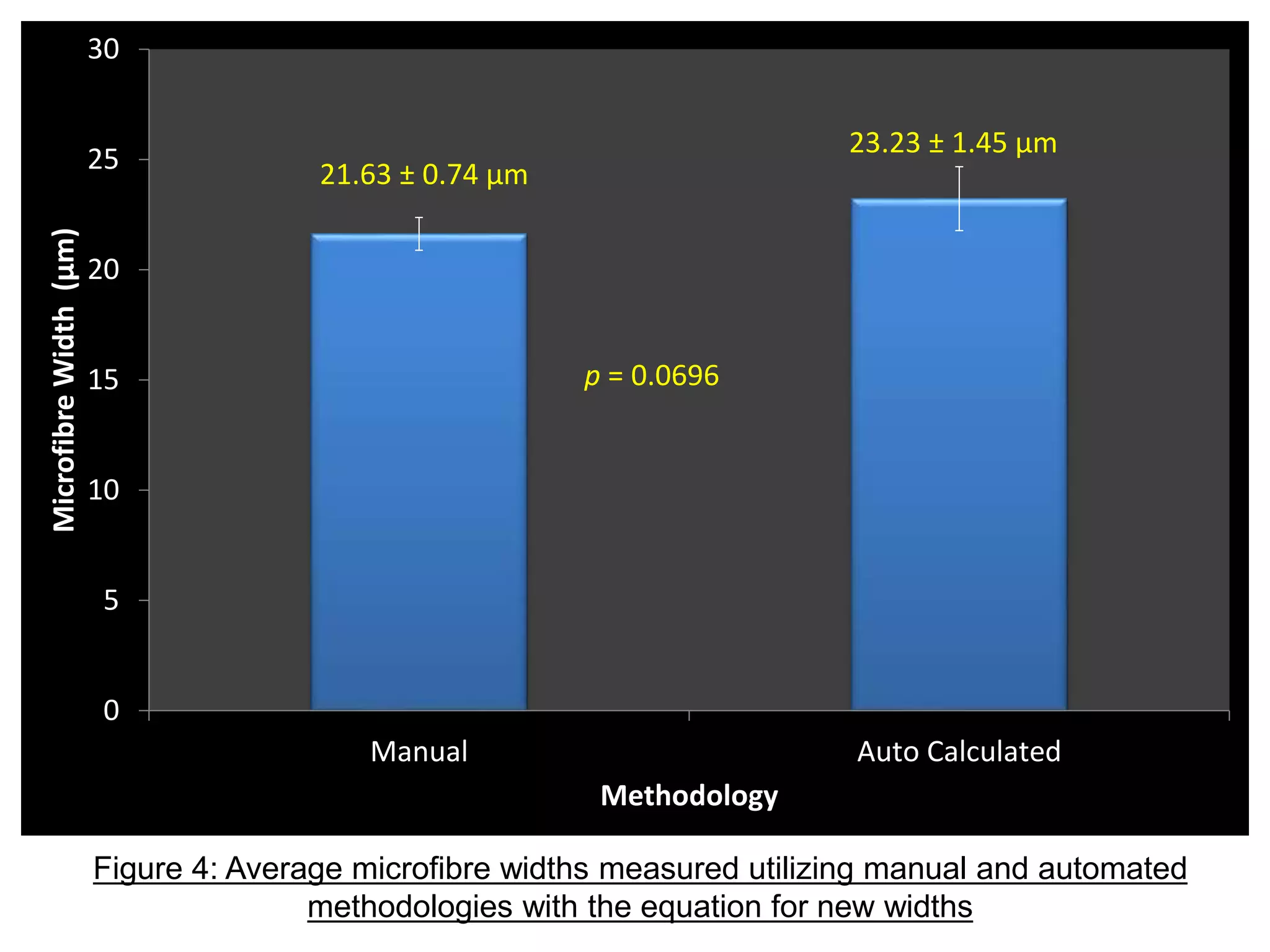
Figure 4: Average microfibre widths measured utilizing manual and automated
methodologies with the equation for new widths
p = 0.0696
23.23 ± 1.45 µm
21.63 ± 0.74 µm
0
200
400
600
800
1000
1200
1400
1600
1800
2000
Manual Automated
Time(s)
Methodology
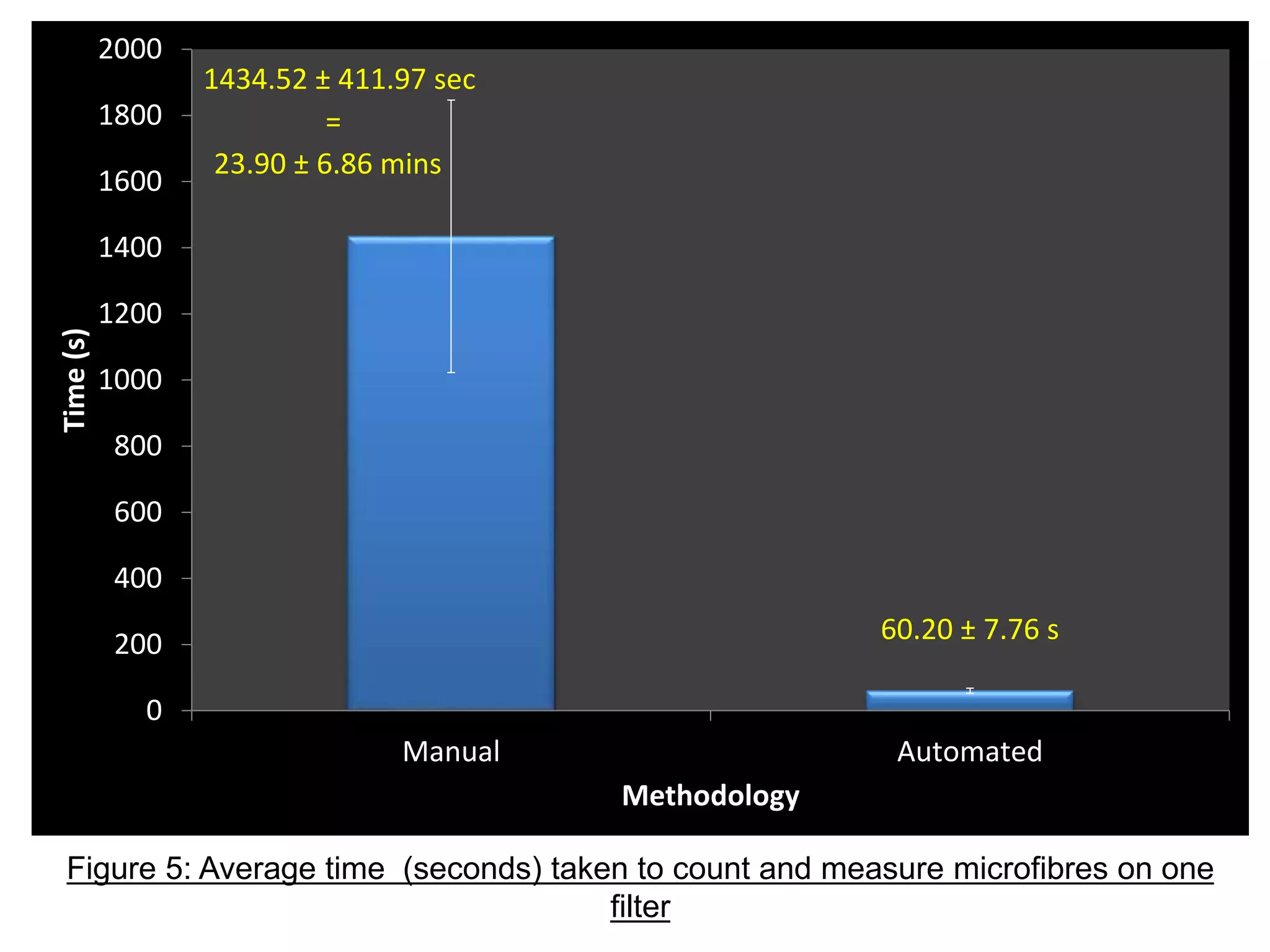
1434.52 ± 411.97 sec
60.20 ± 7.76 s
23.90 ± 6.86 mins
=
Figure 5: Average time (seconds) taken to count and measure microfibres on one
filter
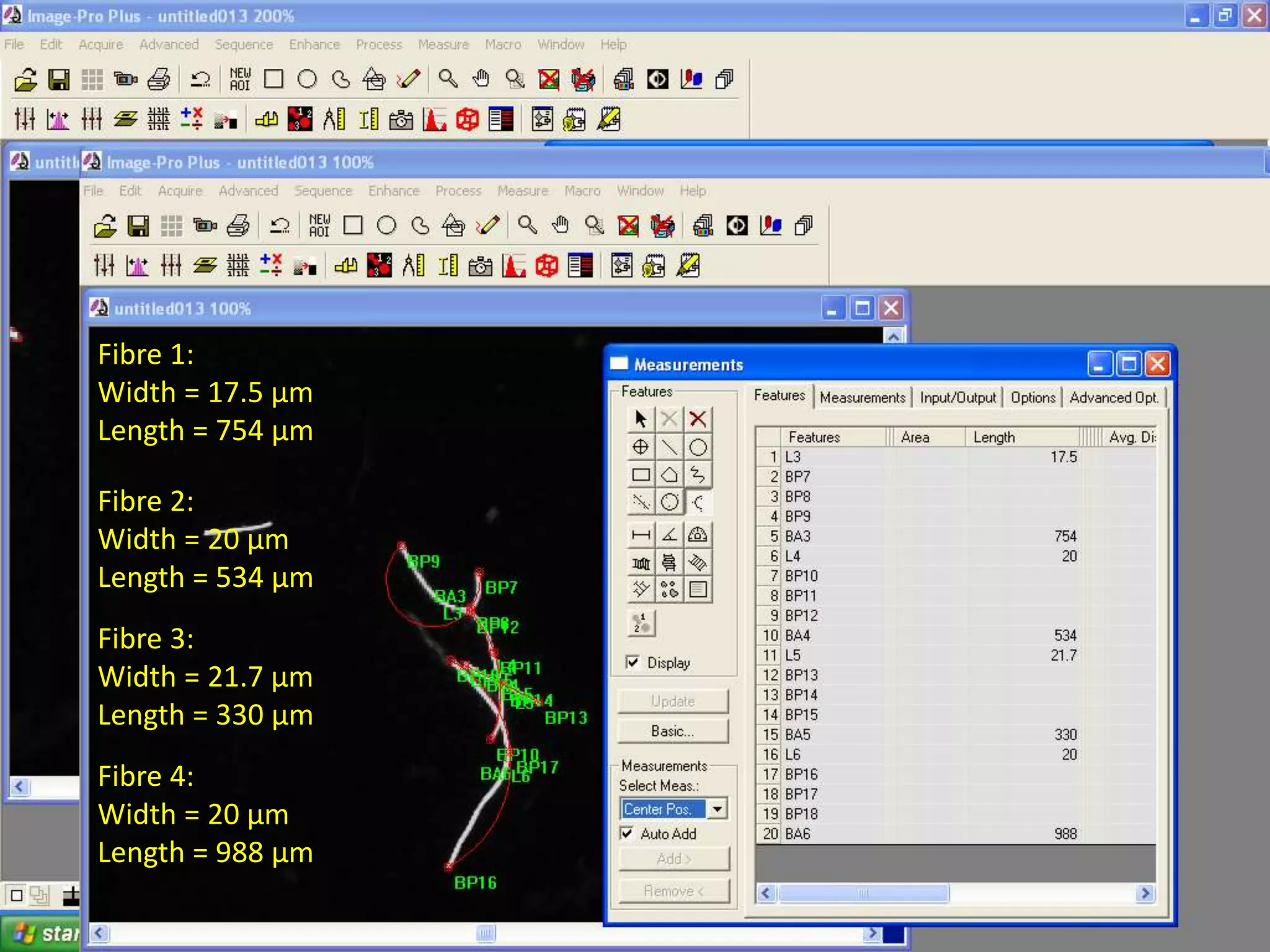
Fibre 1:
Width = 17.5 µm
Length = 754 µm
Fibre 2:
Width = 20 µm
Length = 534 µm
Fibre 3:
Width = 21.7 µm
Length = 330 µm
Fibre 4:
Width = 20 µm
Length = 988 µm
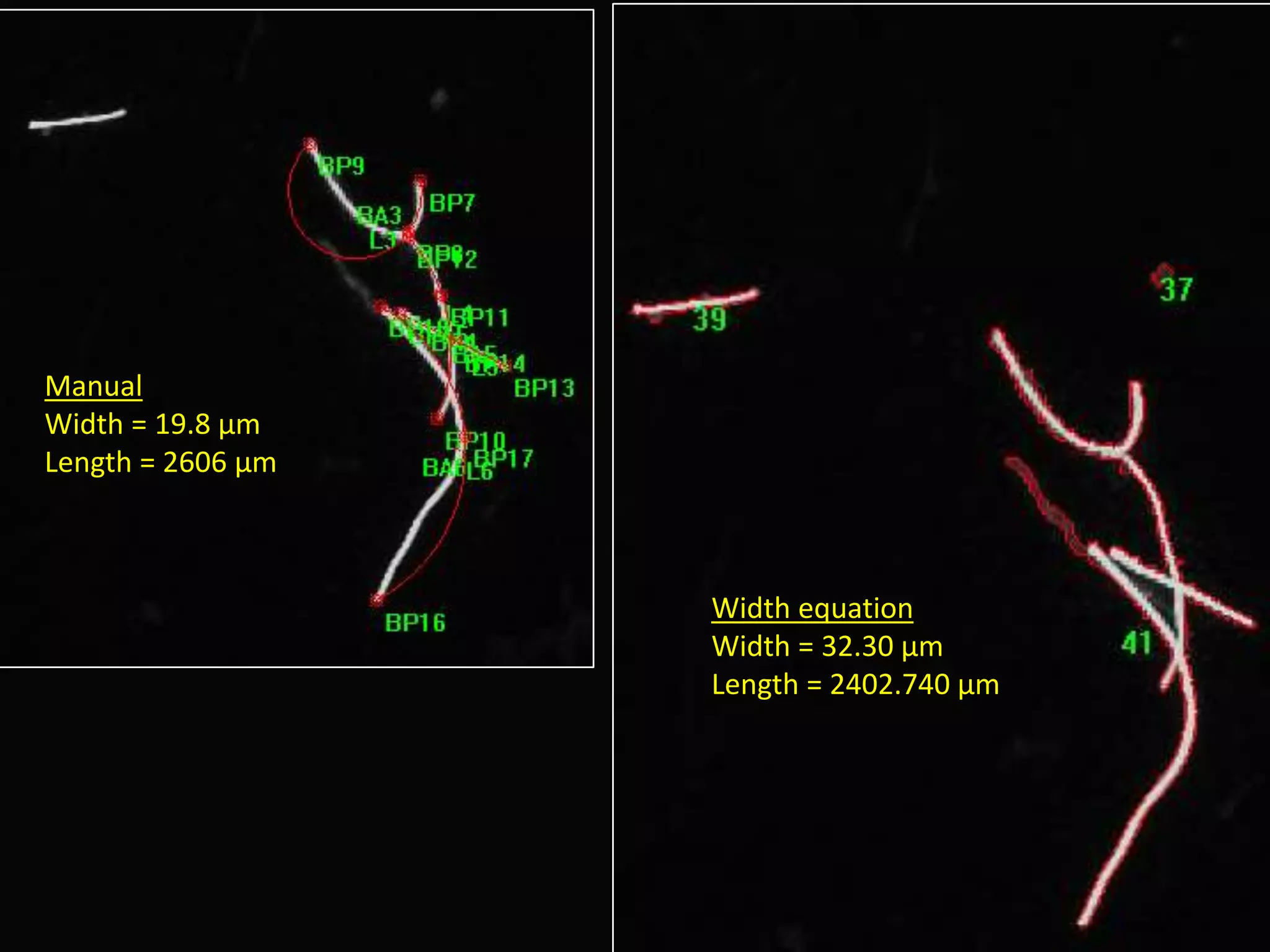
Manual
Width = 19.8 µm
Length = 2606 µm
Width equation
Width = 32.30 µm
Length = 2402.740 µm
Conclusion
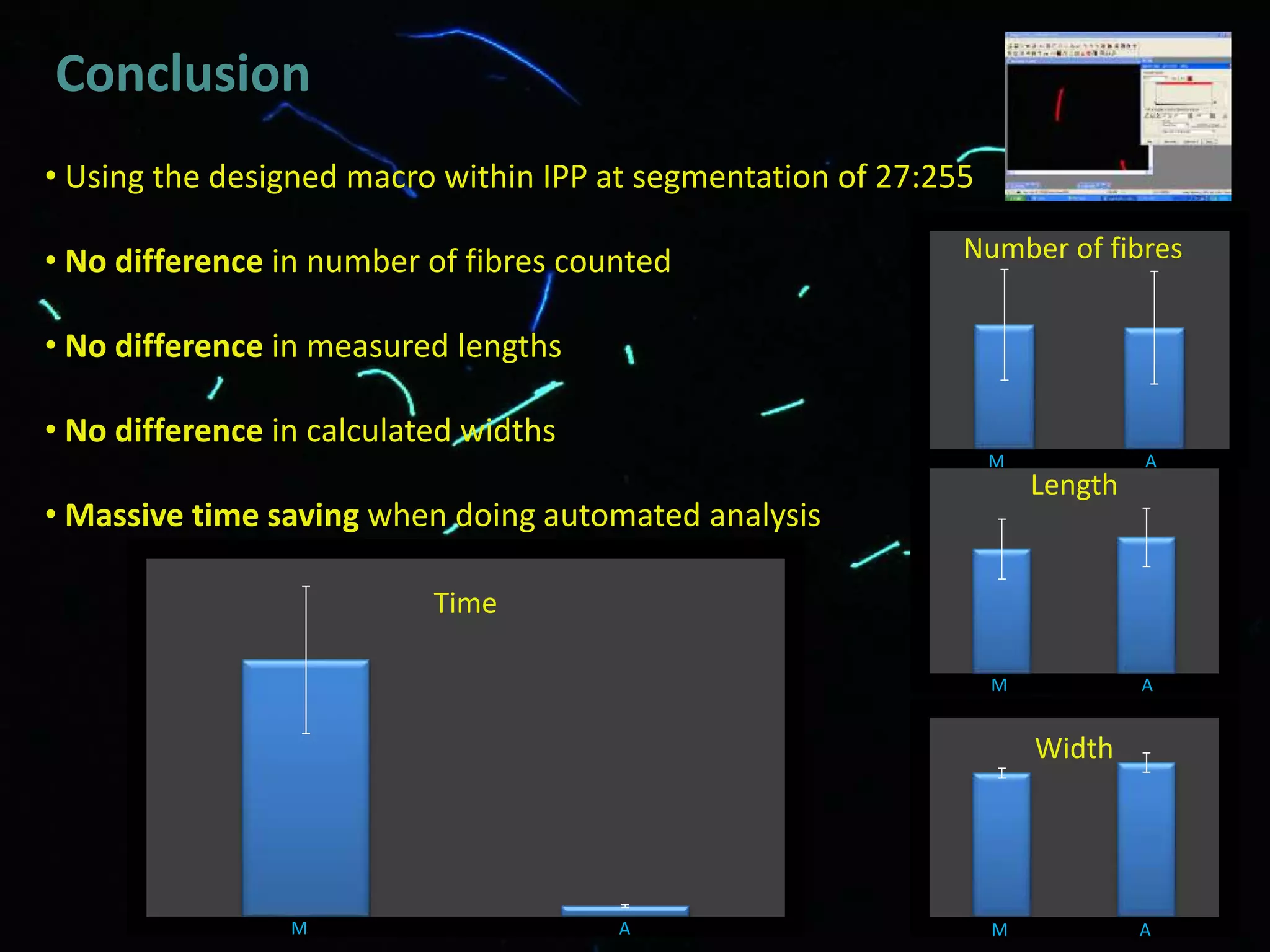
• Using the designed macro within IPP at segmentation of 27:255
• No difference in number of fibres counted
• No difference in measured lengths
• No difference in calculated widths
• Massive time saving when doing automated analysis
M A
Length
M A
Width
M A
Time
Number of fibres
M A
Current and Future Applications
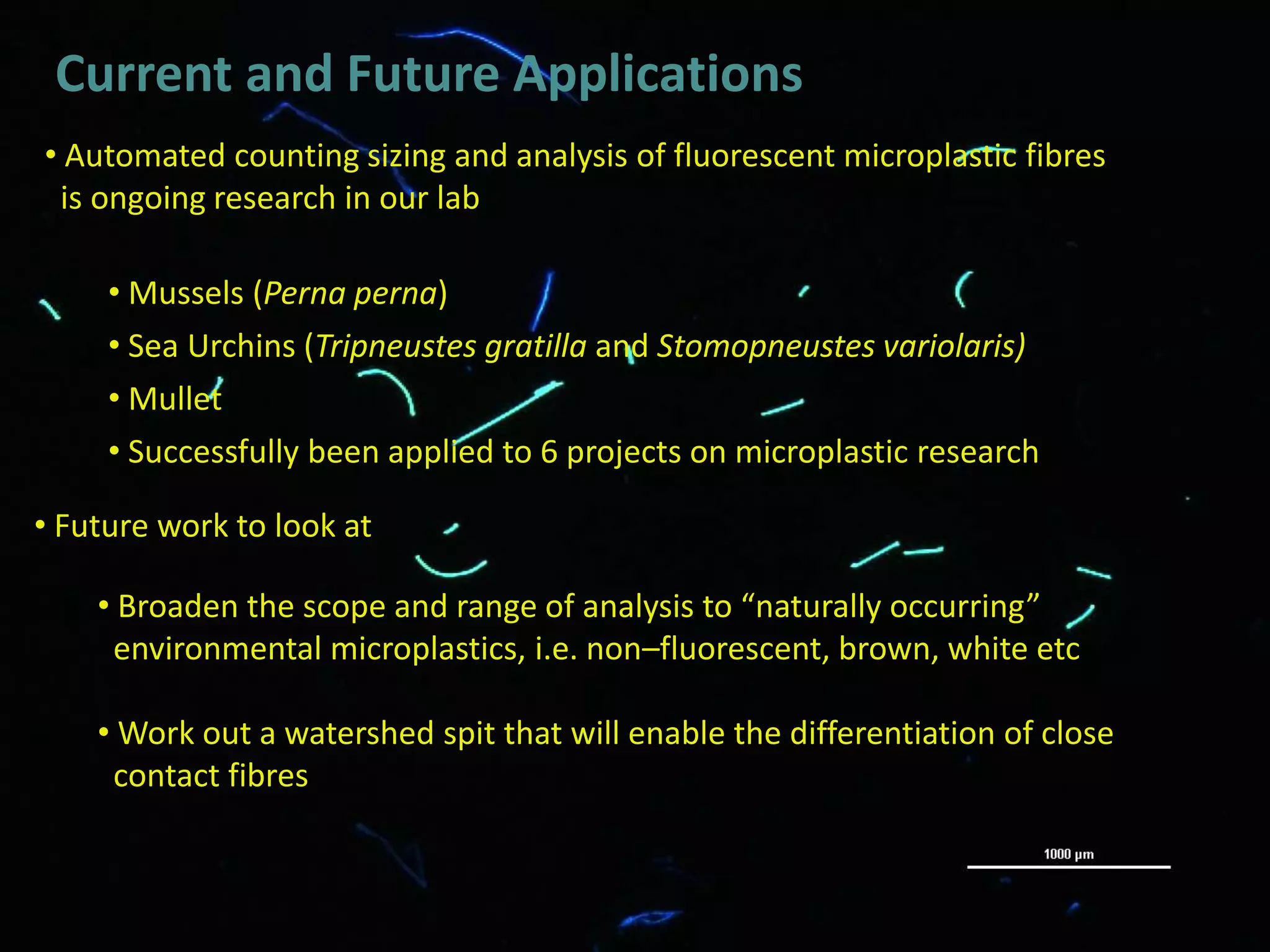
• Automated counting sizing and analysis of fluorescent microplastic fibres
is ongoing research in our lab
• Mussels (Perna perna)
• Sea Urchins (Tripneustes gratilla and Stomopneustes variolaris)
• Mullet
• Successfully been applied to 6 projects on microplastic research
• Future work to look at
• Broaden the scope and range of analysis to “naturally occurring”
environmental microplastics, i.e. non–fluorescent, brown, white etc
• Work out a watershed spit that will enable the differentiation of close
contact fibres
Thank you
Any questions?
Acknowledgements
Thank you to the MACE lab volunteers and to the NRF for funding
this project. Thanks also go to Theo van Zyl.
References
• Hidalgo–Ruz, V., Gutow, L., Thompson, R.C. & Thiel, M. 2012. Microplastics in the Marine Environment: A Review
of the Methods Used for Identification and Quantification. Environmental Science and Technology. 46. 3060–
3075.
• PlasticsEurope 2015. Plastics – the Facts 2015: An analysis of European plastics production, demand and waste
data. Konigin Astridlaan 59, 1780 Wemmel, Belgium.
Full list of internet references available upon request

Counting and sizing microplastic fribres, the accurate and easy way.

  • 1.
    Counting and sizingmicroplastic fibres, the accurate and easy way Kunnen, T. H. Gerber, G. Coote, M. W. Moodley, G. K. Robertson-Andersson, D. V. University of KwaZulu-Natal, School of Life Science
  • 2.
    Introduction • Microplastics definedas being < 5 mm (Hidalgo–Ruz et al., 2012) www1 www2 www4 Primary microplastics Are produced for a specific purpose (eg. shower gels, cleansers) Secondary microplastics From environmental degradation (wave action, UV exposure etc) of larger plastics www3
  • 3.
    • Global demandfor plastic production is not decreasing • Last estimated at over 311 million tonnes per year (PlasticsEurope, 2015) • Most common source of secondary microplastics is from your own household Introduction contd... Polyester Lastex Spandex Acetate Rayon Nylon Acrylic Kevlar Orlon www5 www6 www7 www8 www9
  • 4.
  • 5.
  • 6.
  • 7.
  • 8.
    Introduction contd... “ Experimentssampling wastewater from domestic washing machines demonstrated that a single garment can produce > 1900 fibres per wash.” www17 For cleaner lakes and archipelago “… waste water treatment plant ± 500 000 connected persons is estimated to receive up to 16.9 ton microplastic fibres per year…”
  • 9.
    Materials and Methods 3Weeks later = 0.1276 g fibres 10 – 50/100 µm long Ultra–violet (UV) fluorescent polyethylene–terephthalate (PET) textile (395 nm) www11 www12 www13 www14 www15 White LightUV Light
  • 10.
    Materials and Methodscontd... • Epifluorescent microscope • Low magnification (20 – 40 x) • 10 – 12 fields of view taken • Images analysed with Image Pro Plus (IPP) • Manual counting and sizing • Automated counting and sizing • Length and Width data generation • Time saving www16
  • 13.
    Width = 29.5µm Length = 350 µm
  • 15.
    Width = 24.3µm Length = 390 µm
  • 17.
    Width = 20.6µm Length = 868 µm
  • 19.
    Fibre 1: Width =17.5 µm Length = 754 µm Fibre 2: Width = 20 µm Length = 534 µm Fibre 3: Width = 21.7 µm Length = 330 µm Fibre 4: Width = 20 µm Length = 988 µm
  • 20.
    Automated image analysisby Binary Segmentation and Histogram Selection
  • 26.
    Materials and Methodscontd... • 5 volunteers • 50 images of microfibres • Count Manually • Length, width and time recorded • Automatically using IPP • Recorded time taken This is 39 lines of the 270 (14.4%)
  • 27.
    Figure 1: Averagemicrofibre counts per filter analyzed 0 20 40 60 80 100 120 140 Manual Automated Microfibres.mussel-1 Methodology p = 0.9378 Results
  • 28.
    0 50 100 150 200 250 300 350 400 450 500 Manual Automated MicrofibreLength(µm) Methodology p =0.5478 Figure 2: Average mirofibre lengths (µm) measured utilizing manual and automated methodologies
  • 29.
    0 20 40 60 80 100 120 Manual Automated MicrofibreWidth(µm) Methodology p =0.0079 Figure 3: Average microfibre widths measured utilizing manual and automated methodologies 13.7 µm 113 µm
  • 30.
    Auto Width = 50.2189µm Manual Width = 29.5 µm
  • 31.
    Auto Width = 110.345µm Manual Width = 24.3 µm
  • 32.
    Auto Width = 283.866µm Manual Width = 20.6 µm Width = Area / Length
  • 33.
    Auto Width = 50.2189µm Manual Width = 29.5 µm Width equation Width = 26.57 µm Auto Width = 110.345 µm Manual Width = 24.3 µm Width equation Width = 24.46 µm Auto Width = 283.866 µm Manual Width = 20.6 µm Width equation Width = 25.98 µm
  • 34.
    0 5 10 15 20 25 30 Manual Auto Calculated MicrofibreWidth(µm) Methodology Figure4: Average microfibre widths measured utilizing manual and automated methodologies with the equation for new widths p = 0.0696 23.23 ± 1.45 µm 21.63 ± 0.74 µm
  • 35.
    0 200 400 600 800 1000 1200 1400 1600 1800 2000 Manual Automated Time(s) Methodology 1434.52 ±411.97 sec 60.20 ± 7.76 s 23.90 ± 6.86 mins = Figure 5: Average time (seconds) taken to count and measure microfibres on one filter
  • 36.
    Fibre 1: Width =17.5 µm Length = 754 µm Fibre 2: Width = 20 µm Length = 534 µm Fibre 3: Width = 21.7 µm Length = 330 µm Fibre 4: Width = 20 µm Length = 988 µm
  • 37.
    Manual Width = 19.8µm Length = 2606 µm Width equation Width = 32.30 µm Length = 2402.740 µm
  • 38.
    Conclusion • Using thedesigned macro within IPP at segmentation of 27:255 • No difference in number of fibres counted • No difference in measured lengths • No difference in calculated widths • Massive time saving when doing automated analysis M A Length M A Width M A Time Number of fibres M A
  • 39.
    Current and FutureApplications • Automated counting sizing and analysis of fluorescent microplastic fibres is ongoing research in our lab • Mussels (Perna perna) • Sea Urchins (Tripneustes gratilla and Stomopneustes variolaris) • Mullet • Successfully been applied to 6 projects on microplastic research • Future work to look at • Broaden the scope and range of analysis to “naturally occurring” environmental microplastics, i.e. non–fluorescent, brown, white etc • Work out a watershed spit that will enable the differentiation of close contact fibres
  • 40.
    Thank you Any questions? Acknowledgements Thankyou to the MACE lab volunteers and to the NRF for funding this project. Thanks also go to Theo van Zyl.
  • 41.
    References • Hidalgo–Ruz, V.,Gutow, L., Thompson, R.C. & Thiel, M. 2012. Microplastics in the Marine Environment: A Review of the Methods Used for Identification and Quantification. Environmental Science and Technology. 46. 3060– 3075. • PlasticsEurope 2015. Plastics – the Facts 2015: An analysis of European plastics production, demand and waste data. Konigin Astridlaan 59, 1780 Wemmel, Belgium. Full list of internet references available upon request

Editor's Notes

  • #8 The microplastics content was 550–681 particles/kg in sea salts, 43–364 particles/kg in lake salts, and 7–204 particles/kg in rock/well salts. In sea salts, fragments and fibers were the prevalent types of particles compared with pellets and sheets. Microplastics measuring less than 200 μm represented the majority of the particles, accounting for 55% of the total microplastics,
  • #9 The microplastics content was 550–681 particles/kg in sea salts, 43–364 particles/kg in lake salts, and 7–204 particles/kg in rock/well salts. In sea salts, fragments and fibers were the prevalent types of particles compared with pellets and sheets. Microplastics measuring less than 200 μm represented the majority of the particles, accounting for 55% of the total microplastics,